
Translated material
Siberia on the screen. How Soviet cinema even Siberians forced to believe in their uniqueness
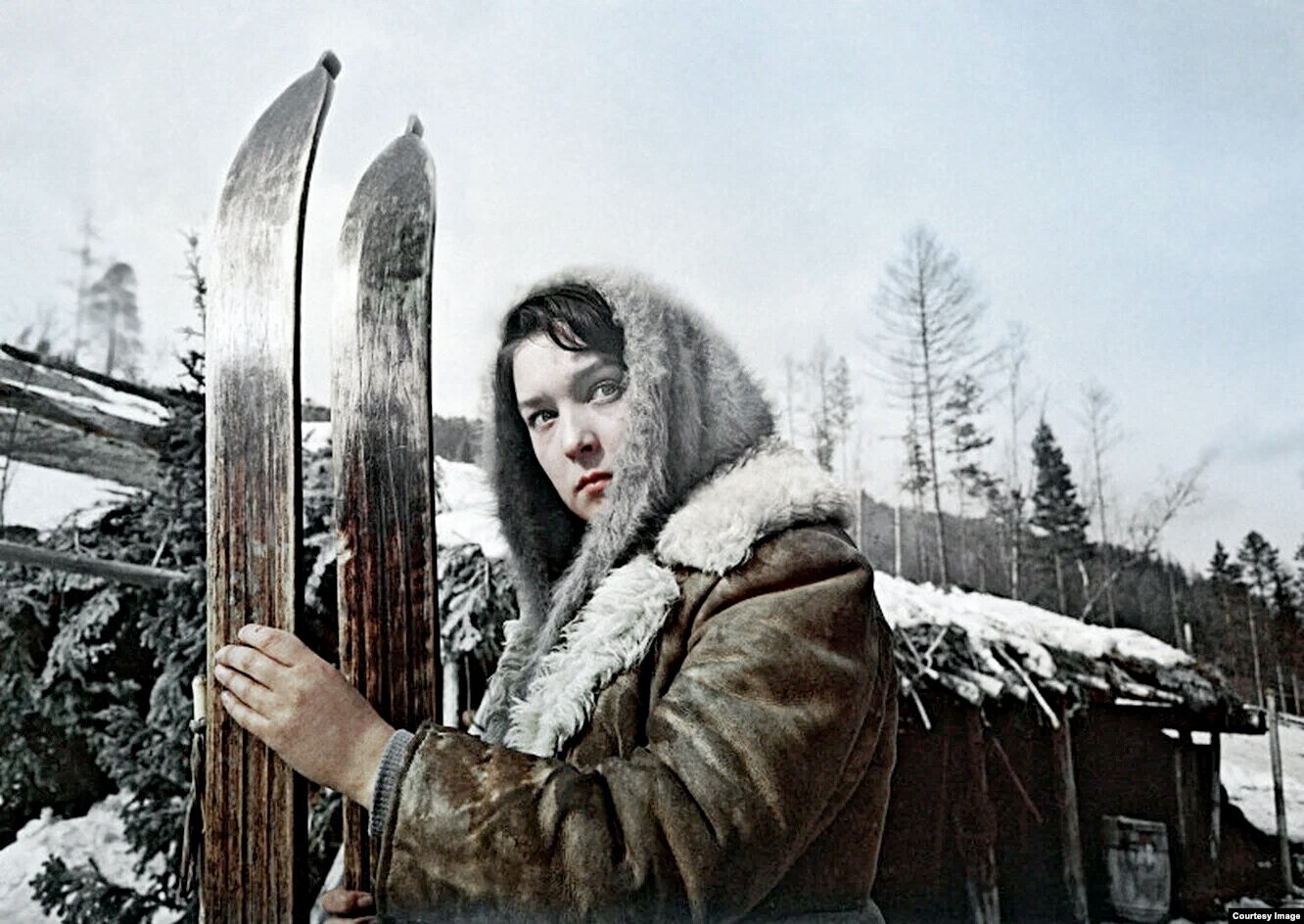
When sociologists try to study the features that the Siberians themselves consider to be unique and determining the "Siberian identity", they stumble upon the same synonymous series. This, as a rule, is cold, snow, a huge territory and the special character of the inhabitants with unique properties - kindness, will, endurance, masculinity, openness, honesty. This list of "special properties of a real Siberian" has not changed for several decades. However, where did he come from? Among the first “suspects” is Soviet cinema, which in half a century of work with the image of the “right” Siberian convinced the locals, and in general everyone is the uniqueness of Siberia and its inhabitants.
Just about the difficult
Either the phrase, which was invented by Lenin, or the phrase, “of all arts for us, is the most important movie”, is the real state of things. Soviet propaganda painted the image of the USSR as a "reading country in the world." In fact, according to the calculations of the doctor of sociological sciences, Mikhail Zhabsky (who was engaged in the sociology of cinema in Soviet times), by the beginning of the 1970s, “introduction” to the cinema was 75% among citizens, 66% among the rural population (visiting the cinema at least once a month). At the same time, among employees with higher education, there were already 93%, with the intensity of visiting 2-3 times a month.
Of these numbers, it is clear why, with the phrase “cult Soviet cinema”, any reader of this text over 35 years old has a completely understandable associative series of the films of Leonid Gaidai and Eldar Ryazanov, but not everyone will remember the “cult Soviet book”. The dusty regiments of Soviet sideboards, filled with "complete collected works" of school classics, somehow did not give birth to bright images.
Having put on cinema as the most effective way of ideological processing of the population, the Soviet government did not discover America. By that time, America had already generated Hollywood, dictating fashion and tastes to the whole world. According to Edward Said, Professor of Colombian University, in his book “Culture and Imperialism”, if classical imperialism is based on economic dominance, then starting from the middle of the 20th century, post-colonial “empires” have been using the cultural “enslavement of” their “colonies”. Hollywood showed the whole world to the US civilizational power, Soviet cinema painted communist utopia, happy workers singing collective farmers and beautiful Moscow. So this ideological conveyor worked.
In the language of modern ethnography, Soviet cinema performed the function of constructing identities. That is, the population taught the population to think about themselves as the "line of the party and government" demanded. Party ideologists came up with myths for the people, which filmed filmmakers on the screen. And the more talented the director was, the more tenacious the myth was.
There is no need to go far for examples. If those who studied domestic history in Soviet and Russian textbooks, force to talk about Alexander Nevsky, everyone will definitely remember the "German dogs-people", whom the cunning prince lured the ice of Lake Peipsi, guessing that the armor of the enemy will be more heavier and will surely pull him to the bottom. In historical reality, the “Ice Battle” was a small skirmish on the western borders of the Novgorod-Pskov land, which contemporaries barely noticed (2-3 lines in two sources are devoted to this event-it is weak for the battle of “civilizational significance”). They say that this is why director Sergei Eisenstein chose Alexander Nevsky as the protagonist for a patriotic blockbuster - too little was known about this prince, which means that historical facts did not interfere with the flight of directing imagination.
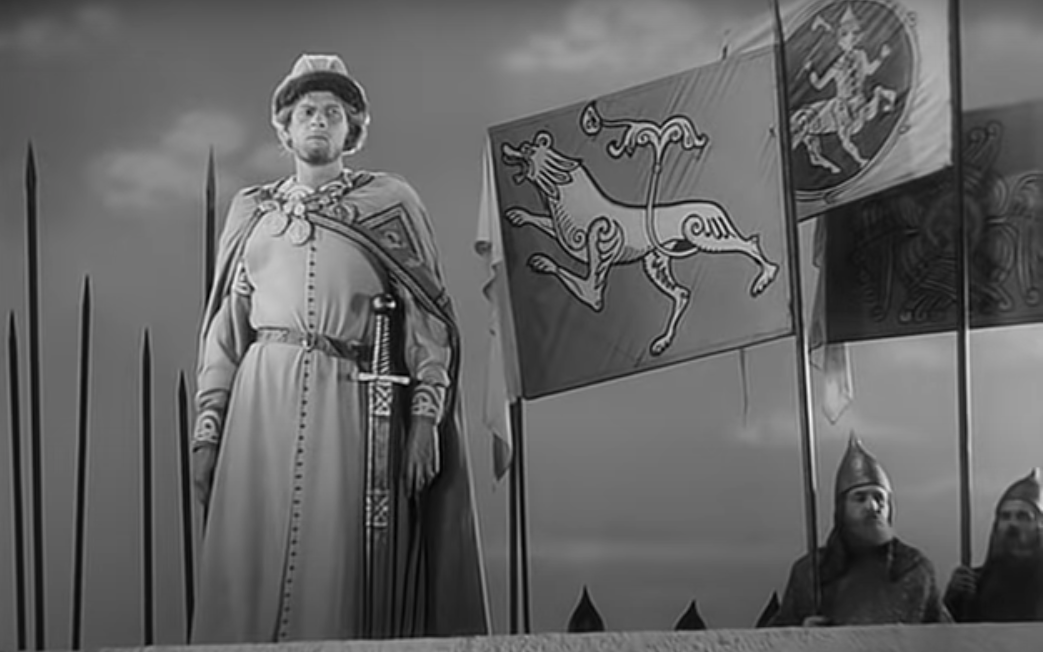
And here is the result: the current paragraphs of history textbooks about the "ice battle" are almost entirely written off from the plot of the film "Alexander Nevsky", which, in turn, almost entirely invented the genius Eisenstein. The film came to the court - in 1938 it was time to explain who the enemy is here. It is even more surprising that in 2023 the same directorial fictions of the distant past turn out to be ideological main for national policy. This is what the "power of cinema" is.
Siberia on the screen
It is generally accepted that the first film apparatus appeared in Siberia in 1896-it was bought at the World Nizhny Novgorod exhibition and took it to Novo-Nicolaevsk (now Novosibirsk) entrepreneur Fedot Makhotin. One of the first directors who shot Siberia is considered Antonio Michele Donatello, Italy vice-consul in Irkutsk, who in 1909 was retrained from distributors to directors. So his documentary films “Flood in Chita”, “Religious celebrations of the Mongols”, “Work on the fish crafts by M.I. Shtykman”, “The Walking on the Steamboat along the Amur River in Khabarovsk” and others appeared. Even if you did not watch these paintings, their ideological message is approximately understandable by the names: Siberia is shown there as an edge of a diverse and untouched nature, among which amazing creatures are dissolved - usually Mongoloid Aborigines.
One of the first Soviet ideological films about Siberia is the work of the Novo-Nikolaevsky film studio (future famous Western Siberian film studio, famous for the Siberia on the screen) for 1924 Red Gas. This movie, as you can suspect by name, was not devoted to the development of Siberian subsoil at all, but no less - the five years of the liberation of Siberia from Kolchak.
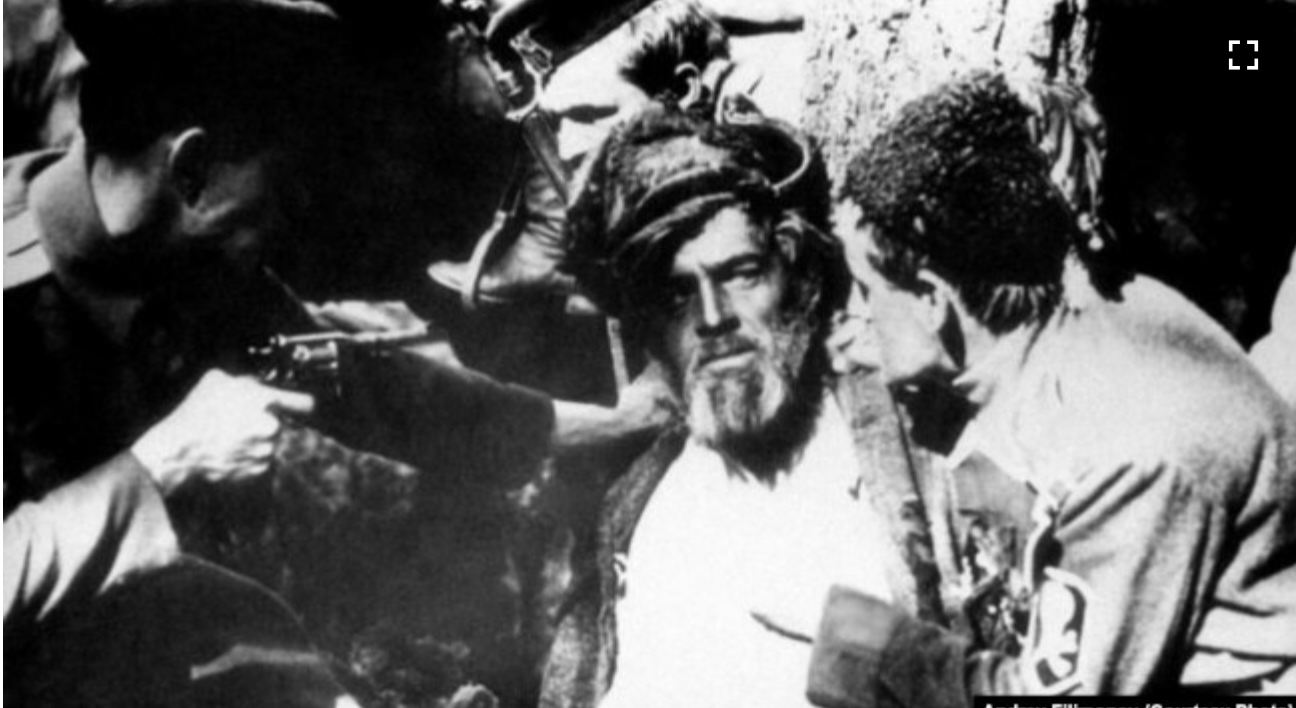
The picture was shot so much in “hot pursuit” that local residents sometimes perceived the work of the crew excessively seriously. The director of the film Ivan Kalabukhov describes the episode in his memoirs when the filming steamer with the “White Guards” (according to the plot - “Kolchakovo ship”) tried to moor in the port of the city of Berdsk, the suburbs of the current Novosibirsk.
“All sorts of rumors went, but the Berdchan did not warn about the shooting-the armed residents gathered there to repulse the whites. And then they said that some other group even prepared an icon with an embroidered towel-on the contrary, for the solemn meeting of the whites,” the director recalled.However, the truly "Siberian" character of the Soviet regional cinema began to acquire in the mid-1930s. And the first movie, in which the “folk” idea of Siberia, which became the traditional “folk”, is laid, is considered the picture of director Vladimir Schneiderov “Golden Lake”, published in 1935. According to the associate professor of the Tomsk State University Elena Savelyeva, who specifically investigated Soviet cinema about Siberia, in the Golden Lake the classic Soviet image of the “Siberian Territory” first appears: forest landscapes, the “gentleman's set” of the local flora (bears and deer), the “traditional” local residents living, naturally, in plague, and the most important people with plague. unique "Siberian character."
According to the plot of the film in the vicinity of Lake Taurus (the current Altai Republic), “good” geologists sent, of course, “conquer the Siberian subsoil” (they did not go to Siberia for anything else), face “bad”, “black gold miners”. As they wrote in the annotations of that time: “The action-packed kaptin has a bonfire of the war-and-a-click of the same, which is being used to the same time, Altai Tyge ".
The end of the film, of course, is happy: geologists free the girl abducted by bandits, open new natural wealth and conclude that "the homeland will become richer."
The fact that Siberia is the cold, the snowy taiga and heroic geologists, Soviet citizens will learn just a few years before Sergey Eisenstein in "Alexander Nevsky" will fence their news that Russian people have always fought with the evil West. And this, of course, is no coincidence. The Soviet Union quickly began to form its internal myth that there are enemies around it, and inside it is mysterious Siberia.
The roads of Ermak
The Soviet myth of Siberia and Siberians is a myth, without a doubt, colonial. And if so, then he needed a colony as a basis in his “primitive” state - so that there was something to conquer. Therefore, Siberia in Soviet cinema (as in Soviet books, newspapers, museums and school history courses) is a virgin land with a naive, recently emanated from nature by the local population. Elena and Ivan Golovneva, scientists from Yekaterinburg, who examined the images of Siberia in Soviet cinema, call Soviet documentaries "On the Nature and Peoples" of Siberia Cultures. "
The canon of “Cultures” laid paintings by the West Siberian film studio of scientific and technical and technical films “Eastern Siberia” (1935), “Altai Mountain Country” (1937), “In the Taiga of Western Siberia” (1939), “Mountain Shoria” (1939), “Baikal” (1939). Again, you do not need to be a film critic to roughly evaluate the plot of these films - they, as it should, showed a "pristine" Siberian nature. As the conquerors of Siberia saw her, starting with Ermak.
Ermak - the character is inherently so cinematic that Soviet cinema expectedly used his image wherever possible. Although the picture with such a name ("Ermak") and it was precisely dedicated to the history of the campaign of the Cossacks for the Urals (which is believed that he laid the foundation for the submission of Siberia by Russia) in the Soviet Union began to be removed only in 1986.
But the idea of conquering the "wild land" is present in almost every Soviet film epose. The heroes of the films again and again heroically conquer the “natural Siberia” (“New Moscow”, “The Legend of the Siberian Land”, “Different Fates”, “Fifth Ocean”), fight “social wildness” (such as the exiled Decembrists in the depths of Siberian ores ... ”, heroically develop the rich resources of the region, build mines, plants. Railway lines (“Guy from the taiga”, “The train goes to the east”, “Honey month”, “Near us”, “It all starts from the road”, “Wait for letters”). And, of course, they protect all the conquered wealth from foreign adversaries ("on the border", "man without a passport", "neutral waters").
Finding Siberia - you conquer yourself
In Soviet cinema, "conquest" Siberia is not just the scenery for the development of the plot. Siberia, like the ocean "Solaris", envelops the heroes outside to transform them internally. In the film directed by Anatoly Dudorov "Gloomy Vangur" (1960), the merciless Siberian taiga sets off to conquer the same heroic geologists. In one of the first scenes of the film, an inconspicuous, completely non -masculine protagonist announces everydayly that "the country needs titanium," and also leaves to overcome all the hardships and hardships that Siberia prepared for him. There, of course, he overcomes himself and shows that the “real” Siberian is a kind, sincere and honest person who, by virtue of these qualities, conquers nature.
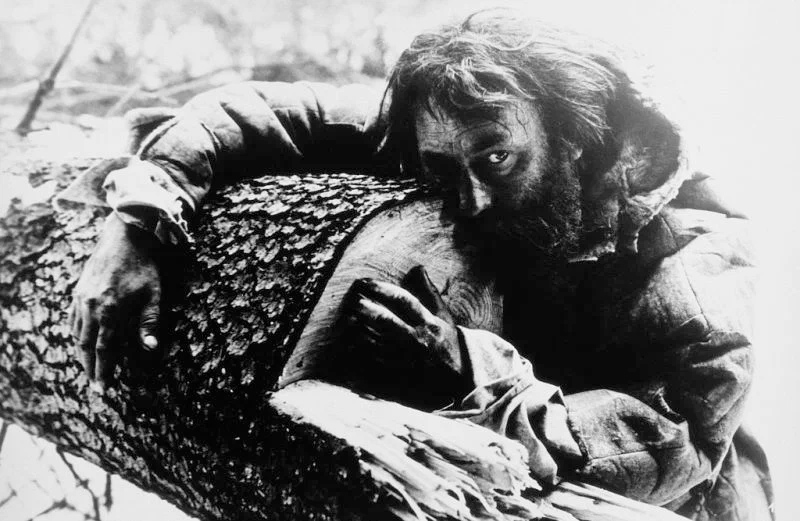
The heroes of the epic Soviet cinema about Siberia "Sibiriada" (1978) by Andrei Konchalovsky are closely connected with the nature of the epic Soviet cinema. His hero Alexei, not always perfect, makes the only right decisions in critical moments and has a connection with the local "pristine" nature. He sees the souls of trees in the form of a star, knows how to communicate with swamp spirits and frost in an abandoned village, is familiar with the "eternal grandfather", which accompanies several generations of their family, and so on and so on.
And, of course, it is in the Siberian nature that they draw their forces for life in general and the spiritual and moral renewal in particular the heroes of the “Writer-Warrier” by Vasily Shukshin. The breadth of the Siberian Katun and the solid huts of Altai set off fussy Moscow stations and tight streets. Therefore, the hero of the film "Stoves-stoves" (1972) Ivan Rastorguev calms down and restores strength only when he returns home. Also, Yegor Prokudin from Kalina Red (1973) - only in Siberia finds strength in order to resist the criminal past and re -learn kindness and spirituality.
From paradise and to hell, and back
The movement of heroes from Siberia to Russia and vice versa is another sign image of Soviet cinema, which is rarely noticed, but which, however, can be considered almost a key idea that fixes the separation of "us" and "their".
Who and why go to Siberia? Passionaries, heroes-consequences of nature, solid and strong in spirit of a man (less often-women). These are geologists, gold miners, convicts (naturally, mainly political prisoners, convicted of the idea), polar pilots, “Far East”. In the course of the development of plots (films “Guy from the Taiga”, “At the good hour”, “Wait for letters”, “People on the bridge”) show activity, courage, determination, enterprise - in a word, all this, to this day, local residents call the “Siberian character” as unique features. By the way, this image, as it would be said now, is extremely masculine: in Soviet cinema about Siberia there are very few women, it is dominated by hard in character and decisive men.
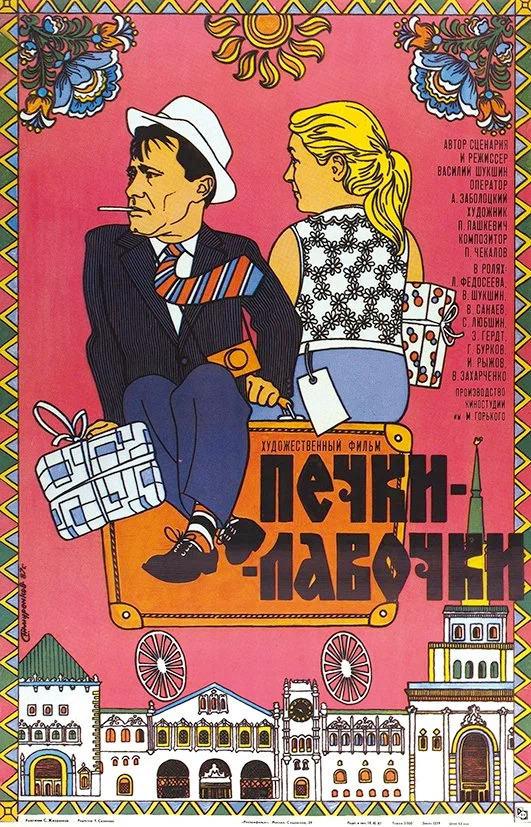
Who and why is leaving Siberia? Careerists, losers, “criminal element”-in a word, “anti-Sibiryaks” (“party ticket”, “in good time”, “stove-stoves”). The leave of Siberia in Soviet cinema is condemned, demonstrated as an ethically incorrect behavioral strategy, which leads to catastrophic consequences for the individual. Siberia is a romantic place, almost paradise on Earth, which by its very existence is opposed by the perverted norms of the "civilized world" (the film "The Tale of the Earth of the Siberian" 1947 and others).
The main character of Kalina Krasnaya, Yegor Prokudin left Siberia, throwing his mother in a distant Altai village in his youth, and what came of him? He became a recidivist thief who is always "ready for debauchery." Returning to the Siberian village, he tries to break away from the urban criminal environment. The protagonist of the “Lawk stoves” Ivan Rastorguev, barely leaving Siberia, is involved in criminal intrigue and is subjected to testing-however, in the end is strengthened in my own position: “I don’t need wealth, I have everything, only to put children on my feet.”
And so - everywhere. The only exception among those who left Siberia is the heroic "Siberian divisions", which, as we know from Soviet films about the Great Patriotic War, not only saved Moscow at a critical moment, but also constantly demonstrated heroism and courage. It must be assumed that if Ermak in their place, he would have done exactly the same.
From the past to the future
Elena and Ivan Golovneva in her scientific article “The image of Siberia in Kinematographic narrative”, analyzing all the listed and many other Soviet thematic films, suggests that “these plots contributed to the formation of stereotypes associated with Siberia and the“ Siberian theme ”, have become an effective means of constructing the image of Siberia at the audience of different generations And they continue to reproduce so far in the modern mass consciousness. "
Confirmation of this is any study of sociologists dedicated to the search for a "real Siberian." As soon as sociologists ask the inhabitants of the Siberian regions, what character traits are inherent in the Siberians, in response they invariably receive: kindness, goodwill, endurance, strong character, masculinity.
Indirect evidence that such a number of associations is a consequence of the Soviet cinema (and less mass - museum and book) propaganda can be considered the prevalence of ideas of a special "Siberian character" among different age groups. As the professor of Irkutsk State University shows in their research , Maria Plotnikova, first of all, consider themselves the "Siberians" residents of the Irkutsk region over 30 years old. The "older" the age group, the more in it are those who primarily consider themselves a "Siberian". Whereas in the age cohort is 23-30 years old (for which Soviet propaganda is a historical phenomenon), the inhabitants of the region are primarily the "Irkutians".
It is not difficult to see that in modern television propaganda Siberia is an explosive mixture between the conditional “Evenki”, emerging in the morning from their plague, to graze deer, and the giant construction sites of the next power plants, mines and railways. Between which various kinds of scientists sometimes flash - as a rule, also conquering nature, albeit in their own way: building a collider or growing unique fry. Modern propaganda does not go beyond these classic Soviet movie myths. It is dangerous. Cinema is still the most important of all arts. And the colony, which believes in some other, the non-colonial myth, as a rule, very quickly ceases to be a colony.