
Translated material
Migrants are not exported
The authorities of some regions plan to ban migrants to work in certain areas - for example, by public transport drivers. In the Chelyabinsk region, a similar ban has been valid for 8 years
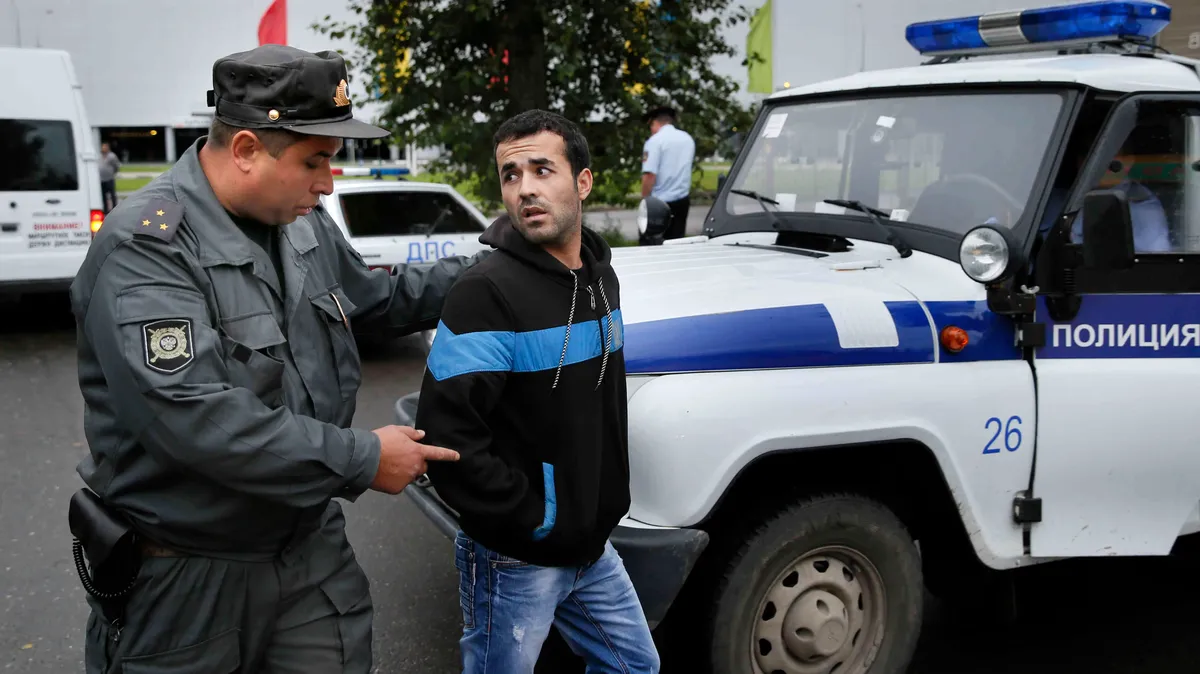
Photo: epa / yuri kochetkov
The authorities of the Tula region from next year plan to ban migrants to work in public transport and catering, as well as trade in tobacco and alcohol. The restrictions apply to foreigners who are working on the basis of patents, follows from the draft decree of the governor Alexei Dyumin. The innovations will not affect the owners of Russian passports and residence. Changes in the migration policy of the region take place against the backdrop of the raids of security forces to enterprises where foreigners work. According to the Tula telegram channel. Extremizm, during one of these events at the end of October, the security forces were looking for not only illegal migrants, but also owners of Russian passports who did not take up military registration.
A similar ban 8 years ago partially introduced the authorities of the Chelyabinsk region. There, the region’s authorities forbade migrants to work in public transport and taxi. The journalist of Novaya Gazeta Europe studied the situation with passenger transportation in Chelyabinsk, the attitude of residents towards migrant drivers and talked with the minibuses themselves.
The most route city
For the first time, the authorities of the Chelyabinsk region banned migrants to work in public transport and taxis in 2016. In November of this year, the restrictions were once again extended by the governor of the region, Alexei Texler.
According to the resolution, it is forbidden to work in the following areas working on a patent:
regular transportation of passengers by buses in city and suburban traffic;
regular transportation of passengers by buses in long -distance traffic;
Activities of car taxi and rented cars with a driver.
The document is accepted annually in order to ensure the safety of passenger transportation and passenger service culture, the Ministry of Roads and Transport of the Chelyabinsk Region said . The measure does not apply to foreigners with a residence permit and citizens of the Eurasian Union, which includes, in addition to the Russian Federation, Belarus, Kyrgyzstan, Kazakhstan and Armenia.
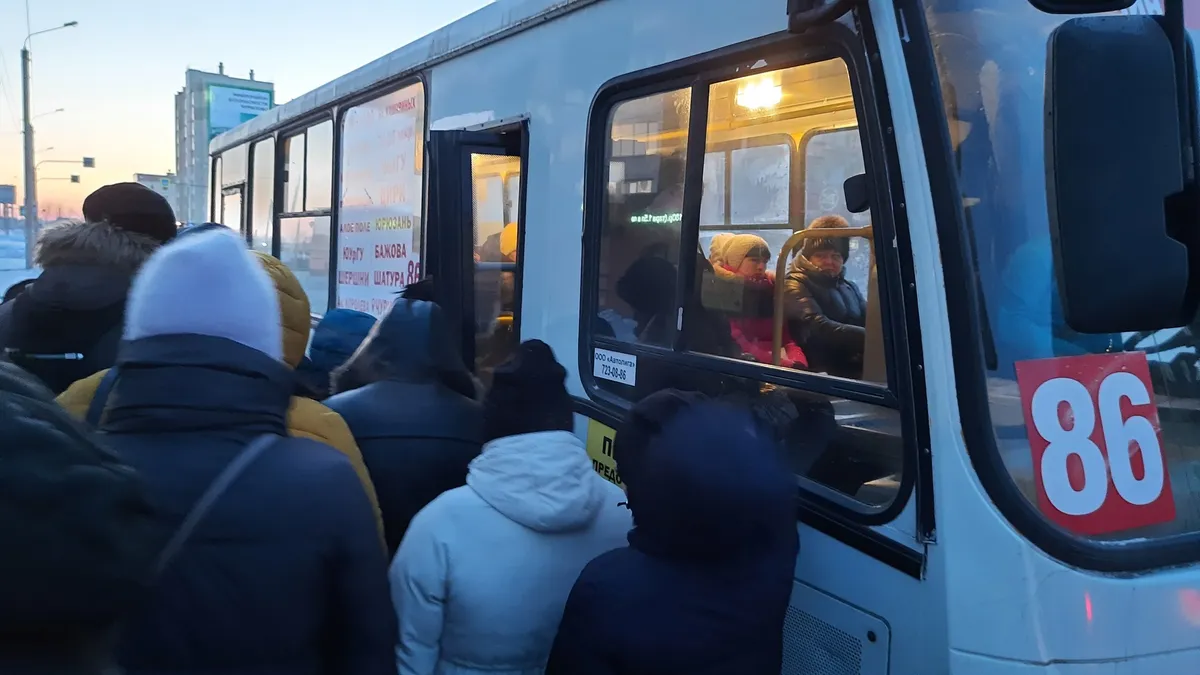
The number of trams, buses and trolleybuses in Chelyabinsk gradually decreased, transport enterprises became bankrupt. Perennial promises to complete the metro in the regional center have not been fulfilled. As a result, by the mid-2010s, the share of minibuses, according to some estimates, reached 70%.
Many of whom were migrants, passengers came to drivers, many complaints came from passengers: for violation of traffic rules, driving manner, rudeness and condition of cars.
In 2015, the ex-press secretary of the governor Oleg Grishankov motivated the introduction of a “critical” number of accidents with the participation of foreign citizens. “The inhabitants of the region, especially among residents of Chelyabinsk, caused numerous complaints the fact that foreigners without work permission created emergency and dangerous situations on the roads. The current order is a consequence of the policy of restoring order on the roads, ”he explained.
At the same time, it is not known how many accidents in those years occurred with the participation of visitors: the statistics of the nationality of drivers in the traffic police are not conducted, the Chelyabinsk police reported.
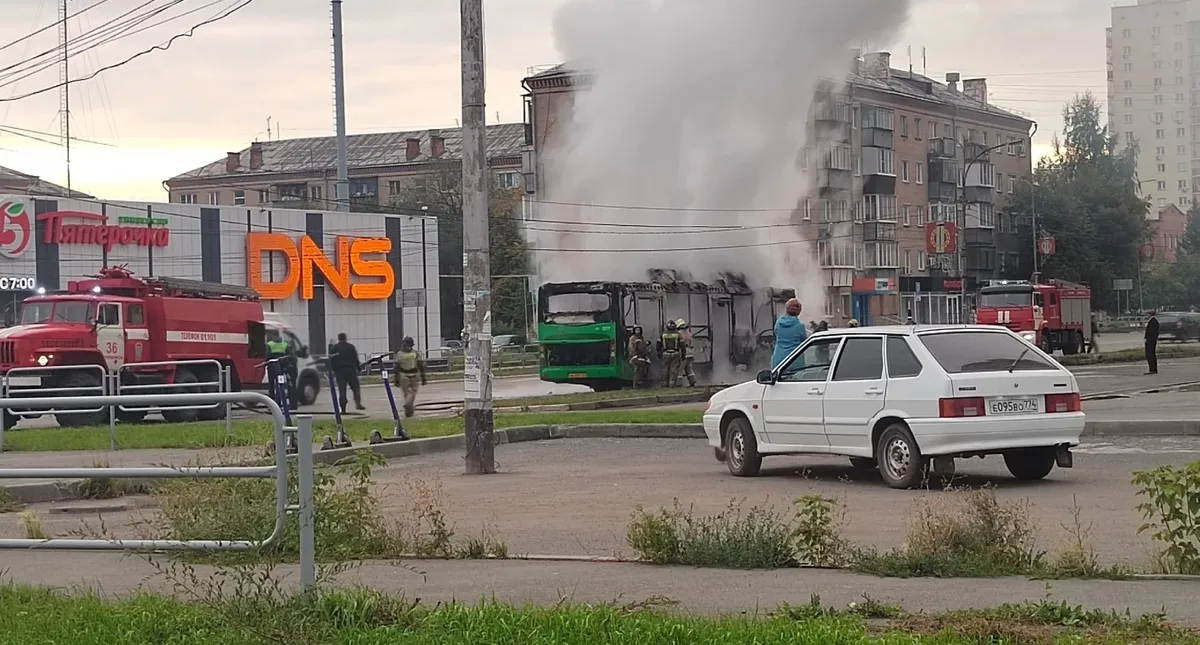
They also decided to remove migrants from transportation against the background of an increased level of unemployment and mass contractions. In 2015, in the region, at the initiative of Governor Boris Dubrovsky, a quota for foreign labor was sharply reduced - from 10,500 people to 876, and then to 216.
“In the region of more than 20,000 official unemployed, but at the same time in 2013 we brought 12,000 foreigners. For this year, a quota has been installed - 10,000. I believe that we and these 10,000 are not needed. Enter the human potential of the Chelyabinsk region! I believe that the region is balanced by personnel, and I do not understand this practice, when we have unemployed, pay them a benefit, but at the same time we carry workers from abroad. This practice is vicious, ”the regional governor said at the end of 2014.
In 2019, the police launched a special operation "Minibus-Nelgal". It was aimed at identifying entrepreneurs who are engaged in illegal transportation of passengers. During one raid, law enforcement officers could identify more than 60 violators of migration legislation, some foreigners were eventually expelled from Russia.
In 2020, the blogger Ilya Varlamov, based on the VSHE data, placed Chelyabinsk in second place in the rating of the most “minibuses” of the cities of Russia. In 2021, the chairman of the Federation Council Valentina Matvienko called on the governor to fight the "dominance of the minibus mafia." “Private business needs to set tough conditions, they carry people on buckets with nails,” she said.
The “death” of public transport in Chelyabinsk was logical, the creator of the Chelyabinsk Urbanist project, Lev Vladov, noted in his blog. According to him, the city hall "There is not a single specialist in transport planning."
At the same time, the millionaire entered the three cities of Russia, where migrants are worst: the level of “migrantophobia” was above in Novosibirsk and Perm.
The reaction of the inhabitants
The Chelyabinsk residents themselves in 2015 met the ban differently. “It is clear that a rather big piece of black pie will be wearing other bureaucrats when the demand for passports of citizens of the Russian Federation begins to go off the city in the city. In general, the same drovers of the donkeys from the villages with a murderous manner of driving, but with the cherished red book in the barce! ”Will ride!” - So one of the comments on the news about the ban sounds.
Others called on the authorities not to fight migrants, but to eliminate the "route mafia." “The same people who are required to develop municipal transport own routes and minibuses. Guess why our municipal transport is practically destroyed, ”wrote another user.
Some were afraid that the new ban would leave Chelyabinsk residents without transport at all: “Everyone is so happy about this news. I’ll look at you when you dance at the stop at the stop in anticipation of the minibus. All this will lead to a significant reduction in routes. And then we will rejoice. Ours are not in line to steer day and night for such a salary! And yes, the “citizens of Russia” sometimes drive migrants, so there is no need for one comb of everyone. ”
After 8 years, the townspeople did not agree on how to relate to the ban: his extension in 2023 caused the same in the content of the discussion . Someone offered to cancel a residence permit and expel migrants, others parked-the presence or absence of documents is not related to the driving culture.
Governor's lever
The ban was prolonged in order to prevent foreigners from working where, on the one hand, to work profitably and conveniently, on the other hand, there is no sharp lack of personnel, says Chelyabinsk public activist Yevgeny Petrov (name changed). He calls the current resolution the only lever in the field of migration policy that local authorities have.
“Many governors want to do at least something that will be positively perceived by the people-for example, the former head of the region Boris Dubrovsky, during the election campaign, promised to expel migrants and received a very high result in the elections, the Governor was gaining above him, probably only Ramzan Kadyrov,” says Evgeny. - This decree [on the ban for foreigners to work in public transport] was an attempt to fulfill election promises. The governor is not entitled to prohibit the natives of Central Asia, and from the moment of its receipt they are equal in rights to the natives of Russia. But be that as it may, it is much more difficult to get citizenship than a work permit, so there is an effect. ”
By 2015, “hard competition” was observed in the transportation market between minibuses and the rest of the transport, so the measure was then relevant, says Petrov.
“The task was not so much to transfer the rudder from Tajik to the Russian one, but to reduce the number of minibuses as such to save buses, trolleybuses and trams. The effect, I think, was - after this decree, many minibuses became illegal, it became possible to fight them, ”he explained to Novaya Gazeta Europe.
According to Petrov, the number of minibuses has since decreased by about 5 times. However, this is not only the effect of the governor's resolution, but also the result of transport reform, Eugene notes. For example, under the program of the national project, the region received about 2 billion rubles in 2021, for which the authorities purchased 157 buses. The electric vehicle is also updated: in 2023, for the first time in 25 years, new trolleybuses began to run.
"If you received a passport, then everything is supposed to you"
Most foreigners in Chelyabinsk have long have Russian citizenship or residence permit, so the extension of restrictions will not affect their work in any way. About this to the journalist of Novaya Gazeta - Europe was told by one of the drivers of minibuses. Anzur (the name changed) came from Tajikistan about 10 years ago and received a driver’s license, a residence permit, and then a new passport in Russia.
“In which country do you live in - laws must be observed there. If I received a passport, then everything is supposed to you. I mean, you can live and work freely, ”says Anzur.
To the question of whether corruption is common when paperwork (users of social networks suspect the migration service of receiving bribes from migrants), the man says that he himself went through all the procedures “as expected”, this also applies to the issuance of a driver’s license.
"Russian, non -Russian" - in the USSR this was not
Local authorities have previously promised to save the city from the usual minibuses more than once. This can be achieved with the help of new prohibitions and requirements, but Anzur does not see the appropriateness in further restrictions against migrants. On the municipal routes, especially the bus, according to the man, there are not enough drivers, because normal working conditions are not created there: the work schedule is uncomfortable, there are only two refueling for buses for the whole city, there are also not enough sinks.
“I have never had serious accidents,” says Anzur. - They will not praise themselves, but never once! Even when I worked on the bus, they told me: you rolled on 25 buses, you have not a single violation, why are you leaving? I told them that I did not see my family from the schedule. At 5 o’clock in the morning I go to work, at 12 o’clock I come - they sleep. Still, when transporting people, security should be above all. Some people say: here foreigners rule, violate. And before blaming someone, you need to create conditions-make a schedule normal so that the drivers do not drive. ”
Drivers in Chelyabinsk are working not only by immigrants from Central Asia, but by the thesis that Russian ministers are lazy is erroneous, Anger is convinced. “It doesn’t matter, a foreigner or Russian,” the man says. - I have familiar Russians - they calmly work on a minibus, like us. Nevertheless, it depends on a person. It’s just how to tell you ... There is a wrong opinion, the wrong interpretations are here in Russia: “Foreigners - then, Russians - then ...” All this must be removed. We are all people, firstly. In the USSR, how we lived - there was no such thing: who arrived - who did not come, Russian non -Russian. ”
The word "foreigner" is not always appropriate at all - it can hurt those who have been living in Russia for a long time, Anzur explains. “For example, you are already a citizen of the Russian Federation for 15–20 years, and they will see you-they will say in any way that you are a foreigner,” the man shares. “It will hurt you because you have been living here for a long time.”
In anticipation of the agenda
With the outbreak of war in Ukraine and the mobilization of the agenda, in particular, to the citizens of Tajikistan and Uzbekistan, who have a second citizenship - Russian. In the spring, State Duma deputy Mikhail Matveev proposed to create Tajik battalions, and in September the parliamentarian introduced a bill to the State Duma on deprivation of Russian citizenship migrants for evasion in the army. In addition, the head of the HRC Valery Fadeev proposed issuing passports to new citizens only when registering military registration.
In October, the Investigative Committee for Moscow announced the initiation of 22 criminal cases against Russian anti-fingers from Central Asia. More than 80 people were sent to the Russian Armed Forces.
Anzur has not yet received a summons. He does not talk about his plans in case of calling.
“As a citizen of the Russian Federation, a person should go, where the state will call, right? He argues. “But if a person has religion?” Here, too, this important role plays. And in religion, Muslims are forbidden to fight for the wealth of this world. This war is now going on for the sake of land, for the sake of territories, for example. If the agenda comes, let's see. ”
Anzur has many acquaintances who were called up for military service. There are those who died in the war.
“Here is his brother (points to another driver) recently came, won. Hero of Russia. He stayed there for six months, ”says Anzur. A relative of the hero clarifies: his brother voluntarily went to fight under the contract and was wounded, now he is in the hospital. He does not plan to return to the zone anymore, but if they call, he will go.