
Translated material
Trump in The Hague
In the parliamentary elections in the Netherlands, the ultra -right politician Gerte Wilders, who is accused of relations with the Kremlin, won. We figure out what his triumph will result in for Ukraine and Russia
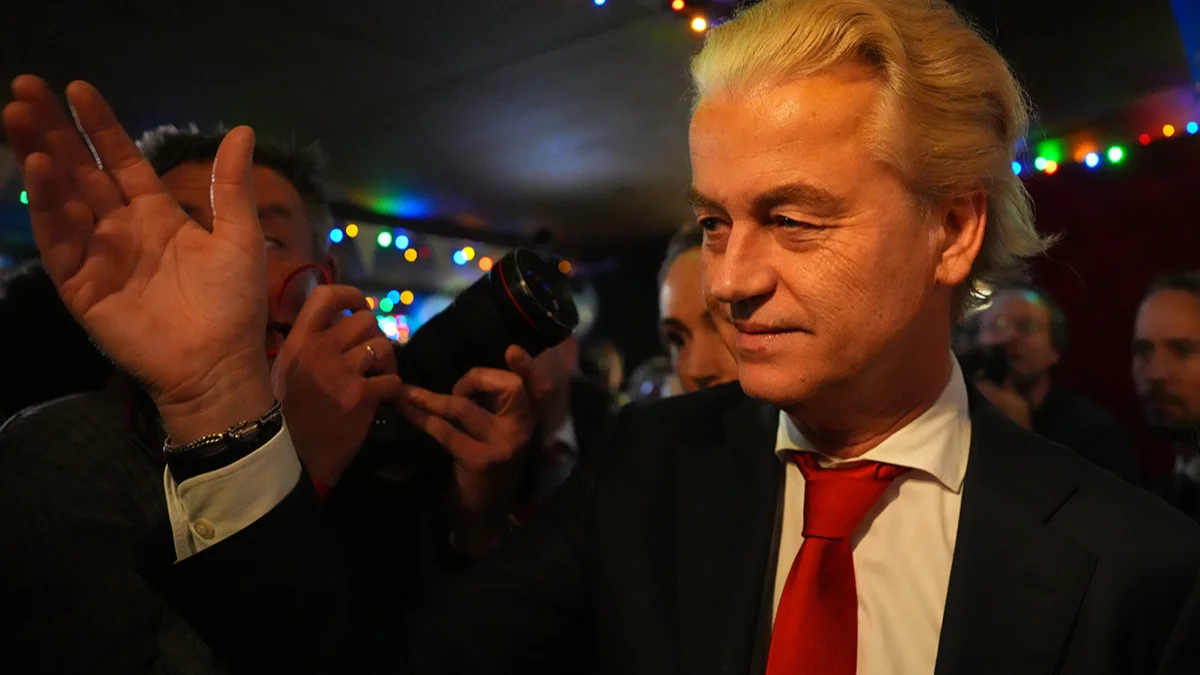
Gerte Wilders, November 22, 2023 in Skveningen, the Netherlands. Photo: Carl Court / Getty images
On November 22, extraordinary parliamentary elections took place in the Netherlands. Initially, the vote was supposed to take place in 2025, but the previous government, headed by Prime Minister Mark Rutte, resigned ahead of schedule against the backdrop of internal disagreements about the migration policy.
The composition of the parliament chosen yesterday will become one of the most fragmented in the history of the country - the voices were distributed between four large batches, including right -wing populists from the Freedom Party (PVV) sensationly.
The results of the parliamentary elections of 2023 in the Netherlands
Source: Nos
To the victory of the ultra -right led by the Netherland politician Gerte Wilders scandalously known to his anti -Islamic position. The first paragraph of his program touches on the topic of providing refuge refugees and emigration as a whole. The policies of open boundaries are called “crazy” in it, and PVV promises to immediately fix it. Largely due to anti -migrant rhetoric in the PVV election, they were not absolute, but still the majority of votes - 23.5%.
In second place from 15.5% was the Alliance “Green Left”-“Party of Labor” (PVDA-GL), which is represented by the former European Commissioner on Climate issues and quite famous at the EU level and at the Netherlands level, politician Franc Timmermmans. Quite a little backward from the green, the third place (15.1%) was taken by the conservative “People’s Party for Freedom and Democracy” (VVD), which Mark Rutte has been headed for a long time and resigned. Now she is led by Dylan Geoshilgez-Siegerius-a Dutch politician of Turkish-Kurdish descent, who has been holding the post of Minister of Justice and Security of the Netherlands since 2022. If Jeshilgo had achieved the post of prime minister, then she would be the first woman in the history of the Netherlands in this position.
Finally, in fourth place with a result of 12.8% was the Center Party of the New Social Contract (NSC) created a few months ago. The founder of the party Peter Omtsig has been engaged in politics in the Netherlands for more than twenty years, and during this time he managed to get a good reputation in the eyes of a large number of Dutch. So, a few years ago he stood up for the defense of the injured parents in a scandal with children's care allowances, when more than 20 thousand families were falsely accused of fraud for drawing up documents for social assistance.
More about parties and their programs
The Party of Freedom (Partij Voor de Vrijheid) is a nationalist right -Populistic party, which has gained popularity due to its scandalous leader Herth Wilders. In addition to anti-migration rhetoric and relevant provisions in the program, the party actively convicts politicians in the Hague, who “brought the Netherlands into a dead end and deceived them for many years,” which is why the purchasing power of the Dutch did not grow. To solve this problem, Wilders offers to reduce food taxes and energy.
The Green Left Alliance with the “Party of Labor” (Groenlinks-Pvda-Partij Van de Arbeid) is the unification of the left-wing forces that decided to create an alliance to strengthen their positions in the government. To resolve the housing crisis in the Netherlands, the party proposes to set the maximum rental price and create zones where people with small and medium wealth would have been priority for housing. In matches of the climate, the party considers it necessary to stop the drilling of gas wells in Groningen and the watt Sea, as well as increase investments in “clean” energy sources - such as solar panels and air mills.
The People’s Party for Freedom and Democracy (Volkspartij Voor Vrijheid en Democratie) is a right -capacity party that defends the free market and limited state intervention in the economy. From 2006 to 2023, it was headed by Mark Rutte, and now the VVD leader is Dylan Yeshilge. In the VVD election program, emphasis is placed on reducing economic dependence on China, simplifying the “overly complicated” tax system, improving the conditions for conducting small businesses, as well as to reduce the inflow of migrants in the country.
The “New Social Contract” is the Christian Democratic Center Party, founded by Piter Omcig, a long-known longitor of Dutch politics at the local level. NSC emphasizes bureaucratic transformations in the country in order to achieve more effective management. So, for example, the NSC plans to create a constitutional court and change the system of distribution of social assistance for more security of citizens.
“Democrats 66” (Democrats 66) - a Levoliberal Party with a rich history, founded in 1966. The founders of this party set themselves the task of the great democratization of the Dutch society, and so far “Democrats 66” are one of the most progressive parties in the country. In their pre -election program, D66 is focused on climate problems, transition to green energy, as well as investing in projects for building more housing. The leader of the party Rob Yetten set himself the goal of creating a coalition for a gradual abandonment of subsidies to use fossil fuel.
The "Farmer-City Movement" (Boerburgerbeweging) is an agrarian political party, which unexpectedly won the regional elections in the spring. Protecting the law of farmers' rights, the party proposes to cancel “suffocating standards” for the release of nitrogen and make the regions more power, creating the “Ministry of Regional Affairs”.
There are 150 chairs in the Netherlands parliament, therefore, to form most of the coalition of parties, it is necessary to get 76 mandates. Traditionally, for Dutch politics, not one of the parties was able to guarantee so many places, although the "Party of Freedom" escaped forward with a noticeable margin from its competitors. In the coming months, all political forces will have to go through the difficult process of coordinating the ruling coalition, although, probably, Gerte Wilders will nevertheless receive the post of prime minister.
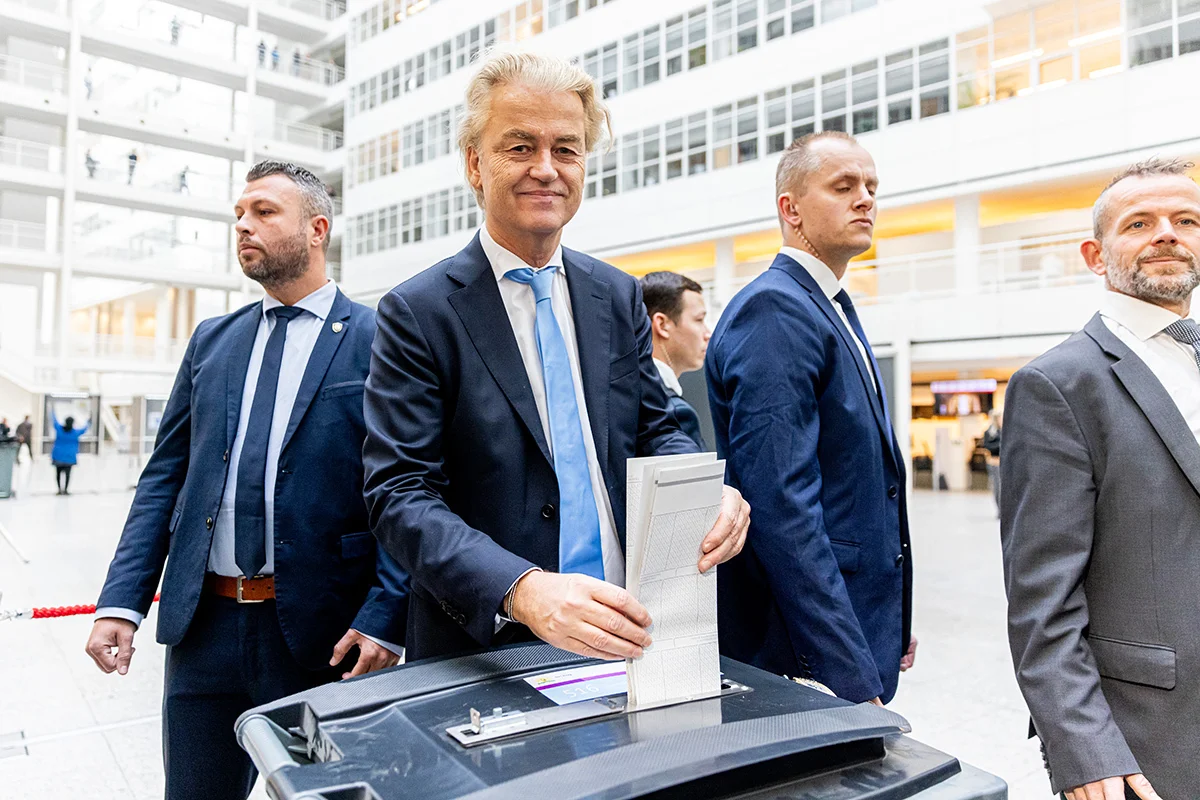
The ascent of the right
Hertha Wilders is called Trump from the world of Dutch politics, and this is not by chance: the PVV leader himself said that between Clinton and Trump, he would choose the latter. There are indeed many similarities between them: like Trump, Wilders also relies on contrasting the true people of his country and a corrupt elite, which makes everything possible to interfere with its prosperity.
“An increasing number of Dutch families are experiencing a deep crisis and with difficulty holding their heads over the water due to constantly growing expenses [...] this is due to the fact that most politicians in the Hague for many years fooled the Dutch with false promises regarding purchasing power”-such formulations are not uncommon in the political program , published by the Wilders party, the slogan of which became the phrase “Dutch. First place ”(Nederlanders Weer Op 1). Reading it, it is impossible not to think about the concept of America first used by Trump.
In addition, both politicians share a negative attitude towards Muslims. Anti -Islamism PVV - a whole brand:
Wilders is known for his calls to ban Muslim schools and stop the activities of all mosques in the Netherlands.
In this regard, the Hamas attack on Israel on October 7 and the subsequent missile defense rallies that passed through the country turned out to be just a gift for PVV, which, expressing unlimited support for Israel, exploits anti -immigration and anti -Islamic sentiments to a certain part of citizens.
The head of VDD Heshilge also spoke out for reducing immigration to the Netherlands, trying to play along with a significant part of the electorate, but this did not help the “People’s Party for Freedom and Democracy”: in the end, the Dutch right -wing voter voted for the man whom he considers a true fighter with the influx of foreigners - Vilders.
There are also people who see the causes of PVV growth in the mistakes of their political opponents. It was the party of the former Prime Minister Rutte that allowed the past government to fall apart due to the issue of migration, thereby holding all the attention of the population to it and giving Vilders the opportunity to achieve such an increase, said the leader of the Party of Democrats 66, Rob Yetten.
And yet, despite the entire anti -migrant discourse of Wilders,
During the election campaign, he nevertheless somewhat softened rhetoric, making the focus on the problems of inflation and the abbreviated purchasing power of the population,
Which probably added points in the eyes of a more massive, centrist voter. The Dutch journalist Wang Van Gal believes that another reason for the growth of Wilders’s popularity may be a fall in the support of the “Party of Farmers” and the transition of its voters to PVV, since on various issues, including migration and climate, they have many similarities.
To the coalition with Wilders
The main question now facing the leading parties is to create a ruling coalition. In the Netherlands, this process usually takes months, and this year is unlikely to be an exception.
The most likely option is the creation of a law-centric coalition in which the PVV, winner of the past election, former party of Mark Rutte VDD and the “New Social Contract” (NSC) Omciga will be united. In conjunction, this will give them 81 mandates in parliament, which will allow the left-wing association GL-PVDA outside the office, the leader of which has already excluded any options for cooperation with Vilders.
In the past, VVD and NSC leaders also expressed doubts that they could work with Wilders because of his radical statements about the country's exit from the EU and the complete ban on Islam.
The latter in general, in fact, would violate the Constitution of the Netherlands. However, since now the PVV leader publicly voices the willingness to compromise in order to achieve at least part of his goals, the chances of such a coalition are high.
The new right -centric government, which, in which all three parties in one form or another share the idea of reducing the level of migration in the Netherlands, will primarily move the country in this direction. In addition, according to Reuters correspondent in Amsterdam Bart Meyer, the foreign policy of the Netherlands will be less support for joint projects of the EU and even more active support for Israel with the possible cut of assistance to Ukraine.
It is possible that other parties will be able to form the coalition. It is still possible, for example, the unification of the efforts between the conservatives from the VVD, the Left Association of the PVDA-GL, the same “new social contract” of the Omtsig and any of the small parties that have also passed into parliament.
Such a composition of the government would have left the triumph of these elections by Gerte Wilders outside the office, but still it is unlikely. First of all, because the entire election campaign of conservatives and left was built on contrasting themselves to each other. It is unlikely that they will be able to agree even in the face of the “right threat”.
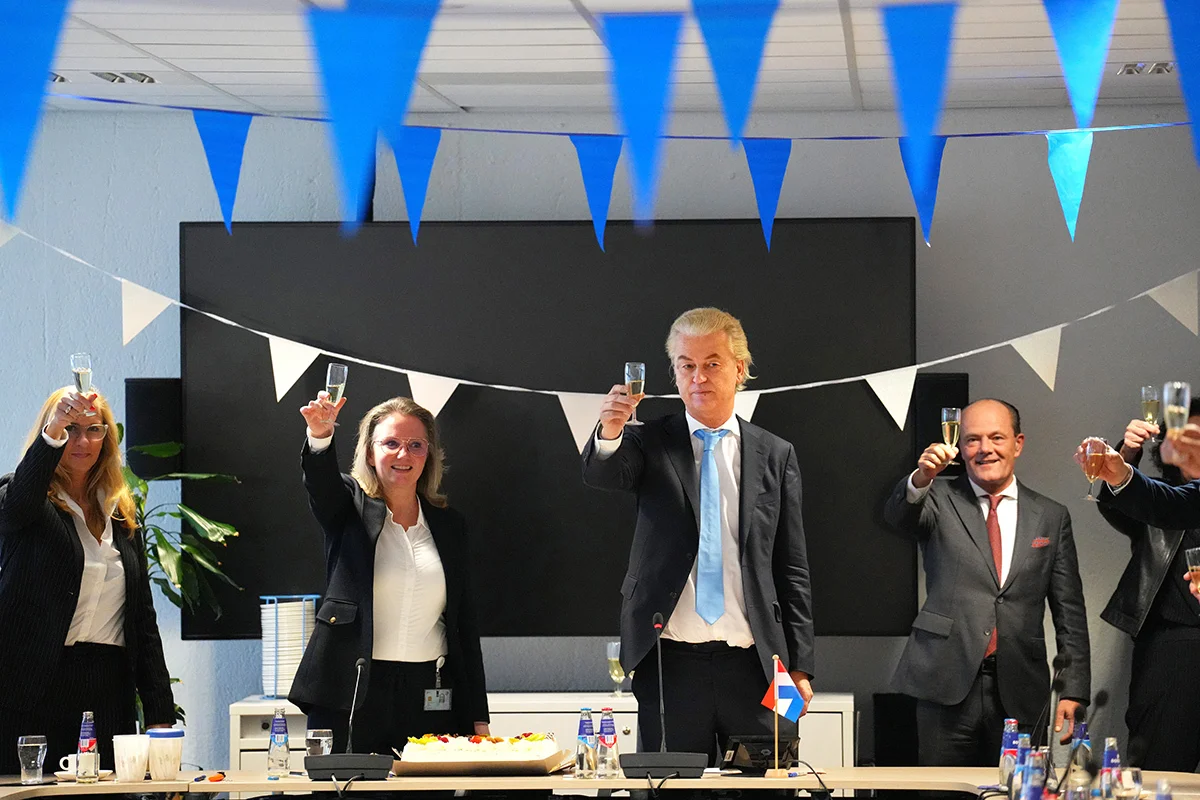
Friend, but not ally
The extremely interesting part of the biography of the winner of these elections Wilders is associated with Russia. In 2018, he visited Russia and was a guest in the State Duma. Photos with the signature "Stop Russophobia! [...] Partnership instead of enmity! ”, Made during the visit by deputy Leonid Slutsky, consisting four years after the disaster with the Boeing MH-17, is still used to criticize the politician. He himself does not comment on this visit.
In February 2022, PVV condemned Russia's invasion of Ukraine, and Wilders was somewhat distanced from the Kremlin. Despite this, his party opposes the supply of weapons to Kiev and categorically does not support the idea of accepting Ukraine to NATO.
Many in Europe, including Kyiv, can cause anxiety, however
The Netherlands is a country with a powerful history of parliamentarism and coalition, so such decisions will not be able to make such decisions to one vilders.
Now the politician needs the support of other parties to form a coalition and is therefore ready to compromise. But even in the future, only 23% of the vote received by his party will force him to focus on future partners, who in foreign policy occupy much more moderate and pro -European positions.
The supply of weapons to Ukraine from the Netherlands can really be reduced, like rhetoric in relation to Moscow can become less radical. However, even with the Prime Minister of Wilders, the Netherlands will not leave the EU, will not cancel most of the sanctions against Moscow and are unlikely to stand on a par with the Hungarian leader Viktor Orban and the new head of Slovakia Robert Fitzo, who are called the “last allies” of the Kremlin in Europe.