
Translated material
As a scooter, the Black Sea saved. But the ichthyologist was not even awarded
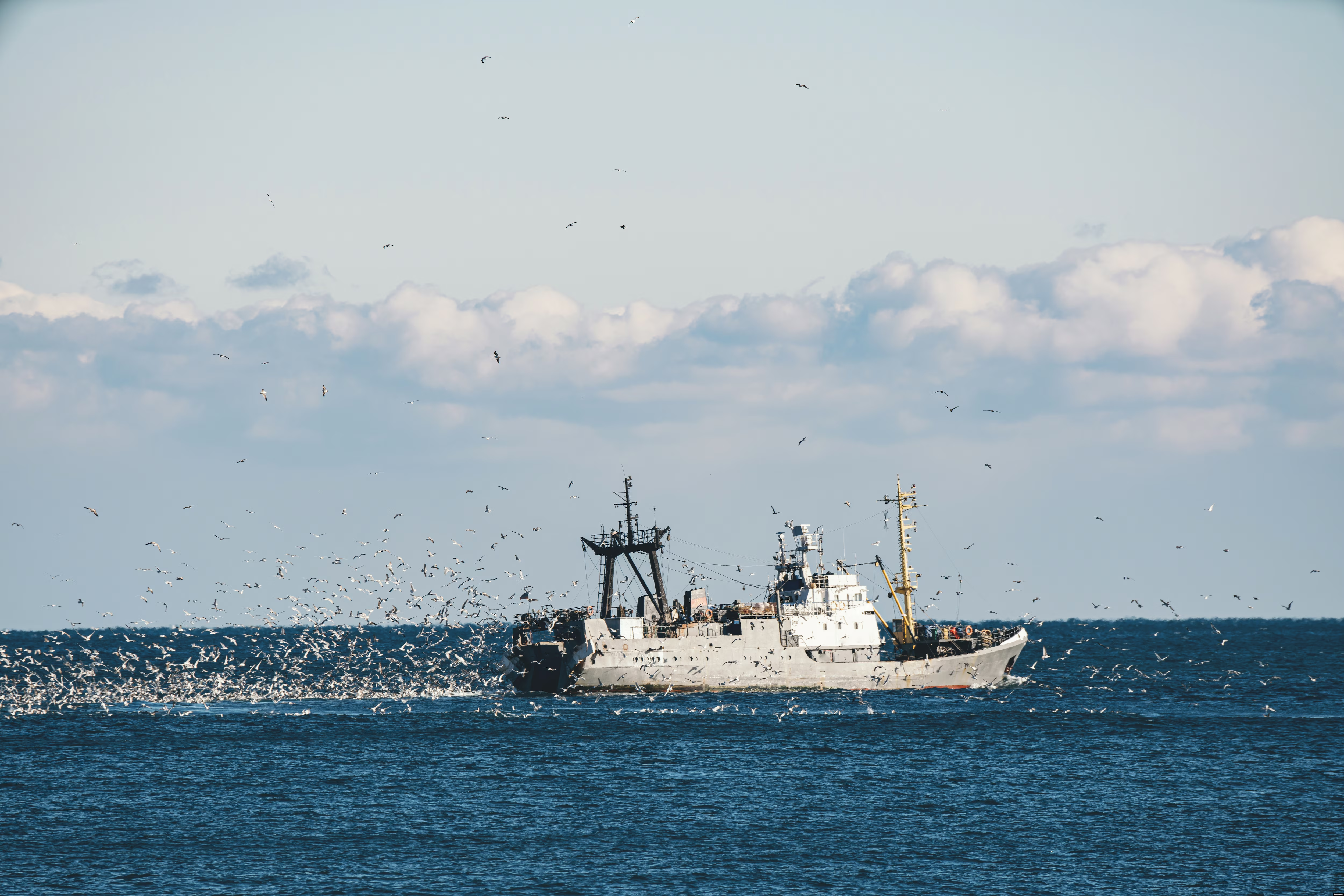
It seemed that the Black Sea dies with the Soviet Union. In the 90s of the XX century, the announcement of "no fish" could be posted along the coast. The Azov sturgeon, Hams and the bull almost disappeared. But the flowering of plankton began, which was accompanied by the release of hydrogen sulfide, killing all living things. The ecological Black Sea catastrophe was then talked at the UN level and international conferences, which proposed various plans to save the sea and its inhabitants. 30 years later, when it became clear that the disaster was avoided, there is no consent among experts regarding the causes of such a happy end. Most likely, several factors worked here, one of which was a unique experiment to resettle the Azov and Black Seas of the Far Eastern Pelengas*.
"Damned Menada"
In the Sea of Japan, he was hungry. Little nutritious silt, too clean water. Unless along the coast, especially during wars, garbage and wastewater accumulated, which over the years became more and more. Cities grew in Japan and in Korea, and in cities (albeit not in all) the standard of living grew - and the sewage system carried more and more nutrients into the sea. The coast changed, the layer of the tribute silt increased, and it became more and more. Still, after all, the worms inhabiting silt are his main food. Let it not be appetizing, but do pigs feed better? However, people are squeamish when they have a choice. "Maenad!" - Japanese fishermen cursed, shaking the catch from their networks. Garbage fish. Steam.
But this fish, which the foreigners considered the “red -legged kefal” and willingly filed to the table, had another name that one of the officers of the Russian fleet gave it in the middle of the 19th century. Observing the behavior of a fish jamb rushing behind the ship, he noted that the fish is being built in the naval manner of a “ledge”, when the leader floats ahead, and the rest of the flock is increasingly expanding, the rest of the flock. In the fleet, such a system is called "Peleng". "Pelengas"!
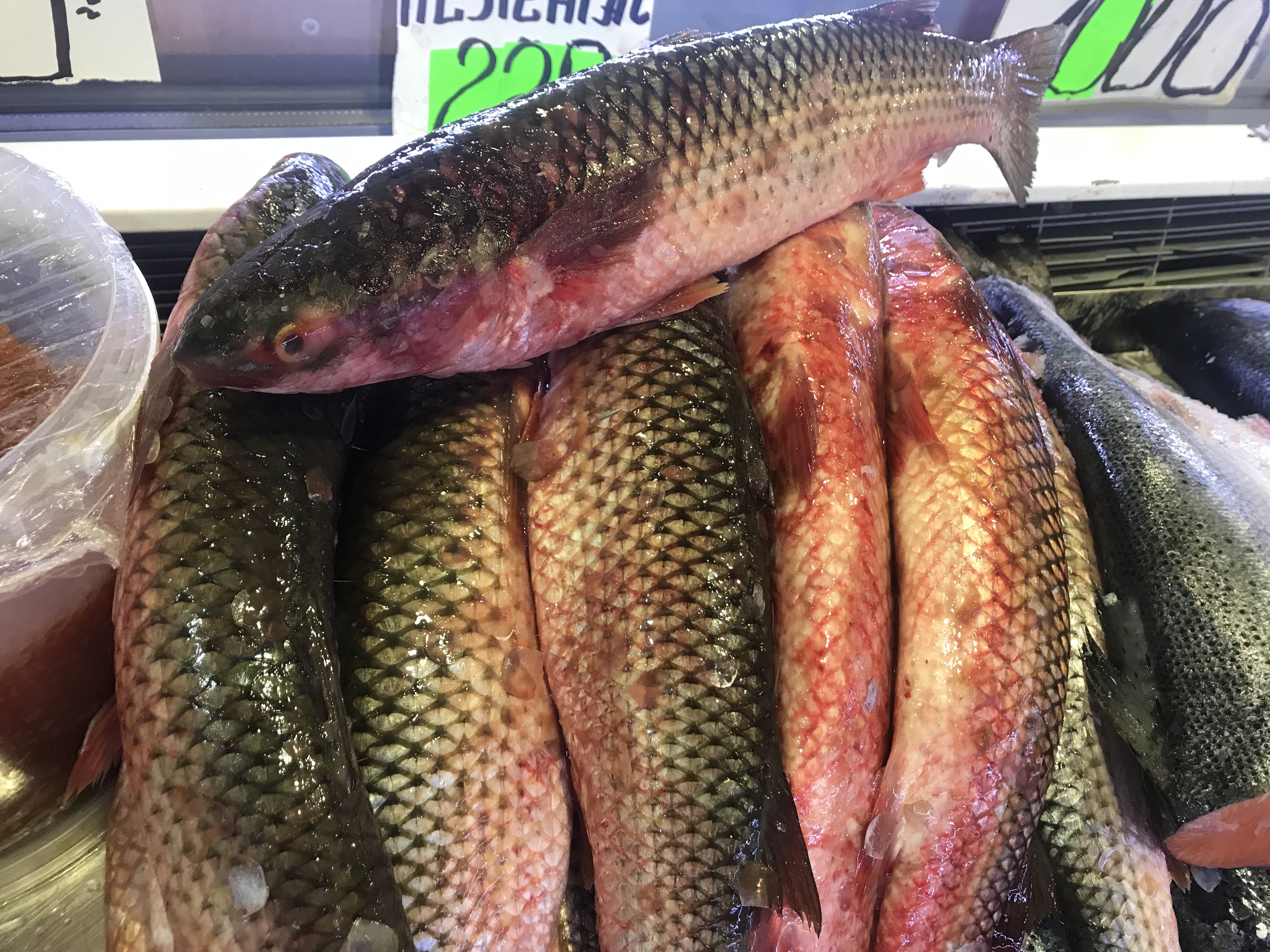
This name, like many other names given by water creatures with witty sailors, for many years was "hearing" only among Russian inhabitants of the Far East. Polengas (or “Pilengas”, as the fishermen call it), equally good in itself in sea water and in the delits of freshwater rivers, often came to fishing rods and on the network, he was prepared and ate in various types, but he was not suitable for fishing.
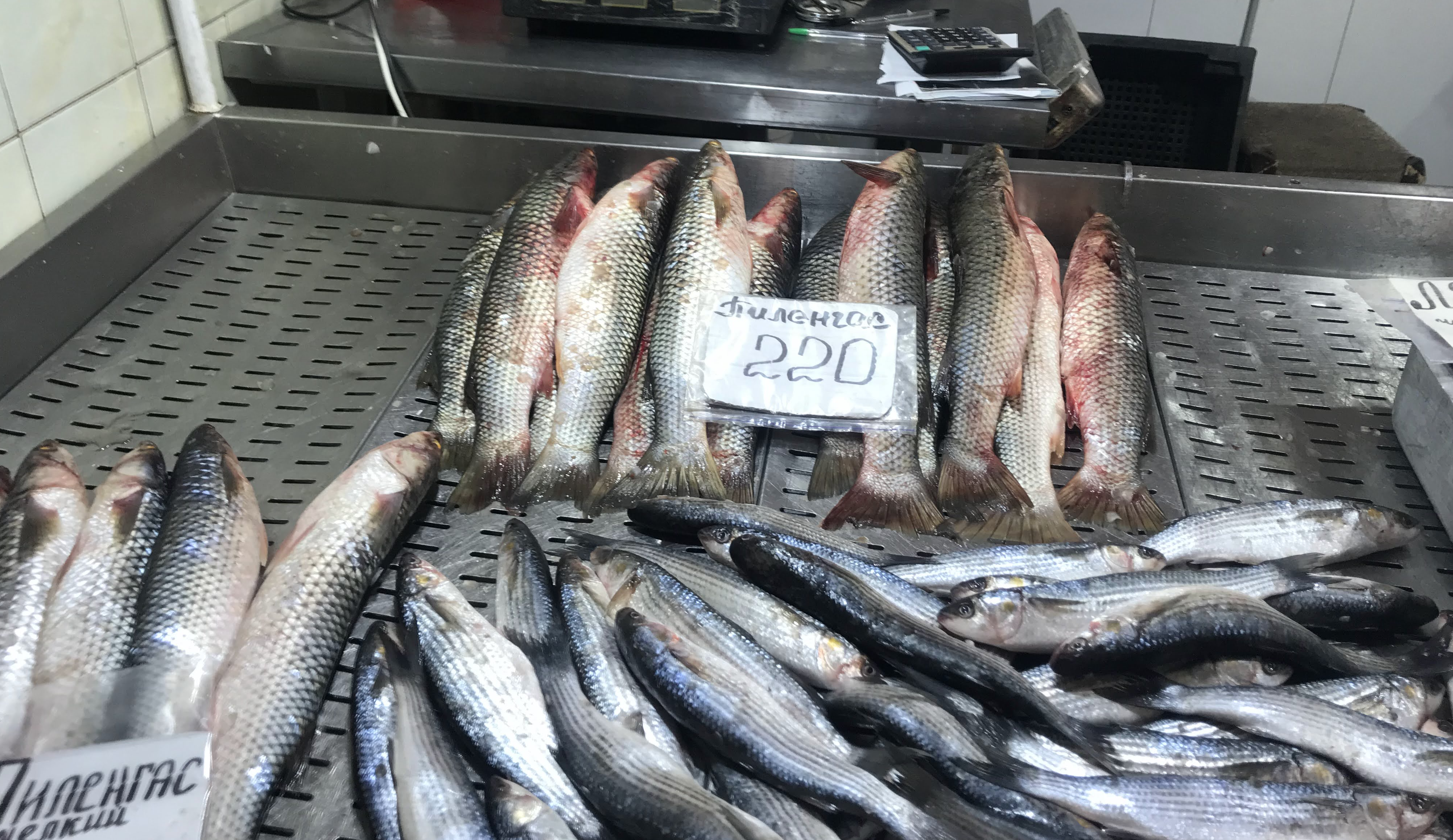
The fact is that it is better to cook Pelengas and eat immediately after capture, in extreme cases the next day - and then tender meat is rapidly spoiled. It is difficult to store it so that the delicacy remains a delicacy. The problem is the same that any fish that feeds on the inhabitants of the dwarf silt: in a day it is already "there is what it eats." Of course, you can freeze, but this is not the same - and the fishermen did not have refrigerators until the middle of the 20th century. And probably, the Pelengas would have remained with exotic local fish, familiar only by the Far Eastern inhabitants, if one day a happy ticket had not fallen. Literally - a plane ticket.
"To the south through the northeast"
This story began far from all the seas, in the Kemerovo region, where in 1936 the family of Lyubov Ivanovna Semenenko was sent from Smolensk. For what exactly, it is definitely not known. Maybe, and “for nothing”, as in that joke: “What is your time? 25? And for what? You’re lying! You give it 10 years.” But, one way or another, for the 36th year, the father of four-year-old Lyuba was even lucky: despite the status of the exiled, for him a job was found by a teacher, and then the director of the school in a small village. But with entertainment it was tight, and during the holidays he was completely given to one thing: fishing.
When the daughter grew a little, she began to ride Siberian rivers with her father. They spent the night right on the shore in a hut, studied habits and bites of different fish, tried to understand their behavior and habits. Soon, the girl became interested in books about water inhabitants and, having graduated from school, entered the biofac of Tomsk University, to the Department of Ichthyology and Hydobiology. However, in the difficult post -war years, the demand for such specialists was small, and after graduation, she had to get a regular biology teacher at a rural school near Magadan.
She married the chief accountant of the state farm, they had a son. Life was gradually getting better. But once there was a disaster: the husband, along with the cashier, went to the district center for money, and on the way back to their car was attacked by one of the gangs raging in the vicinity of Magadan in the 50s. Suddenly becoming a widow, with a four -year -old child in her arms, Lyubov Semenenko realized that she would not survive for a teacher’s salary in the village. Fortunately, the secretary of the Magadan regional committee knew her story and helped get an apartment in the city, and soon she was taken by a researcher at the Magadan branch of the Pacific Research Institute of Fisheries and Oceanography. Lyubina Mom took her son to her village near Kemerovo, and so unexpectedly, many years after the defense of the diploma, Semenenko suddenly had the opportunity to seriously engage in science.
She visited many expeditions: on Chukotka, Kamchatka, Sakhalin, in Vladivostok, on the Okhotsk, Bering Seas ... In 1972, she defended the dissertation for Chukchi fish Navaga. And in the mid-70s, having already become a candidate of biological sciences, a competition was held at the senior researcher at the Laboratory of Marine Fish of the Azov Institute of Fisheries and moved to Rostov-on-Don, where she was entrusted with the position of head of the laboratory. The position obligated to regularly examine the Sea of Azov - and soon Lyubov Semenenko already knew all its inhabitants.
And there were a lot of them: sturgeons, a thick-lock, a white Amur, the famous Azov Gobby ... That's just this bull, whom local fishermen considered the most popular fish (in Berdyansk there is even a monument to the bull-cake !) Periodically threw unpleasant surprises. Roughly speaking, he took it - and almost completely dyed out. He did not care about the five -year plan and to all the norms of capture, which "lowered" the authorities into the fishing state farms on top. The dead, as they say, do not have a shame.
The “overseas”, as it was called a tragic phenomenon for the fishing industry, began to repeat more and more often in the 70s-and Lyubov Semenenko was sent to Berdyansk to figure out what was happening with a miserable fish. It was possible to find out quite quickly: for some reason, many organics began to accumulate in many bays of the Sea of Azov. She decomposed, highlighting the hydrogen sulfide, and made a large -scale grass of all living things. How to deal with this was not clear. Now, if there was any organism that eats this organic matter ...
And then Semenenko remembered that there was such an organism. Not in the south, but in the Far East. Strong, beautiful, delicious organism. Polengas.
"Mom Pelengas"
Here we must clarify that the idea of acclimatizing in the Black and Azov Sea of Pelengas appeared much earlier. For almost ten years, this topic has been engaged in the Odessa Research Institute of Fisheries, but the case was stomped there at a dead point. Polengas did not disdain a new place of residence, a warm sea and Black Sea beauties, eagerly retired to decent sizes, but categorically did not want to multiply. As they say, "lived for himself." No efforts of scientists could make him abandon this hedonistic principle - and throw at least a couple of eggs.
Therefore, in Berdyansk I had to start all from scratch. In 1974, from the Far East in special containers on the plane, two thousand were delivered to the lights of the Polengas fraud - very tiny, smaller, smaller. They were placed in special cages on a dairy estuary near the city. The estuary separated a small isthmus from the sea, in which in the spring the promotion opened, allowing the fish to go to spawning - and it was this place, according to Semenenko, that was supposed to become the new homeland of Pelengas. Water here contained more salt than at sea, and thanks to this fish, caviar could hold on the surface - where there is more heat and oxygen.
But also to this paradise of the fry of Polengas, it was still necessary to accustom. Day after day, month after month they had to feed them literally “from a spoon” with a special nutrient made from Azov silt and humus. This not very appetizing substance Semenenko and its employees made themselves, right next to the estuary, at the biofidation on the Kirillovskaya spit, using rotten carcasses of gobies as a basis (for which local fishermen almost betrayed scientists, letting out the rumor that they have grown a terrible predator that would have a taste and eat the entire Black Sea Gobby). But, of course, Pelengas was not the same. The fry remained extremely peaceful (although funny and playful) fish, which humbly eat all sorts of muck from the bottom, and do not claim more. They would not have been able to - nature did not give them teeth.
So Pelengas smoothly accustomed to new food. And in order to force him to reproduce, I had to use special hormonal injections that enhanced reproductive functions. Gradually, painstaking work gave the result - and three years later the first eggs appeared in the milk estuary. In the second generation, the fry behaved much more directly, and in the fourth year it was decided to let them into the sea.
During this time, Semenenko heard quite a few unflattering words from colleagues and authorities. She was called the "adventurer", "scammaster", even threatened to go on trial for the "wrong" acclimatization of Pelengas. Most of all it was annoyed that the whole institute for ten years with this Pelengas did not work out, but it turned out. At first she fought back, snapped on scientific councils, but then she found a more faithful tactic. Silence - and, if possible, quietly continue your job. To a small biostation on the Kirillovskaya spit, few of the superiors reached, and soon they almost completely forgot about it.
They remembered only three years later, when the fishermen began to catch the hitherto unknown, similar to sea trout, along the entire water area of the Sea of Azov. And a year later, Polengas came to the milk estuary for spawning - and poured into the promo in a huge stream. It turned out!
Soon, Pelengas settled Azov in serious quantities and went into black, and then, as it turned out, in the Mediterranean Sea. He quickly turned into one of the important fishing fish. The first of his taste was the Black Sea dolphins appreciated: according to the observations of ichthyologists, they followed the jamb of Pelengas is almost inseparable. But there was no "Polengas Plan" in fishing farms, and, therefore, the fish should not exist for the fishing state farms. And who knows about her, about this fish? Who needs it?
However, in 1988, a request from France came to the Ministry of Fisheries - with a request to consider the possibility of supplying Pelengas from the USSR. The French wrote that the demand for this fish is growing, and the quantities that Türkiye supplies is no longer enough. Yes, it turns out that the Turkish fishermen for the second year in a row caught hundreds of tons of our Russian Pelengas and were not going to stop! This news excited officials, and at the end of Soviet power, the Black Sea and Azov Polengas was finally declared fishing fish. As they say, it’s better late than never.
Having scratched the back of the head a little more, and finding out that Pelengas not only promises magnificent catches for the almost ruined Azov and Black Sea fish farms, but also thoroughly “cleaned” the bays from the bottom organics, where the bulls now celebrated the life, the officials still decided to note this matter. In 1991, the State Prize was discharged in 1991. But not everyone could get it. Those employees who had left for Russia by this moment were presented to the award. And Lyubov Semenenko remained on the independence of Ukraine that had just gained independence - and turned out to be "not counted."
The doctoral dissertation about the successful acclimatization of Pelengas, which was ready for a long time, she could not protect either - now it was necessary to transfer the text to Ukrainian, certify and vizing, but there was no money for this. She, who successfully changed the environmental situation in Azov, revived and transformed the fauna of several seas, remained a candidate of sciences, and even then she soon became unemployed.
The laboratory on the Kirillovskaya spit was closed as "fulfilling his mission," and Semenenko was retired. She survived her century in Berdyansk, barely making ends meet. In the early 2000s she took up petty commerce, opened a small kiosk in the shopping rows. Then a serious illness pressed her to bed. And, although until the last years of her life she received proposals to continue scientific work abroad (especially called in Israel), there was no strength left for this. In essence, the only recognition of the merits was the nickname "Mom of the Pelengas", who jokingly awarded her institute employees, where she worked for almost thirty years.
"Dad Polengas"
It is as difficult for a person in a new environment as a small fish. In the 90s of the past century, hundreds of millions of our compatriots were subjected to violent "acclimatization", and success in comparison with Pelengas looks quite doubtful. Of course, a person is not a fish, who will help him? And if there is, then why? ..
One of the employees of the biostation on the Kirillovskaya spit, a native of the Volga Germans, Henry Grout in the late 70s took an active part in the Semenenko experiment. He had just graduated from the institute, and judging by his memoirs, he was crowded with young ambitions to such an extent that he seemed to be about to throw caviar instead of stubborn fish.
From the articles that he published 30 years later, it follows that Henry Grout is the same hero, thanks to which the Far Eastern fish settled and multiplied in Azov. This is even especially said in Wikipedia, where it was reported that it was the Ground that the Malkov Polengas on the plane personally transported him (although at that time, in 1974, he had to study in the second year of the institute), raised them and nursed them, and in 1978, without the knowledge of the authorities at his own peril and the risk, he released a hundred fish from Liman to Azov. They spread throughout the seas! And therefore, Pelengas does not have any mother, but there is a magnificent and talented dad who, while still a student, has seen a readiness for freedom and independence in the eyes of young drawers.
True, the penetrating ichthyologist could not achieve great heights in science. The policy that he became interested in with greater passion than fish farming prevented. In the mid-80s, when perestroika began, Grown actively engaged in the revival of the statehood of the Volga Germans and soon headed the All-Union Society, demanding the creation of the National Republic of the Germans of the Volga region. By the beginning of the 90s, he became a noticeable political figure, several times headed the delegations to the Kremlin and, apparently, was fulfilled that he would be able to resettle all the Germans in the collapsing USSR, like Polengas, to a new beautiful country. But for most this country, in the end, Germany turned out to be, and he also wrapped himself at the turn of the century also discovered himself somewhere near Berlin.
However, here, in the center of Europe, his energy continued to beat with a key, and soon he already headed the organization created in haste with the sonorous name "International Convention of the Russian Germans", which became the Internet portal with the uncomplicated name Genosse.ru.
From this excellent publication, access to which is now surprisingly closed to both Russia and Europe (a rare consent of supervisory departments!), It followed that Grout did not like America, the multicultural policy of Frau Merkel, but the right -wing nationalist organizations cause sympathy. And in the Third Reich, everything was not as terrible as in the modern Germany overwhelmed by migrants ...
It seems that the idea for acclimatization to feed fry with a soft brown substance is tightly rooted in the minds of the former ichthyologist. However, the popularity of Grouet among compatriots was rapidly coming to naught. Neither the editors of Wikipedia, nor the angry denunciation of the Arab migrants helped ... In 2016, Henry Grout survived his last "star hour", taking an active part in the sensational stories about the allegedly abduction and rape of Arab migrants in Berlin in the girls of the Russian Germans.
He gave comments for Russian television and collected rallies that were shot by Channel One correspondents. When, after a short investigation, the German police found out that this story was falsified, Ground finally lost political authority. They began to talk about him as the "agent of Moscow" and even blame him for cooperation with the FSB. Today, his name is almost forgotten both in the West and Russia, and he himself, in the sad irony of fate - just like Lyubov Semenenko, survives his days almost immobilized, chained to a wheelchair after a stroke ...
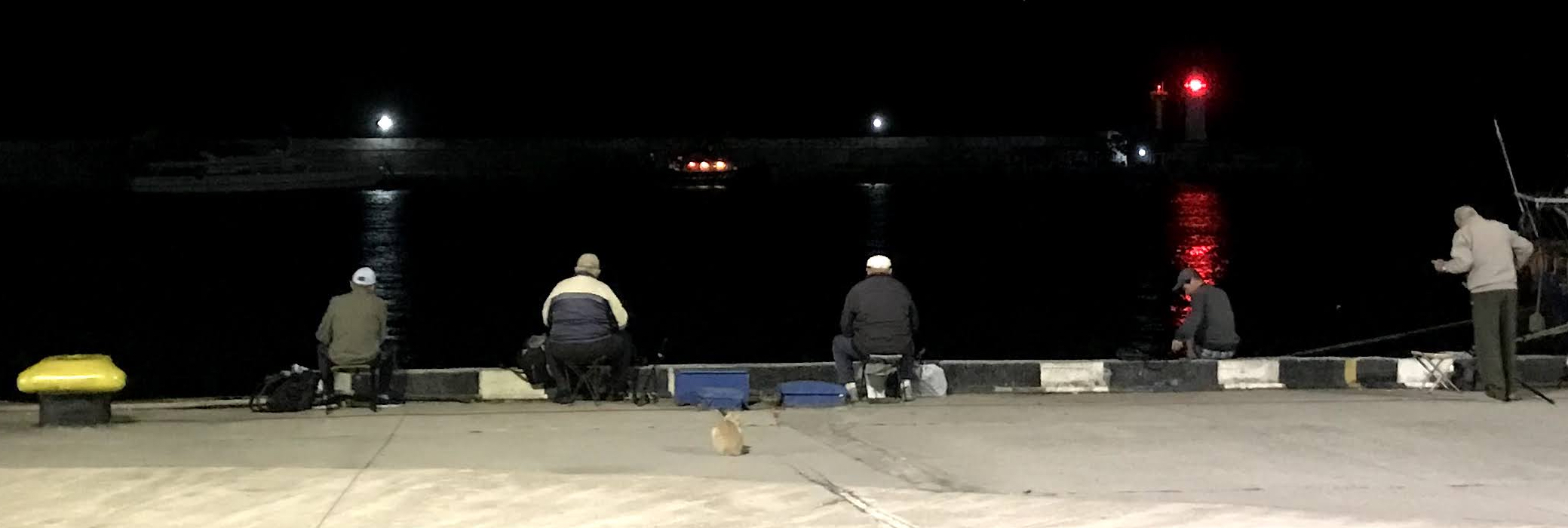
But all this, of course, does not care about Polengas himself. He continues the victorious procession through the warm seas, where no one considers him a migrant. It does not disdain dirty work and cleanses huge water waters from the bottom silt. He runs his fish fat, growing almost twice compared to his Far Eastern ancestors (up to one and a half meters, up to thirty kilograms). И демонстрирует необычайно веселый и беззаботный нрав: рыбаки говорят, что это одна из самых игривых и подвижных рыб в Азовском, Черном и Средиземным морях.
Иногда даже не верится, что люди могут изменить мир к лучшему. С точки зрения человека история – это бесконечная череда катастроф, ошибок и преступлений.
Но с точки зрения пеленгаса мы – молодцы.
* Text from the archive of Siberia. Realities