
Translated material
Make Russia pay
The EU promises to decide on the transfer of Russian assets to Ukraine in early 2024. Here are three scenarios from which Brussels chooses
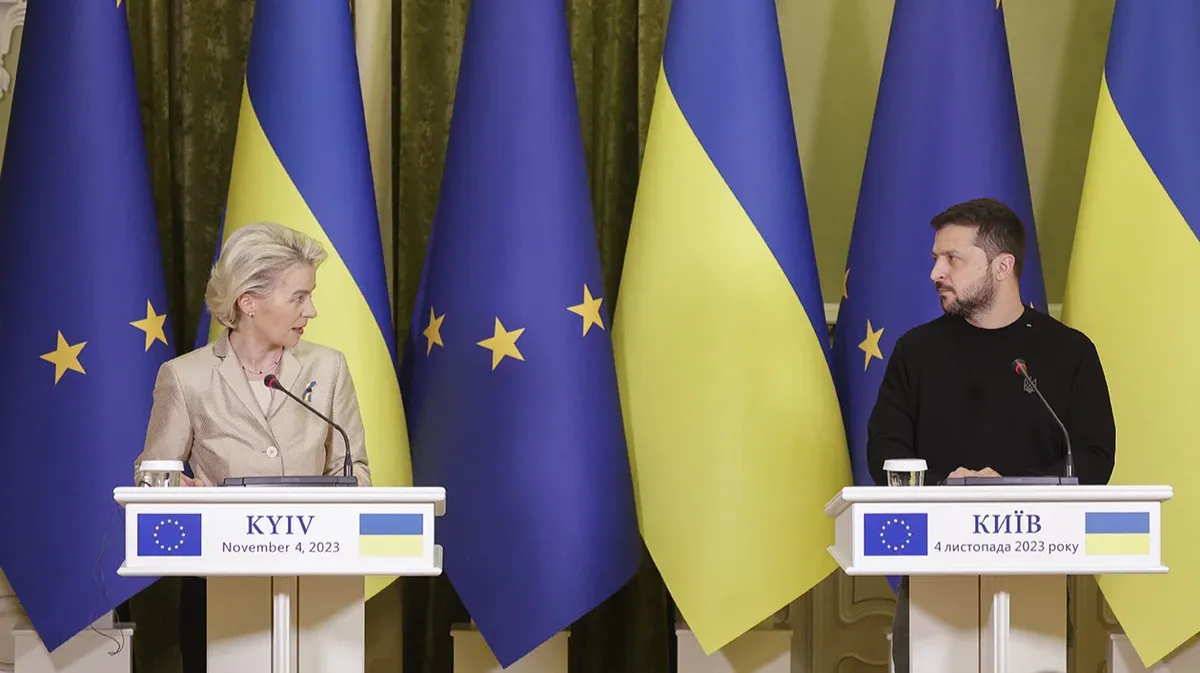
President of Ukraine Volodymyr Zelensky (right) and the chairman of the European Commission Ursula von der Layen (left) are at a joint press conference after a meeting in Kyiv, Ukraine, November 04, 2023 Photo: Sergey Odinoi / EPA
The European Commission once again established a deadline by decision regarding frozen Russian assets. This time, European officials hope to prepare a proposal for the New Year. The main goal over the past year has not changed - to figure out how to use Russian money to help Ukraine, but at the same time not to impact the entire European economy.
If the decision is made, then the first amounts transferred by Brussels will be very modest. But the solution is more important than its political dimension rather than real financial, and probably will launch the seizure of Russian frozen assets in favor of Ukraine at the level of other Western countries. What approaches to solving the problem exist and how effective they can be, the observer of the international and European policy of Novaya Gazeta Europe, Denis Liann, sorted out.
In October, the Chairman of the European Commission Ursula von der Lyain said that by the end of the year a detailed plan will be presented on how to use Russian frozen assets. The discussion about how to do this has been conducted since the spring of 2022, that is, from the very beginning of the war. Moreover, this is not the first deadline that is installed by von der Layen.
The preparation of the decision was claimed back in November last year, and then in May the EUOBSERVER sources in the European Commission reported that the plan could be presented by the beginning of the summer of 2022. But nothing happened. In June 2023, von der Layen promised to submit a draft decision for the beginning of the summer holidays, that is, by July-August 2023. The result was zero again.
At the moment, there are several approaches to how exactly the use of Russian assets to support Ukraine, but each of them has its own legal difficulties, and in addition, possible negative consequences for the EU itself. Because of this, most EU countries still have doubts about whether such serious decisions should be made in such a short time.
So, at a closed meeting on November 8, representatives of France, Germany and Belgium expressed their fears on this subject. In addition, with great alertness to the initiative , in the Main Financial Institute of the EU, the European Central Bank. They believe that this can negatively affect the financial stability of the EU and the stability of the euro as one of the main world currencies.
As a result, if now the EU decides to use Russian assets to support Ukraine, then, most likely, we will talk about a very conservative scenario and a very limited amount of funds. But even such a solution can become an important symbolic step for both Ukraine and European national governments.
Freezing at the capitalists
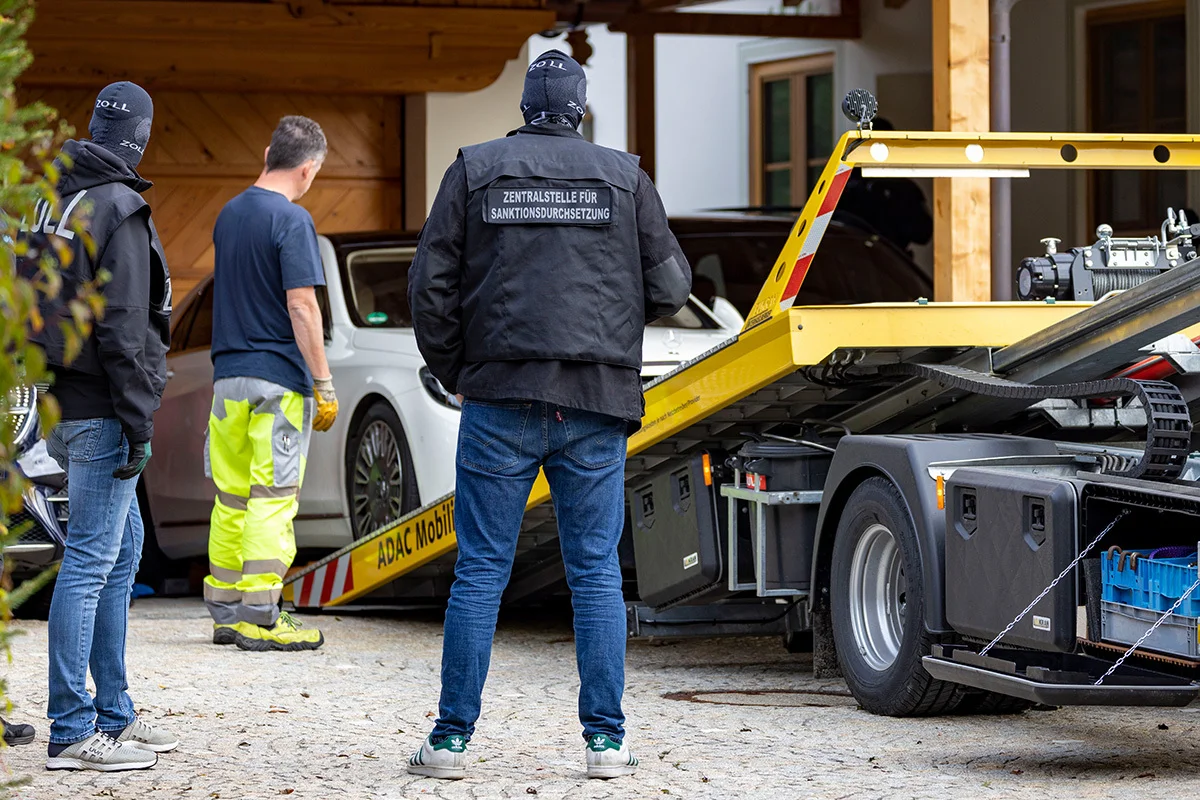
Russian frozen assets include various kinds of movable and immovable property, which was blocked after a military invasion of Ukraine and belongs to either the Russian state or to individuals who fell under the sanctions of Western countries or the EU.
The very fact of “freezing” or immobilization means that Russia and Russian oligarchs have lost the opportunity to dispose of assets. But at the same time, the assets themselves did not cease to be the property of Russia and Russian citizens, therefore, theoretically, if desired, Western countries, access to this money can be restored.
By the summer of 2022, it became known about the frozen assets of Russian individuals who fell under sanctions for a total of 27.5 billion euros. By 2023, this number increased to 53 billion euros.
A noticeable part of this money - 21.5 billion euros - is located in the EU. But to determine in which specific countries it is possible only according to the statements of officials, since the consolidated lists are not published anywhere.
So, the Novo-European-Europe managed to establish the whereabouts of about 16 billion euros. The first places in the list are occupied by Belgium (3.5 billion euros), Luxembourg (2.5 billion euros), Germany (2.2 billion euros), Italy (2.3 billion euros), Austria (1.8 billion euros). The least frozen assets were in Malta (222 thousand euros) and in Greece (212 thousand euros).
A full list of EU countries that froze assets of Russian private individuals:
- Belgium (3.5 billion euros).
Subsequently, the Belgian side announced a blocking of 58 billion euros, but this figure probably includes assets frozen after 2014 and part of state assets;
Luxembourg (2.5 billion euros);
Germany (2.2 billion euros);
Italy (2.3 billion euros);
Austria (1.8 billion euros);
Ireland (1.8 billion euros);
France (1.3 billion euros);
Spain (1 billion euros);
Hungary (870 million euros);
Netherlands (644.5 million euros);
Finland (200 million euros);
Lithuania (103 million euros, including Belarusian assets);
Cyprus (86 million euros);
Latvia (73 million euros, including Belarusian assets);
Estonia (38 million euros);
Poland (34 million euros);
Sweden (28.8 million euros);
Portugal (18 million euros);
Bulgaria (11 million euros);
Czech Republic (10.8 million euros);
Slovakia (4.9 million euros);
Malta (222 thousand euros);
Greece (212 thousand euros).
Of the countries outside the EU, the most funds were frozen in Switzerland (7.27 billion euros), Canada (84.4 million euros) and Australia (41.2 million euros). Japan and the USA, which are also included in the asset blocking group, did not report the volume of blocked funds in their jurisdictions.
Seizure from private individuals
The latter did not interfere, however,
The United States is the first country to transfer at least part of the frozen assets of Russian oligarchs to Ukraine. The decision was made in May 2023 in relation to assets in the amount of $ 5 million,
belonging to the sanctions of oligarch Konstantin Malofeev. US sanctions were imposed on Malofeev back in 2014 for financing groups related to Russia in Crimea in 2013-2014. In 2022, the US Department of Justice accused the oligarch of violation of the sanction regime. This was a formal basis for the court to confiscate its frozen assets.
The framework bill regarding the assets of Russian oligarchs is now under consideration in the Estonian parliament. It suggests that possible decisions on the transfer of assets will be made by Estonian courts. The grounds should be specific applications from Ukraine about a particular damage caused by the Russian army.
In Estonia, assets totaling 38 million euros are frozen - they belong to several Russian oligarchs, in particular, Andrei Melnichenko and Vyacheslav Cantor.
However, such amounts, albeit measured in millions of euros, are a drop in the sea even compared to the financial assistance that Western countries provide to Ukraine. By the end of September 2023, the EU had already promoted Ukraine to 82 billion euros, of which only 25 billion is a military assistance.
Big Kush
Much more impressive numbers are frozen assets that belong to Russia as a state . So, the countries of the Great Seven and the EU blocked the assets of the Russian Central Bank worth more than 300 billion euros. The about where they are located also have to be judged only by indirect signs. According to the data published by the Central Bank in 2022, in countries that subsequently joined the sanctions against Russia, 289 billion euros of Russian assets were posted: 88 billion euros in Germany, 56 billion euros, 52 billion euros in Japan, 36 billion euros - 28 billion euros, 28 billion euros, 16 billion euros in Canada and Canada and Canada and Canada and Canada and Canada and Canada and Canada and Canada and Canada and Canada and Canad 12.8 billion euros in Austria.
At the time of immobilization, most of these assets - about 180 billion euros - ended up in the European depository of EuroClear . This is a private financial clearing organization that is engaged in the calculations and maintenance of operations of European central banks and exchanges. Most of the Russian reserves in Europe were stored in highly liquid securities - in government bonds and securities of private companies. EuroClear in this equation is only an intermediary who holds these assets at home, allowing them to manage on exchanges to make profit to various agents, including the Russian Central Bank or organizations that he hired.
Prior to the start of the war, EuroClear had an agreement with Russia, according to which, at the time of the account of the estimated period for Russian securities, the clearing organization must transfer the reserves and profit from them back to the Russian Central Bank. But on the fact of this translation, it did not take place, since Russia treated this money as a reserve, that is, continued to accumulate and invest them for profit.
In 2022, the EU imposed sanctions on the Russian Central Bank. In accordance with them, EuroClear cannot fulfill part of the agreement and return the money to it to Russia, since organizations registered in the EU are prohibited from conducting any transactions with suction Russian banks.
As a result, a huge share of Russian state assets “settled” on the accounts of the intermediary company EuroClear.
According to the same scheme, some of the reserves of the Russian Central Bank were frozen in another clearing company - the Luxembourg Clearstream.
But EuroClear, like any financial institution, not only continues to keep the Central Bank money in its account, but also puts it into work, that is, continues to make profit from them. So the amount of assets affiliated with Russia is increasing all the time.
The assets of Russian citizens totaling up to 62 billion euros were also stuck in EuroClear. After the start of the Russian invasion and exchange of sanctions restrictions, European deposits stopped working with the Russian national settlement depository, which is part of the Moscow Exchange group. This led to the fact that payments on foreign financial assets of Russians began to accumulate in European depositories. Many tried to sue Euroclear in Russian courts , but so far to no avail.
More or less legal
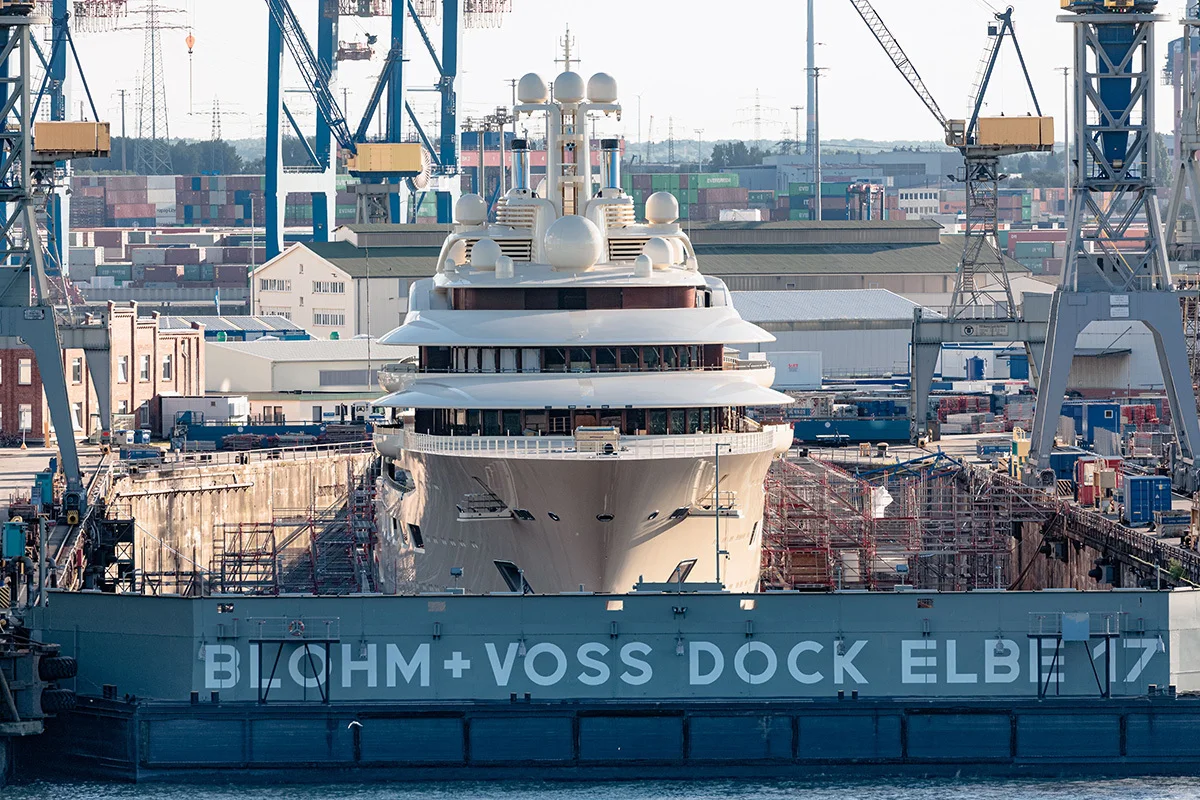
The assets of Russian oligarchs are now under the jurisdiction of the governments of specific countries, and not all of them consider it possible to somehow dispose of the property, even if individuals who have fallen under the sanctions. Although the United States and Estonia are already working to convey this type of frozen assets to Ukraine, this is not a priority. These assets are not too significant and are often in a not very liquid form like yachts.
Now the whole discussion is being held around how to transfer to Ukraine Russian state assets. And here there are three options on the table:
transfer all frozen Russian state assets to Ukraine in the form in which they exist today ;;
transfer only profit from frozen assets;
Only the tax that Russia would have to pay in Europe from the profit from frozen assets.
Both the legal and economic problems that have to be faced with the degree of radicality of the solution.
The complete transfer of frozen Russian state assets to Ukraine carries the most noticeable difficulties. Firstly, European legislation, which involves the possibility of freezing assets, does not automatically make their confiscation. Secondly, as the New European Europe already wrote , state assets have immunity-this is the property of the sovereign state.
This immunity has several reasons. First of all, this is a legal custom that has developed on this issue in international ordinary law. In addition, some acts of international law are directly prohibited to encroach on the property of the sovereign state, for example, the European Convention on the 1972 state immunity or the UN Convention on the jurisdictional immunity of states and their property , although the latter has not yet entered into force. Finally, state immunity is often ensured by national legislation .
On the one hand, Russia could consider the fact of freezing assets as a violation of its own sovereignty. Moscow blocked access to huge resources in state property, which means that it violated its right to freely dispose of national wealth, which is largely formed by the sale of Russian natural resources. On the other hand, however, this did not prevent the G7 and the EU to freeze the assets themselves.
Moreover, it is not clear how international law on state sovereignty generally applies to state assets abroad, the doctor of legal sciences, specialist in international law from the Australian National University, Anton Moiseenko , notes in the commentary of the New-Europe. The issues of sovereign immunities are regulated by the norms of ordinary international law. These norms arose as a result of settlement of court disputes. That is why it is not at all obvious whether these norms can extend to actions that states are taken by an absentee manner, such as freezing or confiscation of assets.
Moreover, Moiseenko notes, confiscation of assets can be quite legal in the context of the “Doctrine of Reter” - it, in particular, is regulated by articles on the responsibility of states for international unlawful acts . This doctrine gives the states the opportunity to take such response measures that, in another case, would contradict international law - as a commensurate response to the illegal actions of another state.
“Given the nature and scale of the ongoing violations by Russia of international law, such as conducting an aggressive war, there is no doubt that the freezing of its state property is a proportional answer, like most other conceivable non -person measures,” Moses writes in the article. Therefore, despite the fact that the decision on confiscation will be primarily political, it can hardly be considered illegal.
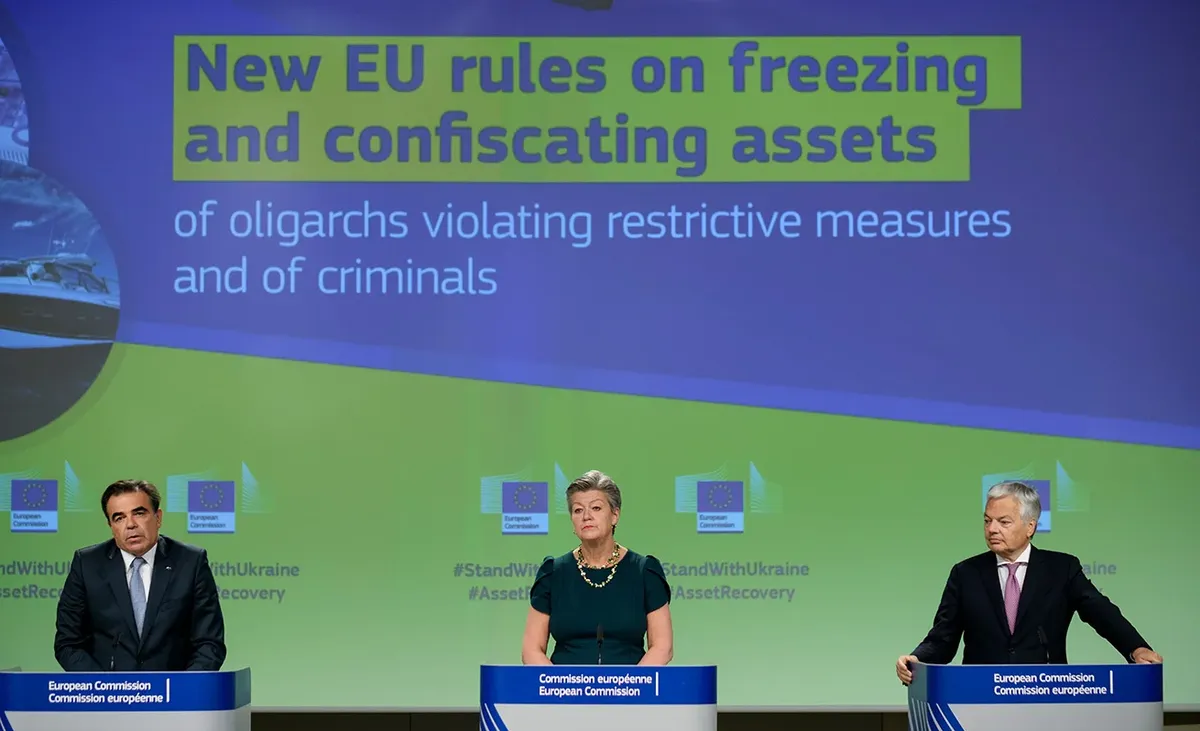
Using a profit from Russian frozen assets is another way that is now being considered. For example, only over the past year, EuroClear has already removed 1.28 billion euros from them. Politically, this is a much more convenient approach - it allows you to reduce the amount of confiscated money, which means that it will be a less hostile step in relation to Russia.
From a legal point of view, however, Moses notes, this does not facilitate and complicates the task. The Brussels authorities could use the argument that the profit does not belong to Russia, but belongs to Euroclear. Otherwise, the legal status of this money is no different from the assets themselves.
Nevertheless, in relation to this option, Western politicians show much more enthusiasm. At the EU summit in Brussels on October 27, the heads of member states called on the European Commission to prepare a draft decision on these profits. Кроме того, подход поддержали в Большой семерке, а также в США устами министра финансов Джанет Йеллен.
Налогообложение —третий способ подойти к проблеме. Так, бельгийская сторона уже заявила , что собирается передать Украине налог, который бельгийское государство собирает с прибыли, извлекаемой Euroclear из российских активов.
Ставка корпоративного налога, применяемого в этом случае, составляет 25%, и, по данным, которые предоставил Брюссель, за прошлый год таким образом уже удалось извлечь 600 млн долларов. По плану бельгийского правительства в следующем году размер фонда, куда Брюссель отчисляет эти деньги, достигнет 1,7 млрд евро. Премьер-министр Бельгии Александр де Кро сообщил , что этот фонд будет использоваться для закупки вооружения и гуманитарной помощи для Украины.
Налоговый подход рассматривают и на уровне ЕС и Большой семерки, только там предлагают ввести на прибыль от замороженных российских активов специальный налог. Можно было бы предположить, считает Моисеенко, что западные политики воспользуются тем, что международное право позволяет облагать налогом суверенные активы в качестве одного из исключений из общих правил суверенных иммунитетов. В таком случае, однако, возникает вопрос — где проходит грань между «конфискацией» и «таксацией»? На уровне 25% или 99%?
В итоге сформировалась обратная зависимость: чем более достижимым выглядит тот или иной подход передачи российских активов Украине, тем меньше суммы, о которых идет речь.
Однако, помимо юридических трудностей, ЕС вынужден при принятии решения оценивать и потенциальный ущерб международной экономической и финансовой системе.
Неизмеримый экономический ущерб
В экономическом отношении главная проблема, которая сейчас активно обсуждается в ЕС, заключается в том, что после решения о передаче российских государственных активов незападные страны могут воспринять это как сигнал и начать выводить свои активы из западных стран. Например, КНР вложила около 1 млрд долларов в гособлигации США. Бразилия тоже держит большую часть своих внешних резервов в долларах. В случае вывода этих резервов западные экономики столкнутся с серьезными долгосрочными рисками, ведь из этих активов финансируется заметная часть их внешнего долга.
Еще одна проблема, которая может возникнуть в таком случае, — возможность ответных мер. Если условное табу на массовую конфискацию активов будет снято, вряд ли что-либо сможет остановить незападные страны от аналогичных мер в случае большой эскалации с США или ЕС. А это значит, что потенциально такое изменение «правил игры» может привести к разбалансировке всей мировой экономической системы.
Основываясь в том числе на этих соображениях, летом 2023 года Европейский центробанк (ЕЦБ) выступил с предостережением: попытка каким-либо способом передать российские резервы Украине пошатнет уверенность в евро как в мировой валюте и повредит финансовой стабильности еврозоны. «Последствия могут быть существенными: это может привести к диверсификации резервов за счет активов, деноминированных в евро, увеличить стоимость финансирования для европейских суверенных государств и привести к диверсификации торговли», — говорилось во внутреннем документе, с которым ознакомились журналисты Financial Times. Кроме этого, может быть подорвано доверие и к европейским гособлигациям как способу размещения внешних валютных резервов. Это тоже большой вызов, поскольку гособлигации — важный источник финансирования национальных бюджетов.
С тем, что такого рода решения будут иметь последствия для европейской экономики и финансов, соглашается в комментарии для «Новой-Европа» и старший научный сотрудник аналитического центра Bruegel Николас Верон . Тем не менее говорить об ожидаемом эффекте, каким именно будет эффект, пока преждевременно, считает эксперт. Слишком многое зависит от того, как именно будет выглядеть финальное решение.
В текущих условиях, замечает Верон, мы вряд ли можем утверждать о том, что оно скажется на «стабильности» евро. Пока речь идет только о «привлекательности» евро как глобальной валюты.
Но даже такие риски, по мнению Верона, можно до определенной степени купировать — путем расширения коалиции, которая будет участвовать в этом решении. В этой связи критически важна поддержка других западных союзников. Тем более что она уже есть и со стороны стран Большой семерки, и со стороны США. Страны G7 поддерживают использование российских активов для помощи Украины, а со стороны США в поддержку этого решения выступает министр финансов.
Символический жест
Судя по тому, какие колебания испытывает Еврокомиссия в решении о передаче российских замороженных активов Украине и как затягивает его принятие, на данный момент наиболее вероятным выглядит самый консервативный сценарий. В этом случае речь будет идти о передаче лишь 1–2 млрд евро, что на фоне уже поставленной помощи от ЕС выглядит скорее как необязательное дополнение, но точно не как основной источник поддержки.
Однако при любом сценарии передача российских активов будет иметь большое символическое значение. Это решение подчеркнет, что Запад, по крайней мере в лице ЕС, решился на одну из крайних мер по отношению к Кремлю — «разморозил» уже почти на два года подвисший вопрос судьбы российских активов. С приближением второй годовщины начала российского вторжения этот шаг подчеркнет европейскую солидарность с Украиной и, возможно, подтолкнет национальные правительства со своей стороны запустить или ускорить процесс изъятия замороженных активов российских олигархов.