
Translated material
"Heritage" - the end of the trilogy of Vladimir Sorokin about Dr. Garina
One of the most cruel books of the writer, who still offers to believe in the best
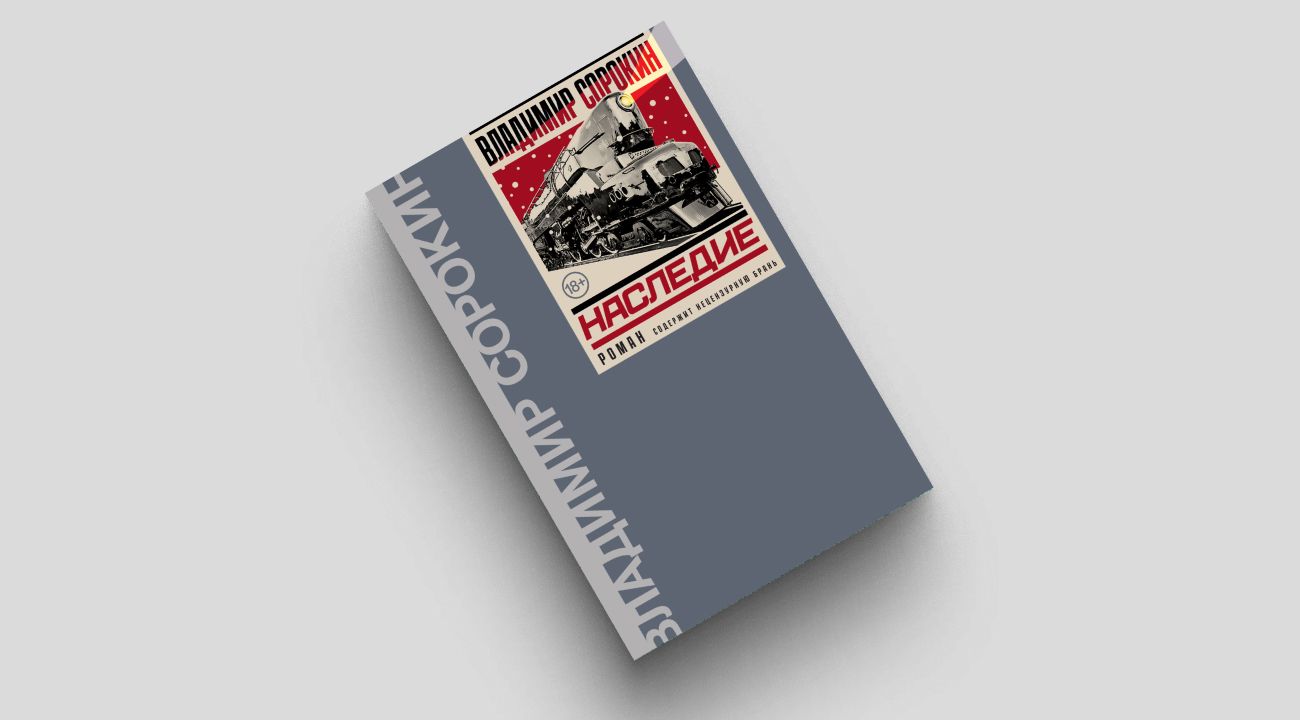
The publishing house Corpus is published by Vladimir Sorokin’s new Roman “Heritage” - the final part of the trilogy about Dr. Garina. In it, the Trans -Siberian express expressed with fresh corpses, army, special services and partisan detachments cut and rape each other. At the request of Medusa, critic Lisa Birger tells about one of the most cruel novels of the writer.
Warning. There is a mat in this text. If this is unacceptable to you, do not read it.
At the beginning of the new novel by Vladimir Sorokin, Trans -Siberian Express No. 4 sets off from Vladivostok. This train is drowned with human bodies, and necessarily “steam”, that is, fresh. Departure takes place under marches of different republics and “Farewell to the Slavs” - three orchestras of different armies play their differently. The sledgehammer is defeated by the "head of the enemy of the Far Eastern people."
The next war has recently ended - the three -year -old Siberian. In a special train car called Iron Maden, or Shi-Ho (translated from Chinese-“gritted teeth”), interrogators interrogate suspects of state crimes and desertion, they are raped, brutally tortured. The elderly, women, children are cut with laser weapons and sent to the furnace.
One of the suspects is Alya girl, in appearance of twelve years. Alya is not killed, but they cut off her finger. On the train, she meets a wheelchair user-an old man in a quilted jacket who entertains the car with obscene ditties and jokes with folk wisdom. Attentive readers of the novel “Dr. Garin” easily recognize the hero by strange aphorisms (“To run - not to shake testiculas ...”). Nine years ago, the Khabarovsk hospital, where Garin worked, destroyed the atomic bomb - his wife burned down, but he himself survived. Garin's face remained disfigured "a terrible, crimson-pink tumor in blue veins." The hero’s memory has been exhausted-probably, therefore, he does not understand that the girl Alya and her twin brother Ole, the children of the Atamansha and the Giant Matrena, from him. In the restaurant car, the doctor reads Ale the book “White Gemini”. Her heroes, Gemini Hrrato and Platuh, are also the children of Garin.
Attention. Then there will be spoilers for the story "Metel" and the novel "Dr. Garin".
"Heritage" is the final part of the trilogy about Dr. Garina. In 2010, the hero first appeared in the story “Metel”: then he was driving a distant snowy village of a vaccine from Bolivian chernukha, but did not reach - frozen to death. In 2020, during the pandemic, the story was actualized - and Sorokin wrote a sequel, the novel “Dr. Garin”. It turned out that the doctor did not die, but lost his legs. On titanium prostheses, he fled from the war through all of Siberia - into the arms of his beloved woman in Khabarovsk. Suddenly everything ended with a happy end.
As we now know, this happy finale did not last long. The events of the "Heritage" take place 20 years later, after the global war, when humanity has finally disappointed. The “blizzard” was a story about the salvation of others, “Dr. Garin” - about salvation of himself, in “heritage” there is nothing to save. But even in his most deplorable state, Dr. Garin continues to move forward, carry his good news. “Yes, the world lies in evil, I agree. But we are still alive good, ”he says in the previous book. In the "Heritage" continues: "Good, after all, will run a drop, a glass, an ocean of vodka will return."
It is amazing that Garina manages to maintain optimism in a new novel: there is a lot of violence-it seems more than ever Sorokin. The whole second part of the book, “The Partisan detachment“ Uyo ”” (“Ussuriy Shoebari”), is an endless series of murders, cruelty, “mortal fuck” with songs and dances.
In the final part called the Milklit, the horror chain breaks sharply. The action is transferred to the writer's estate, where intellectuals eat a ear of fish caught in Altai radiation rivers. The audience talk about literature. In the "Heritage" she is no longer a drug, as in "telluria". And not a mysterious product of subcutaneous writing deposits, as in Blue Sale. Here, novels are created using milk - the texts sink , sculpt and miserate from it. Most of all, a large form is appreciated - cottage cheese that can not only admire, but also literally eat it.
This third part, in Chekhov’s beautiful, is the key to understanding the previous chapters filled with violence. Having seen enough of the cruelty of the war, we suddenly read about the mistress of the house Vera Pavlovna - she lies in a hammock in her garden, the fat French novel “Les Bienveillantes” is leafed through (nothing more than “Frequencies” by Jonathan Littlela) and reflects on the nature of the murder: “We call the murder of a crime. Pre-Access ... Wallow the line ... but who paved it? " Her thoughts look funny and ridiculous - just like any attempt to philosophize against the backdrop of a historical tragedy, whose witnesses we all have been today.
It is no coincidence that the heroine reads precisely the “goodwriters”-a novel-approval, written on behalf of the Nazi, who recalls the war not without pleasure (violence in it is even more in the fantasy chapters of Sorokin). The choice of the name of the heroine is also a reference not only to Chernyshevsky and his Vera Pavlovna, who dreams of dreams about the best Russia, but also to the early story of Viktor Pelevin's nine dream of Vera Pavlovna. His heroine imagined herself an ideal capitalist future, after which she was filled with shit.
The two most important Russian writers are found in this comment on Russian literature, which gave rise to many illusions. Here is the present-death, sledgehammer, a state that requires constant stinking with human material, so that this train, which, of course, has long been on fire, continues at least some movement. “We rested on our literary past, it crawls on us like a glacier,” says Vera Pavlovna in a novel and offers to destroy the paper, look for a new literary form. Sorokin is doing this exactly this - he is looking for a way to confront violence not only on the pages of his book, but also beyond their borders.
It is difficult to talk about the “legacy” without revealing the final - however, the spoiler is already contained in the Harmsa epigraph . Sorokin is trying to contrast his heroes and their ideas with an open nightmare (here is the answer to the question, why portray violence, if there is so much around him). Busted, with a terrible tumor, Garin in a stroller does not lose hope (“Real hope cannot be carried away,” the previous part of the trilogy said). Even in the most terrible moments, he finds the strength to resist violence: "I believe in the immortal soul of human!" It is such a hero that can open a heavenly passage - because on earth it seems that there is nothing to catch.
Lisa Birger