
Translated material
The ruble in the balance
The Central Bank is trying to keep the ruble by the New Year and Putin’s elections. What does this mean and what to expect for Russians?
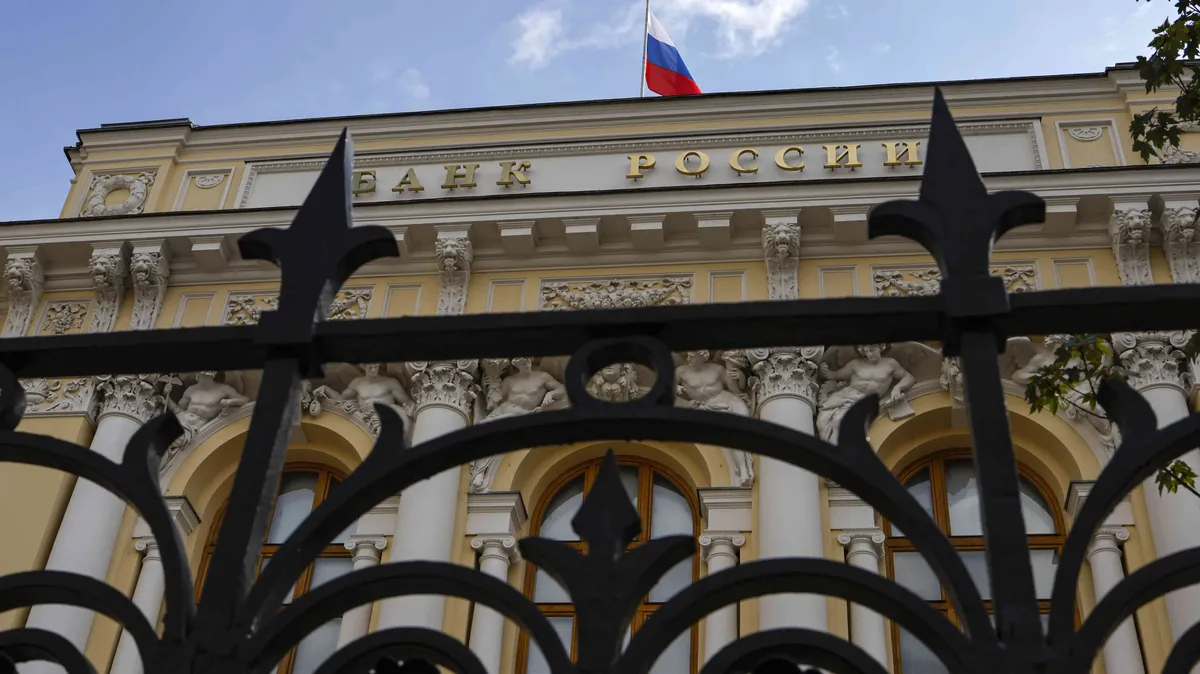
Photo: EPA-EFE / SERGEI ILNITSKY
The Central Bank announced that from January 2024 in the domestic currency market it will resume operations "related to the replenishment and use of the funds of the National Welfare Fund." The Central Bank will again buy and sell the currency “within the framework of the budget rule”, that is, for the redistribution of superpitual income from the export of raw materials.
What is the budget rule?
The latest version of the budget rule has been valid since the beginning of 2023. The ceiling of oil and gas revenues was introduced - 8 trillion rubles annually. All income from above this amount, according to the rule, should go to the “Cubes” - the National Welfare Fund (FNB) - through the purchases of Chinese yuan. The operation is carried out by the Central Bank as an agent of the Ministry of Finance. With insufficient oil and gas income, the Ministry of Finance and the Bank of Russia, on the contrary, sell yuan to replenish the budget with rubles. This is called mirroring.
The Central Bank suspended the purchase of currency to replenish the National Welfare Fund in August 2023. The regulator then announced that such a decision "is made in order to reduce the volatility of financial markets." As noted by RBC, August 2023 became the fifth in the depth of the fall of the ruble from the 1998 default:
The dollar exchange rate on the Moscow Exchange grew by 4.83% and exceeded 96 rubles, the euro rate was 3.26% (up to 104 rubles). In October, the dollar completely exceeded 100 rubles.
Since the beginning of 2024, the budget rule will again be tied to the cost of oil: if Russia sells oil Urals oil (it is focused on the Ministry of Finance) above $ 60 per barrel, all excesses from its export will go to the FNB.
Is everything for the upcoming Putin's elections?
This is, first of all, about maintaining the ruble before the presidential election of 2024, the Russian economist, who preferred to remain anonymous, said in a conversation with Novo-European.
The Central Bank will fill the currency in the market in the amount of up to 1 trillion rubles to hold the ruble by the March elections of Vladimir Putin, the economist Dmitry Poleva said in a commentary for The Moscow Times. He noted that the volume of currency sales (about 4.6 trillion rubles) will exceed the volume of purchases (about 3.6 trillion rubles).
As Medusa wrote earlier with reference to sources in the Kremlin, the Russian authorities hope that the dollar exchange rate will drop by 10-15% to the election and will stay at the level of 75–80 rubles, as they fear social dissatisfaction with inflation. The devaluation of the ruble, due to which the dollar stepped above the mark of 100 rubles in August, has already dispersed the increase in prices, then the interlocutors of the publication noted.
To raise the price of the ruble, you need to increase the supply of the dollar in the foreign exchange market, which is about to make a central bank. And then the system will encounter a large volume of uncertainty, notes the interviewed “New-Europe” economist:
-Firstly, it is not known what volume of dollars will really sell the Central Bank. Secondly, we do not know how the market will react to this. Thirdly, it is not clear how much currency will enter Russia as a result of export operations. Anyway,
It will definitely not be possible to pursue such a policy for a long time - the Central Bank reserves will be enough for a maximum of six months.
But to reduce the course before the choice is no longer necessary.
In order to fill the budget planned for 2024, which has increased significantly compared to 2023, the inflation will definitely increase, and in this case the devaluation will be mainly in the second half of 2024, the expert summed up.
How the Russian budget has changed after the war
This week, Putin signed the law on the federal budget of the Russian Federation for 2024 and for the planning period 2025–2026. Speaks on the army and the military -industrial complex for the first time since Soviet times will amount to a third of all expenses of the country. The next year under the article “National Defense” the budget plans to spend 10.775 trillion rubles: 70% more than in 2023 (6.8 trillion), 2.3 times more than in 2022 (4.7 trillion), and three times higher than the indicators of the pre-war 2021 (3.5 trillion).
"Thin game" of the Central Bank: what is the leadership
According to another interlocutor of Novo-Europe, familiar with the situation, changes in the rules of the sale of currency are directly related to attempts to stabilize the ruble exchange rate, but with the situation in the Bank of Russia itself, and the current leadership of the Central Bank “hangs on the balance”:
-Firstly, there was a devaluation of the national currency-from July this year to the current moment. Secondly, the key rate is increased, now it is 15%. I remind you that when raising a key rate to 17% in 2014, it was believed that the Russian economy is in a pre -crisis catastrophic condition. Now “financial stability” is declared, although in fact there can be no stability at a key rate of 15%: no lending is carried out, there is no investment, and in general the economy feels very bad, ”the expert says.
What is a key rate and how does it affect banks?
The key rate is the interest rate under which the Bank of Russia issues loans to banks. It is this rate that is maximum for placing banks money on the deposits of the Central Bank. The higher the rate, the more expensive the banks cost the money that they borrow, and vice versa. The key rate determines the terms of deposits and loans in banks, with its help you can accelerate or slow down inflation. With a high key rate, keeping money on ruble deposits is more profitable, but not to trade foreign currency.
In addition, the interlocutor of Novo-Europe is reminiscent, about $ 300 billion assets of the Russian Central Bank are frozen as part of the sanctions regime, and "the latest chances of their repatriation also melted this fall." It is also worth recalling the situation with the St. Petersburg Exchange, which the other day, after falling under the sanction , announced bankruptcy.
- The whole set of factors raises the question of the need for personnel rotation at the Bank of Russia. The Bank of Russia is located on the edge of the abyss: by the end of the year it threatens to increase the key rate to 17%, and everyone is configured against this. This is a terrible prospect for banks, business, as well as for citizens: they also begin to realize that there is a difficult situation, because with such rates, re -lending, refinancing and new loans are impossible, ”the expert notes.
This is a “subtle game”, the interlocutor of Novo-Europe continues: thanks to currency interventions, the Bank of Russia hopes to slightly weaken the pressure of growing imports in order to slightly strengthen the ruble and not to increase the key rate before the end of the year.
- Some connect such a policy of the Central Bank with the upcoming elections, but nothing is known about the elections. Maybe they will not be at all: I do not exclude that a kind of “Rocky” is possible, ”he added.
The Politico publication today presented its annual list of 28 most influential people in Europe. The journalists called the main “destroyer” the chairman of the Russian Central Bank Elvira Nabiullina, who “became a silent assistant to Putin, managed to prevent the consequences of unprecedented Western sanctions, designed to empty the treasury of the Kremlin, and thereby extended the war with Ukraine.” “Where once this woman was admired, there is now disappointment about her role in promoting mass deaths and destruction,” the publication said.
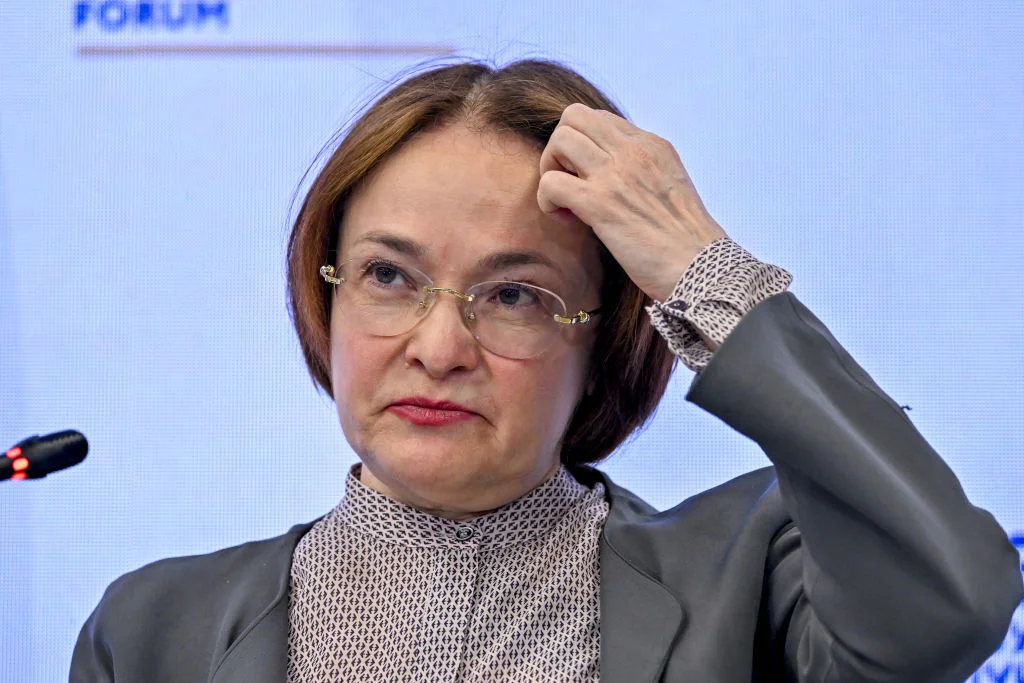
However, not everyone agrees with this definition of the role of Nabiullina. The leadership of the Central Bank, according to the interlocutor of Novo-Europe, hopes to stay at its posts and tries to somehow justify its existence, and the Central Bank policy is aimed at supporting Nabiullin, leaving the post of chairman of the Bank of Russia.
“But far from the fact that it will turn out.” After all, all of them in conjunction are drawn not only on dismissal, but also on landings, ”he added.
The expert in a conversation from Novo-Europe notes that this fall, during the cycle of raising the key rate, the ruble reacted “very sluggishly”, and sometimes even weakened, and not strengthened.
-The fortification that has been achieved in the last five to six weeks was implemented exclusively by selling exporters' revenue, but not by raising the key rate. Thus, an increase in the key rate as a tool has exhausted itself, and if it is continued, it will cause a wave of indignation and frank anger, ”he added.
The new rules will allow you to keep the ruble without raising the key rate in the corridor of about 88–97 rubles per dollar: a mark of 100 rubles per dollar will not be pierced, otherwise it will “overshadow the New Year's table from the idle people,” the expert predicts.