
Translated material
Discover of Kimerica
What did Dr. Kissinger taught us
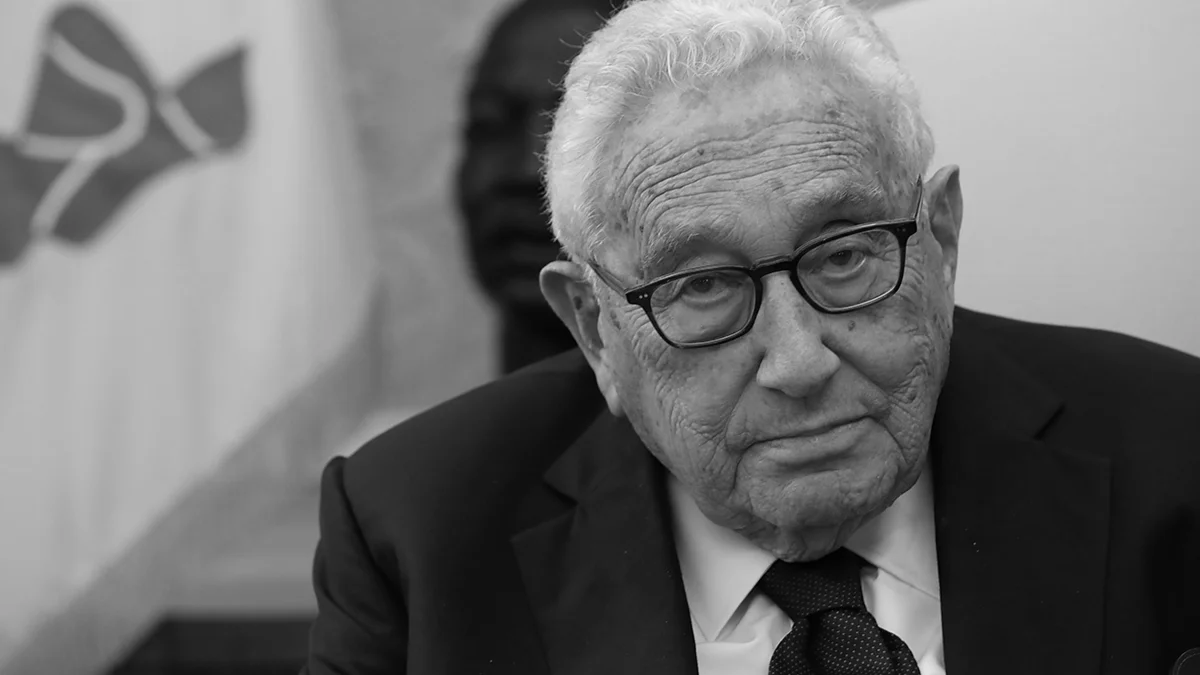
Henry Kissinger in the White House October October 10, 2017 in Washington. Photo: Win McNamee / Getty images
Now we can say for sure: Henry Kissinger is one of the most famous, influential and successful politicians of the second half of the 20th century. Famous-understandable, influential-of course, successful-is very likely, because to die in the 101st year of life in their own house, having lived such a life and making such a career, this is a huge success.
Secretary of State for two presidents, accused of war crimes, sympathy for dictators and silent support for ethnic purges. The Laureate of the Nobel Prize of the World, the Architect "Disgrete" - and an indirect participant in the Watergate scandal. For the Russian reader, this may sound strange, but the American media call the illegal wiretaps organized by him in the list of sins along with the bombing of Cambodia and the involvement in secret murders and revolutions in South America.
Even in recent years and months, Kissinger remained a participant in a global public policy. Literally in July, he flew to Beijing and met with the chairman of SI, and in winter he offered several options for the end of the war in Ukraine.
Today everyone writes and talk about the fact that he was a supporter (and practitioner) Realpolitik, “real politics”. This is so. But the explanations of what this “real policy” is often sound unconvincing. It is understood that “real politics” is such a “cynical” view of the world, “politics as an art of possible”, in contrast to the “idealistic” policy based on values. This is a technocratic approach: no coincidence
Kissinger never held elected posts. But by someone Kem, and the Technocrat was never Kissinger.
He not only practiced Realpolitik, but also theorized it. And if you read the real scientific works of Dr. Kissinger (so officially addressed him), you can find out, for example, that he considered the “balance of power” in world politics not a “natural state”, but, on the contrary, very unusual, almost accidental.
The starting point of the modern realpolitik - that is, the concept of a sovereign state with its own interests, but recognizing the sovereignty of others - the science of international relations counts from 1648 (the so -called "Westphalian world"). It is believed that after a bloody thirty -year war and no less bloody religious wars, when the “protection of religion” on the territory of a neighbor was used as a legitimate reason for the attack, the states agreed that from now on they did not interfere in each other's affairs. The power of some “balances” the power of others, and instead of fighting, they will “butt”. Such a world was not long.
The next attempt to “balance” is the result of the next bloody war. The French revolution has grown into the Napoleonic wars (it is impossible to explain the foreign policy of those years without appeal to the “values”), and then the Vienna Congress tried to return to the principle of non -interference and the separation of the “spheres of influence”. This period was precisely the field of Kissinger’s scientific interests and the theme of his dissertation -somewhere there he found his role models, between the Frenchman Talleyrand and the Austrian Metternich.
But this "real balance" again did not survive its creators. Already in the middle of the XIX century, internal rather than external processes led to the restoration of the world political map. National movements, class solidarity, revolutionary ideas - all this is far from pure “realistic” structure, in which there are unshakable “states” and their “interests”. Kissinger understood this perfectly.
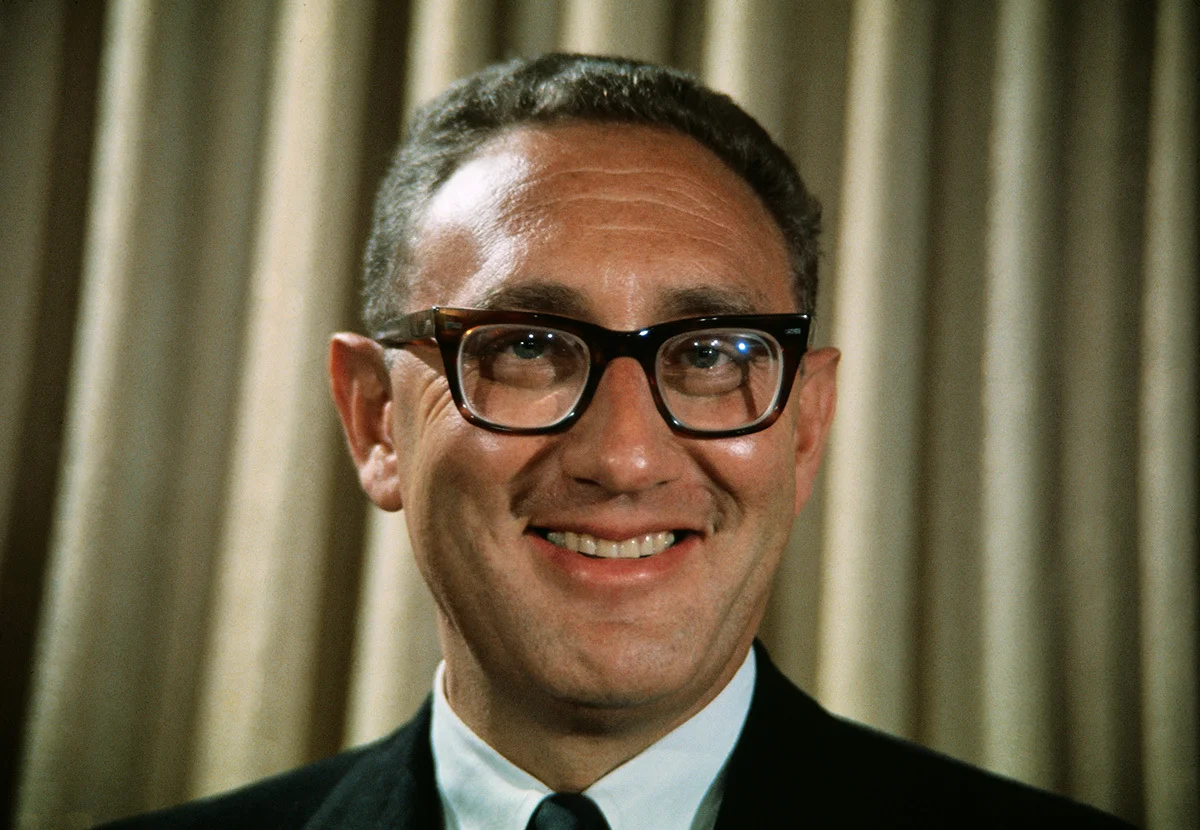
Hence the constant duality of his pragmatism. On the one hand, values should not interfere with politics. On the other hand, if the values are divided by society, then they can be used. Thus, the other famous liberal-realist Dr. Zbignnev Brzezinsky called the “global awakening”, that is, the inclusion of new groups of value-oriented people (from the revolutions of the late 1980s in Eastern Europe to Arab Spring and Euromaidan).
The “realism” of Kissinger - in itself, in isolation from the personality, is an interesting approach. Yes, it is based on an objective assessment of resources, but to the same extent on the ability to imagine a different order of things.
The convergence of the United States with China and the meeting of Nixon with Mao Zedong only today seem quite normal and possible. China of 1972 is a country still passing through a cultural revolution. Poor, overpopulated, with monstrously low quality control, with tens of millions of repressed (and this, by the way, labor). Her foreign policy is also crazy: China even managed to quarrel with the main patron - the Soviet Union.
To see the potential in this country - and not just temporary and tactical, but a strategic and economic union - you need to not be a “sober realist”, but a utopian. How strange, unnatural and even surrealist this alliance looked, the famous opera of John Adams “Nixon in China” (Kissinger, of course, bass ) is dedicated to.
All modern Kimerica - the symbiosis of the PRC and the USA, which can argue on individual and fundamental issues, but who can’t get anywhere from each other - this is the heritage of Kissinger, the fruit of the political imagination of his and his team.
Kissinger’s performances in the war in Ukraine are also indicative. As a real realist, he is ready to change his proposals depending on the situation. But he completely does not believe that there is only one “correct” solution here. This policy, although invented in the head, is done in the process of interaction. Therefore, in order for the discussion to take place, you need options and you need a willingness to hear and speak, invent on the go and trick. Confidence that Russia is easier to defeat the battlefield, and not to beat at the diplomatic table, was alien to him. He would prefer the second option (as he preferred it before), because he always considered himself smarter than everyone.
He understood better than many how important the image was, and therefore his image of a cunning gray cardinal, while “realist” and “cynic”, a dangerous and mysterious person, a veteran-reconnaissance of the Second World War
And the Washington playboy ( nicknamed Henry the K [ISS]), who knows about everything and about everyone, became his main tool. He converted his work into the status of the patriarch of world politics, received forgiveness in all respects, and used the status of the patriarch to continue his work.
To admire people for whom state (or someone’s personal) interests can justify mass killings and wars (although it is important to remember that he was the most striking, but far from the only one). But to pretend that Kissinger's activity is limited to “dirty policy”. Instead of cursing him or admiring him, it is better to learn from him.