
Translated material
Corsican monster
Ridley Scott removed the author's Bayopic about Napoleon Bonaparte. The commander here is not a great genius, but an ordinary man living for the war
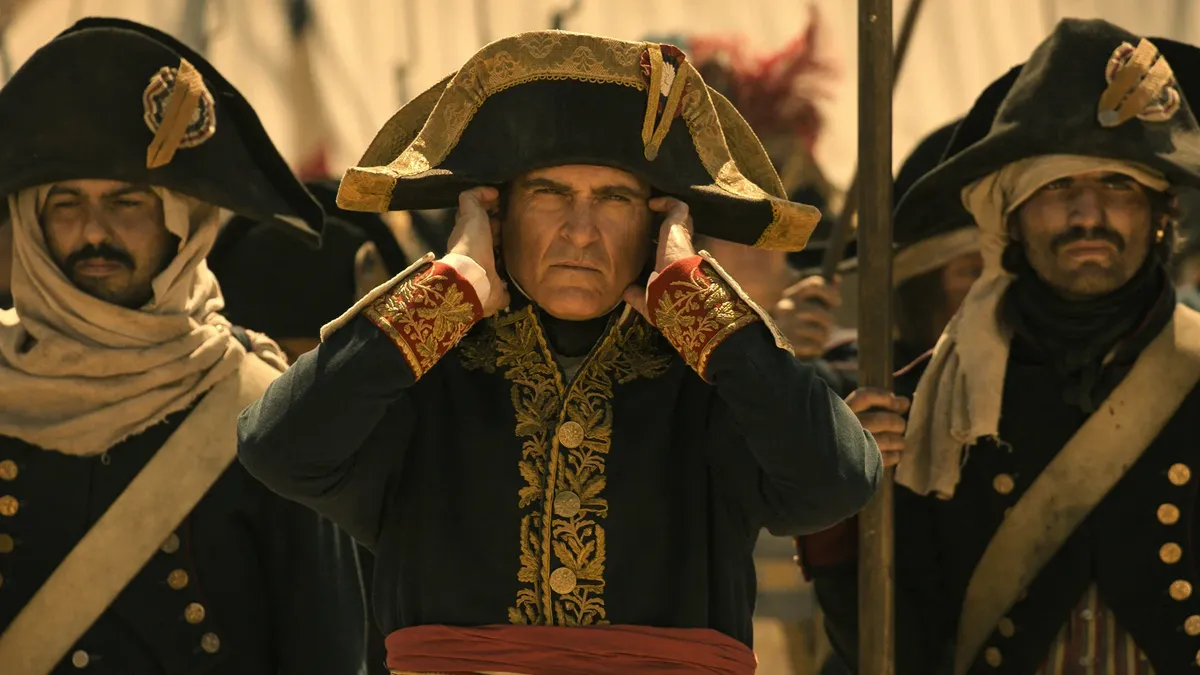
Frame from Ridley Scott's film Napoleon. Source: Kinopoisk
The long -awaited film by Ridley Scott about Napoleon with Joaquin Phoenix as the great commander was released in the world rental. They managed to criticize the film for historical inaccuracy and “superficial look” at the largest historical figure. To which the elderly master, who never hesitated to speak from a pure heart, advised critics simply not to watch his cinema and not particularly trust the French, "who do not love themselves." The film critic Oleg Tundra watched that already became an odious Bayopic and reports that the film was actually successful: Ridley Scott shot an excellent adventurous artistic biography, and used his personal film pupils - phlegmatic men, large -scale battles and horses.
The Great French Revolution. The execution of Maria Antoinette on the guillotine is watching an unknown military with Corsica - Napoleon Bonaparte (Joaquin Phoenix). After a few years, he will become one of the most influential people in Europe, but no one has yet realized this - all the more he himself. After the revolution, France loses not only imperial influence, but also some kind of respect in Europe. The British landed in Toulon and captured the port and the harbor. For a failure mission, they send them to Napoleon temporary workers from the French government. In a letter to his brother, he writes that local weapons are scrap metal, which must be melted; In the future, the battlefield is grazing, and the poor streets are covered with sand from the shore. The sudden victory of the French at Toulon is the merit of Bonaparte’s military tactics: he made a bet on artillery, used red -hot kernels in guns, headed the storm, blew up the walls of the fortress and from there shot all the British ships. A happy incident saved the commander from death: instead of him, during the assault, his war horse was blown up.
Having received the Order and Raise, Napoleon returns to the feverish post -revolutionary Paris: fights take place on state councils, Brumers and Termidores are confused in calendars, rivals are in turn. In one of the salons, Napoleon meets Josephine Bogarne (Vanessa Kirby), who had just left prison with a short -cut mother of two children. Their union is a strange strategy: Napoleon is one of the military without court influence, Josephine is a woman much older than him without wealth and with a dubious reputation. But both in life are not that strategists: not only strong attraction is growing in a pair, but a deep human affection is born. On the private rendezer, Josephine shamelessly extends his legs before Napoleon: “A surprise awaits you there, and you will never forget it”; Napoleon is not particularly inspired by the “surprise”. In general, he is generally not very inspired. Despite the publications in the press about love adventures of a legitimate wife, Napoleon continues to write her affectionate letters to her, while the city is won by the city.
A few years later, Napoleon and Josephine will become the emperor and the Empress, and Bonaparte will open a window of possibilities: a large military geopolitics and a chance to make France again great.
The battle of Director Ridley Scott with critics for Napoleon is quite Austerlitz, about which you can remove a separate one: the parties exchange with poisonous comments and frankly mock each other. The film, obviously, was upset by the directorial liberties and psychological frostbite of the protagonist: the theme of the role of personality in history, according to many, was not disclosed.
Indeed, we admit: Napoleon was not removed by the patterns of the “life of wonderful people” and contains a dozen comic exaggerations like the destroyed top of the Egyptian pyramid or scene, where Napoleon stands on a stool to stand on the mummy of the pharaoh. Scott is a man with what the character and sense of humor, and he is simply not interested in illustrating the crowned image. But he absolutely does not want to overthrow Bonaparte at all: he gives him to observe the gradual ascent of a person among the crowd of low -growing talkers. Ridley looks to where the others are not very interesting to watch. Napoleon and his completely non-imperial manners, which he absorbed on Corsica and, apparently, did not get rid of them, did not get rid of them. On the phenomenal architecture of the battles and tactical tricks with which he fenced the troops of the opponents. On an awkward seizure of power: surrounded by bayonets, his opponents receive an offer that cannot be abandoned: "Well, will we vote?"
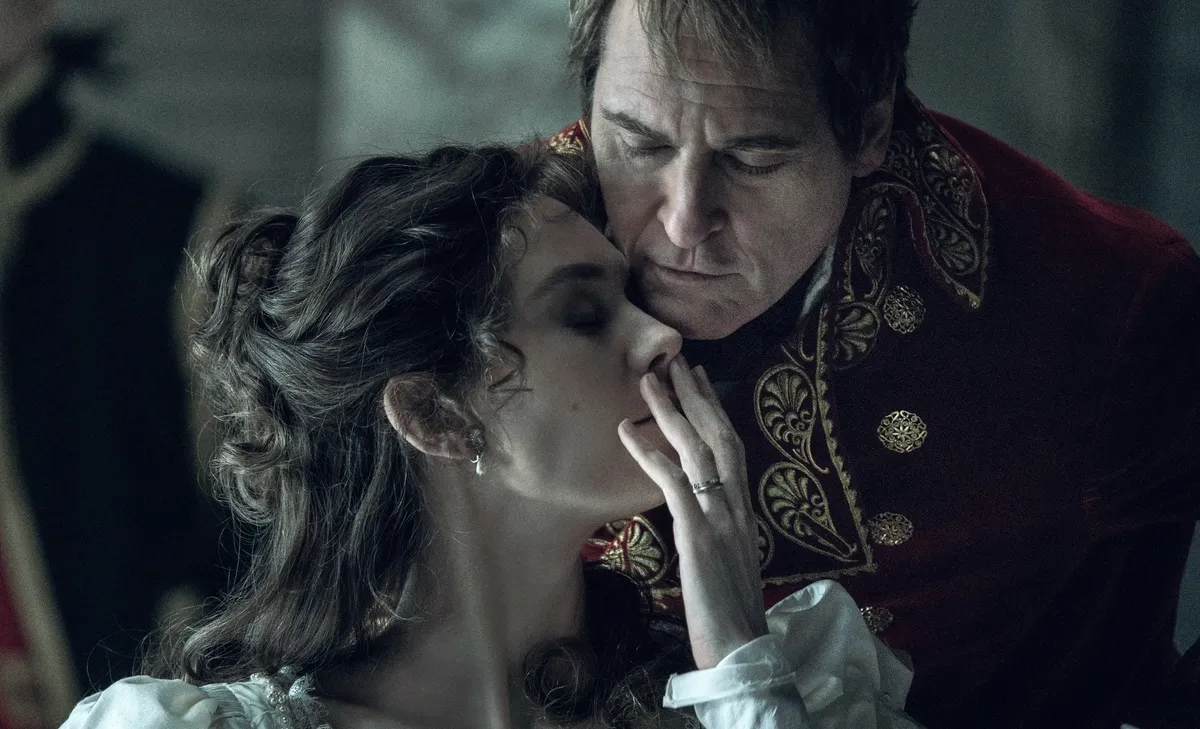
The main difference between Napoleon and the rivals: he knows how others do not know how to fight normally. The rest of the time, he either misses or sleeps (sometimes sitting right in the middle of the conversation), or eats with appetite, or copies with his beloved woman. His relationship with Josephine is not a great love story, but dialogues of mutual awkwardness and passive aggression.
She phlegmatically states: “You are just an animal”, he also calmly replies: “You are just a creature, I'm sorry for you,” and both are inseparable.
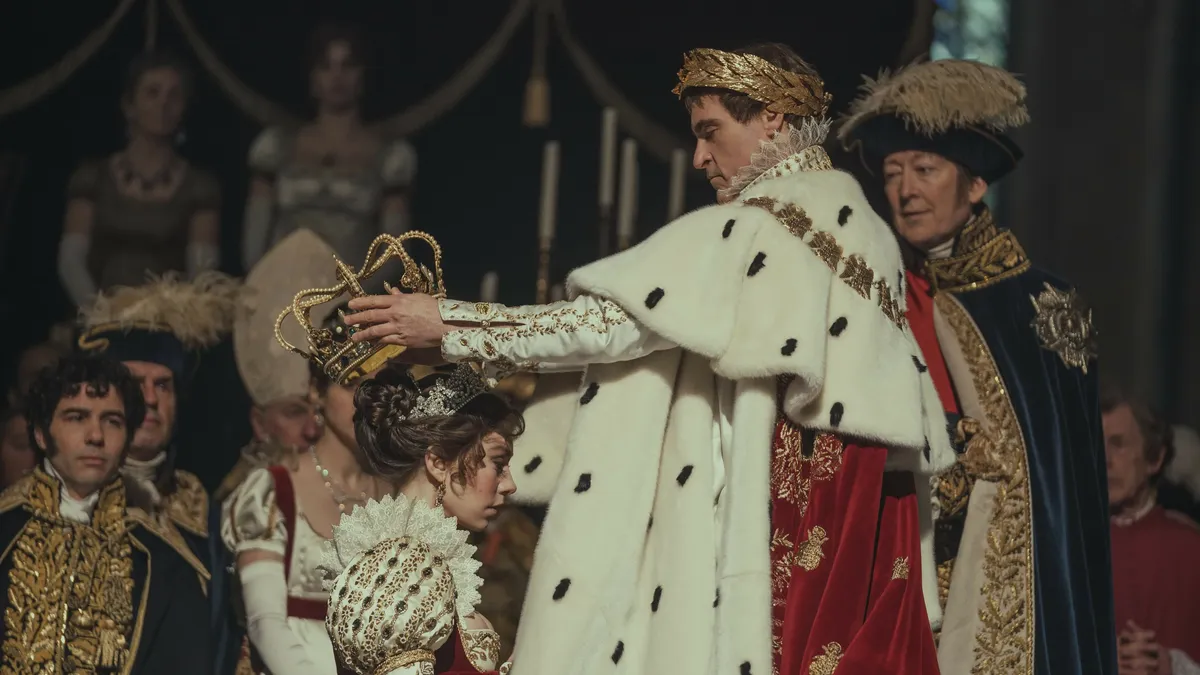
The scene of his first meeting with his second wife, who will give him the long -awaited heir, is generally similar to a joke about the lieutenant of Rzhevsky.
The main features of Bonaparte Ridley Scott are titanic stubbornness and self -confidence: “I always recognize my mistakes, but I am never mistaken.” His social clumsiness and emotional inhibition are erased when Napoleon goes on the battlefield. It is noticeable how Ridley Scott revels in battles. First of all, these are, of course, horses and horsemen existing in the frame as a single organism: the scene of the ice battle with Austerlitz is one of the most dynamic, complex, thoughtful and beautiful battles that generally exist in the history of the cinema. The sappress of the loss of the French at Waterloo is pure magic of directing: few people can remove the battle with the well -known result so that you fidget the edge of the chair for half an hour. And even the cgi schedule of white-stone (rather even serous) Moscow with pigeons, cooing at an empty throne, is a grotesque but very accurate allegory of a temporary triumph. Perhaps Napoleon, known for the tendency to strong exaggeration, would himself describe an attack on Russia.
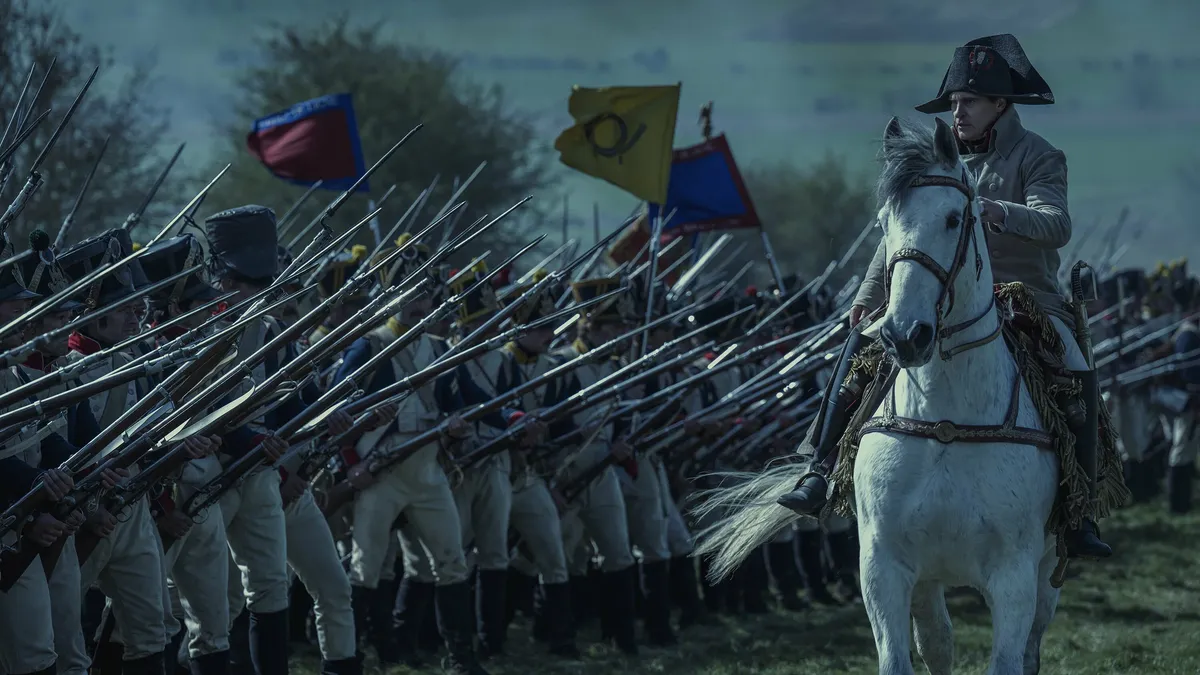
But the energy leading to victory cannot be eternal. Ridley Scott and Joaquin Phoenix perfectly feel the heroic organics of the hero, his age and weighting. Napoleon begins to fade, barely noticeable and gradually. His last jerks - from an unauthorized departure from the Elbe to the organization of a military coup and the battle of Waterloo - no longer carry the impulse of early victories that made it a legend during his lifetime. But Bonaparte cannot but go ahead: it was simply not created for anything other than war. With flies in wine on the island of St. Helena, he simply dies, right at the table, after another boring conversation.
Scott breaks off the wrapper of heroism, extinguishes the pathos of a historical legend and illustrates the extraordinary fate of Bonaparte with three values, about which he probably thought his whole conscious life: "France, the army, Josephine." In general, a standard man who, under the European Rasis, managed to make a rustle on the entire continent and, chasing troops for thousands of kilometers, to kill at least 3 million people.