
Translated material
Saw from ancient Anatolia
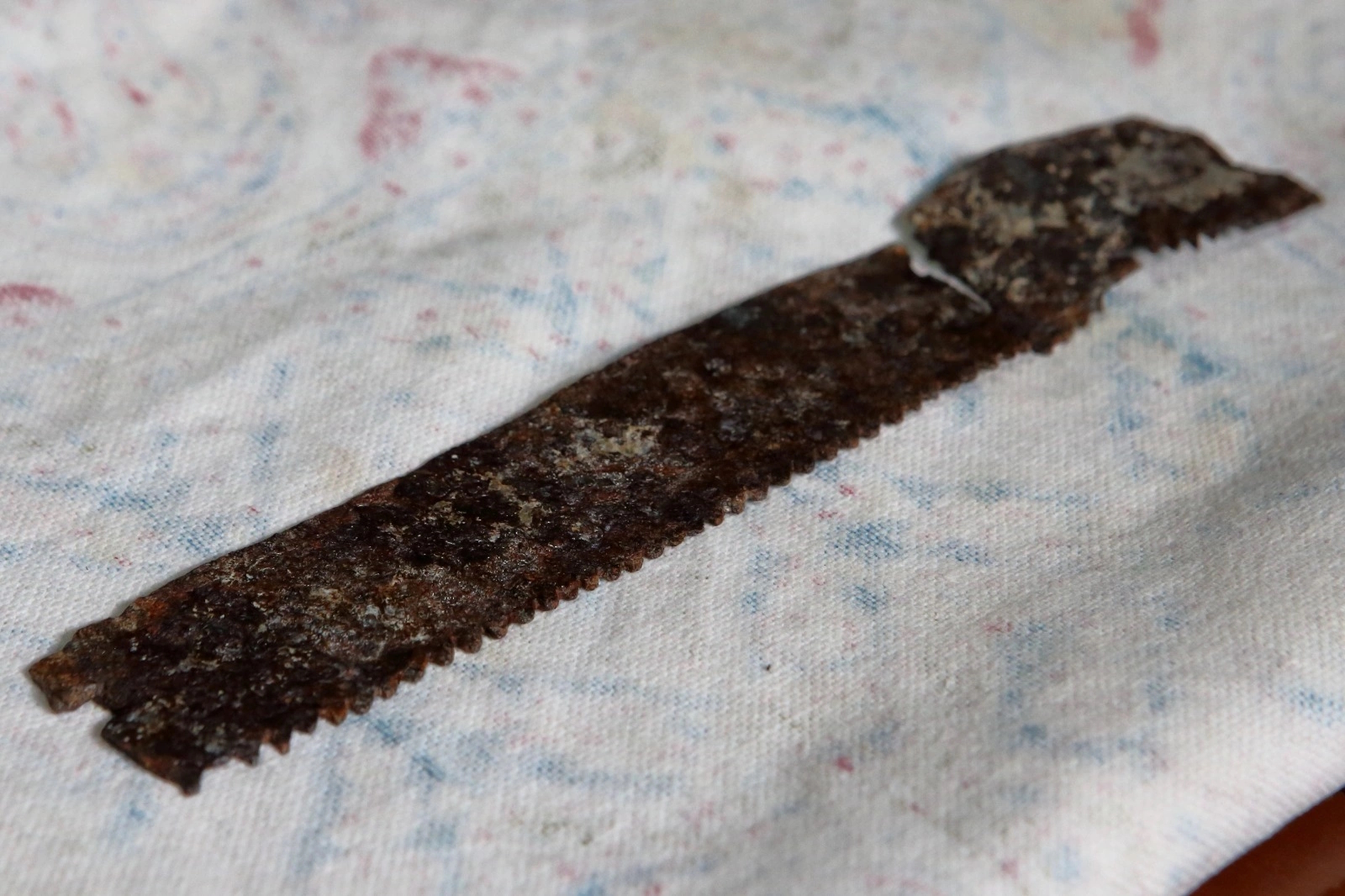
During the excavations of the German Archaeological Institute in the ancient Hittite capital of Hattus, a rare iron saw was discovered , dating from the 3rd century BC.
Professor Andreas Shakhner, the head of excavations, said that the iron canvas of the saw is a little thicker than that of modern saws, but otherwise it is very similar to those used today. A rectangular canvas about twenty centimeters long has teeth on one long side, there are numerous traces of wear on the teeth. The holes on both sides indicate that the saw had a semicircular handle, probably made of wood, for which the carpenter held, moving the blade back and backward.
The building, in the ruins of which the saw was found, belongs to the period when the Central Anatoly was inhabited by the Galatians - the Celtic people, who moved to Asia Military Asia at the invitation of King Bithynia Nicomed around 280 BC. e. Several copies of dragging that era are known, but outside Anatolia. The saws of the Roman Empire are more common.