
Translated material
Tiring running around

Kinocritis Zinaida Pronchenko scolds the series "The Word of the kid"
The series of Zhora Kryzhovnikov (“Bitter!”, “Call DiCaprio!”) “The word of the kid. Blood on the asphalt ”is the main event of the Russian small screen in 2023. Now in the user rating of the film a movie of the series 9 out of 10 points based on more than 250 thousand assessments. It is inferior only to the “Game of Thrones”, “All Great” and “Seventeen Moments of Spring”. The main song of the series is “Puffed” not mentioned in the titers of the “Aigel” duo - the world leader of the Shazam musical service. “The Word of the Boil” is widely discussed not only as a movie, but also as a subcultural phenomenon. The head of Tatarstan, Rustam Minnikhanov, transparently hinted that school fights in the region are a consequence of the popularity of the series, so "such films do not correspond to the policy that we pursue." And what politics does the “word of the kid” correspond to? Especially for the “cold”, the film critic of Zinaida Pronchenko in, perhaps the only negative review of this series of all written, answers this question.
In order not to miss the main materials of the "cold", subscribe to our Instagram and telegram .
Kazan, year 1988 or 1989, khmar, dirt, endless Morok. “Chushpan” Andrei, who lives with his mother and sister, who, of course, “out of business”, regularly receives “in a plywood” from a completed classmate with a caricature appearance of a bourgeois. Suddenly, Andrei comes closer to Marat, also students of his school and, most importantly, having connections in the “kids” circles - his older brother, the “Afghan” Vova Adidas, know and respect on the “street”. The result of the sudden friendship of the “shell” is a radical change in the fate. Here Andrei throws “shaggy”, but Andrei rushes at the “garbage”.

Inspired by Robert Garayev, the series of Zhora Kryzhovnikov, “The Word of the kid. Blood on the asphalt ”, like a brief synopsis, presented above, also consists of almost continuous quotes. If Garaev tried to describe the Kazan phenomenon in the epic manner - the culture of the youth criminal communities of the Late Soviet Tatarstan, which, by the way, was part of it - then the screenwriter of the series Andrei Zolotarev (“attraction” by Fedor Bondarchuk) seemed to have passed reporting work on extracurricular summer reading.
Over the course of viewing, it does not leave that first Zolotarev composed one text, and then, armed with the conditional dictionary of the regional Argo, inserted into every replica in jargonism or simply interjection. This work of dialogs, properly emphasized once again that the heroes are not done with a finger, terribly tires by the end of the first series. By the way, in classic ribbons about the mafia of Martin Scorsese or Francis Ford Coppola to achieve the same goal, the protagonists switched to the Sicilian dialect. Since the USSR of the 1980s is not the United States of the 1970s, but the Zhora of Kryzhnikov seems to be filming not “glorious guys”, but the “Soprano clan”, he has no choice but to part with the sign of the subculture and with musical moments. It is only strange that at the same time he exposes Catharsis not only his characters, but also requires it from the audience. For some reason, the blood on the dance floor of the gooseberries gives herself to the blood on the asphalt, believing that neither the sound-stop “Affectionate May”, nor too obvious parallels with the “brigade”, shaking the parody in places, will prevent us from imbued with the drama of the characters and plunged into the funnel of violence.
But let's in order.
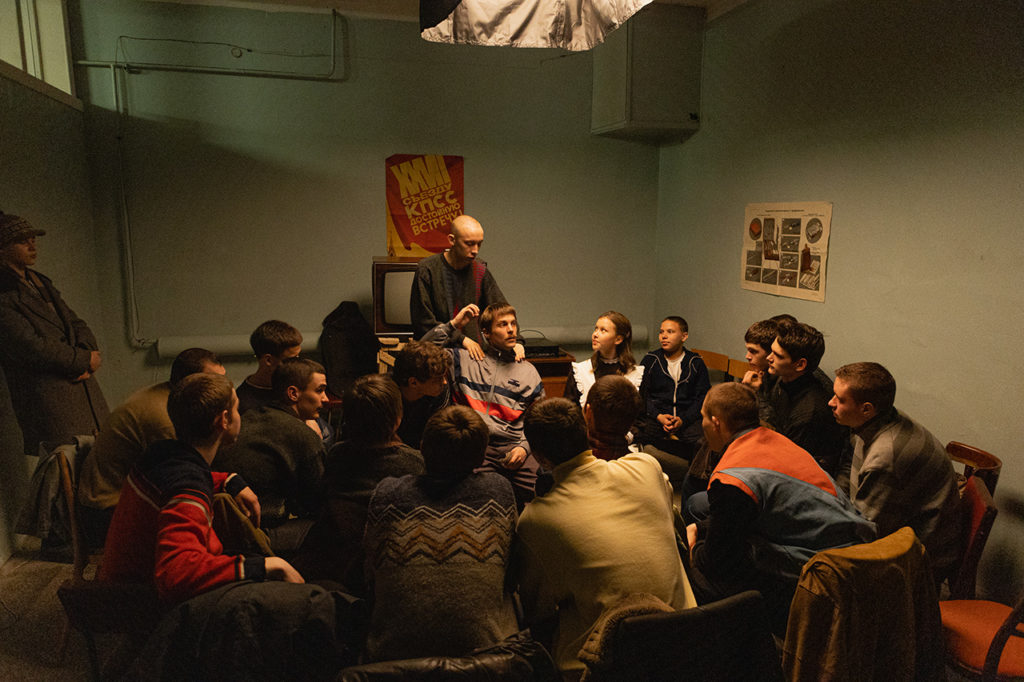
The main problem of the series is not even the dominance of the props - too many talus snow, peeling panels (inside which five -room apartments worthy of academician of the Keldysh are found), rusty Zaporozhets, muskrats, obsessive Slang, Yura Shatunova - and the complete absence of some development. Garaev invited readers to trace evolution, it is also degradation-from the late 1970s to the mid-2000s, from Sergei Antipov, the leader of the legendary group “Tyap-Lap”, to the new generation of “boys”, who replaced the authorities of the 1990s killed or fell behind bars. Not to mention the fact that in the book Garaev partially raises the theme of the KGB, possibly manipulating street bands to implement the low -hearted intentions from protecting the civilian population or resolving corporate issues.
There is nothing like this in the work of Zhora Kryzhovnikov, but there is a tedious running around from the garage to the garage and the repetitions of the same fight, removed and mounted from different angles. And in this sense, the “word of the kid” seems to quote from the series to the “dislike” of Andrei Zvyagintsev: Russia in a tracksuit is trampled on a running simulator. It is possible that here the authors, replicating to the exhaustion of the Mahach scene, swung at the universal metaphor, but something tells: they did not have such exquisite ambitions. After all, fights in the snow under the pop-shoulders are primarily beautiful.
Garayev’s other important line is the constant volatility of the notorious “concepts”, not many in essence differing from the ruble exchange rate. “Concepts” are written in the present, at any second time, the idea of “justice” is mutated, narrowing and expanding the boundaries of “lawlessness” up to the amendments to the constitution. The way Garayev argues about the “concepts”, even the most unable reader can lead to global conclusions about the important features of modern Russian authoritarianism and, of course, about the views of the first person on international legal norms.
To the question of development: Sidorov has logical ties in the “brigade” between the then defendants in investigative-search measures and future authors of special military operations are highlighted by almost caploc. In the “Word of the kid” there are only texts of songs with a capslok, and the main performers-the Aigel group-disappeared from the credits ( because of their anti-war position, the Aigel group does not perform in Russia. The series “Tania” has a certain Tatyana Panteleeva, but this song does not exist on streaming. If you look for a composition through SHAZAM, the service finds a song “Aigel” "Puffed." “And again a gray night” - there is no other time of day in Russia.
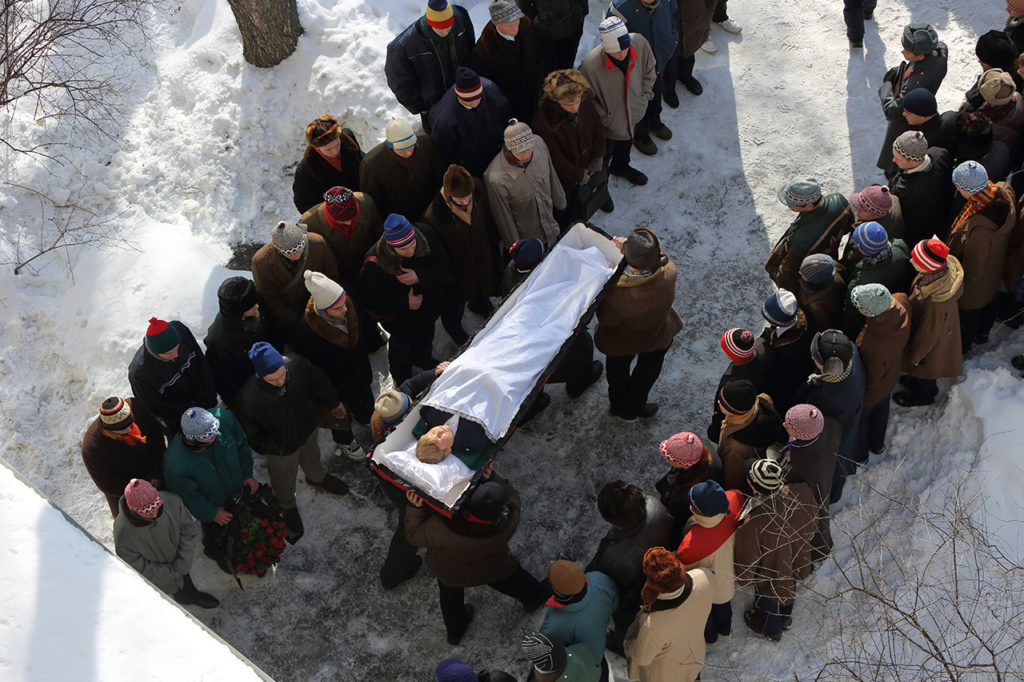
Kryzhovnikov’s “boys” that they never apologize, begin to apologize or, conversely, shoot without warning, having received a high -moraine disclaimer from the screenwriter. Vova Adidas (Ivan Yankovsky) kneels in front of the leader of the enemy group yellow - otherwise his younger brother would be cut, and he promised his parents to look after the kid. Again, Vova Adidas kills an unarmed person only because at the stake the honor of the innocent violinist Aigul (Anna Peresild), but would not be. Hand on the heart, these plot techniques are too clumsy for the series that claims to be the truth of life and the salt of the Earth. It is clear that in the final violence will turn against its subjects and everyone will fall on the same asphalt, but completely cancel cynicism for the sake of the audience sympathies-somehow not in love, not according to concepts.
Anti -American rhetoric also causes special irritation sewn with white threads for “asphalt”. There is no dispute - for sure, gymnasiums have not finished, adopted in Vova, Adidas, is able to contradict himself within the framework of one motivational speech. The capture cap with the inscription of the USA Marat, he asks: “Are you an American? Do you know what they supplied to the “spirits”? ” And after a moment the younger “age” instructs - “Soon it will be better than in America, we will do business!” But the performance of Marat, who was offended by a friend, and therefore pounced on the “informal” by John (Ivan Makarevich) with “presentations” like: “You play kiss, they are Nazis, you need to sing, dear, berth God!” Oh, they are sly in the esopian language of gooseberries with Zolotarev, that these are non -ostrum hints of reality or loyal -actanic curtsies before the acting government - decide, as they say, to the best of your corruption.
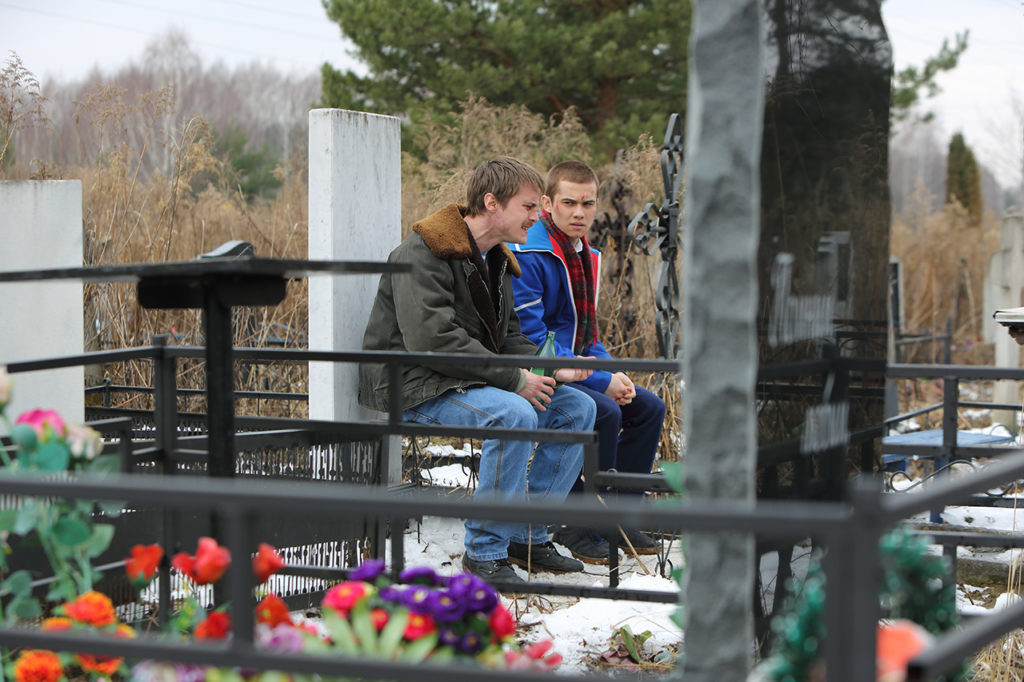
All these errors and inconsistencies, it seems, are written off by the creative group of the series before rounding - not fundamentally, what we are shooting about, but with obvious pleasure. In the frame, the texture beloved by strange love since childhood, which has long become the subject of an unhealthy cult. Perestroika and the beginning of the 1990s-the time of geopolitical disasters and genocide, but also the time of Boris Berezovsky and Danila Bagrov, Zhvachek Turbo and cassettes with porn, the first inflation and ejaculations, the forces that are in truth, or maybe, on the contrary ... what is the difference, sleep, beauty, and look at your eternal dream-about the word that gave you honest kids.
The author’s opinion may not coincide with the opinion of the editorial office.