
Translated material
"We are a popular revolution"
What is happening in Myanmar, where almost two million people left their houses over the two years of the Civil War
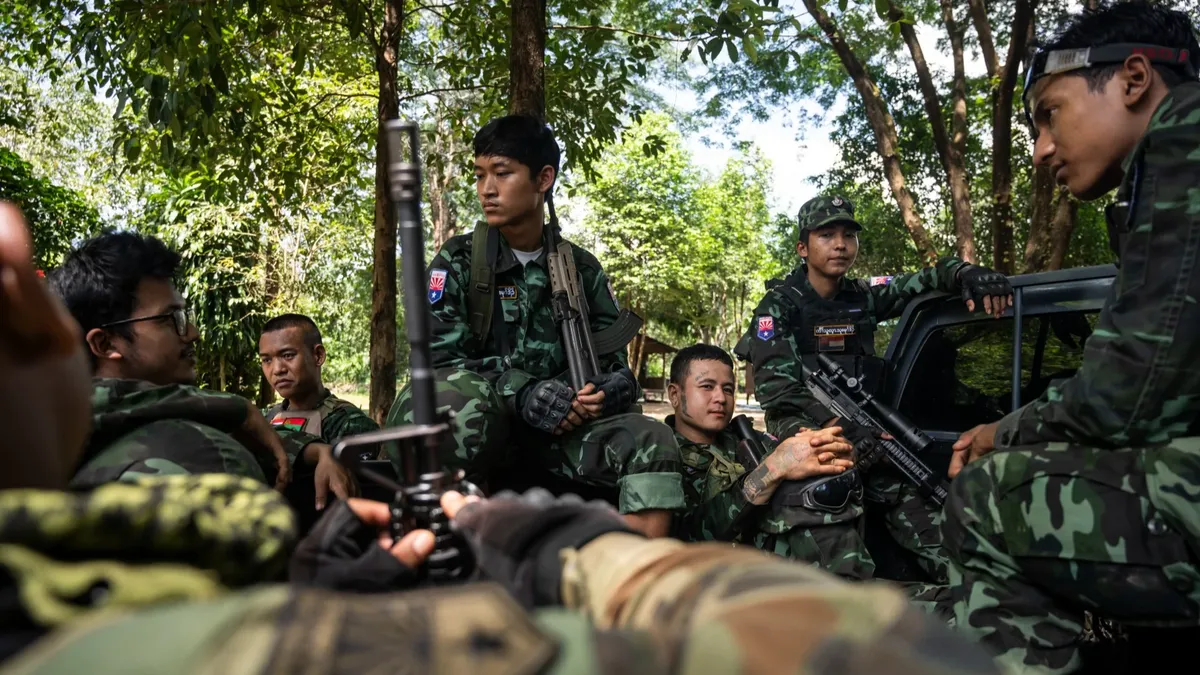
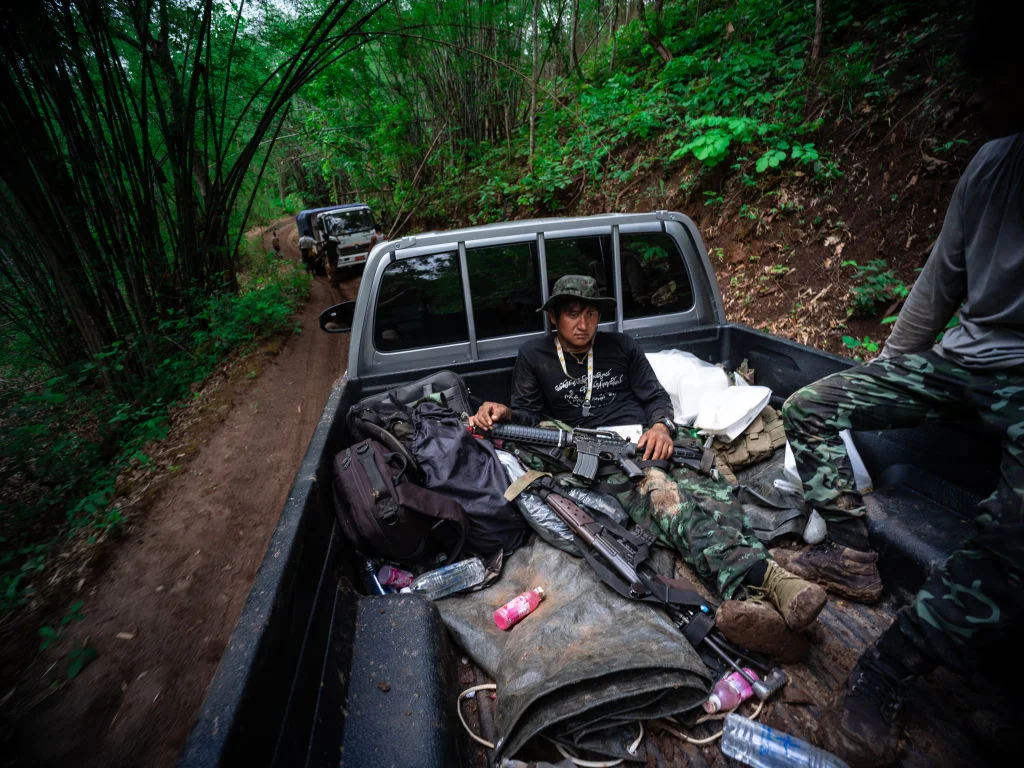
Fighters of the Army Brigade of the Karensky National Union, October 12, 2023. Photo: Kontributor / The Washington Post / Getty images
While the main attention of the world community is focused on wars in Ukraine and in the Middle East, another bloody conflict is unfolding in Southeast Asia. The military junta, which was terrorizing the inhabitants of Myanmar for almost three years, first encountered not just with armed resistance, but with a well -prepared and coordinated attack on its position.
The main force opposing the ruling regime of the generals is the Union of three ethnic rebel groups based in the improper border regions of the country. They were joined by the producing forces associated with the former Secretary of State and informal leader of Myanmar Aun San Su Su Ji.
The New Gazeta Europe says that it was the impetus for the exacerbation of a long -term conflict, how it is developing and what consequences can have for Myanmar itself and the region as a whole.
On October 27, at 4:00 in the morning, the rebels of the Army of the National Democratic Alliance of Myanmar (MNDAA), the National Liberation Army of the Taang (TNLA) and the Arakan Army (AA), united in the Alliance of Three Brotherhoods, attacked the checkpoints, police branches and the base of the Shangi on the border with the Chinese.
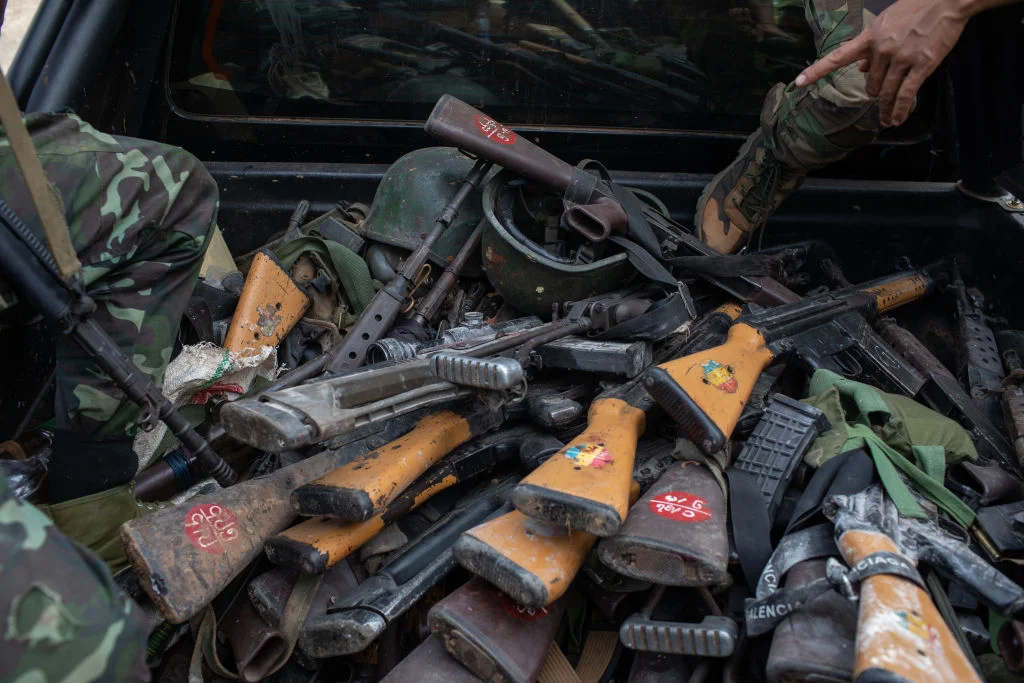
In the very first days of this operation, due to the date of its beginning the name “1027”, the Alliance managed to capture the border city of Chinshvehou, to recapture the counterattack of the Armed Forces of the Armed Forces of Myanmar, dropped into the jungle, and capture several border crossings on the Myanman-Chinese border. Already on October 30, the rebels announced the seizure of 67 army avantists and dozens of prisoners from among the government forces. Gradually, the conflict resulted in the borders of the Shan and covered the regions of Rakhain, Kaya and Sagav, bordering on Bangladesh, Thailand and India.
In clashes with the troops controlled by the junta, militants of the folk defense forces - a militarized wing of the government of national unity (NUG) are also actively involved. This structure consists of officials of the civil, democratically elected government, overthrown by the military in 2021.
Although many Nug leaders are in prison or exile, they consider themselves the full government of Myanmar.
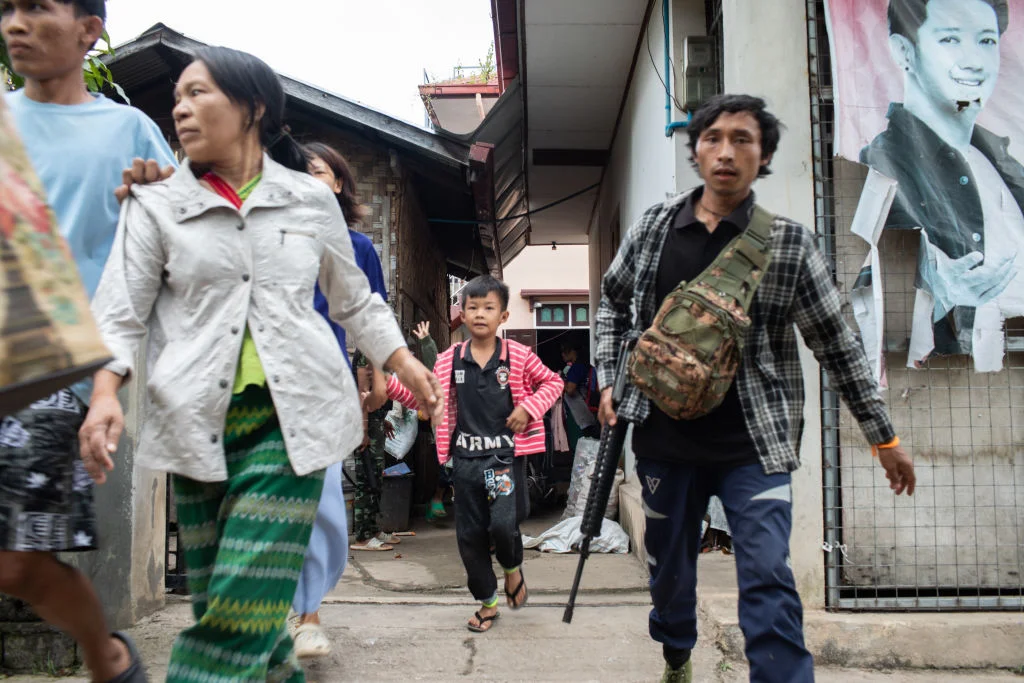
Losing on earth, government troops began massive air raids to the territory covered by rebellion, which led to numerous sacrifices among the civilian population. According to the UN, by mid -November, about 2 million people were forced to leave their homes. Against the backdrop of the growing conflict, China began military exercises on its part of the border and sent warships to the shores of Myanmar. The Myanmar ruling regime has already admitted that the situation is critical.
“If the government does not cope with the incidents in the border region, the country will break up to parts,” said President of Myanmar Myint Svet at a meeting of the National Defense Council.
The origins of the conflict
After the proclamation of independence from the UK in 1948, Myanmar was officially called the Burmese Union (The Union of Birma), which symbolized the multinational composition of the state. In addition to the Burmans' actually the most numerous ethnic group, which inhabits the center and south of the country - 135 ethnic groups live here. Some of them have never completely abandoned the idea of creating their own states and with varying degrees of intensity fought a partisan war with the central government.
The inability to cope with numerous separatist detachments was the main reason for the collapse of the first democratically chosen government of Myanmar. In 1962, the Commander -in -Chief of the Armed Forces, not wines under the slogan of restoration of order, seized the capital, the city of Rangun, arrested most of the government and for almost thirty years established the regime of a single dictatorship based on generals.
A rigid single-party regime, periodically flashing national uprisings, and most importantly-the failure of a socialist economy based on cooperative agriculture and public administration in industry, brought the country to collapse by the end of the 1980s. In 1987, the payments of Burma on external debt reached half of all budget revenues, and the country was officially included in the list of least developed states in the world according to the UN. GDP per capita was ten times less than neighboring Thailand.
In the wake of mass performances that swept all the regions of Burma and accompanied by numerous victims among the protesters, the general did not resign. The producing forces were headed by the Aun Su Su Ji, who returned from the emigration, the daughter of one of the founding fathers of Burmese independence Aun San. In the 1990 parliamentary elections, she headed the National League for Democracy Party, which gained 59% of the vote as a result and received 392 deputy mandate out of 485. represented the interests of the military “Party of National Unity”, for comparison, received only 10 places.
However, the self -proclaimed “State Council for the Restoration of the Law and Order” - the Burmese analogue of the GKChP, consisting mainly of representatives of the army elite - managed to suppress protests and take the situation in the country by that time. The elections were canceled, Aun San Su Ji for many years went under house arrest (in 1991, she received the Nobel Prize of the world in absentia), and the country called Myanmar was headed by a 62-year-old general with Mawung.
The junta returns
In the early 2010s, under the pressure of the world community, the junta weakened the grip: the generals from the government released hundreds of political prisoners, allowed trade unions and strikes. In 2015, the National League for Democracy, recreated by Aun San Su Ji, issued from the house arrest, scored more than 80% of the vote in the parliamentary elections. As a result, for the first time in the history of Myanmar, a government was formed not related to the military.
Aun San Su Su Ji, who had lived abroad for many years, could not become the president under the Constitution, so the country formally led its ally Khtin Zho.
The Myanmansk “thaw”, accompanied, however, by repression in relation to the Muslims of Rohinge and accusations of Su Ji herself in dictatorial manners, did not last long. In February 2021, on the eve of the opening of the first session of the newly elected parliament, more than two-thirds consisting of the deputies of the National League for Democracy, the military accurately repeated the 30-year prescription script. In a few hours, army patrols arrested all key officials, including Aun San Su Su Zhi, who served as a state adviser. A state of emergency was announced, and General Min Auun Khline took the whole power by the commander in chief of the Armed Forces of Myanmar.
Mass protests began in the country again: all the doctors and most civil servants announced the strike, the manifestants filled the streets. Despite the numerous sacrifices and dubious prospects, producing forces decided not to give the country without a fight.
In the spring of 2021, the political activist of Min Ko Nin, who participated in the 1988 protests, announced the creation of the government of national unity and came into contact with the leaders of ethnic rebel groups - Shan, Karen and Kashchi, urging them to oppose the junta by a united front.
A new civil war began in the country, which in the first year claimed 1,500 lives, and 776,000 people forced to leave their homes.
In total, from the moment of the military coup to the beginning of the current exacerbation of security forces, Myanmar killed at least 3,900 people and arrested more than 24,000 protesters. In October 2023, the conflict reached a new level and the number of victims increased sharply.
Massage in Kokang
Along with the previously unprecedented association of producing forces and separatist ethnic groups, a no less alarming signal for the regime ruling in Myanmar is the reaction of China. From the first day of the rebel attack, the Chinese Foreign Ministry distant from the junta, limiting himself to a formal call to the world addressed to both sides of the conflict. A few days later, the Deputy Minister of Foreign Minister of China Norg Rong put Myanmar to the authorities that they poorly ensure security on the Chinese-Mianman border. Despite the traditionally close relations between Beijing and Nupido (the capital of Myanmar since 2005), based, inter alia, on large -scale supplies to Myanmar of Chinese weapons , China did nothing to prevent the attack of the rebels and does not help to extinguish it.
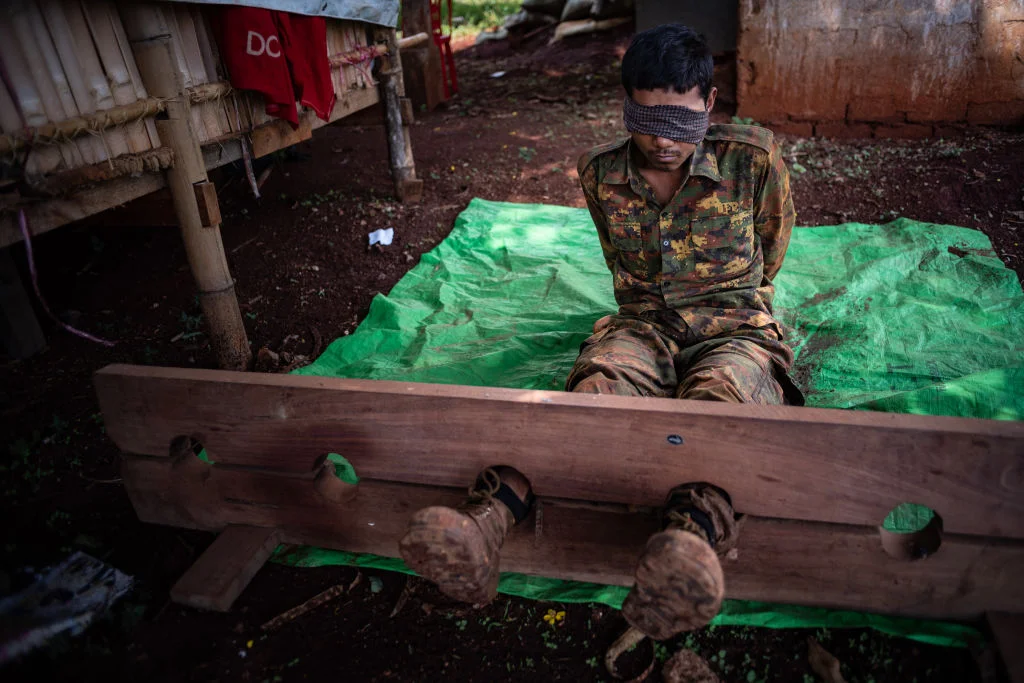
The reason for cooling in relations between countries is what. Faced after the coup in 2021 with numerous sanctions from the United States and the European Union , the government in Neupido was forced to seek additional sources of financing, and in Myanmar, the real boom of the online militia industry began. According to the UN, at least 120,000 people are involved in this activity, which brings the junta, the billions of dollars are involved. Dozens of online casinos and fraudulent hubs are concentrated mainly in the north of Shan, on the border with China. Their direct organizers are often the Chinese criminal groups cooperating with the local authorities. They lure employees from both China itself and from other countries of Asia and Africa, Sulya work in the entertainment industry and a high salary, and in fact condemning people into many hours of slave labor. Numerous journalistic investigations have shown that such workers contain in inhuman conditions, torturing for failure to fulfill norms and killing at the slightest attempts to resist. On October 20, in the self -governing zone of Cokan in the north of Shan, when trying to escape, about 60 people were killed illegally held in one of the villas. Among them were Chinese citizens, including police officers working under cover. The news scattered through the local media and became a regional sensation, causing the indignation of China. Without counting on the assistance of the junta, the Chinese authorities put on the wanted list of the founder of this “enterprise”, which turned out to be a Myanmar official.
Experts of the US Institute of World notes that the PRC since May gave the leadership of the Myanmar Junta unambiguous signals that it is unacceptable to cover fraudulent syndicates on their territory that harm the Chinese economy and practice human trade. However, these signals were not just ignored: many local officials covering criminal fishing were promoted. Actually the organization of human traffic on the border of the two countries, according to Chinese data, was engaged in the Border Service of Myanmar itself.
Myanmar on the verge of decay
By the beginning of December, the United Army of the Alliance of Three Brotherhoods and Folk Defense Forces repelled about 180 military facilities from the army and continue to advance. The junta still holds the capital and large cities, but it becomes more and more difficult to control the situation outside the military. On the side of the government is a multiple advantage in manpower, heavy equipment and aviation:
The fleet of combat aircraft, now bombing Myanmansky villages throughout the country, has recently been replenished by deliveries from Russia.
At the same time, the loss of control over the transport arteries does not allow the junta to quickly transfer the forces and coordinate its actions.
The rebel leaders have no doubt about success. To the question of the correspondent of DW, whether the army of resistance to the capital will reach the capital, the representative of Nug, Kyav Zav, said that this is only a matter of time.
“We are folk power, a popular revolution. The military think that civilians will never win them. But the current operation showed our unity and our strength. The junta is on the verge of collapse. The military is already demoralized and gradually surrendered, ”said Kyav the head, adding that the government of national unity has already created its governing bodies in 170 settlements throughout the country.
However, in case of victory, new problems will face the rebels. The fact is that the Union of the Government of National Unity and Ethnic groups is situational. In the long run, the current allies pursue different goals: Nug seeks to reformat the country on a democratic basis, while maintaining its unity. The army of the Alliance of Three Brotherhoods, on the contrary, fight for the independence of their peoples.
“If the junta falls, this can lead to chaos: competing ethnic armies will control different regions, and a vacuum will arise in the center,” writes The Washington Post. - China, most likely, will introduce troops to ensure border regions. In the worst case, Myanmar will become an failed state that will aggravate the problems of human trafficking and drug trafficking. ”
To avoid such a scenario, participants in the uprising will have to go a difficult path of negotiations and compromises.