
Translated material
Mages on tanks
Why is the military economy of the Russian Federation it is pointless to evaluate by the growth of GDP
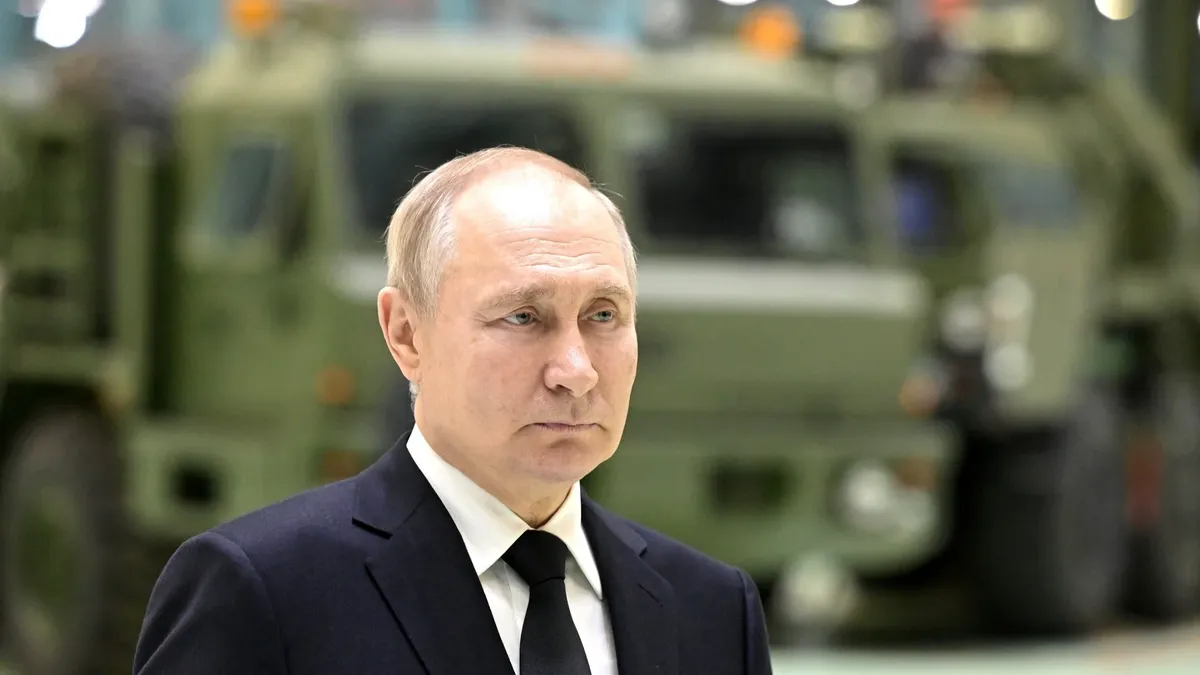
Vladimir Putin during a visit to the North-Western Regional Center of the Almaz-Antey, Obukhov Plant, North-Western Regional Center. Photo: Ilya Talev / MIA "Russia Today" / Kremlin
Some experts started talking again about the possible “victory of Russia” in the war with Ukraine. I am not a military expert, and I will not talk about the prospects for victory on the battlefield. But quite definitely: things in the Russian economy in 2023 are bad. Not catastrophic, but bad. Until the end of the war and the withdrawal of troops from the occupied territories of Ukraine, the standard of living and civilian production will not return to the pre -war level, and until returning to full participation in the world market, sustainable economic growth is impossible.
Economic problems - dissatisfaction with a decrease in the standard of living, which will gradually accumulate, the growth of inequality and the possibility of development - can also affect what is happening at the front. Russian generals and soldiers will more and more understand that they are now fighting for Ukrainian cities and villages, which they will then have to leave during the withdrawal of troops. Because the first responsible government that will come after Putin, even if it is “nationalist,” will withdraw troops to relieve sanctions and restore trade. Because, as already mentioned, without lifting the sanctions, for which the withdrawal of troops and compensation for damage to Ukraine is needed, it is impossible to return to the pre -war standard of life and, moreover, to economic growth.
There is an Iranian scenario in which the archaic political regime continues to be held in power in the conditions of economic stagnation for decades. The Soviet Union in such a situation - economic stagnation in political stability - lasted about 20 years, after which the system of power collapsed. “Putin's stagnation” has been going on for fifteen years, from the global financial crisis of 2008-2009.
The margin of safety of this regime is greater, because it is stronger than the Soviet, relies on a market economy and private property, and so far more than Soviet, integrated into international trade.
On the other hand, the Iranian scenario implies such a fall in the standard of living and such a dump in archaic wildness, which in the history of Russia so far, except on very short segments of the civil war or acute phases of terror.
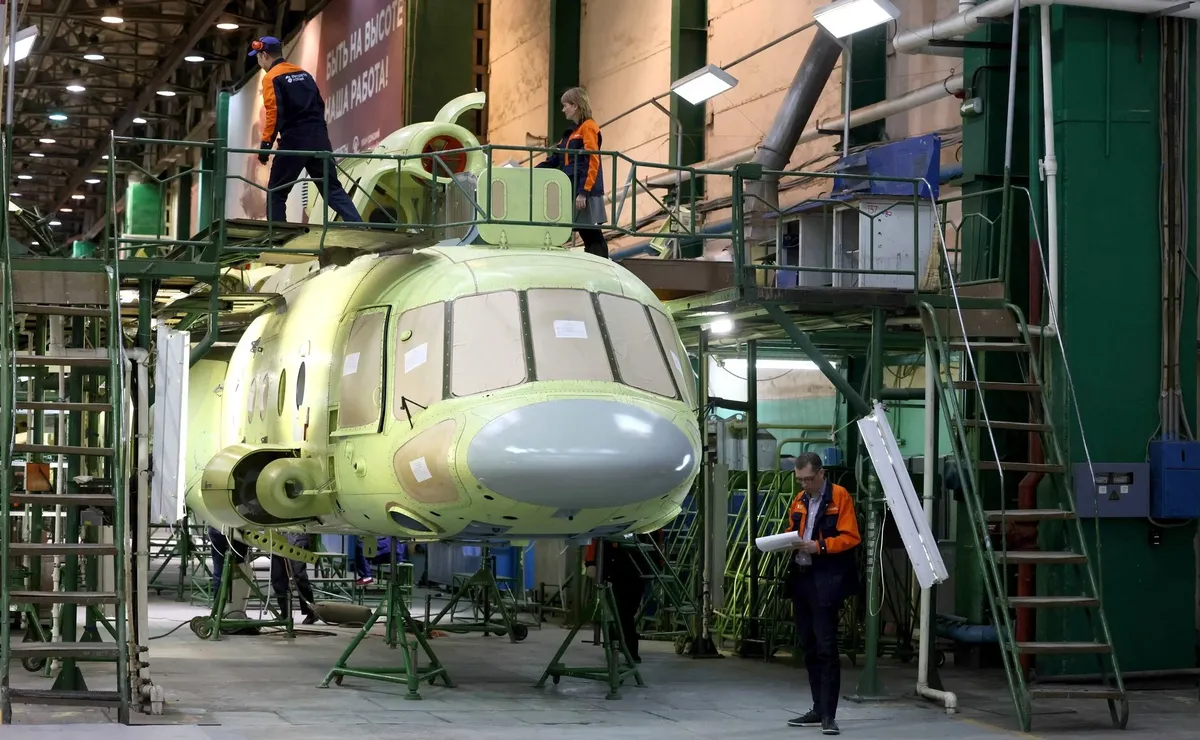
“GDP growth”, which is now being discussed by experts, is a statistical fiction consisting of two components. Firstly, GDP and GDP per capita are valuable and important as economic indicators are not by themselves, but because they, if you averaged for several years, are very correlated with other indicators of the quality of life: with its duration, the amount of free time and time spent with children, with playing sports, traveling, watching TVs, gadgets, clothing, etc. Normal circumstances, the growth of GDP per capita (an indicator that does not in itself significance) at the same time shows how much the standard of living has grown (the indicator that we really are interested in when speaking about the economy). In wartime, these indicators diverge: GDP can grow, but no standard of living. Because the tanks made that burn under Avdeevka in Ukraine, or the missiles that the Ukrainian cities are fired at, appear in GDP, and the standard of living of Russians do not improve.
And if computers or cars were produced instead, the services of dentists or sports coaches were provided, then this would affect both GDP and the quality of life.
The second reason why GDP growth is a statistical fiction during the war is more technical and requires, in a good way, inserts in the macroeconomics textbook, and not a paragraph in the column. GDP measures the “real” quantity of goods (roughly speaking, tons and cubic meters of something), but in rubles. It does not depend on the “price level”, because a special amendment is done for this. But it depends on the relative prices of different goods, so that the space is opened here for the appearance of numbers that have little reflecting reality. When a car, TV, vegetables or fruits, services, etc. is taken into account in GDP, they are taken into account at market prices. But there are no market prices for tanks, rockets, drones - they are essentially created by the government in the process of redistributing resources and reporting. And here, even if no one does it purposefully, the nominal figure begins to be overstated.
Of course, the misfortune consists in the fact that the economy is gradually adapting to the war and military priorities of the government. The more salaries that are paid to the military -industrial complex, the more people go there to work. The larger the state order for the products of the military -industrial complex, the more adjacent businesses, infrastructure, etc. arise around this. This is all not necessary for the economy, it all takes away resources from productive activity.
Moreover: Russian soldiers are now dying, storming the fortified areas in Avdeevka and Kupyansk, which will have to be given when a normal government will appear in Russia. In the same way, all jobs that are now being created in the military -industrial complex and around the military -industrial complex are what will be liquidated when the situation begins to return to normal. During the collapse of the USSR, in which the military -industrial complex was reputed without any measure and proportion, millions of people were left without work, because unnecessary production could not be kept more. In the same way, after the end of the Russian-Ukrainian war, those production that are developing now will become factories for the production of unemployment.
As always, in such a situation there is a lot of "magical thinking in the field of economics." It is clear that Putin and his environment live in the magical world. He holds on power at all costs, his power is not without war and repression. They - profit from war and prefer to turn a blind eye to what price the country will pay for this. It is much more surprising how magical thinking captures the most ordinary people, whose life is objective indicators! - It became worse.
This is not a new phenomenon, of course. In 2014, when the Putin government sharply turned on the path of protectionism and isolation, I wrote a post with a simple and clear explanation of what import substitution is. The schedule, which shows that as a result of the ban on imports its own production will grow, but not to the same extent as to completely replace the imported one, which will lead to an increase in prices and a drop in total consumption and standard of living. As a result, it turned out that way, because it could not be otherwise. But how many comments with magical economic thinking came up, inventing different theories about how total import substitution can lead to an increase in living standards. They did not understand that they were arguing with the rules of arithmetic ( in the traditions of Western journalism, the author here further uses feminity, denoting an indefinite group of persons . - Ed. )
Magical thinking was exploited by the beneficiaries of import substitution.
In the field of politics, the magical thinking of those who believe that stable economic development is possible in conditions of isolation is operated by Putin and his environment.
It is no coincidence that among the supporters of the war and among those who are “volunteers”, so many people with irrevocated loans. But not at all because they go to war to recapture them. These people took a loan and led to propaganda - because these are the very people on whom magical thinking acts. Those who believe that Ukraine attacked Russia, and that in Zaporozhye or Kherson they “protect Russia” are the same people who believe that they can return crazy loans and win the lottery. These are the victims of the Putin’s turn - in finances and in relation to the war. The Russian economy of 2023 is a situation in which the life of the Russians has become worse, but magical thinking gives them the belief that it will soon become better.