
Translated material
Civil servants under the contract with God
15 years ago, Patriarch Alexy II died. Conspirologists are still arguing what happened and his successor Kirill in the collapse of the Russian Orthodox Church
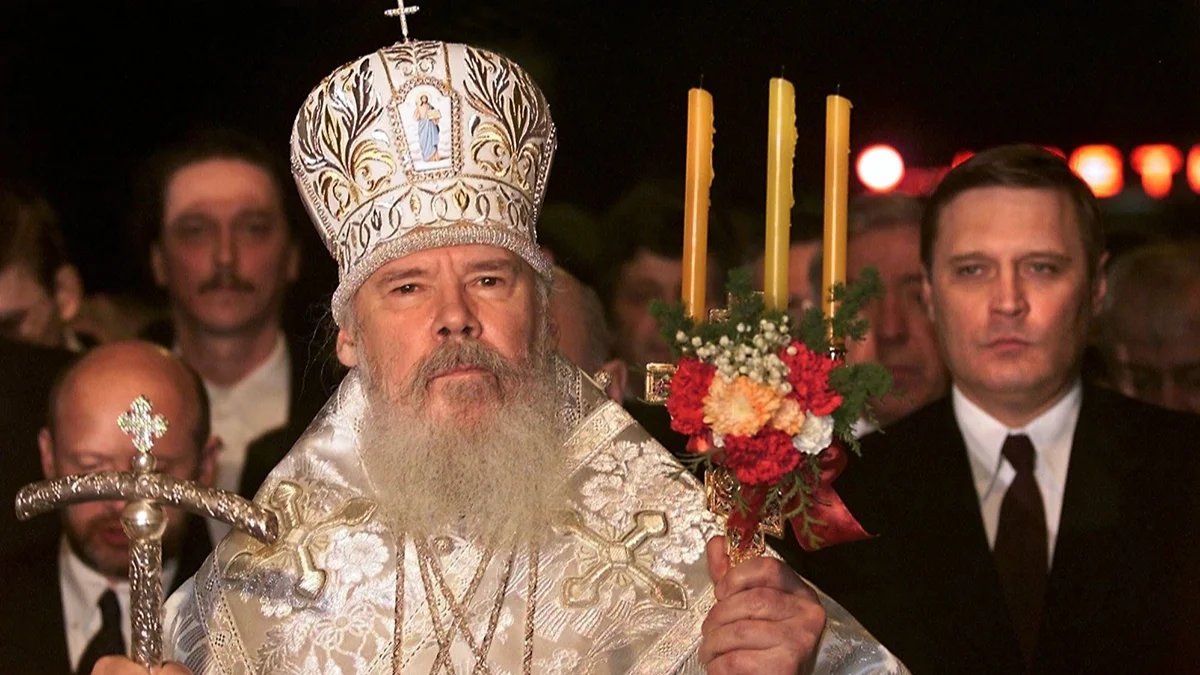
The Patriarch of Moscow and All Rus' Alexy II in the Bogarevsky Cathedral, April 29, 2000. Photo: Sergey Chirikov / EPA
On December 5, 2008, the Patriarch of the Russian Orthodox Church Alexy II suddenly died. He was 79. The next day, December 6, the head of the Russian Orthodox Church (first temporary, and then permanent, in the dignity of the Patriarch) elected Cyril (Gundyaev). He is 77 now.
The circumstances of the death of Alexy II have not yet been fully clarified, and among believers the idea of its incompatibility with the Russia that has been formed for the past 20 years and ended with the paroxysm of war in Ukraine is popular. Christian leaders and ordinary believers in the whole world are wondering whether the Russian Orthodox Church can be considered, who unconditionally supported Putin and justifying "his", Christian. Was the current catastrophe of the Russian Orthodox Church the result of the choice that she made (or which she could not make) 15 years ago?
Versions
On the day of Alexy II’s death, both “national leader” were abroad: the nominal president Dmitry Medvedev - on an official visit to India, and the real leader Vladimir Putin - with unofficial in Armenia. The first immediately interrupted his visit and signed a rather lengthy message. He did not interrupt the second visit and limited himself to brief condolences. Later, these circumstances will also become a “reason for thought” ...
Alexy II had age diseases - mainly cordial (suffered aorticronary bypassing and used a pacemaker) and respiratory. In the fall of 2008, he went through a thorough course of treatment in Germany, from where he returned to Moscow on December 2 and began active activity. On December 4, on the festival of introduction, he served the solemn liturgy in the Assumption Cathedral of the Kremlin, talked with the delegation of the Eltsk Church, and then went to the Don monastery, where he committed a prayer service and said a sermon. According to the current Metropolitan of Tver Ambrose (Ermakova), at that time the rector of the St. Petersburg Theological Academy, the Patriarch gave him two days before his death and looked quite cheerful. He was remembered by the participants in the services on December 4.
The first reports of Alexy II's death appeared at the 5th exactly noon. At first it was reported that he died "an hour and a half ago", then-"between 7 and 8 hours in the morning." When the then head of the Patriarchal press service indicated this contradiction, he promised that the exact time of death will be “informed by a special commission”. She was supposed to publish a medical ballot with the causes of death. 15 years have passed, but the ballot has not yet been made public. Like not a single posthumous photograph of Alexy II, which contradicts the traditions of the Russian Orthodox Church.
One Moscow priest, who served a panachid at the coffin of the patriarch, deep on the night of December 7, 2008, told the author that when he tried to carefully look under the “air” (square boards from brocade fabric), which covered his face Alexy II, he found that he was attached to his face tightly. Strictly speaking, even the fact of the burial of Alexy II cannot be considered legally established - it will be possible to establish it only after the completion of the current political regime in the Russian Federation.
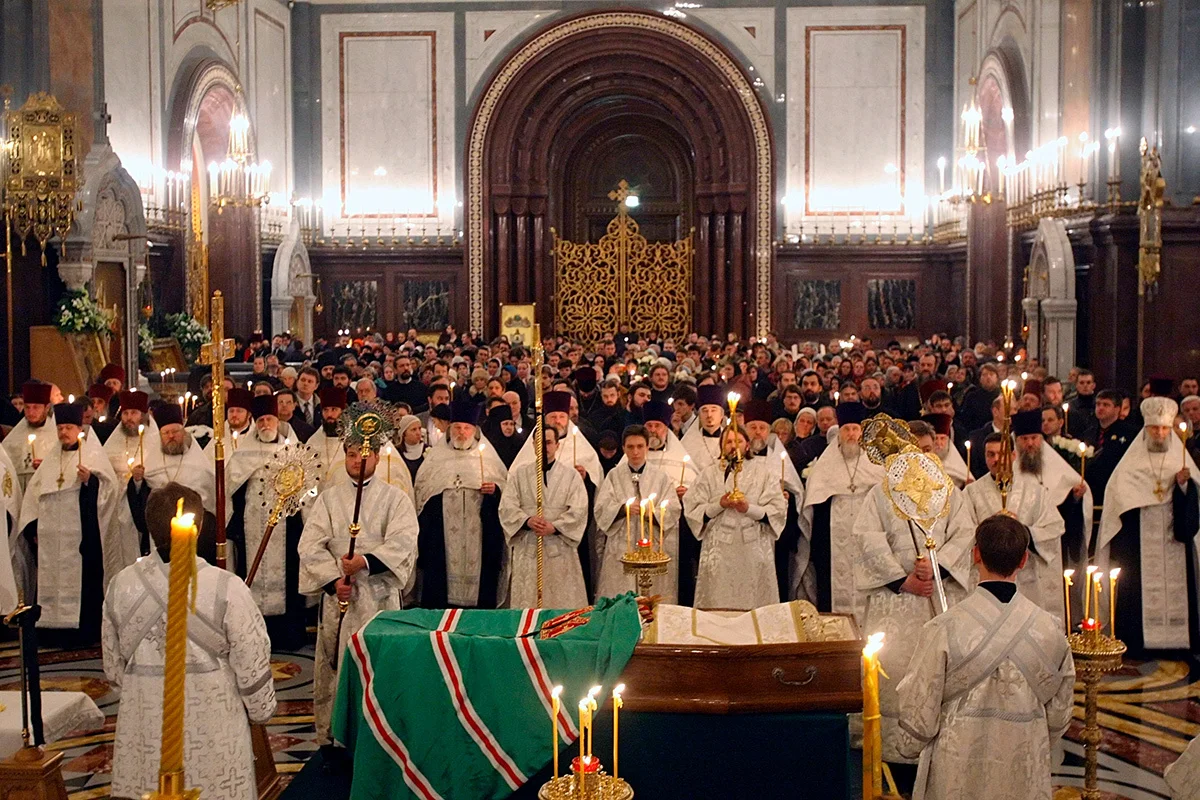
It is difficult to say what goal the leadership of the Russian Orthodox Church and the Russian Federation pursued, catching the fog around the death of Alexy II. But it is quite natural that many versions have grown in this fog and a wealthy conspiracyology has risen. At first they said that the Patriarch died in an accident, and his body was so disfigured that it is impossible to show. Another version was nearby: that they shot at the patriarch, and it was not possible to hide the traces (this version, in particular, was promoted by actor Stanislav Sadalsky). Then they spoke that there was an electromagnetic effect on the pacemaker implanted into the body of Alexy II. Finally, the “canonical” was the version that the protodiacon Andrei Kuraev formulated as follows: “Just an elderly person, with some turn or sharp movement for a second, lost its coordination of movements-and fell. But falling, the back of his head hit the corner of the chair. And this corner interrupted Vienna. " At the time of the announcement of this version (autumn 2009), Kuraev actively played in the team of Cyril-his words were designed to drown out suspicions of the new Primate.
In fact, the oil into the fire of such suspicions was periodically added by Cyril himself. On December 6, 2008, in the program “The Word of the Shepherd” on the “First Channel” of Russian TV, he said : “Sometimes the Lord for some time gives the church a certain test when it is at the head of its elderly and almost already incapable of managing. This is a very difficult time for the church. His Holiness Patriarch left, protecting our church from this difficult time. ” The intonations and the appearance of Cyril left no special doubts about his emotions about what happened. But, as the youth says, Karma gradually overtook him: today he is only two years less “left in time”, and he is already falling from the departments, fainting happens to him, and on the sermons he confuses the names of the holidays and the names of the saints ...
The succession of power
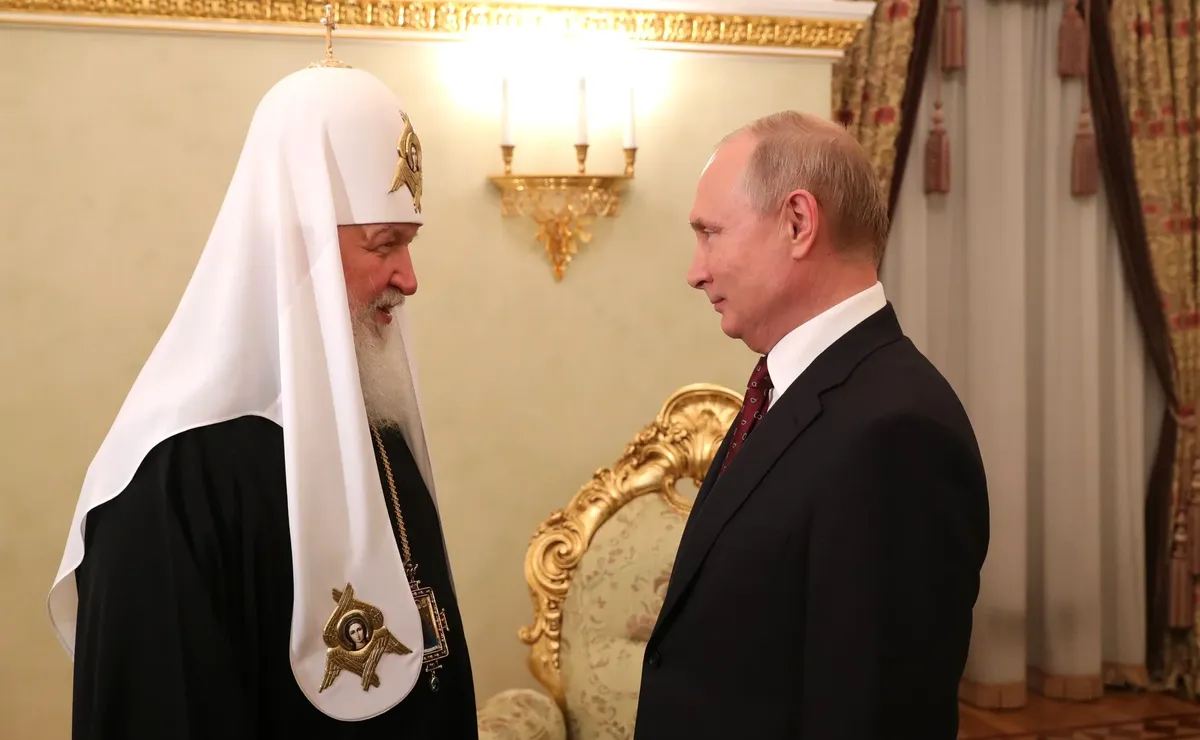
By 2008, Patriarchate became an important institute of Putin's Vertical. It served two main tasks: strengthening the legitimacy of power through its “sacralization” (the president not only “elects” the people, but also blesses the patriarch, that is, he holds his post “by the will of God”) and ensuring the “connection of times”. Alexy II was a bright symbol of such a connection: he became a priest under Stalin, a bishop under Khrushchev, Metropolitan under Brezhnev, a patriarch under Gorbachev, “revived the Church” under Yeltsin and Putin. In this sense, Cyril looks more modest: he is harshly attached to the Putin era, and about his “Catholic / ecumenical” past, partially in Geneva and Rome, it is not supposed to be resembled. Alexy II was the only patriarch in Soviet-Soviet history, elected (in 1990) in a relatively free election-in several rounds of secret vote. Patriarchs Sergius, Alexy I and Pimen were previously appointed by the CPSU Central Committee, and Cyril’s elections (which are below) were extremely opaque.
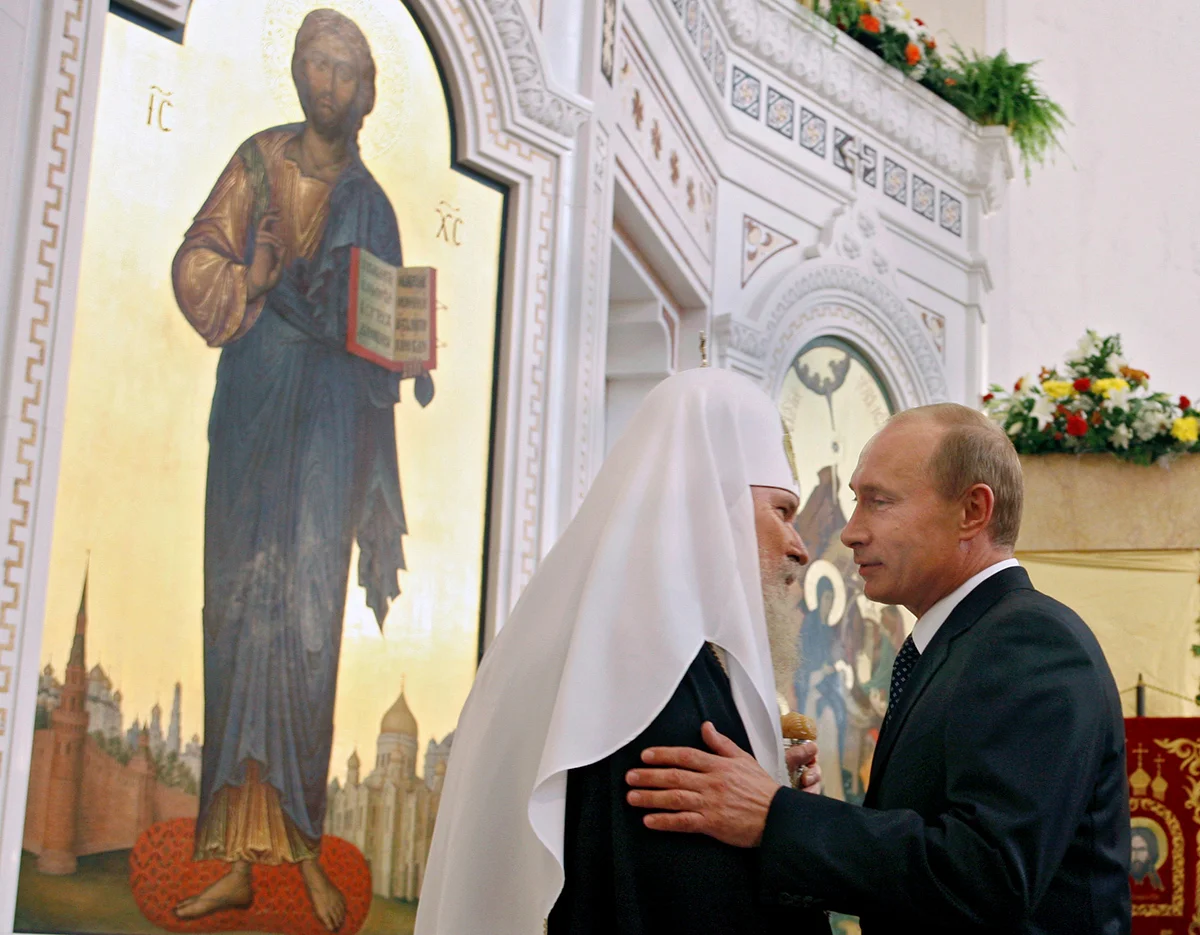
Most often, the patriarchate of Alexy II is associated with a sharp increase in the number of structures of the Russian Orthodox Church (the number of existing temples in the Russian Federation in its years has increased 4 times). His great achievement was the preservation of the administrative unity of the Moscow Patriarchate in turbulent conditions of the 1990s. Only in Estonia, Ukraine and Moldova, the Russian Orthodox Church lost part of its parishes, but everywhere retained the dominant position among Orthodox jurisdictions. Alexy II managed to preserve the unity of world Orthodoxy, which Cyril has already destroyed; Under him, the new martyrs were canonized Russian, who suffered from the Soviet regime, led by Tsar Nicholas II. True, the “anti -Soviet” new martyrs who did not recognize the “Red Church”, whose heiress is the current Russian Orthodox Church, were not canonized, although there are much more than pro -fighting ones. At the same time, under Alexia, the Institute of Local Council with the participation of married priests and laity was actually liquidated (according to the charter of the Russian Orthodox Church, he was supposed to gather at least once every five years, but never had been gathered under Alexia II), total commercialization of church life, a breakdown of relations with Western Christians ...
Black PR and bright illusions
For the first time in the history of the Russian Orthodox Church, the election of Cyril was preceded by a stormy PR campaign using dirty methods that shocked the hierarchy and church people. Andrei Kuraev, who became the face of that campaign and a rewarded for this, the protodiacon and the right to wear a violet Camilance, later regretted that he had spoiled his biography so.
Since the then manager of the Patriarchate of Kaluga, Metropolitan Clement (Kapalin), was considered the main competitor of Cyril, the “Kapalinsky clan” fell under the blow of the PR campaign-primarily the Klement’s brother, the Tobolsk Metropolitan Dimitri (Kapalin). He, of course, is not an angel, but without sufficient legal foundations of Kurai and other promoters of Cyril, they hung on Dimitri and harboring elections for the Local Council, and the suicide of seminarians, and abuse of relics, and the destruction of historical and culture monuments. The former minister of taxes and fees, Alexander Pochinok, joined, who on the air of Echo of Moscow authoritatively stated that the head of the Patriarchate's Humanitarian Aid Headquarters, through which tobacco and alcohol, was the Clement. Although the nickname "Tobacco Mitropolitan" was fixed after Cyril.
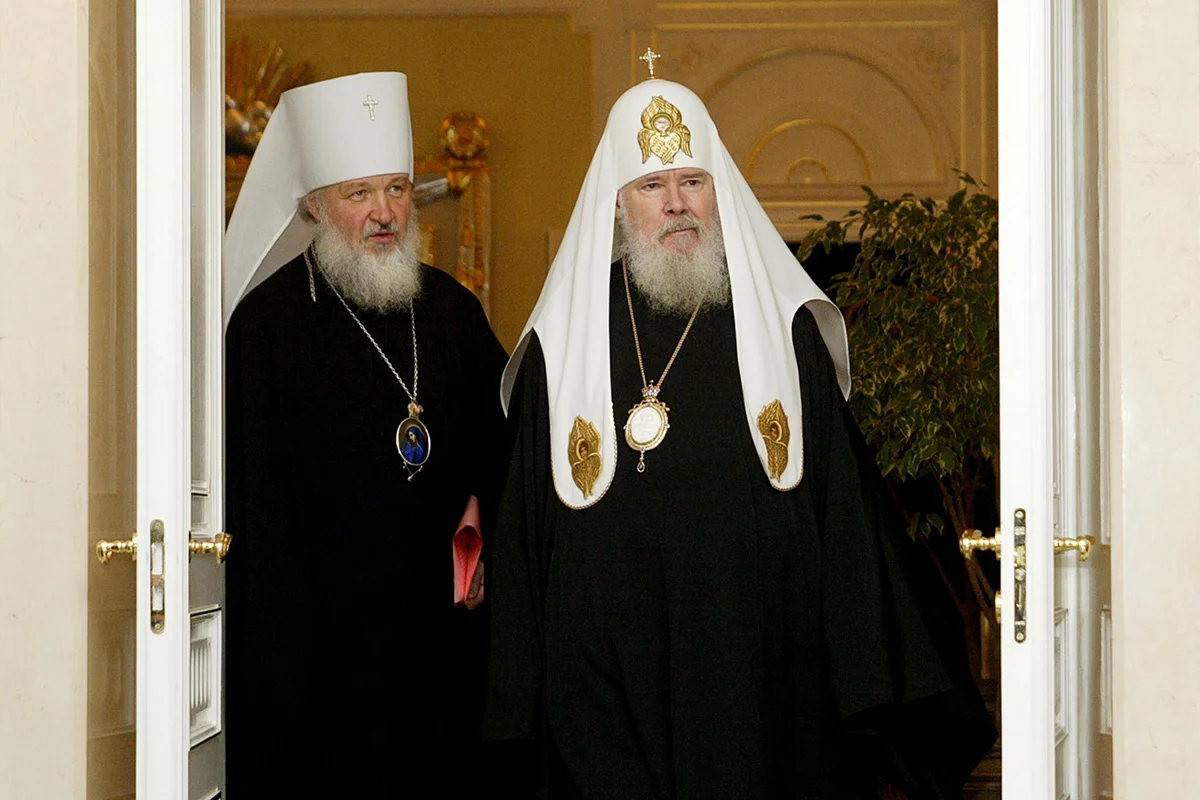
Thanks to the final of the television show, “The Name of Russia” at the end of 2008, it became finally clear that Cyril was a candidate of the Kremlin. The popular vote in this project took many months - Stalin, Lenin and Vladimir Vysotsky fought for the first place. But when Cyril, still a patriarchal locomotor, began to present in the project of Alexander Nevsky, the winner suddenly turned out to be this, far from the deep people of the 13th century. It was on that show that Cyril presented his “geopolitical project”, which he now explains “Svo”:
Nevsky made a choice for Russia in favor of the East, in favor of a strong empire with a disenfranchised people, rejecting the Western Himer of Freedom and Human Rights.
The Guru ROCS reformers, the Moscow priest Georgy Kochetkov then also campaigned for Cyril. In an interview with Credo.press, Kochetkov called his former rector in the Leningrad seminary “an organizer that can agree with state power and preserve the church outside of schisms ... This is a very talented, smart, educated, purposeful, capable of decisive action and therefore sometimes a little hard.” And Kuraev believed that Cyril could “keep Ukraine”, on which Alexy II “scored”: “The period of church homelessness for Ukraine ends.” Today about. Georgy Kochetkov is a zealous supporter of “his to the victorious end”, and Kuraev, deprived of the dignity with his client chef, under the threat of criminal prosecution by the Russian Orthodox Church, emigrated from Russia. Well, in Ukraine (in its free territory) there was not a single parish that remembers Cyril as his primate.
Asphalt Palator and Ghost Nicodemus
The Local Council, which officially elected Cyril by the Patriarch, took place in the Cathedral of Christ the Savior in a special operation mode on January 27–28. He became the shortest in the history of the Russian Orthodox Church. On the first day, two reports were made and the elections of the Patriarch were held, at which Cyril defeated Clement with a significant advantage (other candidates were not exhibited or self -setting). They reported that he scored 508 votes out of 677, but the ballots were immediately burned, and it is impossible to check the numbers. On the second day, two definitions and a message were adopted, deciding not to continue to work on January 29, as planned earlier. The Annals commented on the delegate of the cathedral from the Belgorod diocese of Hieromonk Agafangel (Belykh): “Asphalt Poster!” Yes, Cyril spent the cathedral rapidly and harshly, stopping in the bud any attempts to speak out or change the procedure.
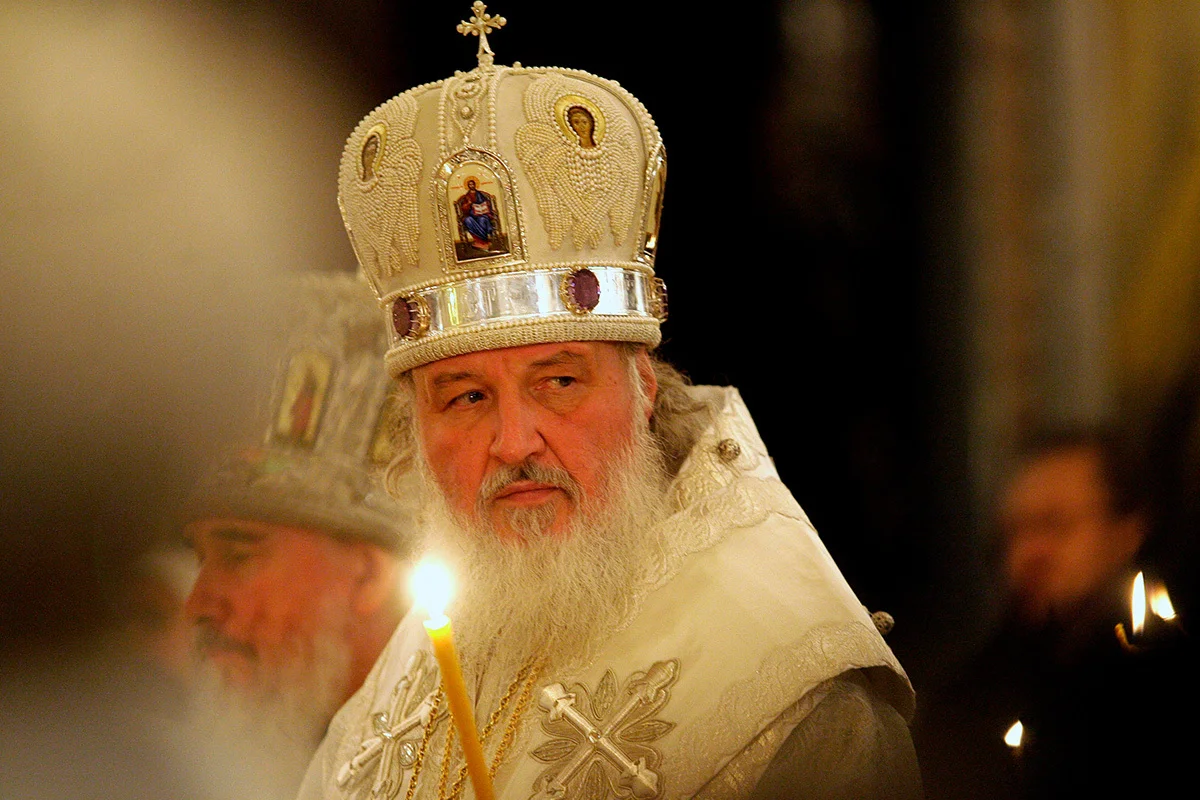
The composition of the participants in the cathedral was, to put it mildly, very strange and did not reflect the real "demography" of the Russian Orthodox Church. The laity was “represented” by the deputy chairman of the State Duma Committee on Taxes and Duties, the rector of the Sechenov Medicalcademy, the director of the Astrakhan circus, general director of UNIFARM LLC, several folk artists of Russia, the deputy chief of customs, a member of the Board of Directors of the Swiss company, the chairman of the public chamber of the Ivanovo region, the head physicians of clinical hospitals, the heads of the marshmallows, and the heads of the museums, the heads Universities and other officials and large businessmen. The streets and squares adjacent to the temple were numb by police officers, the FSB and FSO, and mobile signals were jammed inside and around the temple. A number of independent Internet resources about religion were subjected to hacker attacks and could not work during the cathedral.
Despite the high numbers of those who voted for Cyril, the Cathedral and the elections left a bitter taste in the Russian Orthodox Church. The new patriarch did not become his own for conservatives or liberals in Russian Orthodoxy. From the first day, he was positioned as a top official: his intronization took place on February 1, and already on the 2nd Dmitry Medvedev gave a luxurious reception in the Kremlin on this occasion. The position of the radical opposition was expressed by supporters of the Chukchi bishop Diomid (Dziuban), who openly opposed Cyril in the spring of 2008, accusing him of heresy and godlessness. Cyril quickly achieved his excommunication, and today the Diomidovites belong to the world of "alternative" Orthodoxy.
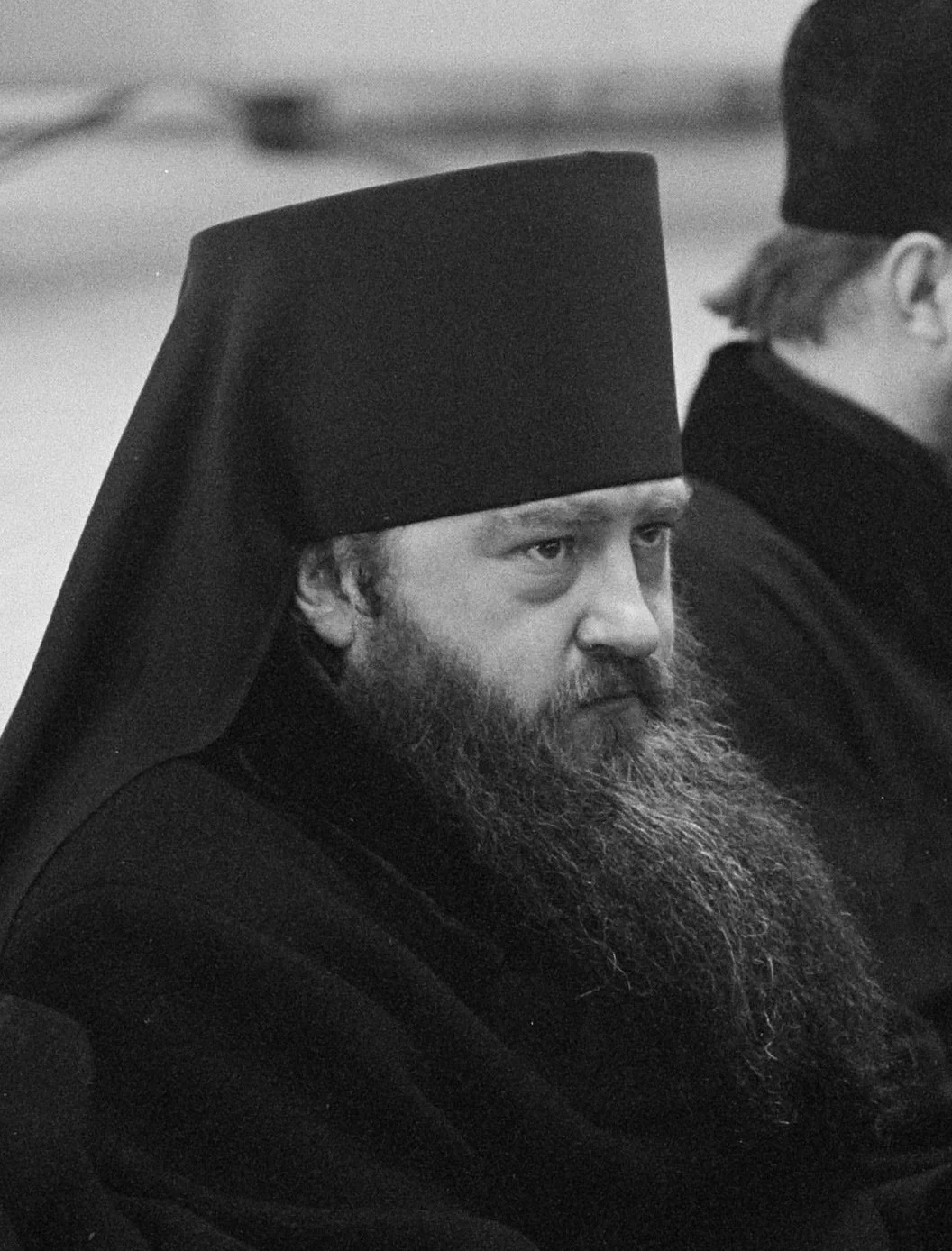
The image of the teacher Cyril Metropolitan Nicodemus (Rotov), the convinced ecumenist and at the same time, the supporter of the communist ideas who died at the reception of the KGB reports identified by the Commission of the Supreme Council of Russia in 1991–92, was absolutely unacceptable to church conservatives, and at the same time, the KGB reported by the Svyatoslav agent, and then the then young then his then young then young then. Assistant Cyril - as an agent Mikhailov. Cyril’s attempts to raise the question of the canonization of Nicodemus suffered Fiasco after Kuraev, who turned to the opposition, published evidence of the phenomenon known in the Russian Orthodox Church as “Nicodimov’s sin” - involving seminarians in intimate relations with the bishop.
Administrative delight
Having become a patriarch, Cyril eagerly took up the reforms, being confident in his special talents and the calling to make the Russian Orthodox Church as huge and influential as the Roman Catholic Church (his mentor Nicodemus dreamed about this). His style was frightened by the traditionally Orthodox circles by the deliberate profanation of Christianity due to coarsing the language of preaching, quite comical attempts to master youth slang and perform at stadiums, transferring the church to the Internet, the abandonment of asceticism and the reduction of worship, which Cyril himself obviously burdens. In this sense, he is “sixties”, a product of the Soviet scientific and technical revolution, a “natural science” approach to mysticism. Hence his passion for Juna and paranormal phenomena in the past and discussion about energy charging from miraculous icons - in the present.
A few years ago, the Wednesday service close to the Patriarchate compared the vocabulary of the sermons of Alexy II and Cyril. The comparison was made “in favor of” Cyril, but curious facts penetrated into it:
For example, the word “power” Cyril uses three times more often than his predecessor, the word “law” is 10 times, the word “power” is 5.
Alexy II almost did not use the secular categories of “values” and “understanding”, which Cyril constantly addresses. He repeatedly criticized a certain “medieval language” (the language of the Bible and the saints?), Propagated sport instead of ascetic exploits and his personal “modern” lifestyle, including love for dogs, skiing and aquabike. It is noteworthy that at the same time, Cyril almost does not interview in an informal setting, as Alexy II loved, and all leaks from his private life turn around with scandals (“bad apartment” in the house on the embankment, the disappearing watch “Breguet”, expensive limousines, yachts and business jets, the palace near Gelendzhik, etc.). Such a train did not reach for Alexy II, who was not particularly interested in the business and admitted that he was badly versed in it. If Cyril, not without pleasure, spoke in one of the sermons that he was credited with a fortune of $ 6 billion, then the largest financial scandal around the name of Alexy II, which erupted after his death, comes down to a sum of 305 million rubles.
Cyril produced a grandiose “disaggregation” of the dioceses: if in 2008 there were 69 of them in the Russian Federation, today - 172. The principle of this disaggregation is quite simple: if the diocese previously covered the entire territory of the subject of the Russian Federation (or even several subjects), then the dioceses in district centers are now formed, so that they were conceived on the territory of most entities from 2 to 5. The people, to parishes in the province, but in fact led to the devaluation of the bishop’s dignity, when people without education and a bad reputation are appointed to the newly formed “district” dioceses. Experts expressed the opinion that Cyril is thus trying to ensure a numerical advantage in the future of the Ecumenical Council, where bishops from all Orthodox churches should gather, but after his refusal to participate in the Lorelore Cathedral of 2016 and the subsequent breakdown of communication with the Ecumenical Patriarchate, this motivation itself fell by itself. Today, the reform has stalled, and many “district” dioceses are left without their own bishops for years.
Another “missionary” undertaking of Cyril is an order to introduce a specialist in working with youth, a ministerial catechist and a social worker into the staff of all urban and large rural churches, providing their constant duty. Склонные к экономии средств приходские батюшки сами замещали эти должности, так что в первые годы патриаршества Кирилла в храмах можно было наблюдать забавную мизансцену: письменный стол напротив свечного ящика, за которым дежурит «катехизатор-миссионер» в рясе, ожидая, что к нему обратится кто-то из «ищущих православие». Постепенно столы за ненадобностью убрали, но гигантская и никому не нужная отчетность, которую патриархия ввела при Кирилле, по-прежнему обременяет настоятелей.
Бюрократический аппарат патриархии вырос в разы: помимо управления делами, в него теперь входят административный секретариат, личный секретариат патриарха, референтура, управление по г. Москве, управление Московской митрополией, канцелярия, служба делопроизводства, служба протокола, правовое управление, финансовая служба… Это не считая десятков синодальных учреждений. Как минимум, в сфере бюрократии мечта Кирилла о «московском Ватикане» вполне осуществилась.
Бюрократизация церкви — процесс, прямо противоположный ее демократизации. От реформы РПЦ 1988–1990 гг. при Кирилле ничего не осталось: за Поместными соборами сохранена лишь функция избрания патриарха, епархиальные органы никем не избираются, а назначаются архиереями, даже члены приходского собрания утверждаются и исключаются архиереем.
Приходское духовенство — одно из самых бесправных сословий в путинской России: его отношения с РПЦ не регулируются и не защищаются КЗоТом, а церковный суд — номинальный орган при архиерее, где добиться правды невозможно по определению.
Духовенство никак не избирается своими прихожанами и часто переводится с прихода на приход. Для имитации соборности Кириллом придуманы «Межсоборное присутствие» и «Высший церковный совет», но их состав формируется синодом (то есть тем же патриархом), никем не избирается и подотчетен только патриарху и синоду при нем. Синод, состоящий из 14 архиереев, также никем не избирается, а сам формирует свой состав.
Алексий II против «СВО»?
Тенденция к снижению посещаемости храмов РПЦ, обнаружившаяся еще в конце 90-х, привела при Кирилле к заметному опустению этих храмов. По статистике МВД, посещаемость нескольких сотен московских храмов на Пасху (а это годовой максимум) снизилась к 2012 году до 90 тысяч человек, уступив посещаемости 4 московских мечетей на Курбан-байрам (около 120 тысяч). По настоянию Кирилла была «изменена методика» подсчета посещаемости храмов в Москве, и сегодня достоверной статистики об этом нет. Зато старая методика сохраняется в регионах, где посещаемость колеблется в районе статистической погрешности — от десятых долей до нескольких процентов.
Природная жестокость Кирилла, звучащая во фразах «Простить было бы некорректно» (по делу о квартире) или «Прощения не бывает без справедливости» (о «СВО»), оттолкнула от него интеллигенцию и морально чуткую молодежь. Агрессивное проникновение РПЦ в системы образования и здравоохранения, сочетающееся с показной роскошью патриарха и высшего духовенства, также не уменьшило аллергической реакции общества «на попов». Конечно, всё это началось при Алексии II, но не достигло бы таких масштабов без титанических усилий Кирилла. После такого опыта, если бы в России вновь провозгласили госатеизм, верующих, готовых идти за свои убеждения на смерть, оказалось бы в разы меньше, чем в эпоху мучеников 1920–30-х гг.
Алексий II был представителем другого поколения, к тому же выросшим в свободной довоенной Эстонии. Он дорожил теми немногими атрибутами самостоятельности, которые РПЦ получила в позднем СССР и в 1990-е, и это позволяло ему, например, резко осудить Первую чеченскую войну и не благословить войну в Грузии. Более того, Алексий II отказался принимать в юрисдикцию РПЦ приходы Абхазии и Южной Осетии, признавая их неотъемлемой частью Грузинского патриархата. Отсюда — следующий вопрос для конспирологов: совпадение ли, что между войной в Грузии и смертью Алексия II прошло всего 4 месяца?
В первые годы патриаршества Кирилл вроде бы продолжал курс предшественника: не явился в Кремль на церемонию подписания договора о вхождении Крыма в состав РФ и вплоть до прошлого года признавал епархии Крыма (а позже «ДНР» и «ЛНР») неотъемлемой частью Украинской церкви. Более того, до 2014 года Кирилл заигрывал с Украиной: ежегодно посещал ее с визитами, вместе с президентом Ющенко возлагал цветы к мемориалу жертв Голодомора, обещал принять украинское гражданство и думал об изменении титула на «Киевский, Московский и всея Руси». Свою концепцию «русского мира» он также разрабатывал «под Украину», предлагая РПЦ в роли надгосударственной структуры, скрепляющей «три братских народа» без политического подчинения друг другу.
Концепция треснула в 2014-м и окончательно умерла в 2022-м. Теперь «русский мир» — это не «культурный проект», а полномасштабные военные действия, и Кирилл полностью подчинился этой новой реальности. Подчинился не пассивно, от безвыходности, а креативно, пытаясь опять поучать и благословлять, — теперь уже строго в рамках «СВО». «Мы как Церковь, — говорит он, — должны принимать участие в борьбе нашего Отечества… с этой проказой, с этим антихристовым движением, могущим погубить и весь мир, и Россию».
Теперь кредо Кирилла — «богословие войны», которую он называет сакральной, метафизической. Есть лишь одна очевидная для него дорога в рай — гибель на поле битвы в «СВО». И есть лишь один пророк, который возвещает истину русскому народу и через него — всему миру. 28 ноября на Всемирном русском народном соборе, участники которого крестились и кланялись изображению Путина, Кирилл впервые с такой однозначностью связал судьбу РПЦ с судьбой Путина (раньше об этом говорили только критики РПЦ). Посвятив свой доклад тезису о том, что Россия может быть свободной только с нынешней властью и только при условии победы над «непростыми обстоятельствами», Кирилл подытожил: «Если не будет свободной России, то и Церкви Русской не будет — найдутся и те, кто изнутри предаст, и те, кто извне поглотит». Такова его вера: не на Христе, а «на России» держится его церковь.