
Translated material
So here’s the Russian opposition’s strategy to confront Putin in the March 2024 presidential election
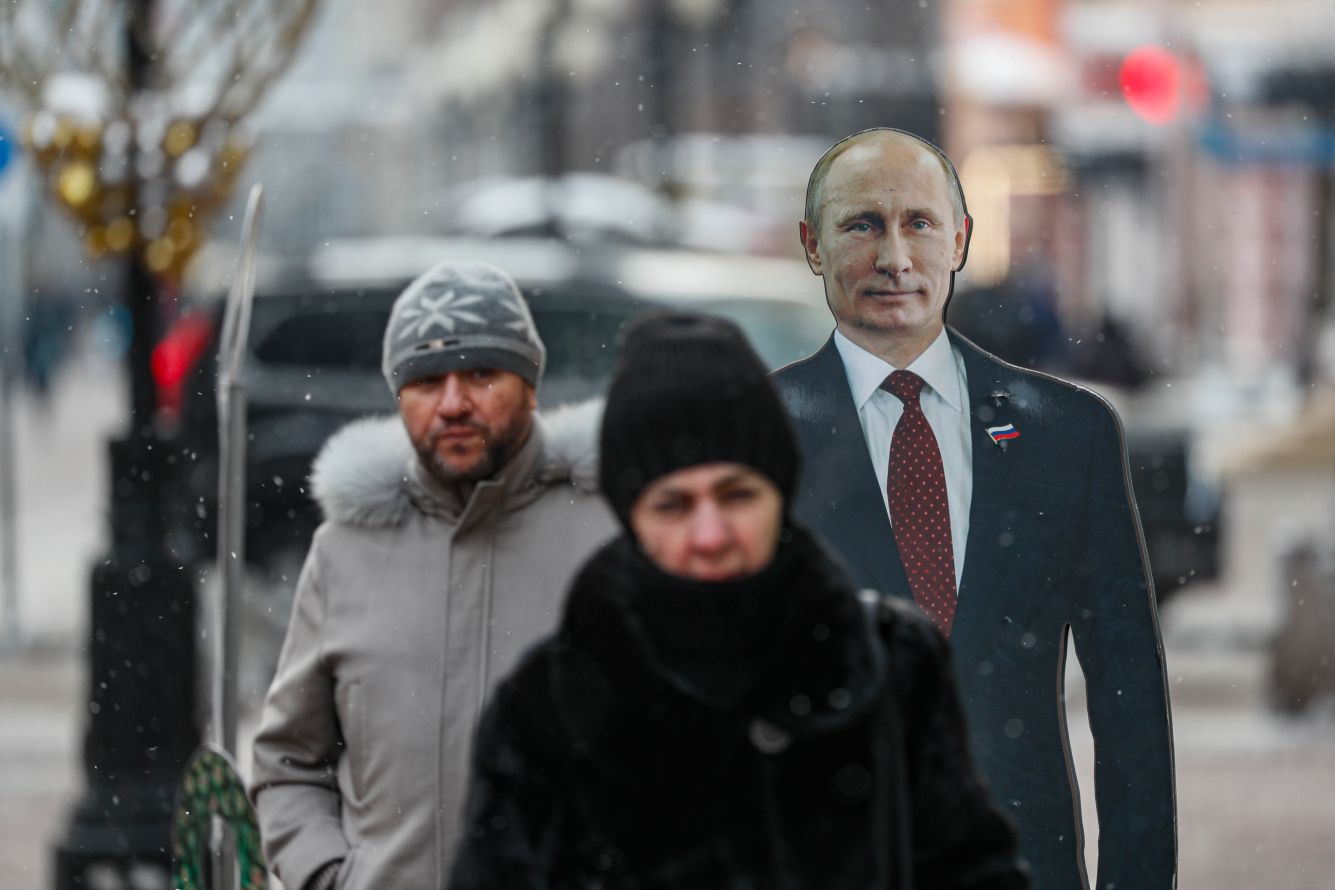
With the flourish supporters have come to expect, Alexey Navalny’s team of activists has unveiled its election strategy for Russia’s next presidential race, which will conclude on March 17, 2024. Team Navalny announced its campaign on Thursday by revealing that it placed multiple billboards across Russia with seemingly innocuous holiday messages that, in fact, led to an anti-Putin website through a QR code in the advertisement. (The billboards were taken down soon after officials learned about the QR codes.) Navalny’s activists say they’ve decided to advocate the same strategy they’ve favored in numerous elections: urging voters to cast ballots for anyone except the favorite (expected to be Vladimir Putin). At the same time, Team Navalny says the election’s results will be falsified and that the act of campaigning against Putin is “far more vital” than voting.
“Any elections — even the fakest — are a time of doubt. People think about who is in power and why they’re there,” Navalny’s team says in its announcement, arguing that the Russian opposition must “answer these doubts” by “giving meaning” to Russia’s inherently meaningless voting process. The activists directly appeal to boycott advocates by reasoning that anti-Putin campaigning unites both camps, regardless of the difference in ballot strategies.
What does Team Navalny propose for the presidential election?
The activists challenge supporters to convince at least 10 other people “to oppose Putin” in the March 2024 presidential election. They suggest three types of campaigning:
- Join Team Navalny’s telephone campaign
- Download and print out prepared anti-Putin leaflets, stickers, and posters and then distribute them throughout cities in Russia
- Campaign online, not just by “liking and reposting” campaign materials but also by sending such content to people yet to be converted to the opposition’s cause
Team Navalny’s “Russia Without Putin” website (its campaign portal and the secret landing page for its shortlived billboards) doesn’t mention that Navalny’s Anti-Corruption Foundation and campaign offices have been banned in Russia as “extremist organizations.” The website also doesn’t note anywhere that Navalny’s U.S.-registered Anti-Corruption Foundation International is similarly outlawed in Russia as an “undesirable organization.” Navalny’s team asks supporters to share their email addresses and promises to protect their privacy.
What do other opposition activists propose?
Politician Maxim Katz, whose bad blood with Alexey Navalny is notorious, has called on the leading “political media outlets” to unite behind a single campaign strategy. His media-focused strategy imagines a cascading chain of opinion influencers campaigning against Putin. The order of operations looks something like this:
- Outlets run by Katz, former oligarch Mikhail Khodorkovsky, and Team Navalny → the “active opposition” → “opinion leaders” (famous bloggers, actors, journalists, and musicians) → the “30 million people” who already watch the opposition media, who in turn will → win over the “60 million neutral people”
Katz argues that election fraud will become difficult for the authorities if the opposition can mobilize so many people against Putin.
So everybody’s on the same page?
Nope! In October 2023, Katz invited Mikhail Khodorkovsky and Team Navalny leaders Maria Pevchikh and Leonid Volkov to meet in London to discuss his proposed campaign alliance. Khodorkovsky agreed to the talks, but Navalny’s associates declined.
After Katz announced his strategy, Team Navalny began a large-scale survey of Russian politicians, journalists, and public figures to determine their attitudes about the upcoming presidential race. With more than 54,000 responses, the most popular strategy (with almost 50,000 votes) was for the opposition to endorse a single candidate and unite behind that person. The less popular approaches, voting for anyone but Putin and boycotting the election altogether, scored 45,000 and 30,000 votes, respectively. Team Navalny ultimately endorsed the middle option.
Katz responded to the news of Team Navalny’s campaign strategy by writing, “Oh, progress! There’s still some time to form a broad opposition coalition and run a general campaign using everyone’s resources. I hope that’s where this is headed.” Judging by the replies to this post, however, most readers interpret Katz’s remark as facetious.
Meanwhile, dissident and former chess champion Garry Kasparov calls on his supporters to boycott the election. In October 2023, he argued that the opposition’s goal should be “regime change” in Russia, which he says is possible “only if Ukraine wins.”