
Translated material
People against oil
How Norway distributes oilollars for the benefit of the whole society and why ecologists again require a reduction in prey in court
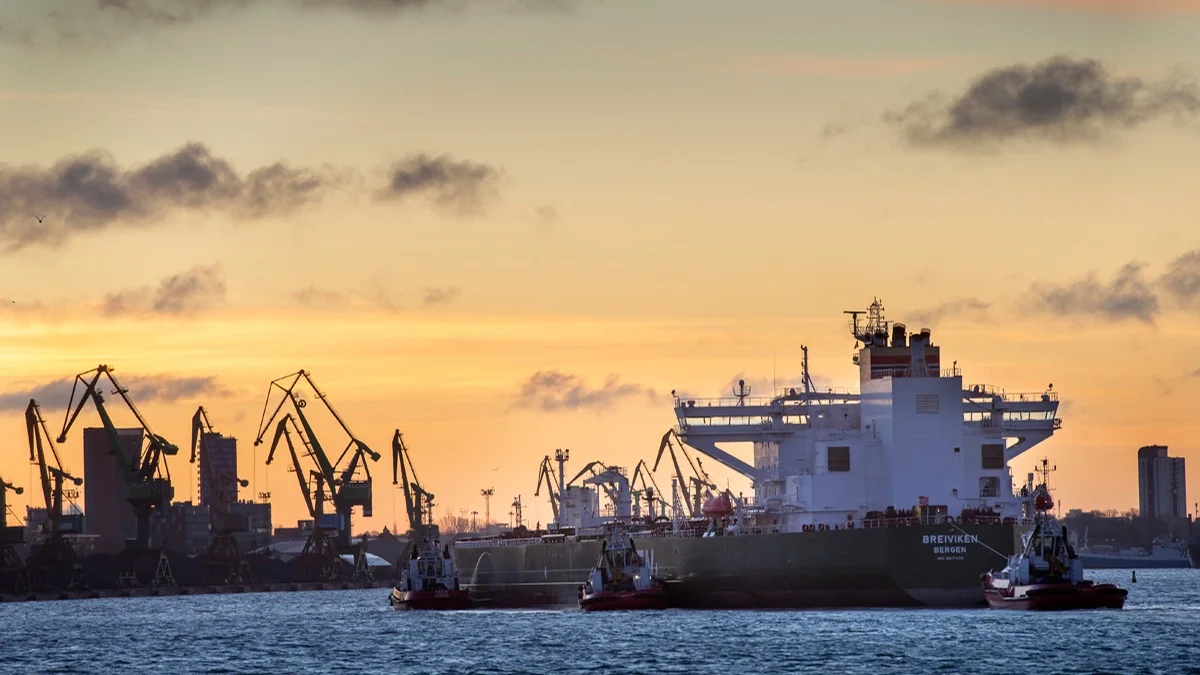
Norwegian tanker Breiviken. Photo: AP / TASS
Imagine that you live in a northern, cold country. The neighbors are condescending to you, because they believe that you have no economic potential.
But suddenly your country finds huge oil reserves on its territory, begins to actively extract them. And instead of simply selling and earn easy money, she chooses a different path of development. This leads to the fact that the economy is growing, the standard of living of citizens is improving - they are confident in their future. And your country is becoming one of the most attractive in the world. Russia also has huge oil reserves, but this does not directly affect the quality of life of ordinary people and their confidence in the future. But next to the neighborhood there is a state where the above scheme has been working well for the past few decades. It's about Norway. From the outside it looks like an ideal system. But even in the utopian society there are those who are able to point out its flaws. As expected in a democratic state, disagreements can express their fears and claims, and even - it is inconceivable to file lawsuits against the government. And the court considers them. Just now Norwegian ecologists sued the state. They require the reduction of oil production.
Christmas gift
The Norway oil era began in 1969. However, the starting point can be considered 1959, when the gas deposit in Groningen, in the Netherlands was opened. It is after this event that the skeptical attitude to the fact that oil and gas deposits can be located on the Norwegian continental shelf has radically changed.
Considering that before this energy production in Norway was based on coal and imported oil, the new prospects were very inspired by the government, and the shelf actively took up research.
The first oil and hydrocarbons found in 1967 were small, but the Norwegians continued the search.
At the end of 1969, Norway received a Christmas gift - the Ecofisk field was opened. The first assessments of its reserves showed that it can be considered very large.
Oil production in Ecofisk began in 1971, and a year later the State Oil Providing Company Statoil was founded, which in 2019 changed its name to Equinor.
Then the parliamentary committee led by Rolf Hellem formulated “ten oil commandments”. Their goal was to establish the principles in accordance with which the Norway oil policy should benefit the whole society.
Initially, 50%state participation in all oil production projects were legally enshrined. Later, this rule was changed in such a way that the Norwegian parliament (Storting) could decide whether the state should increase or lower the level of participation depending on the circumstances.
The next important year was the 1990th, when the Norway Parliament adopted a law on the creation of the State Oil Fund.
Oil for everyone
Although the country has other natural resources (forest, minerals, hydraulic resources), nevertheless, oil remains the “queen of fields”. It provides 30% of funds to the budget of Norway. The country's oil and gas complex is the foundation of the entire Norwegian economy; More than 74 thousand people are directly employed in it, and indirectly another 220 thousand - with the total population of 5 million 300 thousand people.
At one time, the growth of oil revenues allowed Norway against future receipts from the sale of oil and gas to take external loans to support other industries, in particular shipbuilding, as well as to implement social and regional development programs within the concept of the “state of universal prosperity”. A competent economic policy led to the fact that by 2005 Norway no longer had external duty.
How does the state come with oil revenues and why does this directly affect every Norwegian?
Let us return to the "ten oil commandments." One of the main principles of oil resources management of Norway is that intelligence, development and production should lead to maximum benefits for citizens. All income should be received by the state, and it should be done so that it benefits to society.
The logic of the government is simple - from oil production you can get huge profits. Since this resource as a whole belongs to society, the income from it should be in one way or another to citizens.
As a result, only a small part of oil and gas revenues (approximately 3%) falls directly into the state budget. Everything else goes to the State Pension Fund.
It was created in 1990, but it all started in 1960, even before the start of active oil production. Then Prime Minister Einar Gerhardsen and his government announced sovereignty over the Norwegian continental shelf. This has laid the foundation for the national approach to the management of oil resources, based on the responsible and long -term management under strict state control.
Later, 1974, the Ministry of Finance presented in parliament the report “The role of oil activity in Norwegian society” - about how to use the country's oil wealth. And after another 16 years, the Norway Parliament adopted a law on the creation of the State Pension Fund, which is also called the oil fund. It was created to ensure the responsible and long -term management of oil and gas resources income so that it benefits both the current and future generations.
What does the work of the fund look like? In short, he is investing in the revenue of the oil sector. They are guided by Norges Bank Investment Management (NBIM), one of the units of the Central Bank of the country. All the money from the oil production that is located at the Central Bank Stabyfond, through the fund is placed in certain securities around the world. It is forbidden to invest in risky papers. The Central Bank should also ensure that the profitability is at the proper level.
At the moment, the fund owns shares in 9228 companies in 70 countries of the world, and the value of its assets is more than $ 1.4 trillion. These assets ultimately belong to the state. It is especially important that the savings of the State Pension Fund are intended only to finance pension expenses within the framework of the national insurance scheme.
When choosing countries for investment, political factors are also taken into account. On February 28, 2022, the Norway government decided to sell all Russian assets. Then the fund had a share in almost 50 Russian companies, and among them Alrosa, St. Petersburg Bank, Gazprom, En+, Lukoil, Lenta, Magnit, Sberbank, System, TCS Group, X5 Retail Group and others.
And if in 2021 the size of this part of the portfolio was almost 27 and a half billion of the Norwegian crowns, then at the end of 2022 it decreased by 90%, to less than 3 billion Norwegian crowns. Once again-it was the money that invested in the Russian economy and which the country lost due to the Russian-Ukrainian conflict.
As of November 30, 2023, the market value of the Norway State Pension Fund amounted to 15,636,251,139,851 KR ($ 1,461 195 321 918). This means that for every Norwegian citizen there were about 2,900,000 KR, or $ 271,000.
What benefit does this fund bring to a specific Norwegian, which receives all state revenue from oil production?
According to the law, both men and women retire in the country at 67. And not a year earlier, with one exception: if you are “lucky” to work in dangerous production, you can agree with the employer to retire in 62 years. With an average life expectancy at 82, this is generally a very good prospect.
But in recent years, residents of the country are trying to retire later - at 70 years old. Which is generally useful for man and the state. For example, if you end your career at 67, your pension can be up to 70% of earnings from total income for all work experience. If you work three years more, this amount will increase to 85%.
On average, the minimum pension for a single person is $ 1765 per month. For the family, the size of the pension is $ 3167. If in your life you have worked for only three years from 16 to 66 years, you have the right to apply for a basic pension.
Moreover, even if you do not have a working experience at all, but you have lived in the country for at least 40 years from the age of 16, you also have the right to pension payments from 67 years. They will correspond to the minimum basic pension.
Pension payments are large, and the government takes money for them from the oil fund. And this gives the Norwegians a reason to be confident in the future. Any working person here, in addition to mandatory pension taxes, can voluntarily transfer 2% from salaries to private pension funds, which in the future guarantees a higher pension. But less than 10% of working people take this opportunity, which generally speaks not about their shortsightedness, but about what they believe: in old age the state will take care of them.
"The government does not give a damn"
The picture looks perfect. But questions from environmental activists have long been arise for Norway’s oil policy.
In June 2016, Norway officially ratified the Paris Climate Agreement. Its main goal is to maintain the growth of global average temperature on Earth within 1.5–2 ° C.
Then the Minister of Climate and the Environment, Vidar Helgesen, said that the country is striving to jointly with the EU implementation of the agreement to achieve the goals of reducing greenhouse gas emissions by 2030. He assured that the government will achieve a decrease in this indicator by 40% compared to 1990.
It seems that these promises were very quickly forgotten. In 2019, when Norway was already supposed to act under the Paris Agreement, the country's statistical administration published information that climatic gases in the country in 2018 amounted to almost 53 million tons in terms of carbon dioxide. This is 200 thousand tons (0.4%) more than in 2017, which said not about a decrease, but about growth.
In general, everything looked like the government was trying to formally follow the Paris Agreement, not changing its oil policy.
In 2015, a year before the signing of the document, 57 new areas for oil intelligence in the Barents and Norwegian seas were allocated. In May 2016, just two months before joining the agreement, these areas were provided to operators who submitted applications for reconnaissance in the Barents Sea.
Immediately after this, Statul announced plans to drill wells in the Barents Sea in 2017. The plans were to drill a test well at the Goliath field, which the company is developing on the basis of partnership with the ENI Norge, as well as the wells on the formation of Corpfiel in the area of the marine border with Russia.
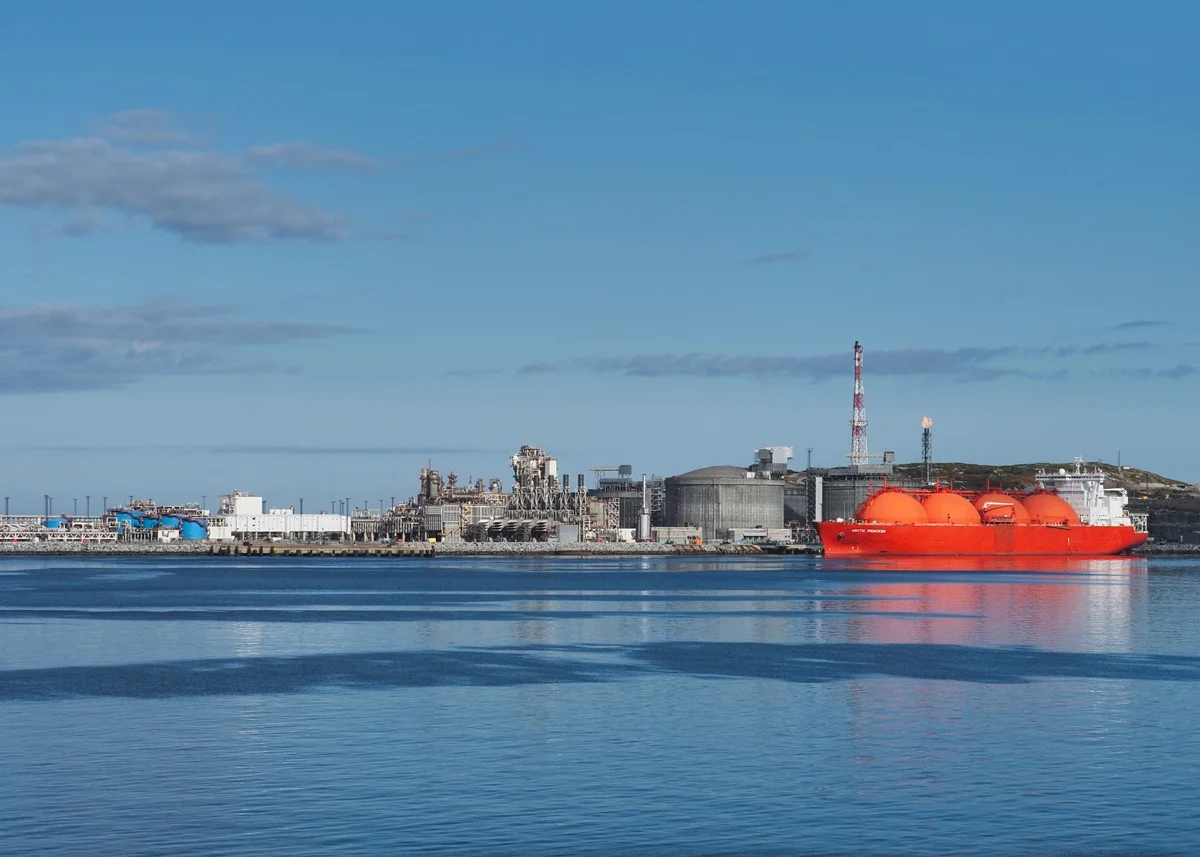
In August 2016, after the signing of the Paris Agreement, the government held another licensed round. The regional manager of the Norwegian oil and gas association Gayr Seleset said then that this will serve as an impetus for expanding activities in the Far North. But what inspired oil workers caused a sharp criticism from ecologists.
On October 18, 2016, environmental organizations “Nature and Youth” and the Norwegian “Greenpeace”* filed a lawsuit against the Norwegian government. Later, the lawsuit was called "people against Arctic oil." In it, environmentalists referred to the 112th article of the Constitution, which states that “everyone has the right to the environment, favorable for health, to the nature, productivity and variety of which will be supported. Natural resources should be mastered on the basis of comprehensive long -term considerations that will retain this right for future generations. ”
Ecologists accused the Norwegian government of violating this article, since, according to their estimates, the decision to license new oil fields will have serious negative consequences for the environment, continue to promote large -scale emissions of greenhouse gases and thereby aggravate the global climate change.
This lawsuit was supported by about 200 Norwegian cultural figures who signed a petition to stop the license round - especially in relation to deposits located at the Estate of Polar ice in the Barents Sea.
Nevertheless, in January 2018, the Oslo district court decided that oil production in the Barents Sea does not violate the constitutional right to a healthy environment. After that, environmental organizations lost in the Court of Appeal.
In April 2020, the case was referred to the Norway Supreme Court. But here the environmentalists were defeated - on December 22, 2020, the highest court rejected the lawsuit filed by three organizations and made a decision in favor of the government that allowed the drilling of exploration wells in the Barents Sea. At the same time, at the end of the last trial, the Supreme Court ruled that the authorities need to include category 3 emissions (combustion emissions) in the assessment of the influence of new oil fields.
After that, eco -activists filed an application with the European Court of Human Rights, now it is under consideration.
All this time, the government was not going to listen to ecologists. For example, in May 2019, the Minister of Oil and Energy of Norway announced that the Ministry is ready to provide oil companies with another 90 plots for exploration, including 46 in the Barents Sea. Contrary to the court order, the authorities allowed new oil and gas projects without calculating combustion emissions and damage that they can cause to current and future generations.
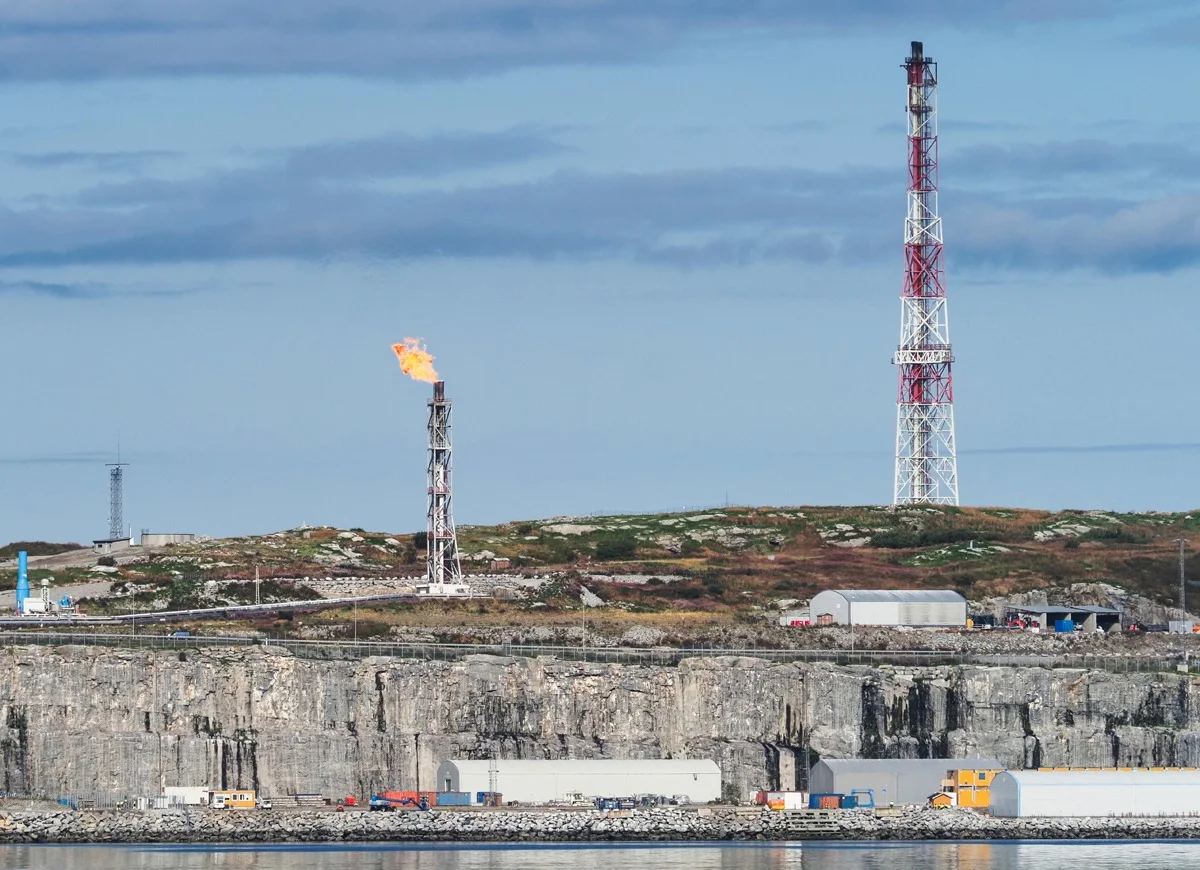
“The expansion of the zone of predetermined areas is important to ensure an effective study of a significant part of the Norwegian continental shelf, including in the Barents Sea,” said oil Minister Highle-Borge Freiberg. “This expansion will give companies access to new opportunities that can ensure the creation of value, employment and development of technology,” his statement emphasized.
This decision also caused indignation. “Nature and youth” immediately made a sharp criticism of the issuance of new licenses for exploration. The organization said that it is contrary to the recommendations of experts of leading scientific institutions, such as the Institute of Marine Research, as well as the Norwegian Environmental Protection Agency, which warn about the negative consequences of the opening of some areas for fish reserves and sea birds.
“The government simply says that he does not give a damn about the climate and biodiversity,” said Gaute Eiterjord, the head of the “Nature and Youth” organization.
"We use the right and duty"
Later, in a joint statement on the issuance of licenses in 2019, “Nature and Youth” and six other environmental organizations demanded that the government abandon such oil policy in the north.
On November 28, 2023, Greenpeace and Nature and Youth made a new trial against the government. It is based on the legal consequences of the verdict of the Supreme Court according to their previous statement. Organizations refer to the conclusion of the court that the Norwegian state should evaluate the global climatic consequences of new oil and gas deposits before they are approved.
This lawsuit does not require the cessation of all current oil production or all new oil developments. This is a separate requirement regarding three specific oil fields in the North Sea
(Tirving, Iggdrasil and Braydablik), in the process of approval of which climatic consequences were not taken into account.
“In the courtroom, we only use our right and our duty to accuse the government of non -compliance with the decision of the Supreme Court of 2020. We live in fateful time for humanity, when each decision we make have consequences and a huge impact on how our future will look. The lesser that we can demand is that these decisions be made on the correct actual basis, ”said Tuva Mjelde Refsum, deputy chairman of the organization“ Nature and Youth ”.
She adds that when the government does not respect the requirements of the Supreme Court to take into account the influence of CO2 emissions on the climate when approving the new oil and gas production, it is responsible and will ultimately encounter the economic and environmental consequences of this decision.
“Today, the consideration of climatic consequences when approving new oil fields is absent or made behind closed doors, without the ability to control or influence conclusions. We not only believe that this is unfair to the young people whom we represent (after all, we are talking about their future), we consider it obvious that this practice contradicts the decree of the Supreme Court and the Constitution of Norway, ”says Tuva Refsum.
Она также указывает на непоследовательность правительства по этому вопросу: «Во время судебных заседаний правительство не оспаривало последствия климатического кризиса. Но при этом утверждало, что три месторождения каким-то образом окажут положительное влияние на климат. Было больно сидеть и слышать в суде, как государство поддерживает научные данные о климате, а в следующий момент говорит о нефтяных месторождениях, которые спасут климат. Это странная и лицемерная аргументация».
Тува уверена, что их новый иск будет удовлетворен. «Мы сможем победить в этой борьбе с агрессивной газовой и нефтяной политикой Норвегии, которая продолжает наносить ущерб климату и людям во всем мире. Уважение права человека на здоровую и устойчивую окружающую среду является обязанностью государств, а не какой-то услугой для сообществ», — говорит она.
Несмотря на уверенность экологов, стоит ожидать, что предстоящий суд будет непростым. В комментарии, полученном «Новой» от министерства нефти и энергии, четко заявлено, что правительство хочет и дальше развивать, а не сворачивать деятельность на норвежском континентальном шельфе. «Мы продолжим оставаться стабильным и долгосрочным поставщиком энергии в Европу, а это означает, что мы должны продолжать разведку новых месторождений нефти и газа. [Конфликт] России с Украиной еще раз продемонстрировал важность энергетической безопасности и важность роли Норвегии в этом вопросе», — говорится в комментарии.