
Translated material
Dictators are always against feminism? But no
We tell how and why tyrants support women's rights (about Putin - separately)
Is there a direct connection between democracy and gender equality? At first glance, of course, yes: the freer the country is, the more freer women feel in it. Political scientists have proven that free elections provide, among other things, gender equality in education, public life and in the labor market. However, from this rule there are noticeable exceptions. Some dictators in every possible way support feminism, finding this benefit for themselves and their modeling model. How exactly does it work? Can women rights in an unlawful state be observed? And finally, how does Vladimir Putin feel about feminism? Political scientist Ilya Obporozhsky answers these questions at the request of the Cold.
In order not to miss the main materials of the "cold", subscribe to our Instagram and telegram .
In 2003, the government of President Rwanda Paul Kagam presented the draft new Constitution, which involved the introduction of a 30 percent gender quota in all legislative bodies-since then a significant part of the deputy mandates has been reserved for women. Rwanda carried out many other reforms aimed at achieving gender equality, and Kagam himself in 2016 received the Champion on gender issues from the hands of representatives of the African women movement.
Rwanda cannot be called democracy. In 2021, one of the leaders of the Rwandian opposition was stolen , taken to the country and sentenced to 25-year imprisonment; The few independent journalists and human rights activists are regularly persecuted in Rwanda. Kagam has been holding the presidential post since 2000 and is going to take part in the 2024 elections.
Another example: in 2004, Laos adopted a progressive law on the development and protection of women, which declares, for example, the equal right of spouses to jointly acquired property and the right of women to equal wages. Laos is one of the few one -party communist regimes preserved to this day, not burdened with the existence of an organized opposition or uncontrolled media.
Among the first five states with the highest level of representatives of women in the legislative (or advisory) authorities, one can find the same Rwanda (61.3% of legislators - women), Cuba and the UAE. Political scientists unequivocally attribute all three mentioned countries to the group of authoritarian and fairly repressive regimes.
We will figure out why many dictators plant political activists with one hand and pursue journalists, and with the other they declare their own commitment to equality.
Women's rights as a convenient replacement of free elections
The vast majority of modern undemocratic modes are located in the countries of the developing world that need investments, loans and direct foreign assistance. The source of these resources is often Western liberal democracies, and if the authoritarian regime will make a completely cannibalistic impression, conditional French or British voters are unlikely to support the government’s decision to distinguish a generous tranche in his favor.
The country ideal for international donors is a poor, but stable democracy, which strives to protect the rights of minorities and gender equality. If dictators could be painlessly formed for themselves a “democratic” reputation, they would almost certainly take this chance. But the trouble is: if you release political opponents from a prison, as well as to conduct adversarial elections, you can at least lose power, and at a maximum - end your days behind bars or exile. Therefore, preference is given to less risky strategies. For example, the adoption of progressive legislation, which cannot directly undermine the regime.
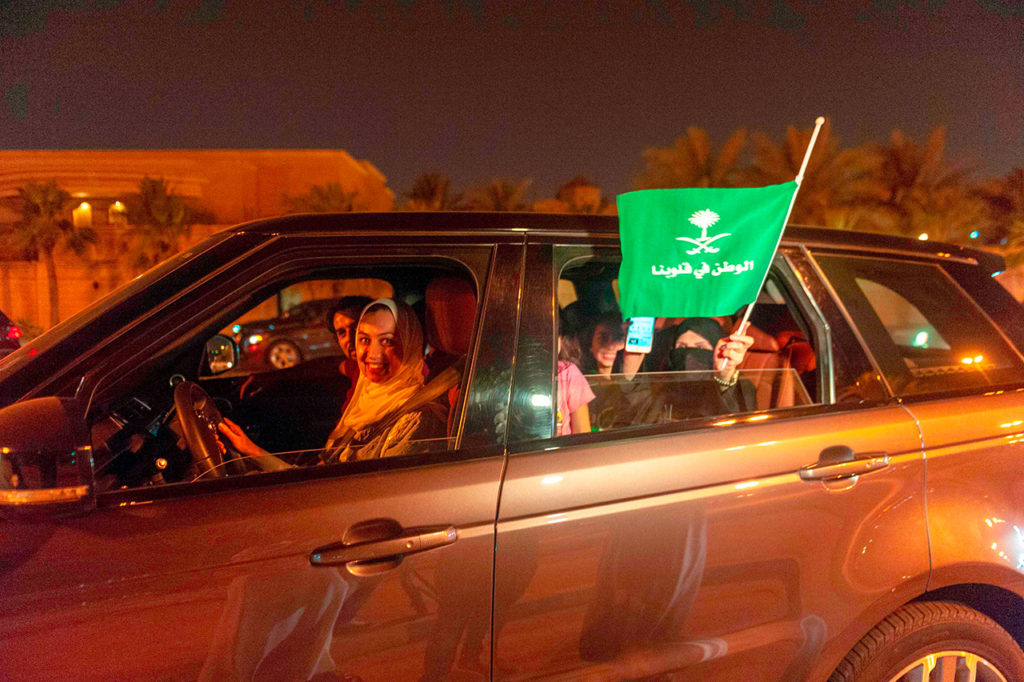
Political scientists call this phenomenon “Authocratic Genderwashing” (literally - washing the reputation through gender issues). And it works. In English -language media and expert reports, one can still find moderately enthusiastic reviews about the policy of the Crown Prince of Saudi Arabia Muhammad Ben Salman, with the mediation of which the kingdom residents received the right to drive a car.
This unconditionally important and correct reform makes observers think less about some other remarkable decisions of the prince. For example, the massacres of civilians of neighboring Yemen during Saudi bombing or literally the dismemberment of a well -known critic of the regime in one of the enemies of the kingdom.
If we talk about more scientific argumentation, then polls of Swedish and American voters prove that information about the high representative office of women in the parliament of a developing country helps to perceive it as a more democratic and, as a result, maintaining financial assistance. Another group of researchers discovers an interesting pattern: dependent on the international support of the dictatorship are much more prone to protect female rights than even democratic regimes dependent on international support. However, the same cannot be said about the protection of free elections and other democratic institutions.
Thus, the Western layman often perceives democracy and the protection of women's rights as closely related phenomena, which improves its or its idea of one or another dictatorship. Autocrats around the world use this with pleasure.
Perhaps even such “reforms” should be perceived as achievements: at least minimal changes are better than their complete absence. But do not forget that, for example, introducing quotas of a female representative office in parliaments, authoritarian regimes fill them with their loyal supporters, and not real activists and human rights activists. Moreover, if the feministic movement is still cooperated with the dictator, its reputation may be tarnished for many years to come, and in fact, progressive reforms will be associated with authoritarianism even after the fall of the regime, as happened in some Arab countries.
Women's rights as a source of legitimacy
Authoritarian leaders are not able to hold power for a long time, relying only on repression: they need at least a minimum level of folk support. Therefore, dictators have to explain from time to time to their citizens why the current political system is the best of possible alternatives. In Putin Russia, for this purpose, an argument on economic growth was often used: an oil boom and a number of successful reforms of the early 2000s made it possible to improve the standard of living of a significant part of the population (especially in comparison with the 1990s). The narrative that Russians owed the well -being personally to Vladimir Putin for many years became one of the Kremlin’s favorite topics. It is believed that this limited the support of forces, which decades ago, anxiety due to the gradual restriction of political freedoms in the country.
Nedemocratic leaders in other parts of the world have encountered a different sense of challenges. For many years the main opponents of dictatorships in Tunisia, Morocco and Algeria were not supporters of the liberalization of countries according to the Western model, but adherents of conservative Islamic movements, who often advocated the organization of public life in accordance with the norms of Muslim law. The authoritarian rulers of these countries acutely needed the support of the secular part of society. In his recent book, American researcher Aili Tripp claims that this can explain the progressive gender reforms that were carried out in the top three of the mentioned countries. For example, in 2011, President of Algeria Butflik ordered the party to reserve about 30% of the seats in the list of candidates in the parliamentary elections for women. With the help of such bills, local dictators signaled the civil society that they were ready to protect the secular way of life. Do not support us - you will deal with much less friendly radicals who will not let women not only in parliament, but even for the threshold of their own home.
Finally, sometimes autocrats play in the best friends of women simply because this allows you to get support for influential public opinion leaders. Women's movements receive money from the regime and even a certain access to power, the regime receives additional votes in the elections.
Of course, this is far from an exhaustive list of reasons why unpleasant rulers unexpectedly become advocates of gender freedoms. It can be assumed that some of them sincerely glad for the ideas of feminism (a prominent specialist in North Korea Andrei Lankov spoke about something similar in a recent interview), while others see in emancipation a way to increase the number of workers in the economy.
Legitimacy with minus sign
Despite the exceptions described above, the world of authoritarianism is not the best place to be born a woman. Chinese leader Xi Jinping Bans on social networks hashtag #Metoo, arrests the femoral and requires women for good propagation; Vladimir Putin signs the law on decriminalization of domestic violence; The Taliban recognized in Russia as a terrorist organization deprives Afghan women of access to education and career. The reasons for these actions also do not seem obvious. It would seem that it is possible to calmly control the authorities, while without pushing 50% of their own population back to the Middle Ages.
The fact is that modern undemocratic modes are not characterized by following a clearly established ideology. If in the 20th century many dictatorships sought, suppose, to build communism or to achieve racial purity of the nation, today autocrats are increasingly using the explosive cocktail of nationalism, socialism, conservatism and many other attitudes. And the already mentioned Xi Jinping with Vladimir Putin and, for example, the Turkish President Recep Erdogan, to one degree or another, positions themselves as defenders of “traditional”, “primordially Chinese/Russian/Turkish” (insert the necessary) values. As a rule, such a rhetoric is accompanied by a criticism of the “moral decline and decomposition” of Western countries, which personify with what Czingin or Vladimir Putin intends to protect society from. This is another way to explain to citizens why they should support the regime.
However, the main problem of “traditional values” is that they mean everything and nothing at the same time. In order to give this abstract concept at least some content, authoritarian leaders find convenient enemies in their countries and are engaged in their systematic destruction. In this role, members of the LGBTK community, ethnic minorities, consumers of Western culture or migrants often act, emancipated women can also fall under a hot hand, who supposedly do not correspond to the “traditional way of life”, a protected by the autocrat from the last forces. Without specific (albeit absurd) actions in the spirit of a ban on demonstrating the rainbow flag, the rhetoric about “traditional values” would remain simply rhetoric, which cannot be presented to the electorate as the results of his work.
When women take up swords
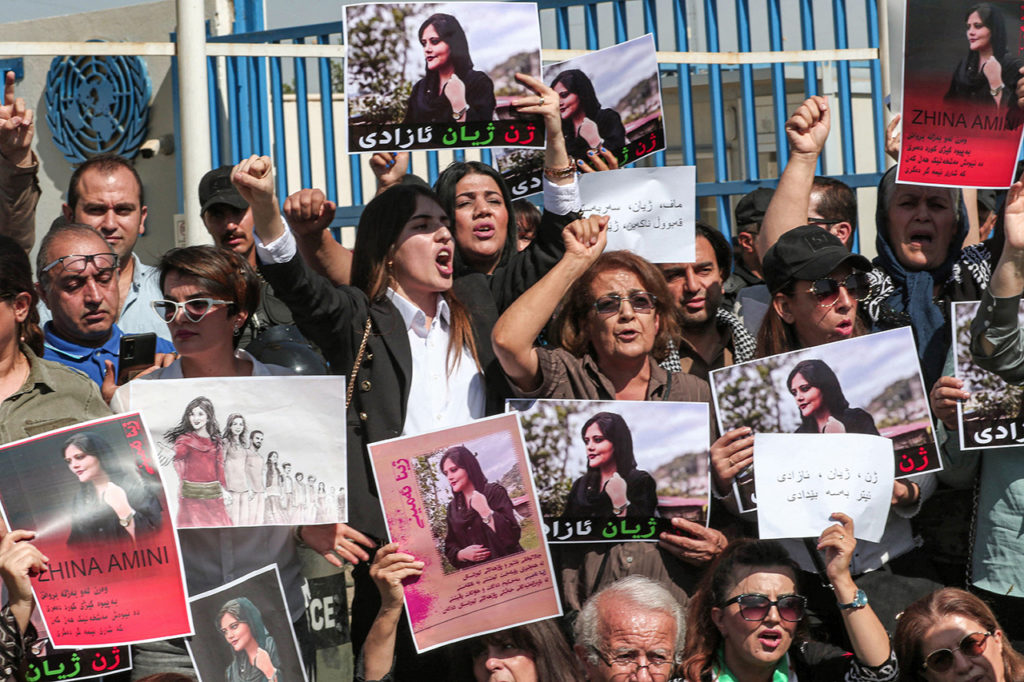
Another reason for the restrictions of gender equality is fear of mass protests. Women have repeatedly become the driving force of democratic revolutions. For more than a year, the Iranians went to demonstrations that began due to the arrest and subsequent murder of Mahsa Amini for the “inappropriate wearing of the hijab” in 2022. The Tunisian businesswoman Widd Bushamaui and the Yemensk journalist Tavakul Karman became one of the people of the Democratic movement of the Arab Spring in their countries and were awarded the Nobel Peace Prize. The female human rights organization of the Mother of Square May was one of the first groups to challenge the Argentinean junta at the end of the 20th century. Similar processes took place in Chile, Brazil and dozens of other countries.
Erica Chenet, one of the most famous researchers of protest, estimates that the revolutionary movements in which women actively participate have much more chances to achieve their goals. The first reason for such a pattern is a double increase in potential protest participants: the more people went out into the streets, the more difficult it is to disperse them. Secondly, the moral capital of protest increases. It is one thing when only young students took to the streets, the presence among disagreements, for example, young girls and pensioners, was completely different. This not only creates a completely different picture in the media, but also complicates the power opposition to the protesting. Chenovet herself uses an example of the Philippine nuns, who in 1986 stood between the crowd of dissatisfied with the regime of President Markos and the military, who received an order to attack the demonstrators. The tanks were stopped, and Marcos had to escape from the country. Thirdly, women can expand the repertoire of tactics available to protesting. For example, to arrange strikes in those sectors of the economy where women traditionally dominate.
A convenient way to reduce the chances of a wide part in the protest of women is to impose on them the role of political and dependent on the men of the keeper of the hearth. Then there will be only an empty area between the crowd and tanks.
Presidents-Macho
Political scientists rarely talk about the personalities of autocrats. Rather, this remains the destiny of political psychologists and sociologists. Nevertheless, the behaviors and statements of leaders about women can also affect equal rights. Note that this problem is also characteristic of democratic regimes. Donald Trump is a famous fan of sexist and objectivating remarks addressed to both public figures and randomly encountered girls.
From the very beginning of his political career, Vladimir Putin appeared before the Russian voters in the image of a macho, a masculine native of power structures, who “wets the terrorists in the toilet”, catches fish with a naked torso and controls a fighter. The Filipino ex-president Rodrigo Duterte called on a soldier to shoot the nesters "in the vagina", because without him they "will be useless." Alexander Lukashenko believes that Belarus is not ready for female leadership. According to the Turkish president of Erdogan, women, no matter how successful they are, should still give birth to children and work around the house. Moreover, without this, they, according to Erdogan, are not full -fledged women.
Let such practices do not lead to restriction of female rights directly, the emphasized or misogynia of the first person of the country (often very popular) enhance the perception of politics as a patriarchal space hostile to a woman. Someone probably brings “wisdom” gleaned from Erdogan and to his own house.
What about feminism is thinking Vladimir Putin?
It should be started with the fact that the issue of equality of women and men probably does not occupy a central place in the picture of the world of the Russian president. Judging by what we heard over the past few years, Vladimir Putin is much more concerned about the “ transformers ”, as well as “ Parent one ” and “Parent two” (read: transgender transitions and same -sex marriages ). In accordance with the preferences of the President from the summer in Russia, the “floor change” is prohibited , and the fictional “LGBT movement” was recognized as extremist.
Vladimir Putin is much more condescending to feminism. In 2017, he called feminism a “right, good direction”, however, mysteriously offering “not to go crazy”. In 2018, the Russian President called for solving the problem of gender inequality: “The world, the state will only win if there are as much female success stories.”
Scientists cannot climb the head of Putin, but they are quite capable of studying how often and in what context he appealed to the “female” problems in public speeches. In 2021, a group of researchers collected an array of data consisting of all the key annual speeches of the Russian president from 2000 to 2020, identified gender-nervous remarks in it and calculated their frequency. It turned out that the share of ultra -conservative remarks is less than 1%; 6% are traditionalist; 17% of the statements are neutral, and 15% were completely classified as “promotion of gender equality”. The main share of remark (62%) is categorized by scientists as “gender-stereotypical/Soviet”. This means that, in accordance with the tradition that originates in the USSR, Vladimir Putin most often mentions the “feminine” qualities of Russian citizens, notes their role as “keepers of the hearth”, but at the same time emphasizes the importance of their activity in the social sphere, politics and in the labor market. В целом такая установка тоже далеко не идеальна как минимум по той причине, что налагает на женщину двойное бремя заботы о доме и построении карьеры. Тем не менее следует отметить, что по крайней мере до недавнего времени Владимира Путина нельзя было назвать закоренелым традиционалистом в гендерном вопросе.
Такая осторожность объясняется очень просто: значительная часть населения России — эмансипированные женщины, которые содержат семьи, занимаются собственным бизнесом и строят успешные карьеры. Они вряд ли испытают бурный восторг, если Владимир Путин во время условной «Прямой линии» заявит о том, что вообще-то единственной миссией женщины является рождение детей, уборка дома и приготовление самых вкусных блюд для любимого мужчины. Это заметно даже на примере текущейкампании по запрету абортов в частных клиниках. В поддержку этой инициативы выступают иерархиРПЦ , ряд федеральных и региональных чиновников, но не сам Владимир Путин. Такая тактика позволяет, с одной стороны, удовлетворить запросы ультраконсервативной части электората перед выборами, с другой — не вызвать раздражения лично президентом у той части россиян, которые считают аборт важным правом женщины.
При этом сложно отрицать, что несколько последних лет Владимир Путин дрейфует в сторону большего традиционализма. В 2019 году в России был разработан закон о профилактике семейно-бытового насилия, который предусматривал, к примеру, запрет на контакты с жертвой насилия для агрессора. Несмотря на то что у инициативы были влиятельные лоббисты (председательница Совфеда Валентина Матвиенко), а домашнее насилие остается колоссальной проблемой (71,7% убитых в 2021 году россиянок пострадали от рук партнера или родственника), законопроект был встречен жесткой критикой со стороны РПЦ и ультраконсервативных движений, значительно видоизменен без согласования с правозащитниками и в конечном счете отправлен «под сукно». Издание «Верстка» сообщало, что это произошло после личного обращения патриарха к президенту.
Если российские власти исчерпают другие запасы «внутренних врагов», а Владимир Путин продолжит сближаться с консервативной частью своего окружения, не исключено, что в ближайшие годы ситуация с гендерным равенством в России станет еще хуже. Однако пока проекты в духе предложения признать феминизм экстремистской идеологией остаются всего лишь предложениями, основной смысл которых — привлечь внимание влиятельных чиновников к автору законопроекта, а не их фактическое принятие.