
Translated material
Iron grandmother
45 years ago, Golda Meir died. We remember her career and try to understand why her figure is still relevant
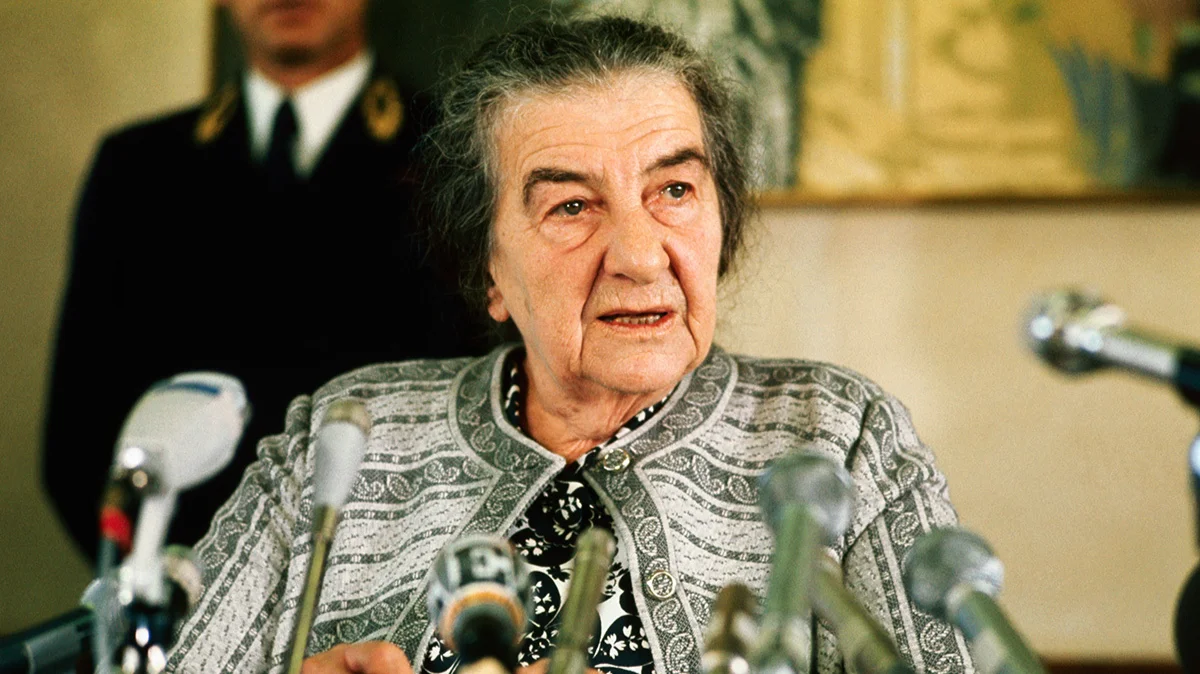
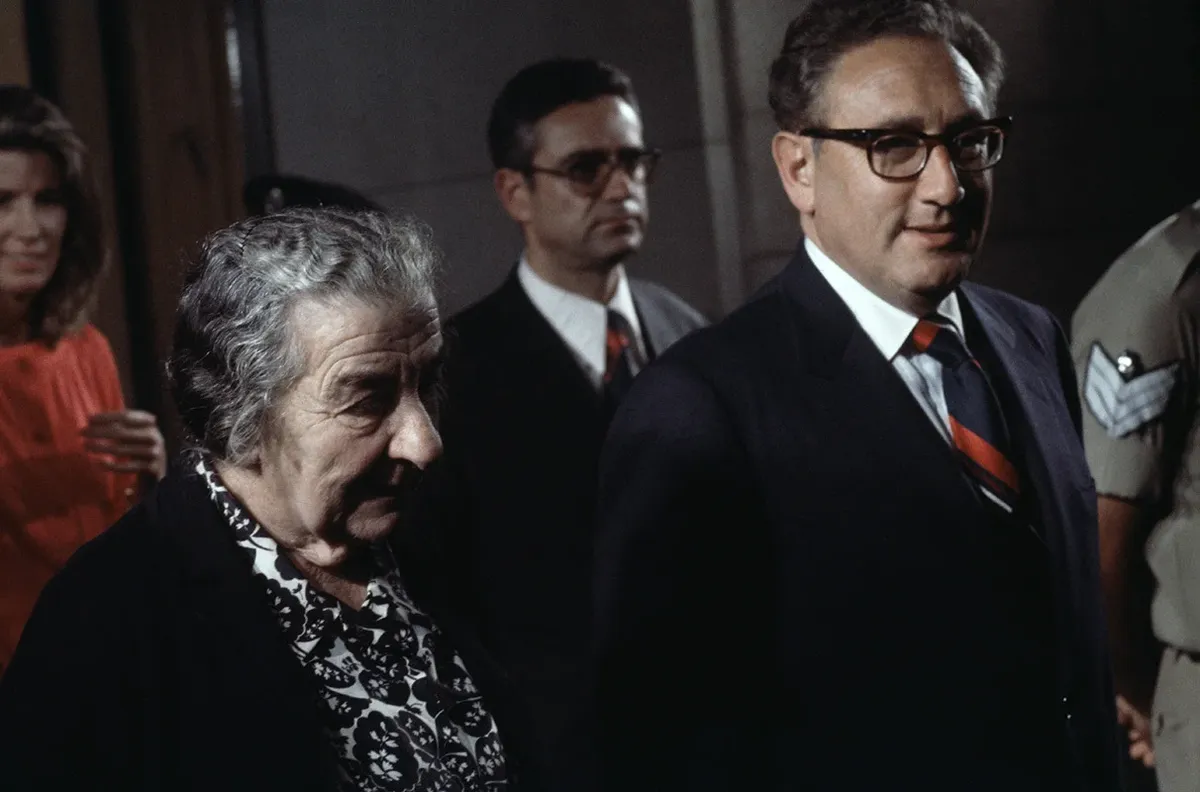
Golda Meir during a press conference in the European Parliament in Strasbourg, October 2, 1973. Photo: Bettmann / Kontributor / Getty images
On December 8, 1978, one of the most famous Kievans passed away in Tel Aviv, whose biography is full of epithets “first” and “only”. The first ambassador of Israel to the USSR, the first lady as head of the Ministry of Foreign Affairs, and, finally, the only woman is the Prime Minister of Israel, whom almost the whole world called just Golda. Specific, in the style of “Aidish Mama”, Golda Meir’s charisma much exceeded her real achievements in the political field, but in the memory of the Israeli she remained “the grandmother of the nation”, caring and at the same time instructive-string.
Large watchman and secret meeting with the Arab king
As a politician, the future prime minister was formed that already seemingly implausible time (mid-1930s), when she-the secretary of the Executive Committee of the histadrut ( the Federation of Workers-the main trade union in the mandate Palestine. - Approx. Ed. )-received less than the guard of the trade union office: after all, he had 9 children, and Golda only two. And in this, according to the memoirs of Meir himself, in the last years of his life - the Honorary President of the Socialist International, there was a “good socialist meaning”. And even earlier, in 1928, having parted with her husband Morris, she devotes herself entirely to the struggle for the creation of a Jewish state, although the Ben-Gurion characteristic “Golda Meir is the only man in my office” never counted a compliment and was by no means a feminist.
The first major political dilemma stands in front of Golda at the end of 1937, when Britain approved the so -called plan of the Pilya commission , which provided for the creation of a tiny, but still sovereign Jewish state. The majority of Ishuva ( the Jewish community of Palestine. - Approx. Ed. ), Led by Ben-Gurion, was for the division of the Palestine Palestine, Meir such a state seemed unusual. Until the end of the days, she reassured herself that Israel did not arise then because of the categorical of Arab leaders who completely rejected the compromise, otherwise the tragedy of European Jewry would be on its conscience.
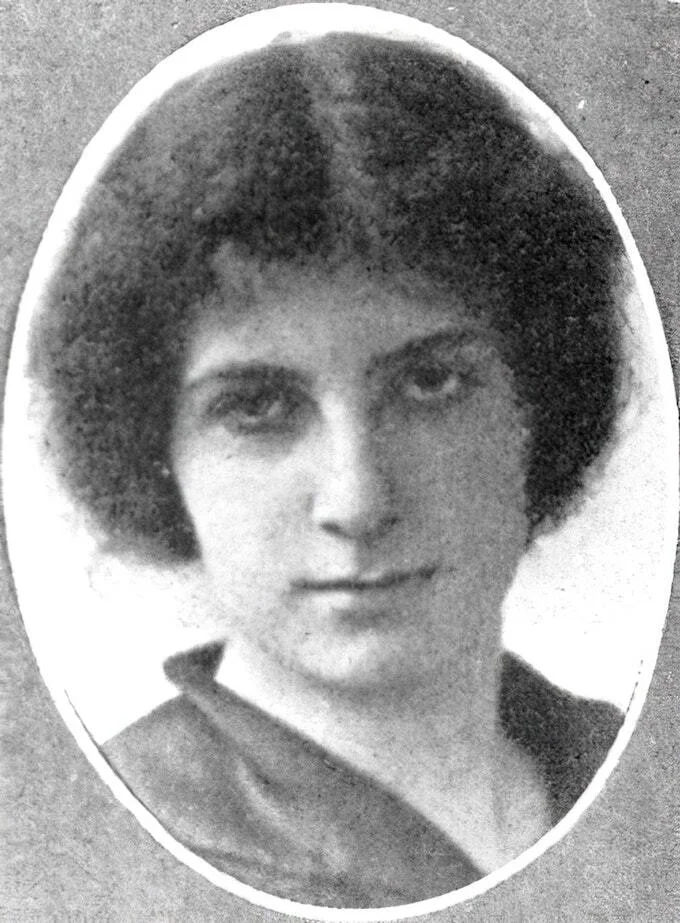
After more than ten years, when the section finally becomes a reality, Golda - the director of the political department of the Jewish agency - traveles half the world, mobilizing the supporters of Israel. “The Jewish population in Palestine will fight to the end,” she says in America, hinting at the war, which will cause the creation of Israel.
- If we have weapons, we will fight this weapon. If we don’t have it, we will fight stones. ”
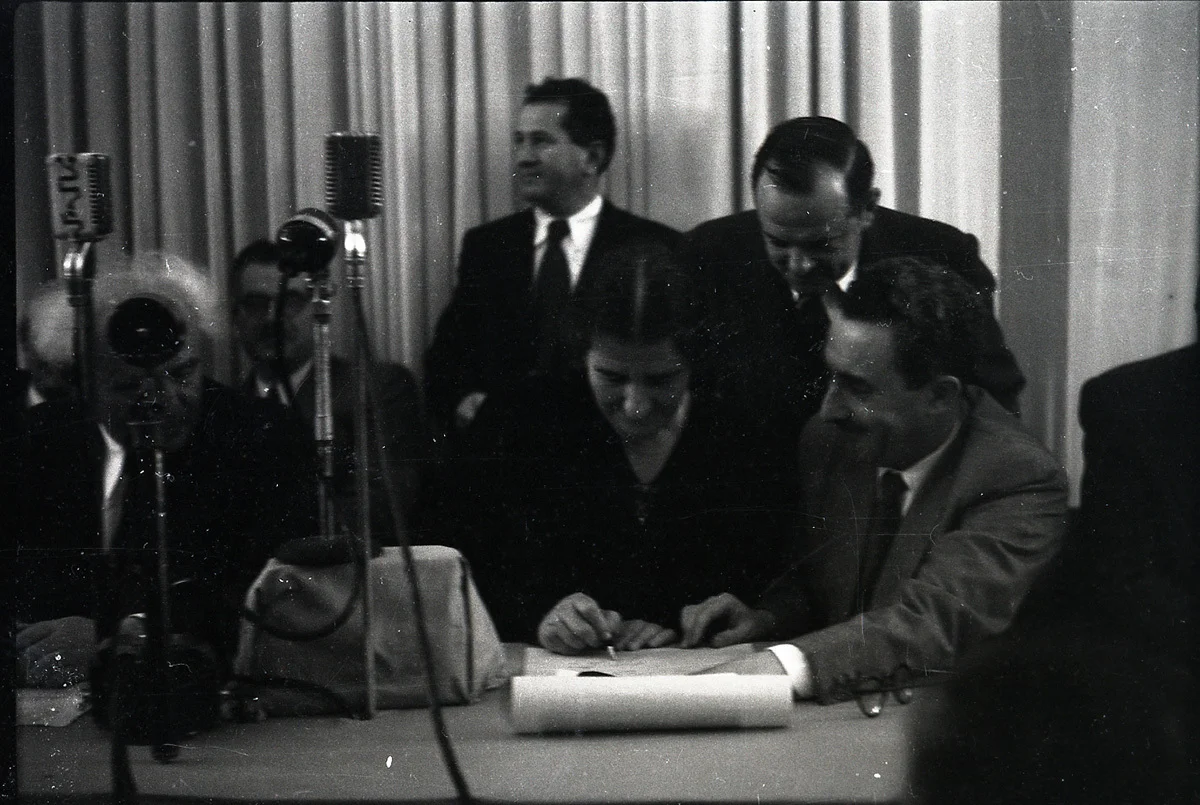
The head of the espionage novel is her meeting with the king of Transijord Abdalla, a few days before the state of the state. In the traditional Arab dress and Paransge Gold with his companion-a Jew who speaks Arabic-goes to Amman, changing the cars along the way. In the appointed place, they are waiting for a person who should spend secret guests to the Royal Palace. The main thing at the same time is not to arouse suspicions among Jordanian legionnaires ...
The meeting was held in the best traditions of oriental etiquette. However, the Jordanian monarch was quite sincerely located Jews, but ... he did not dare to oppose the militant position of the Arab League. Disappointed with the indecision of the king, Golda Meir summed up: "So there will be a war, and we will win." Abdullah only agreed that the Jews were forced to fulfill their duty, and added with sadness that events should go on as usual.
This textbook, which included in all textbooks on the history of Israel, the episode is evaluated today far from unambiguously. But all disputes about whether it was appropriate to send a woman, albeit occupying a responsible post, to negotiations to the traditional Arab monarch, do not at all detract from personal courage Meir.
Stalin's jealousy and a change of surname
Golda’s popularity behind the “Iron Curtain”, and not only among the Jews (remember at least “We dangled the place of Golda Meir ...” at Vysotsky), began with her brief but bright stay as the first ambassador to the USSR. The amateur photograph taken in thousands of copies propagated in thousands of copies (and reproduced even on a banknote of 10 shekels) ( Jewish New Year. - Approx. Ed. ) 1948, when the fifty thousandth crowd of Soviet Jews with cries of “Our Golda” enthusiastically greeted the ambassador of Israel in the Moscow synagogue, she walked around the hands of the fifthly tenaches After. And this despite the article-prelimination of Ilya Ehrenburg that the state of Israel has nothing to do with the Jews of the Soviet Union, where there is no “Jewish question” ... ...
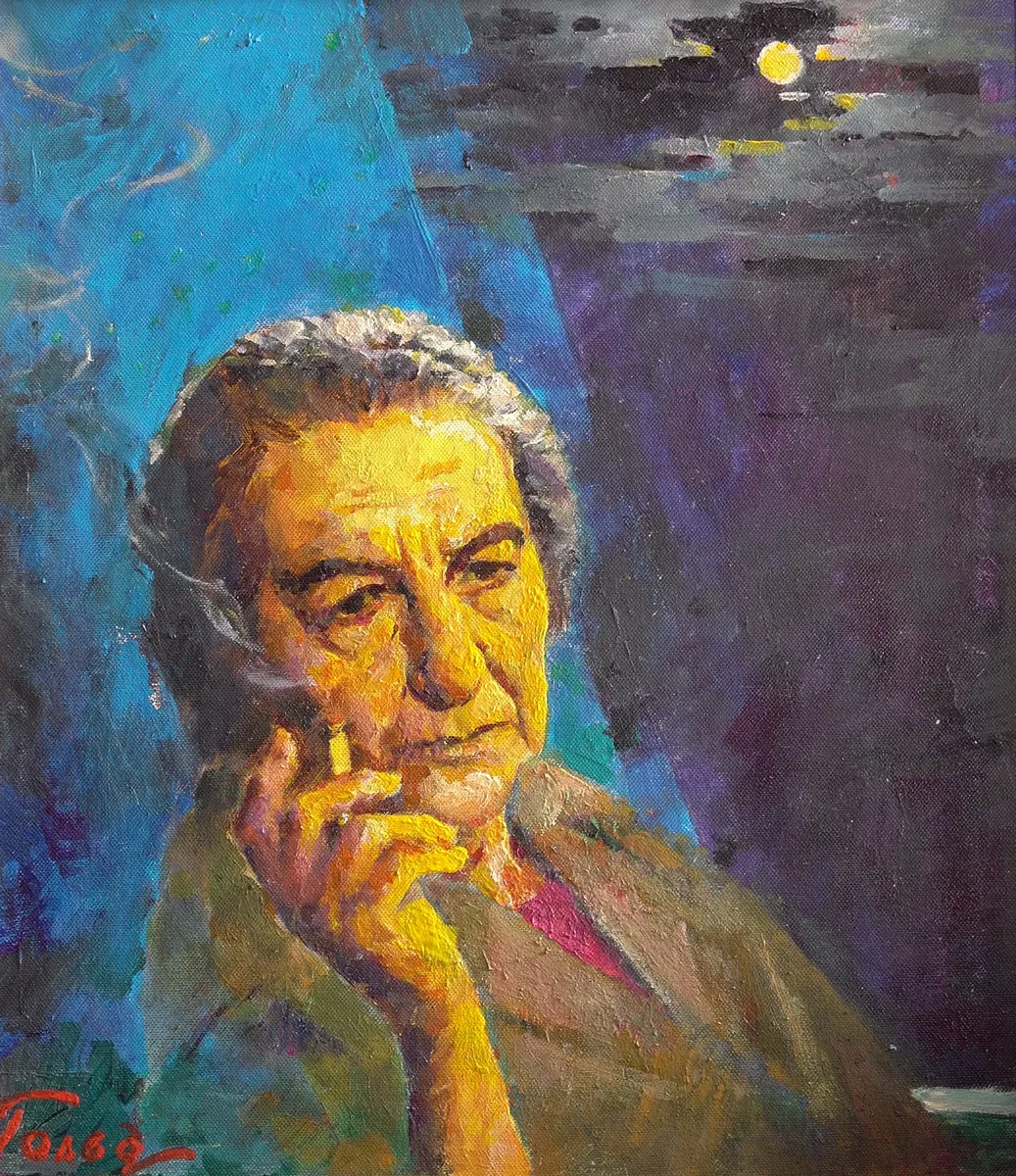
The Stalinist hint voiced by Ehrenburg was addressed not only to Soviet Jews who had been excellent, but also deciphered the realities of the country of stay for Israeli messengers.
As soon as began, the Soviet-Israeli honeymoon broke very sharply and painfully cruelly. The Jewish Theater, the Eikanita newspaper ( the printed body of the Jewish Anti -Fascist Committee. - Approx. Ed. ) And the Publishing House of Der Emes ( specialized in the publication of books for Yiddish. - Ed. ) Were closed literally a few weeks after the public expression of love for the state’s ambassador, which "had nothing to do with the Jews of the Soviet Union." The followed campaign to combat cosmopolitans finally dispelled the slightest illusions against the Stalin approach to the national issue. Whether the behavior of the Israeli ambassador contributed to this is the question of controversial, although the Stalinist remark is known about Golda's activity: "Smart people sent a stupid woman." Jealous?
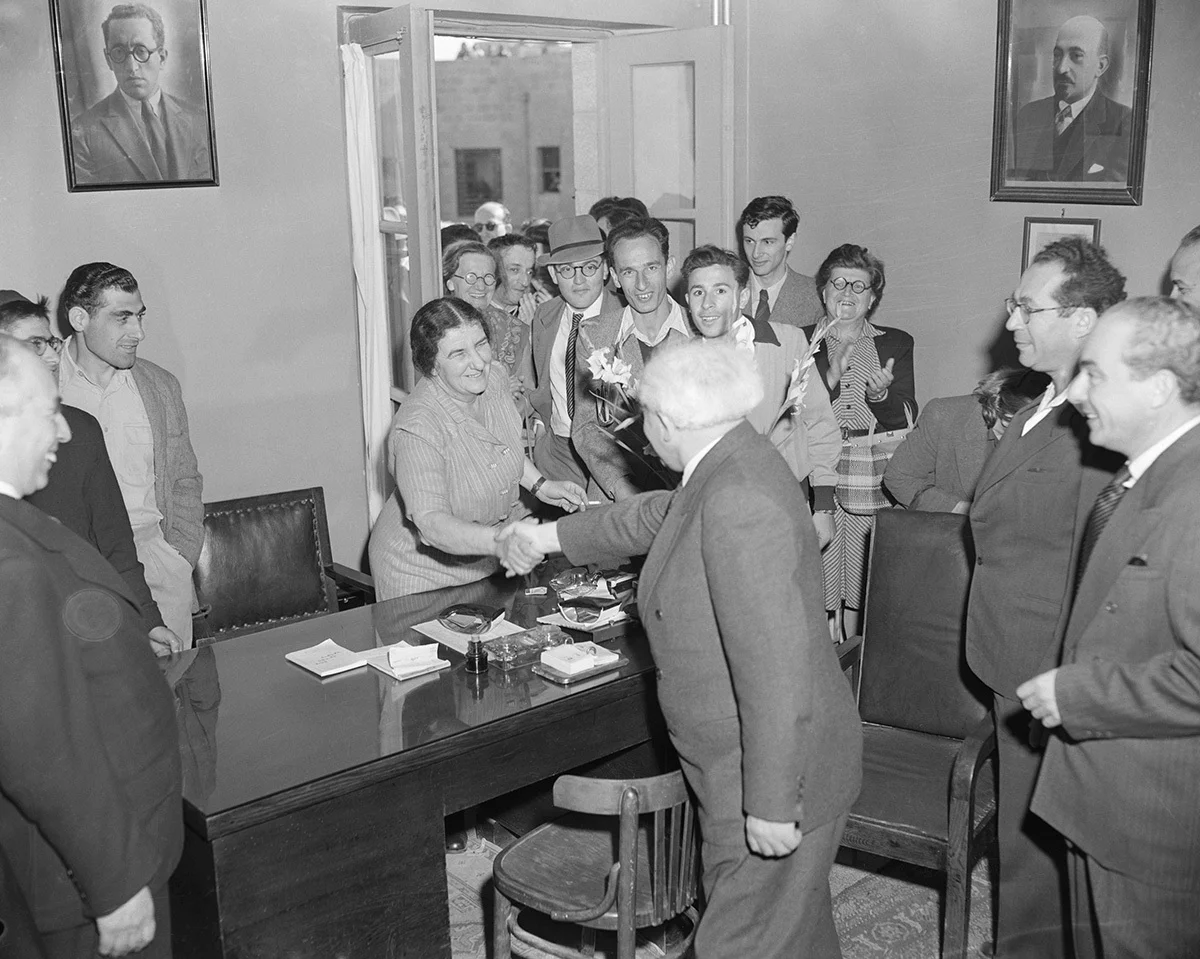
However, by the beginning of 1949, the ex-Posol had already returned to Israel in order to occupy the post of Minister of Labor in the first government of the country. The time of the total card system and strict rationing of products began: 75 grams of meat per month per person, 8 grams of vermicelli per day, 17 grams of rice, 20 grams of cereals ... True, ministers of the Jewish state, unlike colleagues in the country of the victorious socialism, were spent hours in lines for several eggs and ice cream fish. For the idealist Meir, who came in the early 1920s from the prosperous states to abandoned Palestine, who had not used cosmetics for more than thirty years and had never had more than two dresses at the same time, it was natural and corresponded to the concepts of equality and egalitarism.
In 1956, she became the Minister of Foreign Affairs. Previously, at the request of Ben-Gurion, having finally replaced the “diaspora” surname Meerson to Hebrew Meir-State Proposals then ordered to gobrais, that is, to adapt their name to Hebrew.
Once the first woman to lead the Foreign Ministry to the question of how the lady feels in this position, she shrugged: "How do I know, I have never been a man as a foreign minister."
At the end of the 1950s, there is a rapid development of Israeli relations with tropical Africa, in the fate of which Meir saw parallels with a long-suffering fate of the Jewish people. It was then that students from the newly liberated colonies poured into Israel, and from now on - full members of the UN who are supportive of the Jewish state. In turn, Israeli doctors, agronomists, engineers reached for Ganu, Upper Volta, Ethiopia ...
Three percent of popularity and "Iron Grandmother"
Golda met the six -day war in the honorary position of the secretary of the ruling party Mapai, it seemed the last in the career of this already middle -aged and not very healthy woman. But in February 1969, the head of government Levy Eshkol, the head of government dies from a heart attack. The main applicants for the prime minister’s chair are a national hero, the superpopular Moshe Daian and the deputy head of the cabinet Igal Allon. Both are quite young, ambitious and ready for rivalry.
Therefore, the party, in order to avoid shocks, calls for a compromise figure - Golda Meir, whose rating of popularity is only 3 (!) Percent. Temporarily, of course, to the coming of the elections soon ...
“Temporarily” stretched for five years, and the convinced socialist Gold was destined to become one of the main hawks in the history of Israel. Her foreign policy credo fits into the lines of the popular song of those years “The whole world is against us”. So, she refuses the ex-president of the World Zionist organization Nakhum Goldman, in the right to represent Israel in negotiations with the President of Egypt Naser. The 70 graduates of schools in a collective letter are accused of the prime minister of a “missed chance to achieve peace” and refuse to fulfill their army duty under the slogan “There is no choice”. The case for the then Israel, where the army was one of the "sacred cows", extraordinary.
In 1971, Gold decisively rejects even the Messenger of the Messenger of the UN Gunnar Yering, who was approved by Dayan, who assumed Israel's retreat from the Sinai Peninsula. The plan, which, perhaps, would prevent the bloody day of the Day of Judgment - her black shadow overshadowed Golde in the last years of her life. The plan, which, with short changes, was adopted by Prime Minister Begin as the basis of the Kemp-David Treaty, concluded after seven years.
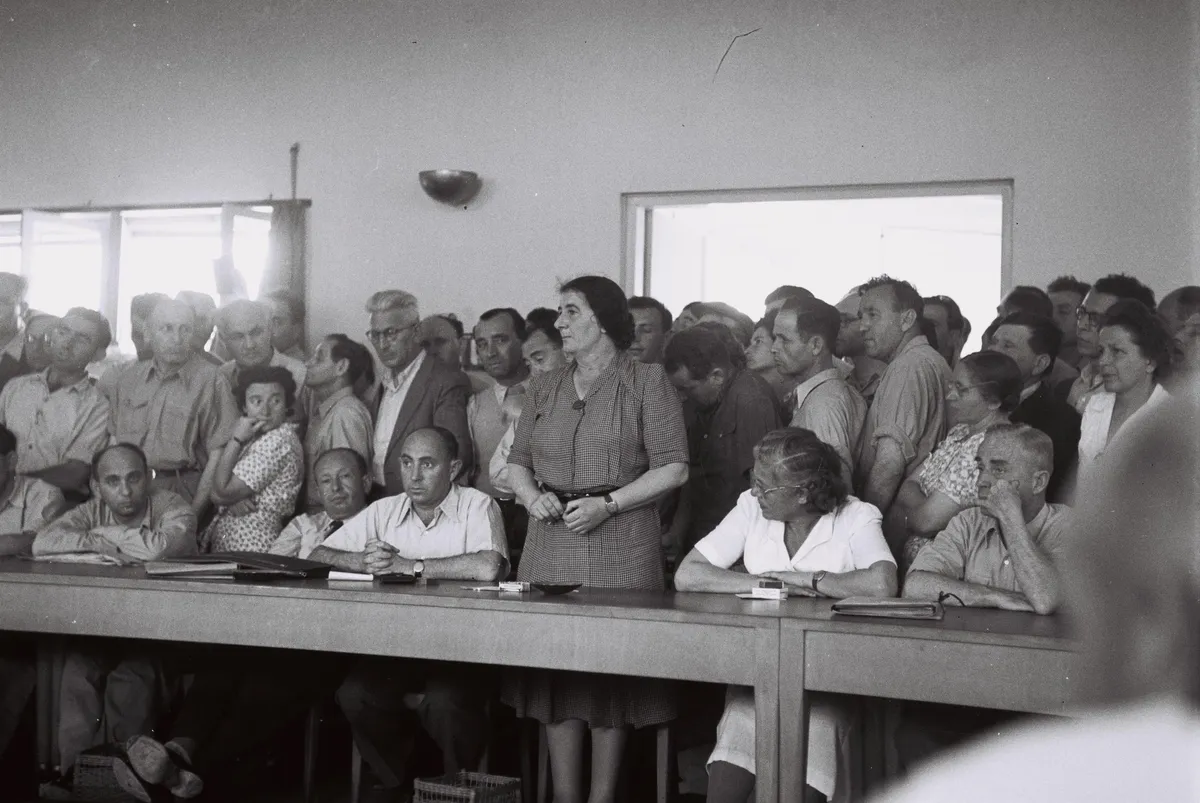
““ Iron Grandmother ”, after all the people experienced by her, was very distrustful of benevolent advice,” said Golda’s colleague, Chancellor of Germany Willy Brandt. And, despite this, the world respected her. Perhaps, for this adamant and, according to Golda herself, the unpreparedness to turn into clay pigeons in order to earn the sympathy of the world community.
In the social sphere, the success of the prime minister was by no means brilliant. And if the signs of that era-the ban on the tour “Beatles” and “Golda’s Panties” (uncomfortable soda for girls-soldiers)-have long turned into a good-natured folklore, then you can’t say this about the Sephardic movement. “Unpleasant guys,” is all that the head of government was able to squeeze out after meeting with the leaders of the “black panther” - youth from the poor “eastern” quarters, where hatred of the Ashkenazist establishment began to acquire hereditary features. Oil into the fire of inter-communal tension added to new repatriates from the Soviet Union, who in the early 1970s began to arrive in Israel: benefits that the state simply could not afford in the 1950s for newly arrived from Arab countries.
Won and lost war at the same time
All these problems and free or involuntary miscalculations have faded into the background in comparison with the grandiose mistakes that led to the war day. The euphoria caused by a brilliant victory in the Sixth War, self -confidence and chap -keeping sentiments led to huge losses on October 6–8, 1973. But a week before, the eminent military leaders surrounding Gold unanimously claimed that the joint attack of Egypt and Syria was unlikely.
In hindsight, Gold admitted that she had to "listen to the voice of his heart and declare mobilization." “I have to live with this terrible knowledge for the rest of my life,” she said later. And in those days, the 75-year-old woman did not leave the residence for more than an hour and slept four hours a day, sometimes right on her desktop. Only the firmness of Golda kept Moshe Dayan from the television to the nation, where he was going to tell the people a monstrous truth about the situation on the fronts. That war (like everyone else) ended in victory for Israel. But a too expensive victory, which Meirov’s aphorism is the best suited: “We had a secret weapon - the lack of an alternative.”
Perhaps she would have forgiven this, but the conclusions of the State Commission, investigating the reason for Israel’s unpreparedness for war, looked too cynical. Having dumped all responsibility to the army command, the government hoped to get out of the water dry, and this overwhelmed the cup of public patience. Golda resigns, and her famous “political”, but in fact a very real cuisine, where she, in hot disputes, drinking up to twenty cups of coffee per day and smoking two packs of cigarettes, made the most important decisions, and becomes part of the story.
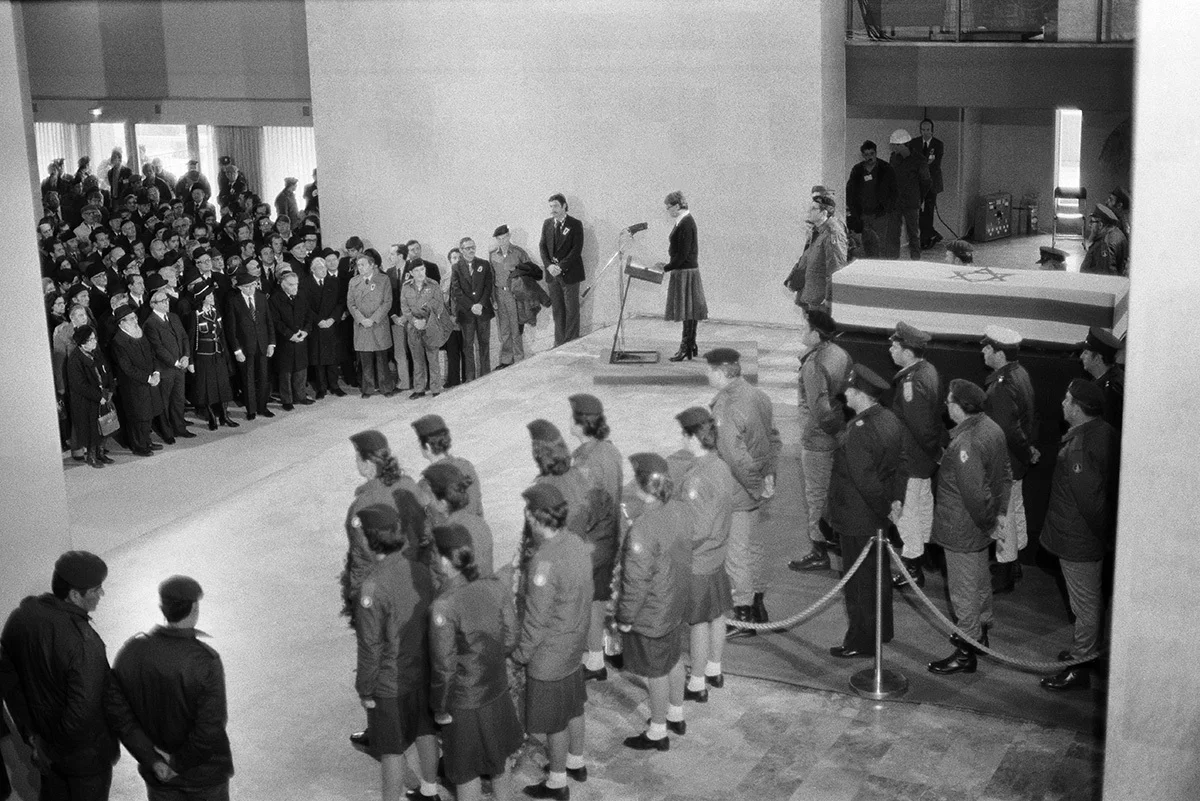
Ironically, the departure of this woman completed the era of the founding fathers. The successors of Golda, whether her beloved Yitzhak Rabin or the Begina despised by Menaham, belonged to another generation. The “elderly lady”, as Begin called her, died two days before the official presentation to him, the former “terrorist” Begin ( at one time he headed the underground militarized organization Ecell. - Ed. ) And the President of Egypt Sadat of the Nobel Prize of the World. The day before, having learned about the intentions of the Nobel Committee, Golda could not restrain irritation, caustically noticing that the peacekeepers would have approached the Oscar more. To tear out this world from her, who ordered herself to wake herself at any time of the night, receiving a message about the death of an Israeli soldier on the Suez Canal, repeating her: she will never forgive the Arabs that “they forced our sons at their sons”, she, from the UN podium, declared that “Israel has held out the hand of the world to its neighbors” ... and her native party went after this. Demagogue?! The world really rolled over.
But even in this new world, something is left. The memory of selfless devotion to the country, maternal warmth to its sons - and passionate faith in their rightness. Memory of a woman named Gold ...
This material was first published in the newspaper “Jewish Observer” (Kyiv) in 2003. Novyevropa edited it in accordance with its standards and publishes it with the consent of the author.