
Translated material
The saving oligarch
Zelensky gets rid of Ukrainian billionaires to join the EU. But there is a nuance
Corruption is the main brake of Ukraine on the way to the European Union. The post -Soviet era raised the powerful oligarchs, who for decades influenced Ukrainian politics through communications, power and bribery, but they also supported the balance of the system: pro -Russian forces were balanced by projuroral. Having come to power, Vladimir Zelensky violated the balance, and the Russian invasion finished it completely. The office of the Ukrainian president wants to put an end to the oligarchy, which supposedly prevents Ukraine from joining the EU. However, the fight against many years of leaders of the Forbes list can fail: old oligarchs can change new ones - already from the office of Zelensky itself. Ukrainian circulation in a circle - in the material "Cold".
In order not to miss the main materials of the "cold", subscribe to our Instagram and telegram .
Ukraine wants to join the EU in the next two years, but corruption is on the way: the country is considered one of the most corrupt not only in Europe, but also in the world-at the level of Zambia and Sierra Leone, although still above Russia. The leadership of Ukraine is trying to hush up an uncomfortable topic so as not to scare away Western partners allocating her money. It was precisely because of corruption scandals that the head of the Ministry of Defense Alexei Reznikov and six of his deputies were resigned. One of them, Vyacheslav Shapovalov, was completely arrested . The flurry of criticism of Zelensky’s office tried to extinguish proposals for equating corruption with the state treason during the war. However, this idea did not go beyond words: the president’s office refused to submit a bill to parliament.
The business in Ukraine has long been fought with the authorities: immediately 11 oligarchs, who fell on the list of richest citizens of Ukraine, managed to work as deputies, ministers and governors until 2022. The most obvious case is the ex-president of Ukraine Petro Poroshenko, who, before the victory in the election, owned the large confectionery business Roshen. Igor Kolomoisky was the governor of the Dnipropetrovsk region and even sponsored the volunteer battalions "Dnipro" and "Sturm". The richest man of Ukraine Rinat Akhmetov was a people's deputy of the two convocations of the Verkhovna Rada.
However, in the new conditions, the president’s office has its own answer to the old problem - the Security Service of Ukraine (SBU), which during the war became the key tool of Zelensky in the fight against oligarchs. The President endowed the SBU with almost unlimited power in its field, and this becomes a problem not only for Ukraine, but also its allies. In the recently drained list of “priority reforms” for Ukraine, drawn up in the US government, Ukrainian partners advise the government to limit the power of the special services and even think about counterintelligence that will work with the SBU.
War on all fronts
Deoligarchization has become one of the main election promises of Vladimir Zelensky. Even before the war, the President of Ukraine signed a rather controversial “Law on Oligarchs”, which he himself introduced to parliament. According to the document, an oligarch was recognized as a person who corresponds to three of the four criteria: his fortune has more than $ 80 million, he has an influence on politics, owns media and established a monopoly in any industry of the economy.
The anti -oligarchic law hit the influence of large business on political life. Businessmen, whom the Council of National Security and Defense of Ukraine (National Security and Defense Council) will consider oligarchs now cannot finance parties and participate in privatization. The law turned out to be so strict that it was criticized by the Venice Commission (Commission of the Council of Europe on Constitutional Law). Experts decided that such a policy against business is contrary to the European Convention on Human Rights and the principles of political pluralism. The commission also recommended that the entry into force of the law.
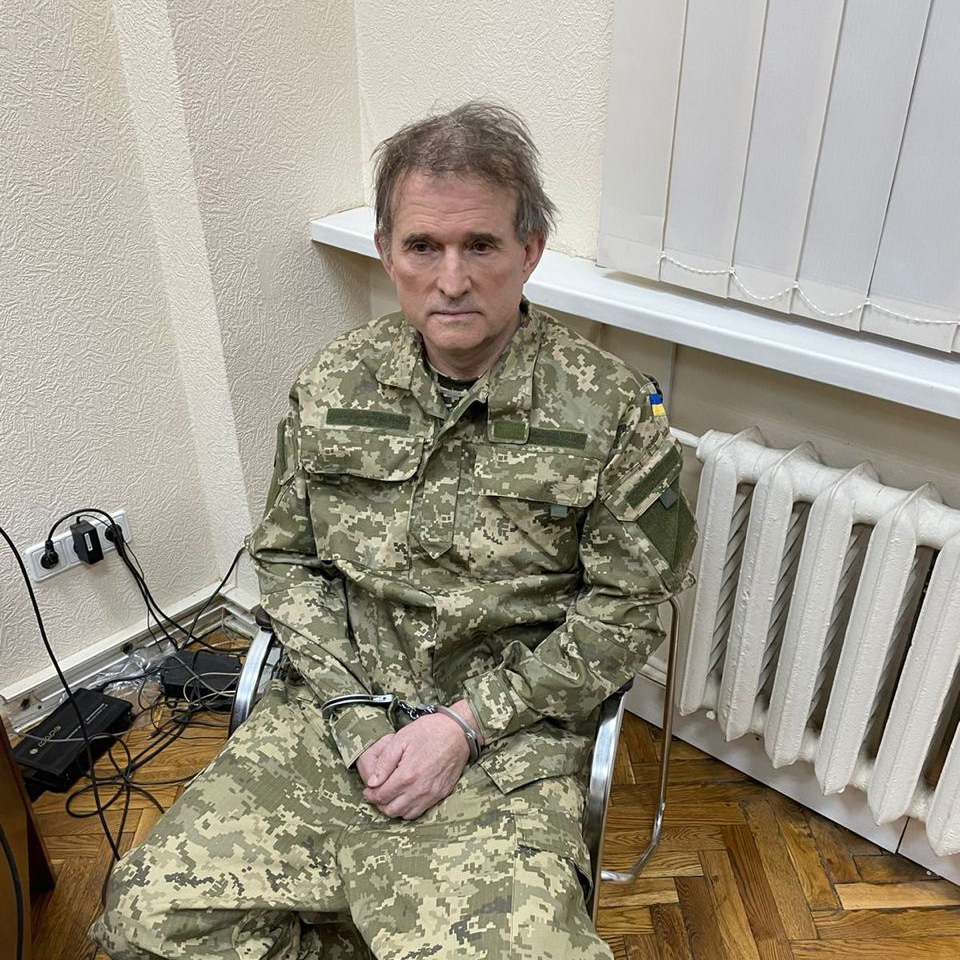
One of the first targets of deoligarchization was the head of the pro -Russian party “The Opposition Platform - For Life” Viktor Medvedchuk. The oligarch, who is considered Kum Putin, was accused of Gosizmen, and later added a violation of the laws and customs of war. After the Russian invasion, he tried to escape to Russia, dressing in the form of the Armed Forces. Now the activities of his party in Ukraine are prohibited by the court, and he himself is in Moscow. Ukraine exchanged it and 55 other Russians for 215 of its citizens, including 108 fighters of the Azov regiment, which was recognized as a terrorist organization in Russia.
In 2021, Medvedchuk took 12th place in the ranking of the richest Ukrainians, influenced the political life of Ukraine, being a deputy of the Verkhovna Rada, and could also lobby for pro -Russian interests through the television channels controlled by him that broadcast Russian propaganda: that there is a civil war in Ukraine, Crimea was transmitted quite fairly, and Kiev was controlled by the United States. In 2021, Zelensky blocked the channels of Medvedchuk. The assets of the oligarch and his wife were arrested , and bank accounts in Ukraine are frozen .
The war crushed the positions of the Ukrainian oligarchs even more: the combined state of the 20 richest people of Ukraine has almost doubled - to $ 22 billion. The richest Ukrainian - Rinat Akhmetov was most affected. According to the latest estimates, his condition decreased three times - from 13.7 billion dollars to 4.4 billion. Two of his metallurgical plants in Mariupol, Azovstal and MMK named after Ilyich , were destroyed during the Russian offensive. These factories made up two -thirds of Akhmetov’s metallurgical business .
Before the invasion of the oligarch Metinvest, the heyday experienced: thanks to the high world prices for ore in nine months of 2021, Akhmetov’s company earned more than in 2020. And this despite the fact that in 2014, due to the occupation of Donbass, Akhmetov’s company suffered even more: Metinvest lost six factories, and in 2015 the losses of the Ukrainian businessman amounted to about six billion euros.
In addition to money, the war deprived the oligarchs of the usual influence on society and politics. Previously, Ukrainian businessmen had a lobbying tool - television and media. Now, television in Ukraine works according to the laws of war: on the main channels, most of the airtime is occupied by the United News Telmarathon, which was broadcast from February 24. According to unofficial data, the office of the President of Ukraine is responsible for the content in the broadcasts of the telemarathon. Most Ukrainian journalists consider a “unified marathon” a form of censorship in the media.
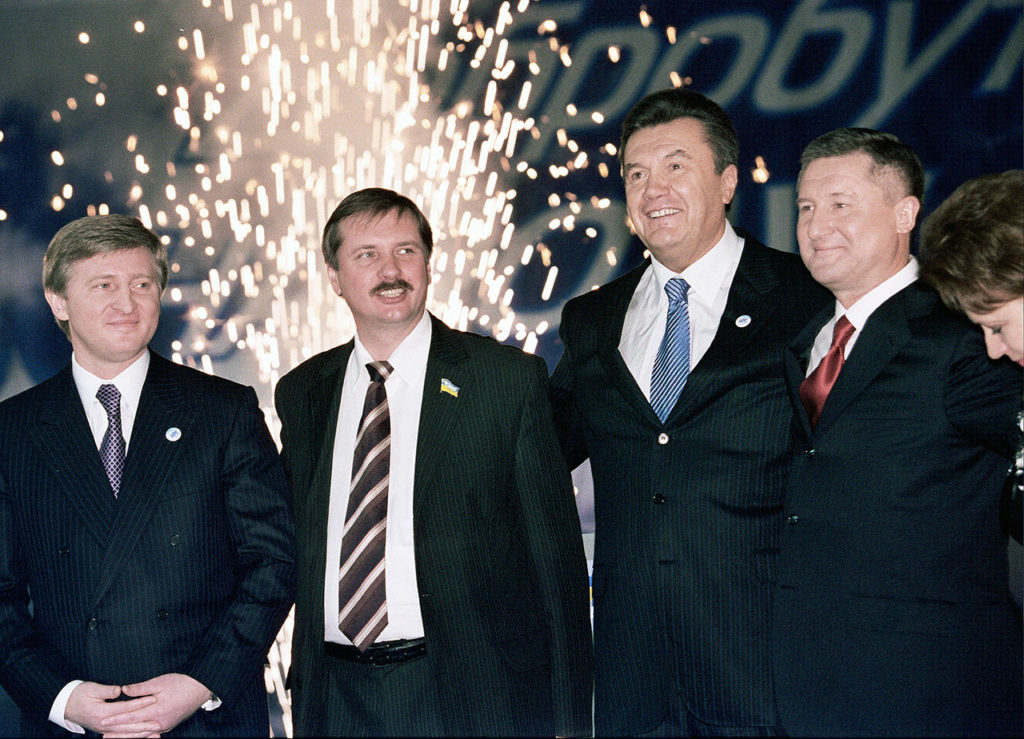
The Ukrainian oligarchs lost and the profits that they were brought controlled by the media. Advertising income fell sharply, but the production of new projects that brought a significant part of the income television companies Rinat Akhmetov, Igor Kolomoisky and Viktor Pinchuk were even more affected . As a result, hundreds of employees were dismissed, and the remaining ones cut salaries. The strongest blow again fell on Akhmetov: he gave the state all the licenses of his television channels and print media - Akhmetov did not succeed in selling them on market conditions.
"Servant" against the "Father"
Particular attention of the Ukrainian community was focused on the confrontation between the Ukrainian authorities with the founder of the largest in Ukraine of the Privat industrial and financial group Igor Kolomoisky, who publicly supported Vladimir Zelensky in the presidential election in 2019.
“Ukraine needs not one Zelensky, but in millions of Zelensky,” said Kolomoisky then.
The opponents of Zelensky even called the future Ukrainian leader the puppet Kolomoisky, and the media called the oligarch his “political father” and the main sponsor . The Kolomoisky channel “1+1” actively advertised Zelensky’s presidential campaign and broadcast his comedic show - including the popular series “Servant of the People”. After the victory of Zelensky in the election, Kolomoisky returned to Ukraine, and Zelensky appointed one of the advisers of the oligarch as the head of his administration. At the same time, Zelensky himself denied the connection with Kolomoisky, and in the election interview he even promised to quarrel with him.
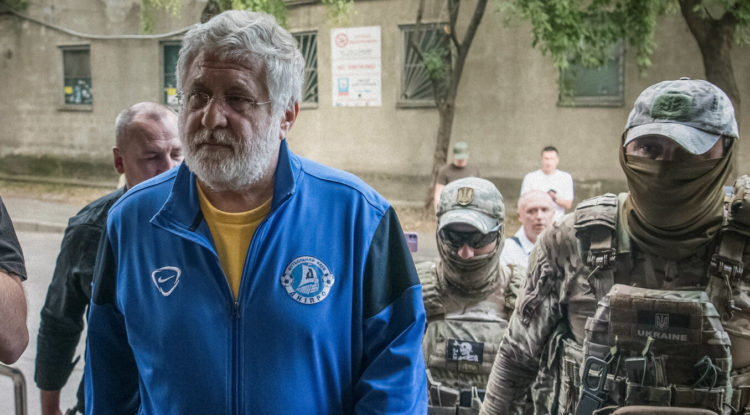
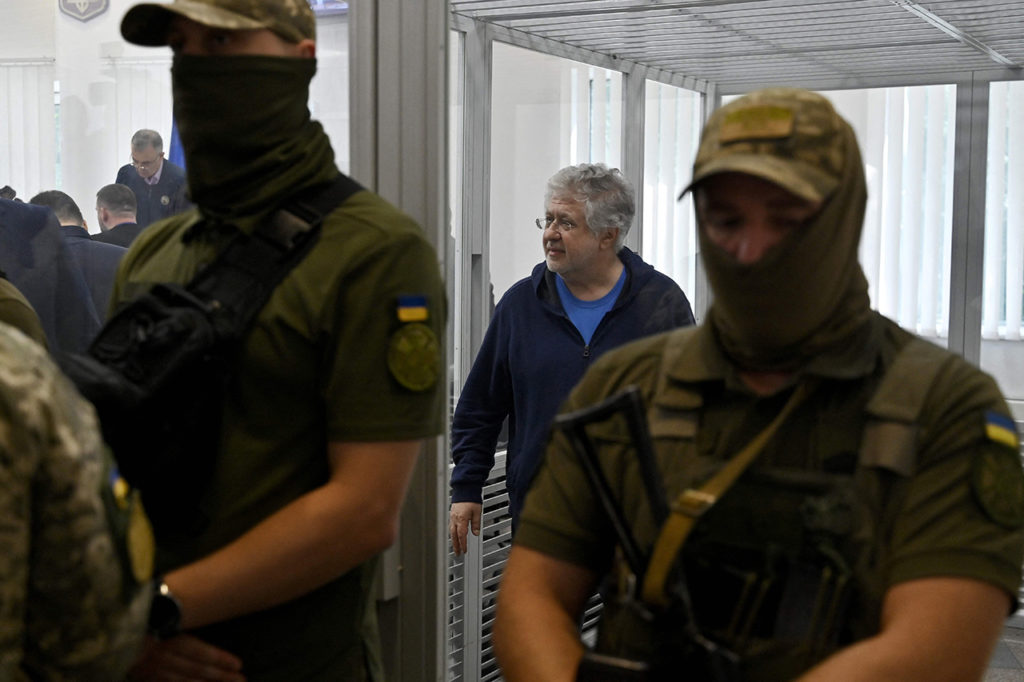
Zelensky kept his election promise. On September 2, the Kiev court arrested Kolomoisky on charges of fraud and illegal withdrawal from the country of more than half a billion hryvnias (12 million euros). The oligarch himself denies his guilt and even refused to pay the deposit for his release. Kolomoisky’s lawyer stated that he considers the case of his client part of the “politically motivated campaign, which began with the unlawful expropriation of the bank with him and his colleagues.”
For a businessman, this is far from the first problems with the law. Kolomoisky is wanted almost everywhere: the case of his financial fraud is investigated by the FBI and the Israeli police , the United States was even introduced against non -chanting, and in Moscow he has been arrested in absentia since 2014 (though not for corruption, but for the “organization of murders”). He even got into the database of the Ukrainian “peacekeeper” for obtaining a second citizenship, which is prohibited by the Law of Ukraine. Since September 2023, Igor Kolomoisky has been in prison.
The arrest of one of the richest and most influential oligarchs of Ukraine is designed to show how seriously Zelensky took up the fight against corruption. But the fight against Kolomoisky has been conducted since 2016, when another billionaire - Petro Poroshenko was at the president’s post. It was under him that the chief asset of Kolomoisky - Privatbank - was transferred to the state. Nationalization was carried out under the pretext of insolvency of the bank. Later, several courts in this case took place in Ukraine: one court recognized the illegal nationalization of Privatbank, the other confirmed the legality of the procedure and the inability to return the bank to its owners. Even after the shift of the owner of Privatbank, one of the most popular banks in Ukraineremains .
Already under Zelensky in Ukraine, she adopted a law , which was called "Antikolomoisky". It prohibits the ex-owners of nationalized banks to return control over them, including even through the court. First of all, the Western partners of Ukraine insisted on the introduction of the law. The International Monetary Fund (IMF) promised the republic additional funding for the adoption of this law: instead of the promised five and a half billion dollars, Ukraine could receive eight billion. In 2020, when Covid-19 raged around the world, Kyiv was very necessary for this money. Then, Zelensky came to the hearings of the bill in the Verkhovna Rada, who campaigned to support the project. In May 2020, the law was adopted , despite the record number of amendments .
Everything is much deeper
Martial law granted the Ukrainian authorities all the powers necessary for the fight against the oligarchs is not hidden by the Councilor of Zelensky on business, Rostislav Shurma, promising that there would be not a single oligarch in Ukraine after the end of the war.
“The oligarchic clans have no future in Ukraine,” Zelensky said in September, promising to overcome corruption.
The problem is that often corruption may not be connected with the Ukrainian oligarchy. One of the most resonant cases of recent times - corruption in the Ukrainian Ministry of Defense, which caused the resignation of the former head of the department Alexei Reznikov - was in no way connected with the oligarchs. The Ministry of Defense was accused of buying food for the military at high prices, for some positions - three times higher than in Kiev grocery stores.
And although Zelensky did not associate the resignation of Reznikov and his deputies with a corruption scandal, explaining that the military department simply needs “new approaches and other formats of interaction with both the military and society as a whole”, the consensus has developed in society, that the resignation was connected precisely with corruption and that Reznikov could not influence it.
However, the oligarchic trace remains in corruption. In May 2023, the National Anti -Corruption Bureau of Ukraine (NABU) detained the head of the Supreme Court of Vsevolod Knyazev during a bribe in the size of three million dollars . The money was a reward for decisions in favor of the oligarch and the former Ukrainian deputy Konstantin Zhevago. Despite the fact that Knyazev was deprived of the status of the head of the Supreme Court and the arrest , he still has the status of a judge, because only the Higher Council of Justice can finally dismiss him. While in the pre -trial detention center, Knyazev continues to participate in the billionaire’s case - in the register of court decisions they published the “special opinion” of Knyazev in the case of Zhevago five months after the arrest of the judge.
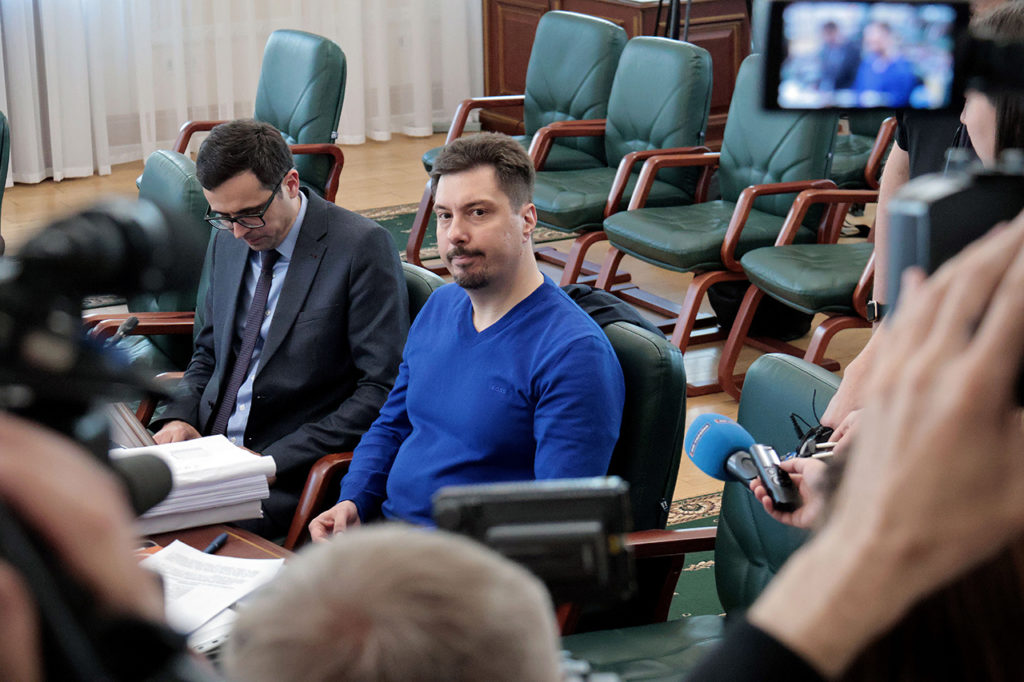
Zhevago is included in the top 5 of the richest people of Ukraine, he is accused of embezzlement of $ 113 million from the bankrupt bank and credit bank. In 2022, he was detained in Curshell, but France refused to return a fugitive billionaire to his homeland. Moreover, he was released from custody on bail of a million euros.
Great hopes
The victory over the oligarchs should help Ukraine join the European Union. However, Ukraine is trying to get rid of the old oligarchs, not noticing that it cultivates new ones. The fight against old -timers actually creates new opportunities for those who can come into their place - for example, for people from the immediate environment of the president. Numerous presidential advisers are the potential future oligarchs of New Ukraine.
“There is a risk of new oligarchs thanks to relations with the authorities and schemes of theft. A way to prevent the emergence of new oligarchs is the creation of strong institutions. We need to complete the judicial reform, ” says Daria Kalenuk, director of the Corruption Center.
Ukrainian oligarchs are involved in many fraud and corruption scandals in the country, but their role is not limited only by this. Influential businessmen became both a curse and salvation for Ukraine. Constant rivalry for influence between Ukrainian billionaires led to the preservation of pluralism of opinions, which is not in Russia. The opportunity to influence the political life of the country was both in the pro -Russian Medvedchuk and the pro -Western Kolomoisky. Unlike Russia, where the oligarchs united around Vladimir Putin, the oligarchs in Ukraine compete with each other and do not bow to power.
In addition, the Ukrainian oligarchs sponsored revolutions and military resistance. The success of the revolutions of 2004 and 2014 is associated with a clear anti -Russian capital position. The same Kolomoisky in 2014 did not allow the creation of analogues of the DPR and LPR in the Dnieper, despite the historical sympathies of this region to Russia.
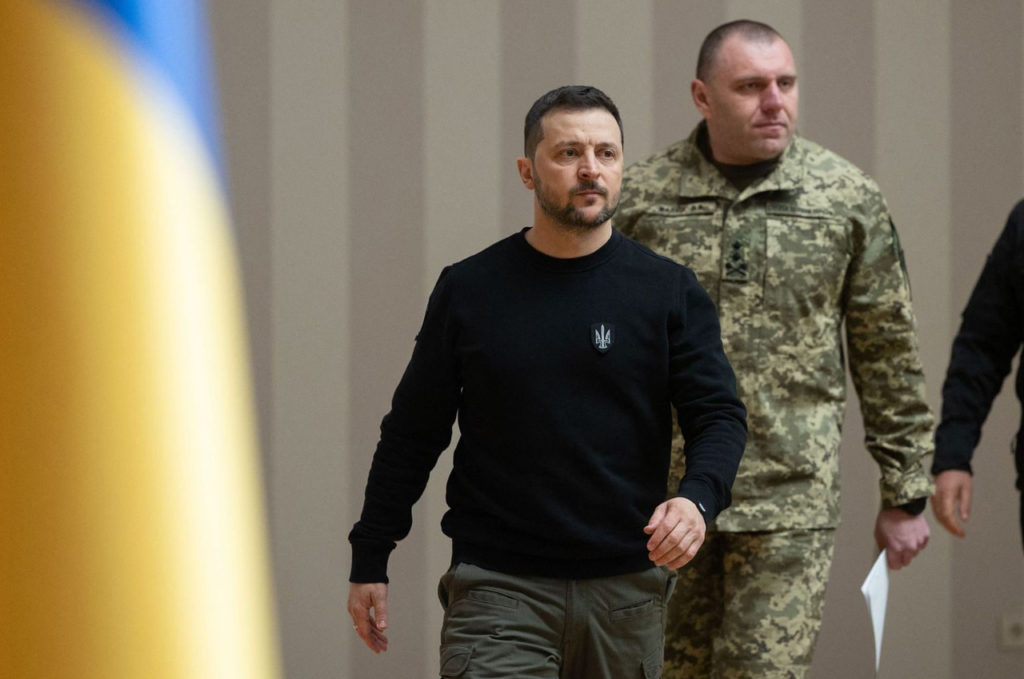
The growth of the non -alternative influence of the SBU is also an alarming call that can significantly hit political competition in post -war Ukraine. Western reforms are also required by the judiciary, which works in favor of those who have money.
“The SBU reform should be on the agenda. We are talking about counterintelligence. The SBU should not be an omnipotent law enforcement agency. The SBU has a long history of abuse of its investigative powers, ” says Anastasia Radina, deputy of the Verkhovna Rada of Ukraine and a member of the National Council on Anti -Corruption Policy.
Trying to deprive billionaires of political influence, Zelensky destroys the future opposition, which can form at the end of the war. The current Ukrainian president will remain at his post at least until the end of the war, but after political purges it may turn out that there will be no influential persons who can contrast him with something.