
Translated material
They became "others"
The time and help returned with his time to enter back to normal. What to expect from those who went through a special operation?
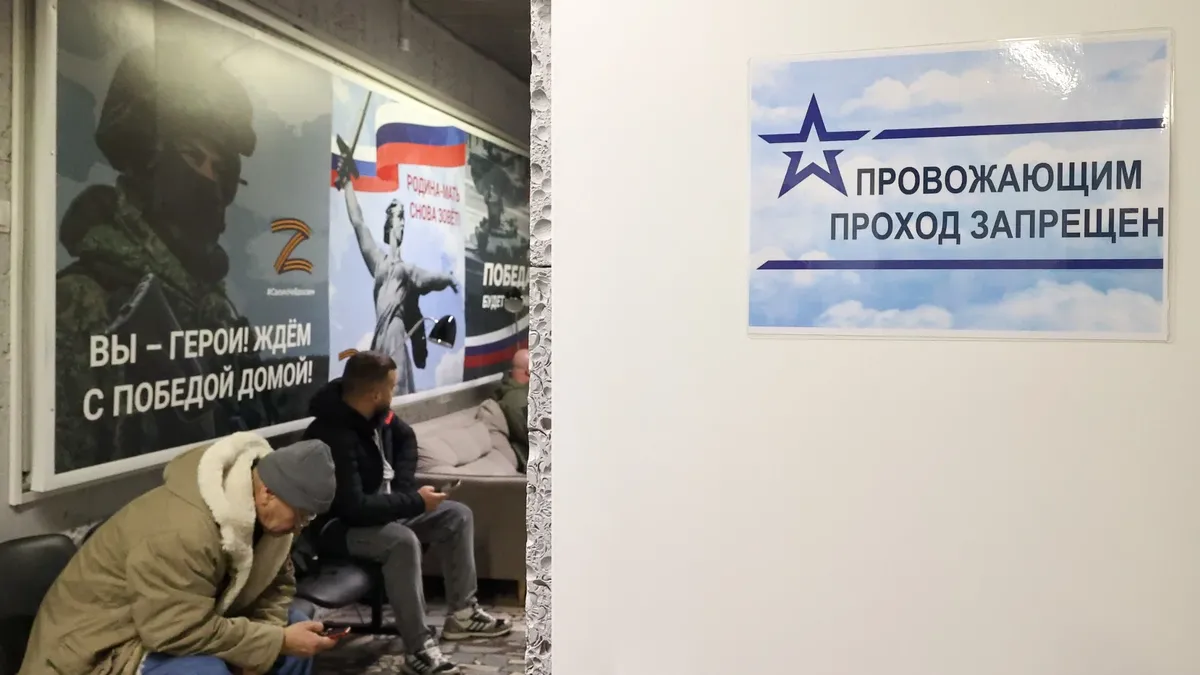
Men in a single selection point for military service under a contract. Photo: Sergey Petrov / News.ru / TACC
What happened to the participant of his who knocked the door to the pilots on board Aeroflot, and why is this not necessarily a consequence of post -traumatic stress disorder? After all, “strange”, or even dangerous reactions, the returning from the front, is enough without PTSR. What should relatives of the participants in the fighting returning from the front be prepared for? Why are units go to psychologists? About this - the head of the general psychological disciplines, candidate of psychological sciences Ruslan Kadyrov.
Not only PTSR
- PTSD is a mental disorder. The psychiatrist or psychotherapist makes such a diagnosis in the presence of certain symptoms.
- The first symptom is the invasion of unpleasant memories associated with participation in hostilities. Suppose a situation occurred in the battle. A month has passed, the second, third, six months, a year, but a person is still experiencing it. She, as a memory, invades without his desire. He can be disturbed by pop -up pictures, again and again reviving this situation that trauma to a person and accompanied by somatic manifestations: for example, a rapid heartbeat or sweating. There are difficult dreams associated with the combat situation.
There may be the so -called flashbacks - when a person plunges into experiences: in the present he is here and now, but emotionally and in the imagination - in the situation that traumated him, shocked, i.e. A person feels and/or behaves as if his traumatic event is repeated.
- And people share it?
- Differently. Depends on the openness of the person, on what relations in the family. If not trusting, then no one will share anything. This applies to any mental disorder.
The second group of symptoms is avoiding. A person does everything to avoid people, places, incentives that remind of the experienced. For example, does not watch films or reports about hostilities. He is trying to get away from talking about this, not to meet with close comrades who also participated in the fighting, because friends remind him of what was happening. This happens constantly: firstly, the memories invade without the will of a person, and secondly, he makes attempts to avoid everything that reminds him of battles.
The third group of symptoms is excessive excitability and reactivity: a quick entry into a frightened or anxious state and a feeling “on the verge”. A person constantly controls what is happening, all the time monitors to be safe or not in a situation that he cannot control. Outbreaks of anger and unmotivated aggression are possible, and the incentive for it is minimal (or completely absent), and maximum aggression.
The fourth group of symptoms is cognitive impairment and mood disorder. Negative thoughts about yourself and about the world around you. Painful sensations, such as a feeling of shame or guilt. Loss of interest in activities that previously gave pleasure. Feeling of isolation or alienation from others. Persistent inability to experience positive emotions (for example, happiness, satisfaction or love). Well, plus bad sleep, frequent awakening, restless thoughts about the war.
In order for the specialist to make the diagnosis of PTSR, the participant in the hostilities must observe all the symptoms indicated below at least one month, namely: at least one case of the invasion of memories; at least one case of avoidance; at least two cases of manifestation of excessive excitability and reactivity; At least two cases of cognitive disorders and mood disorder.
PTSD is treated - there are methods of non -drug psychotherapy, in which assistance is provided to a specialist within 12-17 meetings, this lasts 3-4 months.
But I would not want us to stigmatize PTCP. This diagnosis is not for everyone who fought.
An important thing. People for a long time, some - almost two years, are in completely different conditions. Their psyche is now functioning differently. And a person will definitely need a period of reactration, return to ordinary life. Even without any disorder, he may have some reactions that others will cause surprise, grief, bewilderment and aggression. The actions of loved ones who returned from the battlefield will not fit into our lifestyle with you. During the period of adaptation, they can give out some symptoms associated either separately with the PTSD, or with the fact that people are reacted.
So, let's say
During the fighting, aggression is the norm: due to aggression, fear is overcome. Outside of the hostilities, it is abnormal. But automatism remains. And for a person to return to peaceful life and its foundations, it takes 3, 4, 5 months, to someone up to a year.
All clinical psychologists are ready to work with such disorders. They are taught this. I'm talking about specialists with a basic psychological education, because in Russia about more than 50% of private practicing do not have one.
The psyche works at a different level
-Can we, “peaceful people”, in this regard, expect some rise in the level of aggression?
- Let's take it like this: in our society with aggression, everything is fine. Take the statistics of violent crimes. If they were before his, then where would they go after? And I do not think that aggression will be excessive for the return of the participants in the special operation. Everyone will have different reactions. It depends on the nature and characteristics of a person. Someone will, on the contrary, will close in himself, to think that it will no longer be there, that no one will understand them, will not accept them.
In any case, it will take time to return to the conditions of peaceful life. Because now their psyche is functioning at a different level. In order to live there, to fight successfully, you need to treat life, yourself, to what is happening.
You, when you eat, do not think that then you can not eat for a day? And they think. We are now sitting in the office, and he can sit “in the fresh air”, to put it mildly, in complete equipment. Yes, and under the threat of enemy attack. To be where there may not be food, water in time. This continues from month to month, from year to year. Do you think that his psyche will differ from ours?
It is simply necessary to accept as given: their reactions are excellent only because they lived in a different situation, were adapted to other conditions.
- The recent sensational case. On board the Aeroflot aircraft, a member of hostilities arranged a brawl, knocked out the door to the cabin of pilots. So Ptsr showed himself or something else?
- We must understand. I cited this information as an example. The text is not clear what it was. Maybe flashback or something else. But if the stewardesses were trained to work with such conditions, they could do everything differently. Personnel should be specially taught to work with acute reactions in transport situations. After all, such situations can happen not only with the participants of their own, just now a focus on them. We will be realistic: the transport has enough sharp and “strange” reactions and without participants in his. There are drunk, there are phobic reactions.
It is necessary to reveal the mechanisms to understand what and why is happening. They wrote that a man seemed to be on an airplane, but in battle, behaved inadequately. Certain phrases that the stewardesses would say could return it faster to the present. I am not saying that the passengers did incorrectly when they tied it up, fixed it. But it was possible to take some other actions so that he would return to the adequate perception of reality.
I don’t know what a particular passenger had - according to the description, possibly a flashback. But does he have PTSD, I can’t say.
- According to the experience of past wars and military operations (Chechen campaigns, wars in Afghanistan), not everyone is returning with PTSD, of course. And what is the share?
- The data is contradictory. There are studies that say up to 40%. If studies that say that up to 23%. Moreover, not only the consequences of the Chechen and Afghan wars have been investigated. You understand that the whole world is fighting in local conflicts and psychology and psychotherapy have been dealing with the problem of their consequences for a long time. Foreign studies, even on veterans of World War II, show that there is a different percentage of negative consequences. After the Second World War Analogues, there were no such hostilities anywhere on the planet. And now for the first time all possible types of weapons are used (aviation, artillery, mines, even unmanned aerial vehicles of various modifications). Accordingly, the intensity of the influence of modern weapons on the psyche is much higher. At the same time, it is almost impossible for a military man to hide from technical means of observation, there is a constant threat to life both in direct contact with the enemy and many kilometers from him. Can you imagine living conditions?
This is important to convey to the reader! What people are doing there now is the norm for them. And having returned, they need to learn how to live in our everyday life. Someone will do it faster, someone is slower, depending on the level of preparedness, on the level of maturity and vitality of the psyche to participation in hostilities.
The man does not cry. Military - all the more
- How many after recent military conflicts turned to a therapist for help?
- There is no official statistics. Unofficially - who will tell you? In my opinion, few. I myself am a participant in the fighting in Chechnya in the 95th year. Of my comrades, no one turned to the psychotherapist.
- Because men do not cry and is it ashamed to go to a psychologist?
- There is a prevailing military culture, where a person must cope himself, difficulties to overcome himself, to achieve goals himself. Accordingly, with participation in hostilities, this is cultivated. So all veterans strive to cope themselves. Plus, negative experience of a clash with all kinds of help - medical, psychological.
Besides,
There is also a symptom inherent in the participants in the fighting: they believe that only those who were with them can understand them. And therefore, it is difficult for them to share experiences associated with participation in hostilities, with others.
There are a number of other factors that prevent you from seeking help, and all these factors are subjective. For example, the belief of “men do not cry” is one of the social aspects in the upbringing and development of a man. But military culture affects a person more than this belief.
- Now the participants are already coming for psychological help?
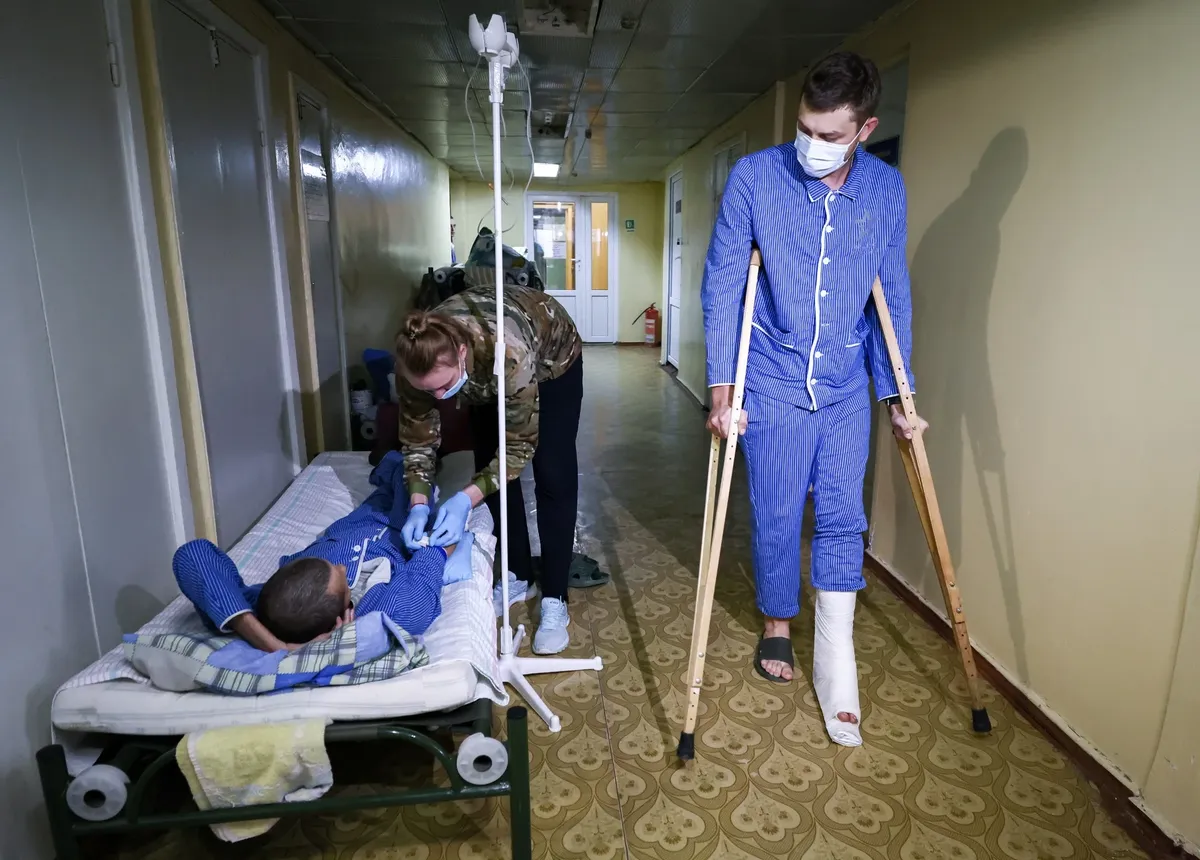
- Come. In the framework of private practice, I accept participants for free. They turn for help while on vacation, or after a wound. But this is not a mass phenomenon: two or three per month. Someone comes simply at a short consultation, someone needs help in connection with specific symptoms. Everyone who addressed me until I saw the signs of PTSD.
But besides this disorder, there are a number of others: alcohol, drug addiction, prolonged disorder, grief (when a person has lost a close friend and worries about this), depression ... People try to cope themselves, drinking alcohol or other psychoactive substances, and do not turn to a psychologist. This is all not PTSD, these are other disorders. Many, as they say in medicine, comorbid (related) disorders.
For some, he became a trigger in the development of a mental disorder. Someone has anxiety of uncertainty. When you wait and do not know whether it will come or will not come, die or will not die. Wives, mothers, sisters of military personnel. Those who have died relatives come for help ...
Yes, of course, with such conditions you can and should work. With the loss of a child, it is more difficult, this is up to 5-6 years of suffering at least. And suffering can continue all your life. The death of a child is an extraordinary, the psyche of a person is harder to cope and come to terms with this. If a partner died, husband, brother - it is easier to cope with this. Conditionally, of course. But to adapt and live further with this is easier than with the loss of a child.
Post -traumatic growth
- Will they be able to work effectively on peaceful positions that have returned from the war zone at least these 3-5 months of reapation?
- There is not only a negative aspect. Studies indicate that there is a concept of post -traumatic growth - that is, there is not only PTSD, but also personal growth. A person has other values, the meanings of life. In another way-higher-the value of life, own and others is considered. A positive context does not mean joyful, we are talking about the possibilities of further development of a person.
According to the experience of studying previous local conflicts, 40-50% of the participants in the hostilities manifested personal growth, the goals have changed, people became socially active, they develop further and develop the case they are engaged.
I conducted research on the military military. All are participants in the Chechen war, the primary link. Those who literally ran with a machine gun ... out of 98 non -adaptive people - nine. One of these nine has become adaptive eventually. It took him about 20 years.
The remaining adaptive are still very functional, everyone is socially successful. Everyone is now either colonels or lieutenant colonels, leaders of large civilian organizations. And who remained to serve, those already generals. And they have families, and children.
- And in the adaptability in what is expressed?
- This is what we talked about: PTSR and alcoholization.
- You conducted the study among the personnel military who graduated from military schools. And if we talk about mobilized, about civilian specialists who did not choose the war with their profession?
- Therefore, I say that we have not had such an analogue of hostilities since the Second World War. Let's wait. As a psychologist-practitioner, I am ready to help-it does not matter whether it is my own or not. But I can’t say anything about mobilized right now. Now the values are different, meanings ... By the way, ragers fought in Chechnya - all my subordinates, 120 people - guys for 18–20 years. And they also endured it differently. So you have to watch and prepare. If something happens, we will work. It won't - good.
The main thing is that, when all this ends, we treat the participants in the fighting as a force that needs to help react and successfully live in the realities of peacetime.
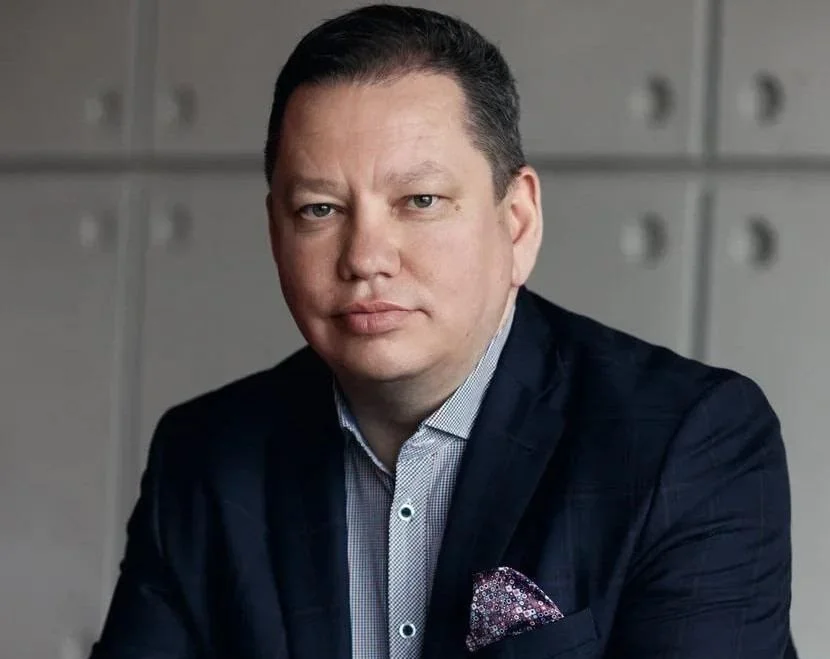
Help "New"
Kadyrov Ruslan Vasitovich - Head of the Department of General psychological disciplines of the Pacific State Medical University (Vladivostok). In 1993 he graduated from the Kiev Higher Naval School with a degree in Social teacher-psychologist. In 2007 - Vladivostok State Medical University (“Psychologist, Clinical Psychologist, Psychology Lecturer”). Candidate of Psychological Sciences, Associate Professor. EUROPSY certificate holder in the specialties "Pedagogical Psychology" and "Clinical Psychology (Clinical and Health)". In 1993-1999 He served in the Naval Corps division, the last position-deputy commander of the airborne assault battalion of the marine corps. Member of the hostilities in Chechnya (1995). Since 2000, it has been providing psychological assistance and has been engaged in the rehabilitation of combat participants.