
Translated material
"The village was left without hands"
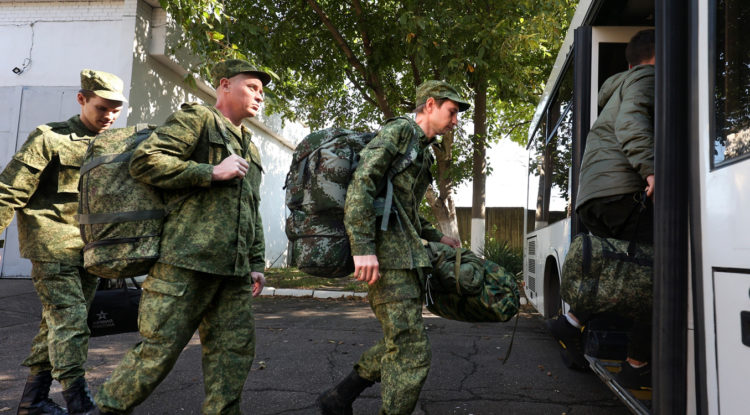
How do villages live in which almost all men were mobilized?
The main victim of the mobilization announced by Vladimir Putin was small cities, villages and villages. Now, some of them simply did not have young men left, because of which key positions remain vacant even a year later. Now pensioners from one village are forced to wear water home, because the water carrier went to the front, in another village-the work stood up because the local master went to the war, and somewhere there was no one to clean up even snow. The "cold" talked with the inhabitants of such villages and tells how they live a year after the declaration of "partial" mobilization.
In order not to miss the main materials of the "cold", subscribe to our Instagram and telegram .
More than a year has passed since the mobilization announcements in Russia, but the decree on its end has not yet been signed. Mobilization needed troops to fill in losses and patch holes in the problematic directions of the front, but this measure was very unpopular, and the authorities were forced to change tactics. Now the bet is made on volunteers - people who independently sign a contract from the Ministry of Defense and go to the front.
By the end of 2023, the authorities wanted to bring the total number of contractors in the troops to 521 thousand people. This plan will most likely be fulfilled: only from January to October 2023, 335 thousand people signed contracts from the Ministry of Defense. Active agitation, and sometimes outright pressure is on migrants and conscripts to convince or force them to sign a contract. In the risk zone - immigrants from poor regions and representatives of small peoples of Russia, who are attracted to large salaries in the "zone of their own".
The press secretary of the project “Go Forest” Ivan Chuvilyaev told the cold that they were most often addressed by residents of the villages and villages of Siberia, the Far East, the North Caucasus and the National Republics. According to him, the majority of villagers are elderly people, and young men, most likely, received the summons and have long been mobilized.
The sensations of human rights activists are confirmed by death statistics. According to joint estimates of the Mediazons and the BBC, the probability of perish in the war with Ukraine near the native of Tuva or Buryatia is 40-50 times higher than the inhabitants of Moscow and St. Petersburg. The leaders in the absolute number of confirmed dead are considered to be the Krasnodar Territory, the Sverdlovsk Region, the Republic of Bashkortostan and the Chelyabinsk Region.
However, if you recalculate these indicators from the male population, the picture will be different: the number of deaths is 10 thousand men higher in the republics of Tuva (48.6 deaths), Buryatia (36.7), the Nenets Autonomous Okrug (30), the Altai Republic (26.5) and the Trans -Baikal Territory (26.2). Moscow and St. Petersburg close this rating with 1 and 2.5 dead for 10 thousand men.
The main supplier of the military - villages, villages and small cities, with low income levels. A striking example is the village of Bukachach in the Trans -Baikal Territory, which was left without a wholly: a man left for war, and there were no others who wanted to work in rural areas for 21 thousand rubles. Residents of the settlement, including many pensioners, were left without the transportation of drinking water and went several kilometers with heavy buckets. Mass mobilization in the same region was carried out in the villages of Elizavetino and Verkh-Narym. According to local residents, almost all men received the summons there.
In the Khabarovsk Territory, 40 men from the Nanai village of Dada were mobilized . This is almost the entire young population of the village, in which 400 people live. Residents of the Tashtagol district of the Kemerovo region said that at some settlements, employees of the military enlistment offices flew on helicopters to mobilize representatives of the small people of Russia - Shors. The number of this Turkic people is only 12 thousand people. The Shors themselves say that the mobilization turned out to be destructive both for their nationality and for the villages in which they live.
“People from the military enlistment offices flew to remote villages on helicopters, to areas where there are no roads to mobilize men into the army. If in a village with a population of a hundred people they call a dozen men, this is destructive not only for the village, but also for the entire Shorean people, ”said Yana Tannagasheva, a representative of the International Committee of the Indigenous Peoples of Russia (ICIPR).
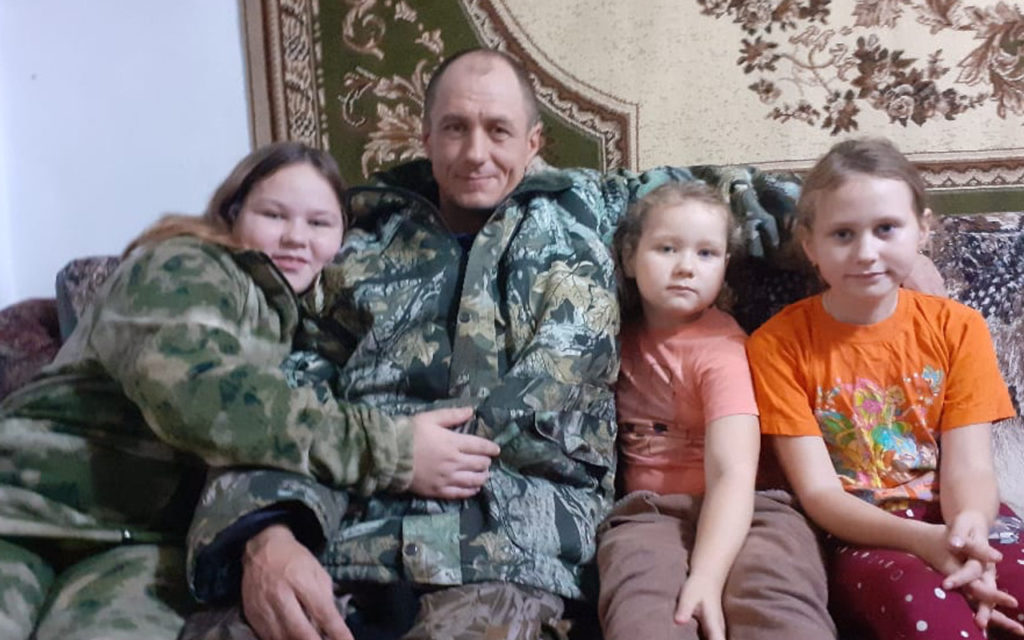
In September 2022, the farmer and father of three children, Evgeny Kurchatov, was mobilized in the village of Mogilny, in September 2022, actually the only capable man. After publicizing in the media, relatives hardly managed to return the man home. But this is rarely possible, and the authorities often diverge from local residents in assessments of mobilization scale. So it was in the village of Tyumenevo Kemerovo region - local residents talked about the mobilization of the entire male population - 59 people, while the authorities insisted that only 10 people received the summons.
Despite the problems caused by mobilization, the majority of villagers, villages and small cities refused to communicate with the “cold” and discuss the consequences of the presidential decree, but somewhat still agreed.
"I did not let my son go there"
Olga (name changed), the village of Tyumenevo Kemerovo region
After the mobilization of mobilization in our village, the summons came to all men. But to be honest: I did not let my son go. The two other guys who were given the summons also defended. My son had the right to delay in the care of my father with disabilities. They told me: "We would not have touched you if they lived only together." I categorically replied: "I have one child, I am not going to sacrifice my happiness."
Then the summons were already distributed and selectively. On mobilization, in the end, three people left [to the front] in our village. One of them served on a contract before, but interrupted it and returned. And after they announced the mobilization, he left again.
I do not agree with the mobilization decision. One of the guys who left was injured by the legs. He twice came here on vacation, and then he was again sent to the front. By that time, there were almost no left in the military unit who served with him. And two more boys were twice on vacation - in the spring and autumn. Then they were again taken away and do not say at all, for how long. The guy with a wound only recently had a second child. We also took a worker from school - however, then they hired a new one.
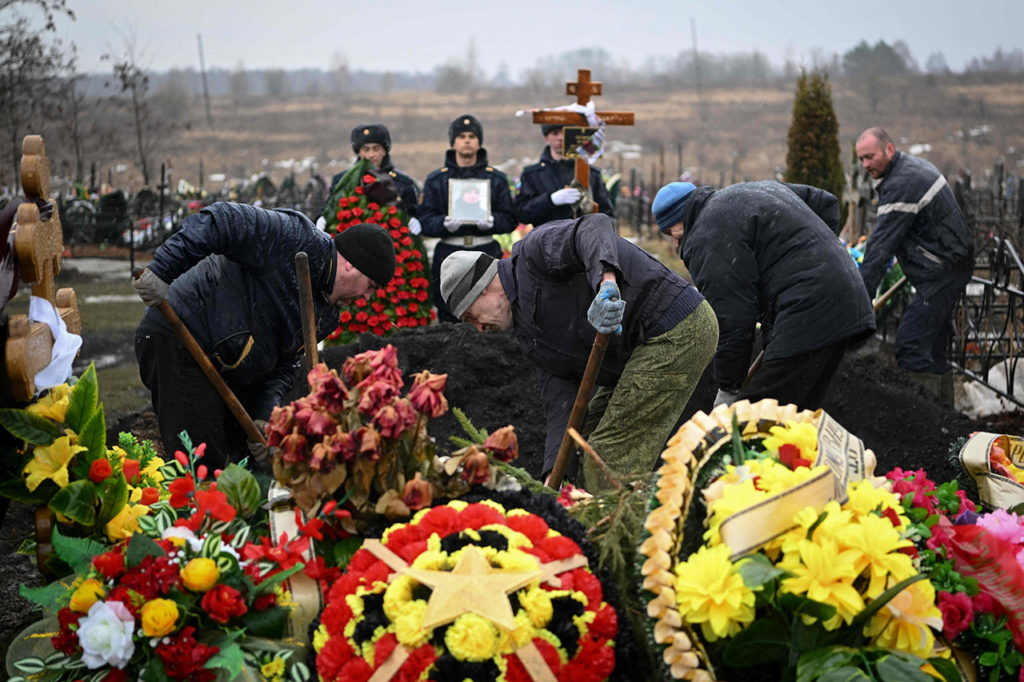
Mobilized families as such are not seen here. Social protection came once, but I don’t know how she helped the military relatives. In general, life in the village has not changed. What can change here? But the military families are very difficult. In the [neighboring village] Belogorodka, a cargo-200 cargo came in the fall, and a contracting guy was buried. In the [city] Mariinsk recently brought two coffins.
When the military was recruited on mobilization, [at the military registration and enlistment office] they said: "Children can play tanks." Well, they are playing enough, and people with what will remain with?
"Now in the village they do not know what to do"
Andrey (name changed), the village of Matveevka, Krasnoyarsk Territory
No more than 300 people live in our village. In total, six people were taken to war] - two of them went to the front from the colony. They have been fighting for more than a year. As soon as they announced the mobilization, men were warned that the agenda would come in a week, and they went without waiting. They shrugged, said: "Where to go, since the Motherland demands." All the inhabitants were shocked.
One of the [departed to war] was just a golden man for the village: a carpenter, a carpenter, and a welder. He repaired the water tower, was a stoker in kindergarten and school, made wooden doors. When the village council won a tender for the construction of a playground, he installed a swing, put fences, made a gazebo. They took a man - and the whole village was left without hands, one might say. Another mobilized worked at the pilram, harvested the forest.
Both had small children - one have two, the other has three. Everyone was injured: one contusion, the second arrived with a fragmented heel from a fragmentation wound. They stayed at home for two weeks, and then they were sent back. One of the men fell into Ukrainian captivity.
In the fall, the area allocated firewood for families whose relatives left for war. Forestial survey arrived, unloaded near the gate - neither go through nor pass - and left. Then everyone who remained, collected [firewood], split, folded it. The hardest all [in the village] live precisely the families of mobilized ones. I personally helped the mother of one of the military. One of the mobilized came for two weeks and managed to make a canopy to clean the snow less in winter.
In general, there are very few young men. Basically, men live in the village who do not work and do not participate in life in life. Many work on watch, go to the north. The collective farm has 20 people, many of them are over 40 years old. Young people are traveling around the cities, the village does not even live, but simply exists. There is no development, work too: only a kindergarten, a school, a collective farm and three stores.
Relatives of a man who had golden hands wrote appeals to conduct a rotation or return it. In addition, he was officially employed as a communalman, and they could arrange a reservation. But there was no answer. Now in the village they do not know what to do without it.
In a neighboring village, eight kilometers from us, two brothers were taken [to war]. One of them worked as a janitor and at school helped the economic part. He died, he was only 24 years old. His brother asked him to be released goodbye to the front. But he was not allowed, because their surnames are different.
"They cannot hide - in the village they all know them"
The Russian authorities have not yet planned to carry out the military rotation and return the mobilized from the front. Russian President Vladimir Putin and the head of the State Duma Committee, Andrei Kartapolov,said that military personnel would return home only after the end of the war. Rotation, like its specific terms, is not provided for mobilized soldiers.
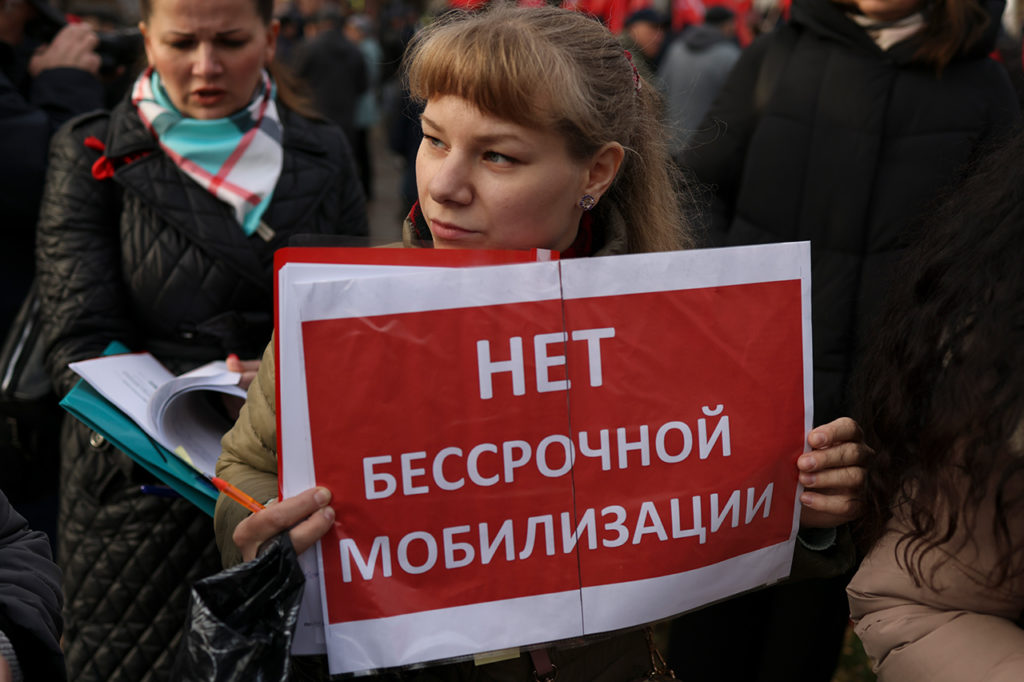
The army of the Russian Federation needs constant recovery of personnel - according to the minimum confirmed estimates, more than 38 thousand Russians were killed in the war with Ukraine, and up to 120 thousand in the maximum . Confirmed losses among mobilized exceeded 4.5 thousand people. Military experts also talk about the shortage of personnel in the Russian army, however, before the presidential election in March 2024, the authorities are unlikely to announce a new mobilization-it turned out to be too unpopular measure: according to the Levada Center, after the declaration of “partial” mobilization in September 2022, Putin’s rating fell by 6%.
The bleeding of the Russian hinterland will probably continue. The press secretary “Go Forest” Ivan Chuvilyaev in a conversation with the “cold” notes that helping residents villages is much more difficult than residents of cities. The main reason is that many cannot quickly leave small settlements.
“They cannot help but open the door to the district police officer and hide from the employee of the military registration and enlistment office - in the village they all know them. Almost everyone has no passports, these people did not go beyond the boundaries of their native region, and therefore these young people are unlikely to quickly go to the city and rent an apartment there. They remain to sit where they are registered. Therefore, it is much harder to help them, as well as find legal support. This requires us much more effort and resourcefulness, ”says Chuvilyaev.
But the main incentive to go to the war remains money. The minimum salary of a participant in the hostilities is several times higher than the average throughout Russia and amounts to 210 thousand rubles.