
Translated material
Children's YouTube is an exploitation
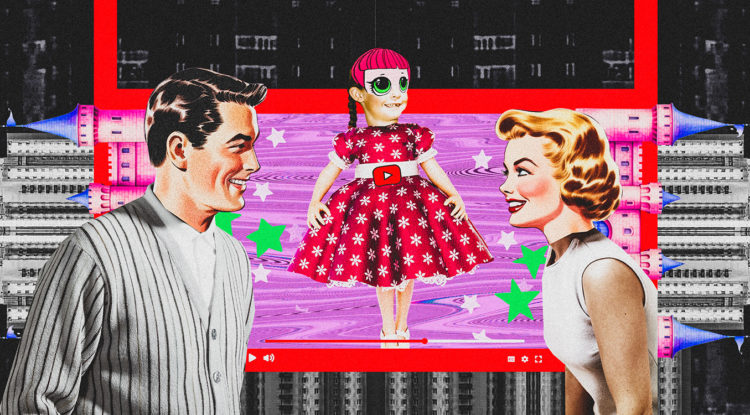
The researcher of the new media Ekaterina Kolpinets explains how multimillion -dollar children's video blogs work
Children's videos are one of the most popular segments of YouTube both in Russia and around the world. Every tenth request on hosting is a video request for children. Four out of ten yutub channels are children's channels. Children also participate in the creation of content for their peers-as a rule, in the role of leading or heroes of reality show. But how do the fate of these children develop? About the cultural and political dimension of the children's video blogging, as well as what remains behind the frame of the ideal world of a happy childhood, at the request of the Cold is telling the researcher of the new media, the teacher of Shanka, the author of the book “Formula Groce: how social networks create our dreams” Ekaterina Kolpinets.
In order not to miss the main materials of the "cold", subscribe to our Instagram and telegram .
In the film by Peter Wira “Show Truman”, the protagonist performed by Jim Kerry is born and lives his life in the decorations of the reality show. Friends, parents, work, romantic relationships - everything that Truman takes for many years as reality is the falsification of producers who created a rating television product from his life. Every day, millions of viewers around the world follow the routine of the protagonist, buy a measure with his face and goods that flickered on the screen. The life of the stars of the Utubub resembles the version of the "Show of Truman" of the era of social networks: the child is born and grows in the artificially built world of a happy childhood, existing within the framework of a strict scenario. Only a team of producers, but its own parents are responsible for the finished media product.
From amateur video grips to personal media imperials
Content, created by children and for children - from a video with unpacking to family video blogs and reading poetry - has turned into a multi -billion dollar business in recent years. The study of the algorithm of the recommendations of YouTube conducted by the PEW Research showed that the platform constantly recommends the audience children's content, regardless of which criterion the initial video was chosen, and 81% of children under 11 years of age allow them to watch YouTube.
The three largest schoolgirls have a lot in common. They appeared at about the same time, and at first the video was exclusively amateur, often without a plot, complex installation and exposed light. At the same time, the authors in just a few years switched from shooting amateur videos to personal media imperials, including several entertainment shows, a line of clothing and toys.
Ryan Toysreview (now - Ryan's World) started in 2015 from home videos, where three -year -old Ryan played with new toys, and his mother shot him on the iPhone. A few months after the launch of the channel, the video about the unpacking of the egg-surprise has become viral , and the number of spectators has grown twice as well. After a few weeks, Ryan’s show became the most visible channel on YouTube in the United States, ahead of the popularity of pop-music stars, flyers (bloggers leading broadcasting video games) and high-budget corporate content. By 2019, the income of the advertising channel amounted to $ 26 million .
The Like Nastya channel born in the Krasnodar Territory Nastya Radzinskaya appeared in 2016. The first videos about visiting thematic parks in different countries and unpacking toys were shot on an amateur camera, each video accompanied the sunbathing voice of Nastina's mother. Subsequently, her father Yuri became a constant hero of the video. The breakthrough was the video about the trip with his father to the contact zoo in 2018, where they were fooling around, finished the plastic cow and ate ice cream. Since then, the video has gained almost 950 million views. In 2021, the Radzinsky family earned $ 28 million, taking sixth place in the ranking of the richest YouTubers. For the past five years, Nastya, together with her parents, has been living in Miami and has several channels in different languages, the total audience of which is more than 200 million subscribers.
Another superpopular children's YouTube Canal- Kids Diana Show -dedicated to nine-year-old Diana Kidisyuk, whose family moved from Ukraine to America. If the Radzinskaya has a permanent partner in the filming, then Diana has a brother Roma, who also has his own Kids Roma Show channel. As in the case of Ryan and Nastya, the jump in the canal occurred after a video with unpacking toys. Now on the Diana channel 117 million subscribers, it ranks fifth in the world in popularity.
It is noteworthy that initially, Anpaking was not a children's genre and was associated with reviews of technology and gadgets. However, it was precisely the children-bloggers that brought the unpacking genre to a new level. So, the phenomenal popularity of the Lol Surprise toy and its many copies was associated precisely with the heyday of the Anpaking genre in children's YouTube.
In addition to multimillion -dollar revenues and the collection of Diamond buttons of YouTube, all three channels are combined by reorientation from amateur content to sell a license to use a personal brand for the sale of media products and goods. Ryan and Diana collaborate with Pocket Watch , a startup created in 2016 by a group of former Nickelodeon and Disney leaders. Like Nastya signed an exclusive global agreement on the sale and licensing of goods with IMG focused on the global audience. Pocket Watch refers to their young partners as film and television stars, around which you can build a global brand of licensed products.
Pocket Watch set out to turn Ryan and other creators of children's content into global brands. It was thanks to the cooperation with Pocket Watch that Ryan had its own clothing and toys line, a television show on Nickelodeon (Ryan's Mystery PlayDate), an appstore application, as well as nine personal channels on YouTube. Such a scaling-from amateur videos to their own media-imperia-occurred with the channels of Nastya and Diana, who also launched their toys, clothes, Lifestail-Tovarov, their own entertainment shows.
Advertising of a happy childhood
The content of the channels of the blogger children is much more interesting than their multimillion-dollar income. What exactly brings them an audience, views, money? The videos have a similar scenario: in the center - a child who has access to all possible options for toys and entertainment; Parents are always nearby - either in the form of a sunset voice, or as a partner in games; The child on the screen has a loving family and funny friends, usually also bloggers. In all children with the millionth audience, “Happy Family” means “full, heterosexual family”, and the child himself is literally built into the finished models of gender socialization. The girl never tries to look and behave like a boy, and a boy is like a girl. The channels of Nastya, Diana or Ryana reproduce the same narrative of abundance and happy childhood.
In the video there is always an advertisement for goods, but in fact all the content of the channel is entirely an advertisement for a happy childhood and a full family, where there is no place for swearing, tears, quarrels or negative. Any conflicts remain behind the scenes. The child living inside the world and entertainment himself becomes a toy.
The Australian media research by Crystal Abidin introduced the term “micro-micro-cognition” to describe children whom “their mothers-bloggers are deliberately preparing to ensure that they have become goods and advertising banners from birth.” Parents construct commercially viable biographies of children on YouTube, supervise the biographical narrative of their child, make sure that in the frame everyone looks conventionally beautiful and cheerful, which in itself is frankly operational.
Comparison of children with advertising banners is not an exaggeration. Moreover, the child begins to like and income even at the stage of the embryo. There is no lower boundary of the age at which you can become an influenser: many accounts on Instagram are devoted to not yet born children and receive hundreds of thousands of likes and subscribers.
In the late 2000s, Gender Reveal Parties began to gain popularity-parties, where famous bloggers, their relatives, friends gather, and then in a festive atmosphere, parents will recognize the gender of the unborn child. Usually it looks like this: a couple bursts a balloon, inside which there are pink or blue confetti, in accordance with the floor of the unborn child. The event is carefully documented and published on social networks. Everything looks like a triumph of sexism and gender stereotypes, which, however, does not interfere with the frantic popularity of such parties. There are more extreme ways to find out and document the floor of the unborn child: for example, in October 2019 in Iowa during such a party, a woman died from fragments of a home -made explosive device filled with gunpowder and colored children's pouring. In March 2021, two pilots crashed , demonstrating the stretching "This is a girl!" off the coast of Mexico - they were hired as participants in Gender Party.
No less significance is attached to the very process of the birth of a child. Since the mid-2010s, many mothers began to invite a professional photographer/video operator, which completely fixes the process of childbirth, among Russian-speaking million-plus-twilight bloggers. In most cases, the audience of such blogs is the same young mothers. The largest growth in the audience of such blogs falls on the first years after the birth of a child, and at the same time, advertisers place the most advertising in them, which is also mainly oriented towards young mothers.
Many women blogers who launched marathons and information on the 2010s built their business around the image of an ideal mother and wife. The family in the person of children and husband was also an obligatory element of heating subscribers before the start of the next marathon on “female energy” or “monetary thinking”. The overwhelming part of the content on the Instagram blogs of Valeria Chekalina, Oksana Samoilova, Alina Levda, Nadezhda Serova (also known as Nadin Serovsky), Evgenia Krivtsova, Lisa Miller, Sophia Stuzhuk and other women of the Influenes with a millionth audience are associated with the themes of motherhood and marriage. And the chances of a child born in a family of popular bloggers not to become a blogger and part of the content of the blogs of his parents are still striving for zero.
Behind the scenes of a happy childhood
The first thing you think about when looking at the blogger children is the judicial claims that they will file their parents as soon as they reach the age of majority. What happens to those children who do not want to live inside the reality show built by parents? And today the blogger child has the opportunity to defend his rights?
In the material of The Atlantic “The first children of social networks are growing up - and they are horrified” tells how in the United States parents abuse the inviolability of the private life of their children. Parents regularly tell the audience from hundreds to tens of thousands of people about failures with the change of diapers, successes in teaching the pot and the details of the first menstruation of their child. There are no real rules and laws that impede this behavior of parents. On the platforms of social networks, there are recommendations for combating really unacceptable content - physical violence against minors, children's nudity, threats, grass and the like. But the loading of “non -interpretative” content can also harm children whose life is carefully documented on the Internet. Currently, neither the laws of the vast majority of states, nor federal laws give children family video bloggers the right to any part of the money earned, although, as The Washington Post recently reported , such a law has already appeared in Illinois and is considered in other states.
Evgeny Gutsal, published this fall, “History of Russian Vigiling” tells about the dizzying take -off of the first stars of the Russian -speaking YouTube. The stories of Roma is acorn and Dani Milokhin, which have become all-Russian Internet knowledge long before its age, are largely similar. The frantic popularity subsided as quickly as it appeared, leaving behind mental disorders and drug problems, resentment, anger and misunderstanding of how to live on. Former fans, who did not give the young stars of the passage yesterday, switched to new heroes of social networks and do not want to see the aged idols who have to make more and more efforts, trying to return the former popularity.
The theater of cruelty of social networks works without intermissions: subscribers and spectators affect the picture of the perfect childhood no less, and maybe more than the creators of the content themselves. As soon as the ideal world gives a failure and exposes for the time being, an unsightly reality hidden from prying eyes ─ with roaring children or domestic violence, ─ bloggers audience immediately bring down a flurry of Hayite on them.
Another eloquent example of what the relations of the current stars can turn into with their parents, was the recently published book of Britney Spears' memoirs , which also tells about the long-term hyperpert of her father, who took away most of the singer’s income and controlled her life; on the lawsuit with his own father and the movement of Free Britney; About what all this turned out for her physical and mental health.
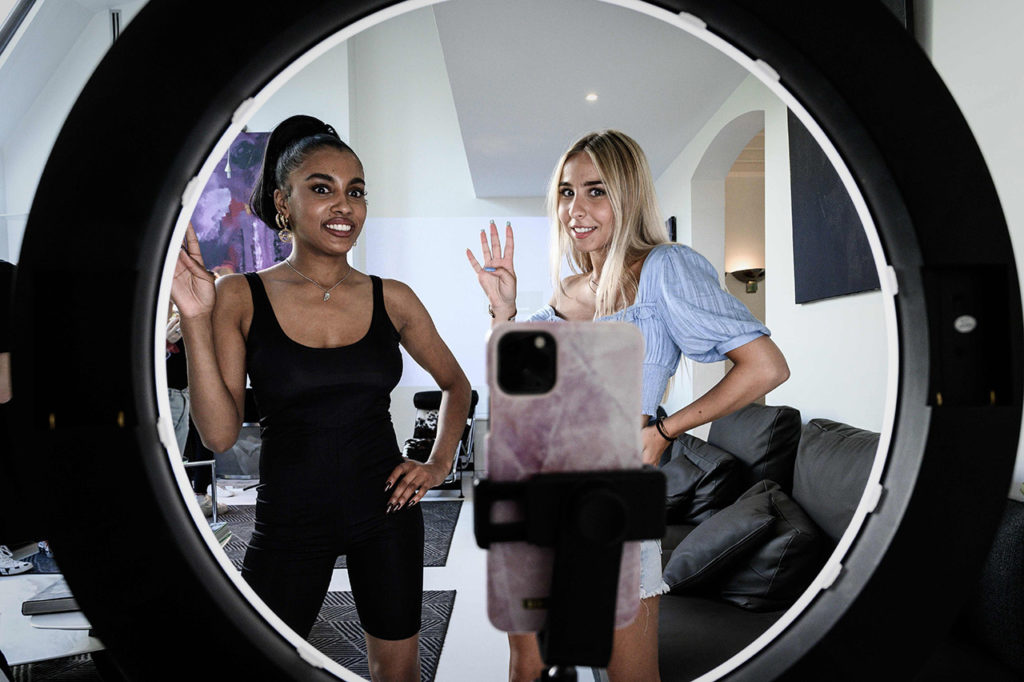
Tick-Tok Houses , where several teenagers-blogers live with a millionth audience in order to remove viral content together, are also a possible scenario. For the audience, life in Tik-Tok House looks a continuous fun, for which yesterday's children receive dozens, or even hundreds of thousands of dollars. In fact, each living in the house is connected by a tough contract, where many points are spelled out, including requirements for appearance and weight.
The reality show of the new generation, where the participants live under surveillance and continuously document their lives, offers its participants more and more fleeting and transient glory.
In the final of the “Show of Truman”, the chief hero still manages to get beyond the limits of the television world, destroy the scenery, where he was kept all a conscious life. Whether like that of modern blogger children will be able to live in the simulator of a happy childhood until they grow up and find themselves at a landfill, we will see in the coming years.
The author’s opinion may not coincide with the opinion of the editorial office.