
Translated material
Three times fossils
The results of the Cop 28 International Climate Conference: “Oil” compromise and Russian anti -raids
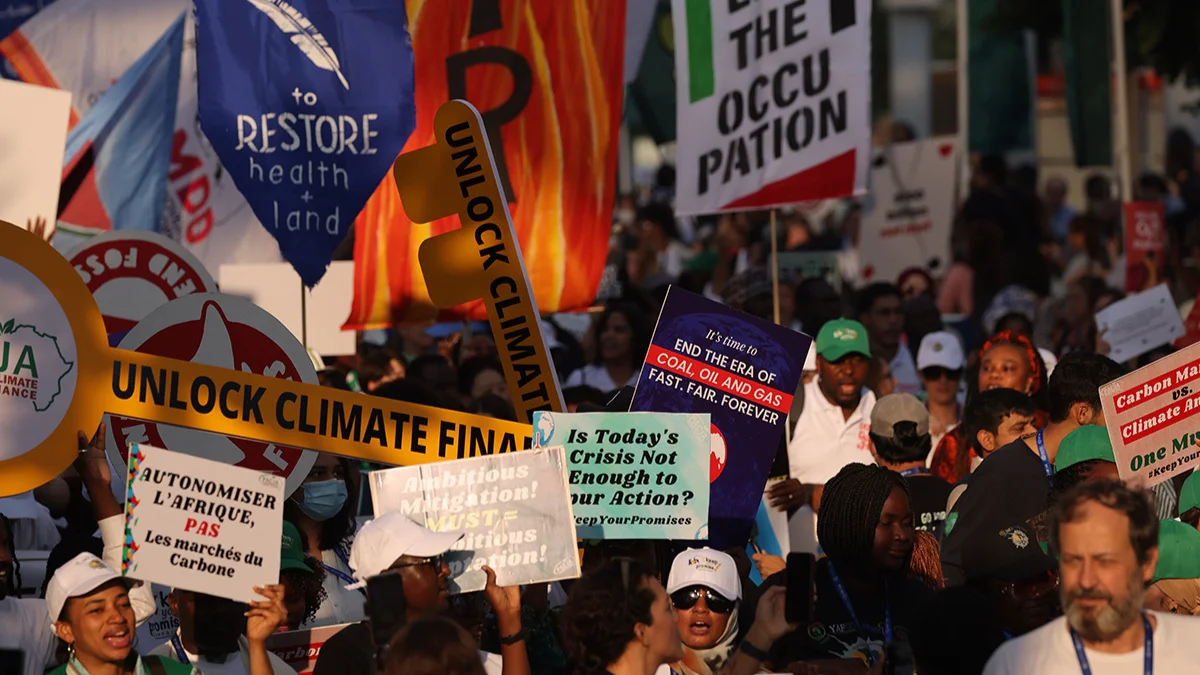
The protest march during the COP28, December 923, Dubai, on December 9, 2023. Photo: Sean Gallup / Getty images
The completion of negotiations in Dubai was delayed for almost a day, but the final document was nevertheless adopted. The countries agreed on a gradual transition from fossil fuel to other sources of energy, however, without a temporary framework. The main victory of Cop 28 was the $ 800 million promised donors in the donor to the Losses and damage to the help of the most suffering from climate change. The head of the Russian delegation proposed to give to the same fund 300 billion dollars frozen due to the war of the country's gold and foreign exchange reserves, but this can rather be called trolling than a real intention. But the voice of Russia was decisive when choosing Baku as the next capital of negotiations.
We will not refuse, but go
The text of the final documents, which was proposed by delegates to the day of the completion of negotiations on December 12, was not agreed. The coalition of oil and gas countries, led by the UAE, did not suit the initially prescribed rejection of fossil fuel as the basis of world energy. After thoughts, the organizers proposed at seven in the morning on December 13 a compromise version of the text: "... the transition from fossil fuel in energy systems in a fair, ordered and equalist way."
Australia, Canada, Chile, EU, Norway and the USA, as part of a group of 100 countries, criticized a new option as too weak due to the lack of a phrase about the rejection of hydrocarbon raw materials. Delegates from Russia publicly did not express their opinion on changing the wording. However, the representatives of the country never voiced the possibility of refusing fossil fuel, but called for acting gradually and maintain the main thing - a stable energy system, albeit on oil, coal and gas climate. The burning of the first two types of fuel leads to emissions of carbon dioxide into the atmosphere, and gas leaks lead to excessive content in the atmosphere of another greenhouse gas - methane. As one Russian expert specified, a participant in negotiations, who wished to maintain anonymity, “the leader of the protest was Saudi Arabia, which always acts as the main“ brake ”of prompatical decisions.”
Softened formulations caused tough criticism of associations of public climatic organizations, such as Climate Action Network. But the text, published at seven in the morning, was accepted unchanged at 11 o’clock. According to the expert of the International Center for Sustainable Energy Development under the auspices of UNESCO Mikhail Yulkin, "it was hardly possible to expect [from negotiations] more, taking into account the desperate resistance of exporting countries, as well as oil and gas companies that landed in Dubai an unprecedented landing of their lobbyists."
The coalition of public organizations, who advocated for refusing pollutants, Kick Big Polluters Out (KBPO) estimated that about 2.5 thousand lobbyists of the oil and gas sector came to negotiations.
The total number of negotiation participants, including delegations and observers, amounted to 84 thousand people.
The Russian delegation seemed to be satisfied with the results of negotiations. One of the participants in the summit, the head of Roshydromet, Igor Shumakov at the final plenary meeting Cop 28, stated on behalf of the Russian delegation that the final document turned out to be balanced and, according to him, each country could move its own way to decarbonization.
Russia - champion in anti -yard
In two weeks of negotiations, Russia received the Climate Action Network (CAN) “Fossil Day” three times. The coalition traditionally gives it to COP every day, noting which of the participants slows down humanity in the way of preserving their own habitat. The first time Russia was “awarded” on December 5. The reason to include the country in the list of “fossils” was the assessment of increase in carbon dioxide emissions by 150 million tons per year presented in the Ukrainian pavilion due to Russian invasion. This volume of emissions is compared with the annual emissions of Belgium. In addition to Russia, the US and Japan were included in the three winners.
The second time the “fossil” went to the Russian Federation on December 9, along with Israel and Australia. This time Russia was noted for the visit of Vladimir Putin, who came to the UAE, but did not take part in the negotiations. Activists believe that the Russian President discussed the conditions of oil transactions in Abu Dhabi, while it is necessary to abandon fossil fuel. According to the results of the conference, Russia received a “colossal fossil” award along with OPEC countries. Social activists were dissatisfied with compromises in previous versions of the final documents COP 28.
The anti -wrades and indignation of activists seemed to be the only thing that made the presence of the Russian delegation noticeable in the negotiations. “Russia did not make a position on a single clause of the agreement, did not promote any its own formulation on the text, but was remembered only by the wonderful proposal of the head of the delegation of Ruslan Edelgeriev to send funds to the Losses and Damage Fund for the countries suffering from climate change,“ due to frozen national gold and foreign exchange reserves in international organizations, ”the expert explained the expert, explained the New-European. Wanted to remain anonymous.
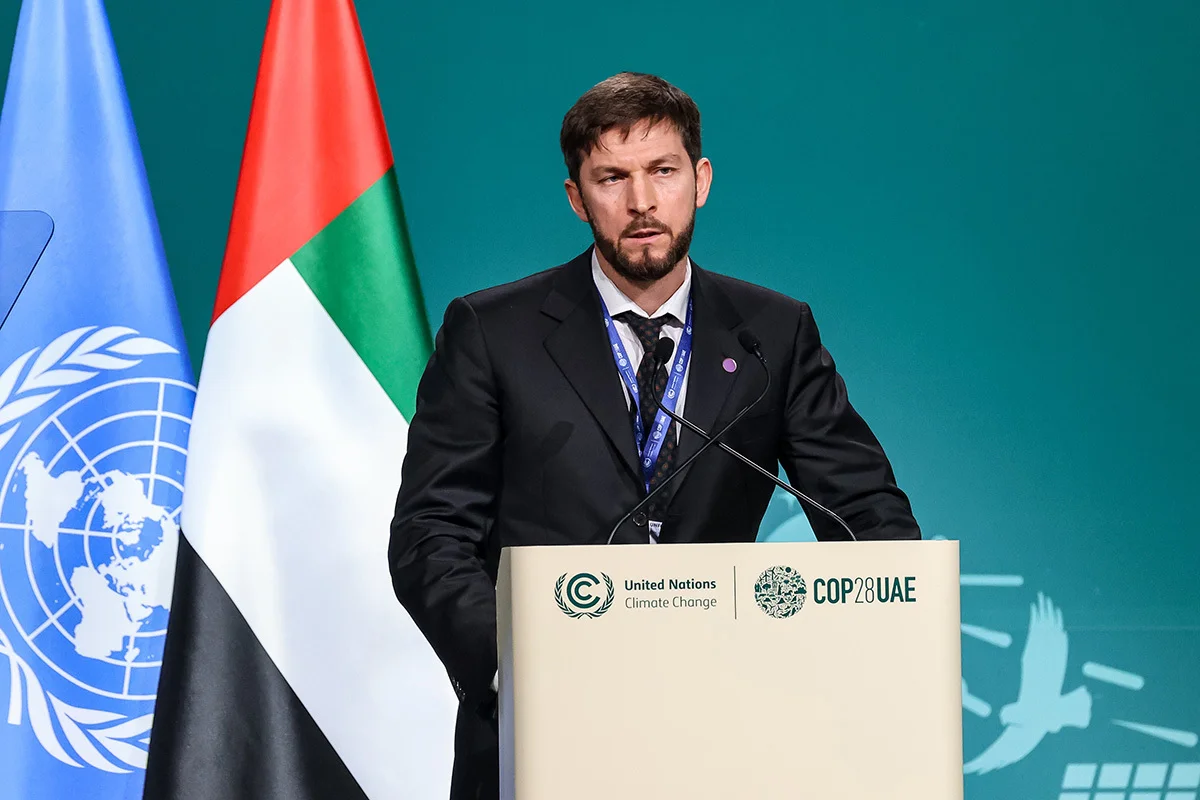
He also expressed the opinion that the statement of Edelgeriev was a game, and not the real intention of becoming a foundation donor. “We suggested - you don't want it! Although the real mechanism for making money is unclear. To say this, I think, is quite in the style of the Kremlin now, ”the expert believes. Meanwhile, the fund is called almost the main victory of Cop 28.
In two weeks of negotiations, about 800 million US dollars were raised in it. The EU, Germany, the UAE, the UK, the USA and Japan announced their contributions.
In addition to a provocative statement of gold and foreign exchange reserves, the head of the Russian delegation confirmed that the country intends to become climatically neutral by 2060. During his speech on COP 28 Edelgerias, like many Russian officials in the last two years, resorted to the language of veiled charges. “The top of hypocrisy, when some require a huge tension of forces for the sake of a common cause, but at every opportunity they try to denigrate and cash in on others,” said the head of the delegation. It can be assumed that this passage is supposed to be a refusal of developed countries and individual companies to supply Russia's technologies, including those that reduce greenhouse gas emissions.
“Rosatom” was asked, Lukoil went himself
During the negotiations, Russia, as expected, did not join any climatic initiative. Even Triple Nuclear Energy - a declaration of 22 countries of the world that it is necessary to triple the potential of nuclear energy by 2050 - did not force Russia to be signed under the document, although the Rosatom State Corporation, the world's largest nuclear power plant. Probably, this decision was influenced by the list of signatories: it included the USA, the EU and Ukraine.
However, later Rosatom at the invitation of the World Nuclear Association (WNA) joined the statement of the company's nuclear industry (Net Zero Nuclear Industry Pledge). The initiative participants agreed to maximize the contribution of existing nuclear power plants and accelerate the development of new nuclear technologies to achieve the goal. In addition, the signatories want to at least be three times to increase the capacity of the nuclear power plant by 2050. It seems that Rosatom could not help but join the general agreement of the nuclear holders, so he supported the application, and then only after the invitation of the initiators.
According to the expert, nuclear energy stands apart in matters of energy transition and access to international "green" finances. So far, no climate money is allocated to the nuclear power plant.
The only inclusion in the international initiatives by representatives of Russia was the accession of Lukoil to the Charter for the Decarbonization of Oil and Gas (Oil & Gas Decarbonization Charter, OGDC). In total, 50 oil and gas companies from around the world supported the initiative. Companies that signed the agreement represent more than 40% of the global oil production. More than half of the signatures of the Charter are national oil companies. However, Rosneft did not join the community. The charter participants pledged to ensure zero emissions of methane no later than 2050, to stop the regular burning of a private oil gas (PGN) on torches by 2030 and ensure carbon neutral of production.
Russian pavilion
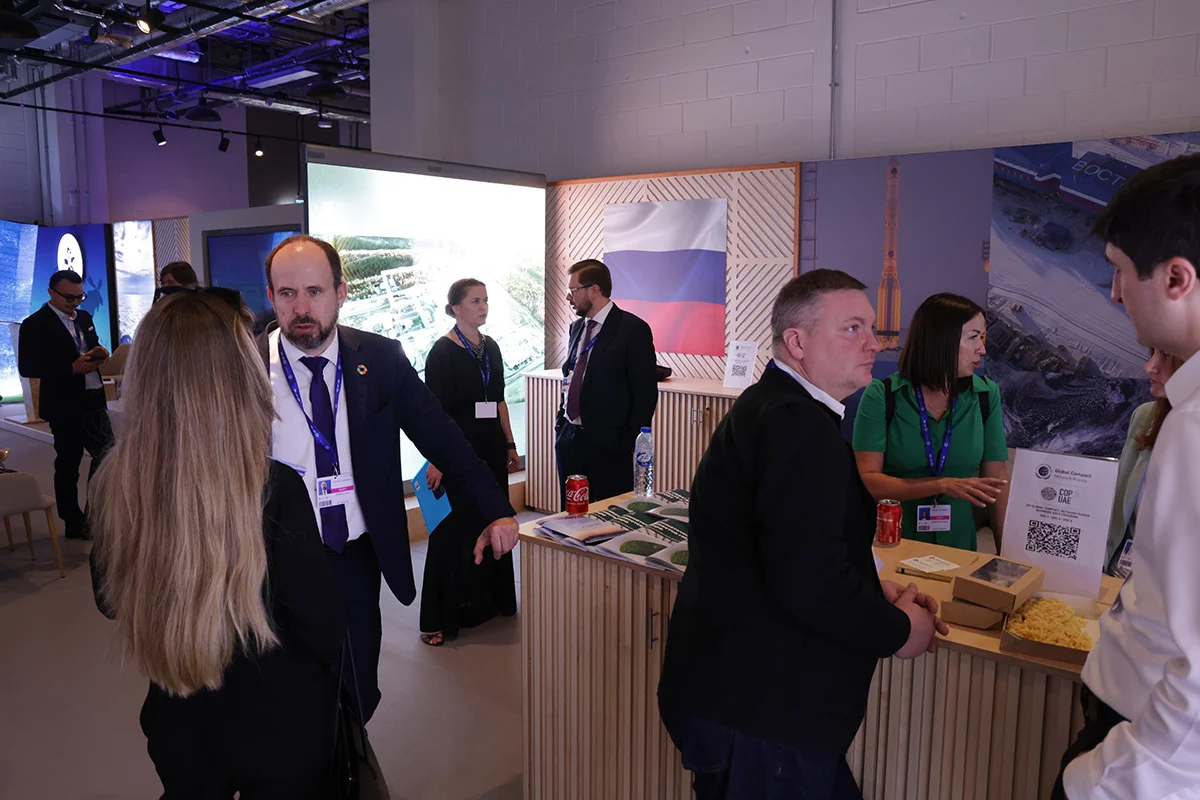
The Russian pavilion on Cop 28 is worthy of a special mention. Here, representatives of the authorities and business told how they save the climate. Judging by the performances, individual participants doubted whether there was a change in the climate and is the role of a person in this process so great. In Russia, there are still many climatic skeptics so far, but earlier they have not come to international negotiations in such quantities. The most striking position was defended by Andrei Melnichenko, who was previously the beneficiary of the largest coal company of Russia Suek.
In early March 2022, Melnichenko fell under the EU sanctions, the next day in SUEK and Eurochem said that since March 9, Melnichenko ceased to be their beneficiary. But, it seems, the topic of coal and climate remained close to the oligarch. At Cop 28, Melnichenko proposed to leave alone industry and energy along with emissions, as they make up no more than 6% of greenhouse gases in the atmosphere from natural sources. The oligarch suggested not to refuse fossil fuel, but to strengthen the absorption abilities of ecosystems.
As a sample of such a project, he leads as an example of a “playstocene park” in Yakutia. In it, scientists are trying to maintain permafrost from Taina with the help of 150 ungulates. According to scientists, animals graze and compact soils, preventing them from degrading. A scientific project has existed for more than ten years. It is known in the world and is of great interest. However, its scale does not allow you to think about the possibility of saving the world, despite the assurances of the charismatic author of the project Alexei Zimov. Apparently, for the lack of technological projects for capturing CO2 or at least reducing emissions from coal thermal power plants Melnichenko switched to scientific ideas that leave the illusion that industry transformations can be avoided.
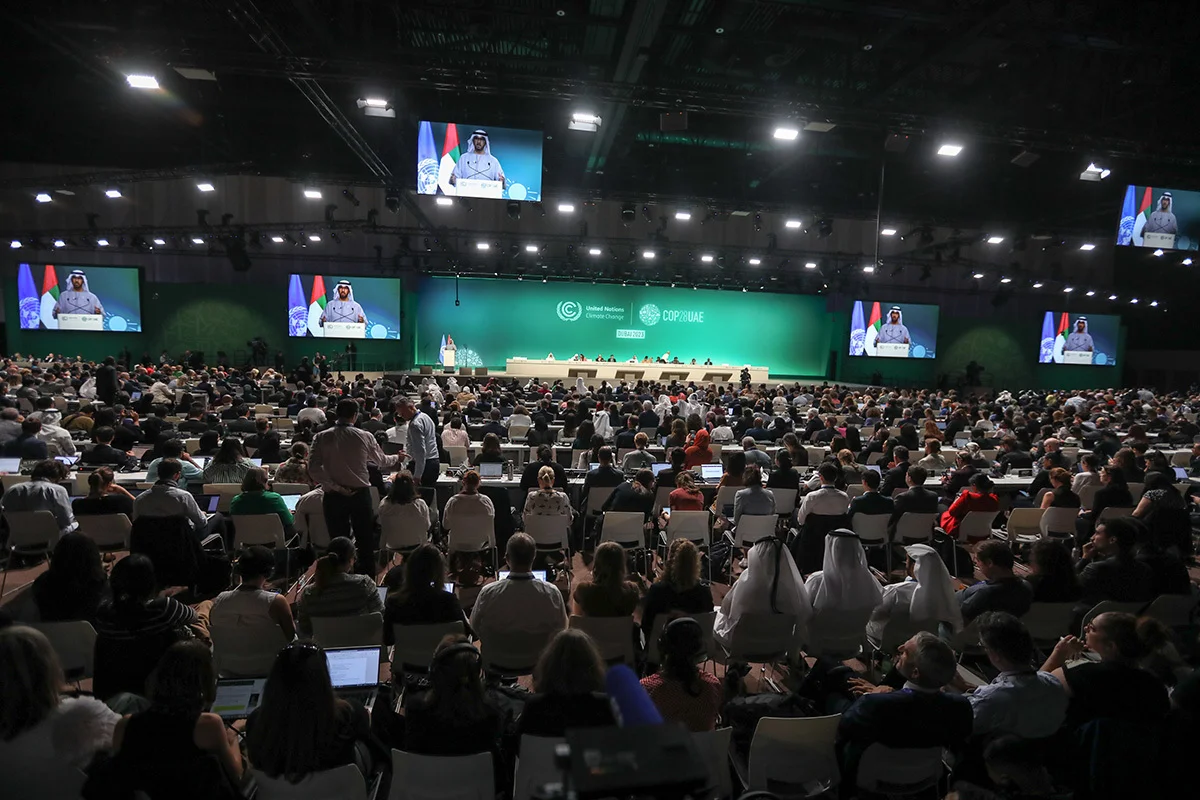
The only COP 28, which is associated with Russian influence, was the choice of the next capital of negotiations. Usually every year the summit takes place in various parts of the world, which emphasizes the importance of preserving the climate for everyone.
In 2024, the capital of negotiations was supposed to be in one of the countries of Eastern Europe. However, there are not many states that can pay for an expensive international meeting.
But, in addition to the financial factor, there is one more - all states of the represented part of the world should be unanimously choosing the capital. Using this rule, Russia warned that it did not agree on the candidacy of the state that occupies an active pro -Ukrainian position in the conflict. Thus, the list of applicants was reduced to Baku. Armenia could interfere with the climatic capital of this city, but the country abandoned the possibility of accepting Cop 29 in favor of a neighbor with a neighbor that she had recently enmity as a gesture of goodwill. As a result, negotiations of 2024 will be held in Baku.