
Translated material
How to cut a genome correctly
The first countries approve of therapy with "genetic scissors." The revolutionary method will probably help cure many diseases and give birth to healthier children
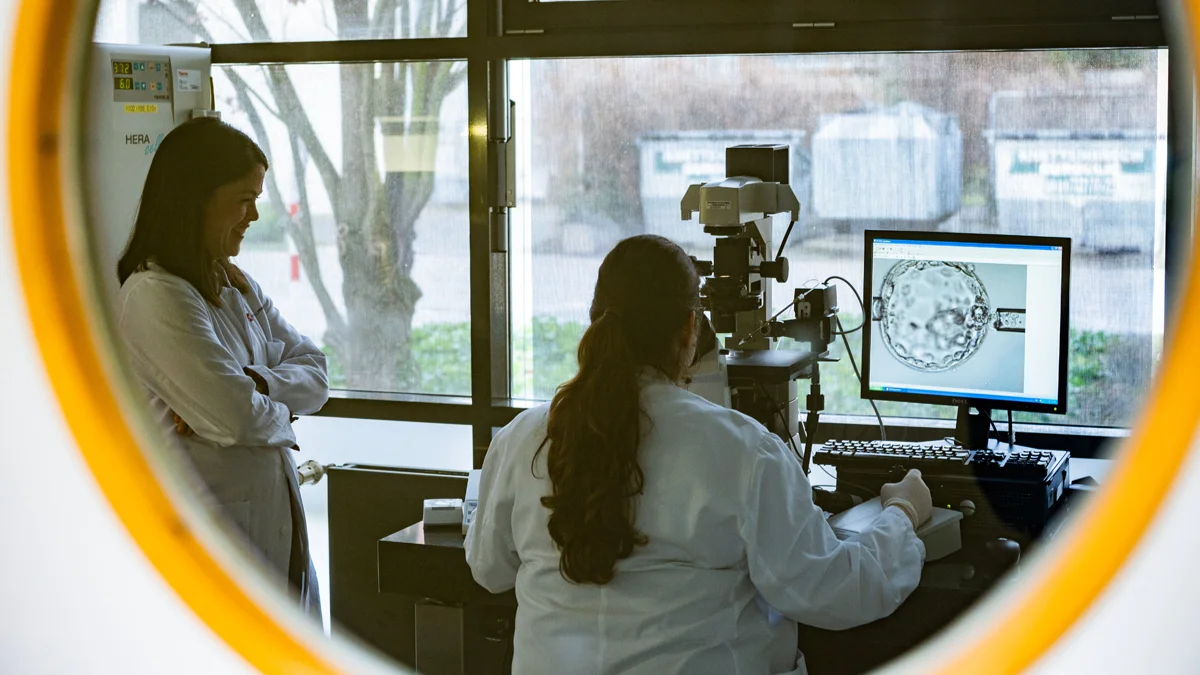
Photo: Andreas Arnold / Getty images
Great Britain and the United States were the first countries that approved drugs based on the CRISPR genes editing system. Previously, scientists who opened the technology of “genetic scissors” awarded the Nobel Prize. Novyevropa figured out how the genes editing and what prospects have this technique.
What is CRISPR
CRISPR (CRISPR/CAS9) is a genome editing tool that allows you to remove and add parts of genetic material with high accuracy in a matter of days.
In 1987, Japanese scientists, when studying Escherichia coli's E. coli, found unusual repeated sequences in its DNA. Then the same chains were found in the genome of other bacteria. They were given the name CRISPR (Clustered Regular Interspaced Short Palindromic Repeats, short palindrome repetitions regularly located in groups).
Already in 2007, Streptococcus bacteria specialists, which is used to prepare sour milk products, found that such fragments are part of the immune system of bacteria. When bacteria are fighting viruses, they cut the remnants of their genetic material and save CRISPR inside their sequences to use information when reflecting new attacks. So immunity appears to a particular virus. During the attack, the bacterium produces CAS9 proteins that carry a fragment of the genetic material of the virus. When the CAS9 fragments are coincided, it cuts the genetic material of the virus and neutralizes it.
In 2011, biologists Jennifer Dudna and Emmanuel Charpentier found out that CAS9 protein can be cheated if it gives him an artificial RNA. Its protein carrier will look for similar genetic fragments and will begin to grind someone else's DNA, regardless of whether it belongs to the virus, plant or animal. Dudna and Charpentier in their work noted that this potentially allows the use of “genetic scissors” to cut the genome of any organism in the right place.
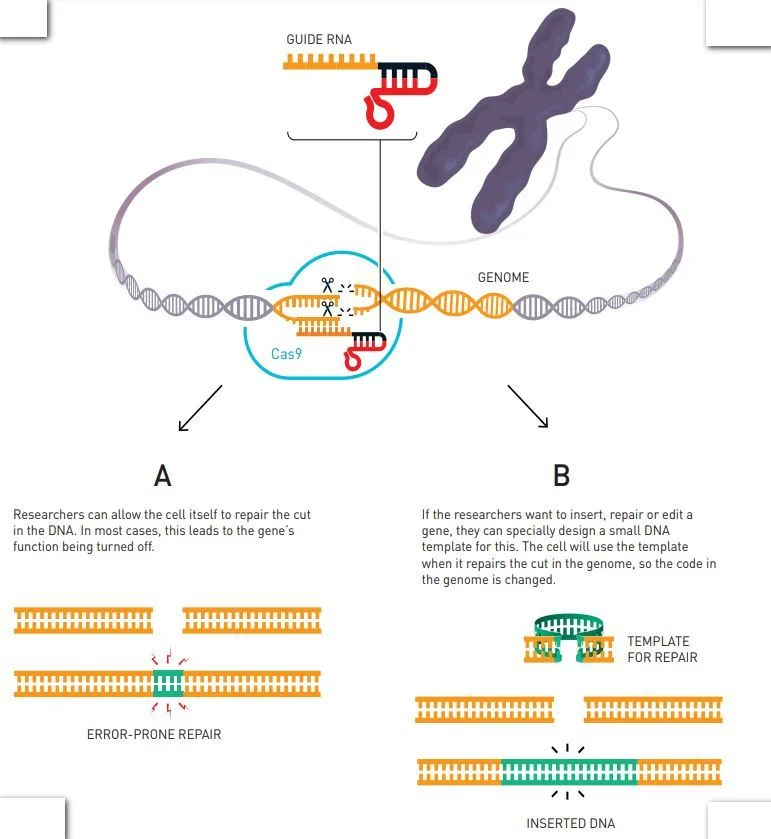
In February 2013, scientists have proved that CRISPR/CAS9 can be used to edit DNA in mice and humans. Then it turned out that the technology allows you to insert others into the place of cut fragments - for this it is enough to add special enzymes that restore DNA. After that, researchers began to actively study the technology and release many works on this topic. So, they found out that another protein - CAS13 - could be edited not DNA, but RNA.
In 2020, Dudna and Charpentier received the Nobel Prize in Chemistry for detecting a way to change the body of the body.
Prospects for the application of technology
The genome editing technology is not new, but the difference between CRISPR is the relative cheapness of the implementation and speed of work, as well as its versatility. This opens up wide possibilities for the potential use of “genetic scissors”.
Researchers distinguish several most promising areas for CRISPR.
Agriculture
CRISPR technology will allow the genome of various cultures to edit them more nutritious and resistant to external conditions. So, it can potentially use it to remove the allergen from peanuts, as well as protect bananas from the fungus. Researchers study the potential of CRISPR in editing the animal genome in order to, for example, derive nonsense cows.
In general, the technology will create more useful and fertile crops. When editing the rice genome in China, it was already possible to obtain a variety, the yield of which was higher by an average by 66%. And Japanese researchers deduced barley, resistant to premature germination before harvesting.
Finally, the technology will help to create completely new crops or products with improved properties. Researchers are already experimenting with the removal of sweeter strawberries or tomatoes without seeds .
Medicine
CRISPR technology allows you to destroy certain types of bacteria resistant to viruses with high accuracy. A number of researchers also work on CRISPR systems aimed directly at viruses, such as HIV and Herpes of the first type . Such systems use a mixed approach that will activate the protective mechanism of the media of the disease and simultaneously suppress the virus.
Genetic drive
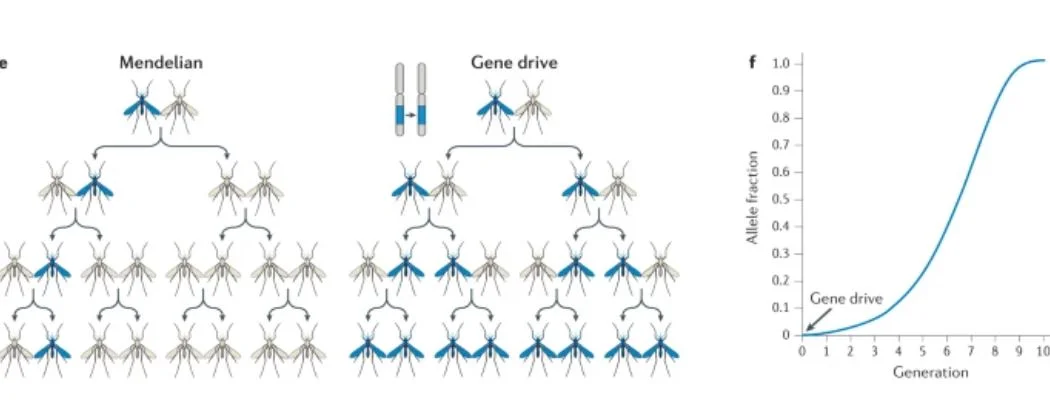
CRISPR will allow you to change not only the genome of an individual animal and plant, but also a whole species. This concept is called "Genetic Drive". The idea is that usually the body transfers half of its genes to the offspring, but Crispr allows you to increase the likelihood of such a transmission to almost 100%. This makes it possible to quickly introduce positive mutations in the genome, for example, associated with susceptibility to diseases. So, researchers in Burkina-Faso were able to bring mosquitoes that will not become infected with malaria plasmodium and will not be able to transmit parasite to people.
However, while the experiments in this area are complicated by the lack of the necessary legislative regulation and the fears of some scientists due to the fact that such a global intervention can affect the planet’s ecosystem.
Editing the human genome before birth
This is the most impressive prospect of the use of CRISPR, which is associated with editing genes of not born babies. So, the child can “set” a higher level of intelligence or athletic physique. However, the concept is faced with a number of problems that impede its implementation. Firstly, it is difficult to edit such genes: for example, thousands of them are responsible for the level of intelligence. Secondly, scientists indicate that CRISPR can cause extensive unintentional mutations. The authors of one work claim that technology tends to make mistakes in 15% of cases.
“The reality is that we still do not understand the human genome, how genes interact, what genes give rise to certain features. It will change over time, ” said Jennifer Dudna in 2015.
Governments also take a tough position in relation to such experiments. In February 2017, the US National Academy of Sciences stated that it would only be tested with serious diseases and under strict supervision.
Nevertheless, researchers from different countries continue to conduct experiments if they can receive funding. In 2018, the Chinese scientist He Jiankui edited the genome of human embryos to protect them from HIV, and then planted them to a woman. As a result, the first genetically modified people were born-twins to Lulu and Nana. However, the editing system introduced the wrong mutation that was planned in their genome. Currently, the fate of the girls remains unknown. Jiankui himself, after serving a prison term in 2022, announced that he intends to test the improved technology to combat Alzheimer's disease.
Already in 2019, researchers from Harvard, led by David Liu, proposed a new way to edit genes - primed editing. It uses a mutant version of CAS9, which can cut only one DNA chain so as not to create its gap. At the same time, CAS9 carries a protein that is able to synthesize DNA on the RNA matrix. As a result, the system first cuts one DNA chain, inserts the necessary sequence there, and only then edits the second chain. This method significantly reduces the frequency of gaps and errors in editing DNA, which reduces the risks of undesirable mutations. The authors of the development in this way were able to cope with the sickle -cell anemia (hereditary chronic anomaly in which the structure of hemoglobin changes), and also made cells resistant to it.
After several successful studies in 2021, the World Health Organization released global recommendations aimed at editing a human health tool with a human genome.
In 2023, scientists from the Massachusetts Institute of Technology presented a new genome editing system, which will be more controlled than CRISPR. She uses short fragments of RNA as a guideline for accurate cutting of DNA targets. However, Fanzor proteins are used in the process, not CAS. They are encoded in the genome of mushrooms, algae, amoebas and bivalve mollusks, and also have in common with the CAS of the ancestor-prokaryotic RNA-controlled OMEGA genomic editing systems. So far, the version of the Fanzor system has been less effective than CRISPR/CAS, but with a certain combination of mutations, its accuracy was an order of magnitude higher.
The first steps in the use of CRISPR
In 2023, two countries-Great Britain and the USA - approved the CRISPR-characteristic of sickle-shaped anemia and beta-Talassemia. Both diseases have similar features, they cause severe pain and destruction of internal organs, but in the second case the symptoms are less severe. Typically, these diseases are recognized as incurable, and the patient's condition is supported by medicines and regular blood transfusion.
Casgevy disconnects the BCL11A gene, which normally suppresses the production of another gene of fetal hemoglobin, active only in embryos. As a result, the patient is activated by this third gene, and he takes on oxygen delivery functions.
To carry out such therapy, the patient takes hematopoietic stem cells of the bone marrow, they are carried out by CRISPR editing, and then introduce back, having previously prepared the body, including with the help of chemotherapy. This process takes several months. The experiments confirmed that Casgevy allows you to practically get rid of the symptoms of diseases for a year and longer.