
Translated material
Putin at the table
The EU at the historical summit began negotiations with Ukraine on joining the Union. For this, Brussels gave Hungary 10 billion euros and sent Orban "for coffee"
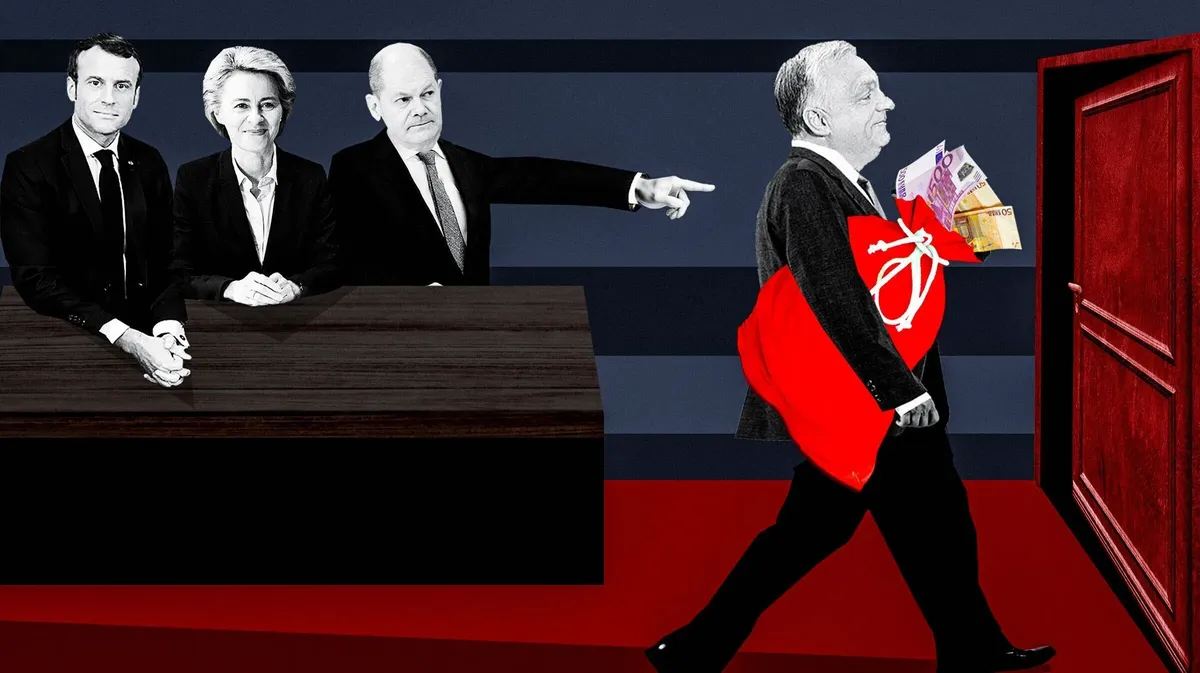
Illustration: "New Europe"
On Friday, December 15, the EU summit ended, which journalists and observers called the “historical” all this week. A lot of “cracking” issues came to the agenda for 2023: the situation in the gas sector, the problems of Islamophobia and anti -Semitism in Europe, the twelfth package of sanctions against Russia and, finally, the new expansion of the EU, including the beginning of negotiations with Ukraine.
It was the last point that became the most serious test of European unity over the past year. And although in a dry residue Europe withstood this test, confirming Kyiv by the European future, this symbolic decision was given to Brussels at a high price and could not provide unity on a more practical issue - approval of the next package of financial assistance to Ukraine. Why European unity is included in 2024 with serious cracks and why previously calm Olaf Sholtsa had to point to the door to Viktor Orban, a political scientist, a columnist for Novo-Europe, Denis Loven.
On December 14-15, two questions in Ukraine were included in the Age of the EU summit: the beginning of negotiations on the country's entry into the EU and the allocation of Kiev by the next tranche of financial assistance with the size of 50 billion euros for the next four years.
In the summer of 2022, Ukraine received the status of a candidate for joining the association, and in early November 2023, the European Commission recommended that negotiations on the entry into the EU with Ukraine, Moldova and Bosnia and Herzegovina. This recommendation was supposed to approve the European Council at the completed summit. And although this is only the fourth of the nine formal stages that need to be held for joining the EU, the fundamental position of countries - members of the association on the adoption of Ukraine is important.
In relation to this issue, the EU is not without difficulty, but the verification of unity withstood: Ukraine has moved to the next stage, bringing it closer to joining the European Union. However, to make this “historical decision”, Brussels once again had to make concessions to Viktor Orban, Prime Minister of Hungary. And the vote itself took place literally without it: on the issue of Ukraine, the German Chancellor Olaf Sholts invited Viktor Orban to “go beyond coffee”, after which the 26 remaining participants in the meeting unanimously voted “for”.
Nevertheless, Orban remained on another vote and used the veto on his second Ukrainian issue - financial assistance.
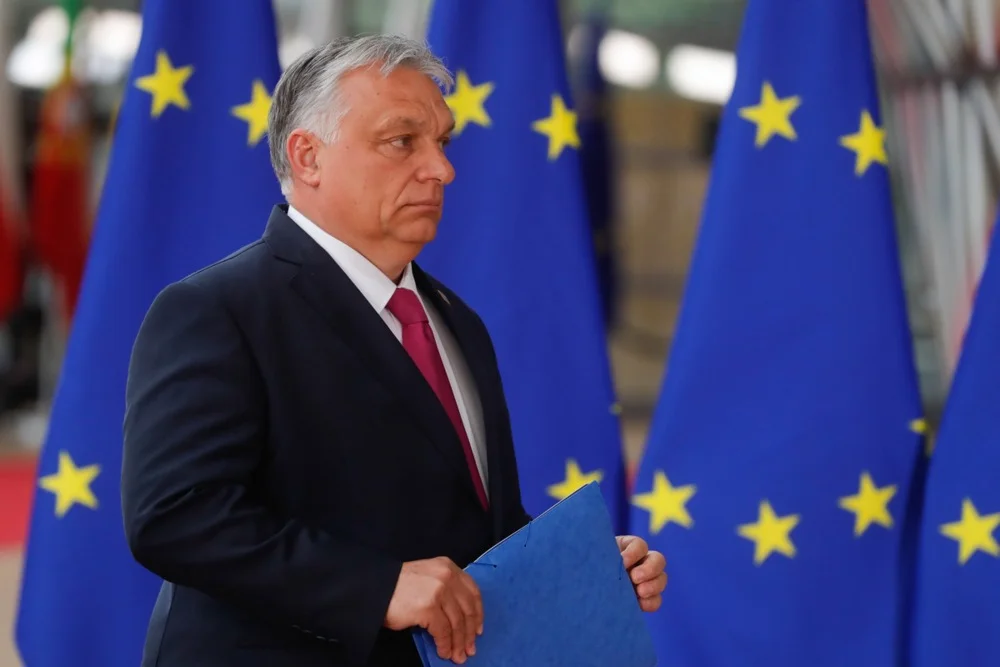
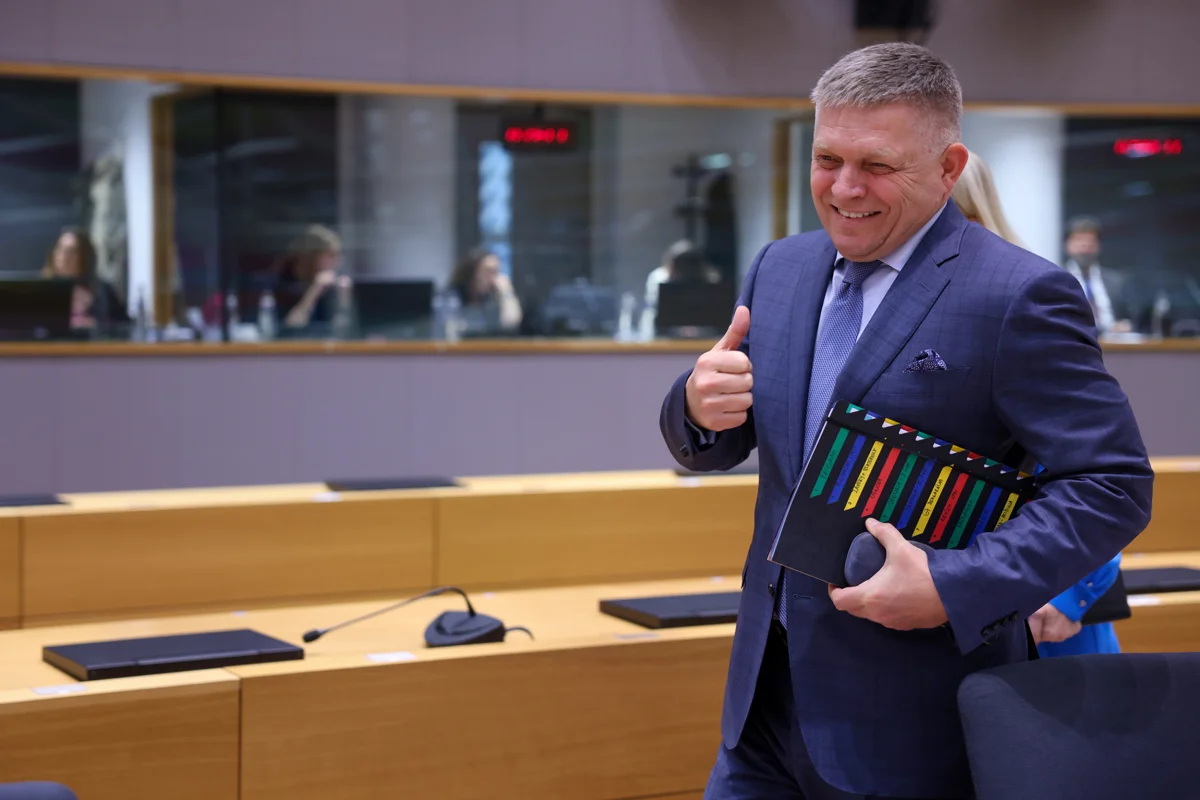
Moreover, the preparation and course of this summit showed that the unity of the EU in the support of Ukraine is now destroyed not only by Hungary. Slovakia joins the “bad guy of Europe”, in which the right -wing conservative politician Robert Fitzo came to power , and even Austria, trying to balance between Moscow and Brussels on economic issues.
And there is no certainty that the list of these countries will be reduced.
Orbana lever
The fact that difficulties may arise with the position of Hungary, it was clear long before the “historical summit”. The conflict between Brussels and Budapest lasts almost ten years , from the moment Viktor Orban began to build an authoritarian regime in Hungary. EU leaders condemn the violation of the rule of law, infringing on the freedom of the press and corruption that has blossomed in the country and try to use a financial instrument to return Hungary to the path of democracy.
In particular, Brussels froze the previously allocated Hungary funding from European funds, thus trying to form a pressure lever. This is a fairly popular tactic that was used by the EU in relation to Poland, when the Party “Law and Justice” was in power, which also launched the country along the path of an authoritarian rollback.
But with regard to Hungary, the tactics of the lever, at least for now, does not work. For example, on the eve of the summit in the country, a new law “On the Protection of Sovereignty” was adopted . In accordance with his requirements, a special service is created, which will investigate the “foreign intervention” in the political life of Hungary. The accepted bill has already been compared with the Russian law on “foreign agents”.
Orban himself decided to contrast the EU with his tactics of a lever, which is simply called blackmail in Brussels. From the very beginning of the Russian war in Ukraine, Budapest blocks a variety of decisions that hit the Kremlin’s interests from individual anti -Russian sanctions to providing military or financial assistance to Kiev.
And while the Budapest lever works more efficiently Brussels: in order to avoid the Hungarian veto, the EU has more than once had to make concessions of Orban.
Before the summit in December, the volume of frozen funds that were intended for Hungary was about 32 billion euros. About two -thirds of this amount are ordinary EU funds distributed between countries from the total budget, and another third are subsidies and cheap loans from the European Fund for Restoring Economics after the Pandemia of Coronavirus. On the eve of the summit in Budapest, the bets were traditionally raised very highly, saying that they would seek the defrosting of all funds blocked by Brussels and that they intend to impose a veto on both issues in Ukraine.
The solidarity of the former empire
According to a random (or not?) Coincidence, two former parts of Austria-Hungary, who had broken up at the beginning of the twentieth century, performed at this summit of Orban's allies. At the beginning of this week, Hungary, Slovakia and Austria were simultaneously made to understand that they were not yet ready to support the beginning of negotiations on Ukraine’s entry into the EU. Veto Budapest for financial assistance to Kiev was going to support in Bratislava.
In Slovakia, in mid-autumn, Robert Fitzo from the Social-Conservative Party “Course is Social Democracy” came to power. During the election campaign, he managed to enlist the support of voters, disappointed with the period of long-term political instability in the country, economic problems after coronavirus and the energy crisis due to the war in Ukraine. As a solution to these problems, Fitzu proposed to stop assistance to Ukraine and even wanted to become an intermediary in peace negotiations with Russia. Fitzu continued the same line after the election: he refused to provide Ukraine with weapons and supported Viktor Orban at the current summit.
Austria, like Hungary, has its own objects for bargaining with Brussels and Kiev.
One of the interests of Austria is the Balkans, where, due to its location and historical reasons, Austria had great influence. Austria has always been a supporter of the speedy entry into the EU countries of Western Balkans - primarily Serbia, Bosnia and Herzegovina and Montenegro.
In November, the European Commission recommended that the negotiations on the entry not only with Ukraine and Moldova, but also with Bosnia and Herzegovina. Then the Austrian Foreign Minister warned that it would be a “disaster” to look at the Western Balkans “through a magnifying glass”, and “through pink glasses” to Ukraine. At the same time, Brussels himself, indeed, is in no hurry to start negotiations with Bosnia and Herzegovina, explaining this by a slow pace of reforms necessary for the EU.
Another Austria lever in negotiations with Brussels is a question for Romania and Bulgaria. For many years, a series of Austrian right -wing and conservative governments has been blocking the entry of Romania and Bulgaria into the Schengen zone. The reason is the threat of illegal migration through the territories of these countries. On the eve of the summit, however, Austria outlined the willingness to mitigate its position on this issue - apparently, in exchange for other concessions.
There is a disagreement with Austria and with Kyiv. It applies to Raiffeisenbank. On the eve of the December summit, Vienna decided to repeat what Hungarian colleagues have already done. According to Reuters, during the summit, Austria demanded the exclusion of Raiffeisenbank from the Ukrainian base of the sponsors of the war . The bank was on the list due to the fact that it still actively continues its activities in Russia. Similarly, Hungary demanded the exclusion of its OTP bank from the list of sponsors of war in exchange for the adoption of the next sanctions package against Russia - and achieved success.
At the time of publication of this text, the decision to exclude Raiffeisenbank from Ukrainian lists was not announced. Austria failed to seriously advance with the entry into the EU Bosnia and Herzegovina. Unlike Ukraine and Moldova, negotiations with Sarajevo decided not to start, but Vienna's position was taken into account: the European Commission was recommended to prepare a report on the successes of Bosnia and Herzegovina on the path of reform for March 2024 and then make a decision.
Hostage of the situation
In the EU and in the European capitals, they were aware of the threat of blocking two important decisions on Ukraine and tried to stop a possible political crisis in advance.
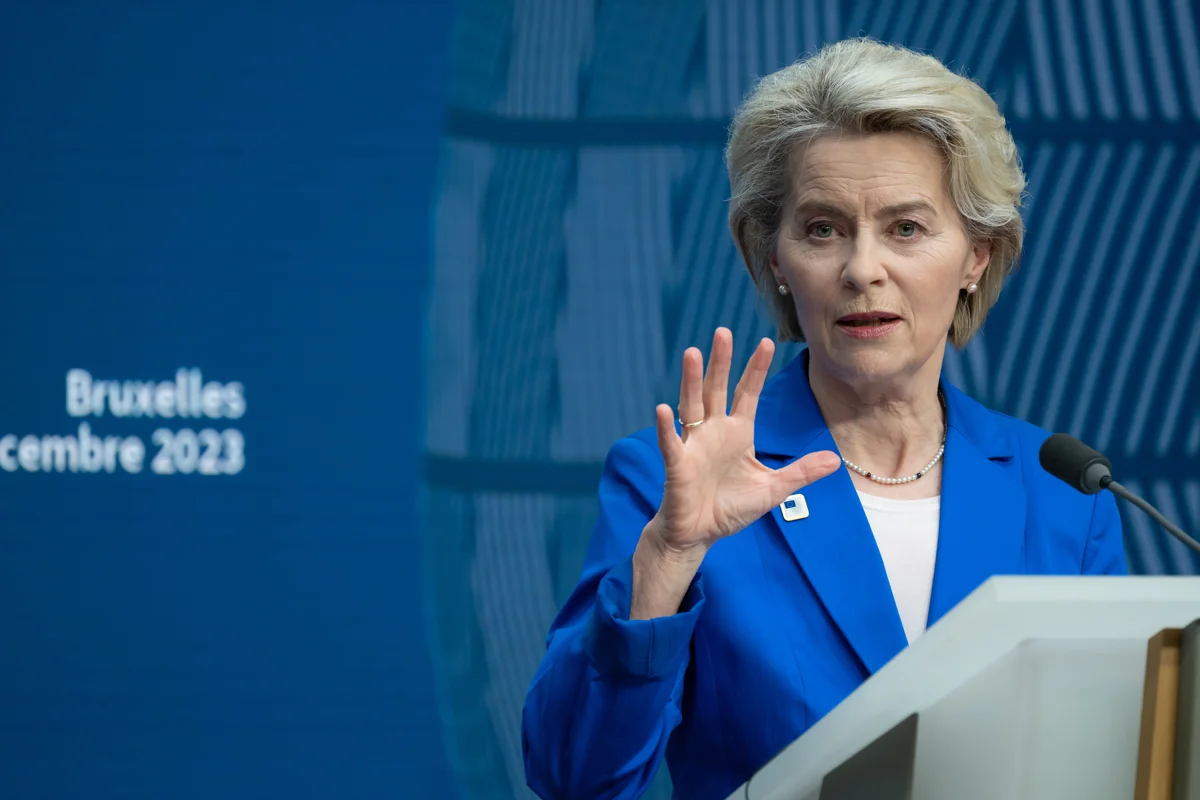
In the morning, before the first day of the summit, a meeting of France President Emmanuel Macron, German Chancellor Olaf Sholts, the President of the European Council Charles Michel and Victor Orban Prime Minister, Chancellor, took place . The event was confidential. This meeting was preceded by a meeting late in the evening on the eve of the summit, it was attended by Michelle, Macron, Scholz and the chairman of the European Commission Ursula von der Lyain. According to Politico, the leaders tried to develop a common position for negotiations with countries intending to block decisions.
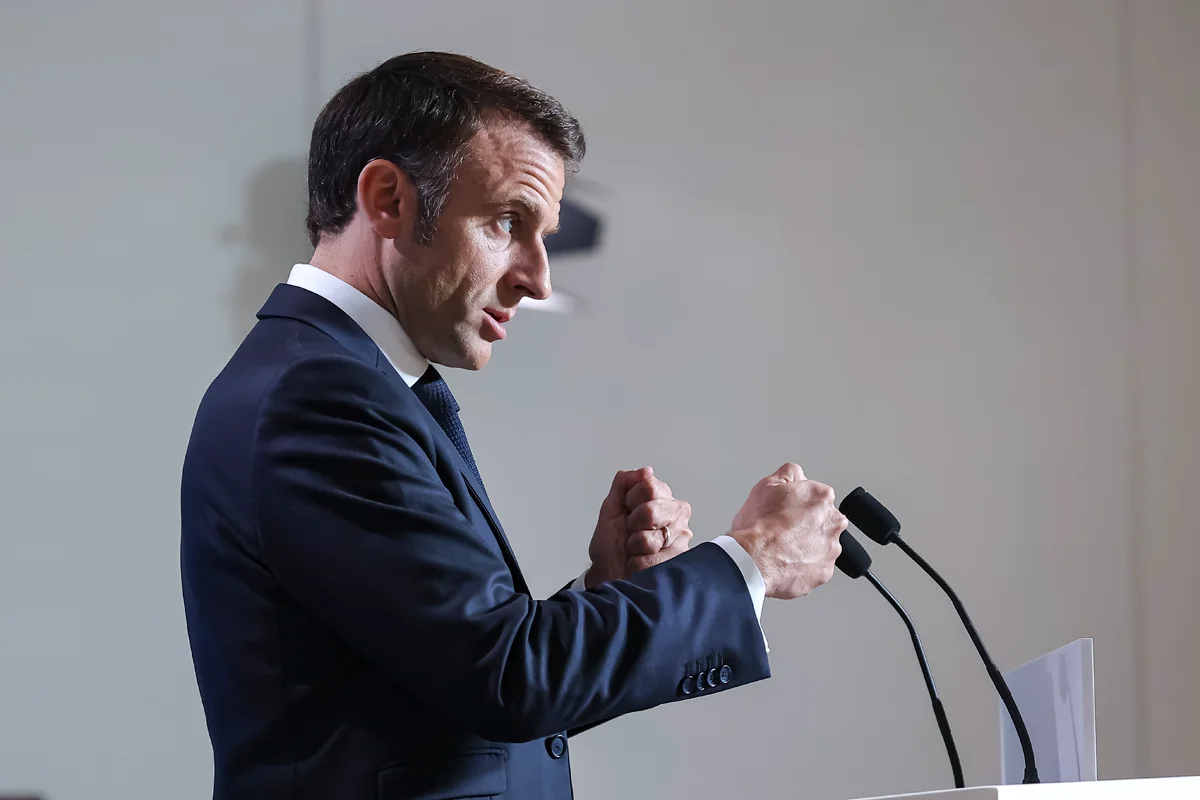
And although the EU made a lot of effort to achieve unity during the vote, and even defrosted on the eve of the summit of 10.2 billion euros for Budapest, Hungary still laid a veto on the decision on financial assistance to Ukraine.
On this occasion, the leader of the German Social Democrats in the European Parliament Jens Gayer said that "Putin is also sitting at the negotiating table." In his opinion, Viktor Orban became actually a representative of the interests of the Kremlin at the EU summit.
Ukraine ultimately turned out to be a “hostage” of three central European states, although it adopted many requirements from the EU. In particular, Kiev has already made amendments to the law on national minorities twice, significantly expanding their rights - for example, now national minorities are allowed to hang banners in its own languages. Budapest demanded this all in recent years: a large Hungarian diaspora has been living in the Transcarpathian region of Ukraine. The latest amendments to the law were adopted right on the eve of the summit.
“We have adopted key laws. You are all - and I emphasize: everything - you know well that we have fulfilled all obligations, ” said the President of Zelensky during his connection to the video summit. But even if Zelensky managed to be convincing enough in this matter to influence the EU decision, this does not remove the fundamental problem of unity of unification in the support of Ukraine. Apparently, Europe will have to help Kyiv for a long time.
The crisis of unity
At first glance, as a result of the Historical Summit, Europe showed that it was able to pave key decisions, even despite the resistance of Hungary, Austria and Slovakia. Moreover, representatives of the European political community have become more radical in their position.
Thus, the main political groups in the European Parliament-the European People’s Party and Social Democrats-categorically opposed the new concessions of Orban in exchange for the support of Ukraine. Together with the Czech Republic, they urged to look for alternative support mechanisms in order not to succumb to the blackmail of Orban. Guy Verkhofstadt, the former Prime Minister of Belgium, and now the Eurodper of the liberal group “Updating Europe”, and, according to Politico, tried to persuade his one-party members to threaten the European Commission with a votum of no confidence if it goes towards Orban and defrosts the funds intended for the country.
All this does not look like a systematic approach to the problem: the far -right forces and Euroskeptics in power in different EU countries will be able to continue the decision -making. In conditions of war and a difficult situation in the economy, this puts the EU in a very disadvantage compared to its potential opponents.
Nevertheless, the EU has a way out. On the eve of the Summit, the European Parliament launched the process of large-scale reform of the association, which should if not completely eliminated, then at least reduce the capabilities of any country to use a veto as a blackmail tool. This process is complicated, and it will require the participation of many players, so if the reform takes place, it is hardly in the near future.