
Translated material
The repentance of Elbasy?
The autobiography of Nursultan Nazarbayev looks like an attempt to rewrite history and at the same time apologize to society
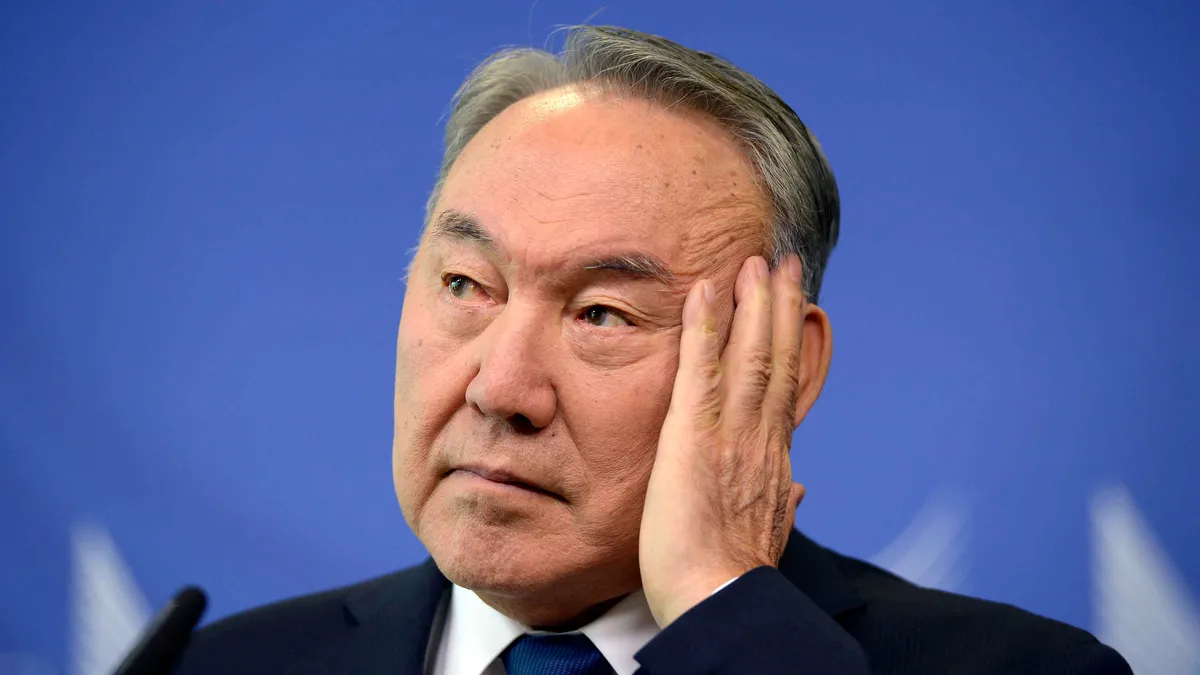
Photo: Vida Press
In anticipation of winter, a warmthing news scattered in Kazakhstani media: an autobiography of the first president of the country Nursultan Nazarbayev is about to appear on the shelves of bookstores. In it, the recently omnipotent “leader of the nation” for the first time admits that since the beginning of the zero had a second family. He, of course, did not surprise the Kazakhstanis by the fact. Rumors about the relationship of Elbasy with Miss Kazakhstan - 1999 Asel Kurmanbaeva and children went on for a long time and stubbornly. But the revelation is followed by another revelation. And a lot of questions have accumulated a lot. Let's say what he did in the early days of January 2022, during an attempt to coup and unrest that led to hundreds of human victims? After all, the “main” conspirator was the long -term ally of the first president Karim Masimov, and to the version that he was preparing the coup “for himself”, nobody believed about it. Moreover, it was after the January tragedy of Nazarbayev and his faithful people that were “cleaned” from the political field, and the nephews of Samat Abish and Kairat Satybalda were on the bench of the defendants. How does Nursultan Abishevich refer to the opposite renaming of the capital from Nur-Sultan to Astana and cancel the status of Elbasy? What does the 2011 protests in Zhanaozen think when the police opened fire on the protesters? Or maybe Nazarbayev decided to repent to the fellow citizens who had once believed in a young charismatic policy, but after 30 years, who escorted him “Old Man, leave!”?
“Yes, I am Kazakh! But I don't need delights "
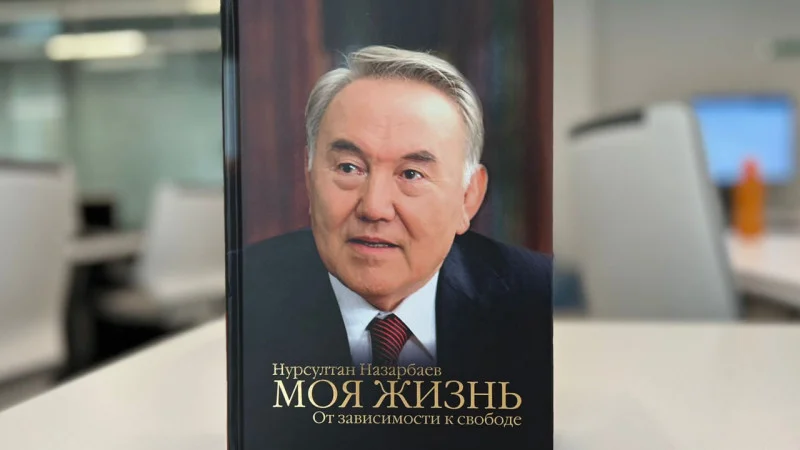
The book "My Life. On dependence on freedom ”Final. To understand this, it is not even necessary to open it. The cover is decorated with a gold font, the format is close to A4, the volume is 708 pages of pure pleasure. How Khryun used to say from the unforgettable “Stew the light!”, Inspires! Natural reaction: "Well, do you really think you wrote yourself?!" The name Nursultan Nazarbayev on the book covers, of course, is the pseudonym of the "team of authors", who created more than a dozen works. But, it seems, “My life ...” is a special book for the “leader of the nation”. If not written, then dictated and carefully checked. However, you can summarize in different ways. Two obvious extremes-repentance for mistakes made and an attempt to rewrite history, putting themselves in the best light, passions will settle over time. The lines “My Elbasy, let me go from this paradise / my people will never rise ... / I am dying in Nur Sultan” will be forgotten. If you prepare the soil, the descendants of the mercers are likely to be more grateful than contemporaries. The first approach is frankness. The second is a fairy tale with elements of a masking truth. But no matter what Nazarbayev chooses, the book will still be interesting.
At least because of the uncertain situation of the ex-president, who can remain in the history of both the founding father of Kazakhstan and the cynical dictator, who had almost strangled the country in a patriotic embrace.
Actually, the young Nazarbayev was a charismatic and outstanding politician. Closer to the end of the 1980s, he looked brightly at the All-Union Skypot, even claimed the post of Prime Minister of the USSR, and in the early years of independence he translated progressive, completely democratic ideas and skillfully balanced between the right and left views. The first hundred pages of “my life ...”, telling about the growing up the future “leader of the nation” will help to recall that Nazarbayev. The story, it is worth admitting, is not devoid of charm, although the positive picture lacks liveliness. Nursultan-Ozornik threw the teacher into the bag of the frog and almost went to Kyiv to enter the university for the pilot, without asking for the permission of his parents. The future president is not observed more serious “offenses”. This right young man with character and healthy ambition looks too good, from a simple but deliberately arranged family.
Young Nazarbayev undoubtedly believes in communist ideals, but almost the main motivation in his life is the “national complex”: “I have to count on concessions only because Kazakh? No! Yes, I am Kazakh. This is my homeland, my land! But I do not need delights. " It is quite known what injuries the national policy of the second half of the Stalinist government gave rise to, which, in the form of various relics, continued to exist after the death of the leader.
The rhetoric about the “older brother” (“great Russian people”) and the “younger brothers” who need his unceasing guardianship and therefore obliged to be grateful, propaganda discussions about the “real” culture brought to the steppe, while the “wild” nomads did not have their own, all this was driven into the heads of the school bench and formed something like “low national national Self -esteem. " This, of course, was done not for the well -being of the Russians, but purely to hold the power of the party elite of the Bolsheviks, who skillfully manipulating all the peoples of the USSR. One way or another, the problem of identity is still concerned about the Kazakhstani society, which, while maintaining and strengthening interethnic consent and a balanced conceptual approach, over time can help the formation of a civil nation. So far, Kazakhstan is worthy of cope with national and language problems. Work with post -colonial injury in the country continues. And, of course, Nazarbayev actively used it in his rhetoric - creating a national state for Kazakhs (the words “dependence” and “freedom” in the subtitle were used in this sense) and at the same time promising protection from oppression to the rest of the peoples. Another question is that such different motivations for the support of Elbasy conveniently kept society from excessive cohesion in the struggle for their rights.
System critic and collector compliments
The young metallurgist, who works at the Carmet -Kermetub in Temirtau, gradually more clearly sees the shortcomings of the Soviet system. The transition to party work only strengthened this attitude. Passages directed against the planned economy are unlikely to cause strong emotions. But he touches criticism by the autocrat of someone else's authoritarianism and inhuman attitude of power to their own people. If you forget about the context, you might think that the long -awaited repentance has begun. Nazarbayev squeamishly describes an elderly and hopelessly passing authoritarian leader, rewarding himself for dubious achievements and is not able to understand how ridiculous he looks from the side with all these tsatski. No, no, it's about Brezhnev.
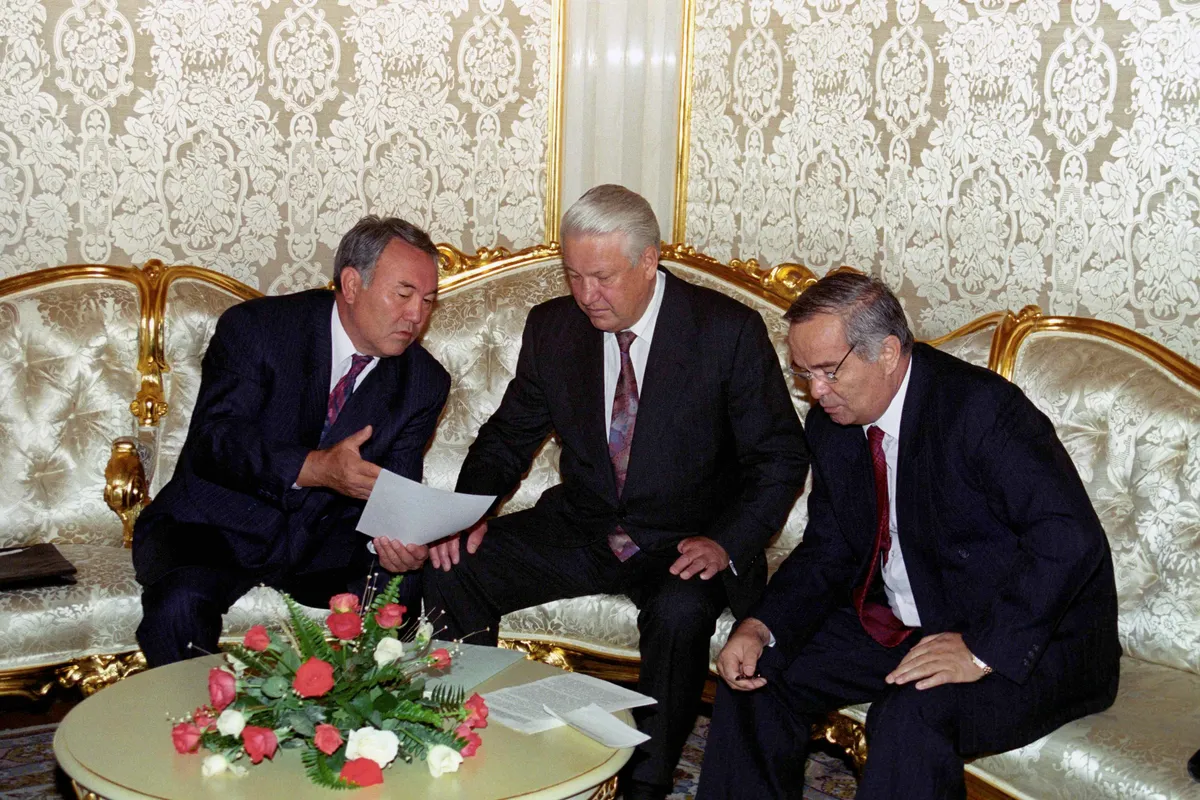
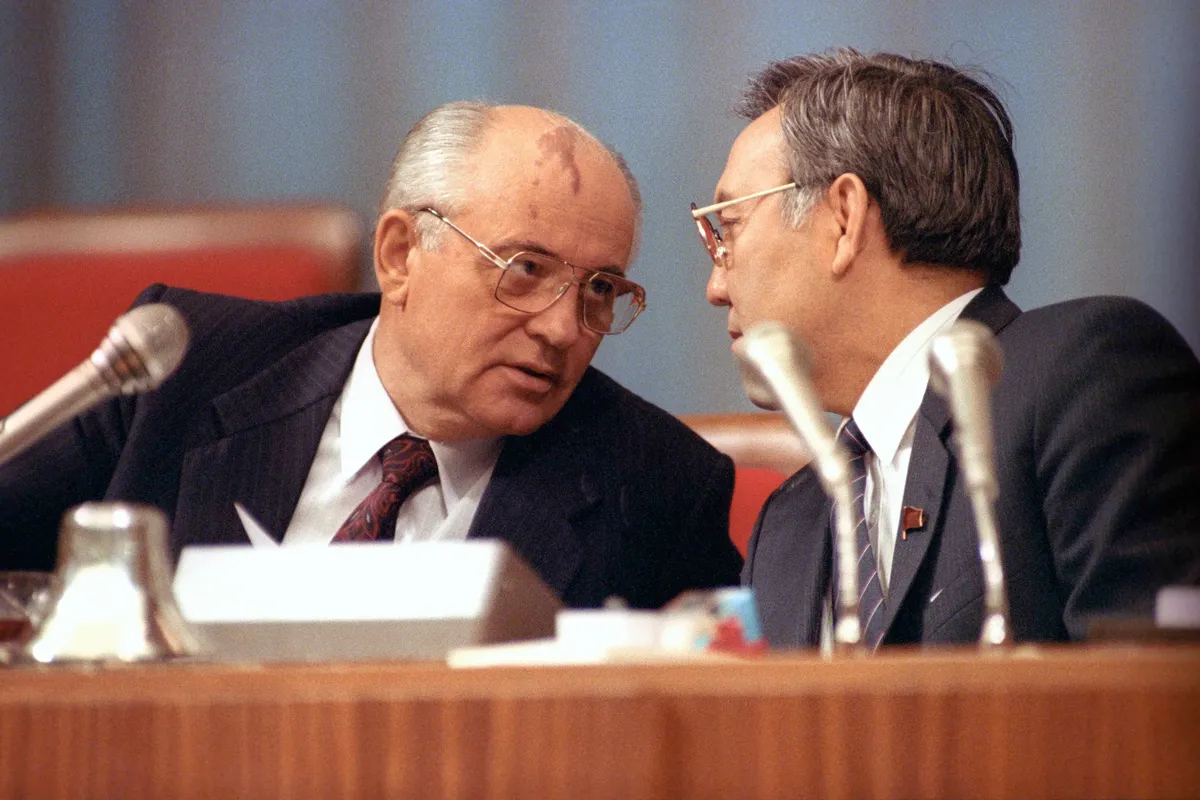
The large block of the text is dedicated to the reasons for the collapse of the USSR. In addition to the global defeat of the Bolshevik development strategy, economic disaster, the corruption of Western “partners” and centrifugal sentiments in the republics, the death of the empire became a consequence of the confrontation between Gorbachev and Yeltsin. “To“ sit down ”Gorbachev, he (Yeltsin) was not afraid to push the state into the abyss, to aggravate the already deepened crisis.” “In my opinion, the impetus for many actions was the internal beliefs of Gorbachev, who wished to remain in history not only a reformer, but also a world-class politician.” This criticism is summarized by a quote from the book of Sergei Plekhanov: “The mutual hatred of two people who put their own power ambitions above the interests of the state did something that hostile armies could not achieve.” And after all, there are no associations with the newly reborn by public opinion by the new capital, expensive, but vivid international events in it, taking place against the backdrop of internal disorder, finally its new, albeit short -lived name, the status of the “leader of the nation” and lifetime monuments.
At the end of the book, Nazarbayev explains that officials actually imposed on him the special status and capital named after himself, in which he, alas, did not see the sinks in time.
Therefore, he allegedly “does not feel excitement” about the cancellation. But we will be honest: the ex-president certainly did not interfere with the manifestation of special sympathy, which over time grew into a full-fledged cult of personality.
Nazarbayev, with sad irony, tells how Gorbachev admired his own friendship with foreign leaders, and then suddenly begins to pour quotes of the same foreign leaders who compliment Elbasy himself. For example, the opinion of Margaret Thatcher: “Now in the world there are five or six large and very influential politicians, among whom Nursultan Abishevich Nazarbayev is located. I really believe him and agree with everything that he does in Kazakhstan. ” The modest president is immediately stipulated that "it is not very convenient for him to give such a high assessment of himself in his book." However, in the shyness of the “leader of the nation” there is a share of cunning, because “my life ...” is literally strewn with enthusiastic reviews of the author and descriptions of respect for him. So Xi Jinping gives Nazarbayev the “Higher Award of the People's Republic of China” Order “Friendship” (“Before me, it was awarded only to Russian President Vladimir Putin”). Already on the next page, Bill Clinton says: “The world is spared from another threat of nuclear terrorism and the spread of nuclear weapons. I appreciate the leadership of this President N. Nazarbayev. ” In fairness, the actions of the Kazakh government, first associated with the closure of the Semipalatinsk training ground, and then with the rejection of nuclear weapons, deserve the highest rating.
The author of “My life ...” considers it correct to bring such an unforgettable quote from one of the elders of the Abay district: “It is right that you came to the homeland of Abay, Shakarim and Mukhtar, my light. Perhaps in the next century, another person will be born in this region, and today there is no one who would have surpassed you. ” In addition to foreign and “folk” reviews in the book, literature, published during the reign of Elbasy and replete with all kinds of sagging, is also quoted in the book. From the same sources, the “unbiased” assessment of the political opponents of the “leader of the nation” is also taken: “At the high post of the head of the government, Mr. Kazhegeldin, the inherent qualities of a small thief shopkeeper, were fully manifested by him ...”. Elbasy himself is also not shy about strong expressions. So, to the opposition and political emigrant Mukhtar Ablyazov, he writes: “I should not forgive such a gearbox. I am amazed at how else the earth wears such traitors. ” And then he regrets that he once brought Caigheldin, Ablyazov and others closer to himself: “I must admit that my natural kindness and gullibility brought me out.” It’s not easy to believe in the author’s kindness. But gullibility does not cause doubt. Otherwise, on the pages of the book, he would hardly return to the topic of his own elections again, with an enviable, childish delight admiring his 95% or 98%.
"The orchestra is conducted by one person"
But back to the quote about Yeltsin and Gorbachev. It continues this way: “... because of the small passions, large and small powers died, dynasties were destroyed, religious schisms occurred. It was impossible to get a more subject lesson on the eve of the independence of their own fatherland. ” There were many lessons. Nazarbayev brilliantly captures other people's criminal mistakes that are painfully similar to his own.
In a conversation about the 1990s, the criticism of Soviet authoritarianism among the president is replaced by a hidden but persistent justification of the power vertical.
Here, looking at the events of October 1993 in Russia, Nazarbayev is convinced that “strong centralized presidential power” is needed for economic reforms. It turns out that members of the Supreme Council are infected with old -regime thinking and interfere with the progressive leader and bright future of the country. “One person conducts the orchestra,” explains Nazarbayev. Soon the Supreme Council “self -opened” - the president “did not resist”. The 1993 Constitution (the most democratic of Kazakhstani) in 1995 was changed to more suitable-and then ruled it with enviable regularity. At the end of the chapter, convincing the reader of his democracy, Nazarbayev reports: “The people know that years later ... I handed over part of their authority to the parliament and took a step towards the transformation of Kazakhstan into the Presidential Parliamentary Republic.” This, of course, is about the moment when, before the transfer of power, the successor Elbasy strengthened the parliament and put the faithful associates there (the prime minister was Askar Mamin with the “speaking” people's nickname “Papin”) in order to maintain control over Tokayev.
In the thoughts of the successor, the way the ex-president understands power is also clearly visible. He gives a fragment of his conversation: “I hope you understand why I made such a decision. The point is that the next president will be Kasym-Zhomart after me. ” Later, “explaining” the logic of the conspirators in January 2022, who allegedly decided after Nazarbayev lost a place at the head of the Nur Otan party, he writes: “... the party leader significantly increases the chances of winning the election. Now the opponents were convinced that in the 2024 elections I will support Tokayev. This meant that he would be president until 2029. " In such phrases, it seems, the real attitude of Elbasy to power and the country is concluded. The decision made by him cannot but become a reality, and it would be better for citizens to agree with it - they will be more intelligence. It would probably not be worth it to voice such things a policy of democracy and paths to freedom. It seems that Nazarbayev himself willingly and accurately criticized these words if they were said by one of the Soviet Secretary Generals, and not to themselves.
The monuments of the Nazarbayevsky period is an excellent metaphor. They took those city places where Soviet sculptures had previously stood. They remained the same in the sense of style-the good (not) good academicism-Socialism, only promoting a new ideology-national, with khans and batyrs. Ideology, however, can be any: the main thing is that it be the ideology of power. In this sense, Nazarbayevsky Kazakhstan was hardly very different from Russia. Inquisitive words were spoken from the stands - words could generally be any, even if contradicting just said. Ideas, principles, values might not be at all. The hierarchical model of interaction between the authorities and the people is reproduced without them. It is only important that the vertical of subordination of fragmented citizens of the state elite is preserved - the only owner and manager of the country. Nazarbayev claims the laurels of the liberator of Kazakhstan from imperial power. However, having achieved external independence, the country did not achieve the essential one - it did not get rid of the authoritarian perception of the relationship “power - society” and the entire set of Soviet behavioral habits of a humble citizen. The “Liberator” turned out to be enough cunning so as not to interfere with this state of things. On the contrary, he willingly strengthened him and with pleasure took a vacant place of the “owner”. Further, of course, it is reasonable to argue about the role of the courtiers who convinced the “leader of the nation” of his royal status. But it does not look like him strongly resisted him.
Failure test
It is easy to guess that there is almost no frankness in the book. He tells the story of the second family of Elbasy briefly and in the most general terms, concluding it with the words “you cannot order the heart”. A fragment of this chapter, which fell into the media, could have amused the fact that Nursultan Abishevich compares himself with Johann Wolfgang Goete, "at seventy -year -olds in love at the eighteen -year -old Ulrika." But by reading the book, this comparison seems harmless and even modest. The ex-president reports almost nothing about his first family and in general about his extraordinary life. In the same way as it regarding the January tragedy, continues to confidently bend the former line. He said about the accused of attempt by the coupling, the ex-head of the national security committee, he says: “Masimov worked with me for many years, but how to find out. Did Jesus Christ know that the sitting of Judas is nearby? ”
The fact that it was Nazarbayev who stood behind the actions of Masimov was a common place in Kazakhstani society. But officially, of course, they prefer not to talk about this.
At the end of the desperate, the reader was awaiting a surprise - a small chapter “My Faith”: “... the test of failures helps a person to more deeply understand himself. It seems to me that a number of events of recent years fully gave me such an opportunity. ” Soon there will be completely gloomy suggestions: “Perhaps it still makes sense to admit that an overly long stay in any position sooner or later leads to a settlement with the existing position, the reluctance of your environment to openly express your thoughts, the gradual loss of a systemic critical assessment of your activity. Therefore, a reduction in the period of stay in power of leaders and their change of replacement is the right approach. ”
Throughout the book, Nazarbayev edits the story in his own way and carefully sculpts the image of a strong leader, decisively and generally successfully acting for the benefit of his people. There is a certain share of truth in this image. Но печально, когда приходится так настойчиво уговаривать читателя (а может, и самого себя?) в это поверить, к тому же постоянно лукавя, манипулируя и умалчивая. Верно в свое время заметил казахстанский режиссер и публицист Ермек Турсунов: «Нурсултан Абишевич — масштабная личность. И он останется в истории. Другой вопрос — в какой?» Пока есть большие сомнения в том, что эта история понравится самому экс-президенту Казахстана. И «Моя жизнь…» — не самая удачная попытка исправить ситуацию.