
Translated material
Battle for Belgrade
Elections in Serbia are under the sign of the most massive protests since the time of Slobodan Milosevich. The opposition intends to squeeze the ruling party
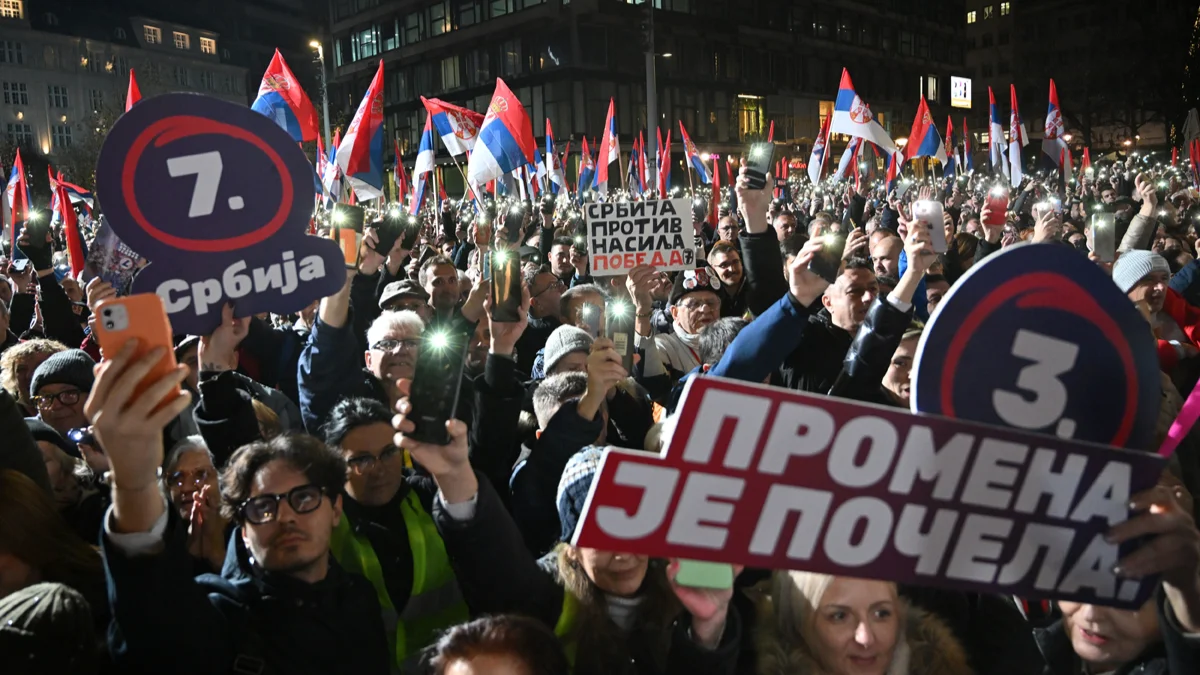
Photo: Oliver Bunic / Bloomberg / Getty Images
On Sunday, December 17, in Serbia several elections are held at once that can seriously change the country's political landscape for the near future.
Firstly, the country will take the third in four years parliamentary elections in which the party of the country's president Alexandar Vucicch intends to confirm his mandate and dominance in the people's buying up. Secondly, voting will take another 65 municipalities of Serbia, including in the capital of the country of Belgrade. And in the latter, the opposition hopes at least to seriously squeeze the ruling party. Novyevropa tells why the Serbs go to polling stations again, why the opposition is more than ever tuned to success and what can wait for the country based on the results of the vote.
They started talking about early elections in Serbia in the spring, immediately after two high -profile cases of joke. In early May, 13-year-old Costa Ketskmanovich shot his students and a guard in his school in the center of Belgrade. And the next day, 21-year-old Urosh Blazhich opened fire in the Mladenovats community in the Belgrade city district.
Both incidents caused shock in Serbian society.
Shooting revealed not only security problems in the country, but also more structural crises - a lack of school psychologists, an unhealthy atmosphere in society and an uncontrolled turnover of weapons.
The mourning rallies quickly outgrown into many thousands of protests under the slogan “Serbia against violence”. The manifestations have become the most massive performances since the fall of the authoritarian regime of Slobodan Milosevich in Serbia. Their peak fell at the beginning of summer, and they continue .
The flagship of the movement was several opposition democratic parties - the Democratic Party of Serbia, the Party of Freedom and Truth, the movement of free citizens and other forces. The Vuchic government was accused of negligence, corruption and creating an atmosphere of hatred.
Serbia against the TV
The key requirements of the protesters are the resignation of the government, the president and the city authorities, the television reform, as well as the closure of the country's largest television channels related to the authorities. The opposition even picked the RTS office - the main television and radio company Serbia.
The focus of protest on television is not accidental. As in Russia, television in Serbia is the main junk of state propaganda. The government controls all the main channels, radio stations and newspapers. This allows her not only to engage in self -patient, but also to replace the agenda, manipulate the opinion, and also attack opponents.
“The ruling Serbian progressive party steadily exerts pressure on independent media and public organizations, conducts misinformation campaigns,” the report of the Serbia analytical center Freedom House said . “The systematic abuse of the institutions, public functions and the most influential media put the participants in the election campaign in an unequal position,” the local election reported today in the reporting of the local CRTA center.
Understanding that in such conditions, victory in the elections is impossible, the opposition began with the requirements of the reform of television and closing the “low -grade and vulgar television channels” associated with the authorities. Later, it was about early elections.
The maneuvers of Vuchich
President Aleksandar Vucich took the protests aggressively, calling them a “attempt to color revolution” and accusing the opposition and “foreign forces” of using the tragic death of children.
Later, Vuchich repeated more than once that the opposition did not want reforms at all, but simply wanted to remove him from power. “All [opposition parties] have the only program that they can offer:“ Aleksandar Vucich is bad, he is a tyrant, he is an autocrat, ”the Prime Minister Ana Brnabichechoed the president.
However, the authorities could not not reckon with thousands of demonstrators in the center of Belgrade. Trying to find a way out of the crisis, in recent months, Vuchich began to hint at the early elections. For the country, this is a very familiar situation. Since 2012, when the Serbian Progressive Party came to power, extraordinary and timely elections were held in the country four times in the country.
By November 1, the president dismissed the parliament and set a preliminary vote date - December 17. Vuchich decided to hold parliamentary and municipal elections in one day.
“The opposition first only demanded elections in Belgrade, where it could win, but after her protests began to fade away, she demanded parliamentary elections. This suits Vucich, ”Birn quotes the analyst Tsvitin Miconevich as saying .
Although the Serbian leader introduced everything as if he had gone to meet the protesters, many experts agreed that the elections were most necessary for Vuchich himself.
Firstly, fearing the further fall of the rating of his party, Vucich is in a hurry to strengthen the position in parliament.
Secondly, having announced the early elections, the president tried to knock down a wave of protests that overwhelmed the country.
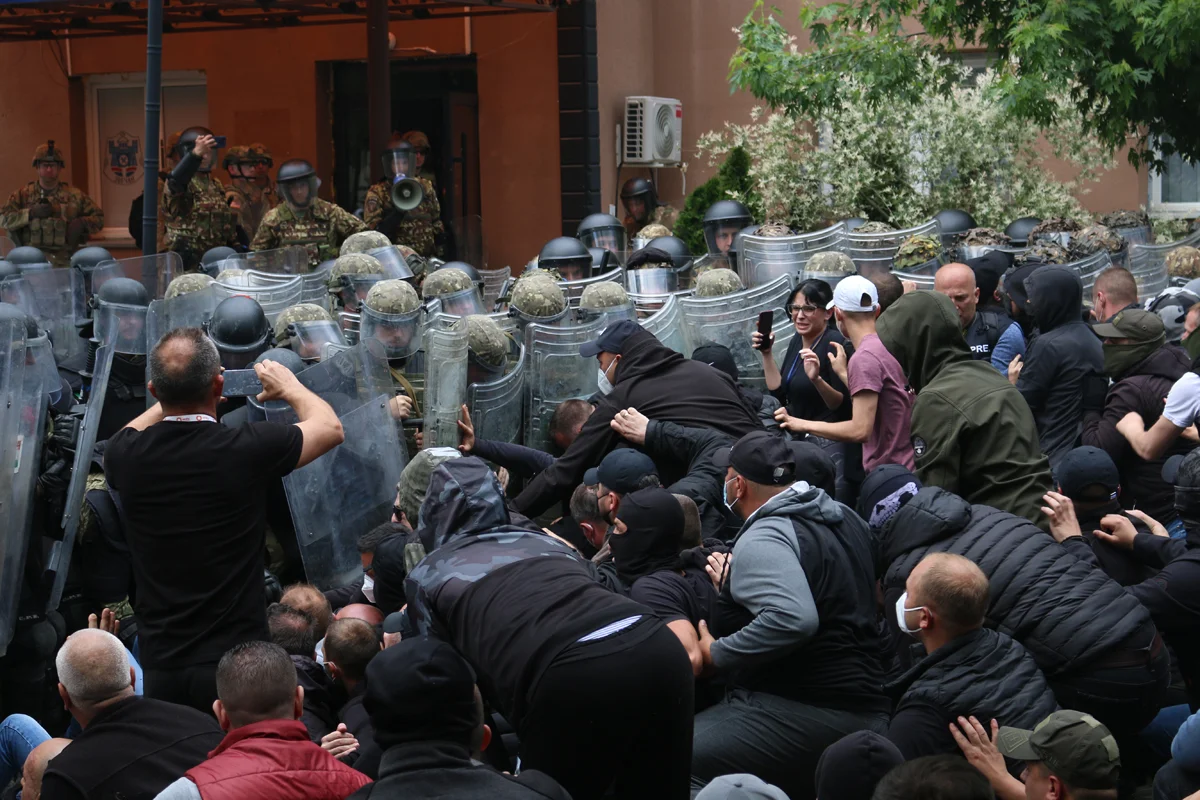
Thirdly, extraordinary elections are a convenient reason to tighten with the resolution of the crisis in Kosovo, on which the United States and the EU insist everything harder. Belgrade requires recognizing the independence of the region in exchange for a significant increase in the autonomy of Kosovo municipalities in which the Serbian population prevails. Vucich knows that his nuclear electorate will not forgive Kosov’s loss, and therefore traditionally draws the process by all means. Moreover, next year the West will be more busy with its political problems - elections in the USA and the European Parliament.
Coalition for the coalition
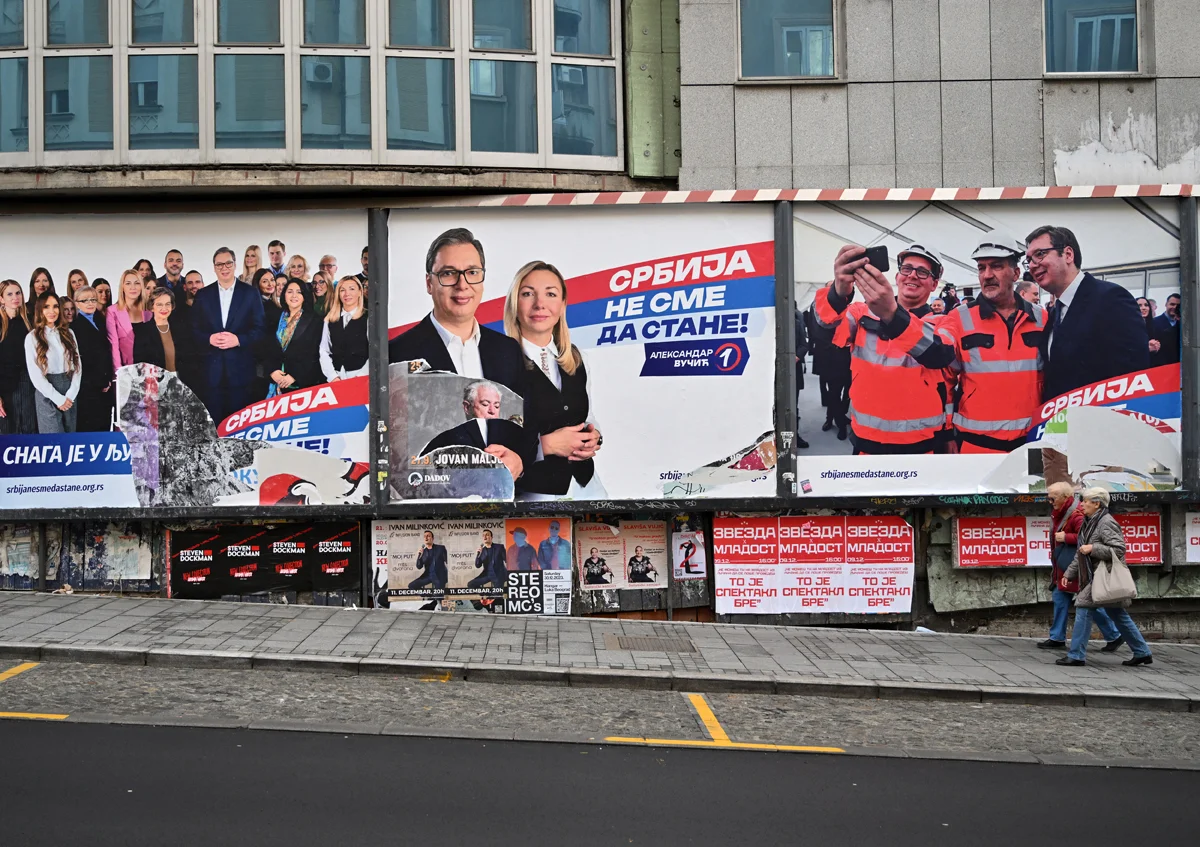
Although Vuchich is not in the ballot, he remains the main person of the election campaign. Its portraits are decorated with houses and billboards, and the president himself appears daily on the news and social networks, recalling the importance of the “right choice”. The message is clear: voting for the progressists, you vote for Vuchich, even despite the fact that this year he formally left the post of head of the party, appointing his closest ally.
The Serbian Progressive Party goes to the elections under the slogan “Aleksandar Vucich - Serbia should not stop”, uniting with five more political forces.
In total, in the ballot in the parliamentary elections - 18 parties and coalitions, many of which are quite loyal to the president. For example, the Socialist Party of Serbia (ATP, the party of Milosevich). Socialists are the long -standing allies of the Vucich party, although they are represented by a separate bloc. ATP is always ready to share portfolios with a progressive party, which has already happened in the past.
The real opponents of the authorities are the Serbia against violence block, the very architects of spring protests. The coalition is based on: the Freedom and Justice Party of the ex-mayor of Belgrade Dragan Dzhilas, the “ecological uprising”, “Green Levy Front” of Radomir Lazovich and others. In the media, the block is called pro -Western and often criticized for an indistinct foreign policy agenda, primarily on the topic of Kosovo.
The third isolated force are ultra -right, which also formed two separate blocks: “National Assembly” and “Hope for Serbia”. This is a mix of nationalist and pro -Russian movements and EuroSrotics. The main thing that unites these forces is a sharp rejection of Kosov’s independence and the desire for military neutrality of Serbia. Some of these parties call Vucich's pocket parties, which could prevent the right block from the right block.
According to CRTA, the coalition “Serbia against violence” can gain about 40% of the vote, and the coalition of Vucich - almost half. The ultra -right can count on 10% of the vote.
The goal is Belgrade
“[According to the results of these elections], changes are possible at the local level, including in the capital - Belgrade. On the scale of the country, such a prospect is unlikely, ” said Daniel Boxler, political scientist and professor at the University of Belgrade.
The victory of the opposition in local elections in Belgrade can be a serious problem for Vuchich, which is conducting grandiose construction projects in the capital, for example, the new fashionable district "Waterfront".
Belgrade is a city with the largest budget in the country, and the authorities must control it in order to be able to maintain the functioning of their political machines.
“The capital in this sense is especially important <...>. About a quarter of the country's population lives in Belgrade. The one who takes power there has a chance to take a dominant position, ” adds Boxler.
Understanding that the bets are high, Vuchich involved all the resources possible for victory. The authorities flooded with aggressive agitation of the streets of the capital and other large cities, mobilizes for the vote of Serbian state employees. The appearance of the so -called ghostly voters from other Balkan regions, for example, from the Bosnian Republic of Serbian, is also expected. It is enough to recall the summer invasion of buses to Belgrade, when people were massively brought to the capital to the rally of progressives.
Vuchich and actions bordering on a direct bribery of voters are not shy.
For example, he promised that Serbian high school students would receive a lump -sum payment of 10 thousand dinars (about 100 euros) in honor of the upcoming holidays, and university students - a thousand dinars. The president did not forget about pensioners who promised help in the amount of 20 thousand dinars.
All these steps give Vuchich and the parties of the authorities a traditional advantage over the opposition. The leader of the Serbia against violence bloc, Billyana Georgevich admits that the victory in the parliamentary elections will not be easy, but believes that without this all other goals are unattainable: “We are not afraid of elections because we know that we will be more, and especially in Belgrade, we know that we can win.”