
Translated material
"Why are enemies published and sold?"
Boris Akunin in Russia is now officially “terrorist”. Sources of Medusa believe that a new wave of persecution of objectionable cultural figures has begun
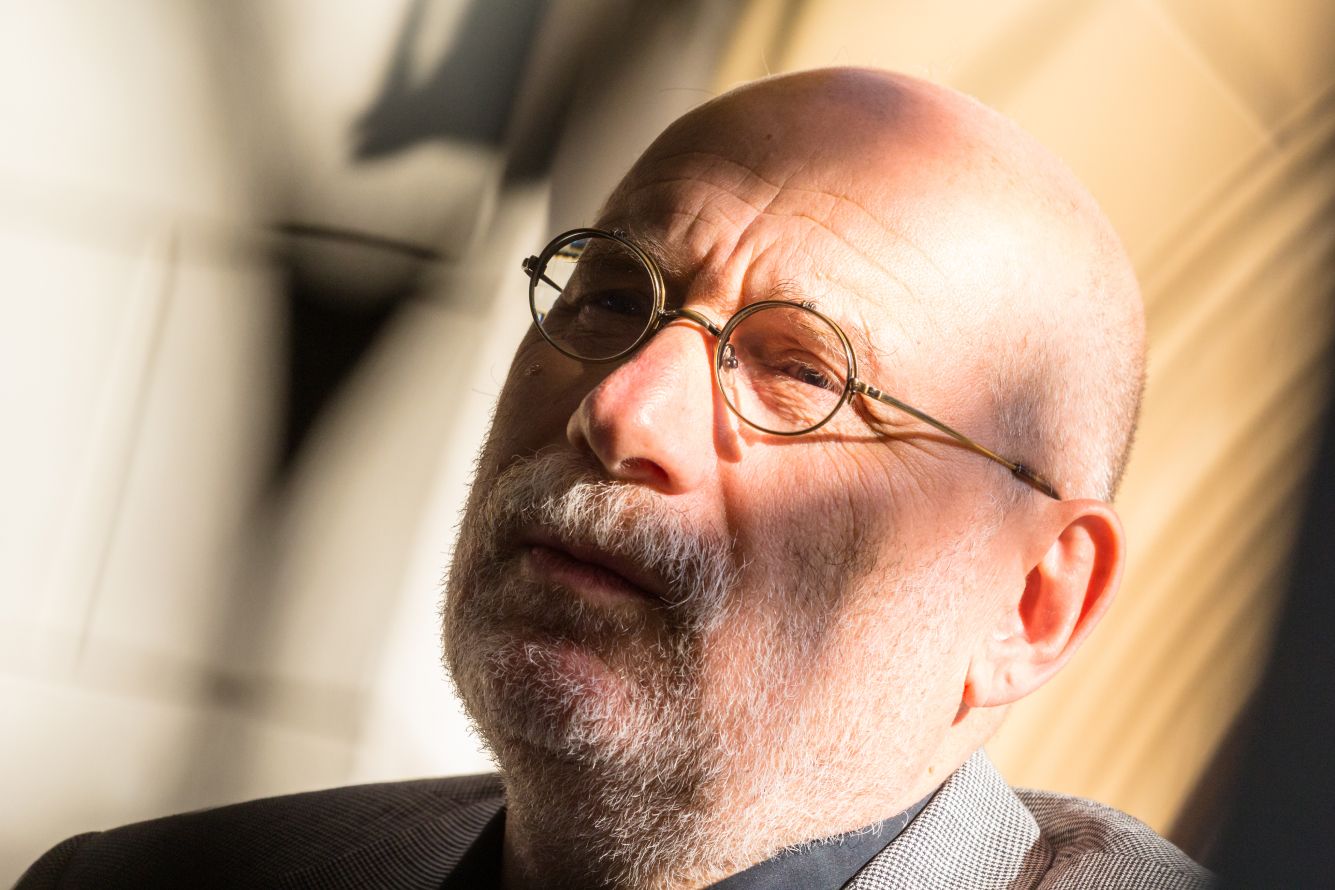
Rosfinmonitoring was introduced by Boris Akunin - one of the most successful and sold modern Russian writers - in the list of "terrorists and extremists." At the same time, a criminal case “on the justification of terrorism” and “fakes” against the Russian army was brought to him, RIA Novosti reports with reference to the UK. A couple of days before, the AST publishing house announced that Akunin would stop publishing books - as well as the works of Dmitry Bykov. These events were preceded by a provocation with the participation of the Prochrevsky “prankers” Vova and Lexus: they called writers as representatives of official Kyiv, and then posted notes on which Akunin and Bykov speak out in support of Ukraine. At the same time, both writers openly openly opposed the war. The interlocutors of Medusa in the book industry, as well as sources close to the Kremlin, say that these events should be considered a new wave of persecution of objectionable cultural figures.
The decision to stop publishing Boris Akunin and Dmitry Bykov, General Director of AST Pavel Grishkov explained by "public statements by writers who caused a wide public outcry." The chain of bookstores “Read Gorod-Bukvoed”, which shot the books of the authors from the sale, also made an identical formulation on December 15: “The decision is due to the recent statements of writers who received wide publicity in the media.”
Litres spoke out a little more details (the service announced the “Sales Surveillance”): “The decision was made in connection with the statements of writers published in the media. These statements require legal assessment, as they may contradict the laws and norms of the Russian Federation, in accordance with which the Liters group of companies operates. We expect the results of a legal examination to make further decisions. ”
“Further decisions” were made almost immediately - and this time by the authorities, not entrepreneurs. On December 18, Rosfinmonitoring introduced Akunin to the list of “terrorists and extremists” (he or “an“ extremist ”or“ extremist ”is definitely unclear - these are two different statuses), a criminal case“ On the Justification of Terrorism ”and“ Fakes ”about the Russian army was brought up on the writer.
At the same time, both Akunin and Bykov previously repeatedly and publicly stated that they support Ukraine (and Bykov, announced in the Russian Federation “Ino -Agent”, even wrote a very complimentary book about the President of Ukraine Vladimir Zelensky). In a conversation with the pro -Kremlin “prankers”, Bykov confirmed his position and said that he would like to “be useful to Ukraine”. Akunin noted that he organized a fundraiser for help from Ukraine.
The publication of the record of these conversations was actively and aggressively discussed by Russian pro -government politicians, propagandists and “military commissars”. In particular, State Duma deputy Andrei Gurulev (United Russia) on the show of Vladimir Solovyov “Full Contact” demanded “destroy Akunin”: “He should not be in this world. Only in the way, probably, our country will survive. ”
Two sources of Medusa, close to the presidential administration (AP), said that at least until recently the Kremlin and the Ministry of Culture of the Russian Federation allegedly tried to return to Russia at least “moderate” cultural figures, that is, those who left the country after the start of the war, but did not make high -profile anti -war statements. Guided by these considerations, AP opposed tough prohibitions on those who openly condemn the Russian invasion: “[prohibitions] scare. They held them for a long time. ”
At the same time, the Russian law enforcement agencies instituted criminal cases against anti -war -minded cultural figures, including against writers . In addition, an unspoken ban on the performance of many musicians with anti -war views acted. However, the “system of repentants” also acted : the artists who acted against the war could get the “forgiveness” of the Kremlin and the work permit in Russia - for example, in exchange for a trip to the Donbass or assistance to children affected in war.
Now, one of the interlocutors of Medusa emphasized, this position is adjusted - at least in relation to writers. According to him, now the Kremlin “urgently asks” the publisher to completely abandon the publication of the books of “foreign Agents” and other authors criticizing power. This decision is allegedly made under the pressure of high -ranking security forces who are wondering: "Why are enemies published and sold?"
The fact that publishers and bookstores decided to abandon cooperation with “unreliable” authors are also said in the literary environment. Critic Galina Yuzefovich in his telegram channel drew attention to the fact that AST “did not fall before a shot”-and previously was in no hurry to remove the publications of authors with an anti-war position from the plan of publications. “Considerations by the [President of Eksmo-Ast Oleg Novikov] moved, lie in the plane of commerce, not high ideals,” Yuzefovich believes (both bulls, and especially Akunin are sold in Russia in large circulations). In her opinion, now the situation has changed dramatically precisely under the pressure of the Kremlin.
Other representatives of the industry with whom Medusa spoke (they asked us about anonymity) confirm that the decision of AST on Akunin and Bykov "was a surprise." “The [new] wave [prohibitions] has gone,” says one of the interlocutors.
Several sources on the market noted that shortly before the ban on Akunin and Bykov, stores began to cancel the presentations of the book of the scientific journalist Asi Kazantseva “Where are the children come from?” Kazantseva herself suggested that this is due to her anti -war position and denunciations. On December 12, after the abolition of the presentation of Kazantseva in “Chita-Gorod”, State Duma deputy (and the murder of the former intelligence officer Alexander Litvinenko) Andrei Lugovoi published personal data of journalists in his telegram channel. In one of the messages that he reposted, it was said that "the betrayal of his country is the worst sin."
In addition, the Moscow Bookstore canceled the December presentation of the book of fashion historian Alexander Vasiliev, who also spoke out against the war with Ukraine. Vasiliev did not comment on the abolition of the presentation, but removed the announcements from his social networks.
The interlocutors of the Medusa, close to the AP, are in turn sure that the “prankers” Vovan and Lexus will continue to call cultural figures in order to “bring out [interlocutors] to support the Armed Forces of Ukraine and some reasoning about the death of Russian soldiers”. And the authorities will use this as a reason to tighten the persecution.
The press secretary of the President of Russia Dmitry Peskov in a conversation with Medusa said that the publishers “hardly need to recommend something” against Boris Akunin “after what was said”: “Two gentlemen who are engaged in this were organized. But no one organized, and what was said - this led to the decisions that were made. "
Medusa asked the Ministry of Culture of the Russian Federation, as well as the AST publishing house and the Moscow bookstore to comment on the ban on the publication and sale of books by authors who spoke out against the war. By the time of publication of the material, they did not answer.
"Jellyfish"