
Translated material
Repressions in Russia in 2023. OVD-Info review
Repressions in Russia in 2023. OVD-Info review
Introduction
The year 2023, unlike the previous one, will not be remembered for large mass protests and thousands of arrests. However, this does not mean at all that the protest is over and there are no other repressions. Rather, we saw a continuation of the trends that emerged in 2022: targeted criminal prosecutions, stricter laws and the adoption of new repressive norms. Such tactics work well to intimidate society, instilling self-censorship in people and saving the regime from the need for mass persecution.
Nevertheless, Russian civil society - both within the country and abroad - lives and fights, demonstrating solidarity and commitment to human rights.
Dissenters continue to speak out against the war and repressive practices, picketing, holding letter evenings, and participating in other forms of resistance such as arson and other direct action.
The state, in turn, continues to persecute both ordinary citizens who express their positions, and representatives of various political, social and religious groups.
The causes and consequences of all this will be discussed below.
If you have a request for data or would like to do a joint project with us, please email: [email protected]
You can subscribe to the newsletter for researchers and experts. In it we report on new reports, data and datasets.
We have a telegram channel in which we share the latest data.
Persecution for anti-war views
Just like a year ago, the bulk of repression consists of persecution for expressing anti-war views in various forms - statements, inscriptions, leaflets and public actions.
Administrative Affairs
We know of 2,830 cases under Article 20.3.3 that came to the courts this year. Of these, 2707 were considered. The decisions were distributed as follows:
The most cases of discrediting in 2023 were opened in annexed Crimea - 372. The cases were distributed by region as follows:
The total number of cases is less than in 2022 - which is explained, among other things, by the fact that last year Article 20.3.3 was widely charged against those detained at rallies, and drawing up protocols for an entire paddy wagon of people is easier than determining from comments on social networks who He wrote them, collect evidence and look for a person. Another factor may be the work of censorship and the fact that there are gradually fewer posts or other statements - however, we cannot verify this.
In 2023, OVD-Info lawyers participated in 1,509 administrative cases and visited police departments 281 times.
Criminal cases
The number of persons involved in “anti-war” criminal cases, that is, cases for various forms of expressing an anti-war position, has increased - as of December 19, 2022, we numbered 378 people in 69 regions of Russia, as of December 18, 2023 - 794 in 78 regions. In 2023, 423 people were added to the list of those persecuted for their anti-war stance.
Among the new defendants, for example, are those being prosecuted in the second case brought against the “Spring” movement - in June 2023, due to posts on social networks in 2022, security forces opened a second criminal case against the participants. There are six defendants in the Vesna case: activists from St. Petersburg Evgeny Zateev and Valentin Khoroshenin, member of the St. Petersburg regional council of the Yabloko party Vasily Neustroev, activist from Tver Yan Ksenzhepolsky, as well as former Vesna participants Pavel Sinelnikov and Anna Arkhipova. All of them were detained after massive searches on June 6 and taken to Moscow, now they are in a pre-trial detention center. At the same time, Neustroyev has not been in any way connected with Vesna for the last few years. Later, at least 14 more people were put on the wanted list, allegedly associated with Vesna, and in September 21 people were added to the Rosfinmonitoring register of “extremists and terrorists” - all of them are involved in the new case.
Those involved in the pre-trial detention center have repeatedly reported pressure - for example, Valentin Khoroshenin was threatened , the security forces tried to recruit Yan Ksenzhepolsky, and after that they did not give out parcels of food and clothing for weeks.
In addition, the security forces opened a second criminal case against at least two people involved in anti-war cases who are already serving sentences. A case was opened against Alexei Gorinov under the article on justifying terrorism, and against the journalist Maria Ponomarenko - a case on causing non-hazardous harm to the health of an employee of a prison.
Due to the absence of mass protests, security forces began to use Article 318 on the use of violence against government officials less frequently. On the contrary, the number of cases under Article 280.3 on discrediting the army has increased - largely due to the fact that there are more fines that have come into force under a similar administrative article 20.3.3 - and cases under the 1st part of Article 280.3 of the Criminal Code are initiated if a person has at least one punishment that has entered into force under Article 20.3.3 of the Code of Administrative Offences.
Article 205.2 is not slowing down either - this year the authorities, in particular, considered approving comments about the arson of military registration and enlistment offices or comparisons of the Russian military with orcs and fascists to justify terrorism. Probably, after the adoption of the law on “justification of extremism,” Article 280 of the Criminal Code will be even more actively used in relation to statements on the Internet. Including, for example, regarding positive statements about Alexei Navalny, FBK, LGBTQ people or the Spring movement - all of them are recognized as extremist in Russia.
2023 was also marked by an increase in the number of sentences with real terms imposed on those involved in anti-war cases.
Sentences for fasting have become harsher - while in 2022 the majority of such court decisions did not involve imprisonment, in 2023 the split is almost 50/50. And the terms themselves have increased - if in 2022 the average term in a case related to publications on the Internet was 34 months, then in 2023 it reached 65 months.
The average sentence for anti-war cases in general has also increased - in 2022 it was 36 months in prison, in 2023 - 77 months. Various factors contribute to this. The main ones, in our opinion, are that a large number of cases brought in 2022 reached a verdict, and also that large sentences were imposed in some cases. For example, in cases of terrorist attacks and sabotage, which we include in general statistics, the punishment in such cases is a priori large, sentences in such cases have become more common, which has affected the overall sentence. Including 19 years in prison for Roman Nasryev and Alexey Nuriev or 25 years in prison for Vladimir Kara-Murza .
Prosecutions for arson
The increase in the average sentence imposed can also be attributed to the fact that, compared to last year, the number of direct actions - arson of military registration and enlistment offices, administrative buildings and relay cabinets on railways - has increased.
At the beginning of the war, such arson was mainly classified under Article 167 of the Criminal Code (deliberate destruction of property), which carries a relatively small penalty. In 2023, similar actions began to be more often classified under articles of terrorism or sabotage, the sanctions for which are much stricter.
In total, in 2023, according to the Solidarity Zone , at least 274 people became defendants in criminal cases due to direct actions, compared to 117 in 2022.
OVD-Info is aware of 44 sentences handed down to defendants in anti-war cases due to arson or attempted arson of a military registration and enlistment office or sabotage, 40 of them in 2023. 30 - with real deadlines. One of these sentences was handed down quite recently - 17-year-old Yegor Balazeikin was sentenced to 6 years in prison for throwing a Molotov cocktail at a military registration and enlistment office.
Article 281 of the Criminal Code on sabotage was used extremely rarely until the end of 2022 and the beginning of 2023: one person was convicted under it in 2022. Over the six months of 2023, according to the same judicial statistics, two sentences were handed down under the article of sabotage.
According to OVD-Info, at least five defendants in anti-war cases are accused of sabotage. In general, they began to use it much more often, Mediazona found out , and not always justifiably. The article was also tightened at the end of 2022: punishment up to life imprisonment.
Harassment of journalists
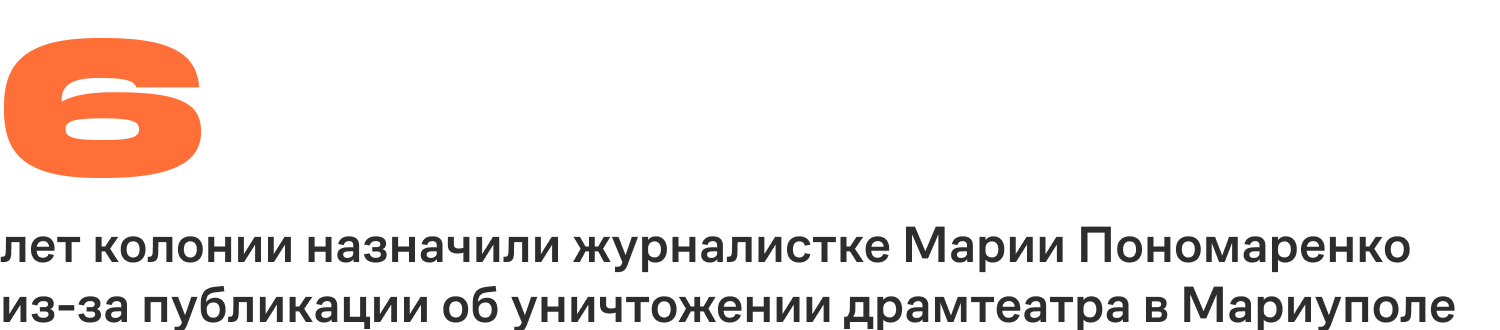
By the end of 2023, at least 43 journalists faced criminal prosecution because of their anti-war stance. Among them are those who continued to work in Russia, despite the introduction of military censorship: for example, RusNews correspondents Maria Ponomarenko and Roman Ivanov , editor-in-chief of the publication “Modern Kalmykia” Valery Badmaev , editor of the Khakass publication “New Focus” Mikhail Afanasyev . The repression also affected journalists who fled the country - for example, blogger Michael Naki and investigator Ruslan Leviev were sentenced in absentia to 11 years in prison in August for articles about “fake stories” about the army.
In addition, Russian security forces continue to persecute Ukrainian journalists in absentia. In September, one of the Moscow courts sentenced the Ukrainian TV presenter Maria Efrosinina - she was sentenced to seven years in prison because of negative publications about the Russian military on her Instagram. 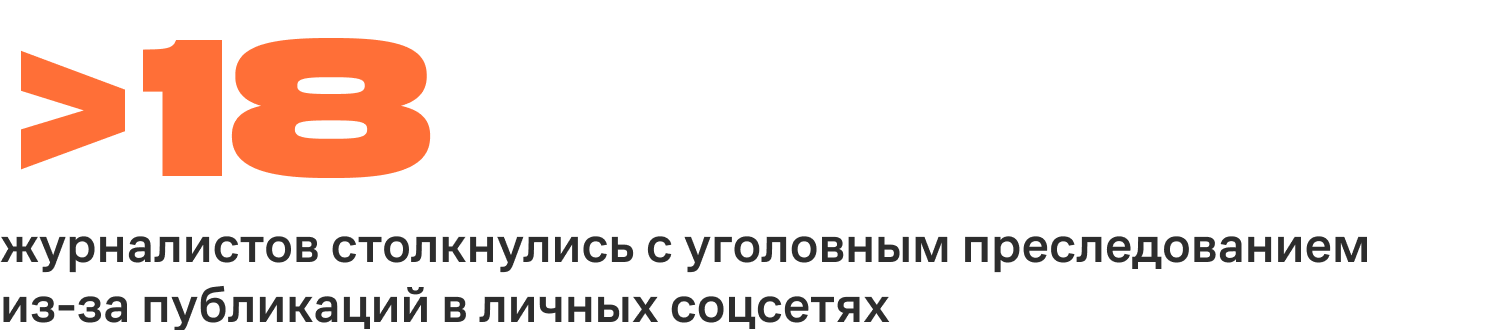 Most of the journalists who faced persecution because of their anti-war views became defendants in cases involving “fake news” about the army or repeatedly discrediting the army. However, media representatives are also charged with other articles - in particular, articles on libel and justification of terrorism. At least two journalists— Ekaterina Goncharova and Angelina Roshchupko —became involved in cases of participation in an NGO that encroaches on the rights of citizens as part of the persecution of the “Spring” movement. The editor-in-chief of Skat MEDIA, Lev Gyammer, was also put on the wanted list in one of the Viasna cases.
Carousel arrests and death of Berezikov
During the year, numerous cases of violations of the rights of those involved in anti-war cases in Russia became known - the use of violence and torture, exclusion of lawyers, unjustified censorship of letters, bullying, and more.
Security forces continue to actively limit the communication of convicted and accused persons with the outside world. Complaints about not delivering letters or not allowing them to be written came from many, including Vladimir Kara-Murza, Yegor Balazeikin, Dmitry Ivanov and Maria Ponomarenko .
Pressure from the security forces also occurred in trials, for example, force was used against the wife of the persecuted Evgeniy Zateev at a meeting, artist Sasha Skochilenko was tortured with hunger. Skochilenko was not given the food she needed, her cell was searched numerous times, her medicine was confiscated and she was not given enough water.
They refuse to investigate torture and violence - Dmitry Ivanov and Igor Paskar , Ruslan Ushakov and Artem Begoyan , Ilya Baburin and Kirill Butylin spoke about violence and torture.

On June 14, it became known that Anatoly Berezikov had died in a special detention center in Rostov-on-Don. Before this, Anatoly was tortured and subjected to “carousel arrest” - according to the “First Department”, they wanted to initiate a case against Berezikov under the article of high treason (Article 275 of the Criminal Code) because of anti-war leaflets.
Igor Baryshnikov remains in mortal danger - a 67-year-old man is suspected of having cancer; he has a cystoma installed in his stomach (a catheter in the bladder and passing through the abdominal wall). He was sentenced to seven and a half years in prison in July, after which he was placed in custody. While in prison, Baryshnikov’s health began to rapidly deteriorate; on August 4, he was placed in the medical unit of the Federal Penitentiary Service. Due to the negligence of the guards, the man found himself in mortal danger: his lawyer points out that her client’s kidneys could fail at any moment.
During the investigation, Baryshnikov was under recognizance not to leave. During this period, as before, he cared for his paralyzed mother Eugenia. The woman died on August 7 shortly after the verdict ; the convict was not allowed to go to the funeral.
Extrajudicial pressure
One of the frequent tactics of the authorities to persecute people with anti-war views remains extrajudicial pressure. Extra-legal methods of pressure have long been used as a method of additional pressure on people, and simply within the framework of the permissiveness of law enforcement agencies. The main types of extrajudicial pressure are anonymous threats and attacks; dismissal from work; expulsions from universities or other educational institutions; cancellation of events (concerts, lectures, films); forcing apologies and other forms of demonstration of loyalty. We also include here any other methods of pressure that do not have a legal basis and procedure.
Obviously, we do not know about a large number of such cases - because people who have been subjected to such pressure are in no hurry to tell human rights activists or the media about it. However, there is every reason to believe that there are more such cases - and a repressive culture greatly contributes to this.
This year there was especially a lot of news about forced apologies on camera - this is no longer a new practice, picked up by various pro-government telegram channels. In total, since the beginning of the war, we know of at least 108 cases of forced apologies. Most of them are in annexed Crimea, thanks to the efforts of local security forces and their connection with pro-government blogger Alexander Talipov, who publishes an apology video.
Among other types of extrajudicial pressure this year:
Repression at the legislative level
This year, like the last, was marked by a large number of different repressive legislative initiatives.
In the spring of 2023, administrative and criminal penalties for discrediting and fake news were extended to “volunteer formations, organizations or individuals assisting in the implementation of tasks assigned to the Armed Forces of the Russian Federation,” that is, including the Wagner PMC. In April, a law on electronic summonses through the State Services was adopted , a Unified Register of Military Records was introduced, and restrictive measures were established for those who evade receiving a summons, including a ban on driving and concluding real estate transactions after ignoring the draft twice.
During the spring session of the State Duma, deputies also adopted a law that introduced life sentences under the article on treason, expanded and tightened a number of articles of the Criminal Code. In particular, the law expanded the list of crimes for which life imprisonment can be imposed - for example, treason. The law established higher minimum penalties, for example, for recruitment or incitement to terrorism, and toughened penalties for a number of “terrorist” articles and for sabotage, up to 20 years, with the possibility of sending those convicted to prison and confiscation of property. The concept of sabotage has also been expanded - arson of military registration and enlistment offices, government institutions and infrastructure, which can be qualified as sabotage, will now be punishable under the second, more stringent part of this article, providing for a term of up to 20 years. The crime of “attacking persons or institutions that enjoy international protection” was also expanded - now it is possible to punish threats of such an attack, for example, on Russian embassies.
The same law introduced a new article 284.3 on assistance in the execution of decisions of international organizations. Criminal liability now arises for assistance in the execution of decisions of international organizations in which the Russian Federation does not participate, or decisions of foreign government bodies on criminal prosecution of authorities, military personnel or volunteers. In fact, the law criminalized the documentation of war crimes - and the broad language in theory allows for punishment even for working with the ECHR.
The amendments to the citizenship law expanded the list of crimes, the commission of which entails the deprivation of acquired Russian citizenship, including “serious crimes against the state,” for example, Article 280.3 on discrediting the Armed Forces and 212.1 on repeated violation of the procedure for holding actions.
A law was also adopted, once again complicating the election process. Also, on July 14, Vladimir Putin signed a law banning trans crossings.
After the summer holidays, during the autumn session of the State Duma, deputies adopted a law expanding the scope of the administrative article for the demonstration and distribution of extremist materials. Courts will be able to punish the dissemination of materials that are not on the extremist register. A bill on “public justification of extremism” was later introduced—but not yet passed—providing an effective new tool for repression, thanks to both the very broad concept of “extremism” used in Russian legislation and the limitless interpretations of “justification.”
A package of laws was also adopted that complicates the work of foreign non-governmental organizations (NGOs) - now they cannot work in Russia unless they have permission from the Ministry of Justice and are not included in a special register, and cooperation with these organizations will result in administrative penalties, and subsequently criminal liability.
The repressive instruments created in previous years have thus increased pressure on civil society representatives and exacerbated the marginalization of persecuted groups. Such cases include increased pressure on the queer community and its actual criminalization.
Pressure on the LGBTQ community
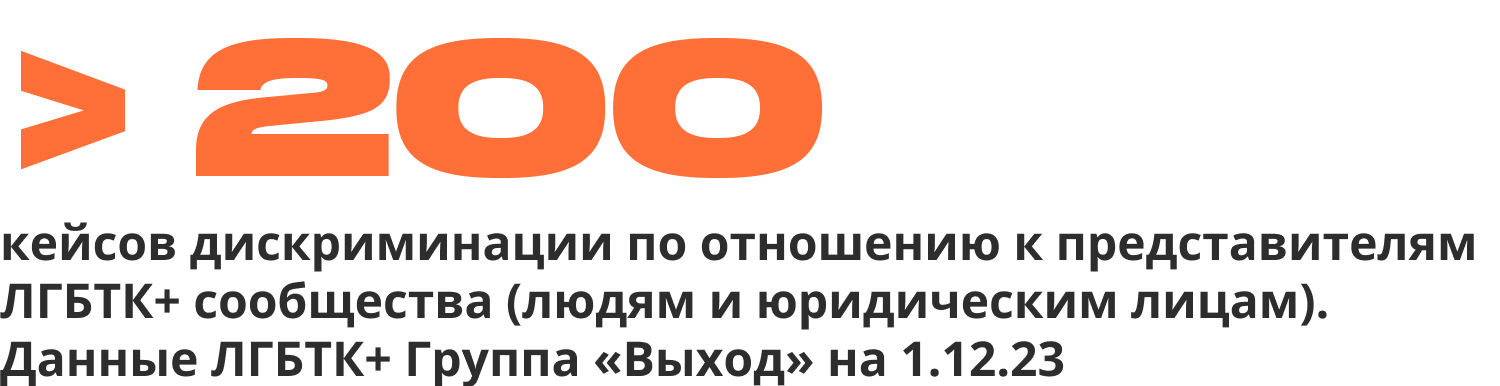
In 2023, the Russian state once again increased pressure on members of the LGBTQ community. On November 30, the Supreme Court, at the request of the Ministry of Justice, recognized the “international LGBT movement” as an extremist organization. The decision to ban the activities of the non-existent movement began to take effect immediately, but liability for violating the bans may come after January 10, 2024, when it comes into force.
Throughout the year, the authorities actively enforced the new expanded article banning “LGBT propaganda.” Activists and bloggers, as well as online cinemas and streaming platforms have faced persecution. Russian law enforcement officers revealed LGBT -Propagand in the films “English barber ” , “Bridget Jones ” , “Tenenbaum family ” . In St. Petersburg, a penalty was assigned to the Avia TV channel due to the video of Sergei Lazarev, in which the security forces did not like the “mutual arrangement in space” and the “individual characteristics” of the actors: the court found that they “broadcast homosexual preferences”.
LGBTK Group "Exit" analyzed the data and reports on such trends:
- Blocks of LGBTK content on a variety of platforms: from activist projects to popular streaming platforms;
- fines of various streaming platforms, TV channels for improper labeling LGBTK content or directly for the extension of the fact that Russian state bodies consider it corresponding to “propaganda”;
- Self-censorship: many platforms/sites/publishers and people themselves delete LGBTK content and even simply mentioning LGBTK due to concerns of sanctions (or put on such content the age rating "18");
- Fines and deportation of transgender sex workers.
According to the article on “propaganda”, LGBTK was pursued, in particular, the authors of the Kitaisa and Grozes channel, Khaoyan Xuya and Gela Gogishvili. Young people were detained in April, after which Xuya was sent under arrest and expelled from Russia. Gogishvili also left the country, later it became known that he was appointed a fine of 100 thousand rubles.
Freedom of speech
In 2023, the authorities continued to use the practice of applying articles on calls to extremism, terrorism, and also began to actively use a new article on calls for anti -state activities. The statements about partisan actions, attacks on the Crimean bridge and calls to sabotage mobilization have become common reasons for initiating criminal cases. In addition, the security forces continued to start affairs under articles on the “rehabilitation of Nazism” and “insulting the feelings of believers”-often because of minor hooligan outputs, which are served as socially dangerous actions in the press releases of the security forces.
Cases of calls for terrorism, extremism or anti -state activity
In 2023, to the rooted practice of pursuit of disagreements with the Russian authorities under articles on calls for terrorism and extremism, persecution under the new article 280.4 of the Criminal Code was added on calls against the security of the state. For these articles, at least 134 politically motivated affairs were initiated, at least 10 of them are associated with calls to sabotage mobilization. The author of the animated series “Masyanya” Oleg Kuvaev , Kazan blogger Parvinakhan Abuzarov and Moscow poets, defendants in Mayakovsky , were faced with the persecution of calls against anti-state activities against mobilization due to mobilization.
Among the most high -profile cases of using an article on the justification of terrorism are a criminal case by the author of the play “ Finist - the clear falcon ” Evgenia Berkovich and Svetlana Petriychuk. In 2022, their performance about women recruited by the militants of the Islamic State received the Golden Mask Award, in 2023, the creators were sent to the pre-trial detention center because of it.
The accusation, which was arrested by Berkovich and Petriychuk, was built on an examination conducted by Roman Silantyev in the framework of the science of the Destructology invented by him.
Since 2019, human rights activists noted the increase in the number of criminal cases on the promotion of terrorism in places of imprisonment: in most cases, such persecution affect representatives of religious minorities. In 2023, such cases began to start in relation to other political prisoners: “justification of terrorism” as part of conversations with cellmates was charged, for example, previously convicted due to anti-war statements by Alexei Gorinov and Anarchist Azat Miftakhov .
Criminal cases of promoting terrorism or extremism continue to be made by those who comment on relevant events on the Internet. In 2023, at least 16 such cases were brought up on the attacks on the attacks on the Crimean bridge or the Belgorod region, at least 8 - on the promoted to death of the military commander Vladlen Tatarsky or the attempt on Zakhara Prilepin.
Among the other reasons why the Russian security forces start cases of calls for terrorism or extremism: negative statements addressed to the head of Rostec, Sergei Chemezov, reasoning on how to pour a police car, and jokes about Vladimir Putin. Igor Girkin also became a defendant in the case of calls for extremism. Earlier, the court in the Netherlands found him guilty in the case of the MH-17 Boeing Boing, but the Russian authorities considered it necessary to send him to a pre-trial detention center due to two posts in Telegram.
Cases of propaganda of prohibited symbols
In July 2022, the State Duma adopted a law providing for a punishment for the "threat of security" of Russia. Because of this, Article 282.4 appeared in the Criminal Code, which enables the security forces to pursue the criminal procedure for those who repeatedly violated the norm on the ban on the demonstration of Nazi or “extremist” symbolism after bringing to administrative responsibility.
Administrative protocols under Article 20.3 draw up, in particular, due to the demonstration of the white-blue-white flag, the letters "n" and Nazi symbols (even if it appears in historical materials or on anti-fascist caricatures).
According to the SOVA research center, 22 people became defendants in cases under the criminal article in 2023. Among them is a resident of Kalmykia, Sanan Ulanov, who was sentenced to two years-colonies of the settlement in September. Later, the Supreme Court of the Republic justified the man, but Ulanov himself had not survived before: according to official information, in November he committed suicide in jail.
"Rehabilitation of Nazism" and desecration of symbols of military glory
In 2023, Russian security forces excited at least 45 politically motivated cases under the article on the “rehabilitation of Nazism”, 12 of them-due to the actions of the eternal fire, which the security forces considered inappropriate. Such criminal cases started, among other things, due to drift , lighting cigarettes , spilled on the monument of lemonade and eating seeds next to the eternal fire. And on the blogger Alena Agafonov, who shot a joking video in which she “tickles” the chest of the Mother Mother monument, started the case under the article on the desecration of burial places.

After Vladimir Putin in December 2022 signed the law on the assignment of the status of the “symbol of military glory”, the security forces began to make things more actively under the article on “rehabilitation of Nazism” and for its desecration. Among those who were persecuted, is a resident of Netinka (Bryansk region), who torn the St. George tape from the clothes of a fellow villager, and singer Charlot , who shot a video in which he tears an orange-black ribbon.
In most cases, the case in the third and fourth parts of the article on the “rehabilitation of Nazism” (desecration of symbols of military glory, insulting the memory of the defenders of the Fatherland) aroused people who committed frivolous hooligan actions and, most likely, did not invest a political statement in them. However, the first and second parts are more often used in relation to critics of power. So, in March, the security forces conducted mass searches with the employees of the Memorial. They came to human rights activists due to the fact that the names of three people who collaborated with the Nazis were found in the “Basis of the Victims of Political Repressions” of the USSR. The denunciation of the Memorial was written by the organization "Veterans of Russia."
OTD-Info is known about several cases when the reason for politically motivated persecution under the article on the rehabilitation of Nazism was statements on historical topics. So, against the associate professor of Mikhail Belousov, who was dismissed from St. Petersburg State University, they opened a matter due to a conversation with students: the security forces claim that the historian spoke about the “signs of falsification of history in some topics about the Second World War”. The St. Petersburg local historian Dmitry Vitushkin was arrested due to statements about the blockade of Leningrad. The reasoning on the same topic was the reason for the two millionth fine, which was appointed Ivanovo architect Sergei Volkov.
Insulting the feelings of believers
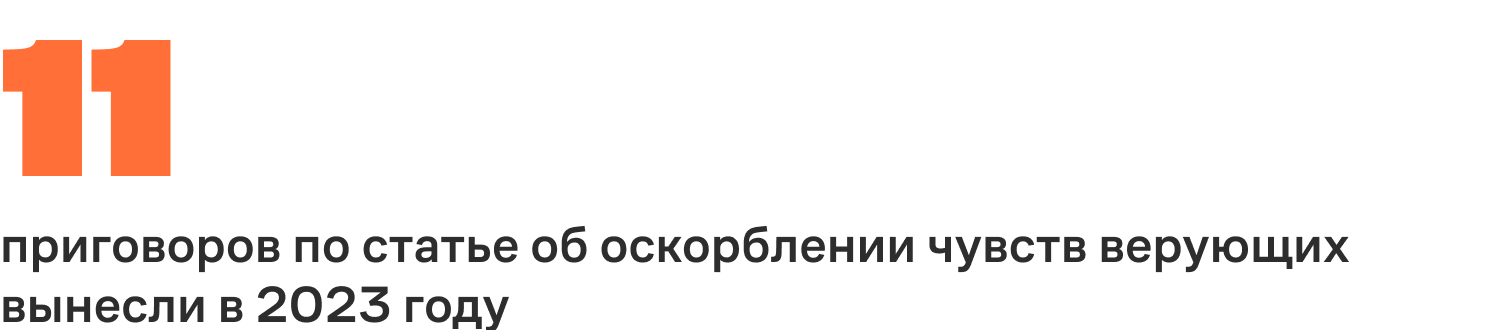
In May, the security forces opened the case of insulting the feelings of believers against the Volgograder Nikita Zhuralya - the reason was a video with the burning of the Qur'an. Later, the young man was transferred to the Terrible pre-trial detention center, where he was beaten by the 15-year-old son of Ramzan Kadyrov Adam. The video of the beating appeared on the Internet, but the Republican Ministry of Internal Affairs abstained to initiate a matter against Adam Kadyrov. On the contrary, after this act Adam awarded state awards in several regions.
The pursuit of this article, among others, also collided by the blogger Olesya Pavlova (because of the video where she gets out of the coffin with a cry “In general, it’s convenient to fuck, Christ is risen!”), Nagging a photograph of Patriarch Kirill to the tree singer Charlot , who hung on the tree. The Cross Volgodonets Yuri Kravtsov and Pussy Riot Pussy Riot Nadezhda Tolokonnikova .
Freedom of assembly
Despite the fact that there were no major protest actions in 2023, persecution for the exercise of the right to freedom of assembly continued, as well as local protests. In total, in 2023 we recorded 817 detentions on street shares.
The most massive detentions for anti -war statements were the detention on February 24 for laying flowers to monuments to Ukrainian writers, arrest 30 people at the presentation of the book of Sasha Skochilenko on March 19 and 14 people on May 9 at an anti -war exhibition.
In addition, this year there were detention in support of political prisoners, environmental and city -protective actions, rallies against the arbitrariness of the authorities and against the ban on abortion, speeches in support of LGBTK people and against violence.
The most massive detentions on other shares were detention at the Kyiv District Court in Simferopol, where two times-January 25 and August 25-detained people who came to support the persons of the Hizb Ut-Tahrir affairs, and 55 people. Large in the scale of 2023 by the detentions also noted the action in support of political prisoners dedicated to the birthday of Alexei Navalny on June 4, then 114 people were detained.
Pursuit of eco -activists and city defenders
Separately noticeable this year were the persecution of eco -activists who conducted shares in the environment.
In Moscow alone, this year they detained the defenders of the Bittsev forest , the defenders of the Kosinsky Park and the protesters against the construction on Bolshaya Dorogomilovskaya Street . Eco -activists were detained at least at least 11 regions of Russia, in total we know about 37 such detentions in 2023.
 "Though kill us, at least go through us." How the Kuban village fights with a landfill surrounded by rice checks like the Kuban village fights with a landfill surrounded by rice checks
  OVD-Info June 15, 2023
The active struggle of the inhabitants of the village of Poltava , opposing the garbage training ground , also did not go unnoticed by the authorities. In the spring of 2023, the pressure on activists became especially strong: the police came to the participants of the national gathering, one of the activists, Lyudmila Grishkova, threatened the criminal case under the article on the application of violence to the police officer (Article 318 of the Criminal Code), and two protests - spouses Natalya Garyaeva And Vadim Motovilov - became participants in the criminal case under the article on the destruction of the car number (Article 326 of the Criminal Code). In April, Garyaeva Enterprise Kamavtoresurs came with searches in the case against her ex -husband, who died in October last year. The police stopped the bus with activists who were sent to apply to the governor (the practice of detaining a whole bus with activists was also used in the Primorsky Territory).
On May 26, when activists from Poltava once again blocked the road to the training ground, 10 people were detained and fined. They fined activists from Poltava and for messages in Telegram with an appeal to go to promotions and videos dedicated to the landfill. On December 11, it became known that the landfill at the training ground was closed and it would not resume work.
Entertone pressure was also used against ecocactivists-in the Nizhny Novgorod region activists and journalists were beaten during an illegal landfill check, in Novorossiysk, a man spoke about threats , in the Kemerovo region of ecologists, guards of the coal section beaten , in the Leningrad Region, eco-activists announced the abolition of subbotnik due to threats of officials , opponents of the garbage training ground in the Sverdlovsk region were threatened by reprisal, and they attacked the defenders of the Bittsev forest.
From particularly distinguished cases-against a resident of Izhevsk they opened a criminal case and charged calls for terrorism (part 2 of article 205.2 of the Criminal Code) and calls for extremist activity (part 2 of article 280 of the Criminal Code) due to comments with the proposal to execute officials who wanted Reduce the requirements for wastewater discharges in Baikal.
The city defenders were also detained-the story in St. Petersburg with the defenders of the Basevich house became the most noticeable. In May, three activists detained and appointed administrative arrests from 12 to 14 days. After the arrest of the arrest of one of them - Kirill Kaverin - was expelled from the second year of the faculty of political science of St. Petersburg State University without the right to restore.
This is not the only story with city defenders in St. Petersburg-in January the St. Petersburg activist Yaroslav Kostrov said that he was attacked by unknown in the demolition of a historical building. In Moscow, the city defenders were detained who conducted the action in defense of the central hippodrome.
Ingush business
In 2023, the courts and other persecutions in the case of protests in Ingushetia 2019 continued. So, in July, the court approved the sentences to seven people whom the investigation considers protest leaders - from seven and a half to nine years in prison. When considering the appeal, the defendants asked for the withdrawal of judges and lawyers for their intended purpose. Despite the fact that the lawyers themselves supported these petitions, the court refused to satisfy them.
Inconsistencies of shares: statistics for the year from famous cases and on topics
In total, according to the ATS-Info, in 2023, the authorities have at least 117 times refused to coordinate public events. One of the most popular reasons for failures is covid restrictions: officials used such a basis in 2023 at least 15 times. At the same time, Rospotrebnadzor lifted coronavirus prohibitions a year and a half ago - including for mass events, and WHO completely announced the end of the pandemic. In November, at least 5 failures concerned events organized by relatives of mobilized and dedicated to the requirements to return them home.
"Foreign Agents"
In 2023, 217 positions were introduced to the register of the Ministry of Justice. The register included a variety of people-from the regional activist Elena Agafonova (“People’s Council of the Tula Region”) to former Prime Minister Mikhail Kasyanov . Among the organizations included in the list are activist communities ( “ Omsk Civil Association ” , “ Council of Wives and Mothers ” ), Media ( “ Taiga.info ” , “ Lawyer Street ” , Sotavision and “7 × 7 - Horizontal Russia ”) and HIDEMYNAME VPN service provider .
In addition, in June, information appeared for the first time about the closed register of “affiliated with the“ foreign agents ””: from the document published by the Ministry of Justice, it became known that by December 31, 2022 861 people were brought there.
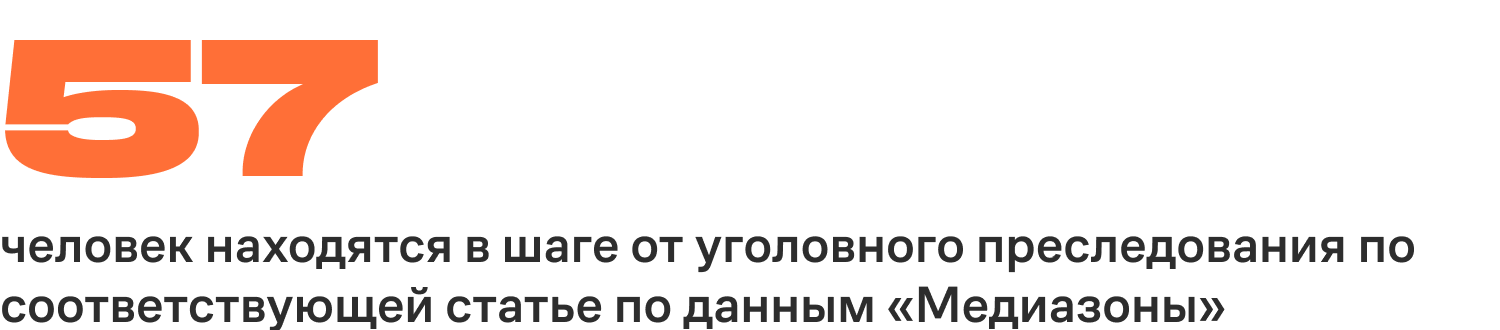
Foreign agents ”began to be fined more often - mainly, according to articles on the inappropriate“ marking ”of publications (or the absence of this marking) and not providing reporting. If two such fines come into force, then during the year a criminal case can be made on the “in agent” due to the third “violation”.
In October, it became known about the case against the journalist of the Tatar-Bashkir Service "Radio Liberty" Alsu Kurmasheva. The journalist is charged with receiving information about the teachers of one of the universities of Tatarstan mobilized into the army: the security forces believe that since Kurmasheva recognized such information, she had to convey to the Ministry of Justice so that she was on this basis included in the register of “foreign agents”. The woman is in a pre -trial detention center.
Freedom of associations
Despite the fact that the practices of violations of the right to freedom of associations in 2023 practically did not change, the scale of their application increased significantly. If in the previous year 23 organizations recognized as “undesirable”, in 2023 more than fifty legal entities were included in the corresponding list. In addition, the persecution of the participants (or alleged participants) of associations, which the Russian authorities consider “extremist” or “terrorist” ones, did not weaken.
"Undesirable" organizations
The Prosecutor General’s Office in 2023 recognized “undesirable” 53 organizations (for comparison - 23 in 2022). Among them are the media (for example, “Medusa” , “rain” and “New Gazeta. Europe” ), environmental ( Greenpeace and World Wildlife Fund ), academic ( Central European University and Free University ), Religious ( “ TCCN and Allatra churches of churches ” ), human rights ( “ Agora ”, a network of “ Human Rights ” ) and political ( “ Congress of People's Deputies ”and “ Free League ”) Institution.
This year, human rights activists and journalists learned about the recognition of several organizations “undesirable” not from the reports of the Prosecutor General’s Office (as always happened before), but after the introduction of these organizations in the list of the Ministry of Justice. Такая практика в очередной раз повысила риски для участников объединений, которые российские власти могут счесть «нежелательными», поскольку ответственность за работу с такими организациями наступает с момента внесения их в реестр.
По уголовным делам, связанным с «нежелательными» организациями, проходили массовые обыски. В частности — по делу о сотрудничестве с ENEMO, которое вменили участникам движения «Голос», и по делу об украинской церкви « Возрождение » .
Приговоры по уголовным делам о сотрудничестве с «нежелательными» организациями вынесли Владимиру Кара-Мурзе (ему вменили участие в мероприятии Free Russia Foundation), пасторам-пятидесятникам Николаю Богославскому , Святославу Югову и Николаю Улитину (всем троим вменили сотрудничество с церковью « Новое поколение » ) и президенту региональной Федерации смешанных единоборств Денису Шибанкову (из-за вмененного сотрудничества с религиозным движением «Фалуньгун».
Давление на Алексея Навального и его сторонников после запрета его проектов
В августе Мосгорсуд вынес решение по делу о создании экстремистского сообщества против Алексея Навального: политика приговорили к 19 годам колонии особого режима, а его соратника Даниэля Холодного — к восьми годам общего. Экс-главе уфимского штаба Навального Лилии Чанышевой в июне назначили семь с половиной лет колонии по аналогичному обвинению (а также по статье о призывах к экстремизму), проходившего с ней по одному делу Рустему Мулюкову — два с половиной года. Экс-главу томского штаба политика Ксению Фадееву отправили по делу об экстремистском сообществе в СИЗО.
Осенью троих адвокатов, защищавших Навального, — Вадима Кобзева, Алексея Липцера и Игоря Сергунина — отправили в СИЗО по делу об участии в экстремистском сообществе: им вменили передачу писем от их подзащитного на волю. Также в 2023 году стало известно о нескольких делах, связанных с донатами Фонду борьбы с коррупцией, и как минимум шести делах об участии в деятельности «экстремистской организации» — структурах Навального, после их запрета.
В начале декабря в соцсетях Навального появилась информация о возбуждении против него уголовного дела по статье о вандализме. Что именно вменяют политику, неизвестно, однако ранее в Удмуртии и Ярославской области завели дела об участии в экстремистской организации из-за граффити в его поддержку. Значительную часть года Навальный находился в ШИЗО, а 7 декабря его родные, адвокаты и соратники потеряли с ним связь: его перестали подключать к судебным заседаниям по видеосвязи, а представители ФСИН позднее заявили , что он «убыл за пределы Владимирской области».
«Экстремистские» и «террористические» организации
В 2023 году Верховный суд по иску Минюста признал экстремистской организацией «международное движение ЛГБТ » ( Подробнее читайте в нашем разделе «Давление на ЛГБТК сообщество») . Помимо этого, суды запретили как экстремистские движение « Новое величие » и Конгресс ойрат-калмыцкого народа . В апреле вступило в силу решение о признании экстремистским движения «Весна». Участники «Весны» (и те, кого силовики считают причастными к ней) стали фигурантами нескольких уголовных дел: в июне 2023 года нескольких людей обвинили в распространении «фейков» про армию, призывы к антигосударственной деятельности и распространении неуважительных сведений к дням воинской славы.
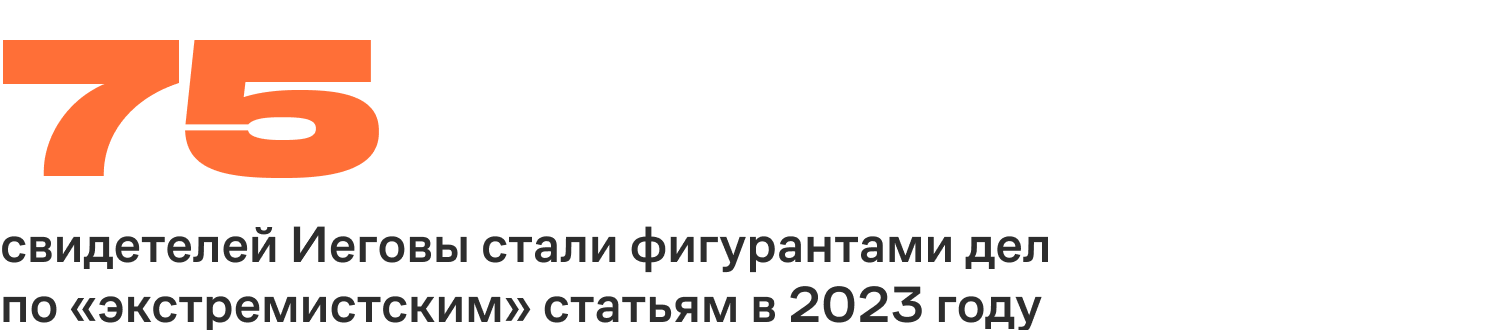 Источник: JW Russia
Силовики продолжили возбуждать дела по «экстремистским» статьям против представителей религиозных меньшинств — Свидетелей Иеговы, предполагаемых сторонников «Нурджулар», «Таблиги Джамаат», «Ат-Такфир валь-Хиджра» и «Алла-аят». Такие дела нередко заводят из-за встреч с единоверцами или чтения и обсуждения религиозных текстов.
На предполагаемых последователей исламистской партии «Хизб ут-Тахрир» заводят дела по «террористическим» статьям (чаще всего речь идет об организации деятельности террористической организации, но также встречается и обвинение в оправдании терроризма и). К осени 2023 года проект «Поддержка политзеков. Мемориал» насчитал как минимум 343 преследуемых в рамках таких дел, 115 из них приговорили к срокам от 15 лет. Большинство преследуемых — крымские татары. С давлением сталкиваются также правозащитники и журналисты, которые пытаются привлечь внимание к ситуации вокруг «Хизб ут-Тахрир». Так, правозащитника Бахрома Хамроева приговорили к 14 годам колонии из-за помощи мусульманам, а журналистку издания SOTA Анну Лойко обвинили в оправдании терроризма из-за текста о «Хизб ут-Тахрир».
В 2023 году ОВД-Инфо также стало известно о ряде дел по «экстремистским» статьям против отрицателей распада СССР, которые мы считаем политически мотивированными. Дела против «граждан СССР» возбудили в нескольких регионах.
Давление на правозащитников
В 2023 году по искам Минюста ликвидировали целый ряд правозащитных организаций. Московскую Хельсинскую группу , Информационно-аналитический центр « Сова » , « Человек и закон » и Сахаровский центр ликвидировали на основании «нарушений „территориальной сферы деятельности“»: правозащитников обвинили в участии в мероприятиях за пределами регионов, где были зарегистрированы их организации. В Петрозаводске по решению суда закрыли НКО «Рассадник культуры»: это произошло после того, как его основательницу, журналистку Наталью Севец-Ермолину, признали «иностранным агентом».
У сотрудников «Международного Мемориала» провели обыски по делу о «реабилитации нацизма» из-за указания нескольких имен предполагаемых пособников нацистов в списках жертв репрессий. Экс-председателя пермского «Мемориала» Александра Чернышова отправили в СИЗО по делу о покушении на контрабанду культурных ценностей: ему вменили попытку вывоза архива организации в Германию. Другой фигурант дела, экс-глава пермского «Мемориала» Роберт Латыпов, покинул Россию. Члена ликвидированного ПЦ «Мемориал» Бахрома Хамроева приговорили к 14 годам колонии по делу, связанному с его профессиональной деятельностью.
 «Уверен, что недолго осталось этому чудовищному беспределу». Члена «Мемориала» Бахрома Хамроева приговорили к 14 годам Правозащитник получил 14 лет лишения свободы за помощь мигрантам из Средней Азии ОВД-Инфо 09 июня 2023
Силовики провели три обыска в офисах «Команды против пыток». Юристу Команды Магомеду Аламову угрожала расправой семья 27-летней жертвы домашнего насилия Марины Яндиевой, которой он помог.
Адвоката Александра Немова и журналистку «Новой газеты» Елену Милашину избили , когда они ехали на оглашение приговора Зареме Мусаевой — матери чеченских активистов, которых связывают с оппозиционным каналом 1ADAT.
С уголовным преследованием из-за своей работы столкнулись адвокат Тимур Идалов (Москва), правозащитницы Надежда Низовкина (Улан-Удэ) и Светлана Аршавская (Оренбург). Обнинскую правозащитницу Татьяну Котляр, которая помогает мигрантам, в шестой раз признали виновной в фиктивной прописке доверителей.
Троих сторонников правозащитного проекта «Омбудсмен полиции» Владимира Воронцова приговорили к реальным срокам по делу о заведомо ложном доносе: ранее Василий Федоров, Евгений Моисеев и Ирина Андина предали огласке информацию о фабрикации доказательств в деле Воронцова. Сам мужчина в октябре освободился из колонии, он находился в заключении с мая 2020 года.
Уголовные дела — общая статистика
Мы знаем о 467 фигурантах политически мотивированных уголовных дел, чьё преследование началось именно в 2023 году. Всего мы знаем о как минимум 3457 политически преследуемых, 1027 из них лишены свободы прямо сейчас.
Как и в прошлом году, самой популярной тематикой преследования стала свобода слова. Виден и рост категории «другое» — туда мы относим, например, дела о госизмене, или дела, касающиеся поджогов административных зданий или диверсий. Как виды протеста, так и сам портрет политически преследуемого человека меняется вместе с ростом репрессий, и очень важно не забывать о людях, о которых мало или почти нет информации — это происходит в том числе и потому, что человек ранее не сталкивался с давлением системы, не знаком с правозащитниками или попросту лишен связи с внешним миром.
В 2023 году юристы ОВД-Инфо оказывали юридическую помощь 108 фигурантам уголовных дел, помогали людям во время 15 обысков полиции, оказывали консультации во время 62 допросов. Support OVD-Info .
Дела о государственной безопасности
Очевиден рост количества дел о «государственной безопасности» — в том числе по статьям, принятым в прошлом году, например, о конфиденциальном сотрудничестве с иностранным государством. Еще в июле 2023 года было известно о как минимум 43 делах, возбужденных по статье о госизмене с начала года. Для сравнения — за весь 2022 возбудили 24 таких дела.
В таких делах в этом году силовики часто стали применять тактику «карусельных арестов». «Карусельные аресты» — неоднократные последовательные аресты по административным статьям, после чего человеку часто предъявляют уголовное обвинение. Эта практика тоже получила широкое распространение в 2023 году. Чаще всего в подобных случаях обвинение предъявляют по статье о госизмене. Так произошло, например, с Савелием Фроловым и Александром Крайчиком .
Помимо таких арестов, дела и процессы по таким обвинениям традиционно крайне закрыты и засекречены — зачастую невозможно узнать, в чем обвиняют человека, оказывают ли на него давление и что с ним вообще происходит. После ужесточения сроков по госизмене вплоть до пожизненного заключения, у силовиков также появился серьезный устрашающий аргумент чтобы заставить человека признать вину — тогда срок будет меньше.
2023 год отметился и первым в истории современной России делом о шпионаже против иностранного журналиста. Эвана Гершковича задержали 29 марта в Екатеринбурге, где он работал над материалом об отношении общества к ЧВК «Вагнер». Гершковича поместили в СИЗО «Лефортово», где он находится до сих пор.
Другое громкое дело о шпионаже касается гражданки Украины и крымской татарки Ление Умеровой. Девушка находится в заключении с декабря 2022 года: ее задержали на контрольно-пропускном пункте «Верхний Ларс», когда она ехала в Крым, чтобы навестить болеющего отца. Она провела три месяца в центре для размещения иностранных граждан, после чего ее поместили под один административный арест. В начале мая 2023 года стало известно, что сотрудники ФСБ вывезли Умерову из изолятора временного содержания во Владикавказе, на нее завели уголовное дело.
Увеличение количества дел хорошо подчеркивает риторику властей о предателях, шпионах и иностранных агентах, особенно пока продолжается война и борьба с «коллективным Западом». Большое количество дел о госизмене связано с Украиной и предполагаемыми контактами с гражданами этой страны.
SCHIZO
Другой часто встречающейся практикой стало помещение фигурантов уголовных дел в ШИЗО. В октябре 2023-го мы рассказывали , как часто фигурантов политических дел отправляли в ШИЗО, и публиковали статистику за год. Для годовой сводки мы обновили эти данные.
Реальных случаев, когда фигурантов политических дел отправили в штрафной изолятор, может быть в разы больше. Проблема в том, что не о всех них есть информация: передать сведения из колоний и тюрем бывает очень сложно или даже невозможно. Некоторые узники или их близкие не хотят освещать водворение в ШИЗО в медиа. Несмотря на это, мы считаем важным фиксировать известные случаи.
В 2023-м году как минимум 49 человек , преследуемых по политическим мотивам, помещали в штрафные изоляторы. В среднем они проводили там 17 дней . Максимальный срок нахождения в ШИЗО — 15 суток, однако администрация колонии может вменить заключенному новые взыскания и продлить срок в штрафном изоляторе. Срок помещения в ШИЗО нам известен в 76 случаях из 103. Если сложить сроки, можно сказать, что в 2023 году фигуранты политических дел провели в ШИЗО в общей сумме минимум 1354 дня .
Кого в 2023-м году чаще всего отправляли в ШИЗО:
- Теймура Абдуллаева — фигуранта симферопольского дела «Хизб ут-Тахрир» — на 179 дней ;
- Алексея Навального — на 161 день ;
- Муслима Алиева, фигуранта ялтинского дела «Хизб ут-Тахарир» — как минимум на 120 дней ;
- Тимура Ялкабова, фигуранта третьего симферопольского дела «Хизб ут-Тахрир» — как минимум на 85 дней ;
- Владимира Домнина, фигуранта дела о «Правом секторе» — на 69 дней .
Еще трех человек, преследуемых по политических мотивам, помещали в ШИЗО как минимум на 60 дней : фигуранта второго бахчисарайского дела «Хизб ут-Тахрир» Сервера Зекирьяева , воронежского активиста Григория Северина и экс-главу Серпуховского района Подмосковья Александра Шестуна .
Чаще всего в 2023 году в ШИЗО помещали фигурантов дел «Хизб ут-Тахрир» — известно как минимум о 14 людях . Также в штрафные изоляторы водворяли осужденных по делам Свидетелей Иеговы — не менее 8 человек за 2023 год.
Фигурантов «антивоенного дела» тоже отправляли в ШИЗО — это коснулось как минимум 7 человек: Алексея Москалева и Владимира Кара-Мурзы — 5 раз, Алексея Горинова и Марии Пономаренко — 3 раза, а также Ильи Яшина , Вячеслава Попова и Богдана Зизы — водворяли по одному разу.
Как минимум 3 женщин , преследуемых по политических делам, отправляли в штрафные изоляторы: это Мария Пономаренко, создательница «Левого сопротивления» Дарья Полюдова и фигурантка дела Свидетелей Иеговы Ольга Панюта . Как мы рассказывали , ШИЗО в женских колониях в худшую сторону отличается от мужских: перед помещением туда женщин буквально раздевают — оставляют в сорочке, трусах и резиновых тапочках. В этих вещах они находятся в изоляторе весь назначенный срок.
Как подмечала «Медиазона», политических заключенных все чаще после приезда в колонию сразу отправляют в ШИЗО, после чего переводят на строгие условия содержания или СУС . По нашим данным, в 2023 году с ШИЗО сразу после этапирования в колонию столкнулось как минимум 10 человек . Руководитель проекта «Поддержка политзаключенных. Мемориал» Сергей Давидис отмечал в беседе с ОВД-Инфо, что таким образом администрация колонии стремится изолировать узника от общения с другими заключенными и внешним миром.
Conclusion
В 2023 году мы увидели снижение уличной протестной активности — массовые акции больше не проводились, а основное сопротивление режиму, судя по тенденциям, проявлялось онлайн и в акциях прямого действия. Однако снижению количества репрессий это не способствовало.
Ужесточаются методы политического давления — резко выросло количество дел по статьям о государственной безопасности, в антивоенных делах растет число приговоров с реальным сроком, стали более жесткими уголовные статьи о диверсиях, терроризме и экстремизме. Также сейчас мы видим и рекордное за все время число нежелательных организаций, массовые штрафы для «иноагентов», увеличение репрессий в сферах, ранее не настолько затронутых — как ЛГБТК активисты.
Очевидно, что, пока идет война, тенденция продолжится — война увеличивает потребность режима в репрессиях. Несмотря на все это, посреди мрака и репрессий, россияне внутри страны и за рубежом — продолжают быть активными, развивать НКО и СМИ, помогать гражданам Украины, политзаключенным и людям, не желающим воевать.
Когда-нибудь будет конец и войне, и режиму, ее развязавшему. На наш взгляд, главным актором будущей трансформации государства станет гражданское общество. Поэтому берегите себя и не теряйте надежду. Support OVD-Info .