
Translated material
Segregation without negativity
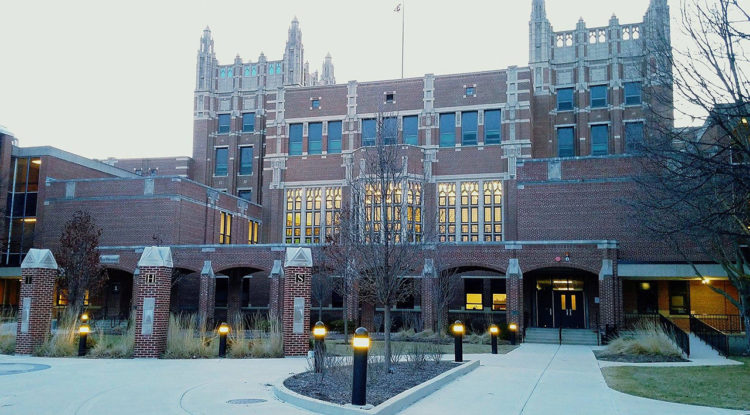
The school in the United States shared white and neglected children for the sake of equality and inclusiveness. How is that?
The school in the United States has introduced a new program to increase the performance of students of different ethnic groups. Now some subjects are taught only for them - in their classes do not allow white students and teachers. The initiative should increase the sense of comfort and stability primarily by African American children, but is already widely criticized by the public, although it has been introduced exclusively in a voluntary format. Mandatory separate lessons contradict the constitutions and return the United States during the time of racial segregation. However, African American children and teachers supported the isolation of white students and see great potential in it. "Cold" talks about the innovative method of combating inequality.
In order not to miss the main materials of the "cold", subscribe to our Instagram and telegram .
American education suffers from the problem of ethnic gap : dark -skinned students are on average behind the academic performance from the children of white Americans. The trend is explained by the social and economic differences between children: dark -skinned ones often live poorer than their white peers and receive less high -quality education. The state recognizes this problem and tries to reduce the gap in academic performance with the help of state support. For example, in 2015, a law on the success of each student was adopted , the purpose of which is to prepare all children, regardless of the status, race and income to entering college.
However, high school, Evanston-Township in Illinois, found his view of inequality. The educational institution went through segregation, dividing the classes by racial feature: one class - one ethnic group. Now at school there are lessons in mathematics and seminars on writing, to which only dark -skinned and Latin American students can go to. The lessons are conducted by a teacher from the same ethnic group as children. At the same time, schoolchildren study the same material as their white classmates. There are six “racial classes” in Evvanston, which have 200 non -sophisticated students, and children generally have a positive attitude to this idea.
“I feel that I have a privilege to study and be surrounded by people who share a common identity with me and can understand what I go through, at a different level,” one of the students shares .
The school leadership wants children from racial minorities to feel more comfortable in the walls of the educational institution. Children consider such classes - not just lessons - they compare classes with homogeneous communities of people in which it is easier to realize.
Race mathematics
3600 children study in Evvanston's secondary school. The racial composition of students is diverse: Latin American, black and Asians make up about 49% of all children. The worst results are demonstrated by dark -skinned children. True, this trend is characteristic of the whole country: dark -skinned students on average give standard tests worse than white. Statistics show that the children of black Americans will also be more likely to quit their studies, while white students will most likely finish his own way and receive diplomas.
Attempts to divide students on a racial basis were carried out at the Evvanton school earlier, but such practice was used not on basic school subjects, but elective. The division of classes was explained by the subject: the lessons concerned the history of the ethnicity of students or helped the integration of a particular group of students. By similar logic in other American schools, a division was introduced by sexual basis: for example, as part of a separate course, girls wanted to introduce typical “male” professions.
Separate lessons for dark -skinned and Latin American are needed to reduce the anxiety of students, says the leadership of the Evvanton school. They study in an environment where white dominate, and feel in isolation from the majority. Especially the feeling of loneliness is exacerbated at the courses of an advanced level, where there are even fewer representatives of racial minorities.
“In this class, I feel that I imagine myself, and not the whole black race. This is a safe place. In classes with in -depth study of the subject, where the whites are mainly trained, it seems to me that if I answer incorrectly, then all black children are evaluated for me. I am silent in such classes, ”a dark -skinned student who studied under a“ racial ”program in 2021 shares his impressions.
However, not everyone supports such a practice. The MAKS Education researcher Eden insists that the division of classes in the ethnicity of students does not meet the purpose of the law on civil rights , the provisions of which are prohibited by discrimination on the racial basis and segregation in schools. “Integration is a social good. We want students to not see races and treat each other only on the basis of what kind of people they are, ”the expert said .
Glenn Singleton, a racial equality consultant who worked in the secondary school of Evvanston for more than 10 years, suggested that separate classes would eventually lose their meaning. Now they are needed to achieve equality between students of the same school. “The ultimate goal is not the presence of a separate class of algebra [for neutral students], but the lack of inequality,” said Singleton.
Phantom racism
In August, the teachers of Evvanston reported that their non -widespread students attending courses began to feel more comfortable. However, the leadership of the school refuses to publicly discuss the results of the “positive segregation”. All the requests for comments were deviated and ignored. The interest in the topic forced the reporter The Wall Street Journal to come to the public meeting of the parents of the dark-skinned students, but the spokeswoman for the school district found out about the presence of a journalist and threatened to cancel the meeting if he did not leave.
It is difficult to evaluate the real successes of the program: the leadership of the school does not disclose specific results. It is only known that at the November meeting of the leadership of the Vice President of the School Council, Monica Parsons said that the dark-skinned students are still behind others.
It is impossible to draw unequivocal conclusions of the effectiveness of segregation in other schools in the United States, where similar practice is used for options. For example, in the state schools of Minneapolis, an object was introduced on the history of African American. In 2015, this lesson was available only to black boys, then they began to teach it black and chopped girls. A similar course in Latin American history is being developed. According to the study, the academic performance of black students after the introduction of such courses increased , but it was not possible to achieve a breakthrough result: the average score grew from 2.14 to 2.27 with anofficially “good” average score of 3–3.5.
“Often in our education system, black students expect compliance with white standards,” says Dena Luna, an expert on increasing the performance of black students in the public schools of Minneapolis.
The ex-Superinthant (the leader standing over school principals in the district) Charlotsville African American Rosa Atkins called the comparison of the performance of dark-skinned and white classmates unjust. White children, according to her, for the most part visited the best preschool institutions and had the opportunity to travel, including abroad.
“Children bring a very different experience to our school system. When we tell them: “If you are not learning like white children, then your efforts are not enough,” then, I think, this in itself is discrimination, ”Atkins explains .
According to a study published in 2020, segregation in American schools exists without using the program directly - the economy, not culture, race or ethnic group. Statistics shows that dark -skinned children learn worse in those schools where children from unsecured families study with them and where the vast majority of students are non -permanent.
The same study explicitly says that the academic performance of neutral students is higher in schools where most students are white. The problem is that most of the whites learn in institutions that representatives of neutral races cannot afford - hence the gap: in the more “poor” schools, dark -skinned students gain on average 20 points less in mathematics tests than their peers from better schools.
“When dark -skinned children have the opportunity to attend the same schools that white children usually attend, non -widespread children show noticeably the best results in standard mathematics tests, which we use as a measure of performance,” the study says .
Segregation is the result of inequalities among white and non -fingered Americans. Only 31.3% of white students go to schools, where the poor in the population mainly study. Among the black students, such schools are attended by 72.4%. “In America, the race and poverty are intertwined, which puts dark -skinned students in a doubly disadvantageous position,” the authors of the study say .
Again new
The segregation in the United States has historically been associated with the laws of Jim Crowe, which acted in some states until 1964. These laws enshrined the discrimination of African Americans, including in educational institutions. For example, in North Carolin, dark -skinned students had separate sets of textbooks. The absurdity of the laws came to the point that two Bibles were stored in the courts of the Atlantea: one for black believers and the other for the whites.
Almost 60 years after the abolition of the laws of Jim Crow, American schools still remain segregated. These are now considered those in which representatives of racial minorities cannot fall. In such schools there is a situation when the vast majority of students belong to one racial or ethnic group. Nevertheless, today racial diversity in American schools is noticeably higher than before: in 2022, white students amounted to less than half of all students enrolled in public schools.
“Everyone wants the best for their child, but this is what helped to start the segregation engine. I have always adhered to the opinion that the internal segregation is a way to keep white people in public schools. Thus, the superiority of the white race is the basis of the system of public schools, ” said Lisa Wullfly, Associate Professor of the University of Virginia.
The government distinguishes two factors that slow down the integration of minorities. The first is territorial. According to statistics, most students go to schools located near the house. Financing of schools in the United States often depends on local real estate taxes. Such a system creates a situation of inequality, because in the wealthy areas of the school will be more prosperous. This means that most African Americans visit not only, in fact, segregated schools, but also schools in which they by default receive less high -quality education.
The second factor is associated with the system of school districts, the number of which has only been increasing in recent years. Each district has the right to introduce its norms and educational standards on its territory. This led to the fact that the young districts were able to achieve the best results in academic performance, but the worst in racial diversity. With such fragmentation, the schools become more closed and elitist.
“There are objective incentives to isolate dark -skinned children. I do not think that schools see something positive in mixing the composition of students, because white parents will simply leave, ”the former member of the school council of Veneibla Dede Smith explains the reasons for the occurrence of segregation in schools.
In 2003, a scandal erupted in the United States because of one such school in Charlotsville. Then a group of dark -skinned families asked to send 20 children to study at a mono, one of the historically established “whites schools”. As one of the members of the school council recalls , the white parents from Venebl “became furious”, having heard that dark -skinned people would study with their children. The children were able to translate into a mono only a year later.
School items, where students are divided by racial basis, rather reinforce the current segregation of US educational institutions and, apparently, do not help solve the problem of insufficient diversity. American law also speaks against such initiatives: back in the middle of the last century, the US Supreme Court ruled that the division of children in public schools on the basis of race contradicts the constitution. Former employee of the Ministry of Education William Trahman notes that the law must fulfill all public schools, without exception, and new attempts to segregation can lead to the USA to the old policy, for which the Americans were ashamed .