
Translated material
... in a recent state
Why you need to see the "Fairy Tale of the Last Angel" by Andrei Mogeliy
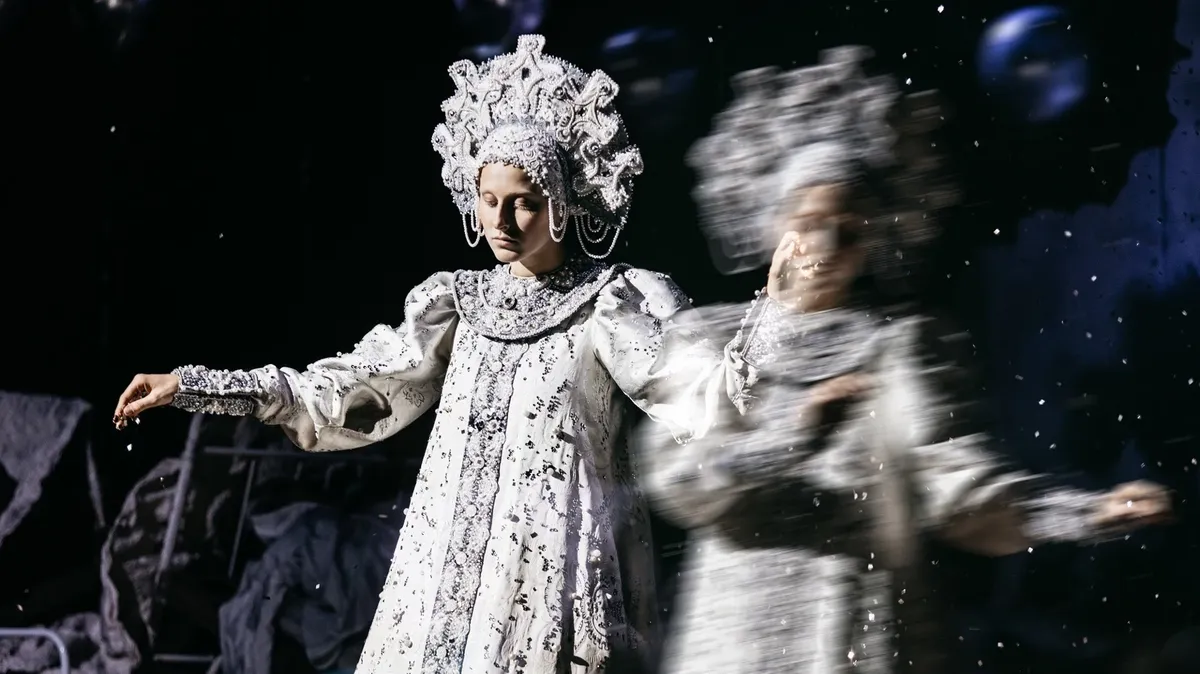
The scene from the play "The Tale of the Last Angel." Photo: Theaterofnates.ru
No matter how they put the theater, but it still bursts. Outstanding artists are asked from their posts, large artists are not released on stage, they are planted by playwrights, but - an amazing thing! -The lack of performances is still not felt. Apparently, gunpowder in the powders remained, the Russian theater either knew something (I would have shared with literature!), Either all these years he was sensitive to the growing gully time, but the fact remains: in 2023, the anti-utopian extravaganza "Sasha, Hello!" According to Dmitry Danilov, there are “cruel children” - the opera of Philip Glass (!) According to the novel by Jean Cocteau (!!) in the Sats Theater (!!!), there are wonderful things in the Shalom Theater. I would like to think these outstanding productions, no matter how much they talk about them - you won’t talk. And even on our bezbie, they are found relatively often.
However, if you need to choose one, and only one performance in this or next year, I ask you, go to the "Fairy Tale of the Last Angel." Director Andrei Mighty managed not just to say something new in the theater, he promised hope when the hope in our Serpentaria was a very rare beast. And in return he only asked for us to believe him.
I believed.
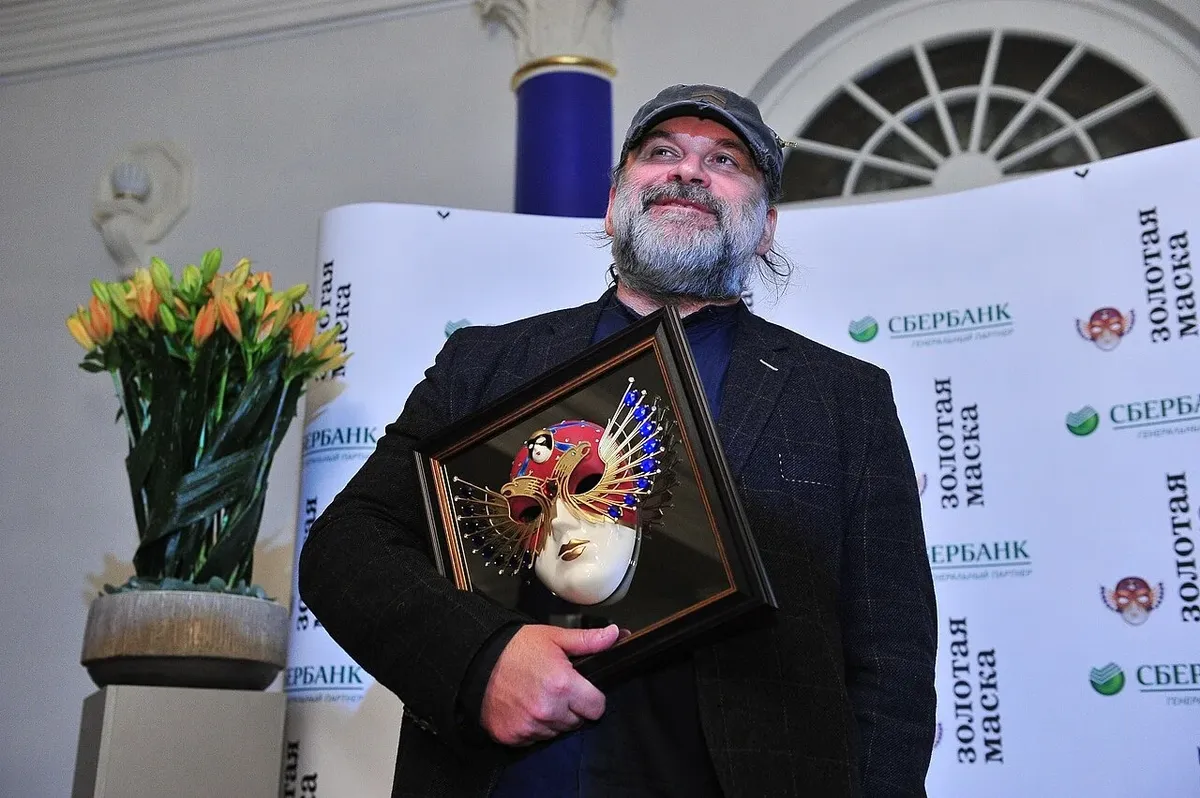
“The Tale of the Last Angel” is more than an outstanding performance. This is an event that happens once in a life and is never forgotten. It is impossible to discuss it, because everything turns out not that: too simple, flat, stupid. Its plot is so grandiops more grandiose that the synopsis loses all meaning, stage techniques are staggering like mammoths in the center of Moscow. And most importantly - this is precisely the theater, that is, an amazing hit of the work in your medium. Each acting stroke, intermission, plot, scenery, but everything, decisively everything in the play of a powerful is an theatrical gesture, unimaginable in the text or on the screen. Therefore, it is so difficult to describe it. In the century, if you allow, Gesamtkunstwerka, when Cyril Serebrennikov woves (and successfully weaves) a cinema into the theater, and Konstantin Bogomolov indulges (not so successful) with the art of the performance, Andrei Mighty remains a formalist in the highest, country sense of the word.
And creates a new theater.
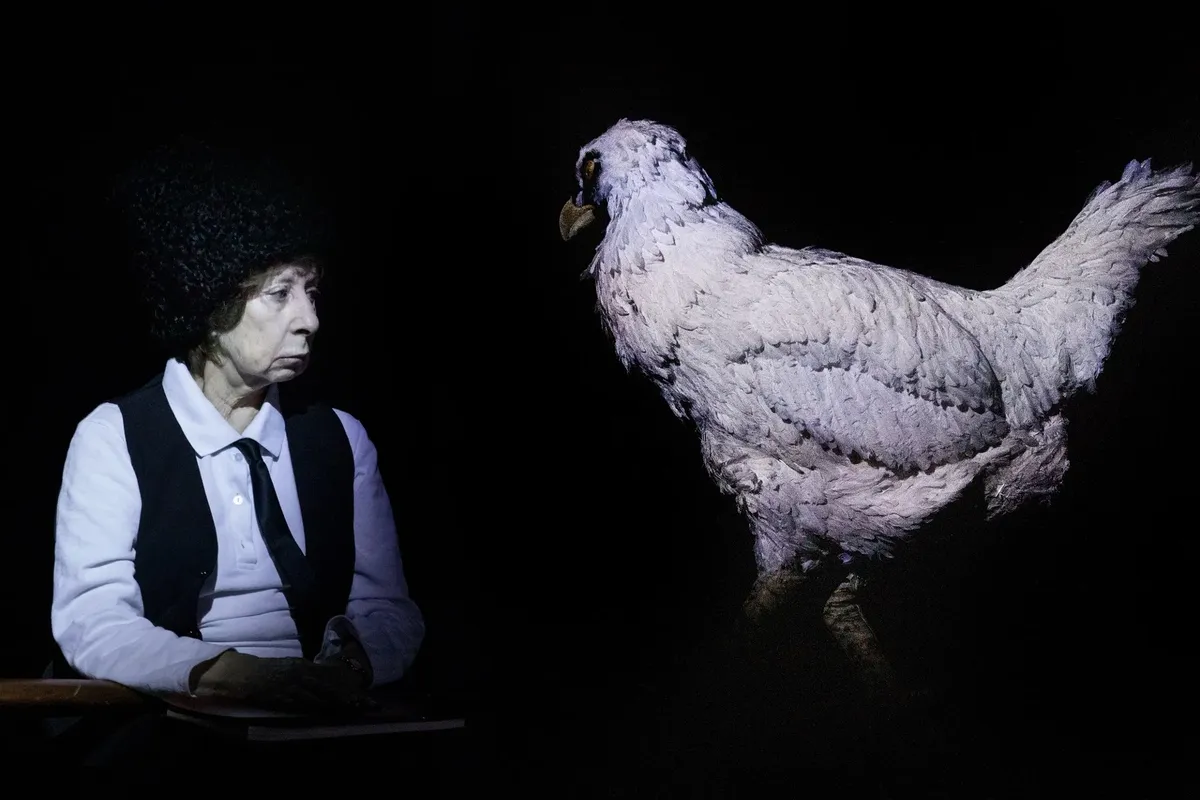
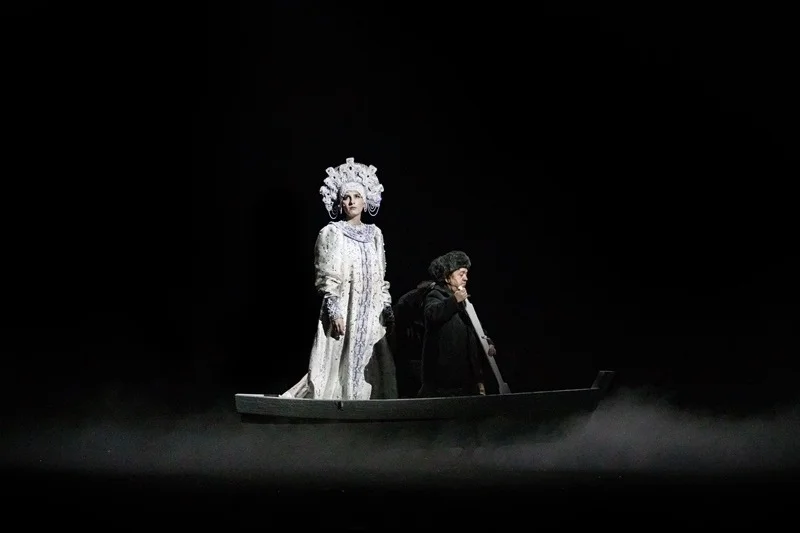
“The Tale of the Last Angel”, set in 2019 for the Theater of Nations, has changed a lot over the past four years. The popular Leah Akhedzhakov, the performer, seems to be inconspicuous, but in fact the central role of a neighbor Oksana, was replaced by an alien rose Khairullin. Musya Totibadze, who played Oksana, the dream of the protagonist, part -time, was replaced by the princess Lebed. The possibility of such a turn, due to (how else) by non -submarine reasons that it was originally laid in the composition of the performance. Mikhailov (mathematics, writer and proud participant in the show “Dancing on TNT”), as well as the fairy tale of the 90s of Alexei Samorov (actually, according to the “Fairy Tale of the Last Angel”), he simultaneously justifies the audience expectations and overcomes them-no, he is not easy to jump into the texts of the artist.
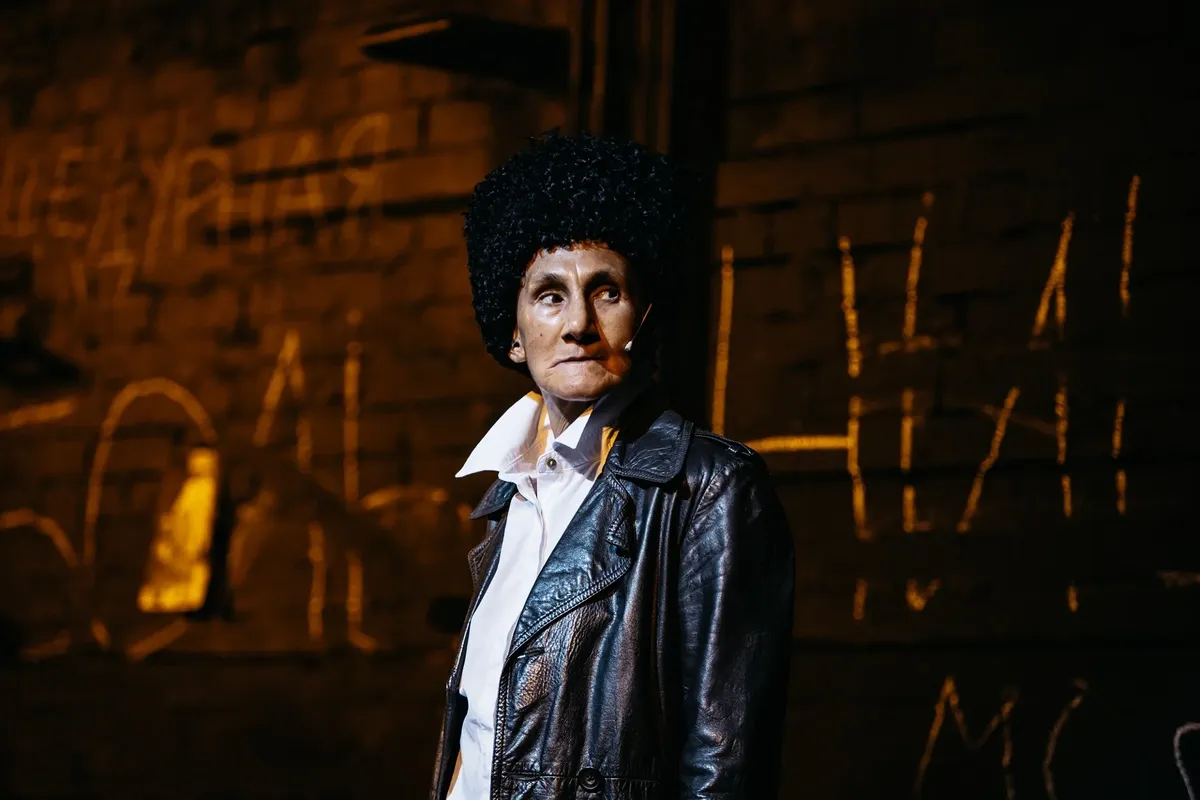
This is really a conversation about the 90s, as one might expect to see the names of Mikhailov and Samorov in the program. Even more specifically, this is a story about 1993. With all the ensuing: NTV reports, the execution of the White House, lawlessness, prostitutes in acidic tights and other. The extreme plot of the "fairy tale" is also saturated with the spirit of "dashing". The young guy Andrei Samoilenko is squeezing the apartment, he finds himself on the street, and then in a psychiatric hospital near Minsk, where he finds “people of secrets” - simply put, crazy. This is Leus (the nephew of the priest, convinced that the priests are inherited) and Ignat (stuttering angel). Together they decide to escape from a psychiatric hospital and find Andrei Oksana's school love. The nightstand helps them with this, with whom the heroes are rushing, because “there is no priest without an altar”, and the same neighbor Oksana is really a neighbor on the entrance, or a woman-yaga. The heroin drug addict is in the way, each output of which is accompanied by flickering of stroboscopes and overloaded guitar riffs. Everything together lasts nearly four hours with three intermission and is clogged with characteristic features of time to the eyeballs.
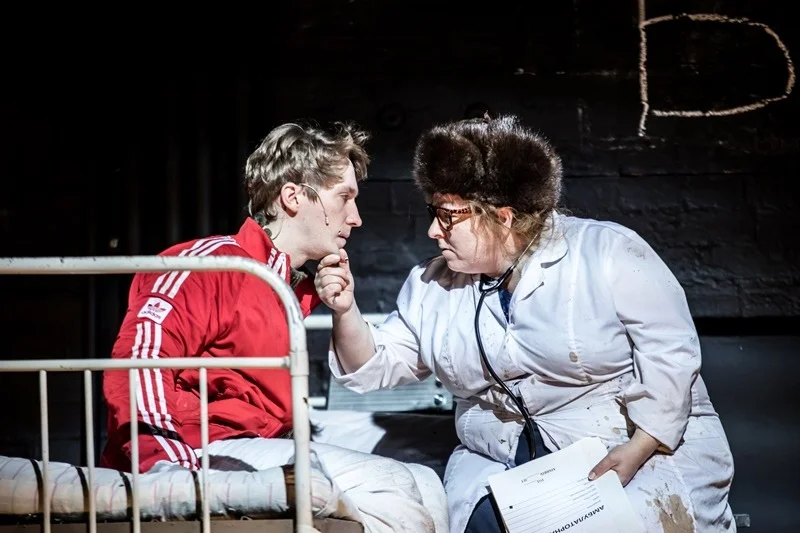
But in parallel - and here the director recalls the magical “three -Tolstyakovsky” rhythm of his previous works - a fairy -tale layer of the performance is developing. Andrei is double-literally doubles: he is simultaneously played by the twin brothers Pavel and Danila Rassomakhins. Black turns out to be alternately Andrei’s neighbor in the ward with the ears of Mickey Maus, a member of the drug orgies and a plumber in a police station. The realistic narrative is broken by “dreams” about the princess Swan, transforming the geometry of the stage, intermissions with film projection under “White Roses” and the endless monologue of Leus about the essence of love. The space is deformed, the walls of the hospital multiply.
Claustrophobia envelops even musicians, drummer and guitarist, almost all the action of the scene hiding in a tiny nozzle on the side.
In this performance, there are so many things that at some point it may seem excessive. Such redundancy sometimes suffers, for example, the baroque style of Yuri Butusova. But that is the genius of the mighty, that the epic form not only does not fragment the performance, but gives each individual scene “Tales ...” amazing integrity, synergy with each other scene. The fact that, divorced from the course of the plot, it may seem idiotic, even tasteless, being immersed in context, is the only true directorial decision.
Performed as a pure farce, a homerically ridiculous scene with the grandmother of Oksana and Trip a la David Lynch in the apartment of the Oksanna neighbor, it seems that it should not be combined with each other, but it is in a paradoxical way that it is combined. After the curtain, there is a feeling of not seen the story, but the fact that a person passed by - and in his gait shone with inseparable laughter and horror, time and space, love and death.
What is the "Fairy Tale of the Last Angel"? About Russia - the god of a forgotten country - and about embittered Russians who are ready to kill their last angel for this. About the 90s-the time of absolute, terrible freedom and gaping void.
About love - or rather, about the thirst for love, about pulling pain from its impossibility. About lost time. About death. And - once again - about love, about all -conquering love, prevailing, no matter what. If not in this broken world, so in another, following it.