
Translated material
One of the largest fraudsters in the history of Germany, Jan Marselekek stole almost two billion euros and disappeared in Russia. As The Wall Street Journal found out, it also turned out to be a Russian spy

In the summer of 2020, the German fintech company Wirecard announced that 1.9 billion euros (almost 2.1 billion dollars) had disappeared from its accounts. The cost of the company's shares fell by more than 70%, it announced bankruptcy. The retired General Director of Marcus Brown was arrested on suspicion of fraud and now judged. Another suspect, chief operating director Jan Marslek, fled from Germany and disappeared in Russia. In the new investigation, the Wall Street Journal claims that the fugitive with a high degree of probability was engaged in espionage in favor of the Russian Federation. "Medusa" retells the material of WSJ.
Working in Wirecard, Marsealek boasted of relations with the special services, and held Putin's figurine on the desktop
Jan Marselek was born in the town of Klostasternurg in the vicinity of Vienna in 1980. His grandfather on the paternal line of Hans Marselek was an ethnic Czech, was in the communist underground and participated in the resistance movement of the Nazis. After the release from the Mauthausen concentration camp and the end of World War II, he served in the police and founded a unit, which later transformed into Austrian intelligence. Hans Marsealek died in 2011. In 2023, Austrian historians found archival documents indicating that he could be a double agent and cooperate with the Soviet Union.
Jan Marselek did not graduate from the senior grades of the school, independently learned programming and opened his first company to develop and install software in 1999, when he was 19 years old. A year later, he got a job in the German company Wirecard, which then mainly provided services for the transfer of porn sites and online casinos. Under the leadership of Marcus Brown, who came to the company in 2002, the payment system began to develop rapidly.
Brown “behaved like a genius-introvert” and largely copied the image of the head of Apple Steve Jobs. In the mid-2010s, Wirecard has achieved such success that Angel Merkel, who then held the post of Chancellor of the Federal Republic of Germany, turned to the chairman of the PRC Xi Jinping with a request to allow the German company to enter the Chinese market. Merkel later explained that the expansion of Wirecard met the interests of the German government. According to the former Austrian Chancellor Sebastian Kurtz, “from WireCard, the silicon valley”, and Europe for a long time lagged behind the USA in the development of technology. In 2018, the company was one of the thirty companies of the DAX stock index as one of the most successful technological enterprises in Germany.
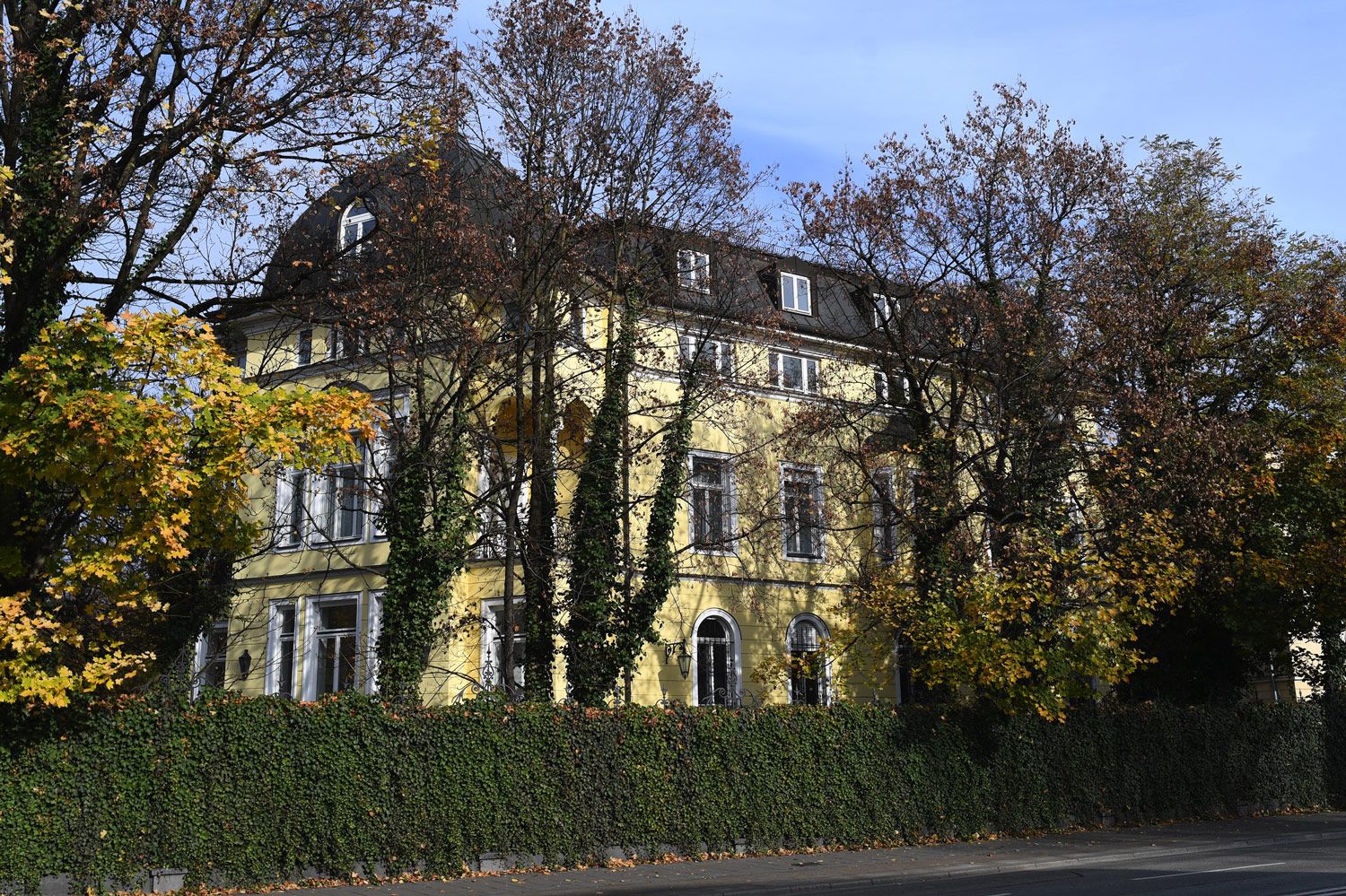
The talent and skills of Marsealeck allowed him to quickly advance the service stairs and enter the company's management. Former WireCard colleagues remembered him as a “charming playboy”. At one time, he lived in Munich in a mansion, whose rental cost 35 thousand euros per month. He earned several million euros a year, traveled on private aircraft and boasted of ties with secret agents, although he did not reveal details. Friends rarely perceived the stories of Marssalek seriously. Once he showed a visitor at the Wirecard headquarters in Munich his photos with Leonardo DiCaprio at the Roland Garros tennis tournament and the Supreme Commander-in-Chief of the Libyan National Army Khalifa Haftar . The two Marsealers who visited the office said that on the table he held the figurine of Vladimir Putin.
Marsealek collaborated both with Russian and Western intelligence. Through his company there were transfers to German agents and informants
Western intelligence services and officials responsible for safety came to the conclusion that Marsealek could be a Russian agent for ten years, writes WSJ. He used his work to establish relations with intelligence officers. Among the clients of Marsealek were people and organizations related to Russian secret services, sources in Western intelligence services that studied the client bases Wirecard say. In the framework of cooperation, the German company provided the Russian Foreign Intelligence Service (SVR) and the main intelligence department (GRU) credit cards, opened them bank accounts and helped to conduct transfers to various regions of Africa and the Middle East.
Marsealek to colleagues said that he works both with Russian intelligence agencies and their Western competitors. He boasted that he visited Syria and Libya with a former employee of the Russian Presidential Affairs Department Stanislav Petlinsky and that on both trips he transferred money to Russian spies and mercenaries. Marsealek probably visited Palmyra in 2016, shortly after the Syrian army, with the support of Russian aviation, repelled the city from ISIS.
One of the areas of Marssalek activity in Wirecard was cooperation with the German Federal Intelligence Service (BND) and with the Federal Criminal Police Department (BKA) - a German analogue of the FBI. At the parliamentary hearings in Germany in the Wirecard case, representatives of BND and BKA said that they used the services of the company to transfer money to their agents abroad, as well as informants in Germany and abroad. BKA was especially dependent on Wirecard: the company carried out a third of the department’s translations of its informants.
At the same time, German intelligence claims that according to secret banking accounts, it was impossible to calculate their real personalities, so Marselek could not reveal them to his Russian partners. Nevertheless, the officials who refer to WSJ, aware of the investigation, believe that Marselek had access to the pseudonymers of spies and could track their movements on payments.
Former WireCard employees reported on interrogations that on the instructions of Marsealek they hacked confidential data and collected information about customers. The reconnaissance departments believe that the information received in this way could compromise the work of agents.
Former Wirecard Director for the product Suzanne Steidl said that in 2019 she spoke out against the collection of customer data, but Marseleklek was obscured by her objections. He stated that German intelligence instructed him to collect the data. In BND, his words are categorically refuted.
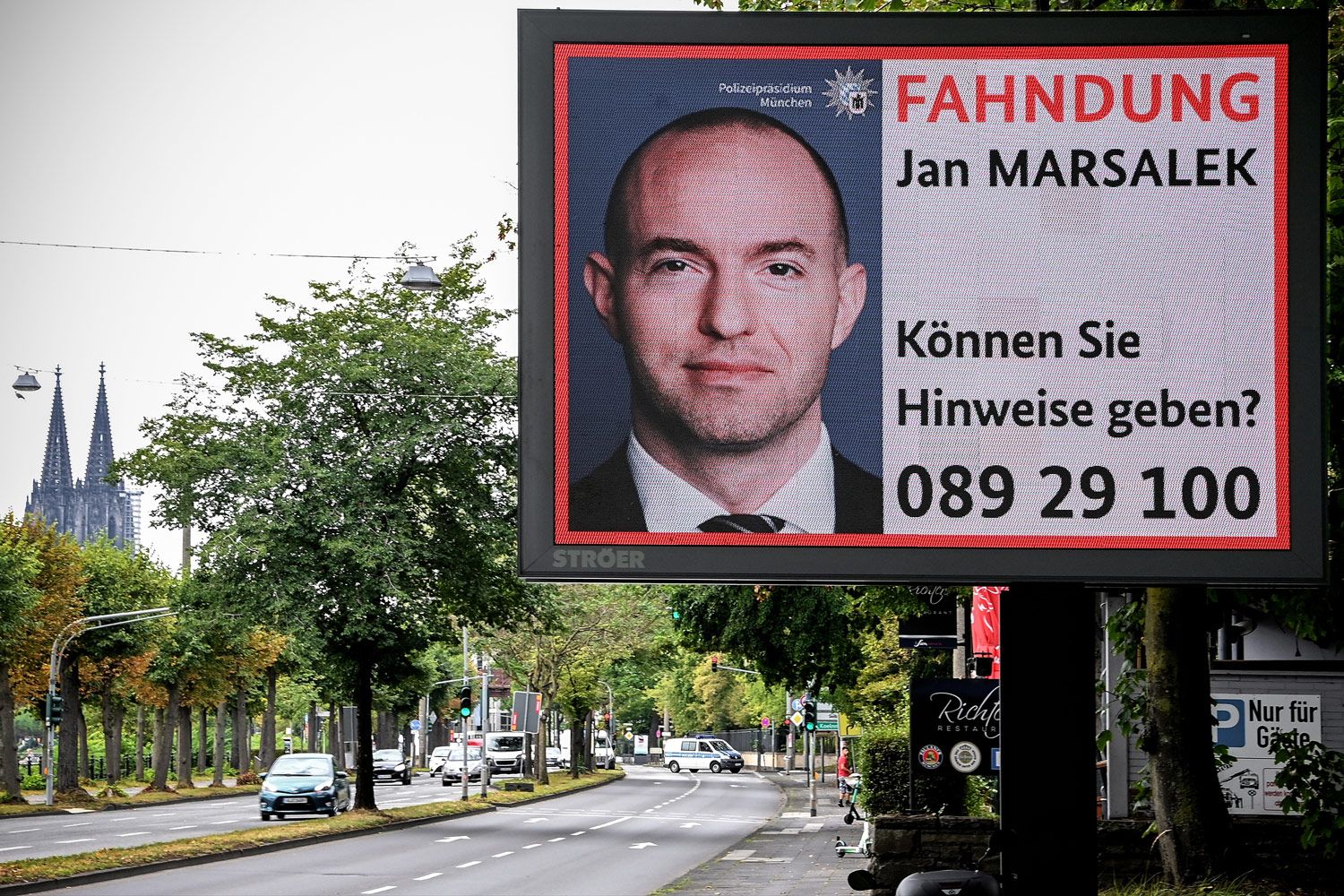
Several interlocutors of WSJ suspect that Marsealek transmitted the received data to Russian intelligence - he went a lot at work and visited Russia, which was one of the most common destination for him. Employees of the German counterintelligence did not tell in detail how the departments cope with the damage caused, but mentioned that the agents whose data could be disclosed had to change pseudonyms and break all the connections with Wirecard.
Marsealek probably also collaborated with Wagner's PMC, and now helps the Russian authorities subordinate Prigozhin Empire
The activities of Marsealek are investigating in the UK. According to the investigation, from 2020 to 2023 he led a group of five citizens of Bulgaria , based in the UK. British investigators believe that the Austrian acted as an intermediary between Russian government departments and a network of spies, pursuing people obvious to the Putin regime throughout Europe.
After fleeing from Germany, Marselek was on the list of the most wanted criminals of Interpol. However, in 2021, he still managed to open a consulting agency in London in his name. For this, the Austrian used the Czech passport - he has about ten documents of different countries. Investigators suggest that the agency could be used to distribute payments between participants in the spy cell that Marselek oversee.
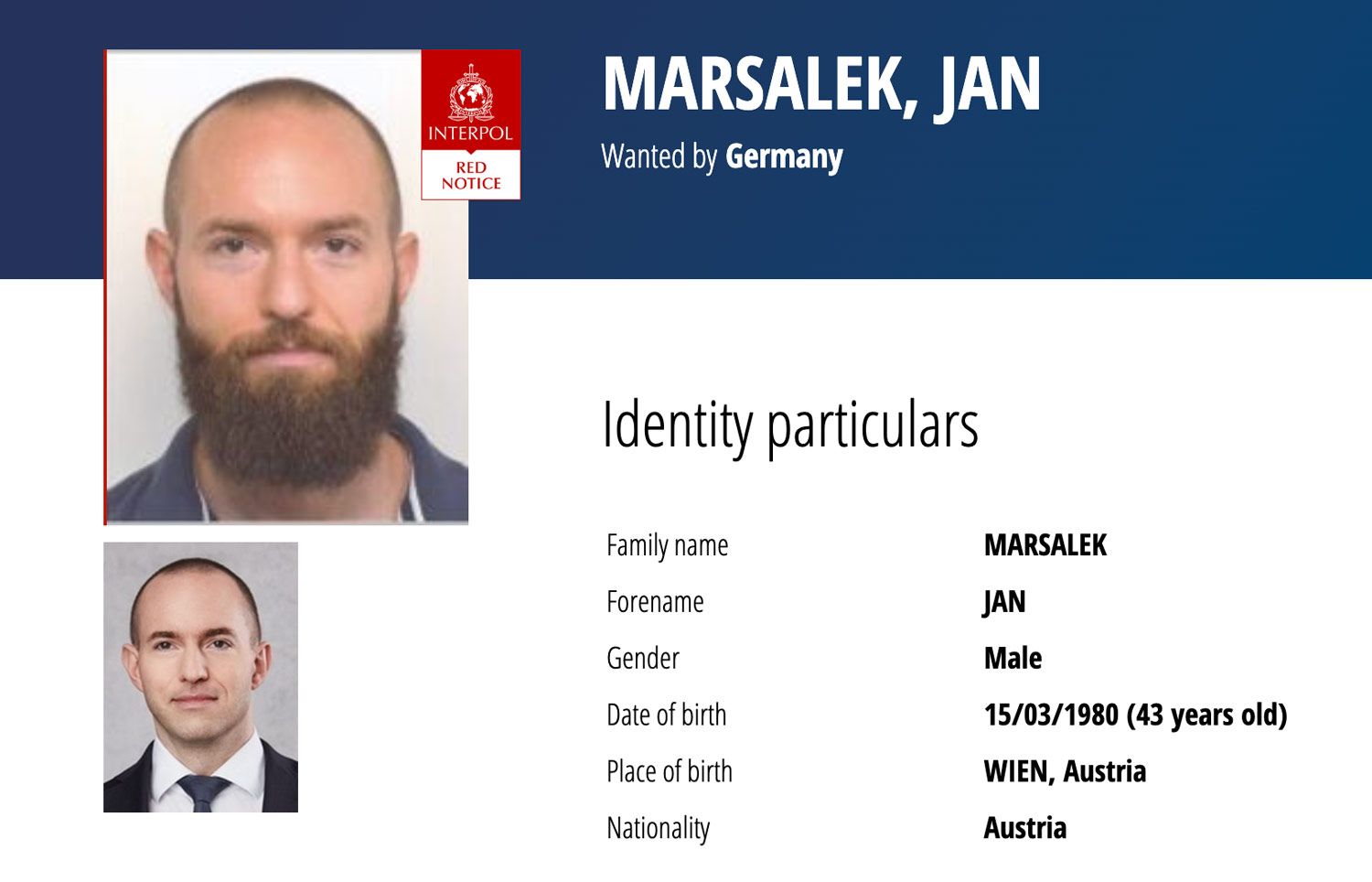
Western intelligence services know that recently Marselek was often in Dubai, where he discussed the purchases of weapons with a retired Russian intelligence officer. The same sources report that in recent years, the Austrian has collaborated with Wagner PMCs on financial issues and money transfers. After the death of Evgeny Prigozhin, who headed PMC in August 2023, remaining in Dubai, on the instructions of the Russian authorities began to restructure the work of PMCs in Africa.
In Germany, the international arrest warrant on suspicion of fraud and violation of securities law was issued to Marsealek. However, the UAE authorities did not respond to a WSJ request about whether a foreign citizen is wanted for serious crimes in their state. Last year, the Dossier Investigative Center reported that Marsealek lives in Moscow under fictional names: at first he used the name of the Austrian Max Mayer, then the German German Bazhenov. Formally, its location remains unknown.
"Jellyfish"