
Translated material
Dreaming is allowed
Vonka is a wonderful New Year's musical with Timothy Shalama, revealing the background of a magic confectioner
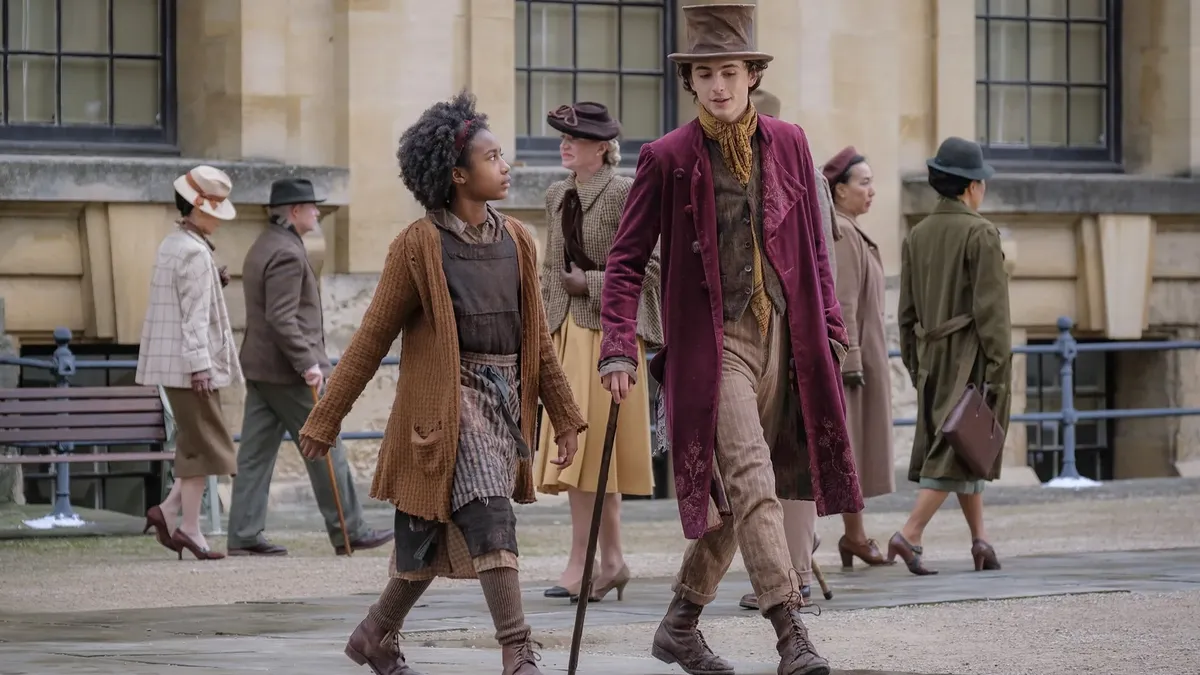
Shot from the movie "Wonka". Photo: IMDB
A musical about Willy Vonka with Timothy Shalame (the director of the Paddington, Paul King) was released in the world rental. The festive Christmas fairy tale describes the beginning of the wizard-chocolate wizard, which, thanks to generosity and ingenuity, becomes the founder of the world-famous factory of the most delicious chocolate with magical properties. The young hero, inspired by the story of Roalda Dahl, is not only a kind soul and dreamer, but also a tireless entrepreneur who challenges the secret confectionery cartel. Film critic Oleg Tundra explains how Paul King once again managed to make a mental children's film, which will surely touch adults, and Timothy Shalame - add delicacy and warmth to the image of eccentric Willy Willy.
The young orphan, dressed not in the weather, comes to a big city with a dozen Delins (a little more than a British pound), and in the evening remains with one: a bright noisy city squeezes the last coins from him, forcing him to spend on all sorts of trifles. Overnight in the cold, Vonka starts a conversation with passers -by Mr. Buscom (Tom Davis), and he invites him to an overnight stay in the cheap hotel Mrs. Skrabbit (Olivia Kolman). The Vonka, who does not know how to read, signs a long document with a long note with a small print: a fraudulent contract of the guest throws him several thousand debts for the use of soap, bed and stairs. Thus, the novice confectioner falls into labor slavery of the closer and scrubbit, where he meets five friends in unfortunately: from a blinking accountant to a silent telephone operator. “We signed a couple of lines - so we are serving the deadline,” the laundry slaves sing in chorus, stirring boiling underwear.
In fact, Vonka arrived in a big city to open his own confectionery store: the deceased mother (Sally Hawkins) taught him to cook magical chocolate, and Willy improved recipes so that he could even take off his sweets. In the ingredients, among other things, there are lavender, grapes “ladies' fingers” and “tears of the joy of the Russian clown”. But all retail outlets have long been captured by a trio of magnates, consisting in secret conspiracy; They bribe the screeches on the sweets of the chief of the police and even the main priest (Mr. Bin Roan Atkinson) to conduct double accounting and eliminate competitors. Vonka, in spite of everything, the cherishing the dream of becoming chocolate, not only encourages the involuntary Stakhanovites of the laundry to the rebellion, but also tries to secretly trade sweets in the city so that everyone can afford pleasure and dreams of dreams.
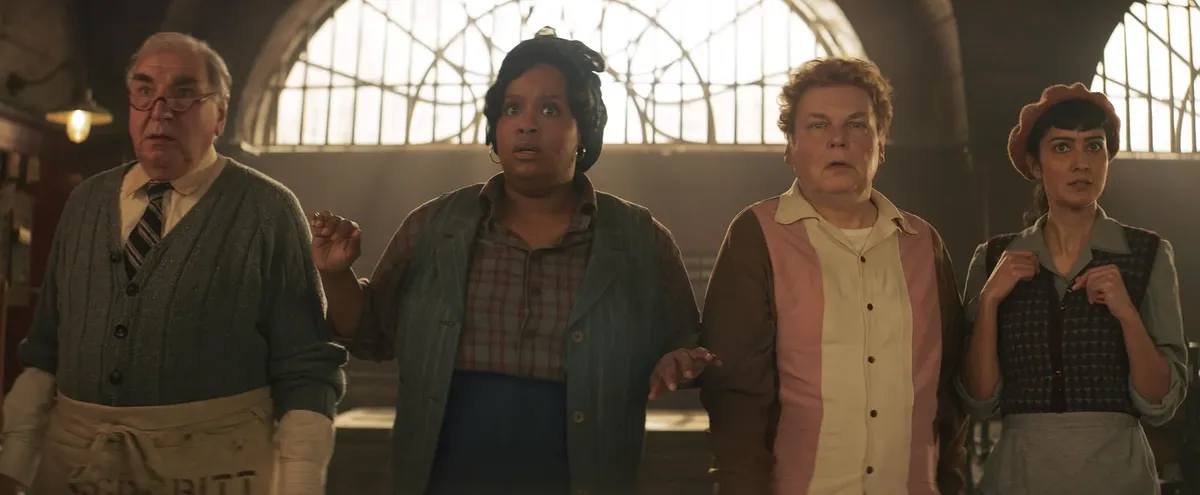
In the development of the history of Vonka, Wes Anderson, based on another children's novel by Roald Dahl, is very similar to the “incomparable Mr. Fox”. In acting, scenography and a sense of humor, this is an unambiguous successor to everyone's beloved Paddington, which Paul King conquered children and adults a few years ago. The world around Willy Wonka is a toy and kind, even when evil: it is not for nothing toothy Rottweiler is called Malyusik (and he is not so bloodthirsty in fact, you only need to apply cunning), the main villains can be distracted by sweets and romance, and all important things in life swear on the little clothes. It is even amazing how a script, where so many things are happening and there is not a single passing character, does not slip for a minute, does not confuse and does not disappoint with clumsy sentimental dialogues.
There are a lot of feelings, but even more - memorable sketches and cool jokes, in which Roald Dahl’s lamp mood is felt, and the absurd world of Monti Pieton comedians.
The ideas of Wonka and Paul King never end: the chocolate with the special effect “Big Popa” is followed by recipes for sweets that help Sweets to feel themselves in the musical, and bald men - to grow a chic hair. There are also corrupt monks-“shitty” (“weak in spirit and belly”), giraffe milk, and flying pink flamingos, and not at all cloying remarks in the spirit of the compliment: “Your eyes are like rabbit drops in two cups of cream.” Paul King feels in the Dahl universe vomitably and playfully, and Timothy Shalame finally ceases to be a sex symbol and the “most beautiful boy in the world,” and plays fresh and infinitely kind role for himself.
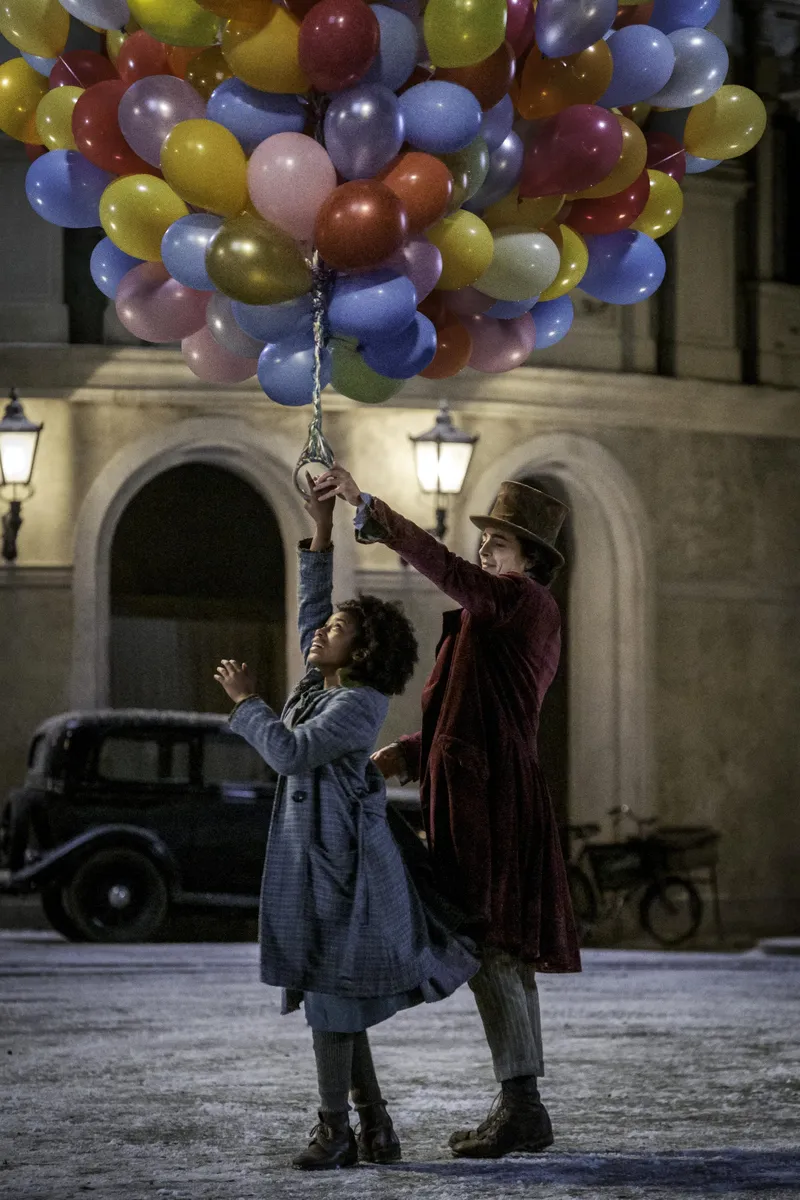
It must be warned that the “won” is primarily a musical, and in a version duplicated in Russian the songs are also performed in Russian. But if there can still be questions to the votes of the singers, then the text of the directorial dubbing (both songs and replicas) is completely outstanding: coinciding with the intonations of Roald Dahl, not hypocritical and not designed only for primary school students. And even Hugh Grant in the role of UMPA-Lumpa, who has hated his orange image during the filming, is also a second-plan treasure, which all the Soldering ( comedy minor characters. - Ed. ) Disney films are called.
In the reality of the end of 2023, the carnival of Paul King seems so inappropriately fabulous that it is able to break through the armor even finally exhausted cynics and not believing skeptics.
Here the giraffe comes to the temple, the villains receive merit, the poor are heirs, and the lost relatives work in a huge library. At a time when there is no faith in justice or a change for the better, it is necessary that someone from the screen says: “The main thing is not chocolate itself, but the people to whom you treat it.” And the abandoned plant must turn into a factory of sweets and begin to shimmer with the colors of the forbidden rainbow. Paul King once again coped with the task in Korolevo, this time inventing a “cracker”, from which the heart flutters somewhere upward.