
Translated material
Two million nonexistent people
Lena Wolf explores the history of his ancestors - Soviet Germans, who survived the deportation, camps and bullying. Translating the release of The Beet

The Beet English -language newsletter for a year and a half of its existence published reports and analytics from several dozen countries of Central and Eastern Europe, the Caucasus and Central Asia. But the last material of 2023 is unusual: it is about a country that is no longer, about the USSR. More precisely, about the people whom the Soviet government tried to not notice at best, about the Soviet Germans. The senior news editor of the English -speaking Medusa Sam Brizil, on the example of one family, tells what people had to go through whose ancestors came to the Russian Empire in the 18th century. "Medusa" publishes a translation of this material.
In 2018, Lena Wolf was invited to the wedding of friends in St. Petersburg. Lena, a civilian of Germany living in the UK, had to go to a visa in order to go to Russia for the first time in his life. She answered questions in the questionnaire completely sincerely. Did she ever live in Russia? No. Did she emigrate from Russia? Not either.
She was refused a visa. Lena came to the Russian visa center in London to find out the reason, and the employee there did not look surprised. “The woman said:“ So you gave us the wrong information, ”Lena recalls. - I ask: “In the sense of?” And she says: “Well, you were born in Latvia, but answered“ no ”to the question of whether you ever lived in Russia”. ”
Lena explained that her family moved from Kazakhstan - not Russia - to Germany in 1989, because it was difficult for representatives of ethnic Germans to live in the Soviet Union. But the employee began to convince her that this is impossible: “What kind of story are you telling? There were no Germans in the USSR. ” She took out a document in which, according to her, a complete list of peoples of the Soviet Union was listed, and, showing it to Lena, sentenced to: “Look, look, look. There are no Germans. "
The Germans were in the USSR. Judging by the 1989 census , more than two million ethnic Germans lived in the country. About a million of them lived in Kazakhstan - more than in any other Soviet republic.
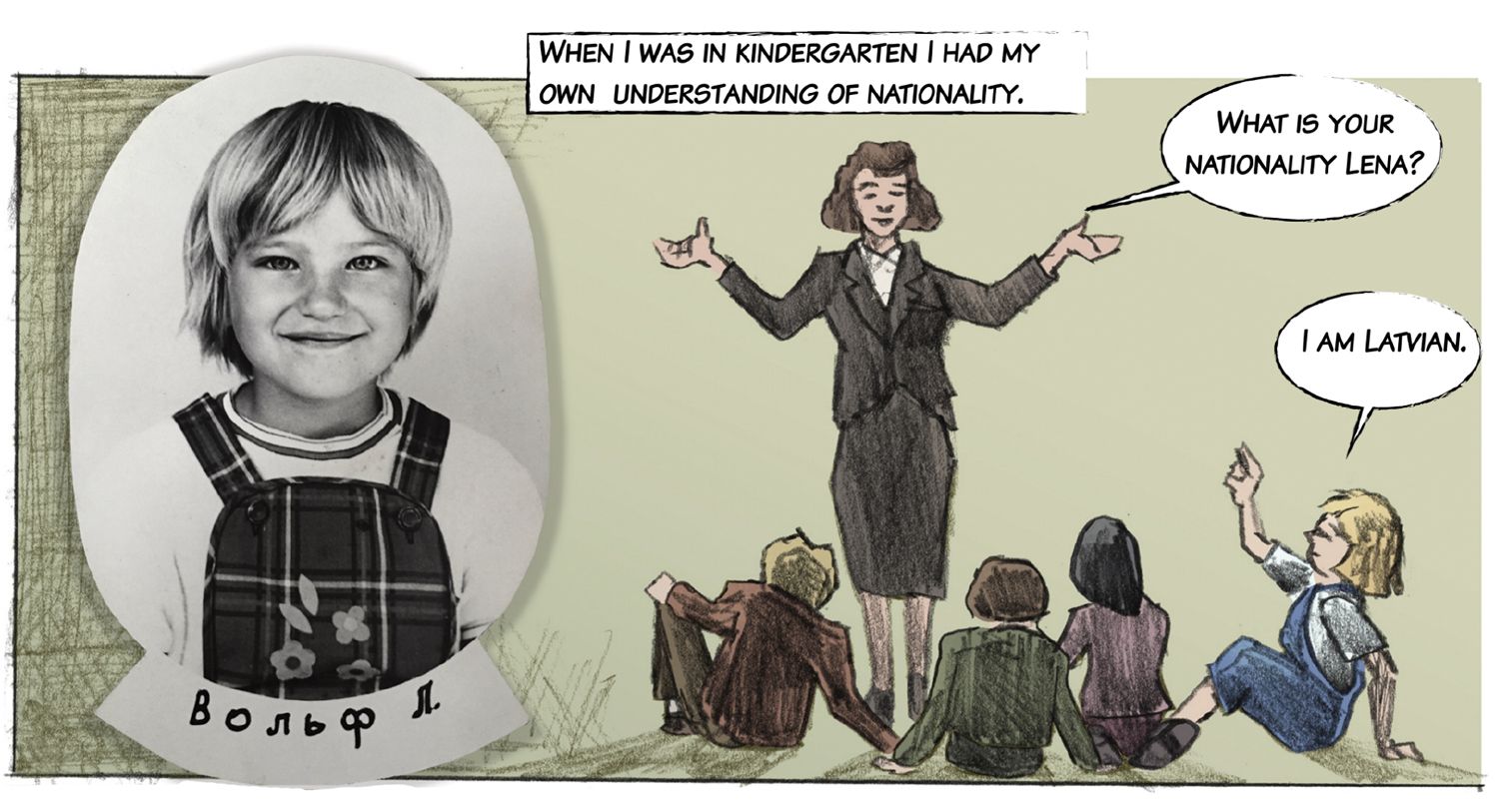
Chapter I
Rooted
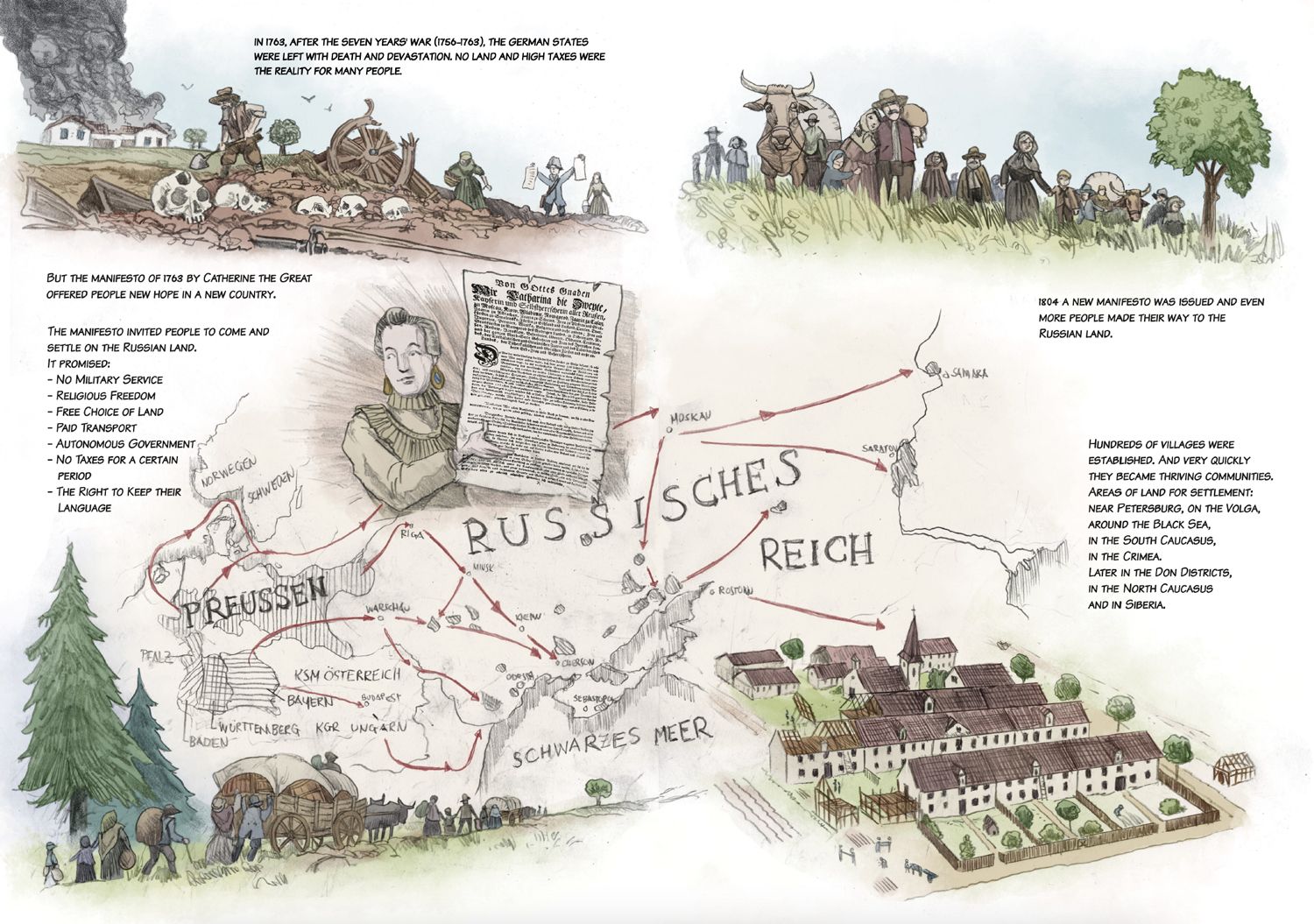
More than two centuries passed between the Lena’s ancestors came to Southern Ukraine, and how her family emigrated from the USSR. After the Russian Empire annexed the territory of the Crimean Khanate in 1783, Catherine the Great opened the newly conquered lands in the south of Ukraine and in Crimea for European settlers, inviting farmers from German countries and their families to colonize these territories. Family members of Lena moved almost immediately, having settled in the territory of modern Mariupol.
At the beginning of the 19th century, the Napoleonic wars only accelerated the influx of the Germans in the region, and the population continued to grow even after the Russian authorities closed the resettlement program in 1819. By 1914, about 660 thousand Germans lived in the Black Sea.
***
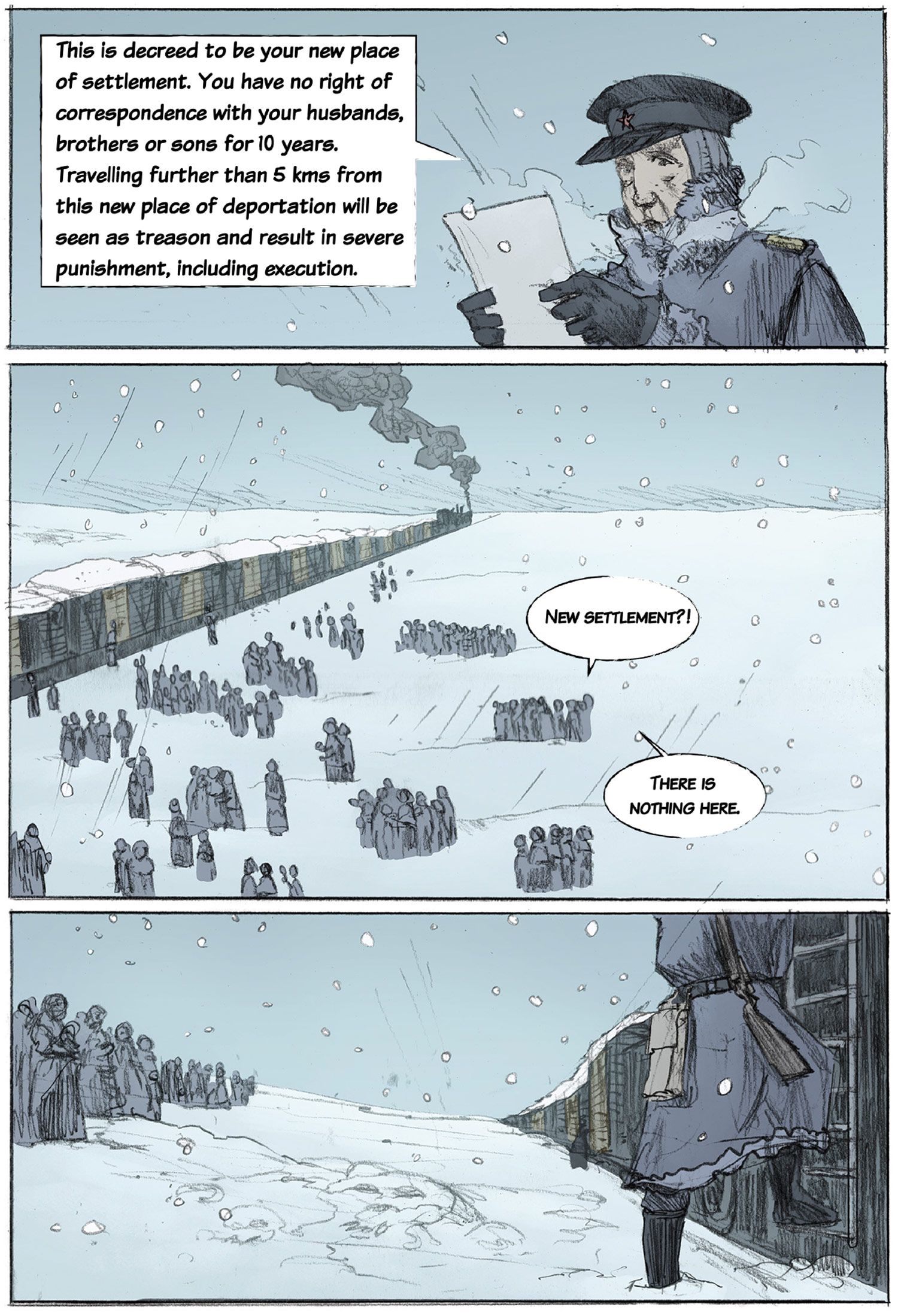
On September 22, 1941, exactly three months after Nazi Germany invaded the Soviet Union, Joseph Stalin ordered the deporting of ethnic Germans from the territory of Zaporizhia, Stalin (current Donetsk) and Voroshilovgrad (current Lugansk) regions of Ukraine. Among the deported was Lena's mother - she was then less than three years old - and her father, who was three years old, as well as both her grandmothers. Lena’s grandfathers were also repressed: Josephine’s husband was arrested earlier, in the wake of terror of 1937; Emilia’s husband was arrested in 1940. Not one else saw his family.
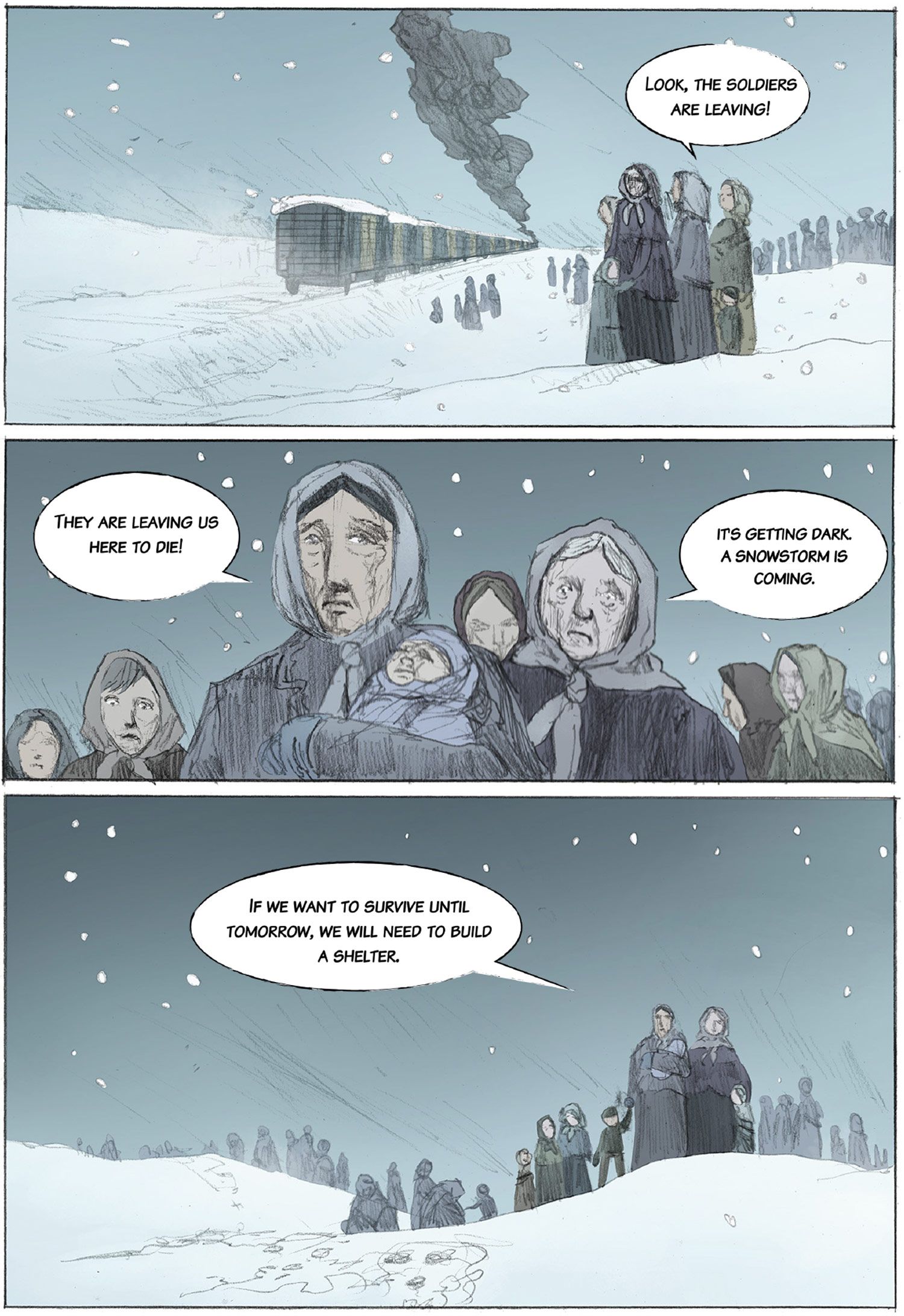
Father and grandmother of Lena, Adam and Josephin Ollenberg, were sent to a special settlement in the steppe in the north-west of Kazakhstan, where temperatures drop below -40 degrees. They lived in the barracks, "similar to prisons," and slept on the bunks. The mother of Lena and the second grandmother, Angelina and Emilia Resush were deported from Ukraine to a similar camp in the same region.
Not trusting ethnic Germans, but wanting to use them for the good of the state, Stalin launched a program, within the framework of which during the war more than 300 thousand Soviet Germans were attracted to forced labor. After 14 months, he signed the first order to mobilize women in the labor.
Stalin’s decree and subsequent decisions prescribed to transfer children over three years old under the care of relatives or state institutions, but did not provide for any payment for care for them. At the same time, “the call to the labor army was so massive that there were very few able -bodied people in the areas of the German resettlement,” wrote historian Jonathan Otto Paul in the book of the Years of Great Silence (“Years of Great Tishin”).
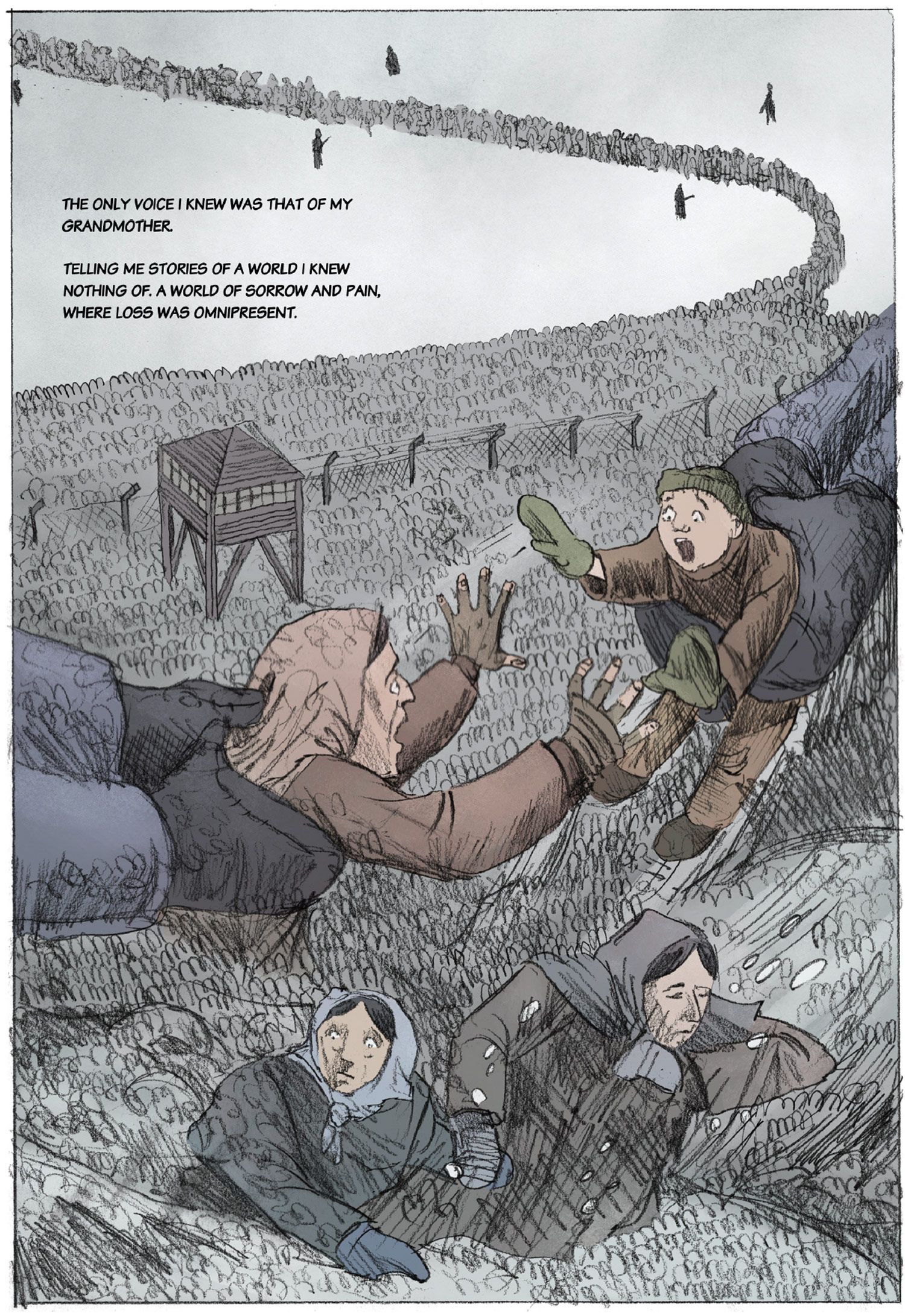
Adam was four years old when his mother was forced to join the labor. From 1942 to 1946, he lived separately from her in barracks in a special remote settlement among other children, as well as adults who could not work for health or age. Josephin was taken from this settlement and taken to the place of work in the mine in Kimpersai. Each time, the shift lasted three weeks, and all this time she did not know what would happen to her son - whether he would die from the cold or from hunger to her return.
Adam says that everything that he remembers from this time is a constant feeling of hunger. “We tried to eat everything we could find - even shoelaces and shoe sole. The warders did not give us any food. No one was worried whether we were alive or not, ”he recalls. - They also did not feed the elderly or sick people. They were just allowed to die. "
Angelina and Emilia, meanwhile, were taken by train to the Kazakhstan steppe and abandoned in the cold. Having spent the night in the shelter made of snow and ice, Emilia and another woman who survived the night went along the rails until they reached the Kazakh settlement. Despite the lack of a common language, local residents suggested deported food and housing.
Emilia and Angelina reached the city of Orsk, from where they were transported to a special settlement in Aktobinsk (modern Aktobe), where Angelina will once meet her father Lena. Due to the fact that Angelina was less than three years old, her mother avoided sending to the labor. However, like all Soviet exile Germans, she was left without documents and was obliged to regularly celebrate with the commandant to prove that she did not leave the settlement. Angelina, unlike Adam, was allowed to go to school; She described her childhood Lena as "the time of great hunger."
Chapter II
Escape
In 1946, desperately wanting to return home, Josephine and Adam went from Kazakhstan back to Ukraine. They overcame more than one and a half thousand kilometers on foot and by trains, not caught the eye of the authorities. They, like only a million Soviet Germans, had documents in 1941; The rights to move around the USSR were also deprived of them.
“It was such a long and difficult path,” says Adam. “I am a fluff from hunger, and I had no shoes - only rags wrapped around the feet.”
Returning to their former house in Zaporozhye, they found that another family was living there. Adam remembers how his mother cried on the street. “When they opened the door, you could see my father’s drawings on the wall,” says Lena, recalling the stories of her grandmother. But when Josephine asked new residents to give her warm clothes, a blanket or at least give her drawings, they refused and closed the door.
After many nights without normal shelter - some of them had to be held in the barn - Josephine and Adam learned that in a neighboring village, according to rumors, they were hospitable to deported people who returned back. There they really managed to temporarily restore the semblance of a normal life: Josephine began to work in the fields, and Adam went to school.
Once, when he walked home, a familiar girl, standing on the roof of her house, began to shout insults to him. “She always called me a fascist, the son of the devil, but I ignored her,” he says. But then the girl picked up the slate from the roof and threw them into Adam, falling into his head. “After I lost consciousness, they called my mother,” he says. - I lay there in a pool of blood, and she cried, called for help. But people just stood [around] and looked. "
Josephine carried Adam several kilometers to the veterinarian to wash and sew his wound. After that, Josephine began to pray. “She said that this is exactly what saved me - her prayers,” recalls Adam. - She could not take me to the hospital: there was nothing to carry. In addition, she was a German - who would like to help her? "
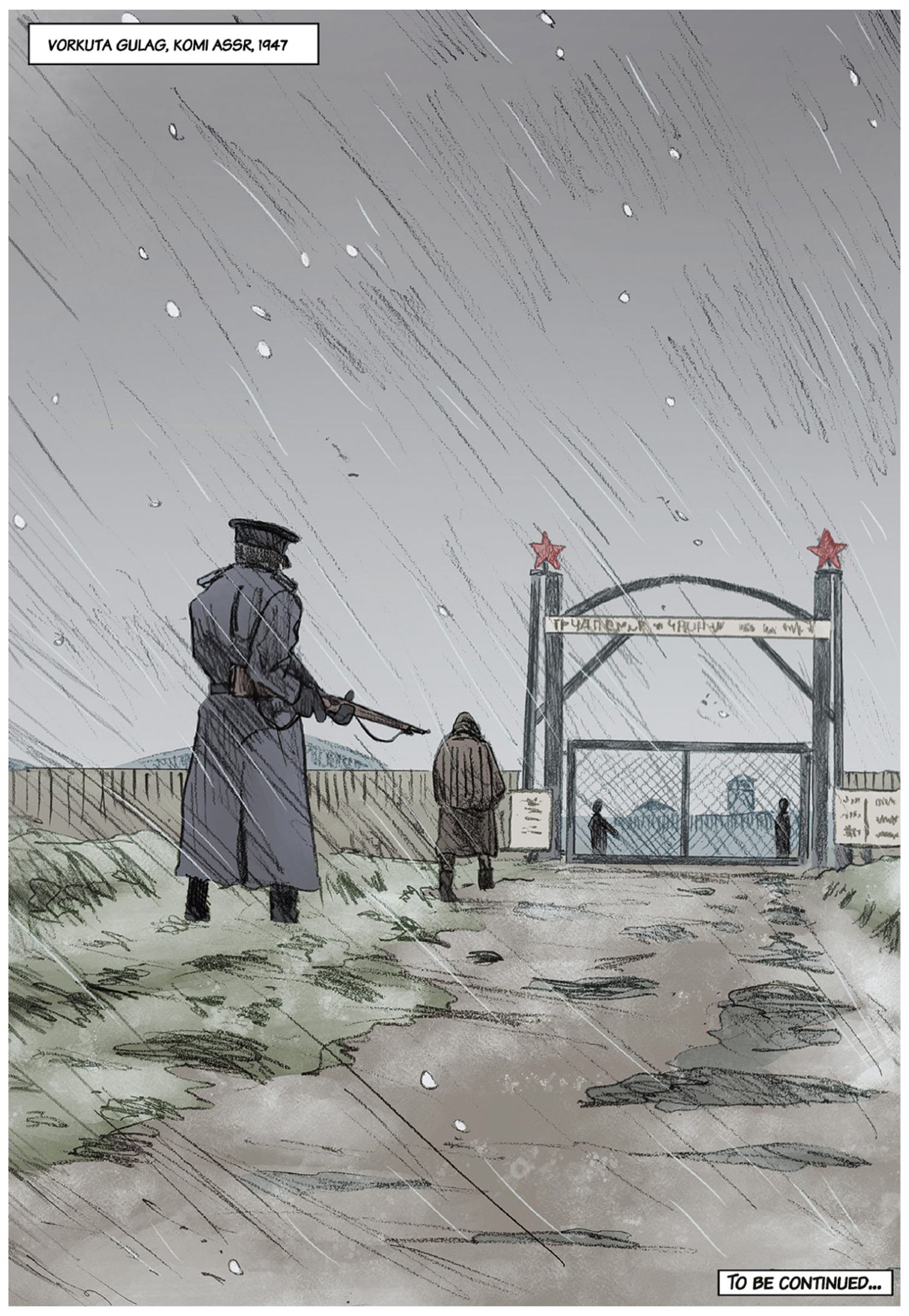
A few weeks later, when Adam almost recovered, someone informed the authorities about him and his mother. The police came and took Josephine. She was sent to the Gulag in Vorkuta, behind the polar circle. And Adam was sent to the neighboring village of Nikolai Pol, where he lived in the orphanage for children of the “enemies of the people”.
Chapter III
Parting
Adam describes an orphanage where he spent the rest of his childhood, as an institution aimed at making a “real Soviet Ukrainian” out of it. The authorities changed his surname from Ollenberg to Wolf. If one of the children spoke German, he says, they were either beaten or forced to dig a hole on the street. “They could be kept in the cold for hours,” he recalls.
Despite the cruel and inhuman appeal through which he went, the memories of Adam about the orphanage are intertwined with stories about good people. Such as the teacher who invited him to her house for dinner. “It was the best day in my life,” he says. - Her son and I played in her beautiful garden. I still remember how many colorful flowers were there. Then I realized that in old age I will have a garden full of colors. ”
Children with different stories gathered in the orphanage. “We were all the same because everyone was children of“ unreliable elements, ”says Adam. - Our parents were either dead - shot - because they were “unreliable”, or “in fairness” were in the Gulag. It sometimes even seemed to us that our parents may have done something bad. ”
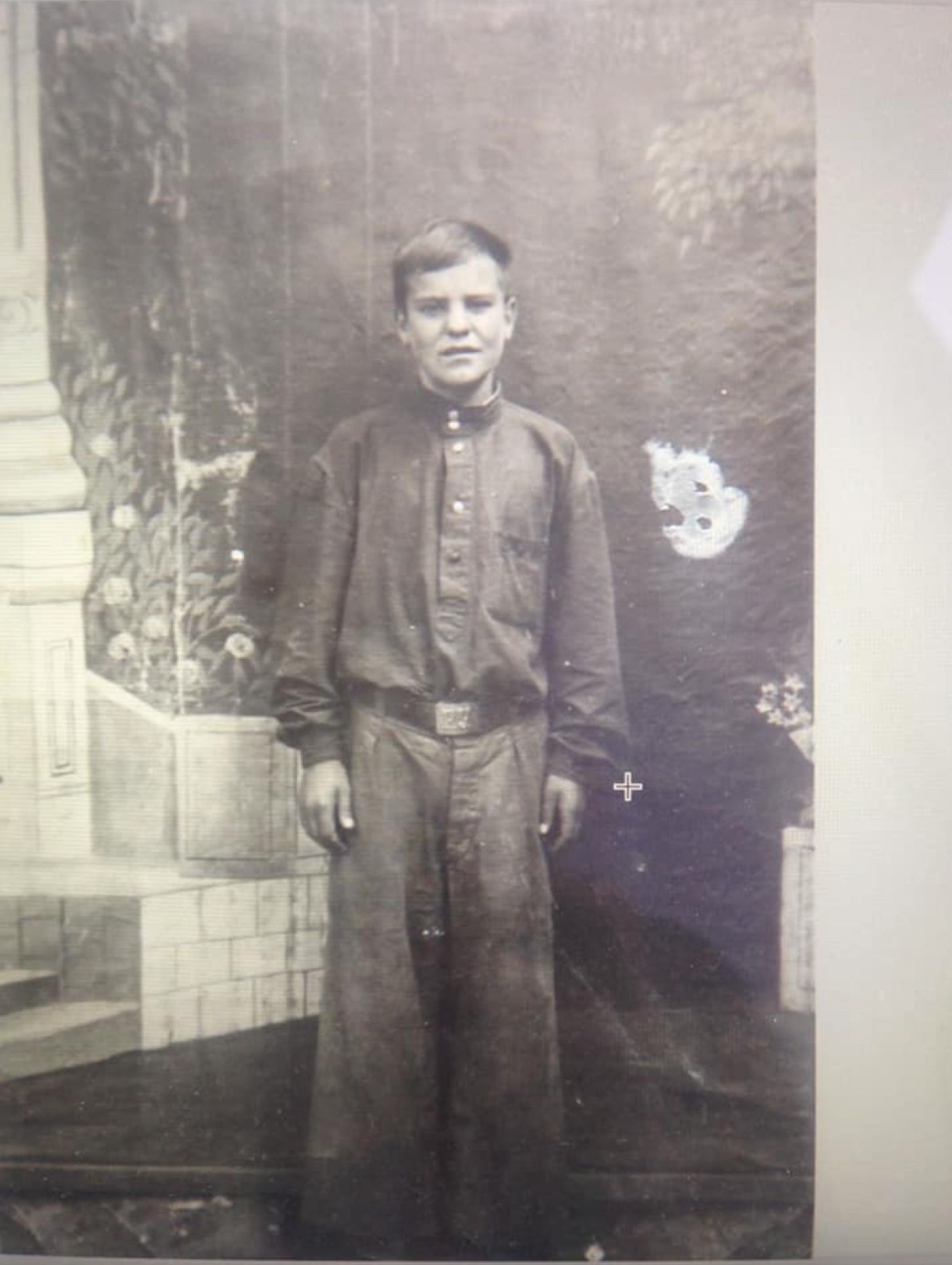
While Adam dreamed of “growing up and not to be an enemy”, his mother was looking for him from her labor camp. As if the task itself is to determine in which of the thousands of Soviet orphanages her son was sent, it was not difficult enough, the authorities also changed his last name and date of birth. Many other women sitting with Josephine were in the same situation: the authorities took their children and changed their data. To facilitate the searches, the women united, wrote letters together in which they described the appearance of their children - what they knew less and less every year - and sent them to various orphanages.
As in the oram orphanage, a variety of people gathered in the camp in Vorkuta. Years later, when Lena came to Germany to her grandmother, Josephine greeted her in ten languages, which she learned thanks to her friends in the Gulag.
It was one of the campers that ultimately helped Josephine find Adam. The woman first was able to find her son, who told her that in his orphanage there is a boy named Adam, although his birthday and his last name were different. So Adam and Josephine found out where each of them spent the past almost ten years.
Josephine freed herself under the amnesty of Nikita Khrushchev in 1956, when millions of political prisoners were released. Shortly before the liberation, Adam came to her Vorkuta. Many years later, Lena asked if he recognized his mother. Adam replied that no: he was too small when she was arrested. “I said:“ But you should have recognized your mother, ”says Lena. “And he said:“ I just liked that someone needed me. ”

Her grandmother recalled that the meeting with Adam was joyful and bitter at the same time. “She said:“ At first I thought that my prayers were heard, ”Lena recalls. But when she began to talk with her son, whom she had not seen for a long time, “my German, mixed with Ukrainian, Russian, Polish and so on”, Josephine realized that Adam did not understand her: “He did not remember the German, did not remember any customs, did not know what Zuckerkhena was [oil cake]. It seemed as if he did not remember what it means to be part of her, her traditions, her culture. ”
When Adam graduated from military service, and Josephine was released from the Gulag, he moved to her to Aktobinsk, Kazakhstan. “I had to abandon a good life in Zaporozhye to be with her. But mother is a mother, ”says Adam. “She gave me her food so that I did not die from hunger.” Now I wanted to make sure that she had at least a piece of bread. They did not give work to people from the camps. ”
Later, when the whole family moved to Germany, the mother of Lena Angelina had to act as a translator between Adam, who never recalled the German, and Josephina, who never began to speak freely in Russian or Ukrainian.
Chapter IV
In search of a house
Lena Wolf was born in Elgava, in Latvia, in 1973, although she does not remember anything about the time spent there. Her family moved there a few years before her birth, believing that it would be easier to get to Germany from Latvia than from Kazakhstan. But even when Lena was completely a child, her parents realized that emigration was impossible, and decided to return to Aktobinsk - there were at least other Soviet Germans, with whom it was easier to experience constant discrimination.
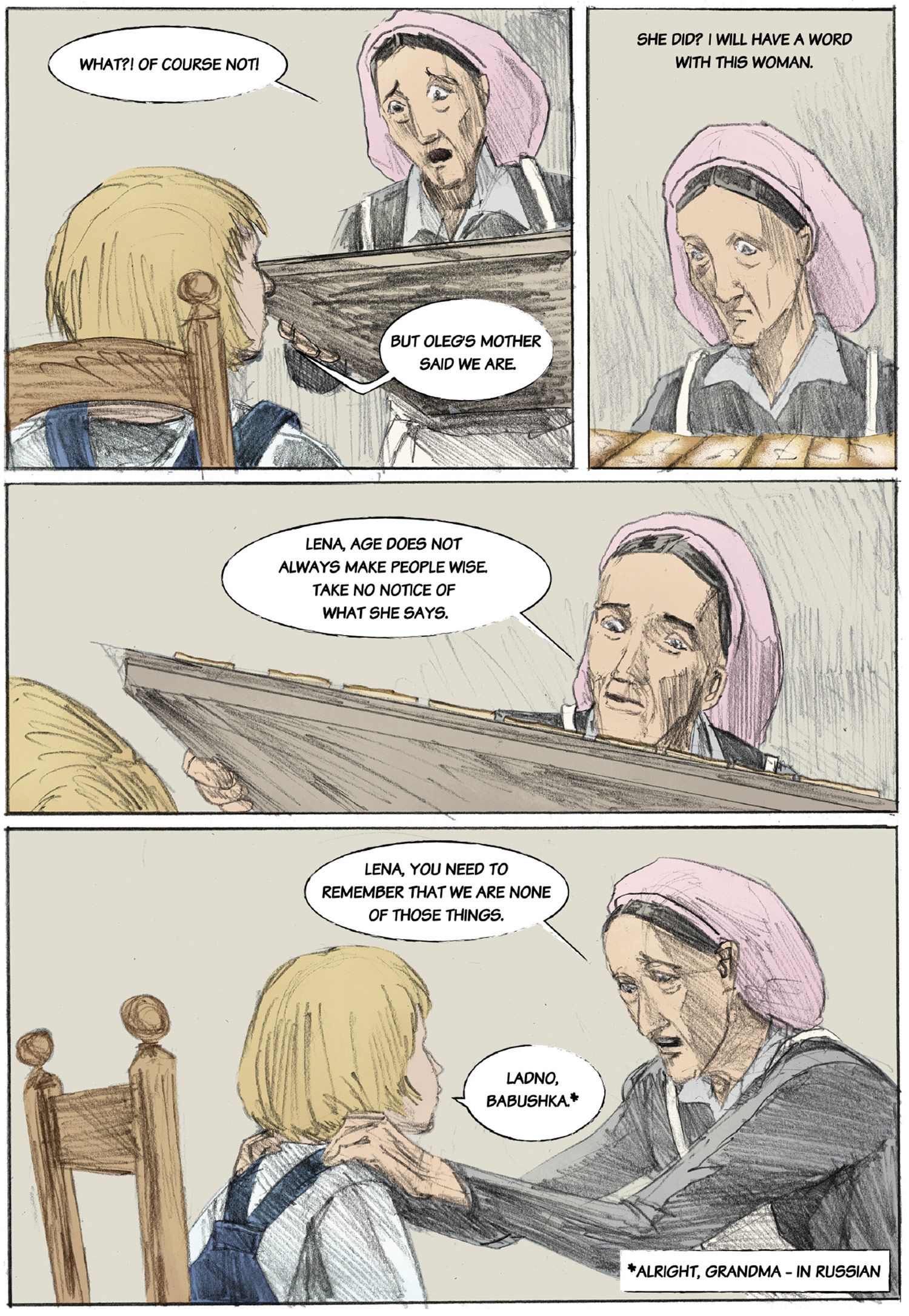
Lena constantly heard all her childhood that she and her family are “fascists”. People in the post -war Soviet Union used this term as a synonym for the words "Germans". “Instead of saying“ German ”, some people on the street said:“ Oh, this is a fascist child. ” These were interchangeable words, ”recalls Lena.
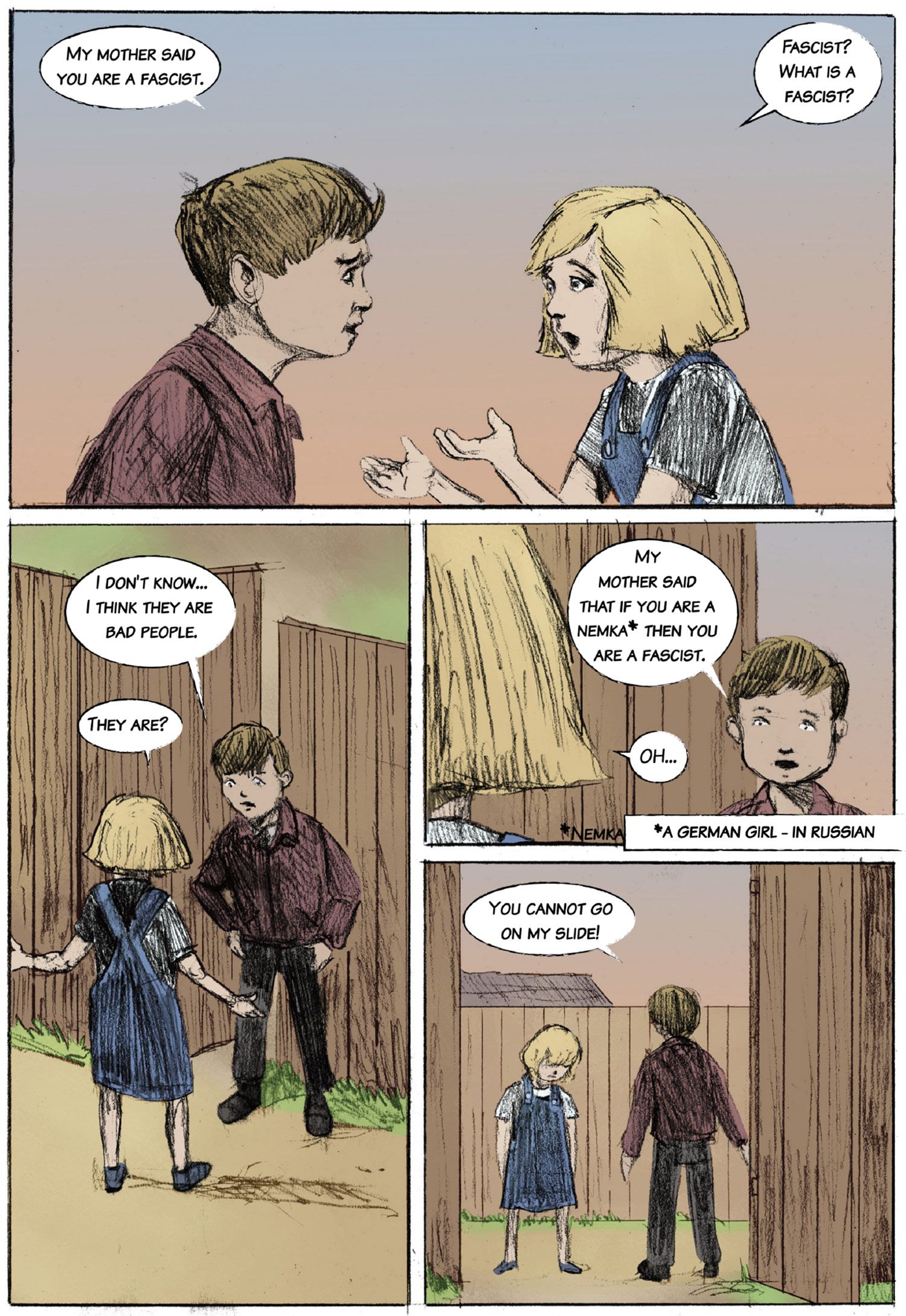

Since the ethnic Germans who settled in the Russian Empire were largely excluded from Soviet history, most ordinary people did not distinguish between them and soldiers of Nazi Germany, who invaded the Soviet Union in 1941. “Several times when I told people that I was a German from Kazakhstan, they asked:“ Your grandfather came with the Nazis and so loved our country that I decided to stay? ” - says Lena. - No one knew that we lived in the Russian Empire for 200 years. We were not mentioned in textbooks. We, as a group, did not exist in Soviet newspapers, on radio or television. ”
In childhood, Lena was especially confused, given the multinational nature of the Kazakh SSR, which was largely the result of compulsory movements of the population and internal migration. “All my friends were Kazakhs, Poles, Koreans and so on,” she explains. -And due to the fact that Kazakhstan was a melting boiler of all these different nationalities, for a long time I did not know where we came from. I thought the Germans came from Kazakhstan. ”
The policy of the Soviet authorities to suppress the German language, culture and identity was allegedly aimed at stimulating assimilation. And, like her father, Lena in childhood sought to become a “real Soviet citizen” as soon as possible. At the same time, the legislation prescribed to indicate the nationality of all citizens in their identification documents. “This meant that people whom the Soviet government classified as Germans could no longer get rid of the status of second -class citizens,” writes historian Jonathan Otto Paul.
“I grew up with this subconscious fear of everything related to Germanism,” Lena explains. -It was like this: “Oh God, what if the neighbors hear, as we say in German? What if we bake this tsukekerkhen, and the neighbor will decide to inform the police about us?” ”

Shortly before the collapse of the Soviet Union, the Wolf family finally introduced the opportunity to move to Germany as part of Berlin’s repatriation policy . Lena was 17 years old, and she did not want to leave her friends - but she thought that at least for the first time in her life she would feel at home. “But, of course, when we arrived in Germany, we became immigrants,” she says. “We were very different from other Germans.”
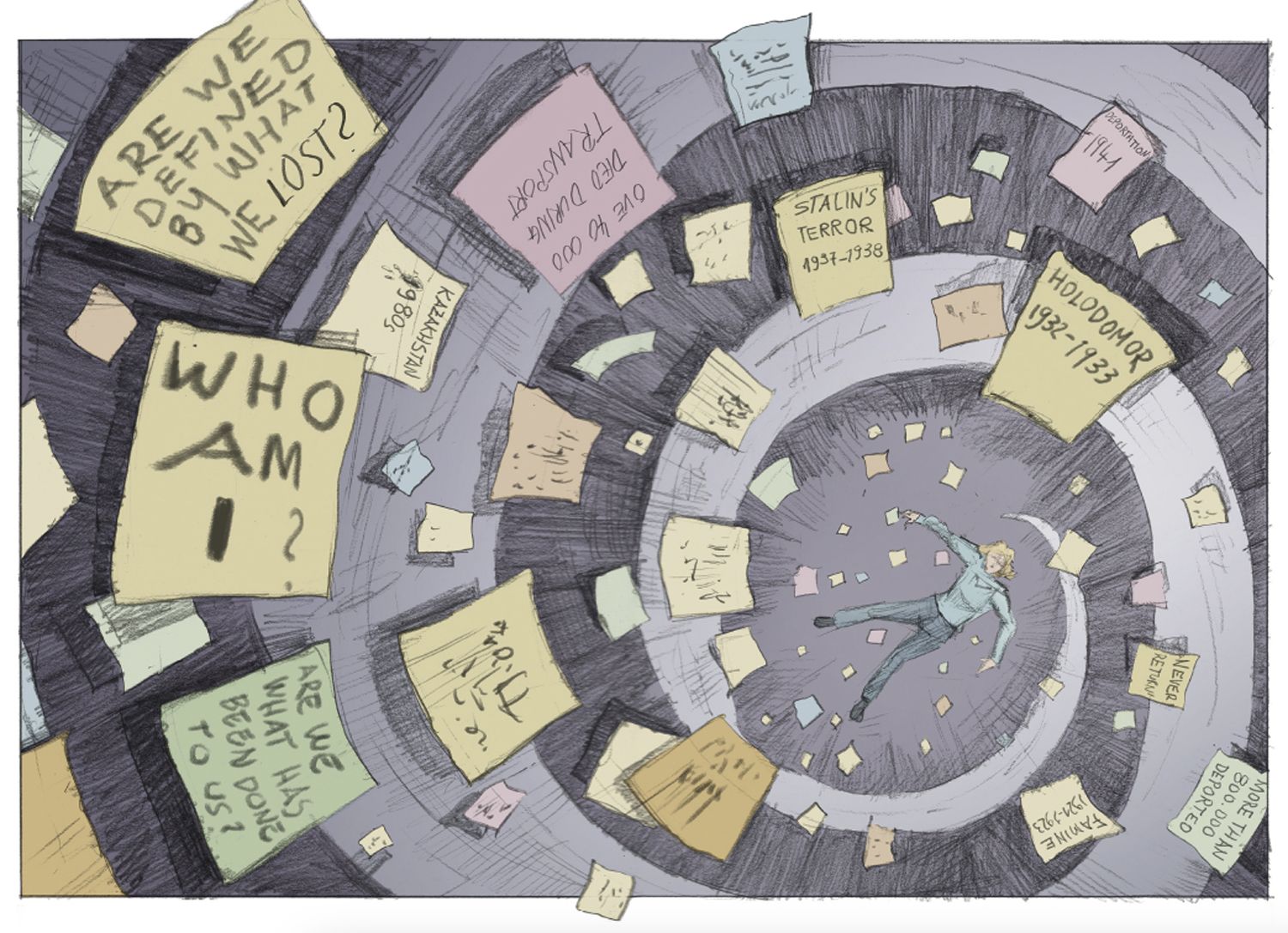
With the move from Kazakhstan to Germany, Lena's understanding of his own identity was even more complicated. And the desire of her parents to let go of the past and assimilate in German society only confused her stronger. “They always seemed to believe:“ Oh, let's not talk about it, it’s too difficult. Just be a German, since you are finally in Germany, ”says Lena. “And this is sad, because we did, in fact, the same as in Kazakhstan.”
According to Lena, an attempt to integrate into German society, not paying attention to the centuries that the family spent in the Russian Empire and the USSR, is the same that cut off your legs: “You can learn the language very well, you can integrate, but you will always miss something in your identity. And this is something-200 years of history. ”
Chapter V
Survival history
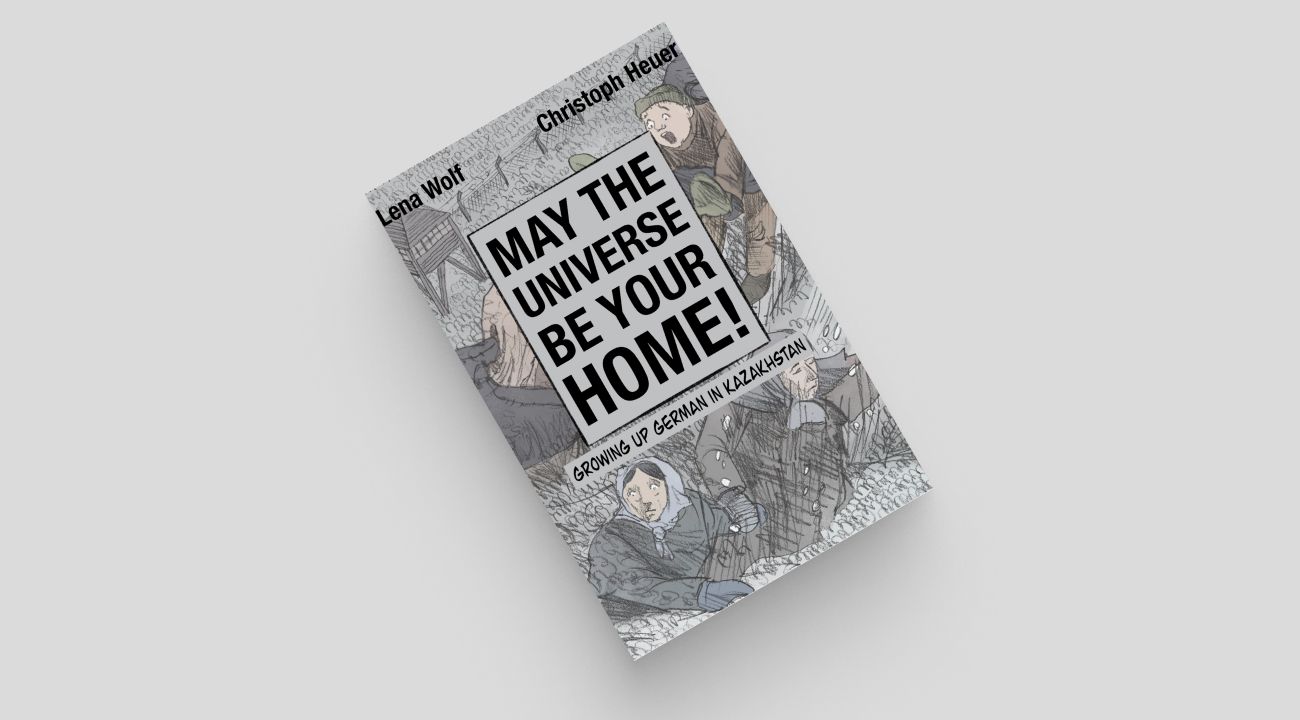
In 2016, after many years, when she had to explain where she came from - or, even worse, to listen to the fact that people do not exist - Lena decided to document the history of the family in a format that will be close to the young generation: in a series of graphic novels.
“I want to create a book that will not only immerse people in depression, but also tell them about our history and give them something positive,” says Lena. - So this is not easy [story] about our terrible story, although it is really terrible. He is also about how we cope with this. [Это] истории выживания и невероятной храбрости».
Первая книга Лены — под названием «Мир вашему дому!» — почти завершена. Иллюстрации для нее создал немецкий художник Кристоф Хойер. Книга объединяет в себе историю бабушки Лены по матери, Эмилии, пережившей войну, депортацию, изгнание и преследование, и личный опыт Лены, которая столкнулась со сложной историей семьи и попытками осознать свою идентичность как немки из Казахстана, живущей в Европе. Вторая книга расскажет о бабушке по отцу Жозефине и о том, что она пережила в трудовой армии и ГУЛАГе.
«[Даже после того как мы переехали] в Германию, я говорила: „Бабушка, ты вчера ходила за покупками, ты принесла бананы?“ А она отвечала: „Ох, в ГУЛАГе у нас вообще ничего не было“, — рассказывает Лена о Жозефине. — Иногда мы сидели часами, глядя в окно на лес, и затем она словно выходила из оцепенения и говорила: „В Воркуте было так много деревьев. Но нам приходилось так тяжело трудиться“».
* * *
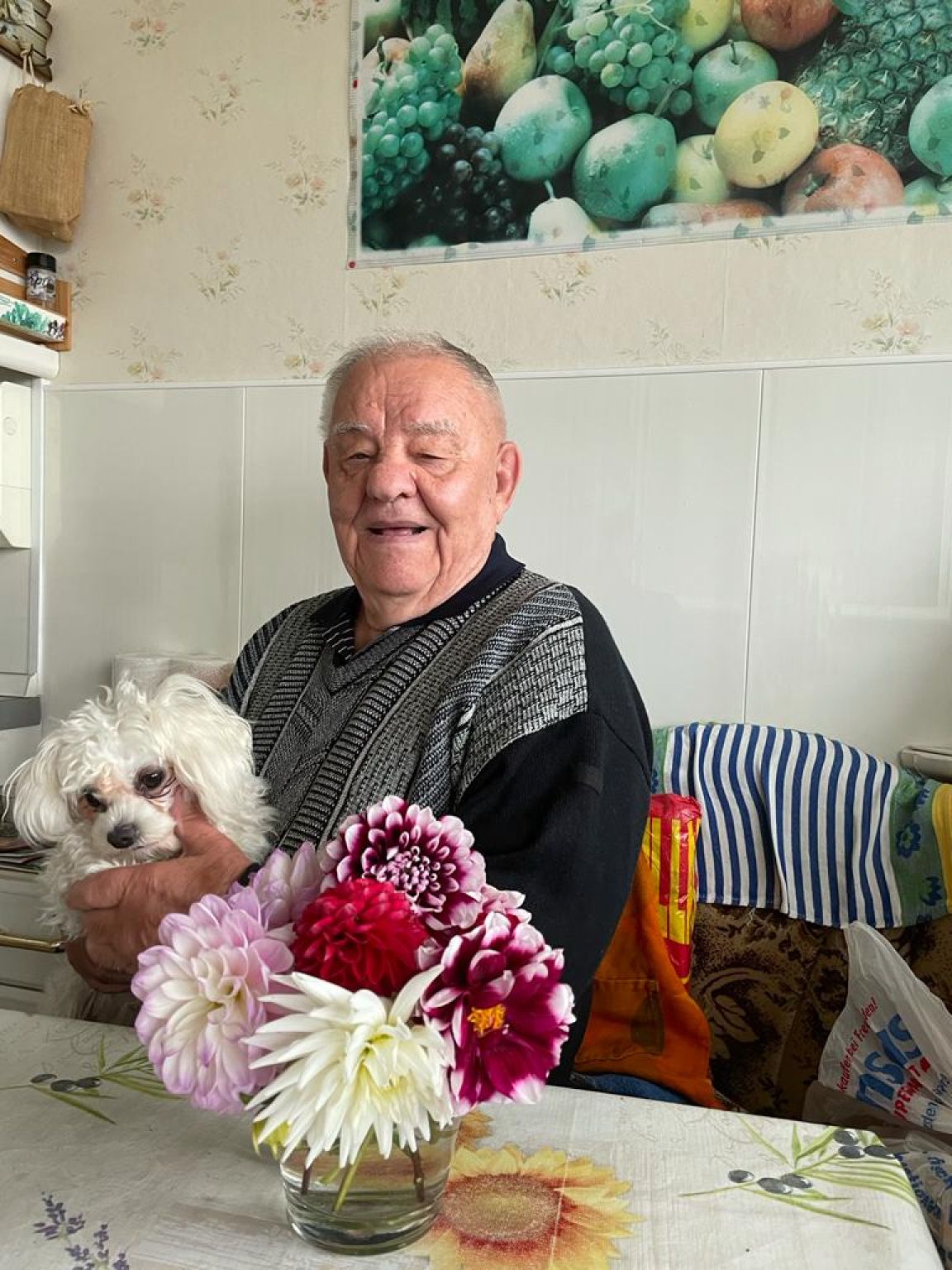
Адам Вольф сохранил фамилию, которую дали ему советские власти. Сейчас ему 85, он живет в городе Оффенбах-ам-Майн на востоке от Франкфурта. Из-за полномасштабного вторжения России в Украину в Германию приехало большое количество украинских беженцев; это значит, что впервые за десятилетия Адам может говорить на привычном ему языке. «Он оживает», когда разговаривает по-украински с недавно приехавшими соседями, рассказывает Лена.
Но у Адама есть и близкие друзья, с которыми он не говорит на одном языке. «У моего отца появилась компания в Оффенбахе, состоящая из украинской женщины, которой под девяносто, соседа-сирийца, которому тоже за восемьдесят, и женщины из Косово, — объясняет Лена. — Они сидят на своей скамейке, и, если смотреть издалека, можно подумать, что они говорят на одном языке. Общего языка у них нет, но они жестикулируют, улыбаются и как-то понимают друг друга».
Послушайте интервью Лены Вольф в англоязычном подкасте The Naked Pravda
 |
И подписывайтесь на The Beet
Автор: Сэм Бризил для The Beet
Editor: Ailish Hart