
Translated material
Tower of the Federation - in context
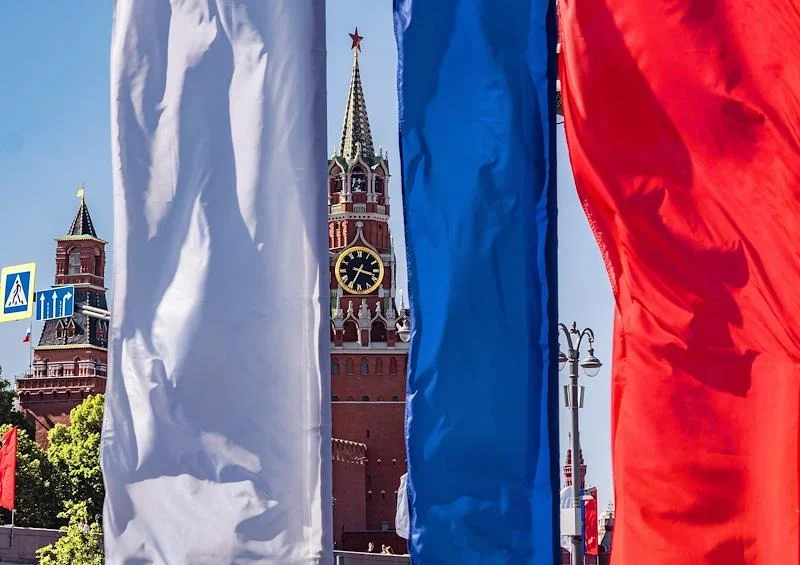
How to unite Russia with a "horizontal power." Vladimir Pastukhov* - About the future, which must be discussed today
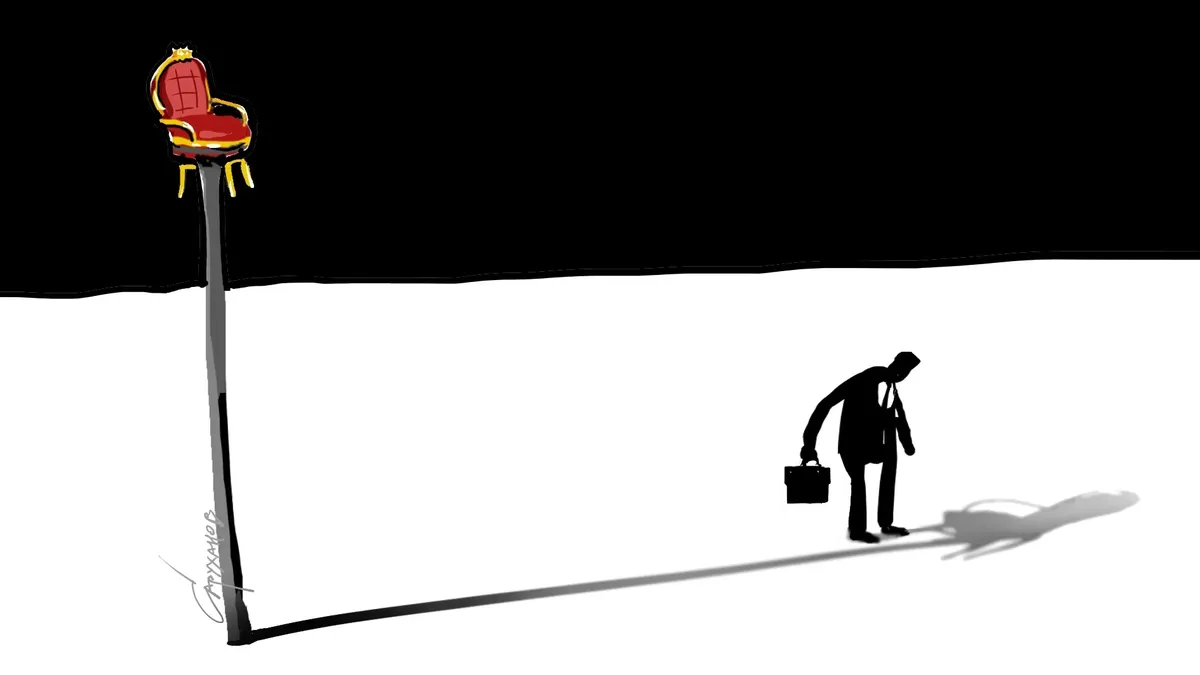
Peter Sarukhanov / "New Gazeta"
18+. This material (information) was produced, distributed and (or) sent by foreign agent Pastukhov Vladimir Borisovich or concerns the activities of foreign agent Pastukhov Vladimir Borisovich
The Russian state, like any other state, is by nature a political union of people. But this is in theory. In practice, the vast majority of the members of this union (according to the passport - Russian citizens) forgot to ask if they want to be part of it, even fewer of them actually feel themselves, and almost no one except the elect can affect its activities. They live in Russia, as it were, each in itself (without civil society), connected together only by the will of the army of officials, whose hierarchical pyramid is crowned by the leader endowed with sacred force (king, emperor, Secretary General, President).
All this is called "vertical of power" in Russia. She is an object of lust of some and the hatred of others. The former always dreamed of mastering it and built with its help dictatorship, the latter dreamed of destroying it and generated in the intervals between the dictators of the Time of Troubles. Nevertheless, no one could do without her, because - no matter how disgustingly poorly it was designed - only thanks to her Russia acted in history as a subject , retained its cultural identity and moved along the prerequisites of its own historical trajectory , which arose from these cultural prerequisites. It was worth touching her - and Russia began to fall apart in her eyes.
You can break this vicious circle in only one way: replace the “vertical of power” with something else.
In order to get rid of the “vertical of power”, you must first connect Russia not outside, but from the inside - the “horizontal of power”.
That is why federalization is a strategic direction of the political evolution of Russia in the 21st century. But at the same time, it must be remembered that federalism in Russia - and this is what few people still understand - not a way of separation, but another, alternative method of combining. Having lost sight of this, you can, relying on absolutely correct prerequisites, get the wrong result in the root.
I
In order to decide on the strategy of that political reform that is inevitable at the end of the Putin reaction, it is necessary first of all to decide what we mean by the “strategic vulnerability” of the current system and how we see the possible ways to eliminate it.
It is obvious that candidates to the best answer to the question: "And what went wrong in Russian history?" - so many. I would venture to assume (exclusively as a working hypothesis),
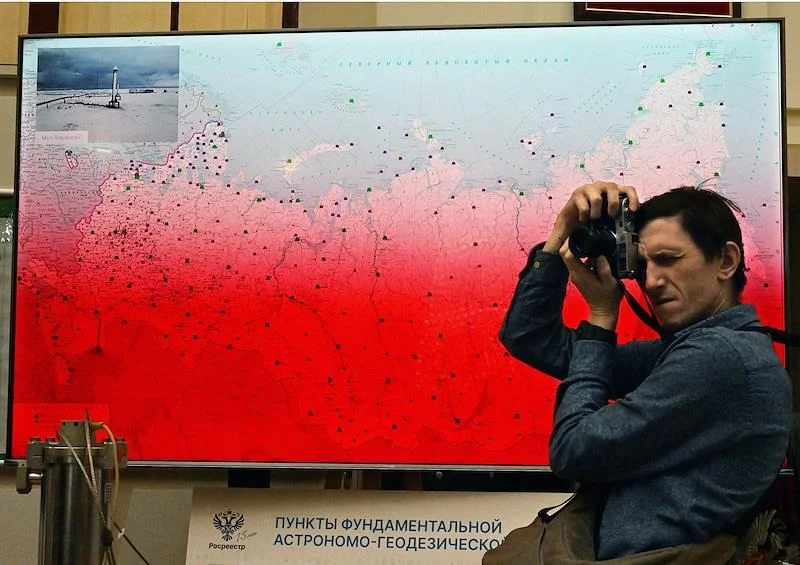
The forced hypertensiveization of a giant bureaucratic machine was and remains strategic vulnerability in both the existing political system in Russia and all its earlier versions. In a sense, this really relates Russia with China, but that the Chinese is good is Russian death.
This hypertensionalization is really forced, since it arose not according to idleness, but as an answer, and very successful, to real historical challenges. In a sense, we can say that hypertensionalization allowed Russia to historically take place in the form in which we know it. We have no answer to the question, Russia would have taken place historically in some other form if this hypertentralization of the authorities could not be achieved. Nevertheless, today hypertensionalization is not an engine of evolution of Russian society, but its brake. Popying the famous meme from the Haidai film comedy, we can say: whoever helped us before, he now interferes with us. Hypercentralization has become a preservative that prevents the evolution of the political and social system in Russia. Its role today is twofold: it is impossible to remove, and it is impossible to leave. To understand how Russia has reached such a life, you need to look back a few steps ago. The way in which Russian civilization paved the way for its world history since the 16th century was an aggressive (and, in general, extremely successful) colonization of the surrounding spaces. In this sense, Russian culture both in genesis and by nature is imperial and no other. This is a brief characteristic, but it can be given more detailed: this is extensive culture, that is, with rare exceptions - responding to internal crises not through the restructuring of the system, but trying to shut up the crisis into the external environment (through expansion).
Today's systemic crisis ultimately consists that Russia has practically exhausted all the possibilities of extensive development due to squeezing crises to the outside (rested),
But with perseverance worthy of better use, continues to try to do this. And even an attempt to “recover” the former Soviet spaces - and above all, Ukraine - does not really give. Even if we assume that she could be successful (which personally seems impossible to me), it would not solve the problem.
Russia has nowhere to expand endlessly, and it can afford to wage a cold (surrogate) war for a much shorter period than the USSR. This is called civilizational stagnation. Each time, Russia will come to the finish line with the same problems as at the start, only more exhausted. Sooner or later, this will lead to death at a distance. And all because the old imperial method of development does not work, and it does not work to find an alternative to him.
Naturally, the question arises: why? And here it is just that the obstacle to the search for alternatives is the very bureaucratic hypertension, which has previously been a Russian rush wand for centuries.
II
One of the paradoxes of Russian colonization is that its main motive was not so much enrichment (of course, not without this at all, an example of which is the conquest of Siberia, but this is not the main thing), and resolution through colonization of some of its internal problems that could not be resolved in another way. We can say that the inner disorder of Russian life drove the Russian man around the world in search of other, more promised lands. The result of this method of evolution was giant territorial acquisitions, by no means always indisputable and useful (for example, the North Caucasus). Management of this colonial heritage - and even in the conditions of permanent resource deficiency - just demanded the creation of a giant super -centralized bureaucracy.
Speaking of resources. In my opinion, the problem of resource deficiency for the first time in Russian history was resolved under Putin only once, but this is unlikely to be merit to him personally.
In a short period of time between 2003 and 2013, Russia literally bathed in money, and this, it seems to me, became an involuntary trigger of such a deep reaction. An illusion of “efficiency of the empire” arose, which without oil boom would have no chance of being born.
One way or another, the strictly hierarchically built bureaucracy (power vertical), which grew out of endless external Russian expansion, so powerfully towered over all the other strata of Russian society for several centuries that the latter had not the slightest chance for any full amateur development, and for centuries continuing to be in an embryonic state.
As a result-external colonization in Russia was always supplemented by internal colonization, the meaning of which was that the central power in Russia acted in relation to all local communities as an “internal aggressor”, building with them exclusively single-channel relations of dominance-subordination, preventing any real self-government or even autonomy. Often, the external regions, annexed to Russia later than the formation of Hartland, had more autonomy with all the ensuing consequences than the original Russian internal areas. Both of these processes - external and internal colonization - have always developed parallel to each other. A civilization of a vicious circle arose.
External colonization gave rise to a powerful internal bureaucracy. This bureaucracy suppressed all amateur performances within Russian society, giving rise to a heap of insoluble problems. In an effort to find the solution to the problems created by it, the bureaucracy even more dispersed external expansion, the result of which was its further strengthening.
This bad historical infinity is, in my opinion, the key vulnerability of that “Russian world” that seeks to recreate Putin.
The rupture of this vicious cyclic is, respectively, one of the central tasks of the generation. The whole question is how fulfilled is this?
III
Today, the reflection of the isolation of the historical space of Russian imperiality is represented by two main points of view, within each of which there are a great many versions that differ in varying degrees of emotional expression in the formulation of a general position of a particular position for all supporters.
The adherents of a romantic point of view believe that the current historically political way of life of Russia, the core of which is an omnipotent bureaucracy, is nothing more than stupidity, and therefore it is enough to show pronounced political will so that this archaic format will go forever into oblivion, giving way to the “classical” liberal model similar to the fact that they exist in Western, and now in Eastern Europe.
Adherents of a realistic approach believe that with existing economic, social and cultural prerequisites in any other form, except as a support on a super -centralized bureaucratic apparatus capable of suppressing any internal disturbances, Russia cannot exist. Either so, or in any way - that is, either an empire, or a complete collapse and dissimilation. It is interesting that such a point of view adheres to both the Black-Holy Fanatics-Reconstructors and many serious experts, in the liberal views of which there is no reason to doubt. Both points of view have obvious vulnerabilities. Romantic optimists who believe that the whole thing in historical misunderstandings can hardly explain the repeatability of these misunderstandings, with the enviable constancy of Russian history from the mid-16th century. Realists, who after Hegel, that everything is real, is unlikely to deny that the periodic crises that cover the empire, where each of the next scale is larger than the previous one cannot be endless, and if not current, one of the subsequent crises will finally finish the empire. So the proposed historical Dolce far niente (sweet nothing) is only an attempt to keep a smart face, plunging his head in the sand.
In my opinion, the breakdown of this closed circle is necessary and possible. The point of application of forces must hypothetically be the same bureaucracy that has turned into an unbearable barn castle of Russian history. It must be dosed to weaken. The word "dosed" is key here.
On the one hand, it must remain strong enough to prevent chaos (Russian Troubles), and on the other, it should be weakened exactly so that other parts of the elite can control it. Such a partial weakening of the bureaucracy should have two positive consequences.
Firstly, the conditions for amateur performances of other communities that are in a state of political animoosis will arise.
Secondly, the “mobilization” capabilities of the bureaucracy will sharply decrease, that is, its phenomenal ability to overhaul the company from solving real internal problems to solve illusory external problems for the purpose of its own self-preservation.
In this case, the ability to untie the conflict in a naked place will be limited, which means that you will have to do more internal matters. Everything rests on the methods that are most suitable for solving this problem precisely in Russia.
IV
Methods of a controlled reduction in the force of bureaucracy have been known for many centuries - this is the separation of powers . The whole question is in proportions, dosages, methods of application. As with any medicine, the shortage is useless (and often dangerous), the bust is always dangerous. In the 90s, a clear shortage occurred in Russia, as a result of which we in the zero received power with gigantic resistance to any attempts to divide.
I’m afraid that the usual, “protocol” tool (dividing into executive, legislative and judicial power) will no longer work. Combined treatment is needed: a classic scheme of division of the authorities by vertical plus federalization, that is, its division horizontally. And here we approach the most important issue requiring a concentrated understanding. Federalism in Russia is perceived as a pure formality, something like an advanced fifth wheel in a state administration cart, or as a method of increasing the level of autonomy of the regions. In fact, he is neither one nor the other.
That Soviet federalism, to which everything has come down today has nothing to do with the actual federalism, there is no need to prove.
But on the fact that federalism is not related to the powers of the regions, which are beautifully called "subjects of the federation", it is worth stopping.
Federalization is a method of reforming a central, hierarchically organized power throughout Russia. Self -government is a method of organizing an original, rooted in local life in the regions, including the method of protecting from central government. The fact that in Russia local life is suppressed so long and firmly that it is considered exclusively as the lower link of a unified system of central government is exclusively the problem of our mentality. In fact, these are two political worlds, coexisting nearby, intersecting, but not coinciding. For decentralization of power, both processes are important - the federalization of the central government and the development of regions self -government. It is necessary to develop both, but federalization has priority, since without it no self -government will survive. The main thing is not to make a typical mistake of all past years and not replace one by another. Therefore, when, within the framework of the topic of federalization, it comes to something like a “federal agreement” or “regions' rights” (including economic), this is not at all about that. Federalism is an exclusively question of how to cut a “power pie” so as not to choke: only in three parts vertically or in addition to this, and also divide into layers horizontally? I think that any attempt to globally reinterpreting the territorial-and-administrative division that has prevailed in Russia is a utopian, and this is not necessary.
To steal local elites today - worse than turning a hornet's nest: you won’t get honey, but you will leave all stung.
Therefore, the regions, as they are, should become the basis for the development of local self-government in Russia, which is generally even logical. It should be provided and guaranteed a real and sufficient autonomy and preserved the opportunity to have a representation in the upper house of the parliament. But federalism in Russia, apparently, will have to be introduced by the method of “imposition”, creating another “intermediate” level of power that did not exist before. Although it must be admitted that the story of the very possibility of its existence has outlined the attendant line. It is only important to be able to read these signs correctly.
V
There are many ways how to hook the tentacles of the Russian bureaucracy, and I am ready to offer only one of the options as a reason for the discussion. I will immediately make a reservation that the “stuffing” of this proposal is as provocative as the demonstration at the exhibition of some “sautable” concept car. The purpose of this demonstration is not a presentation of the machine, but a performance, often in a grotesque light, some general ideas, which in the future can affect the development of automotive industry. The fact that I am going to state just refers to the category of such “general ideas” that are unlikely to ever be realized in its pure form, but may serve as a reason for a good discussion.
In general, my idea is to cut an additional “knee” into the political system, and then close the additional link created in this way at the federal level at a separate point. I would push away from the existing, that is, federal districts and the State Council,
But I would put a completely different meaning into these empty appendages of the federal bureaucratic machine today. Now there are eight of them, and they perform purely technical functions. I would increase their number to 15–25, tied to million-plus cities as natural growth points, and would give them political functions.
When I am talking about political functions, I mean that these new federal districts should become centers of political life, which is not there now, but which must be created with their help.
I understand that they are now waiting for Raikinsky "how much to hang in grams." But I will not say that. I hope we will be able to get answers to these questions in the course of a future discussion. In the meantime, I am ready to act as a person who predicts the possibility of the existence of something like the “boson of Higgs” or “Axion” in Russian politics. То есть само их существование пока под вопросом, а уж свойства — совсем запутанный вопрос. Но тут действует другая логика: существование такого дополнительного «колена» она многое бы объясняла и многое позволяла бы организовать по-иному в России.
В практическом плане это может означать, что федеральные округа должны иметь свои собственные выборные представительные органы власти, выборную же исполнительную власть, так как именно наличие последних создает на территории политическую жизнь. Кстати, сюда же могут быть подверстаны и федеральные судебные округа, которые сегодня привязаны неизвестно к чему и непонятно как.
Естественно, что наличие собственных представительных органов власти предполагает возможность и необходимость развития местного законодательства в пределах округов. Возможно, и федеральный бюджет также может быть децентрализован, и часть его должна осесть на уровне «колена». Я не готов сейчас подробно прорабатывать эти вопросы, но это, безусловно, тоже предмет дискуссии.
Все это, кстати, позволит разрешать множество вопросов, связанных с неоднородностью российского общества, когда то, что не вызывает никаких вопросов в Москве и Петербурге, кажется сомнительным в Сибири и Краснодаре и совсем неприемлемым на Северном Кавказе.
В конце концов, сейчас в США есть штаты, где смертная казнь, а есть штаты, где она отменена. Точно так же есть штаты, где аборты запрещены, а есть такие, где они разрешены. Может быть, для России такой разброс и ни к чему, особенно по упомянутым выше темам, но в целом это хорошо иллюстрирует, насколько большим в принципе может быть разброс при реальном федерализме.
Вновь созданные округа должны на что-то замыкаться на федеральном уровне, и это что-то не должно быть Администрацией Президента, как сейчас. Более всего для этой цели как раз и подходит уже имеющаяся структура Государственного совета. Главы федеральных округов должны входить туда по должности. Компанию им могут составить некоторые высшие должностные лица Федерации, либо лица, назначаемые президентом, правительством и палатами парламента. Это на самом деле не столь принципиально и может быть придумано по-разному.
Важны функции, на которых остановлюсь чуть подробнее. На мой взгляд, у Госсовета должен быть не широкий, но крайне важный набор «ветирующих» полномочий. Это — в прямом смысле слова «последняя инстанция», которая должна предотвращать эксцессы, подобные тем, которые в течение всего посткоммунистического периода русской истории последовательно загоняли страну в цивилизационный тупик. Речь идет прежде всего о назначении на должности руководителей силовых структур, решении вопросов войны и мира, конституционных в широком смысле изменениях. Роль Госсовета — быть своего рода институализированным Советом безопасности, страхующим от стратегических ошибок и поддерживающим политическое равновесие. Впрочем, кому-то может быть ближе сравнение с советским Политбюро. Оно не лишено смысла в той части, в которой есть потребность в институте коллективного принятия решений по ключевым вопросам жизни российского общества.
Еще раз подчеркну: все это не вместо самостоятельности (в том числе бюджетной) для существующих уже регионов, развитие которых должно осуществляться через институт самоуправления, а вместе с ней, то есть в дополнение к существующей схеме. Речь идет о развитии федерализма методом наложения на Россию дополнительной политической матрицы. По сути, это попытка создать объемную трехмерную модель политической жизни, добавив в нее еще одно, ранее не существовавшее измерение.
Напоследок замечу, что есть проблема постановки задачи и проблема поиска решения поставленной задачи. На данном этапе я нахожусь на стадии поиска правильного ракурса для постановки задачи, и поэтому предлагаемые мной решения выглядят как едва заметные пунктирные линии, которые я сам буду готов многократно стереть и нарисовать заново. В чем я больше убежден, так это в том, что задача состоит в ломке вертикали федеральной власти и замене ее более гибкой конструкцией, в рамках которой разные «этажи бюрократии» имеют возможность достигать консенсуса по ключевым политическим вопросам, обеспечивая таким образом б о льшую и долговременную стабильность системы.