
Translated material
The main request
About the main political result of the year. Most Russians realized the need for peace negotiations
Photo: Pelagia Tikhonov / Kommersant
Not only the Novaya Gazeta survey, but also the data of sociological services record the confident growth of the number of Russian citizens who advocate peace negotiations with Ukraine.
According to the November data of the Levada Center*, 36%protrudes for the continuation, 57%for peace negotiations. In February of this year, the picture was different: 43% - for the continuation of its, 50% - for peace negotiations. Yes, the number of those who consider the right decision on the beginning of its own is quite large: according to VTsIOM, in January it was 68%, and did not support this decision 20%. Nevertheless, the formation of a very serious request for the world is the main political result of the outgoing year. And at the same time - the main issue of the year of the coming: will this request be implemented?
The proposal to cease to fire and conduct peace negotiations from the first days of Svo.
The Political Committee of Yabloko accepted the appropriate application on February 24, 2022, and then repeatedly confirmed its position. With this requirement, political and public activists reached the pickets (with unchanged detentions). It sounded on social networks and in the media that remained independent of power.
And although public preferences over the past 22 months hesitated, even in conditions of deafening militaristic propaganda of the decisive advantage, supporters never had their continuation. And by the end of 2023, as already mentioned, the number of peace negotiations speaking significantly exceeded the number of supporters of the continuation of hostilities. The latter were clearly divided into two parties:
One is Russian “Z-patriots”, demanding to go to Kyiv, Odessa and further “to the Polish border”,
The other is the emigrant political “party”, which demanded to continue the fighting until the “collapse of the regime”.
The essence of the ceasefire was, it would seem, extremely simple:
This is primarily the cessation of the destruction of people. The only way to save human lives and stop the “counter” of victims and destruction.
Only in these conditions - when the fire is stopped - you can negotiate and discuss any issues.
In February 2023, this position in Novaya Gazeta was stated in an article by Grigory Yavlinsky “Stop!”. It said that "today all parties intend to continue (...), mistakenly counting on a military victory, which in modern conditions is inaccessible to anyone." That to finish the armed conflict “on the battlefield”, as some dream, will not work. That the continuation of hostilities in any form - offensive or positional - does not promise any positive development of events either for Russia, Ukraine, or for Western countries. That if you do not cease fire, then the consequences will be catastrophic and most likely irreversibly destructive. And most importantly - that it is never returned to the people to be returned again ...
Emigrated ex-politicians fiercely pounced on the article, who did not risk and not losing anything under the cargo of administrative or criminal cases, which are free and in full security.
They accused Yavlinsky of “writing the next column right on the Kremlin Temnik”, that he “calls on the Ukrainians to surrender”, that he invites Ukraine to “recognize the loss of territories”, and most importantly - that this proposal is very “beneficial to Putin”.
The article did not say a word either about “recognition of the loss of territories”, nor about “surrender”, but Putin never proposed a “beneficial” ceasefire to him - this did not stop the critics, whom Lev Schlosberg* very accurately called a “party of someone else's blood”. They adamantly demanded to continue the fighting: no ceasefire and no negotiations! True, they demanded this from bars, cafes and etheric studios: others were to die in the name of the goals they wanted ...
The conflict has long passed into the positional stage, in which for many months the situation on the contact line almost does not change, only the number of victims and the scale of destruction increases.
But the "party of someone else's blood", which made a bet on the world, stubbornly did not want (and does not want) to recognize the obvious.
Including the fact that the Kremlin does not need any "break". As we see, the continuation of the fighting does not interfere with the set of contractors, nor the production of weapons, nor the purchase of shells ...
But despite this, not only the emigrant community continues to repeat about it.
Just the American Institute for the Study of the War once again stated that Putin could seek a temporary ceasefire that would benefit Russia, as he would give time to prepare for a new offensive. And the New York Times writes about certain “signals”, which Vladimir Putin, allegedly through intermediaries, is allegedly through intermediaries, about his interest in the ceasefire.
Again, Putin did not make any public statements about this. On the contrary, on a recent direct line, he continued to say the same thing with which he started on February 24, 2022, about “denacing”, “demilitirization” and the “neutral status” of Ukraine. And his spokesman Dmitry Peskov told the same Nyt that Putin is ready for negotiations, but subject to the achievement of the stated goals ...
How much more can it last? Months? Years? It is unknown: the answer to this question depends on many external and internal factors. But there is another question:
How many people will die on both sides? What will happen to the economy of Ukraine? With millions of refugees? And what will happen in Russia, where we observe not only economic problems, but also strengthening bitterness and aggression, a return to Soviet practices of life and the growth of political repressions threatening to go into political terror?
These questions ask themselves many in our country - and gradually come to the fact that the world is needed, and not “victory in their” (especially since there are completely different ideas about how this victory should look).
Meanwhile, it is unanimous for “continuing his own and victory” - all five parliamentary parties: “United Russia”, the Communist Party, “Fair Russia”, the LDPR and “New People”. They have long been indistinguishable from each other and vote amicably not only for prohibitive and repressive laws, but also for the denunciation of international treaties of Russia, including an agreement on ordinary armed forces in Europe (DOVS). On the Duma site it was solemnly reported that the vote in the State Duma on this issue on May 16, 2023 was unanimous: he was supported by 405 parliamentarians who voted against, abstained.
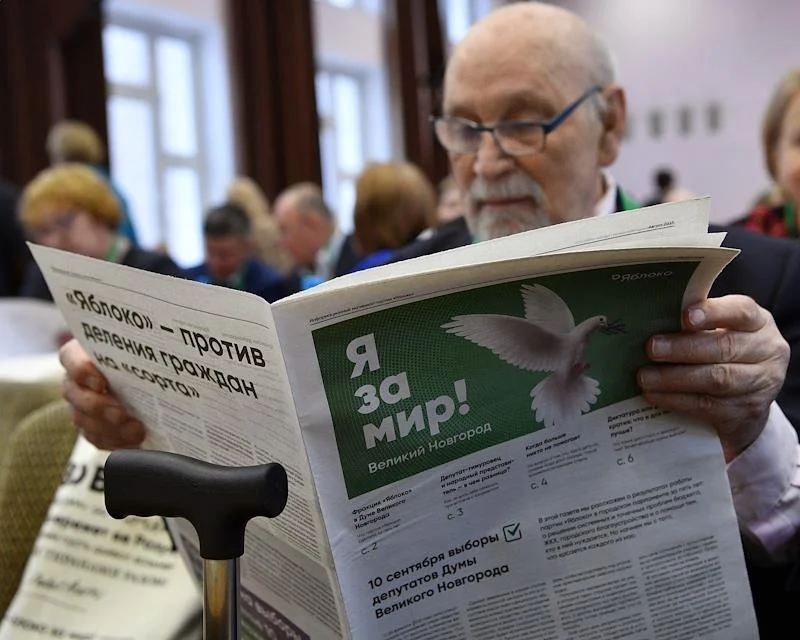
This means that supporters of peaceful negotiations, which are the majority of even according to Loyal Sociological Services such as VTsIOM, are deprived of a parliamentary representative office. The only registered party with an anti -war position - “Yabloko” - is represented only in four regional parliaments, but not in the State Duma (and not in the Federation Council).
And therefore, the proposal for the ceasefire and peaceful negotiations, in principle, does not sound from the Duma rostrum - completely different words sound from there. About the same as from the screens of TVs on the "Hate show." Although if the parliament was a truly representative body (and even more so elected in honest elections), he could not ignore a request for peace and negotiations today.
Is this request possible? Will they give, if this happens, these negotiations are the result? Not a fact: they may be unsuccessful. But while they go, people will not die.
Let me remind you of the Minsk agreements repeatedly criticized on both sides: yes, their potential was not used and they did not lead to the world, because there was no political will. But there was a chance.
And most importantly, if you look at the statistics of those who died on both sides in 2014–2021, we will immediately see - by several years - a multiple decrease in the number of victims of the conflict after the conclusion of these agreements ...
The implementation of the request for the world, the proposal for the ceasefire and peaceful negotiations - maybe not the best decision, then exactly the best of the possible ones. The best of what is given in today's situation.
The price of refusing a request for peace is people's lives. And they are the highest value, more important than territories, resources and political interests.
The editors may not share the assessment and judgments of its observer.