
Translated material
Boom during the war
The Russian economy has not "collapsed" for almost two years of invasion of Ukraine and even shows rapid growth. We explain why this is a deceptive picture
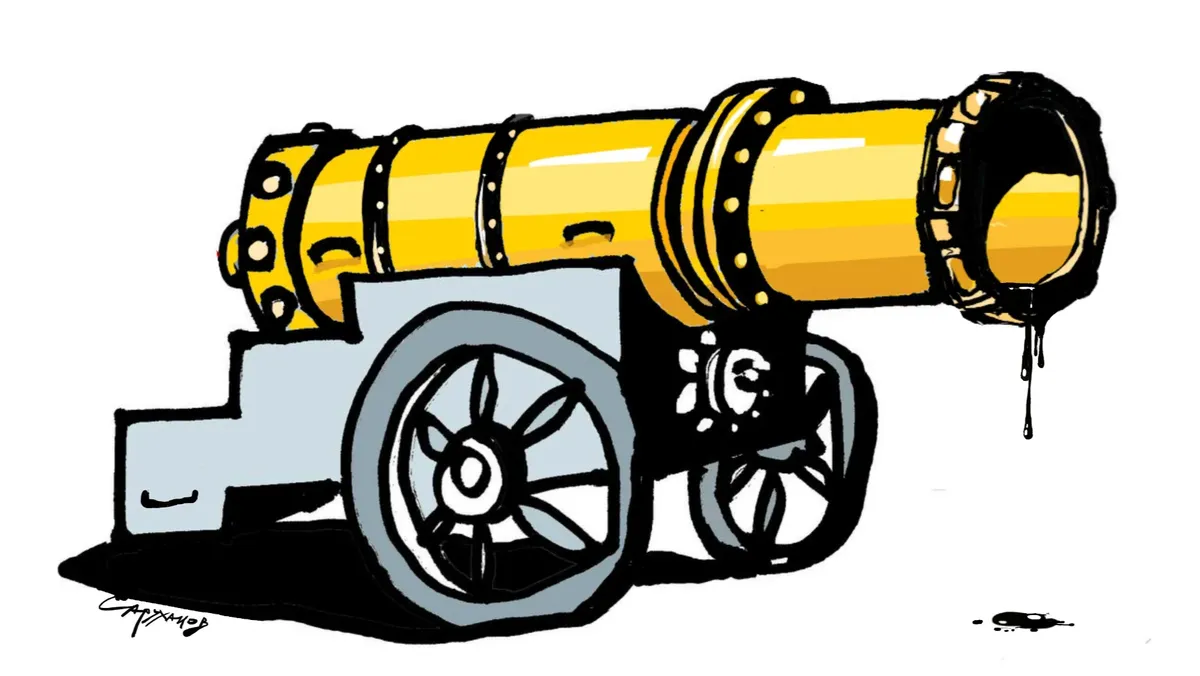
Illustration: Peter Sarukhanov
In recent months, the world press has filled out alarming forecasts that Vladimir Putin's plan to draw Ukraine and the West worked into an exhausting war. There was a consensus that the sanctions did not live up to expectations, and the Russian economy was stable. At the same time, at the beginning of the year, the mood was completely different - it seemed that Western restrictions finally began to deprive Russia of oil and gas out -and -offs. The new newspaper Europe tells why this did not happen and at what cost the Russian authorities adapted the economy to a protracted war.
The collapse that everyone was waiting
“The Russian economy is twice on the way to the reduction,” said US President Joe Biden a month after the start of a full -scale war in Ukraine. “Russian industry lies in ruins. There are no spare parts. The Russians disassemble their refrigerators and dishwashers to get semiconductors for the military complex, ” said the chairman of the European Commission, Ursula von der Layen, six months later.
By the end of 2022, it was obvious that the forecasts of Western leaders were not justified. Many peaceful industries sank by dozens of percent, but the economy as a whole, thanks to the record raw materials revenues, has declined much less initial expectations, and military production has grown sharply.
The new hope for the suppression of Putin’s military machine was given by the West in December 2022 and the ceiling of oil prices. This time the first persons were more careful in statements. The official statements declared the goal of limiting Russia's income from oil, but to leave it in the market, which, in addition, was still to stabilize world prices for hydrocarbons, "benefiting countries around the world." Nevertheless, this measure was the reason for the next pessimistic forecasts regarding the Russian economy.
“The accumulative effect of sanctions will become critical, and the fall in GDP will accelerate to 8%. The reduction in the economy can become fatal for the Russian Federation and will deprive the Kremlin of the potential for conducting hostilities, ”the Ermak -McFola group predicted , which calls for sanctions and offers the allies of Ukraine various options. The main international financial institutions - the World Bank , the IMF and others - also gave pessimistic, but more moderate forecasts for the fall in GDP - by 2-3%.
The first data on the fall in the cost of Russian oil and the record month of the budget in early 2023 again gave reasons to talk about the success of Western restrictions. However, analysts already warned : these numbers are deceiving,
In fact, Russia is not losing so much, and part of the “lost” revenue is kept in “ shadow reserves ” in foreign accounts.
How the fleet struck the ceiling
As a result, Russia eventually managed to redirect almost all of oil from closed Western markets to Asia. The ceiling of prices for this flow was supposed to be supported by European insurers and sea carriers, who used to serve most of the Russian supplies.
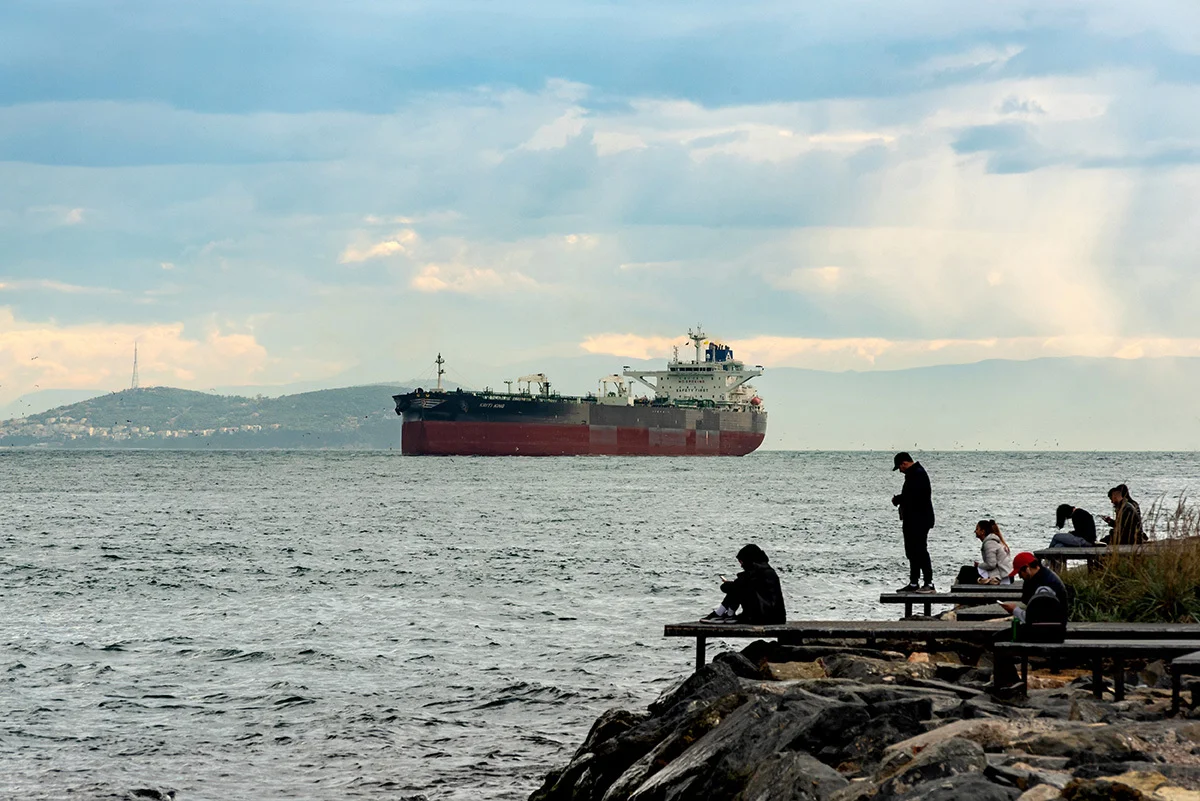
Russia began to bypass these restrictions in different ways almost immediately. The key role was played by the creation of a “shadow fleet” of several hundred tankers, with which most of the oil is transported bypassing the ceiling. The fact that it will be so in a conversation with Reuters was warned by American officials and representatives of the industry even before the introduction of this measure.
Tankers for the “shadow fleet” Russian authorities purchased mainly in the West through forthcoming companies, analysts at Harvard University say . The introduction of restrictions is accompanied by many compromises that leave loopholes in the rules. So, instead of a complete ban on the sale of Russian tankers in the 12th package of EU sanctions, which was adopted at the end of 2023, only the obligation to notify the EU authorities on the sale. Some Mediterranean countries that earn on sea transportation opposed more sharp formulations, Reuters reported .
But the purchase of the fleet alone to bypass sanctions would not be enough. In order for him to work, tricks are invented that amaze the imagination. For the “circumvention” of Russian oil, it is poured from one tanker in another right in international waters, Bloomberg found out . According to the agency, the legal cover to these tankers is provided by confusing schemes, in which many companies from different countries are involved, from the African Senegal to Britain and even Ukraine.
By the end of 2023, a consensus was formed among foreign and Russian economists:
Sanctions for the year nevertheless reduced the income of Russian oil companies. But experts differ in damage assessments using different methods.
In December, one of the highest assessments of the undertaken profit gave in December the Center for Studies of Energy and Clean Air (Crea) - $ 34 billion (14% of possible oil profits without sanctions) for a year from the date of administration of the ceiling. These are a little more budget revenues in November or a quarter of expenses for military needs and security forces planned for 2024.
However, losses from oil sanctions were reduced by the end of the year two to four times, researchers say.
Three times lower the losses were estimated by Bloomberg - 11 billion per year of sanctions. Russia earned the same amount only from oil in October that more than a month before the war. In addition, researchers note that these ceiling losses are also partially settled in pockets of oil meters associated with Russia.
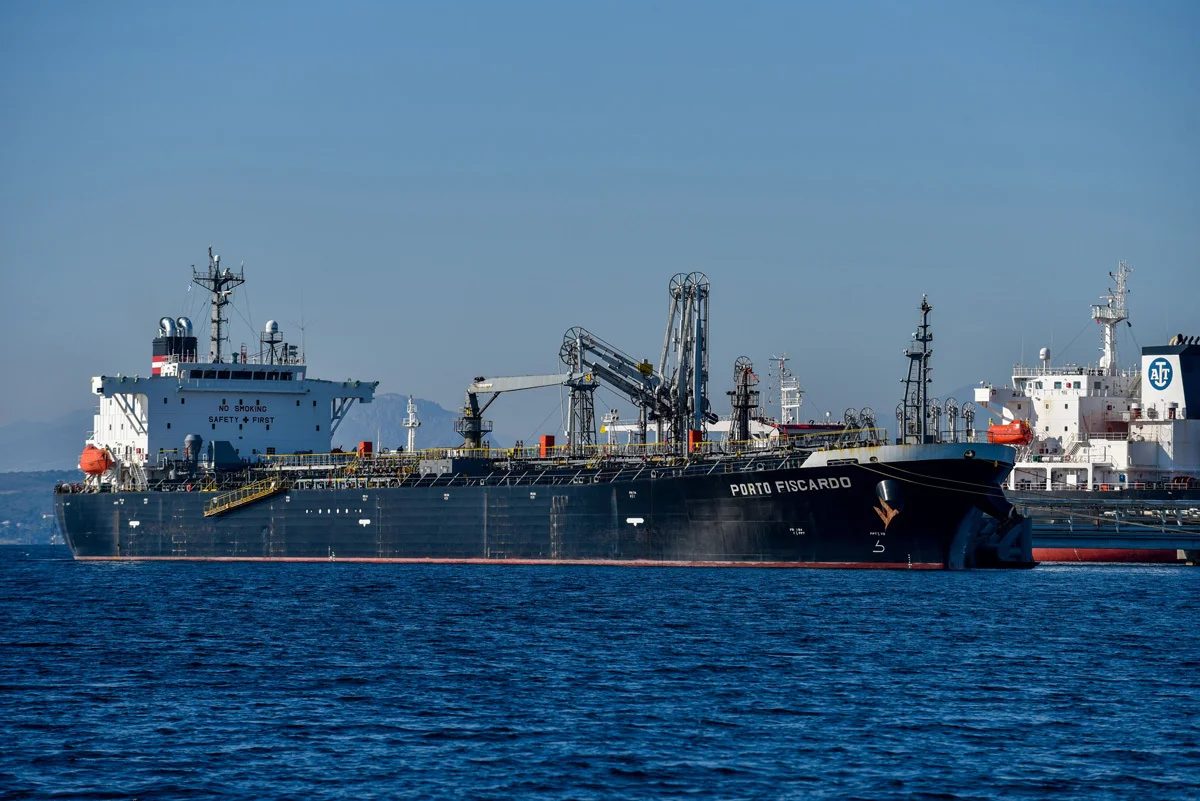
By the end of the year, almost all Russian supplies were higher than the ceiling of $ 60 per barrel, anonymous official from the European government in a conversation with the Financial Times recognized as anonymity. The main variety of Russian oil Urals has been traded above the ceiling since July, and then rose above $ 70, the independent agency of Argus and the Ministry of Finance of Russia reported. The department claims that in September-October, the price of Russian oil exceeded $ 80, and the discount to the Brent reference brand was about $ 10.
The rise in the price of Urals in the summer-autumn also contributed to the decision of the OPEC cartel and Russia to reduce oil production. This caused an increase in world prices, especially on high -sulfur varieties, such as Urals and Dubai Crude.
The budget has recouped for oil
At the beginning of the year, the government dramatically increased the expenses of the federal budget, issuing money for military industry with advance. Already by May, expenses exceeded the income by 3 trillion rubles, which was higher than the annual plan for the deficit. But the restoration of the flow of oil money helped the government to straighten the situation with the budget. Gradually, monthly oil and gas income increased by about doubled.
The total amount did not catch up with the record result of the last year, decreasing over 11 months of 2023 by 22% compared to the same period of 2022. But taking into account other sources, income increased by almost 5%.
As a result, the budget deficit by December was three times. And according to the results of the year, it will be half as much planned 3 trillion rubles, said the head of the Ministry of Finance Anton Siluanov at the end of November. Against such a background, the government gradually increased the cost plan . They should exceed last year by about 5%, reaching 32.5 trillion rubles.
Operational information on the structure of expenses was classified. According to Reuters sources, almost a third of the expenses should go to the article “National Posteron”.
The economy was also enormous on new occupied territories. The authorities sent 1.7 trillion rubles there, the head of Rosfinmonitoring said in a conversation with Putin, without specifying the terms and sources of expenditure of funds.
In addition to an increase in non -Neneftegas revenues, the budget, oddly enough, helped the increase in expenses related to the war: the military payments and compensation to their relatives, as well as state defense orders. By the chain, part of these expenses through taxes returned back to the budget, and at the same time supported the economy as a whole.
As a result, according to official figures , GDP for ten months of 2023 increased by 3.2%, exceeding more than 1% of the pre -war level. According to Putin, according to the results of the year, growth will reach 3.5%. Western analysts ( IMF ,European Commission , Goldman Sach , JPMorgan ) by the end of the year have also improved estimates and instead of a fall predict a height of 2-3%. At the same time, it is important that this is largely restored growth, and without war and sanctions, the Russian economy could be more than 5% of GDP.
“The mechanism of functioning of the Russian economy has remained the same, with the exception of the geographical structure of export consumers and import suppliers for Russia. Russia exports energy resources, and buying technological imports to the proceeds, ”the doctor of economic sciences notes in a conversation with the New Evrope (for security reasons, we do not indicate his name).
Technological imports to Russia in nine months of 2023 entered the pre -war level, the researchers of the Kiev school of economics say . In the first place in supplies is the products of the American Intel, and it is followed by Chinese corporations with other American companies.
Against this background, analysts in the West are increasingly building disappointing forecasts. “The sanctions did not reduce the Kremlin’s determination to wage war,” Crea concludes in the December report. “Russia has proved its stability, perseverance and patience. Russia can cover expenses like no other. Its industry is mobilized for war, and its soldiers are unnecessary and replaced by goods, ” writes analysts at the British Institute of Chatham House.
Post -war rebound
Restorative growth figures are not so surprising if you look at its structure.
The Russian economy was restored faster than expectations due to the growth of internal demand, which was reinforced by the infusion of state money through the military-industrial sector,
Subsidizing interest rates and social programs, the European Commissionnotes in the autumn report.
More than half the growth of GDP is on the manufacturing industry, the rest - for trade and services, in December, Putin said , emphasizing that the contribution of the raw material sector was small. A similar assessment of Bloomberg economist in Russia Alexander Isakov. According to his estimates , at the expense of the military -industrial complex, the industry provided about 40% of GDP growth excluding banks and the public sector.
Rosstat data in ten months show that specific military categories like finished metal products and other vehicles are growing by more than 30%for the second year in a row. At this time, large and mainly civilian spheres, such as metallurgy and oil refining, have grown an order of magnitude less, and the pharmacy and woodworking are in a small minus.
Against this background, Rosstat also has been reporting to the average accrued salary by almost 15%for the second year in a row. It exceeded 70 thousand rubles. The agency publishes a median salary once a year with a large lag. In 2022, it was 40 thousand rubles-that is, one half of Russians receives less than this amount, and the other more.
Economists, companies, HR platforms admit that in Russia there is a sharp increase in salaries. But it is not associated with the growth of the economy, but with a shortage of personnel, which arose due to the outflow of workers abroad and for war. Contractors of the state defense order are forced to lure employees to fulfill plans and increase salaries by an average of 20-30%, and the rest of the companies try to compete with them for labor resources, but their proposals are many times more modest.
Along with this, in some segments of the consumer market there is a recovery boom, which was helped by low and preferential credit rates in the first half of the year. The monthly volumes of retail sales in the fall returned to the pre -crisis level, Rosstat calculated. According to the Russian unit of the Nielsen IQ International Agency, sales of everyday demand have grown by 10%by November by November. The growth in sales of non -food goods, according to Rosstat, reached 20% minus inflation in October.
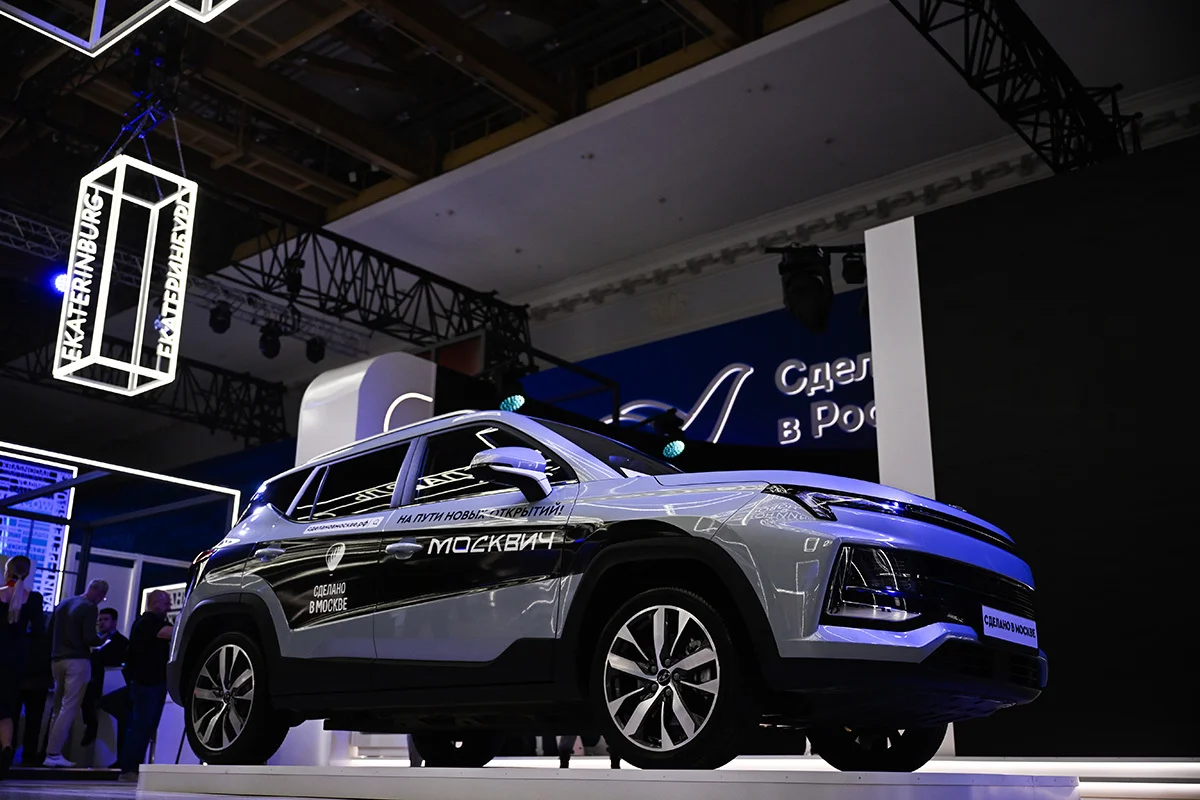
Sales of electronics and household appliances also grow in pieces. One of the main beneficiaries of such growth can be called Yandex , Ozon , Wildberries , which report about the growth of revenue by 50–100%.
Large purchases of the authorities supported preferential loans.
After collapse, the car market jumped 60% last year and approached the pre -war level. After the departure of the leading world brands, Chinese brands and AvtoVAZ were divided by each other. The latter even reported on the record for ten years of sales in October.
The same thing happens in the housing area thanks to a preferential mortgage.
The number of loans issued in ten months immediately increased by 60%, to 1.6 million units, and new buildings went up by an average of about 15%.
“The numbers say that decisions are made, life is coming, the economy is developing, and in general the result is obtained,” said Putin. However, by the end of summer, the systemic problems and risks that the economy of the warring state faced itself.
Overheating right at the course
The first call about problems in the economy was rang in June, when the dollar in Russia jumped from 80 to 100 rubles. Then the economists argued about the reasons for this and even associated the collapse of the ruble with the ri of Evgeny Prigozhin. But the problem turned out to be not temporary, the dollar then costs up to 100 rubles and entrenched in recent months in the region of 90 rubles.
Following the dollar, inflation, or rather, the Rosstat price index - up to 7.5%jumped more than in the fall.
Among economists - in the power or from independent organizations - there is no unity in the opinion of the reasons for the destabilization of the ruble and inflation. They emphasize different factors that are folded into such a chain:
growth of budget expenditures that increase demand in the economy;
budget deficit due to growth in expenses ;
a surge in lending due to the too low rate of the Central Bank and preferential loans, which also increases demand;
the inability to satisfy the increased demand due to problems with import and domestic production;
The increase in imports, due to which the demand for the dollar is growing .
This is far from a complete list of versions, somewhere they contradict a friend to a friend, but somewhere they complement. One way or another, all of them arose as a result of the war: the incoming problems are closed with “anti -crisis” measures that cause malfunctions in other places.
Moreover, the government cannot fight the root of the problem.
Minister Siluanov, presenting the budget for the third year of the war, outlined the purpose of the economic policy - “Ensuring our victory”.
For this, expenses under the article “Niceboron” in 2024 will increase by another 70%. Together with the costs of security forces, they will amount to 8% of GDP. This is still half the time of the late USSR .
“The Ministry of Finance, as I understand it, already does not control these expenses. That is, people come from the Ministry of Defense and say: it is necessary so much, ”commented in a conversation with Novo-Europe Andrei Yakovlev, an associated researcher of the Center for Davis Harvard University.
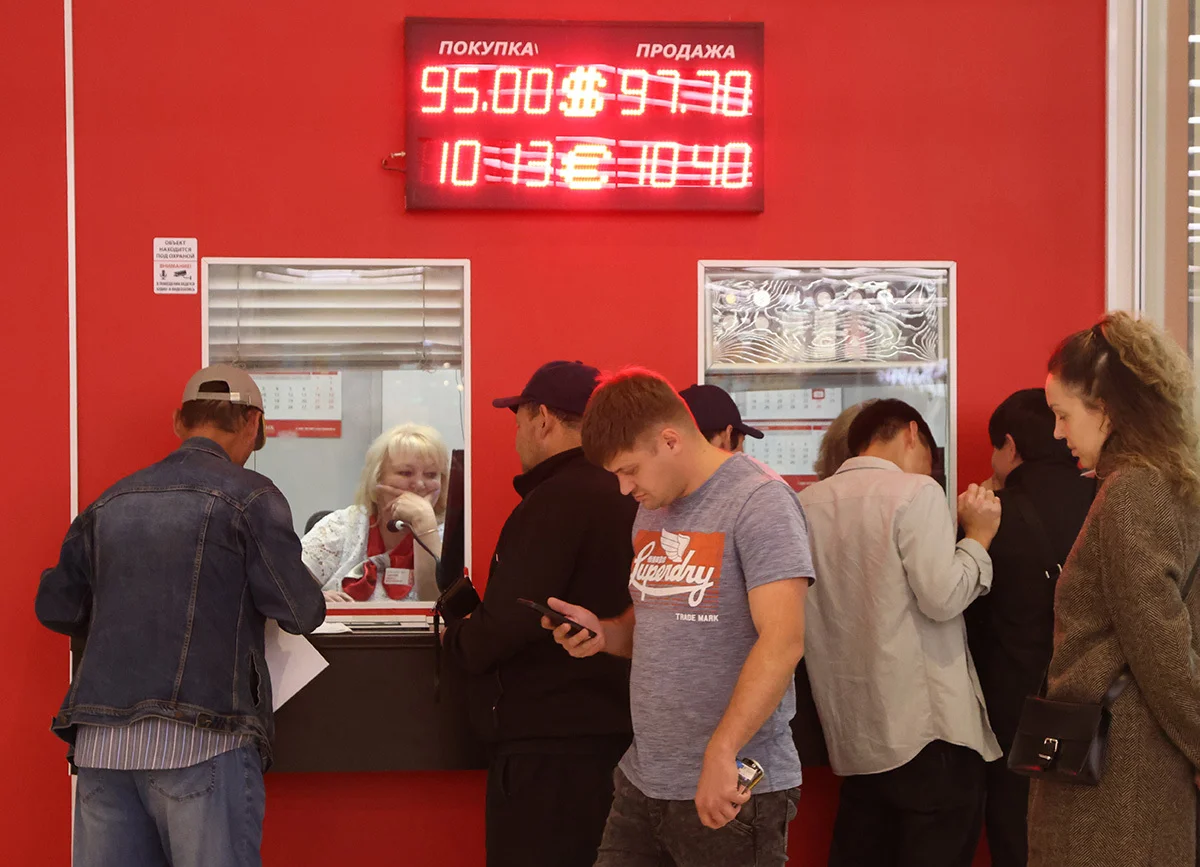
Economists have no doubt that they will find money for these expenses: if there is not enough income, the government has savings in the National Welfare Fund and the ability to occupy from Russian banks. In addition, to replenish the budget, the government introduced new fees from business and citizens: for the import of foreign cars, mining , duties for exporters, a united superprofit and others. New fees also additionally disperse inflation. The largest magnates, concerned about the unpredictability of the appetites of the authorities, have already begun negotiations on new taxes in 2024 with the government.
The Central Bank in this situation can only fight the consequences of such a policy. To reduce lending, he more than doubled by doubled the key rate in recent months. But here, the authorities go around the closed circle due to preferential lending programs. “They allow you to get cheaper loans to the elect, but everyone else pays for them,” says the head of the Central Bank Elvira Nabiullina.
The "elected" have already asked even more preferential loans. Among them Russian Railways, Aeroflot and other state -owned companies. According to them, without benefits due to the increase in the Central Bank rate, they will have to raise tariffs. The head of Rosneft Igor Sechin proposed money to finance benefits through taxes from banks that show record profit. The head of the Sberbian, German Gref called this idea unprofessional, since the banking sector is the "most affected" in the country.
“[Further expansion of preferential lending] will mean that the Central Bank rate will simply cease to be important and will lose the opportunity to significantly affect the inflation level,” says Yakovlev.
While the authorities argued about anti -crisis measures, inflation reminded of themselves. The increase in prices has become one of the main topics on the direct line of Putin.
In the first place - eggs. On average, in the country, they have risen in price by almost one and a half times in a year, and in some regions more than 70%. This caused exciting demand, and in some stores, lines lined up for eggs. К борьбе с подорожанием яиц привлекли разные ведомства от Генпрокуратуры до Антимонопольной службы, но до начала Прямой линии ситуация не исправилась, и Путин прямо в ходе выступления за это извинился .
Хотя многие базовые продукты дорожают на десятки процентов, пенсии и пособия в 2024 году увеличат только на тот самый официальный уровень инфляции — 7,5%. В то же время тарифы на коммунальные услуги, по официальным планам, увеличат на 10% в среднем по стране, а в некоторых регионах — на 15%.
Другие социальные расходы правительство и не собирается индексировать на уровень инфляции, а отдельные статьи даже сокращает. Расходы на образование и здравоохранение увеличат на 5,6% и 3,2% соответственно. При этом, чтобы уложиться в лимиты, власти решили сократить финансирование борьбы с сердечными и онкозаболеваниями, ремонта школ, больниц и многих других направлений.
What will happen next
На этом фоне Запад вводит новые санкции и пытается заставить работать уже введенные. Под них начинают попадать небольшие зарегистрированные за рубежом компании, которые помогали России обходить ограничения. Некоторые из них — это просто подставные фирмы, которые владеют одним танкером. Тем не менее аналитики зафиксировали , что скидки на российскую нефть опять растут. Но прошлый опыт показывает, что делать выводы еще рано.
Одно из важных препятствий для усиления санкций — политическая неопределенность. Один из «архитекторов» потолка цен на нефть Бен Харрис сомневается, что у США есть возможности, желание и политический капитал, чтобы охотиться за всеми, кто помогает обходить санкции. «И рынок так пока не считает», — говорит он. Главный вопрос заключается в том, действительно ли США хотят сократить потоки российской нефти, что может привести к росту мировых цен на топливо в год выборов Джо Байдена, отмечает Bloomberg.
В то же время между Западом и Россией продолжают существовать сферы торговли, которые всерьез и не пытаются закрыть. Например, растут поставки товаров металлургии в ЕС, а экспорт сжиженного газа в ЕС второй год бьет рекорды.
Большей угрозой для России некоторые экономисты видят не санкции, а снижение мировых цен на нефть из-за рыночных причин.
Пока же в конце 2023 года мировые финансовые институты — МВФ , Всемирный банк и другие — прогнозируют России рост ВВП в 2024-м на 1–1,5%. ЦБ допускает более пессимистичный сценарий из-за торможения экономики в связи с повышением кредитных ставок — 0,5–1,5%.
Это охлаждение необходимо, так как экономика сейчас похожа на перегретый автомобиль, разгоняющий инфляцию, заявила Набиуллина. По ее словам, потенциала для роста на текущем уровне нет — из-за дефицита рабочих рук и технологических ограничений. За следующий президентский срок Путина дефицит рабочей силы вырастет еще на 2–4 млн человек, прогнозируют аналитики.
Рост цен до выборов президента в марте 2024 года власти будут пытаться сдерживать с помощью крупных корпораций, но потом они компенсируют убытки за счет последующего роста цен, прогнозирует «Тинькофф банк».
Без форс-мажорных обстоятельств в ближайшие пару лет Россия сможет показывать рост ВВП за счет связанных с войной расходов, но благосостояние россиян увеличиваться не будет, говорят опрошенные «Новой-Европа» эксперты.
Разрыв отношений с западными инвесторами закрывает для России перспективы устойчивого роста, для которого необходимы технологии и экспортные рынки, отмечает экономист на условиях анонимности. Компании из развивающихся стран — например, из Китая — гораздо сложнее уговорить на передачу технологий и развитие локализованного производства, как это получалось, например, с немецкой Siemens и другими западными компаниями. При этом жесткую конкуренцию с китайскими производителями россияне не выдерживают даже на собственном рынке.
«Самый ожидаемый сценарий для экономики в целом — стагнация или некоторое уменьшение благосостояния из-за роста цен и снижение финансирования гражданских отраслей, включая здравоохранение и образование. Продолжится милитаризация, к которой как производители, так и потребители будут приспосабливаться», — говорит он.