
Translated material
A guy who gives hope
The film "Soltburn" with Barry Keogan is a class satire for British society
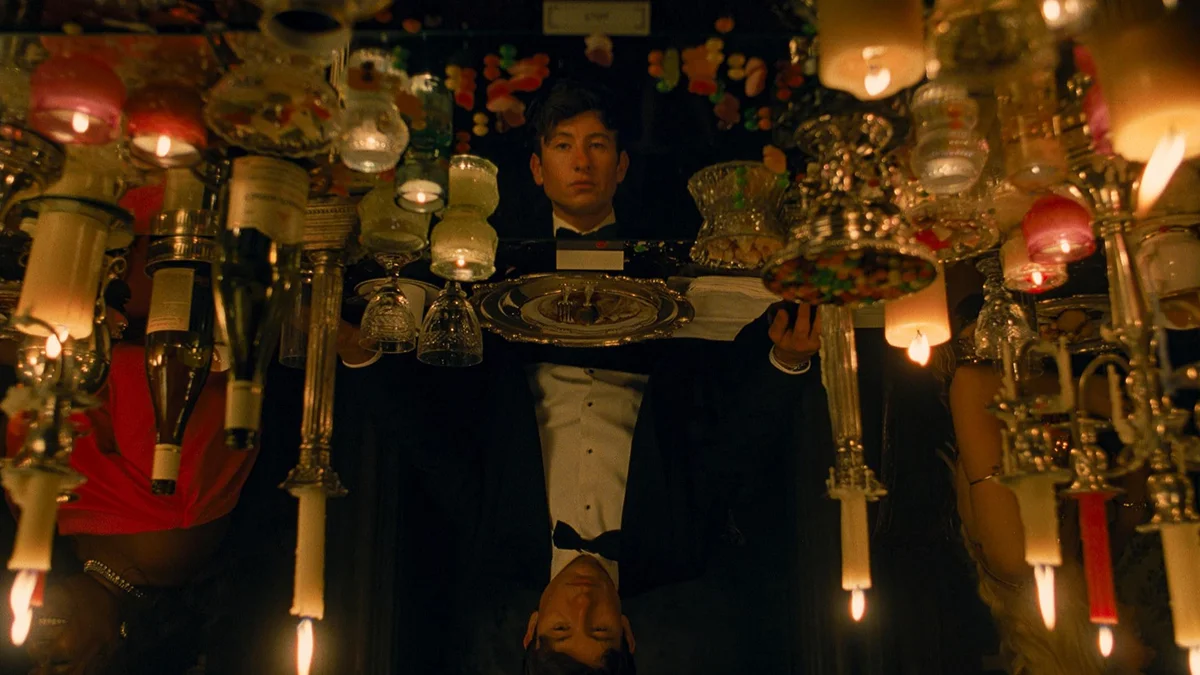
Frame from the film "Soltburn". Photo: IMDB
At the streaming, a satirical thriller was released about the Class inequality of Soltburn, written and shot by Emerald Fennell, Oscar laureate for a “girl who gives hopes.” This is a story about the unremarkable poor scholarship of Oxford Oliver, who invites Felix Katton to his super -fighting and sexual classmate to the Soltburn's suburban estate. In the Katton estate, a detective history of relations of an unknown poor orphan and privileged vultures are unfolding. In the acting ensemble-Rosamund Pike (“Disappeared”), the star of Euphoria, the new sex symbol Jacob Elordi, Richard Grant (“Witnail and Me”, “Gosford Park”) and the rising Irish star Barry Keogan (“Banshee Inisherin”). The film critic Oleg Tundra tells how the sexually provocative and sarcastic “Saltburn” makes fun of the concept of success Fake It Till You Make It, and the director collects a cocktail from all the elite stamps - and it turns out perfectly.
The low, pockmarked and inconspicuous Oliver (Barry Keogan) enters Oxford with a scholarship for excellent performance, falling into the world of heirs of aristocratic dynasties and financial empires. Every second will make him understand that he is here-an annoying error, and only the same clumsy nervous mathematician will offer chocolate in the library. Oliver's gaze immediately attracts the local handsome man, the soul of any company and the richest heir Felix Katton (Jacob Elordi) is a brunette, above him by two heads, always surrounded by a dozen girls and friends.
Once Oliver brings his bicycle, and Felix begins to show aristocratic generosity in response: and after six months, to the surprise of others, they become friends-despite the difference in appearance, status, behavior and character.
When all students go home during the summer holidays, Felix invites Oliver to his parents to his parents in Solthburn's estate for three hot months of 2007. The sun fries brighter than on Barbados, from the speakers plays the nu-rav-hit MGMT “Time to Pretend”, the baroque SOLTBERN with a green maze in the field is felt as a separate world.
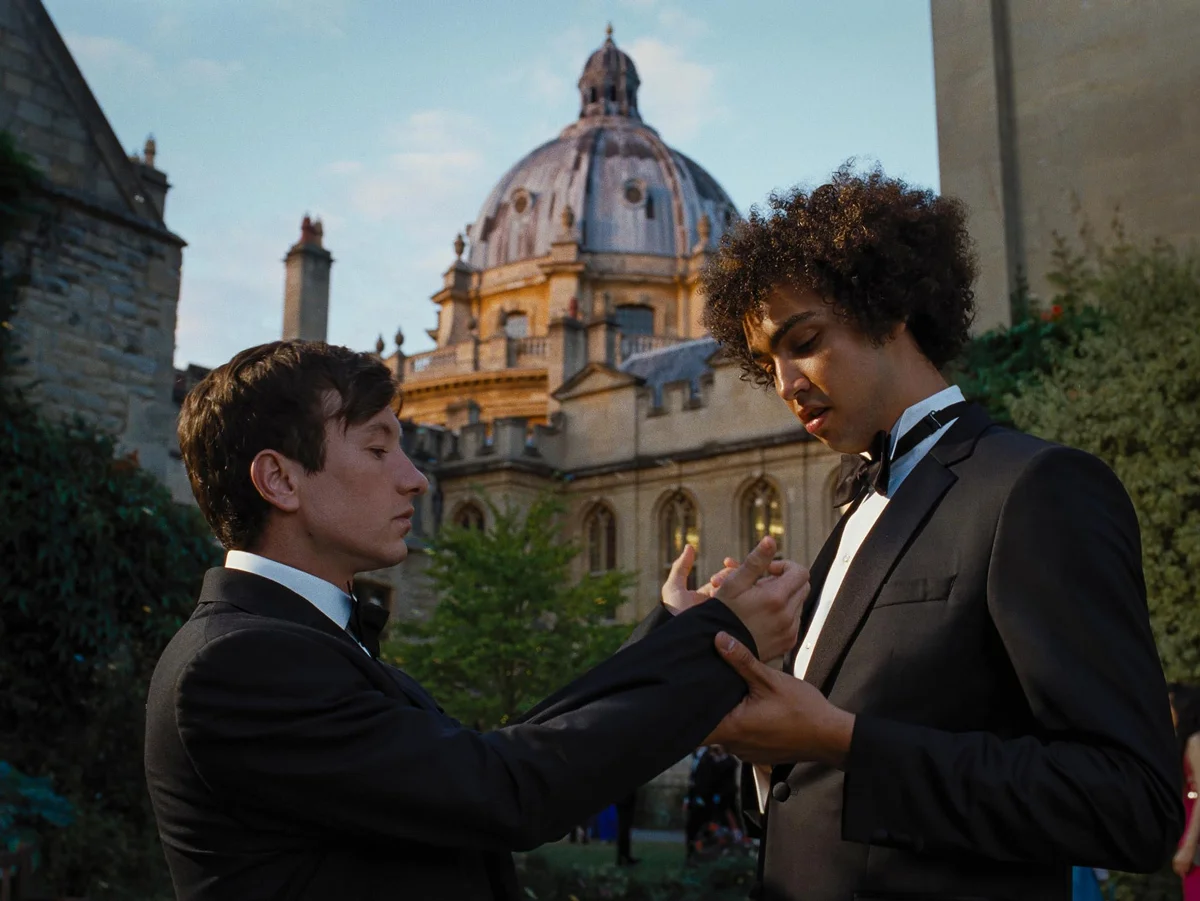
Oliver is met by a damage of the butler and fussy family of the Kattons. An inconspicuous mother with unceremonious questions and comments (Rosamund Pike) is trying to please everyone. Father (Richard Grant) reads a newspaper at breakfast, as in the First World War. The rotten Farli (Archie Madekve) - a cousin of Felix from a British interracial marriage with an American - reminds each remark that Oliver is not in Saltburn. Not sleeping at night, smoking at breakfast, the younger sister of Felix Venice (the excellent role of Alison Oliver) immediately states that the "new toy of Felix" this year was especially successful. Poor Pamela (Carey Malligan) is still in the living room - a confused red -haired girlfriend of the family, who was astraying and annoyingly stuck on the estate for a long time. Felix runs Oliver on a dimensionless house with a wooden spiral staircase, a huge library and ghosts of late relatives: all English monarchs named Henry hang over the sofas in the living room, where the “Superpers” and “Call” are watching in the evenings. What Oliver cannot fully admit to himself or to others - why he actually came to Soltburn with Felix. He is in love with him, wants him, despises him, envies him, wants to be in his place? What the hell, he forgot in this abbey downton, where he was brought by pure chance, and what is the relationship to himself?
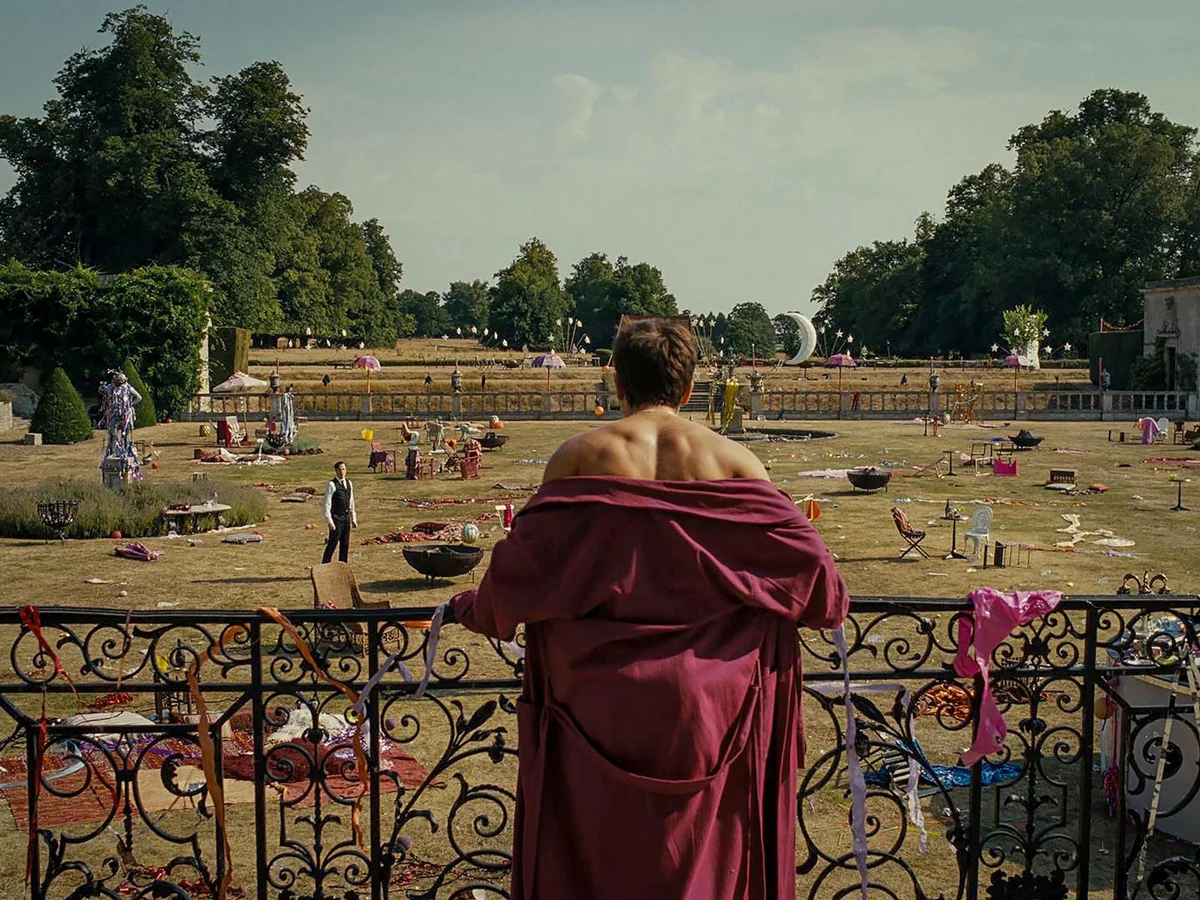
British Emerald Fennell (“killing Eve”, “Girl who gives hopes”, “Crown”) wrote her second original scenario that she was very familiar: about the Oxford of the middle of the zero, where she studied and began an acting career in university troupes.
The daughter of a famous writer and designer of jewelry, of course, was more likely in Oxford in the status of conditional felix than Oliver, but her position does not stop her at all soberly looking at her past and the British castration as a whole.
And plenty and readiness helps to pack in a two -hour film almost everything that mass culture knows about Britain. In addition to “Returning to Braidshead,” “Yes, Ivlin constantly stuck away from us,” Felix Sutton throws it) and the already mentioned “Downton Abbey”, “Atonement” and “Favorites” (by the way, the art director of Solberne Carolina worked on this film), Fennell quotes heavy artillery from films about the status and films about the status and psychopathy. Saltburn can be called Oxford “talented Mr. Ripley” or the British “Great Gatsby”, baroque “parasites” or “dreamers” of the nu-Riva era. Oliver’s adventures around the inhabitants of Solthburn at the best moments resemble the decadent “theorem” of Pazolini, and in the most whale-a family judge in the spirit of the New Year's thriller-captain “Get knives”. Well, the potato-industrial oliver itself is among the Katton family-this is H&M in the triangle of the sadness of Balenciaga (it is no coincidence that a classmate in Oxford squeamishly laughs at his clothes from the network mass market).
Already from the first frames, Soltburn shows sexual frustration, with which the main character is not able to cope, and almost the entire film we observe wild, witty and unobvious ways to realize sexual fantasies through the game, manipulation and bold by the standards of the current Kininstim Fetisha. The stocky Barry Keogan, once engaged in boxing, with his creeping animal charisma is an ideal performer of the role of the creature, which transforms into a predator or reptile. Pornographic a carnivorous look with which the camera looks at the young inhabitants of Saltburn is a conscious position of Fennell, implemented with the help of a brilliant operator of Linus Sandgren, who shot the “Babylon” and “La La Lada” Shazella and the “American scam”. Parties on the screen are usually not so delightful, sex is so seducing, and luxury is so unconditional and unbearable. According to one of the foreign film critics, "The main pornography in the film is the house."
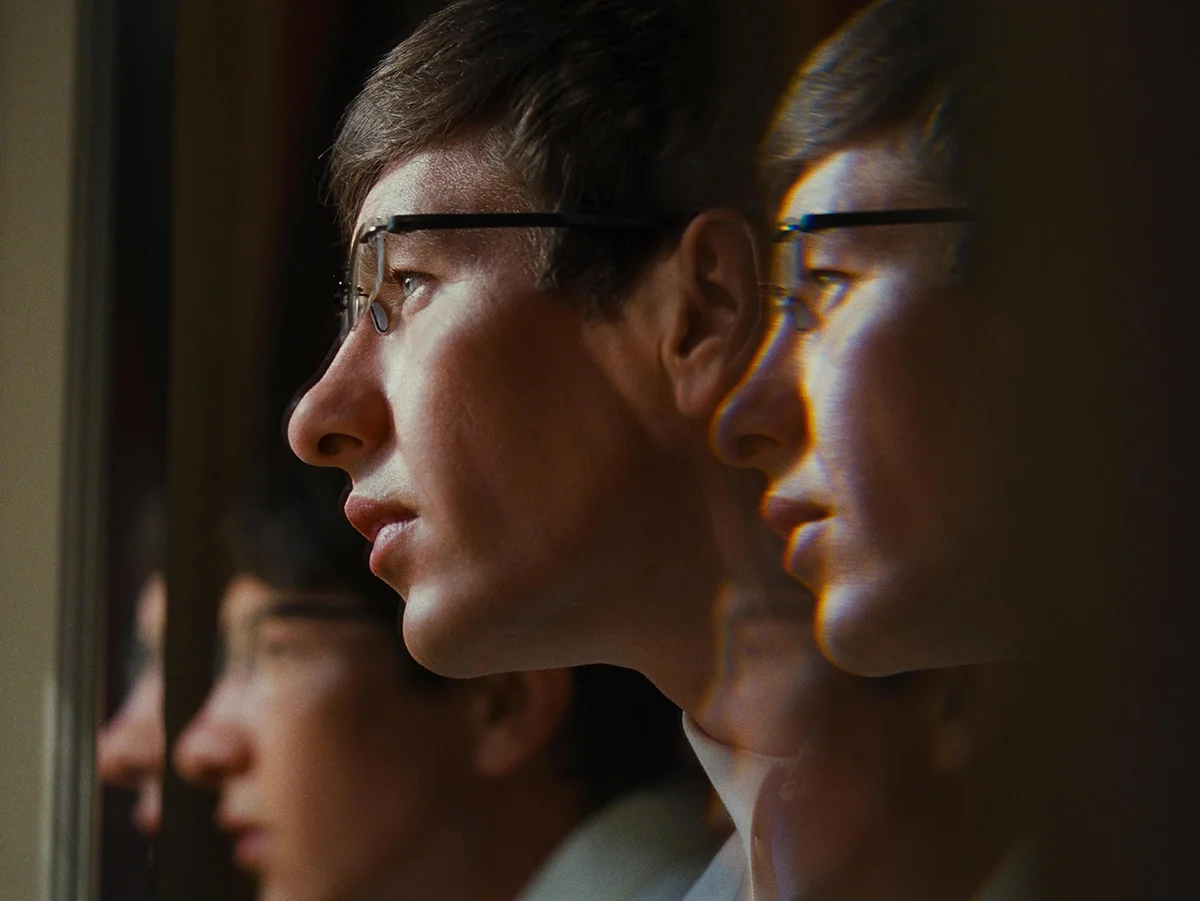
Indeed, the family estate of the 11th century, which has become a set for Soltburn (and the very fact of the very existence of this house in our times in this form) is a living proof of the frustration of Oliver and the lifelong serenity of the Sattons: when the lawns live longer, it is not surprising that blood boils for envious people.
Fortunately, Emerald Fennell in this film is not interested in morality, the choice of the right side and righteous rage. In an interview, she loves to quote her beloved director, French rebel Katrin Braya: "Sexual tension does not exist between two people, but between desire and disgust."
She is concerned about the dangerous ties of people with pathologies, dark secrets and disadvantages, everything is unexpressed and unexpressed that people are trying to embody, but achieving their own, are not necessarily satisfied.
The ambivalent relations of Oliver and Sattons are much closer to the world of classical British literature with rich patrons and poor companions than to the pragmatic reality of success, benefits and Old Money, and therefore are opened by numerous interpretations. After the final, the divinely beautiful Felix and Venice remain no less mystery than the Oliver’s mongrel - and they all live in the timelessness of Solthburne without smartphones, where in the evenings in karaoke they sing along with the Chita Pet Shop Boys: “I love you, you pay my rental.”