
Translated material
"Europeans are going!"
Fragment of the book of Marshall T. on "Russian moment in world history"
How did Russia become the European Early New Age state? Not at all like the leading countries of Western Europe. Those developed in evolutionary, relying on the public forces and institutions that had their own, and the Russian autocracy had to push its inert society with reforms imposed on top, because for several centuries it saw a threat to its existence in Europeans. So Marshall according to Marshall, the author of the book “Russian Moment in World History”, the fragment of which is published by Gorky.Starting from February 24, 2022, we were all in the face of the advancing barbarism, violence and lies. In this situation, it is extremely important to preserve at least the remnants of culture and support the values of humanism - including for the sake of the future of Russia. Therefore, the editorial office of Gorky will continue to talk about books, reminding our readers that the world remains in the world and fiction.
Marshall T. Po. Russian moment in world history. M.: The whole world, 2023. Translation from English Peter Ilyinsky. Content
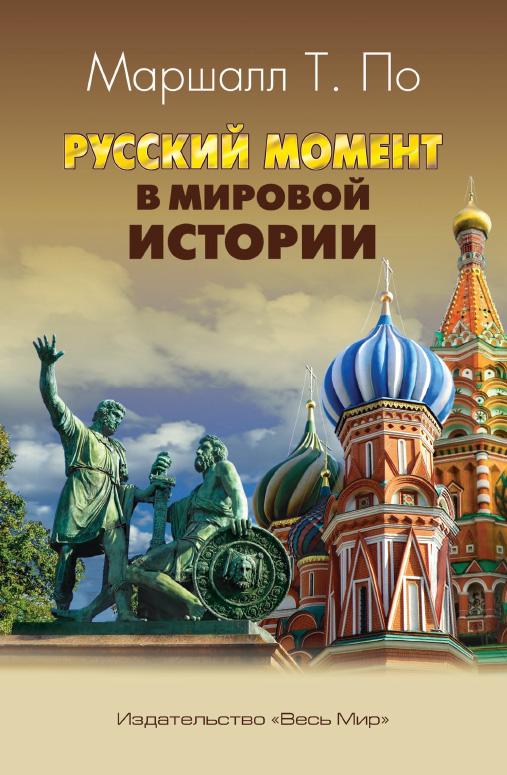 The “Russian moment” of world history began when the Moscow elite created the first sustainable society that could withstand the call thrown by Europe. The Russians achieved success where others suffered (or still tolerate) failure. We have already examined in detail the course of the reforms that formed this society in the XVI-XVII centuries. We now study their results.
The most significant consequence of the Moscow reforms was that Russia became the state of early New Age . What is it for the period and how does it differ from the previous era and from the very very new time? Of course, the answer to such a question is quite complicated, but we prudently restrict the definition of this period by the totality of four distinguishing features: the presence of a complex administrative system, the emergence of a half public sphere, the presence of proto -industrial production of goods, as well as an army armed with firearms. By the XVI century. Almost all large states of Western Europe entered the early new time. The same can be said about the Ottoman Empire, the empires of the Great Mogols and Qin. We have already shown that nothing like this can be said about Muscovy of that time. In the XV century. Rus was ruled by a tiny yard and its scribes; There was no intelligible public discourse; Her economy was entirely agrarian, and the army was equipped with cold weapons.
However, by the beginning of the XVIII century, Russia has definitely already become the state of the New Age (in the narrow sense of the word we have adopted). The country was ruled by a semi -bureaucratic organization under direct control of the throne. In the system of orders of the case, officials who had competence were conducted, and did this according to the written rules. Of course, they were poorly organized, sold and corrupt. But even the orders were a huge step forward compared to the random administration of the previous period, especially if we talk about the work of the court apparatus. At the same time, in the Russian court and in the largest cities, something like a public life was formed. Under Peter the Great, salons, assemblies, clubs appeared, a periodic seal arose. Noble people began to read and discuss what they read. Of course, the throne carefully tracked and in every possible way limited the direction of public thought, but at the same time the embryo of genuine publicity was evident. By the end of the Moscow era, the production of goods, especially weapons, was organized in a new way, much more efficiently. In the Peter's era, the Russians built the first primitive factories for the full -scale production of basic industrial goods: metal, ceramics, explosives, etc. Finally, the Russian army of the late XVII - early XVIII century. It was completely equipped with firearms, trained and well debugged. In the battles, she defeated European troops, for example, Swedish during the Great Northern War.
Despite the fact that the results were approximately the same, the emergence of the state system of early new time in Europe and in Russia was fundamentally different. For decades, historians sought to find out when and how Europe entered the path of current existence. There was no satisfactory answer. At first glance, it seems that the European path did not start. The classical heritage, the invasions of the barbarians, the Renaissance of the High Middle Ages, the Renaissance, the restriction of monarchical power, the growth of liberal thought, trade and military revolutions, the great geographical discoveries and imperialist conquests - all this contributed to the emergence and evolution of the New Age. Evolution here is a keyword, because we can definitely say that although in Europe a new era was created by human hands, it did not have any one creator. In Russia, it originated later, and its origins are much more distinct. They can be found precisely in the original response of Russia to the European threat: in the reforms of Ivan IV, Alexei Mikhailovich, Peter the Great, etc. Unlike the imperceptible and elusive evolution in Europe, the new time in Russia was generated by these people in this period as a conscious way of protecting the state.
The Russians used completely different methods of building public institutions of early new time. The reason was primarily in the presence of the necessary modernization resources: Europe had them, Russia had no Russia. Since Montesquieu was the first to indicate the role of intermediate institutions in monarchical states, all of them are structurally organized land ownership, free cities, religious congregations, guilds, local parliaments, etc., were considered primarily as examples of violations of unlimited monarchy. And so it really was, which, it seems, proves an example of Moscow Rus'. But it is extremely important that the intermediate institutions themselves were sources of social energy. They could act in the direction that was necessary for the state, which headed for modernization. Therefore, how significant was their presence in society, the strategy of the monarch-reformer depended: the monarch could buy them, if they existed, or create them if they were not. And we see how this theoretical difference was manifested on the example of Europe and Muscovy of the early New Age. European monarchs in state construction had to make relatively little effort when creating various social structures. They simply used the cash resources of their societies. On the contrary, the Russians, who had not possessed anything like that, were forced to closely engage in creating, using the methods of social engineering. This difference between the two methods of state construction can be seen in how all the above four conventional components of the New Age society were created: an extensive administrative system, social sphere, proto -industrial production and the army armed with firearms.
Creating a complex administration, European monarchs could copy the already existing samples of the organization (for example, a church organization), hire experienced leaders and, when necessary, take the members of intermediate public institutions. Of course, all this had its own political price. Buying an administration is an expensive thing and therefore required to increase taxes. The growth of taxes, in turn, entails the requirements of political rights for those who serve the monarchy and pay taxes. So the monarchies became limited. In Moscow Rus, the autocracy formed the first complex administrative system from scratch - AB OVO , since there were no initial resources for it in the Russian society. People with whose money all this was organized-merchants and peasants were completely dependent on power and were so fragmented that they could hardly demand any political representation.
Due to the complex structure of European society, the public sphere was also formed in the context of multipolarity. The court, to know, cities, church and other elements of this structure had power and an independent voice. Being endowed with the representative office that the system of a limited monarchy allowed them to have, all these organized groups could openly openly defend their interests before the royal authority in special meetings. In Muscovy, the social sphere arose in a unipolar political environment. Only the king and the church acting in unison had the right to openly express their point of view. Therefore, if the Moscow, and later the imperial court considered it necessary to open any discussion, then its means, methods and rules were very clearly regulated. The Boyarsky Duma, Zemsky Cathedrals and the Petrovsky Senate - all corresponded to this model created by the state and focused on the state of social dialogue.
In the West, protustral enterprises for the most part arose thanks to private initiative and existed, although on a limited, but to some extent free market. The royal authorities created a legal and fiscal environment that allowed carriers of organized capitalized interests of society to supply goods produced by a private or public sector to the market. In Muscovy and at the initial stage of the imperial period of Russian history, only the state had power and means that can organize new forms of production. There were no question of the markets, since in Russian society of that time there were no manufacturers and consumers of industrial goods. The state simply produced what it itself needed. In the XVII-XVIII centuries. There were hardly a mine, a manufactory or a foundry that would not be created according to the royal command. Few exceptions, for example, the Ural enterprise of the Stroganovs, only confirm the general rule.
In Europe, the creation of large, well -organized armies armed with firearms was stimulated by the existence of a market for military units. During the early New Age, the captains of the Containers (military entrepreneurs) created, trained and armed troops precisely in order to supply them to this very market. Consumers (kings, princes, cities and parliaments) well paid for the services of elite army associations, which, in turn, stimulated further improvements to weapons and tactics of actions. Swiss and Hessian mercenaries are probably the most famous examples of such entrepreneurship. In Russia of the same period, only the state could create, train and arm troops, since only it had the necessary means. There were no mercenaries, besides Europeans, in Russia.
Summing up, we can say that Rus' entered the era of the early New Age with delay and being not ready for it. She needed to catch up with Europe, relying on very limited public resources. The only resource was the preservation of the existing order of things. The fact that the state of development from the very beginning was the state, had a huge impact on the course of Russian history. In the continuation of the subsequent three centuries, when the states of Western Europe improved the republican method of government (they were pushed by the variable spiritual trends and class interests), Russia remained under the rule of the numerically small autocratic ruling class. This is not to say that in Russia there were no aforementioned incentives for changes-they were just. This also applies to the latest spiritual trends: after all, liberal political and philosophical ideas that inspired European Republicans became known and ardently discussed in Russia in the middle of the 18th century. It is enough to notice that Catherine the Great bowed before the ideas of Montesquieu. In the 19th century, Russian thinkers, relying on European political philosophy, often openly exposed the autocracy, reproaching him for injustice. The most famous of them were Westerners. As for new class interests, the Russian nobility in the middle of the XVIII century. It was released from compulsory service, after which it became a class, potentially independent politically. In 1825, a small group of nobles (inspired, of course, by European political philosophy) tried to overthrow the autocracy. Later, in the 19th century, the Narodniks and Socialists, who declared that they serve as a mouthpiece of peasantry and the emerging working class, opposed the power of the minority. They probably discovered the first campaign of political terror in the modern era, mercilessly and unsystematic killing representatives of the ruling regime. The spark was thrown, but the fire did not flare up. There were four obvious reasons.
Firstly, the ruling elite, like all the ruling elites, did not want to give in to the power of anyone. Simply put, she clung to power. Some researchers (Richard Pipes come to mind) criticized the Russian ruling class for a seemingly endless desire to hold power. But to expect something else is not to take into account the main property of human nature, selfishness. Moreover, the Russian elite managed to hold power over and over again, since there were no organized political forces in society. In the Envoy, with the exception of the Church, there were no such ones. Later, the military class (boyars and nobles) and merchants appeared in Muscovy, but they were created by the state. In Petrovskaya and Catherine’s era, Russian society underwent further changes, but neither the liberated nobility nor the growing class of citizens showed a particular interest in political power. By the end of the XIX century. Politics appeared in Russia in the modern sense of the word, but only after the state allowed its occurrence after the great reforms and revolution of 1905. When the autocracy experienced inconvenience from such political activity as in the Duma period, it was always able to drown out the voices of the opposition.
Secondly, the ruling elite could always justify the monopoly on political power and slowness in the implementation of liberal reforms with a reference to the European threat. The elites could discuss liberal reforms and even create genuine democratic institutions (Duma). But as soon as it came to serious and irreversible transformations, the fear of the invasion of the West again threw them into the arms of the autocracy, which had unique opportunities for mobilizing society. Many researchers (George Kennan was the most famous and influential of them) considered Russians fear of the West something like paranoia. According to this common point of view, the Russian ruling class suffered from a historically established complex of inferiority and transferred fear for the instability of its position to the same West. The cry was always relevant for them: “Europeans go!”, Even if it was difficult to agree with this from the point of view of a neutral observer. But the theory of Russian paranoidality is hardly quite reliable (it seems a little delusional), especially if we take into account the proven irrefutable facts from the history of Russian-European relations. Since the very first meeting of Moscow Rus' and Europe, European armies constantly invaded Russia. In the XVII century. These were Poles, Ottoman and Swedes, in the XVIII century. - Swedes, Prussians and Ottoman again, in the XIX century. - The French, the British and Ottoman again. Not a single nation on Earth experienced such a permanent and deadly military pressure. Of course, the Russian elite often began military operations itself, but the nasty side attacked much more often. In such conditions, the rulers of Russia hardly seemed reasonable to carry out political reforms that could only weaken the country in the face of the upcoming threat.
The third reason for the preservation of autocratic government was more significant than the previous ones: the weakness of Russian society and the continuous modernization of the West made the advantages of the modernization of Russia from above. We have already seen that Russia began to gain power in extremely unfavorable circumstances. The ruling class was at the sight of superior European forces. The country, which was under his authority, was politically inert, technically backward, economically poor, geographically vulnerable to attacks from all sides. Despite all these negative factors, in comparison with what Europe had, a wonderful reform program saved Russia from death and brought it to its own way to a new time. But the same reforms made Russian society the fruit of the state. This phenomenon can be considered on both sides. From a European point of view, the subordination of society to the state entails all kinds of negative consequences. Autocracy constrains political activity. Closed boundaries and tight control over public life limit cultural and technological progress. State control over the economy causes damage to the efficiency of a market economy, and militarism, supported and paid by the state, becomes an engine of imperialism. However, from the point of view of the Russian elite, the preservation of the guardianship of the state over society had enormous advantages. The autocracy provided unity of charge and prevented the exhausting political battles. Контроль над культурой способствовал политической стабильности и при надлежащем вложении средств концентрировал интеллектуальную энергию на необходимых проектах. Командная экономика приводила к тому, что, хотя и нельзя было чересчур разбогатеть, никто (или почти никто) не страдал от голода. Предметы первой необходимости производились в достаточном количестве. Милитаризация общества позволяла государству сохранять безопасную дистанцию между ним и Европой и, кроме того, приобрести международный авторитет.
Подобные полярные воззрения сами по себе есть порождение столкновения между европейским и русским путями модернизации, а потому довольно расхожи, не более того. К тому же их можно и не рассматривать вовсе, поскольку из-за геополитических условий и сущности русского общества выбор у российской элиты был крайне ограничен. Европейцы, как выяснилось, «идут» всегда, и русский правящий класс обычно располагал лишь одной возможностью: чтобы защитить себя и свой народ, он всякий раз был вынужден начинать реформы «сверху». Все государственные реформы, предпринятые Петром I, Екатериной II, Александром I, Александром II, Сергеем Витте, выполняли две функции. Во-первых, они подкрепляли тезис о том, что только самодержавие в состоянии обеспечить эффективное развитие России. Так как европейское наступление не прекращалось, а Россия всегда была ослаблена прошлой реформой, других вариантов попросту не существовало. Во-вторых, каждая реформа приводила общество в состояние боеготовности к прошлой войне. В межвоенные периоды подобное государственное давление отсутствовало, и общество впадало в застой. Когда же на горизонте начинал маячить новый конфликт, российский правящий класс обнаруживал, что его социальные ресурсы безнадежно устарели. И это, конечно, делало следующую намечаемую государством реформу еще более необходимой.
Наконец, ясно, что русские в глубине души идентифицировали себя с самодержавием и его программой, и именно это дополнительно укрепляло и то и другое. Не стоит обманывать самих себя и подобно марксистам прошлого утверждать, что в России лишь правящий класс верил в самодержавие и сопутствовавшие ему государственные механизмы. Со временем доводы в пользу русского пути модернизации, сформулированные мыслителями из правящего класса, глубоко проникли в самую суть русского общества и русской культуры. Возьмем, к примеру, популярную доктрину «русской традиции». Ее возникновение восходит к XVII в., когда в Московии впервые была озвучена идея о том, что Русь кого-то от Европы защищает. Зародыш «русской традиции» можно, например, усмотреть в ненависти староверов к любому иноземному новшеству. Сама же доктрина приобрела четкое очертание только к концу XVIII в., когда представители русской знати внезапно осознали, что европейцы-то они ненастоящие. И вдруг в их груди забилось исконно русское сердце, защита «русской традиции» стала необыкновенно модной в консервативных кругах. Хорошей иллюстрацией этой тенденции может служить ностальгическая политическая философия князя Михаила Щербатова, возносившего хвалу старинному образу жизни. By the middle of the XIX century. защита «русской традиции» стала, с одной стороны, официальной доктриной («православие, самодержавие, народность»), а с другой — полуполитическим движением (славянофильство).
Историки часто описывали русский путь к модернизации раннего Нового времени с использованием терминов, обозначавших недостатки и неудачи. Согласно таким воззрениям у русских не было стремления к демократии, открытости, свободному рынку, а также ни малейшего интереса к национальному самоопределению. Поэтому, по мнению авторов таких идей, русские и потерпели неудачу. Но такой вывод есть плод интерпретации русской истории исключительно с европейской точки зрения. Если же занять позицию более нейтральную, то дело будет выглядеть совсем по-другому. Россия совсем даже не проиграла, скорее наоборот. Страна успешно отражала европейское давление на протяжении более чем пяти столетий, в то время как все остальные неевропейские государства раннего Нового времени были сокрушены. Россия добилась этого замечательного успеха благодаря тому, чем обладала (или, точнее говоря, создала), а не потому, что у нее чего-то не было. Она обладала в первую очередь высокоэффективной, прочной, имевшей большой ресурс политической системой — самодержавием. Будучи свободной от перебоев в функционировании, вызванных политическими междоусобицами, самодержавная власть позволила русскому правящему классу идти к модернизации собственным путем, характерными чертами которого были жесткий контроль над общественной жизнью, регулируемая командная экономика и созданная государством по своему усмотрению армия. С помощью этих средств русская элита в течение двух столетий превратила примитивную средневековую страну в одно из самых могущественных государств мира. Трудно назвать подобное достижение неудачей, по крайней мере в период до Первой мировой войны.