
Translated material
Cat depression, dog pts
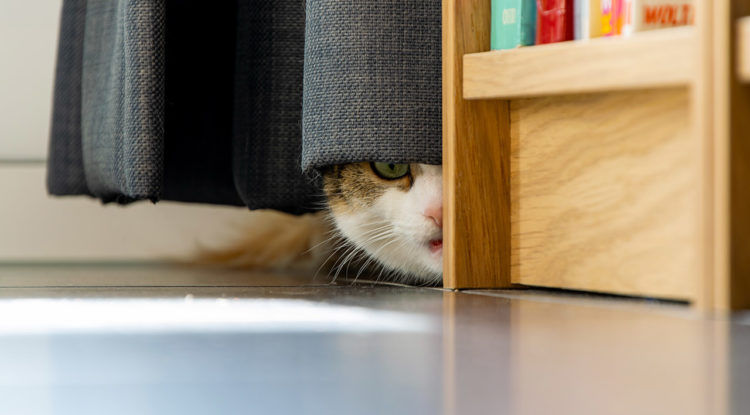
Hyde for mental disorders of pets
Every year, thousands of animals are injured because of New Year's fireworks, moreover, not only physical, but also psychological: bright flashes and loud sounds cause stress, anxiety, and even PTSRA for many pets. However, domestic animals have other problems associated with the psyche, and even the most sensitive owners can not always notice anxious signals on time. “Cold” collected everything that is known about the psychological problems of pets: from the types of disorders and symptoms to a way how to help animals cope with them.
In order not to miss the main materials of the "cold", subscribe to our Instagram and telegram .
Psychological problems in pets are a frequent phenomenon. Often they develop due to cruel treatment (scream, physical violence, punishment), lack of food or care, separation from the owner or his death, a sharp change in the situation (moving, loss of a house), lack of communication. But sometimes mental diseases are also found in animals that live in good conditions.
Another psyche of animals is affected by a long life in the nursery, police and military service. For example, dogs that are constantly in cells or on a leash are especially suffering from a lack of communication and the lack of the opportunity to explore the world around him. Sooner or later, their psyche is broken sooner or later, and the dog will bark a lot, walk in circles, try to jump out of the aviary or break off the leash, repeat the same actions, show aggression, whine, digging the earth, constantly scratching or lick.
In cats and dogs, there are different types of anxiety, obsessive-compulsive disorder, depression and PTSD. They can develop both at an early age and appear in an adult pet. Below we will consider the most frequent mental disorders of pets, as well as their symptoms, causes and methods of treatment.
Anxiety
The pet, who feels anxiety, often experiences fear or aggressively reacts to noise, people, animals and even family members. Anxiety can manifest itself in different ways and depends on the environment. For example, animals try to break through fences or windows, pull the walls and doors, hold their breath or breathe too often, try to escape when the owner is preparing to exit the house, they will be very whining and licked.
An alarming animals are more often sick, and their life expectancy can decrease. They can also be dangerous to others: bite, scratch, attack.
It is important to find the cause of anxious behavior in a pet - for example, he recently suffered stress. Try to eliminate these reasons and provide an atmosphere that is comfortable for the pet, support a certain mode (walking and feeding on schedule), add physical and mental activity and do not scold or punish the pet in any case. If the alarm does not go away, despite your efforts, several days, you need to contact the veterinarian.
According to some studies , products like Thundershirt (special compression vest) help animals feel calmer and cope with anxiety in trigger situations (for example, when you need to go in the car, go to the veterinarian, go for a walk in a new or crowded place).

Anxiety of separation
Pets are also alarming for separation, when they are left alone, separated from the owner or relatives. It manifests itself in different ways: they bark/meow, try to escape, spoil furniture, do not want to eat, piss in undesirable places, constantly licked, chew various objects. Such anxiety occurs in pets of all ages, but it is especially clearly manifested in young animals, because they are not used to being alone.
This condition is also dangerous by the fact that the pet can accidentally injure himself if the wire or other inedible item is squeezed, he can also be poisoned by domestic plants or chemistry.
To help yourself and the pet, you need to accustom him to loneliness. For example, to offer him different toys so that he has something to do, to equip a cozy and safe place (an animal home house), where a thing with the smell of the owner will lie (an old T -shirt or any other subject). It may turn out that the pet is just bored at home without the owner. In this case, it is worth trying interactive toys, as well as turn on a TV or radio before leaving for noise.
There are still special exercises that helps to accustom the animal to the absence of the owner:
- Place the animal in a separate room, leave him a treat.
- Say something with a soothing voice.
- Move for a short time go to another room or leave the apartment. Listen to the reaction of the pet, do not respond to whining, barking, meowing.
- Return, calmly welcome the animal, do not behave emotionally. Give him a treat, praise and stir him.
First you need to leave the pet alone (several minutes), each time you can increase the time that it will spend alone. It is also very important to hello hello and say goodbye to the animal when you come home or leave without it, because too strong emotions can also provoke an alarm of separation from him.
Another exercise reduces the reaction of the pet to the triggers, signaling the owner’s departure from the house (the ringing of keys, the ringing of the alarm clock, the sound of the door opening, the training and putting on the outerwear). For example, take the keys or put on outerwear, but instead of leaving home, pour the animal food, play with it or go about the usual things.
Social anxiety
It differs from the usual in that the animal behaves scary or aggressively in an unusual environment (in an unfamiliar territory or at the sight of strangers). The main symptoms: tremor, urination or defecation, attempts to run away or hide, growl, breathing problems.
As a rule, the main reason is insufficient socialization . For example, puppies or kittens did not introduce people and animals and did not show them new places. Adult pets can also experience social anxiety: for example, if they were picked up from the street, survived the abuse or lived in a closed territory without contact with a person and relatives. Dogs that have grown outside the city also often experience fear and anxiety in the city.
To treat social anxiety in dogs, you need to help them learn to explore the world. Start visiting quiet, deserted and open places (park or forest in the early or late hours). First, the dog will worry, so it is important to be near, try to play with it, encourage a treat.
To acquaint a dog with new people is best in the usual environment (at home, in the courtyard, in a park where there are no crowds and hustle and bustle).
- Make sure that around is calm and nearby there is a place where the dog can move (another room, its house, safe shelter).
- Do not pull it by the collar and do not push it with your hands. It is better to encourage it with words, treat it with treats and stroke.
- Encourage the right behavior. For example, when the dog went to the man, sniffed him, wore his tail, behaved calmly and kindly.
It is also useful to present the dog to other dogs. It is necessary that they are calm and friendly (you can call friends with such a pet for a walk or go to special socialization courses for dogs).
- Stay nearby for the dog to feel your presence.
- The meeting should be short, a few minutes are enough.
- Award the dog with a delicacy for good and calm behavior.
- With signs of fear or anxiety, increase the distance between the two dogs, and if this does not help, retire to a quiet place with your dog.
Socialization is best from an early age: you need to drive a puppy to different places, introduce as many people and situations as possible (after all the necessary vaccinations), and represent other friendly animals.
Cats may experience difficulties in socialization due to early separation from a mother, limited contact with other animals and people, as well as due to cruel treatment.
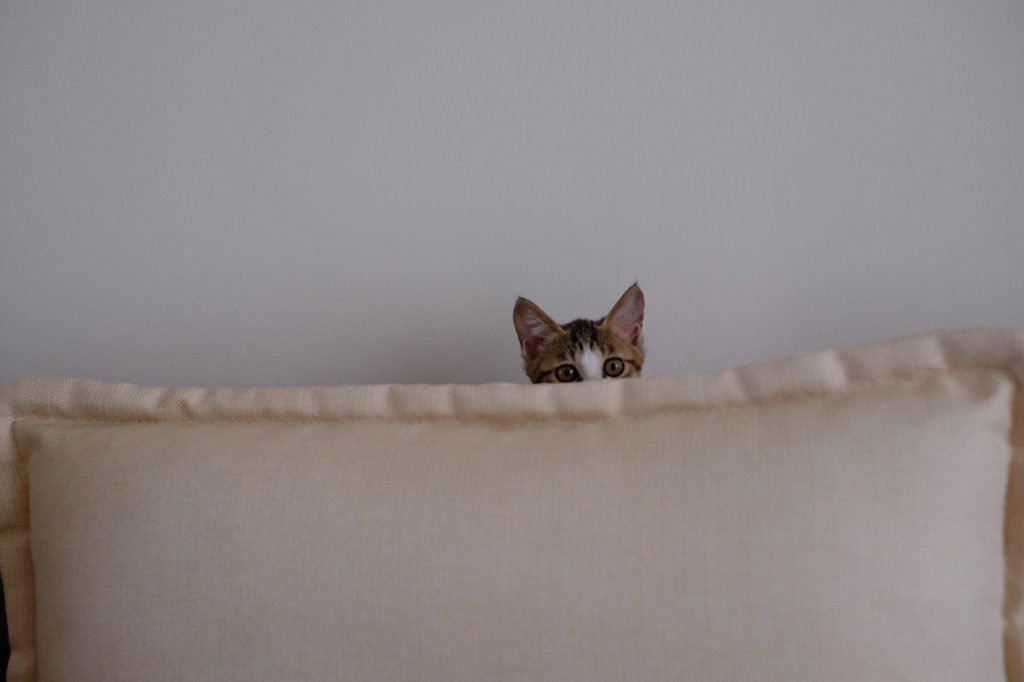
These problems can remain unnoticed for a long time and manifest itself sharply after moving, changing the owner, going to the veterinarian, acquaintance with a new person or animal.
Cats begin to hide , can show aggression and fear (hiss, attack, press their ears, pressed to the ground, run away). In a new setting, a cat can scratch furniture, meow loudly, celebrate the need in undesirable places, look tense and frightened.
To help the animal adapt to a new environment or person, you need :
- To equip a safe place where the cat can hide. Ideally - closed from above and on the sides (for example, a cat house). If the pet has favorite objects (goodies, toys, things with the smell of the owner), put them there.
- Try to observe the silence. Cats are sensitive to sharp and loud sounds (music, TV, vacuum cleaner, repair, screams), so a calm environment is necessary at least during socialization.
- Do not make sudden movements and do not touch the cat if she does not like it, especially when she leaves shelter and studies the room.
Over time, the cat will get used to the owner or new atmosphere. You can touch it if it itself shows interest (approaches, sniffs, rubs or caresses). After contact, treat it with a treat to reinforce the desired behavior.
There are situations when domestic cats do not accept other pets. The appearance of another animal can cause them a severe stress, so first you need to introduce them correctly.
Do not rush to arrange an animal physical meeting. First, they should get used to the smell of each other. At first it is better to place them of different rooms. Each animal should have its own sleeping place with litter (or towel/blanket), its own tray and bowls.
- Change animal objects with each other (blanket, towel or toys with which they sleep). If aggression occurs, remove the subject to the other end of the room. Every day move the thing closer to the sleeping place. In the process, it is recommended to return their objects to animals and repeat such an exchange several times until they get used to the smell.
- Change animals in places in the rooms (enough 5-10 minutes) and observe the behavior.
- Let the pets see each other at a distance. There should be a barrier between them to exclude a fight (for example, a slightly ajar door or a mesh). If they behave calmly, in a few days you can begin a personal acquaintance.
- Organize short meetings under supervision (several minutes). Increase time until they completely accept each other.
With age, socialization of cats can be more difficult, so it is better to do this in the first two to eight weeks of life (communicate and play, iron, represent other people). If an adult street cat always lived outside the house and did not communicate with people, socialization may be impossible . If the animal cannot be socialized, it is necessary to contact a zoopsychologist.
Obsessive-compulsive disorder
Animals often play with themselves, and such behavior is normal, but too frequent repetition of ordinary actions (pursuit of the tail, digging pits, chewing objects, licking) can signal a compulsive disorder . An animal with such a disorder can behaveunnaturally : running in a circle, endlessly chasing glare or tail, there are dirt, feces or inedible objects, try to catch what is not, combing your wool, click on the jaw, to eat objects or paws.
This disorder is dangerous in that the animal can eat toxic objects, comb to ulcers, which leads to infections, injure itself or even attack the owner and other pets.
In some cases, the OCD in dogs develops due to the features of the breed. For example, a German shepherd, Collie, Doberman, Jack-Rassel-Terrier, German Dog, Retriever, English bulldog are more prone to compulsive behavior. The reason for the occurrence of a disorder can be a large number of stimuli - therefore, it is important for treatment to provide an animal with a comfortable environment and observe whether changes will appear. If unnatural behavior continues, you need to contact a veterinarian or zooopsychologist. A specialist will help to choose medicines, if necessary, and give advice on correction of behavior.
For prevention, you can provide the pet with an active lifestyle: to take it for walks more often, teach teams, introduce other animals (if they both behave friendly) or people, often play, and also calmly communicate with him and in no case do not punish. If the pet loves silence and peace, support his physical and mental activity walks in secluded places and calm games (search for goodies, special rugs and toys with goodies).
If the pet is diagnosed with OCD, you need to try to monitor his behavior. For example, you notice that the pet begins to behave compulsively. Then try to distract it with food, toys, games or teams. It is important to have time to do this before the beginnings of the OCR episode (when it becomes difficult to stop the animal) so that the pet does not perceive this as encouraging unnatural behavior. For example, if the dog begins to chase the tail, say the “sit” command and give a treat only after its performance.
Cats with OKR need a calm routine, toys with goodies and developing games, and in some cases, sedatives appointed by the veterinarian.
Symptoms of compulsive behavior may coincide with symptoms of other diseases. Even if you are sure that this is OCR, the animal must be shown to the veterinarian and choose a treatment plan. If you cannot constantly be nearby, it is useful to equip the house so that there is something to do with a pet.
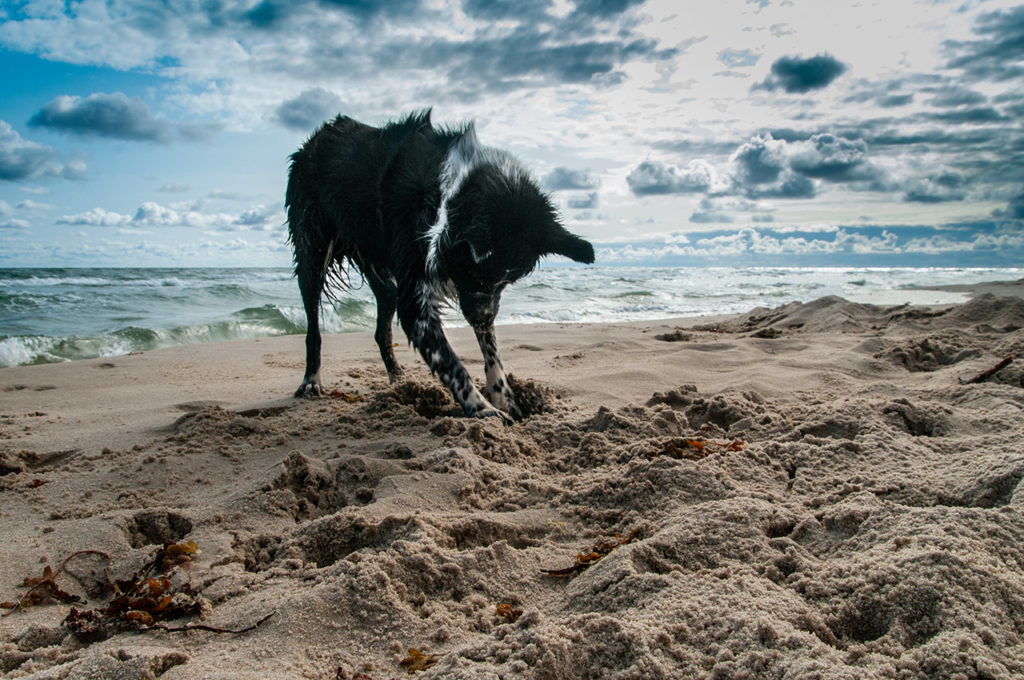
Depression
Cats and dogs in depression become lethargic. They hide, avoid contact, do not eat and do not drink, lose interest in familiar classes, sleep longer. First of all, you need to contact the veterinarian to check the physical health of the pet.
If the tests show that everything is in order with the pet’s health, and the veterinarian will diagnose depression in your animal, you need to try to find its causes. For example, it can develop due to moving, new animals or people in the house, castration or sterilization, parting with a family member or other animals, violence (bodily punishments, fights with animals). Also in young dogs (from eight to 18 months) or in females, hormonal depression has a hormonal depression after childbirth.
To treat depression, you need to give the animal time to adapt to new conditions, as well as provide a calm atmosphere. Veterinarians recommend spending more time with him and maintain intellectual activity using training, teams and developing games. Medicines are usually not used.
Post -traumatic disorder
Dogs, like people, may encounter post -traumatic stress disorder (PTSR). The main reasons are military and police service, dog fighting, injuries in childhood, abuse, life on the street.
PTSD can also develop as a result of traumatic events, such as military operations (explosions, panic, loss of the owner), the death of the owner, accidents, experienced cruelty, cataclysms (fires, floods, hurricanes, storms, destruction around, thunderstorms, thunderstorms) and even strong fright from fireworks .
The symptoms of PTSD include: anxiety, hyperbdity, sharp changes in the behavior of the pet, attempts to escape or hide, aggression, strong anxiety, loss of interest in the owner or favorite occupation, lack of appetite, disorientation, barking, meowing or whining.
If you suspect that your animal suffers from PTSR, it is important to contact a veterinarian or zooopsychologist. Treatment is mainly built on behavioral therapy, but in some cases, drugs may be required. Cats are more indifferent to treats and owners than dogs. Therefore, the treatment of PTSR in cats includes sedatives prescribed by the veterinarian, and the complete rest of the animal. It is necessary to provide the animal with a cozy shelter closed on the sides and on top (a cat house or homemade shelter from boxes, blankets or pillows). It is important to calmly communicate with a pet, not make sudden movements and not make loud sounds.
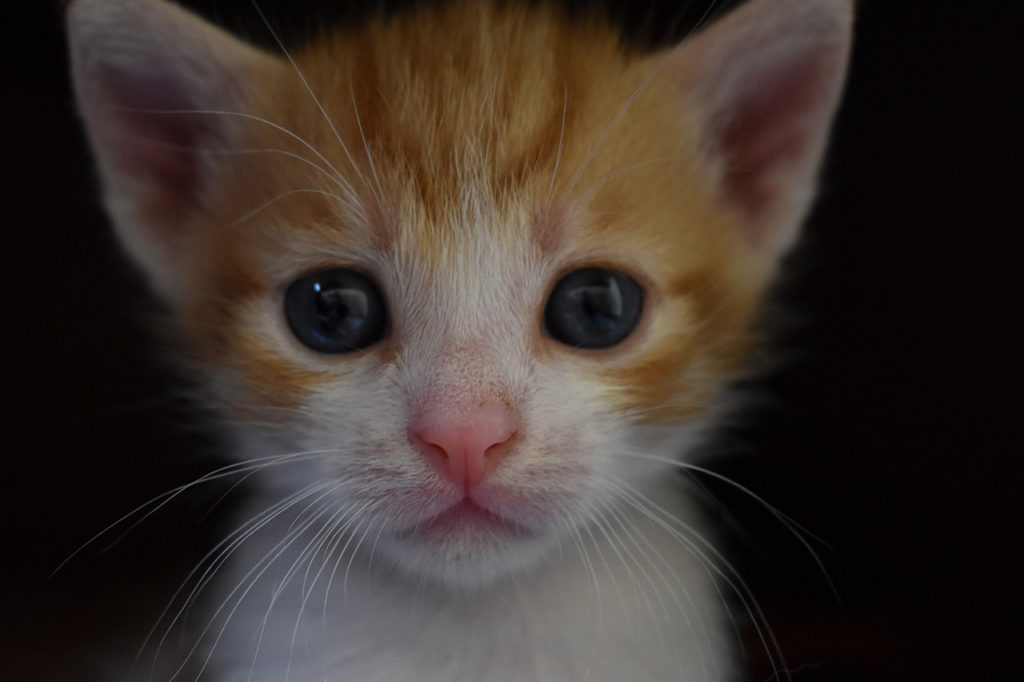
Cat hyperesthesia
Hypershecy in cats is an unusual disease that is quite rare. Cats with these diseases are very sensitive to light, sounds and touch, especially in the back.
Hyperesthesia syndrome, as a rule, is found in young cats aged from one to five years. Any breed of cats can obtain hyperesthesia, but this is more common in the oriental breeds: Himalayan, Burmes, Abyssinian and Siamese.
In cats with this syndrome, painful episodes occur, during which they painfully respond to touch in the back, do not control their actions and behavior, attack themselves or the owner. Также можно заметить следующие симптомы: расширенные зрачки, подергивание хвоста, волнообразные движения кожи, неконтролируемые и резкие движения, одышка, компульсивное вылизывание, тревожные крики, неожиданные забеги, неконтролируемая дефекация или мочеиспускание, мышечные спазмы. Кожа животного странно подергивается 20–30 секунд, затем это резко прекращается. После этого кошка ведет себя обычно.
Это заболевание довольно трудно диагностировать, потому что подобные симптомы могут наблюдаться при зуде, заражении клещами, аллергии. Поставить диагноз и назначить лечение может только опытный врач.
Точная причина синдрома гиперестезии у кошек все еще неизвестна. Это может быть связано с травмами хвоста, заболеваниями позвоночника или мозга, эпилепсией и проблемами с мышцами. Некоторые эксперты считают, что это может быть видом ОКР, в то время как другие связывают этот синдром с судорогами .
Тревога и стресс могут усиливать проявление гиперестезии, поэтому план лечения часто включает в себя снижение стресса: питание по расписанию, спокойные игры, ласковое обращение. В отдельных случаях ветеринары назначают препараты.
Как определить, что животное испытывает стресс?
Общие признаки стресса у собак и кошек : отказ от лакомств, шерсть дыбом, расширенные зрачки, нахмуренные брови, прижатые вниз или в сторону уши, проблемы с дыханием, тремор, отряхивание (будто животное отряхивается от воды, хотя его шерсть сухая), частое зевание, попытки спрятаться или, наоборот, привлечь внимание, прыжки, вылизывания, неусидчивость, вой, мяуканье и скуление, общее напряжение, прижатый к телу хвост. Кошки могут чрезмерно ласкаться к человеку или предметам, прижиматься к полу или стараться залезть на человека.
В таких случаях рекомендуется устранить возможные факторы стресса и не беспокоить животное. Можно дать лакомства, которые надо грызть, — это успокаивает питомца и снижает стресс.
Также лучше избегать активных игр (догонялки, мяч) и заняться чем-то простым (поиск игрушек или спрятанного корма). Такие игры не вызывают нервное напряжение и успокаивают животных.
Как предотвратить развитие ментальных расстройств у животных?
Заботиться о ментальном благополучии питомца так же важно, как и о своем собственном. Чаще всего подобные проблемы не появляются сами по себе и сигнализирует о страданиях питомца, физических болезнях, недостатке внимания, плохом питании или неподходящих условиях. Поэтому для профилактики стресса и психологических расстройств, важно уделять внимание главным аспектам:
- Рутина . Регулярное расписание (кормление, прогулки и игры) создает для питомца стабильную среду: он чувствует себя безопасно, а также понимает, что и когда происходит. Старайтесь избегать резких изменений в расписании или окружающей обстановке (частые переезды, резкая смена кормления, много гостей, если животное к ним не привыкло), потому что это может вызвать стресс и тревогу.
- Nutrition . Рацион обязательно должен соответствовать потребностям, размеру и возрасту питомца. Для подбора сбалансированного рациона лучше всего проконсультироваться с ветеринаром.
- Подходящие занятия. У животных есть свои предпочтения и интересы. Если питомец любит гулять и изучать все вокруг, нужно чаще водить его в новые места, если он с удовольствием играет в догонялки, нужно найти подходящие игрушки и игры (фрисби для собак или игрушки-мышки для кошек), если питомец радуется похвале после выполнения команд, старайтесь уделять больше времени умственным тренировкам и не забывайте поощрять его похвалой или лакомством.
- Physical activity. Нужно выделить время на регулярные прогулки, игры и тренировки. Для кошки можно установить дополнительные полки или площадки на стенах.
- Умственная активность. Необходимо играть в развивающие игры, учить командам, давать питомцу специальные игрушки. Играя, животные тратят много энергии на изучение нового и чаще общаются с хозяином, что укрепляет эмоциональную связь и снимает стресс.
- Социализация и общение. Социализация необходима животным не меньше, чем людям. Питомцы могут испытывать тревогу и страх в незнакомых или шумных местах, а также при общении с другими. Поэтому животное надо социализировать с раннего возраста: водить в новые места, знакомить с людьми и животными. Помочь социализировать взрослое животное могут кинологи, а также посещение специальных курсов.
- Регулярные походы к ветеринару. Визиты к специалисту помогут следить за общим состоянием животного и выявлять проблемы до появления осложнений. Такие визиты включает проверку на наличие паразитов, проблем с кожей, зубами, а также общего состояния здоровья.
- Полезные игрушки и одежда. В интернет-магазинах можно найти полезные приспособления: миски для медленного кормления, неваляшки и коврики для поиска лакомств, автокормушки, головоломки, двигающиеся игрушки и игрушки со звуком. С ними питомцы не будут чувствовать скуку в течение дня и смогут играть без хозяина. Склонным к тревоге питомцам может помочь специальный компрессионный жилет: он мягко и бережно давит на тело питомца, из-за чего тот чувствует себя спокойнее.