
Translated material
Before a wonderful fall
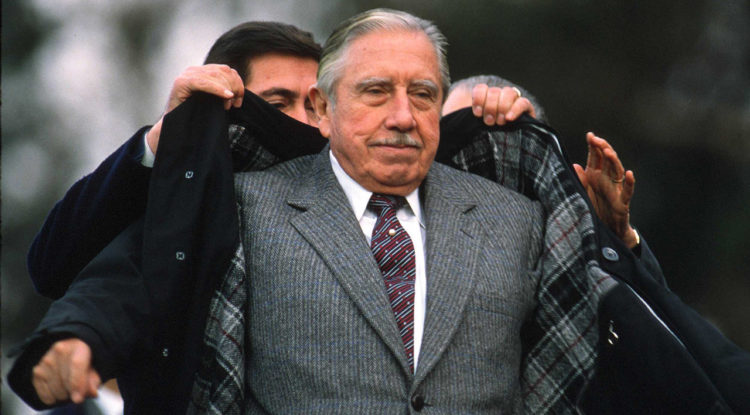
How the dictators inspiring horror felt just a year before the loss of power
History knows many examples when the most stable regimes collapsed, contrary to expert forecasts. “Cold” publishes an encouraging New Year's text about what was happening with six famous tyrants exactly a year before they were overthrown.
In order not to miss the main materials of the "cold", subscribe to our Instagram and telegram .
Probably, Vladimir Putin celebrates the New Year in a good mood: the Western media write about the failure of Ukrainian counterattack and the fatigue of European citizens from the war; Relations between the Gradesian and military authorities of Ukraine are at their lower point; The Russian economy has suffered less from sanctions than it was expected.
The main domestic political contradictions also seem to be settled: the rebellion of Prigogine failed, and its initiator was blown up in the sky over the Tver region; Alexey Navalny is serving a deadline in prison; Even Igor Strelkov, who criticized Vladimir Putin from a law-conservative position, is in conclusion. The March presidential election has not yet promised big surprises: most recently, the CEC even refused to allow an independent candidate to Ekaterina Duntsov to participate in the campaign.
But history shows that often authoritarian regimes were destroyed at the moment when this was least expected. In this text, we will talk about how six the horror of the horror of the dictators of the past felt a year before the complete loss of control over the events taking place in the country. Some of them were convinced that they enjoy unconditional folk support and loyalty of elites; Others are confident in the ability to suppress any disagreement by force, others seemed indestructible even experts-political agencies. However, each of them had to leave their post in a matter of months. Let's try to figure out why we could not predict these events in the past and are unlikely to be able to do it today.
Gambia-2015: how dictator-Homofob lost the election of ex-security guard
This small country was often called "North Korea of Africa." In 1994, the young Lieutenant Yayu Jamme headed a military coup and has not since let power out of his hands, re -elected in dishonest elections. In one of the public speeches of 2015, he promised to cut the throats to gays, in the other he called them the reason for the "death of empires." Then Human Rights Watch released a report entitled “The State of Fear”, which spoke in detail about the life stages introduced by the Jamma for “homosexuality under aggravating circumstances”, countless arrests, murders, as well as torture of journalists, activists and students. This, as well as the depressing poverty, did not greatly delight the inhabitants of Gambia, who massively emigrated to European countries, despite the risk of dying of smugglers or drowning at the intersection of the Mediterranean Sea.
The commander of the Army of Gambia in every possible way emphasized loyalty to the dictator: "We love you, Your Excellency, and these bonds of love and leadership are eternal." The soldiers went to rallies in support of Jamm. In part, such a demonstrative adoration was due to a truly detective story that occurred in Gambia a year earlier. A small group of emigrants who have entered into an alliance with a resigned high -ranking security official tried to organize a coup on their own savings. They managed to recruit a couple of dozen Gambians, bring a weapon into the country and attack the president’s residence. Contrary to expectations, the military were ready to fight for their leader: the coup failed, some of the conspirators were killed, others appeared before the US court (whose citizens they were) for violation of the “neutrality law”, which prohibits participating in private military operations against “friendly countries”. An attempt to make a egg Jamma to further strengthen the repression (the last independent radio station was closed ), and the military - in every possible way to demonstrate devotion to the dictator.
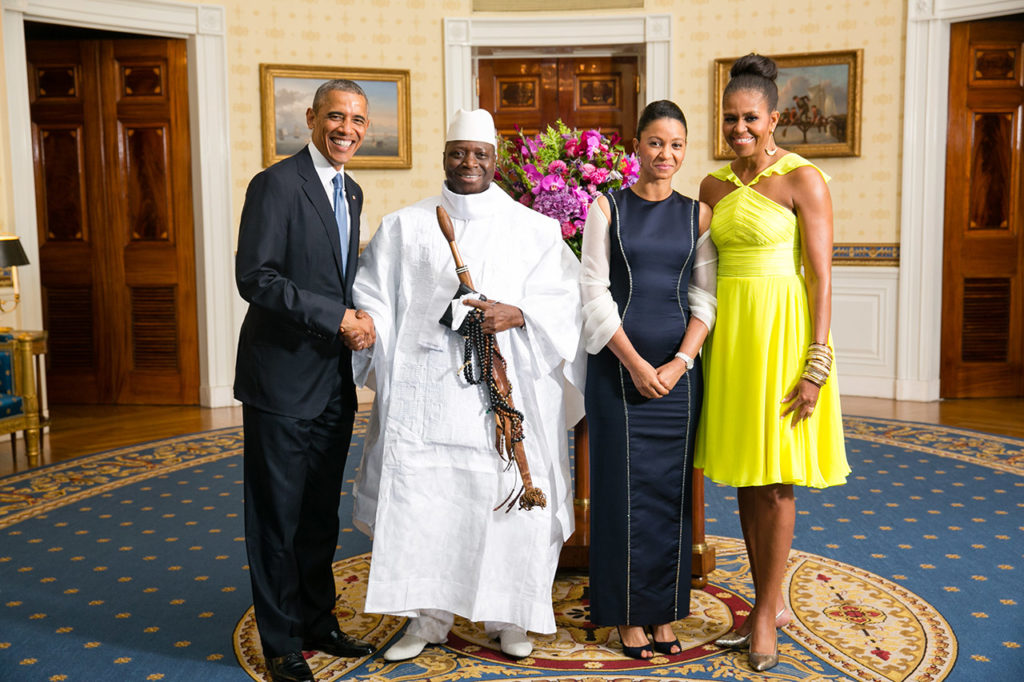
In 2015, many experts agreed: an unsuccessful coup attempt only strengthened the Jamma regime. The Washington Post released the text with the heading “A long -term dictator of Gambia in the near future is not going to go anywhere”, one of the journalists specializing in the region wrote in The Guardian: “The coup did not just fail, he further aggravated the situation.”
They were mistaken. In 2016, Jamma sensationally lost the election to the former guard of the London supermarket, which was supported by the main opposition forces. At first, the dictator promised to peacefully transfer the authorities, but quickly came to his senses and demanded a second vote, referring to violations when calculating the ballots. Despite this, he still had to go into exile after several leaders of neighboring African countries threatened to overthrow him by force. Neither the generals, nor allegedly devoted supporters, who had previously previously reached the marches in his support, saved Jamma.
Libya-2010: Murder Muammar Gaddafi
A year before his overthrow and death, Muammar Gaddafi, who has ruled by Libya in 1969, not only enjoyed hegemony in domestic politics, but was probably proud of the status of an influential geopolitical player. In 2010, Gaddafi visited Italy to negotiate the limitation of the flow of African migrants crossing the Mediterranean Sea. In exchange for these services, Gaddafi demanded five billion euros from the European Union. In the same year, the dictator came up with the initiative to divide Nigeria into two states, called for Jihad against Switzerland for the ban on the construction of minarets and publicly dreamed of creating the "United States of Africa."
Rich oil reserves allowed Gaddafi to provide the Libyans with an acceptable standard of living, and also made his own family fabulously rich. One of the sons of the dictator met 2010 in Beyoncé, the other owed the Italian hotel almost half a million US dollars and made a career as a Hollywood producer.
Gaddafi himself was also a tendency to extravagant luxury: the dictator loved to travel with a detachment of bodyguards, purebred Arabic horses and the Bedouin tent, which was used as a temporary residence. During one of his visits to Rome, the dictator hired 200 “attractive, well -dressed” Italians “under the age of 35 years and more than 1.7 meters” to give them a lecture on the purpose of women and recommend to accept Islam. After the meeting, the participants were awarded on a copy of the Koran, the Green Book (a pretentious pseudo -philosophical treatise of Gaddafi) and 50 euros. “We expected at least a snack,” one of the participants in the meeting later complained .
These “cute” details should not shade the fact that Gaddafi brutally pursued and physically destroyed thousands of political opponents (including abroad). In 1996, for example, in the prison of Abu Salim, more than a thousand people were shot at a time.
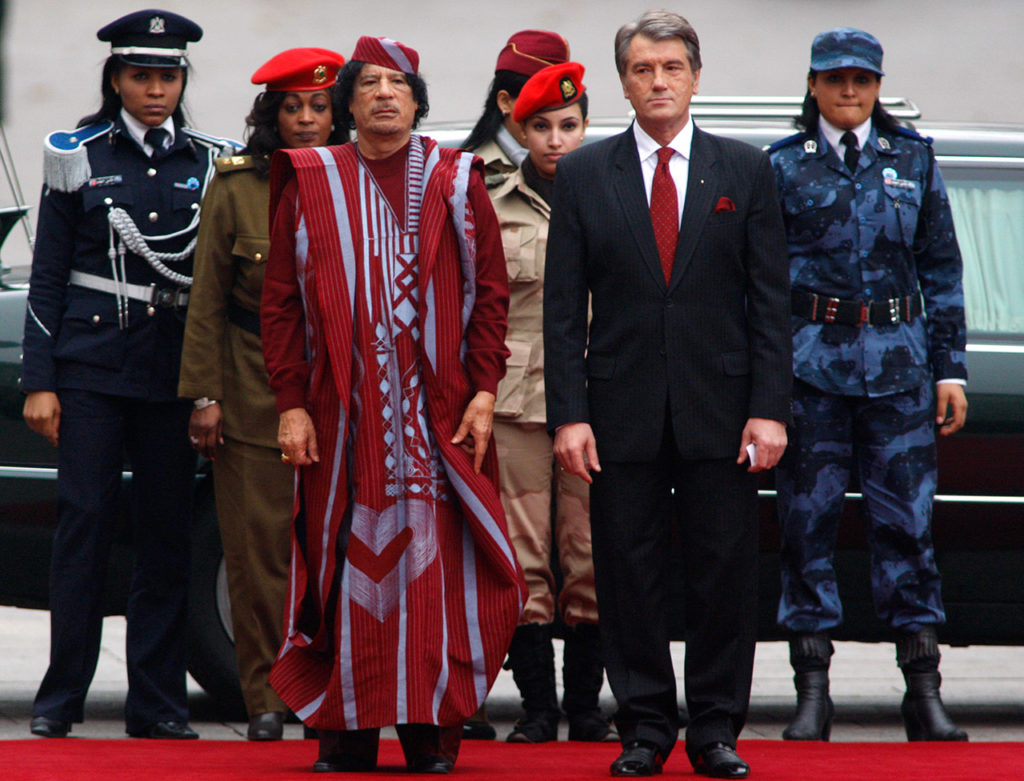
The regime seemed extremely stable: in 2009, the country was magnificently celebrated the fortieth anniversary of Gaddafi's reign, houses and advertising shields were abundantly decorated with his portraits, streets - crowds “glorifying” the dictator. But excessive self -confidence played a cruel joke with Autocrat.
In early 2011, in the second largest city in the country, Benghazi, protests that were triggered by the arrest of a famous lawyer and several opposition activists broke out. Instead of trying to agree, the government applied gross power. Outraged Libyans began to protest even more actively, many took up arms. When the army of Gaddafi practically defeated the rebels, the UN Security Council authorized the armed intervention of foreign states in the civil war to protect the civilian population. The forces of the international coalition destroyed a significant part of the troops faithful to the Libyan leader, and during one of the attacks a column of equipment in which Gaddafi himself was hit. The rebels captured Autocrat captured and brutally killed, later putting his body for public display in an industrial refrigerator.
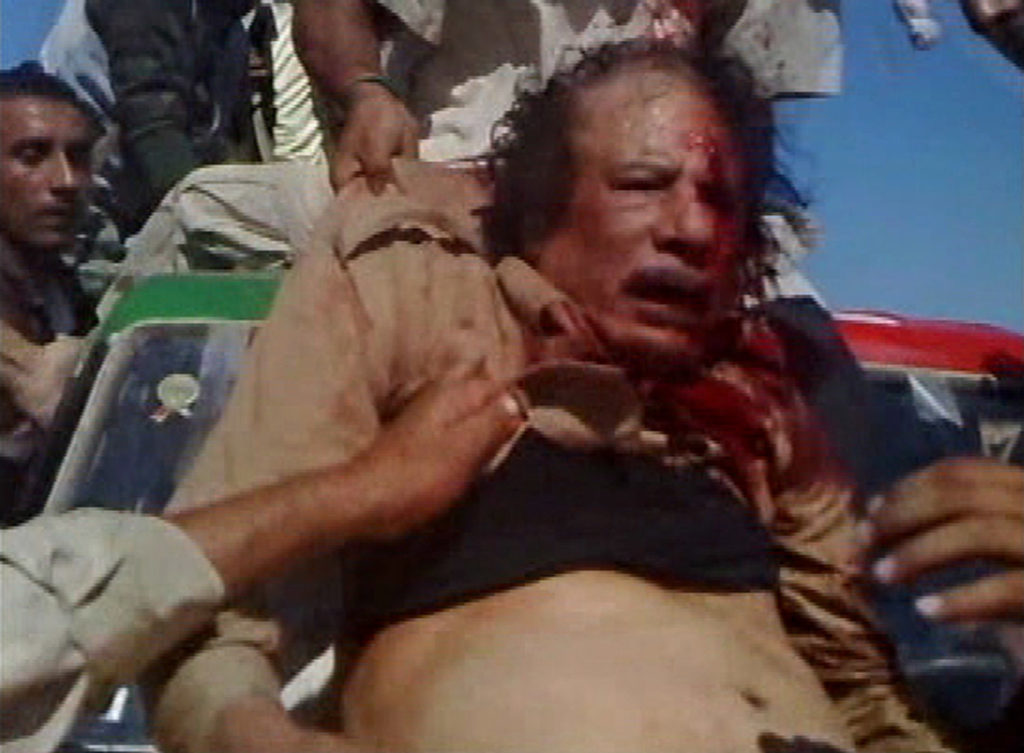
As in the case of Gambia, the protests and subsequent overthrow of Gaddafi have become a great surprise for the international community. In the essay "Why were we surprised (again) in the Arab spring?" A professor of sociology from New York University admits that he does not know about the existence of any political scientist or sociologist who would be able to predict a wave of 2011 protests. Moreover, he notes that the three country covered by the protests - Tunisia, Libya and Bahrain - in 2010 were classified as an authoritative “index of fragile states” to the category of prosperous countries.
Chile-1987: Sudden "No" from 56%
General Augusto Pinochet seized power in 1973, overthrowing the democratically elected left -handed government. Thousands of people were persecuted: political prisoners were kept and tortured directly at the giant Naconal stadium. Later it turns out that in total about 40 thousand people suffered from the actions of the regime, more than three thousand were killed.
In order to legitimize the regime, Pinochet and its junta partners organized the 1980 constitutional referendum, in which there were numerous falsifications and which established an unlimited reign of the military up to the next vote in 1988, when the Chileans could again extend the mandate of autocrats for another eight years. A small spoiler: in 1988, Pinochet will lose, and Chile will take the path of democratic reforms. But first we will move to 1987. One of the central political events is the visit to this conservative Catholic country in the Pope, which openly calls the Chilean regime “dictatorial” and requires the protection of human rights.
Apparently, Pinochet believes that in 1988 he will again be able to enlist the support of the Chileans even in relatively competitive “elections”. The government legalizes several moderate opposition parties, will allow political emigrants to return to the country and allow the work of independent media.
At the same time, Pinochet begins its own election campaign : some of the methods used by it may seem well familiar to Russian voters. Pinochet receives the lion's share of the screen time on television channels controlled by the government; Citizens dependent on the state are blackmailed by deprivation of subsidies in case of voting against the presidential candidate; Loyal Chileans receive additional benefits that vary from bags with flour to bicycles.
Despite this, the opposition parties managed to take advantage of the unexpected “thaw” and with a common effort conducted a large -scale campaign “Vote against!”. It was enough for almost 56% of the Chileans in 1988 to say no Pinochet. The dictator clearly did not expect such an outcome and tried to enlist the consent of the other members of the junta to maintain power by force, but received a refusal . In 1989, the first democratic elections in Chili took place in Chile.
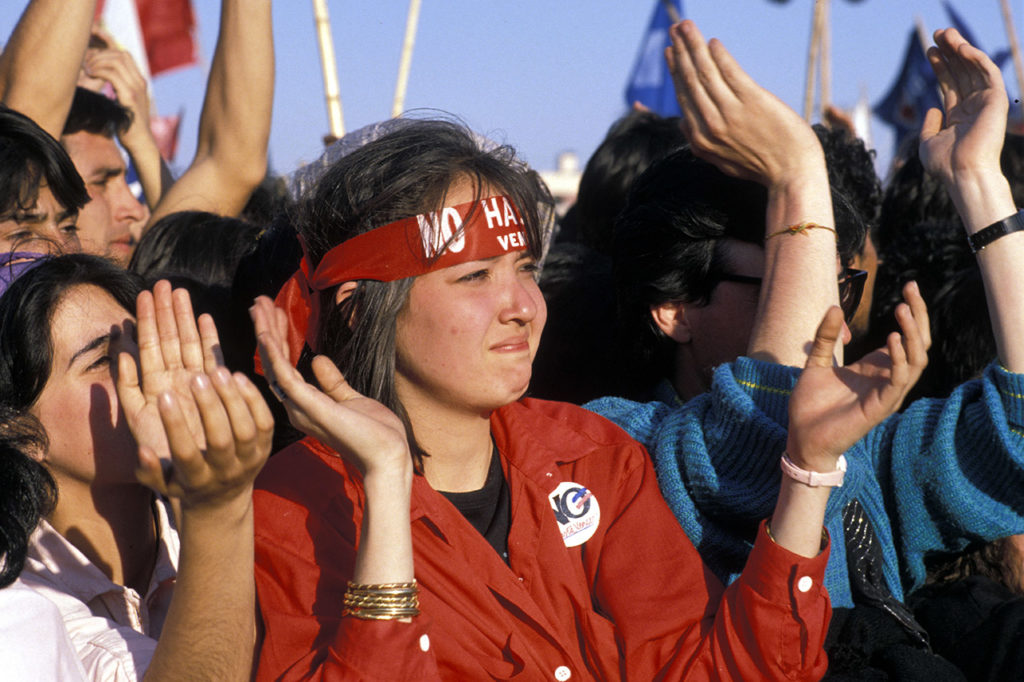
The Chilean regime did not look as confident as, for example, the Libyan. In the country, massive workers' strikes regularly occurred , and in 1986, left -wing radicals organized an attempt on Pinochet, which was nearly crowned with success. It seems amazing not the renunciation of the general from the authorities, but the very consent to moderately liberal reforms and the conduct of plebiscite. In addition to the visit of the Pope, among the reasons for this decision, disagreements inside the Chilean junta are called and Pinochet’s conviction of the ability to win in the referendum. Political science is well known that due to the suppression of freedom of speech, autocrates experience an acute lack of objective information, which sometimes leads to the adoption of suicidal decisions.
Iraq-2002: US invasion shortly after 100% in the elections
If you ignore everything that we know about non -homocratic regimes, and superficially study the recent history of Iraq, Saddam Hussein may seem the most popular politician known to humanity. In 2002, he won the presidential election, receiving 100% of the vote. Of course, the turnout also amounted to 100%: all 11.5 million voters allegedly came to the sites. The announcement of the results was accompanied by a statement by one of the Iraqi officials that "this is a unique manifestation of democracy, which surpasses all other forms of democracy even in those countries that besiege Iraq and try to strangle it."
In 1990, Hussein tried to capture the neighboring Kuwait, of course, justifying the attack, including the foggy “historical law” of Iraq to this territory. The coalition led by the United States quickly defeated Saddam troops and restored the independence of Kuwait, but did not overthrow the dictator. Instead, the UN introduced against the aggressor a regime of strict sanctions, which did not cause Hussein himself serious harm, but led to a real humanitarian catastrophe: Iraq citizens were forced to fight for survival in the conditions of a shortage of first necessity.
Before the invasion of Kuwait, Saddam Hussein managed to fight with Iran for eight years, as well as apply chemical weapons against his own citizens, killing about five thousand inhabitants of the Kurdish city of Khalabja. His government was engaged in the persecution of Iraqi Maadans, reducing their number in the area of historical residence from 250 thousand in 1991 to only 40 thousand to 2003. Iraqi adolescents aged 10 to 15 were trained with hand -to -hand combat, handling and landing from helicopters, and for the families of minor fighters threatened the withdrawal of grocery cards if they could not send their children to their children to training camps.
In a word, Saddam Hussein did not look like a politician who enjoyed unconditional folk love. In addition to achieving the phenomenal result in the elections in 2002, the dictator was noted by the statement that his country was not engaged in the development of nuclear weapons, and also tried to apologize to Kuwait (apologies were not accepted).
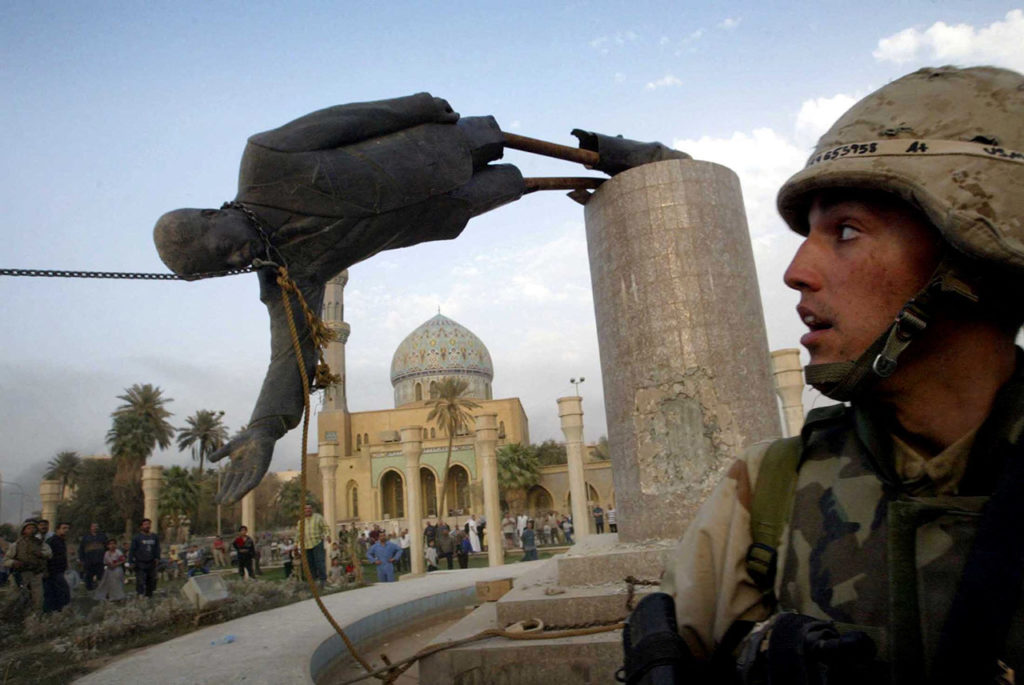
This did not help stop the impending disaster. In 2003, after Saddam's accusation of the development of weapons of mass destruction and support for terrorism, the coalition led by the United States invaded Iraq, Hussein was captured, condemned and executed in 2006. The Iraqi army failed to provide serious resistance, many military deserted. Among the main reasons for the defeat of Saddam, analysts called the unwillingness of military personnel to fight and die for the sake of the dictator. The recent 100% support seemed to disappear. Modern autocrats are much more cunning and try to limit “folk love” at least 70–80% of the vote. But there is no doubt that in the case of overthrowing the regime, they will evaporate as quickly as that of Hussein.
Portugal 1969: a dictator who did not understand that he was all
The next hero of the text, Antoniu Salazar, is strikingly different from the tyrants described above. Despite the fact that he managed to conduct a non -democratic way to hold power in Portugal from 1932 to 1968, contemporaries characterized it as an extremely ascetic and modest intellectual, a devout professor of economics. The number of victims of political motivated murders was also calculated “only” by hundreds, and not thousands - not the worst result for 36 years of reign. However, in many ways, such stability was ensured by the effective work of the powerful secret police of PIDE. According to some estimates, about every four hundredth Portuguese (20 thousand people) was its employee, and every fortieth (200 thousand people) was at least an informant.
Salazar is of interest to the reason that the elderly dictator most likely did not even know about the loss of power after the actual resignation. These events were remarkably described in the book of Alexander Baunov “The end of the regime. How the three European dictatorships ended. ” In 1968, Salazar survived a stroke and lost the ability to rule the country, and then the elites appointed the new Prime Minister of the progressive politician Marcel Caetan, who began to carry out liberal reforms. When Salazar came to his senses, the former subordinates decided not to injure the dictators of the news of the resignation, instead, having played a large-scale performance for him: they held fake meetings, brought documents to the signature and printed the issue of the government newspaper, where the Salazar was still listed as the Prime Minister. Baunov writes that, in addition to a sense of compassion, the conservative environment of a retired autocrat was also motivated by the desire to provide their own survival: “Salazar was a guarantor for them that the changes would not go too far.” This performance continued until his death in 1970.
Despite the development of technology, modern autocrats can theoretically threaten a similar fate. Если они получают информацию от строго ограниченного круга доверенных людей, не исключено, что те рискнут взять гораздо больше власти и не поставят в известность своего начальника.
Румыния-1988: от « революция невозможна» до попытки побега и расстрела
Протесты Арабской весны 2011 года были не единственным масштабным событием, которое не было предсказано политологами и экспертами. В статье 1995 года экономист Тимур Куран отмечал , что коллапс коммунистических режимов Восточной Европы в конце 1980-х годов тоже застиг мир врасплох. В центре его аргументации — проблема «фальсификации предпочтений», свойственная авторитарным режимам.
Дело в том, что, когда высказывания своих политических взглядов на публике связана с угрозой для жизни или общественным осуждением, люди склонны держать рот на замке. Эта «спираль молчания» разрывается в тот момент, когда у сравнительно небольших групп полностью заканчивается терпение и они начинают открыто протестовать, тем самым показывая согражданам, что те не одиноки в своем недовольстве. В результате к движению несогласных присоединяется все больше людей, а режим начинает разрушаться.
Даже к концу 1980-х Румыния казалась одним из самых сильных звеньев среди социалистических стран Восточной Европы. В отличие от Венгрии и Чехословакии страна не имела опыта восстания против коммунистического режима или попыток внутренней либерализации. В отличие от Польши в Румынии не существовало сильного низового протестного движения. Управлявший страной с 1965 года Николае Чаушеску сумел создать культ своей личности: его называли «Вождем» и «Гением Карпат», книжные магазины выставляли на витринах 28 томов его сочинений, жену диктатора Елену позиционировали как гениальную исследовательницу-химика, хотя у нее даже не было подходящего для серьезной научной работы образования. В начале 1980-х годов Чаушеску помешался на идее достижения полной независимости от зарубежных стран и озаботился погашением внешнего долга. Из-за режима жесткой экономии граждане недоедали и мерзли, зато Чаушеску к 1989 году смог объявить Румынию страной, полностью расплатившейся со своими долгами.
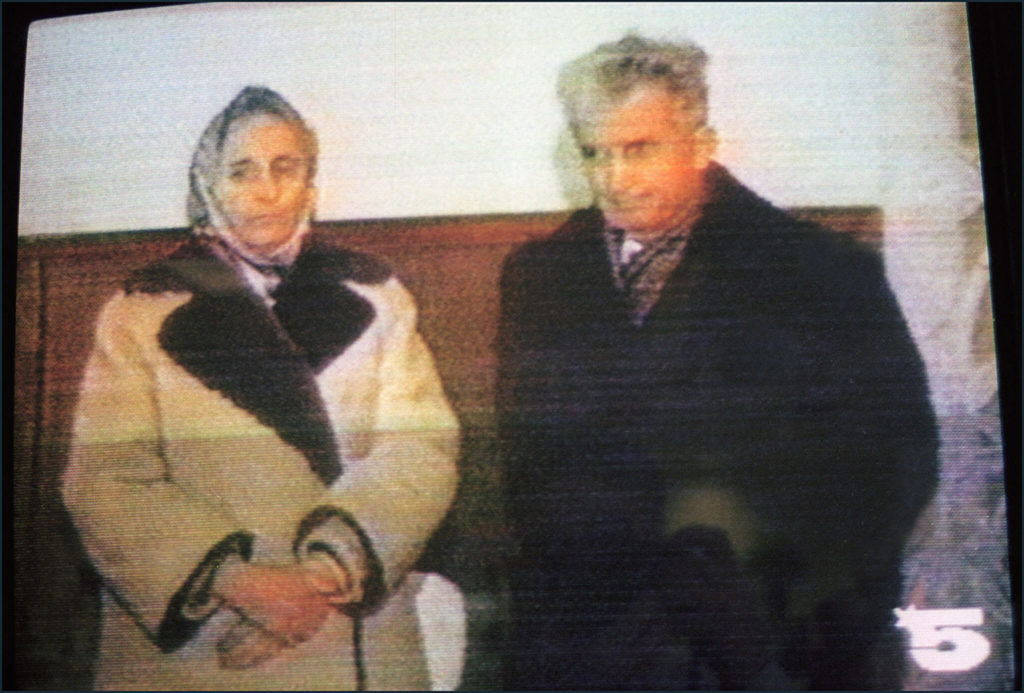
Первый президент постсоциалистической Румынии Николае Чаушеску якобы говорил , что революция в этой стране была невозможна, поэтому ее нужно было инсценировать. Но революция все-таки случилась. В самом конце 1989 года жители румынского города Тимишоара пытаются защитить от преследований пастора-диссидента Ласло Тёкеша, силовики открывают по толпе огонь, гибнут десятки людей. Чаушеску, разумеется, винит в протестах «зарубежные круги» и «иностранных шпионов». Спустя несколько дней диктатор собирает в Бухаресте митинг лояльных «сторонников», пытается произнести перед ними речь, но толпа начинает свистеть и улюлюкать: это видят и те, кто наблюдает за митингом по телевизору. Чаушеску до последнего не верит в то, что его «собственные» граждане на самом деле — против него, думая, что его просят говорить погромче. В конце концов растерянного диктатора уводят с балкона резиденции. В городе начинаются беспорядки, а армия переходит на сторону восставших. Чаушеску вместе с женой бежит из столицы, но оказывается в руках военного трибунала, который выбирает в качестве меры наказания расстрел и немедленно приводит приговор в исполнение.
Конец диктатуры и начало демократии — это одно и то же?
Список неожиданно рухнувших авторитарных режимов вполне мог бы быть дополнен строго противоположными случаями, то есть теми, когда большинство наблюдателей делало ставку на скорый коллапс системы, однако эти диктатуры здравствуют и по сей день. Здесь можно вспомнить недавние примеры Сирии, где Башар Асад продолжает удерживать власть, несмотря на продолжающуюся с 2011 года гражданскую войну , а также Беларуси, которую по-прежнему контролирует Александр Лукашенко, хотя в 2020 году протестное движение казалось слишком сильным, чтобы сохранить автократу шансы на выживание.
Это не означает, что диктаторы теряют власть исключительно в тех случаях, когда этого никто не ждет, а лишь то, что любой категоричный прогноз следует воспринимать с большой осторожностью.
Другая, еще более серьезная проблема состоит в том, что конец авторитарного режима не обязательно означает установление демократического правления. Статистически, это происходит менее чем в половине случаев. Поэтому, формируя собственные ожидания относительно будущего страны, следует оценивать, стремимся ли мы просто к смене режима или его последующей либерализации.