
Translated material
Martyr John Karhapi
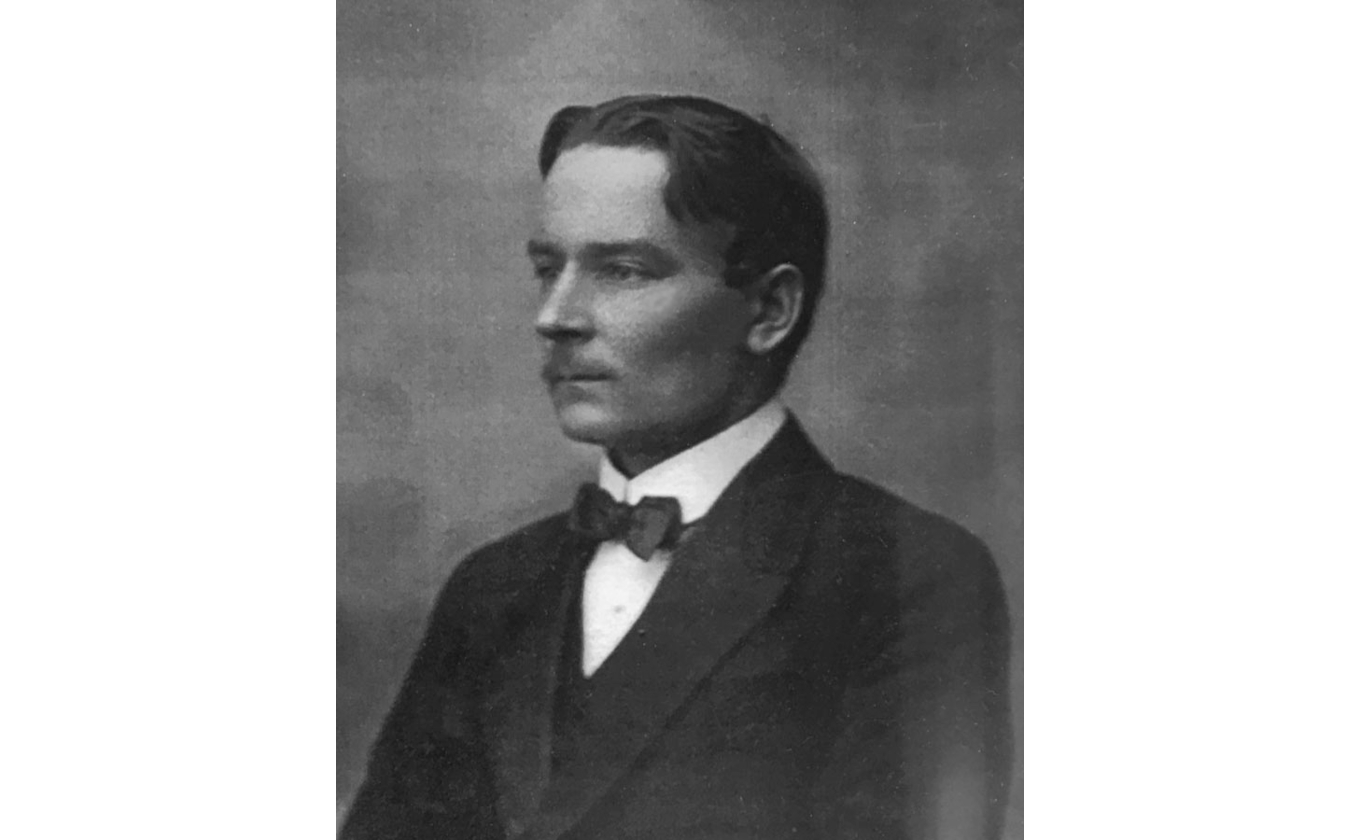
Ivan Vasilievich Karhapi originally from the village of Sonkayranta halfway between the city of Yoensuu and the village of Ilomantsi. The local Orthodox were then included in the parish of Ilomantsi.
Ivan married, he had two sons. The eldest, Sergey, died shortly after birth, and Alexei survived. Ovidev, Ivan entered into a second marriage. His family, along with his father, Vasily, lived on the Nissille farm. By 1906, the 20-year-old Ivan became one of the creatures in Sonkai the Orthodox Youth = GO Society, gathered under the auspices of the fraternity of St. Sergius and German Valaam. Society gathered in the house of the Karhapi brothers, and Ivan became its chairman. In one of the rooms, a temporary chapel with a modest iconostasis and candlesticks was arranged. In addition, its own public library was founded. However, the main form of activity of the society was the spokes of the church choir, with great enthusiasm, perceived by local residents. The activity of the company served as an example for many.
In the same 1906, on behalf of society, Ivan Karhapi wrote a letter to the Archbishop of Finland Sergius (Stragorodsky) with proposals for the revival of the spiritual life of the Orthodox. Soon after this, the archbishop was given a blessing on the foundation of the Orthodox People's School in cooperation with the Orthodox Karelian fraternity founded in 1907 in the name of the Holy Great Martyr George the Victorious. Brotherhood schools were mainly church and did not propagate on the scale as the schools of the Ministry of Education, causing the fear and suspicion of the ideals of pan -Slavism in that political situation.
In 1908, with the support of the Orthodox Karelian fraternity, an Orthodox school and a hostel under her was built in Sonkayranta. The language of teaching was Finnish. The school became popular and by 1911 had already had four classes. Students from the poor or living in the distance of families could live and eat at school. Educational and festive events were arranged for local residents.
On behalf of the Brotherhood of Sergius and Herman Valaam, Ivan was engaged in educational and missionary activities in Ilomantsi and eventually became a law teacher in the subordination of the Orthodox Karelian fraternity. Sometimes one, sometimes accompanied by the Hieromonk of the Valaam Monastery Isaac (Trofimov), he made trips through the environs in order to spread printed icons and literature. Ivan also held popular spiritual meetings.
In 1914, the spiritual consistory of the city of Vyborg appointed the self -taught Ivan Karhapi to the state position of the law teacher. He had to teach in almost the entire Coopio district in different parishes. The district was large, because, in addition to the city of Coopio and its environs, the entire region of North Karelia also included.
Ivan entered the teaching position, shortly after that he was accused of informing to the authorities. In 1910, the newspaper Pereshapochalinen already hinted that Ivan and his father allegedly supported Russia's anti -against policy, and called them "too low creatures to be called the Finns." In this context, the name of Ivan became known in different parts of the country.
The situation of the school in Sonciranta worsened in 1914, when the bishop of Merdobolsky Cyprian (Shnitnikov) suddenly died for a long time, and the activities of the Orthodox Karelian fraternity were paralyzed. However, the work of Ivan Karhapi nevertheless brought a good fruit, because the next year, the Petersburg merchant Nesterov was donated 10 thousand rubles for the construction of a private church for the needs of the school. The drawings of the future temple were compiled by the inhabitant of the Valaam monastery monk Gennady. The church was consecrated in the fall of 1915 in honor of the holy prophecue of Anna. The celebrations were led by Archbishop Sergius (Stragorodsky), accompanied by numerous representatives of the brethren of the Valaam monastery, parish clergy and laity. After consecration, Ivan Karhapai turned to those present with the speech.
For approximate works in the church and educational regions, Ivan Karhapi was awarded numerous awards. The sincere faith of Ivan and the appropriate works of her were the hatred of opponents who spread all kinds of rumors about him. The fact that in 1912, in the house of Karhapai, was particularly, the Governor-Albert Aleksandrovich Zeyn (1909-1917), who was hated by many at that time at that time, was especially unpleasant. During this visit, Zeyn advised asking public funds to build a road to the village, which only increased the suspicions of Ivan's ill -wishers. The accusations reached the apogei shortly after the October Revolution in Russia in 1917, and the school was closed as the "Seedlings of the ideas of Pan Slavism." Ivan Karhapa began to insult more often, calling both the “ministry of tsarism” and “bloodhound” and “the Bolshevik”. It was argued that its influence applies even to appointments in the Orthodox clergy.
In 1917, the newspaper Karjaalalan Sanomat published Pasquvili, in which Karhapa was associated with dark forces acting as a Fatherland. His missionary and educational trips, as well as the awards received by him, were criticized. In particular, it was argued that Ivan sows disagreements and hatred in the Karelian population, which, according to critics, did not have a pronounced religious and national identity. Ivan Karhapi was called the uncompromising and merciless conductor of the ideas of Pan Slavism, who wanted to keep the Finns in the subordination of Russia. Office also affected the Orthodox faith of Ivan. It was argued that he himself considers himself a martyr and sows fear in the local population. It was told that he allowed himself to mock faith and sacrificed, which misled ordinary people. In the same way, the father and brother of Ivan Karhapi were subjected to mockery.
As criticism increased, calls for state power began to take harsh measures in order to ban public activities to Ivan. Ivan Karhapaya did not consider it necessary to refute the accusations or respond to insults.
The Orthodox from Sonkayaranta provided all support to their mentor and his school project, but the Orthodox also occurred at Easter 1917 among the Orthodox. At the then meetings of parishioners in the village of Ilomantsi, the work held by Ivan and open to him by the school was recognized as aimed at oppression and antipatriotic, for which religion was used. The question was raised about the liberation of Ivan Karhapi from his responsible parish posts and deprivation of his membership in the parish council. Regrets regarding his activity were expressed from the Orthodox parish of G. Yoensuu. With the onset of autumn, Ivan lost the support of the church authorities and was removed from the post of law teacher.
In March 1918, at the cross -ward week, Ivan and his brother Yakov received the agenda to appear on the mobilization point of the Finland White Army in the People’s School of the village of Tuupovaar. Here, on the basis of a denunciation, they were arrested. It was said that one of those who arrested the brothers found in Ivan a small icon in his pocket, which he always had with him. The one who discovered the icon swore, threw it to the ground, began to stomp with his feet and said that Ivan would no longer need it. The brothers were supposed to be delivered to Yoensuu, but before that Ivan managed to visit at home. There, he blessed the one -year -old godson, crossed himself and put on her neck a golden cross.
After that, the brothers under the escort were taken to Yoensuu, where captured soldiers of the Russian army, red Finns, and people suspected of sympathy for the Bolsheviks and simply suspicious elements, the number of which were classified, were also included in the conviction. On the way, a stop was made in one of the houses, the mistress of which Ivan managed to say that his days were numbered. In Yoensuu, the brothers were placed with the rest of the prisoners in the basement of the city council buildings.
The military command sought to control the execution of executions, but often the RS RIDs took place spontaneously, under the influence of alcohol and without any court. Such a fate also befell Ivan Karhapay. He was shot in March-April of 1918, among other prisoners in the Siilanen region in Yoensuu. At the time of death, he was 33 years old. According to the date on the grave stone, Ivan was shot on August 8; There are two more dates of his execution, all of them are documented.