
Translated material
"No one should be afraid"
Priest Andrei Kordochkin - about why the patriots executed Christ and whether silence could be a feat
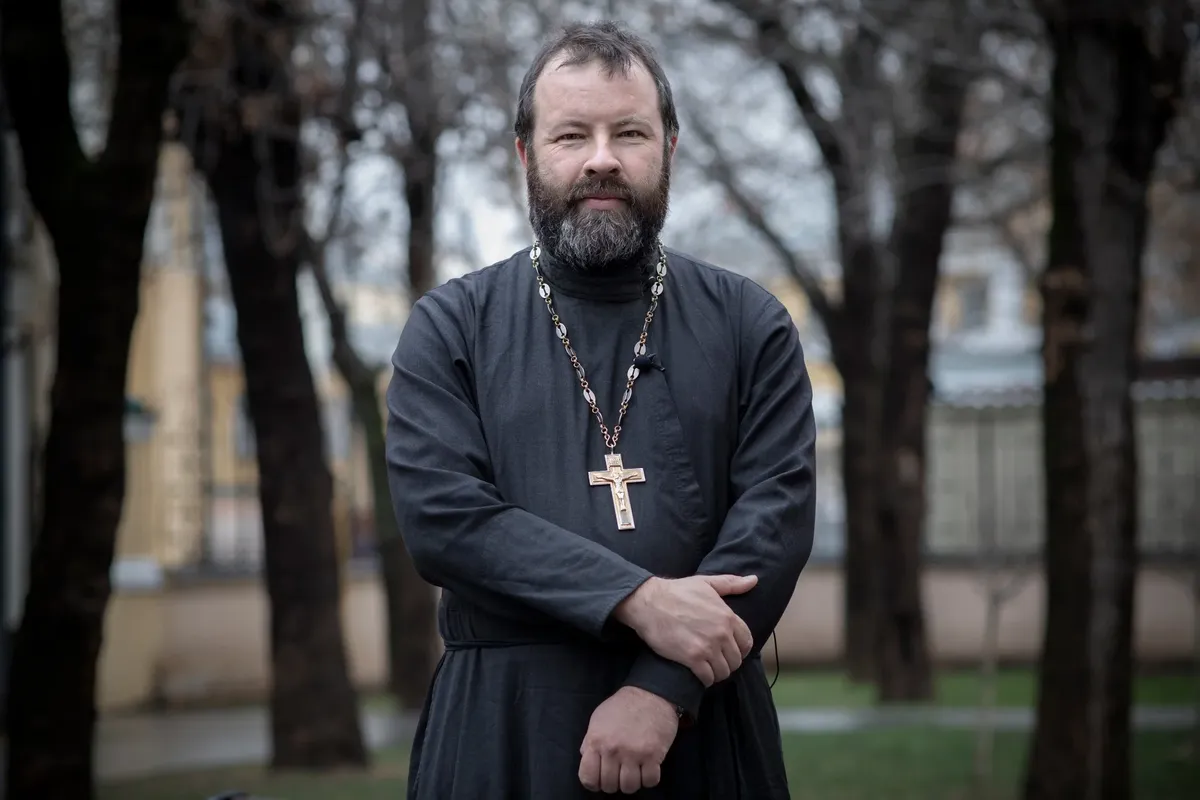
Archpriest Andrei Kordochkin, who served in the temple of Mary Magdalene in Madrid for many years, left him - and the jurisdiction of the Russian Orthodox Church. Now he has moved to Germany and helps other Russian priests who have been repressed due to public disapproval of his own. On the eve of Christmas, we talked with Father Andrei about exile, loneliness and courage.
"We play for human life and against the cult of death"
- Let's talk about exile first. It became the personal history of millions of people from Ukraine, Russia and Belarus. And now you are also in voluntary exile, because you left the temple in which they served, the country where they lived, and the Russian Orthodox Church itself. What became the final impetus for this, how difficult it is and what supports you?
- It would be easier to make this decision not now, but at least a year or a half ago, when it became clear that my vision of the current situation diverges radically with how the institutional church sees it.
Then many told me that I should leave, but I had an argument: the priest has no right to leave his parish, his community. There are words in the Gospel of John about a shepherd who should not, seeing a wolf, run and leave his sheep. Therefore, I stayed. Nevertheless, several reasons arose that nevertheless forced me to decide on leaving.
The first - at the beginning of 2023 by the decision of His Holiness Patriarch, I was banned in the service for three months. It became clear that this is a warning shot and that an unlimited prohibition would be a matter of time. The second event, it seems to me, was the prohibition in the ministry of Father John Koval, who replaced the word “victory” with the word “world” in prayer. It became obvious to me at the same time that for priests, publicly unanimous with me, there is no more place in the Moscow Patriarchate. The space was narrowed, and I saw two options in front of me: to wait until I will be prohibited in the service, and then look for a place or now look for some kind of way out.
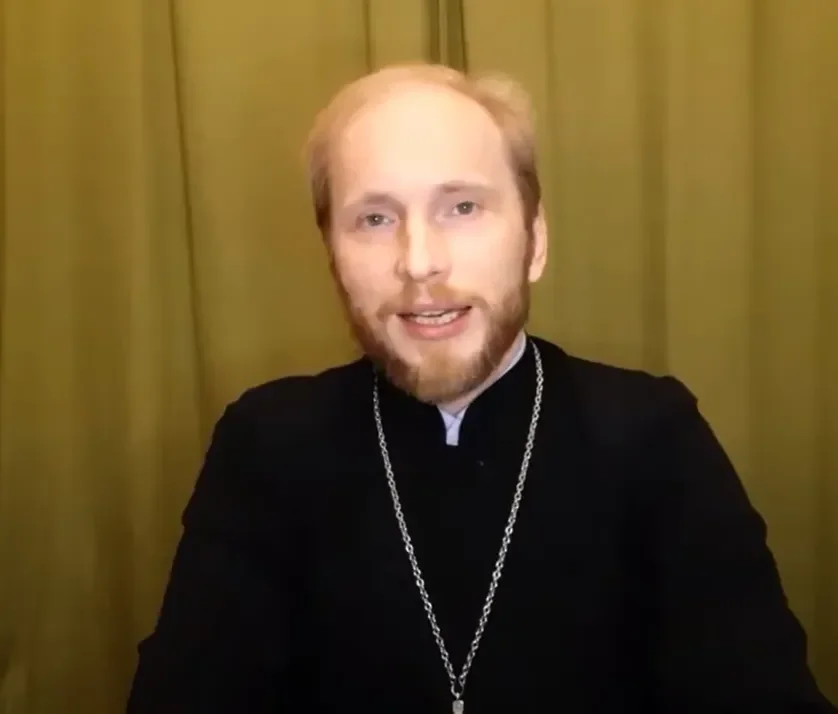
When I received an offer of academic work in Germany, it seemed to me that it would be more correct to leave myself. Not only for me, but also for our parishioners in Madrid. Here, as in a family: it is wrong to see children when their parents are humiliated. When I was banned in the ministry, I continued to come to the temple, read the clock before the service. But I saw that for many parishioners this experience turned out to be much more traumatic than for me, it was painful and difficult for them. And I decided that if I submit a petition for the state and I can perform the last liturgy myself, say goodbye to people, for them and for me it will be correct.
This was not a voluntary decision, but until that moment I believed that different voices could and should sound in the church, and I was ready to continue the ministry, despite the public injury.
But in fact, now there are not a single priest in the Russian Orthodox Church, who would publicly express an anti -war position and would not be repressed in one form or another.
- Public - yes, but there are those who are silent. I now thought when I was listening to that priests who were publicly against, they were at a special risk. This is, as a rule, a large family, a non -working wife. And then, excuse me, the profession itself-you cannot be a priest-freelancer!
- This is really a problem. It is clear that many of us, especially the abbot of the temples, in addition to worship, are engaged in economic, administrative, whatever issues. But if there is no secular specialty, then the priest, even when he has enough experience in various fields of activity, is certainly very vulnerable. I think that many understand this and this is a restraining factor for them.
It is appropriate to talk about a resource called "peace to all." It was created to help priests who were without a livelihood as a result of a public statement about their position after February 24, 2022. Some of them remained in Russia, someone left Russia and is in Montenegro, in Turkey, and someone, for example, in Mexico expects the opportunity to leave for America. Fate is very different. We can’t even call someone’s names, because priests do not want to find ourselves in the center of attention of the relevant organs. But besides, in order to help these people, I really wanted to make it so that it became known that both Russia and the world have no feeling that the Russian Orthodox Church is a monolith that fully supports <l>. We wanted them to cease to be invisible, to learn about them and they would have the opportunity to be heard - at least at virtual venues.
But I still do not consider the resistance of these priests a protest movement. We are not “against”, we are “for”. We advocate human life and only therefore against the cult of death and sacralization of wars.
We believe that life is the gift of God and is given to man in order to live it. Of course, the death of the Savior himself was a voluntary victim. Of course, there are examples of martyrdom. But this does not mean that the best that can happen to a person is death on the battlefield, where he goes to kill and be killed. We affirm what the Gospel claims, nothing more. This really sometimes turns out to be a movement against the current. But this is not a protest. This is nothing more than a continuation of the gospel sermon.
"Patience is not a state of a clogged animal"
- Christianity itself was a movement against the current.
- Yes, but not in protest. “Z-Slavia” very clearly divides the world into his own and strangers, friends and enemies, and Christianity breaks all this. The Lord does not teach what he himself does not fulfill. And when he says that he needs to love his enemies, he himself does not call a single person his enemy. Moreover, it can be very firm, and his word can sound very sharply, for someone even offensive. It is clear that no one could perceive the words “your father of the devil” as a compliment. Nevertheless, Christ does not call a single person his enemy. He does not fight with anyone and nothing. But it is clear that for those people who are afraid of the loss of their authority, their power - political or religious - for them his figure was dangerous at one time and continues to remain dangerous now.
- He was perceived by the authorities as a political opponent?
- He was perceived as a threat to those who believed that human power has no restrictions. In the earthly life of Jesus Christ, His first and last image is the image of the king, that is, one who has the fullness of power. Why, for example, Herod orders to kill babies? Because he is afraid to lose power. At the very end, Pontius Pilate gives consent to the execution of the Savior to show loyalty to the emperor: “If you let him go, you are not a friend of Caesar; Everyone who makes himself king is an adversary to Caesar. ”
In fact, a Christian in this sense is faced with a choice: either we confess the relativity and limitation of all earthly power over a person, or we find ourselves at the same time people who require the execution of Christ. When they demand her, they shout: "We have no king, except Caesar!" That is, there is no other criterion of good and evil, except for the benefit of the state, despite the fact that their idea of benefit and good can easily be erroneous and even more so not to be Christian.
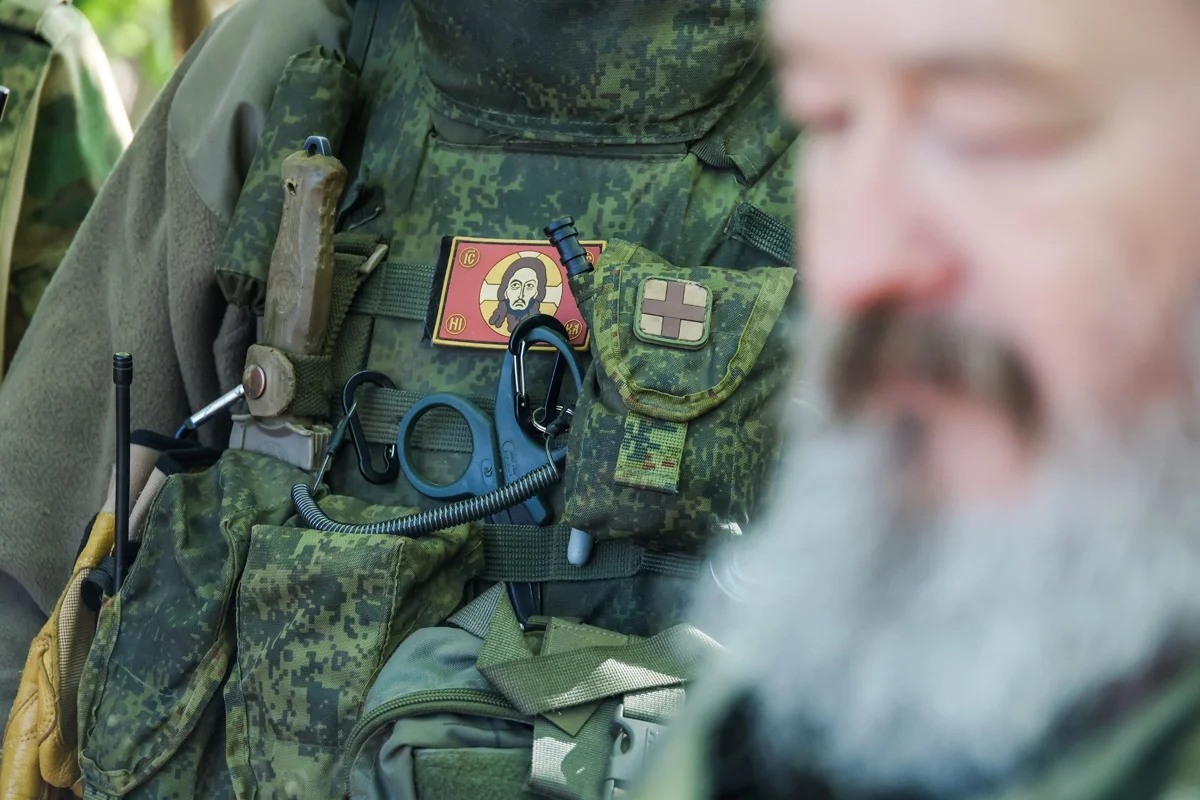
- People who shouted: “We have no king, except Caesar!”, Is this a patriotic community?
- This is the basis of a classic patriotic position. The theme of patriotism in a special way begins to sound during any wars. And it is clear that a person who does not support his country does not matter what era we are talking about - declared a traitor.
In totalitarian systems, the power usures the concept of patriotism. But the dissenters also consider themselves patriots and are ready to pay a high price for their views. I am very interested in the fate of Orthodox people related to resistance, including those who became a martyr due to the resistance of the National Socialist regime, including the mother of Maria (Skobtsova) or the participant in the White Rose, Alexanda Shmolel.
It is amazing me that in modern Russia, which largely defines the victory over fascism as the main event in its history, for these saints, which died precisely because they were anti -fascists, there is no place.
For the most part of believers, the name of Alexander Shmorerel does not even know, and certainly not to find his icon in the temples, but in the temple of the armed forces and even more so. Why?
Because his image tells us that evil can have institutional forms and a person should not always be on the side of his state. Moreover, the resistance to evil, including in institutional forms, can be charged with righteousness and even holiness. This example for modern Russia is too dangerous. You can not rock the boat.
- Well, by the way, about active resistance - and silent. The commandment “Don’t be afraid” or the sigh of the wife of Protopop Avvakum: “Still shake”? Victory over fear or patience?
-Well, firstly, if you recall Avvakum, this is an example of clearly not passive behavior, but rather non-violent resistance. If he silently suffered, he simply would not be in exile or in conclusion, all the more, he would not be burned alive. Secondly, “do not be afraid”, “do not be afraid”-these are words that very often sound both in the Old Testament and in the new. They are heard from the angels at the very beginning of the shepherd in the field, at the very end - a woman in an empty coffin, these words the Savior himself converts to people many times.
These are very important words, because in the Gospel Antonym of Love is not hatred, but fear and indifference. The Apostle John says: "The fearful is imperfect in love, for perfect love is expelled by fear."
Humility and patience are, of course, important Christian virtues. But each time you need to ask yourself a question: what is it? Father Alexander has very good words. He says that patience is not a state of a clogged animal, but a willingness to go forward, despite external and internal obstacles and temptations. A patient person is one who is able to maintain mind, inner calm, faith, hope, love. Patience is not learned helplessness, humility is not the position of a person who raises his hands up.
I think that no one should be afraid, but what decision is for a person correctly - to everyone to decide for himself. Now we have entered a time when there is no right decision for everyone. The choice of dissenting priests in Russia is the same as everyone else - between emigration, imprisonment or silence. Many refuse public discourse not out of fear for themselves, but realizing that in the case of their removal, their parishes can be formatted and destroyed. But if I made a decision for myself, this does not mean that it is correct for another.
No one has the right to speak, especially while safe outside the country, that people in Russia should or should not do.
"You can be silent with a different expression on the face"
- Based on the results of the Novaya Gazeta survey, which coincides in the main thing with polls of sociological services, including the state, the most of the population - for peace negotiations. These are a lot of people, but most of them are silent. If a person makes a choice in favor of silence, does this make his accomplice? And if this is silent resistance? *
- I think the answer is very simple. No one is guilty of what is not guilty of. You can’t even impose guilt in an act that we do not commit to anyone, even to ourselves. At the same time, even if a person is forced to be silent, then you can be silent with different expression on the face. At the same time, silent consent becomes a political foundation of any dictatorship.
- And if a silent disagreement?
- In the current situation, silent disagreement is already a feat.
If a person who is turned to all the power of state and church propaganda has retained the ability to think critically, he ceases to be brick in the wall. This is especially difficult in small cities where there are practically no like -minded people, and the one who does not believe in propaganda is often doomed to loneliness, including in the church.
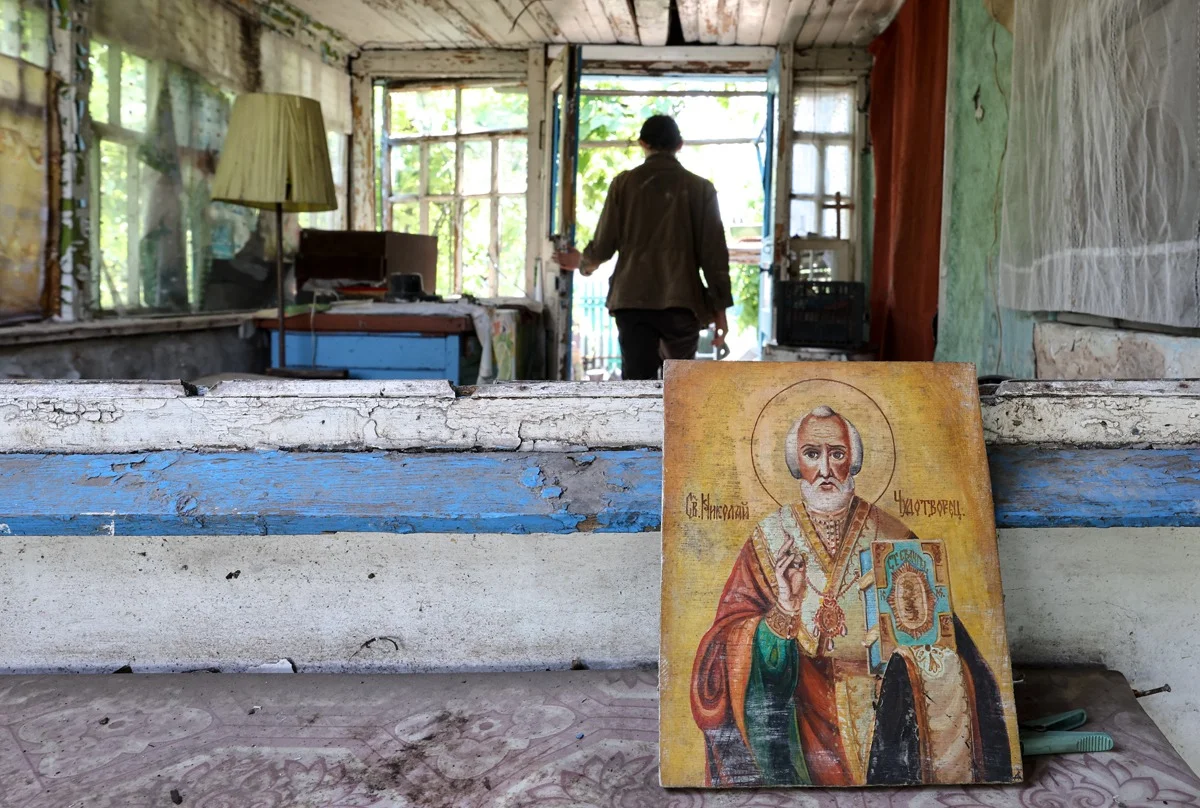
- Such people lose their loved ones, friends, go into the inner exile. How in this situation not to fall into what is called a sin of despondency?
- It is important to feel resonance with unanimous people, albeit personally unfamiliar, but in whom you recognize your own vision, - and you can hear them on YouTube, read their publications. This becomes easier. This is overcoming the imposed insulation.
- That's why everyone is blocking.
- So, the technology will resist the dictatorship. The Soviet dictatorship was largely held on isolation - on the wilderness, on prohibitions. But now it is much more difficult to technologically provide an information wall. In addition, the state itself depends on these technologies, using them for propaganda. Apparently, they don’t really want to strangle themselves. Although, in fact, this is exactly what they are busy.
"The Lord was not with those who in the mainstream"
- The question is "for what?" Everyone arises: in refugees, and among the relayers, and the prisoners, and those who are under shelling, whether in Kyiv or in Belgorod. How to come to terms with the power of evil and innocent victims?
- It is impossible to come to terms with this. But in this situation, a person has been living since Adam and Eve. The suffering of a person can be undeserved. The Old Testament speaks about this if you recall the prophet Job. The drama of Job is that friends came to him, who tried to explain to him the meaning of what was happening to him, his suffering, his pain - to find logic, to explain what he was to blame for, and ultimately turned out to be absolutely wrong.
It is impossible to come to terms with evil. But this is the reverse side of human freedom, its terrible secret. God created man free, in fact introduced his risk zone in which a person can harm himself and to another.
Forced good is impossible. It is impossible to love to love. The mechanism cannot love, cannot love a clockwork toy. Only free creation can love. A person can use freedom to the detriment of both himself and others. But there is no other law except the Law of Freedom.
- About the voluntary choice of evil. We observe colossal, cave cruelty: judges who say to torture. People who rejoice in bombing. The torment of a dying in prison Politzek Baryshnikov. Judge Demyasheva, who forbids Sasha Skochilenko to change the batteries in the cardiomonitor ... At the same time, not humiliated, but harvested by the authorities are special cruelty. For what? Nobody forces them ...
-Any system is built on the fact that some things are either encouraged or punished. If sadism is encouraged, it will go upward. In addition, another simple law works here. For a person, the desire for security is important. These people can be so deformed that they sincerely believe that Skochilenko or people in its position are dangerous for the state and for themselves. They are sure that they save themselves and others from danger. This fear is induced from the outside, but from this it does not become less real. A person who feels himself driven into a corner is certainly capable of great cruelty.
If in non -violent resistance, in dissent, the state machine sees a danger to itself, then this means that it itself is aware of its weakness. There is no stable design, there is only ideology and repression. Therefore, she reacts so painfully even to such low frequencies.
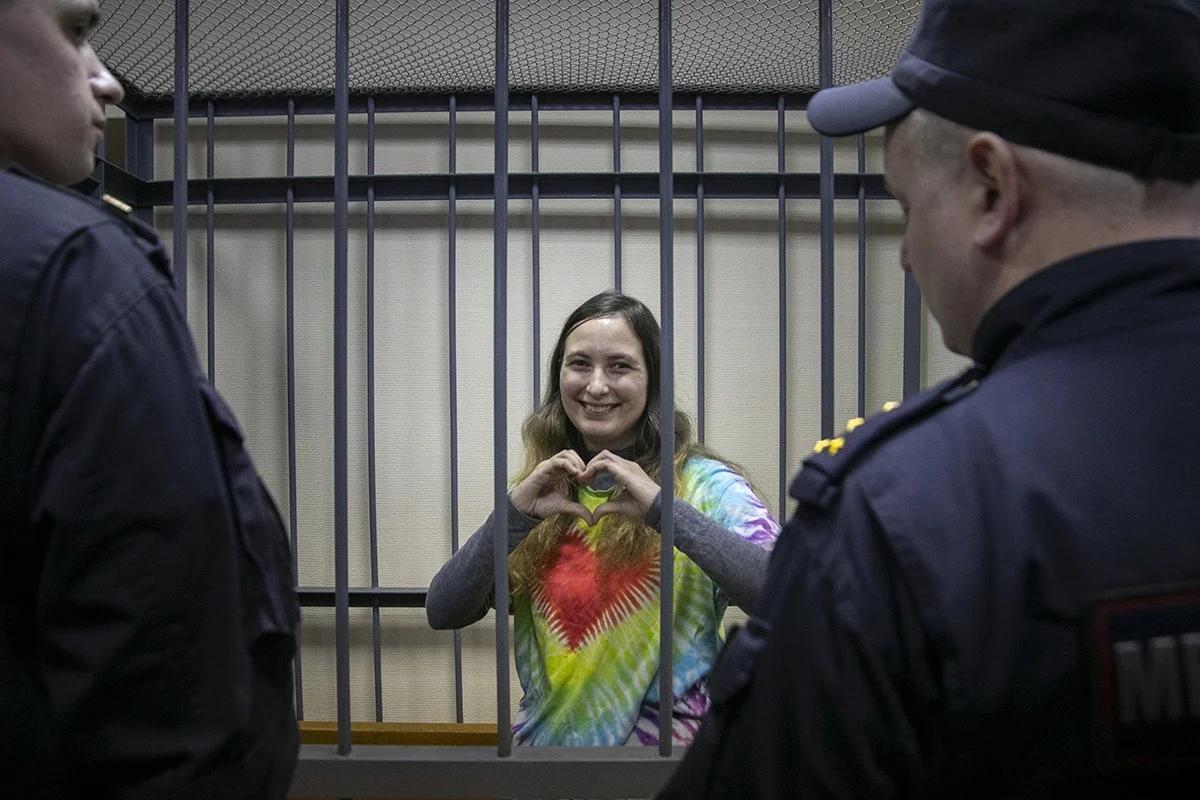
- For me, Christmas history has always been a story about refugees. Christ was born in a stable, because there was no roof over his head. It seems that now we are all the exiles ...
- Recall the Christmas cycle Joseph Brodsky. Despite the fact that he was not a practicing Christian.
- But he was a practicing exile.
- Why was this image for Brodsky so important that he returned to him so often and wrote poems dedicated to this event in the days of Christmas? The exile, homelessness was not a curse for him, but with what he felt his life and his fate of the Savior's consonant life. And this applies, perhaps, not only those people who were forced to leave the country. Many of those who stayed also feel: what was home has ceased to be so.
In a broader sense, we must recall, for example, the psalm “On the Babylonian rivers”, which will remember the Boney M. song about the most people in Russia, and we sing it in the temple with great fasting, even if we are not expelled, but continue to live quite safely. This is an image of longing for the lost homeland, which is designed to feel any after the expulsion of Adam and Eve from paradise. In this sense, any nostalgia is a bored that in the service of the Panichid is called the “coveted Fatherland”, having no political or state borders, in the country where, by the words of the same poet, “there is neither January, nor February, nor March”.
- Another gospel story, which is now recalled often, is the commandments of bliss - a high -profile sermon in which all those whom the state hates or rejects society, who do not fall into the mainstream are called blessed. Expelled for the truth, those who scold and who are slandering ... The rhyme is beautiful, of course, but how to live in such everyday life?
— На одни и те же обстоятельства люди реагируют по-разному. В несчастье можно озлобиться, а можно ощутить то, что в Нагорной проповеди называется блаженством. У того же Бродского была заповедь: человек не должен ощущать себя жертвой, иначе у него пропадает решимость что-то менять. Когда ты чувствуешь себя жертвой, сразу открываешь двери для обиды, озлобления — и личность начинает сжиматься. Но если стараться искать смысл, сохранять спокойствие, достоинство, смирение, терпение, думать, как правильно себя вести даже в ситуации абсолютно несправедливой, — это залог духовного роста. Сам Господь на протяжении земной жизни был совсем не с теми, кто в мейнстриме, а именно с отверженными, больными, одинокими.
Сейчас очень интересно видеть, как институциональная церковь теряет монополию на христианский дискурс. Навальный в тюрьме рассказывает, как к нему подселили дурно пахнущего сокамерника. И он задает себе вопрос: а как Христос поступил бы на моем месте? А это вопрос не просто верный — это единственно правильный вопрос.
Сейчас христианское видение мира транслируется не Z-проповедниками, оно снова доносится из тюремных камер.