
Translated material
Torn page
The new Tamizdat, the time of young, the persecution of dissenters. What happened in Russian literature in 2023
Photo: Getty images
Separating a literary event from non -literary today is not easy today. The attempt to kill the writer Prilepin is what, for example? But the main problem with summing up literary results is different. Writing books is a non -public and non -public process. Therefore, the “main literary event of 2023” most likely occurred in the room of some author (maybe unknown to anyone) and (for now) unnoticed.
Against the backdrop of universal fatigue, the literary year seems extremely absent and faded. But these 12 months simply could not work out empty, if only because the war in Ukraine and the tightening of the Putin regime in 2022 launched a complex and irreversible transformation in Russian society-and in culture too. The outgoing year is rather transition. It developed already neglected processes, which, however, far from the “middle of the path”. Sorin BTEM talks about how the literature lived in 2023, and very carefully predicts.
The war of the poets
A popular phrase from official rhetoric about the “largest divided people” in 2023 sounds convincing more than ever. “Supporting their own” and “opponents of the criminal war”, “left” and “remaining”, “involved observers” and “catacombs” ... They are increasingly talking about the Cold Civil War and wonder: “How to look for a common language“ after ”when people who survived 2022–2023 - in the space of one district/apartments? Years are very traumatic and at the same time fundamentally different experience? " These schisms could not but be printed in the literature.
The first vivid reflection is the absentee confrontation of poetic collections: anti-war and zubtors. Most of the noticeable were in 2022. The conflict was already manifested at the level of names directly opposed to each other: “Poetry of the last time” VS “Poisia of the Russian Summer”; “Understood and Witnesses” by VS “Risen on the Third World”. The editors of the collections periodically entered the controversy, only aggravating the picture of the “paper war”. This phenomenon would be worth leaving the previous year if not for one nuance. At the end of the first half of the year, the freshly baked “poet of the Russian summer” began to be advertised through letters from “public services” and even give temporary free access to it.
The calculation, it seems, was that the user on joy, that he did not find more serious and addressed to him “reading” personally, will lose his vigilance and open the treasured book. And there, of course, do not break away! The combat poet Paaganda provoked a trend for the “critical understanding” of Z-Poesia in the media. The main question that the public was asked: “Could it be not a very good person serving the interests of the totalitarian regime to be a talented author?” However, real analytics, as a rule, replaced knuckles against ideological opponents. It is also significant.
Now the struggle of opposition and prosperous authors continues with local skirmishes and denunciations (some Z-poets prefer this genre to otherwise).
The conflict is symbolic between the compiler of the “ten dimensions” by the poet Ruslan Komadei and his mentor, the pronounced author Andrei Sannikov. The first refused to include in the book “The Beautiful” selection of the second because of his “promoterist views”. The second published a letter with a refusal, which also refers to the anti -war positions of the participants of the anthology, and provoked the student’s injury with a through motive: “We are very terribly loved by their homeland, and we are“ canceled ”for this.” What global consequences can such a rhetoric lead to, obviously. It is also characteristic that the author’s political orientation remains more significant than the quality of texts.
New "Tamizdat"
The 2023th will definitely be remembered by the vivid revival of Tamizdat and the next split of literature on the published “inside” and “outside”. Books and thick magazines in the “Russian Abroad” were constantly published, but they had not attracted so much attention for a long time. Now, outside Russia, publications appear that are simply difficult to ignore. So, in the framework of the project “Free Printing” in 2023, among other things, Viktor Shenderovich’s book “Do not be afraid, everything was already”, collections of poems by Polina Barskova “Scraper” and Zhenya Berkovich “Narrow”. In Germany, though in German, a new novel by Victor Erofeev “The Great Gopnik” appeared (who we are talking about, it is easy to guess). And in the United States, a relevant study of Mikhail Epstein “Russian Antiri” has published.
Nevertheless, Freedom Letters , founded in the spring of 2023 and immediately declared itself, played the main role in the revival of Tamizdat. The concept of an “unquestioned” publishing house implies a certain understanding of literature. This is, first of all, a way to reflect on the most acute and painful public issues and create a kind of “drawings”, models of future solutions. From literature they are now expected if not answers, then the ways that can come to them. It is difficult to be in a catastrophic information context, but it is hardly possible to abstract from it. Hence another request - to comprehend modernity, but as if a little from the outside, so as not to choke in a stream of dramatic events.
The occurrence of Freedom letters is a direct response to both of these requests, and successfully implemented. This is a completely star authority-Dmitry Bykov, Vera Pavlova, Demyan Kudryavtsev, Alexander Ilicevsky and others. And the appearance of obvious “near political” hits, like the Bykovo biography of the Zelensky “VZ”, a collection of plays by Svetlana Petriychuk “Tuarep” or “Resistance useful” by Ilya Yashin. The serial approach justifies itself. Next to the art and documentary books about the war in Ukraine, the first studies of what is happening in Russia appear, the Russian classic is published with relevant preface (a good way to reflect on the role of culture in Russian history), and the recently launched series “Light” gives the tired reader the absolutely necessary, but not divorced from life reading. You might think that the distribution of literature between “tus-” and “here-Izdat” will occur according to the criterion of politicization. Nevertheless, one of the most powerful novels of the year (in my opinion) “Demetrius” by Alexei Makushinsky, it seems, would calmly overcome all censorship barriers and went out in Russia, but was published in Freedom Letters.
Within the borders: youth and experience
Summing up the intra-Russian results, many literary observers spoke of an unexpected flourishing of auto-fifth ( a letter, the basis of which is an expression, often a very frank, inner world of the author, his experience, experiences, memoirs, etc. - Approx. Author ) and the release of a new literary generation of 30-year-olds. Indeed, many of the “young” prefer this genre, but not all in different proportions. In literary reviews, the argument often sounds: “Well, it is clear that in Russia censorship, you cannot write about the actual“ outside ”world, so you have to talk about the“ internal ”.”
It seems that in fact, the writer is quite natural to demonstrate his own insides, firstly, more likely the interest of the progressive part of society in psychology and build a healthy relationship, which manifested long before the war. Secondly, this is a useful ajar of “forbidden topics” that have accumulated thanks to the habit of silence and not to work out injuries. Thirdly, the natural desire to humanize the Russian cultural space with its inherent attitude towards personality manifests itself. The lists of significant books traditionally appear in the editions of the new series “Polyandry No Age” (Marina Kochan-“Khorea”, Ilya Mamaev-Niles-“Year of Porn”, Maria Nyrkova-“Bay Patience”) and “The hands of the women of my family were not for writing” Egana Dzhabbarova (“No Kidding Press”). The latter was released in the series under the curators of Oksana Vasyakina, the author of another noticeable novel “Rose”, published this year in UFOs.
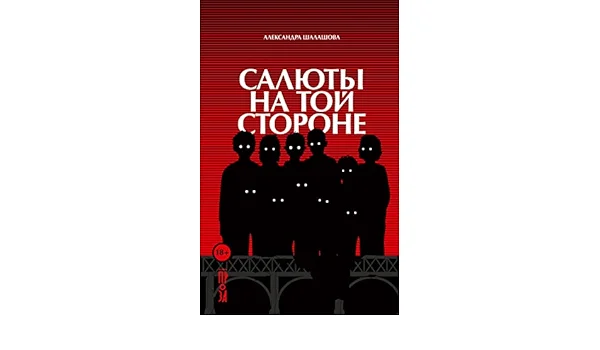
The rejuvenation of Russian -speaking literature occurs not only in the direction of auto -packet. So, the debut novel of the poetess Alexandra Shalashova “Saluts on the other side” that came to the final of the “Big Book” is rather a reflection of Russian society, in form gravitating to the parable. “Alpina Prose”, which released the book, is also one of the flagships of young Russian -speaking literature. Here, the first novel of the writer from Belarus Helena Povyarzhina “Valsarb” (also the finalist of “Big Book - 2023”) and the acute -social prose about family violence “The Wind Removes Dead Leaves” of last year’s “Lyceum” Ekaterina Manoilo were released. It is impossible not to add to this list the brilliant debuts from the “Publishing House of Ivan Lumbach”-the poet’s acutely actual book and critic Denis Beznosov “Certificates of Habitat” (Polyphonic Thinking of Catastrics and Totalitarism ”) and Roman Arena Vanyan“ Dismantage ”(about Armenia of the 1990s and the Karabakh conflict). Indeed, there is a feeling that a new and interesting generation is growing in domestic literature. This is perhaps one of the few current trends that he would warmly wish to continue.
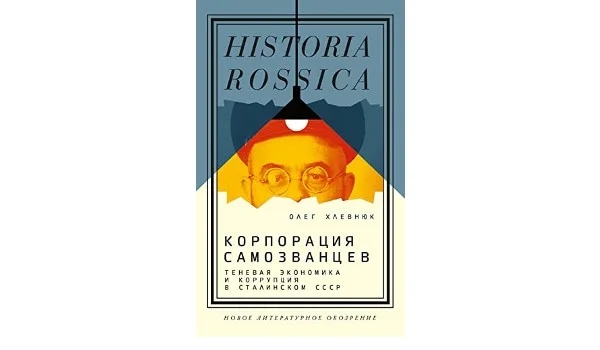
Another key trend was formed last year - the popularity of books about the events of the past, but associatively related to modernity. Legal opportunity to talk about the main thing, bypassing censorship? Yes, but not only. First of all, this is a way to collect a variety of experiments that will help to understand what is happening and develop a strategy - both personal and public. And besides, this is the desired detachment from a catastrophic context, but not in order to hide - on the contrary, to look carefully from a safe distance. Here we are talking mainly about non-fiction. Probably the most noticeable book of this kind was “End of the regime: how the three European dictatorships ended” Alexander Baunov. The most close study of the study that became the laureates of the Enlightener Prize, “impostor corporation” deserve the most close study of the study. The shadow economy and corruption in the Stalinist USSR ”Oleg Khlevnyuk (nomination“ Humanitarian Sciences ”) and“ War of Patriotisms: Propaganda and Mass Punings in Russia of the period of the crash of the empire ”Vladislav Aksenov (“ Polit -Losvet ”). It cannot but interest and the work of Harald Jeneer, which has just released in Russian, “Wolf Time. Germany and Germans: 1945–1955 ".
Pursuit
In 2023, the state attacks on the literary world were pointed. In the spring of absurd charges of “justification of terrorism”, the director and poetess Zhenya Berkovich and playwright Svetlana Petriychuk, who are still in jail, were arrested. The occasion was the production “Finist Yasny Falcon” according to the play of the same name. Apparently, the authorities also have claims to her text. The "theatrical" case, but is the most direct relationship to literature. Until 2023, the authors were subjected to repression for position or non -literary activity. So, the poet Vsevolod Korolev, in July 2022, found himself in a pre-trial detention center in the case of "fakes", is still not guided by poetry, but for posts in VKontakte. The case against Berkovich and Petriychuk is a direct attack of the state on works.
The same can be said about the “Mayakovsky case”, according to which poets Artem Kamardin (seven years of imprisonment) and Yegor Shtvb (five and a half years of imprisonment) were convicted on December 28. Earlier, four years of conclusion received a deal with the investigation Nikolai Daineko. The arrest of poets at the end of September 2022 after reading on the Triumphal Square, accompanied by beatings and torture, even by the standards of present Russia, looked like a wild indicative reprisal for an open refusal to swallow the Putin’s decision on “partial mobilization”. There was, obviously, something like a “class” hatred of Moscow “informal” activists. In fact, poets are pursued for reading anti -war verses. The last word of Artem Kamardin in court was devoted to just the freedom of creativity.
Shortly before the verdict in the Mayakovsky case, the prose writer and translator Boris Akunin was included in the list of “terrorists and extremists”. The AST publishing house announced the cessation of cooperation with him and Dmitry Bykov, also “played” by pro -Kremlin prankers. The Liters portal and the book Network “Read City-Gorod-Bookwood” suspended the sales of their books. From the website of the magazine "New World", the plays and the page of Akunin were removed. Performances began to be canceled by his works. And the Publishing House "Zakharov", who did not announce the breakdown of relations with the writer, came with searches. There is a feeling that at the end of the year the authorities decided to remind writers and publishers “their place” and produce several indicative attacks so that they would not feel deprived of attention. It is clear that the literature is still getting on the residual principle - and thank you for that. The sources of earnings, the authorities actually “clean up” his works from the intra -Russian literary field and send an unequivocal signal to his brothers in Peru.
The authors who were persecuted this year until recently belonged to almost non -intersecting worlds. The verses of Berkovich and the play by Petriychuk are works for the sophisticated reader, Akunin’s book, on the contrary, is for the widest. “Mayakov readings” until recently were perceived in the literary environment as an underground circle of amateur performances, where they prefer simple and catchy spicy -social verses. The Putin regime united these non -similar artists, once again emphasizing that political issues are now more important than any aesthetic discrepancies - both for the authorities and the cultural community.
And the last. The question that unites the “split” literature is, in fact, the basic is about the significance of texts. For some year and a half of the war, this “significance” fell almost to zero. Others, on the contrary, felt that the word for the first time in decades became truly important. It promises to supporters of “Svo” the places of “conductors” and “inspirers” of the people in the service of the state. Time will tell, but now I can’t believe in their success. For authors who are aware of the catastrophe that occurs with Russia (except for personal drama), also a professional challenge of monstrous complexity. After all, someone will have to unravel this dead knot of historical and psychological contradictions, look for a connecting substance for schisms and in the broadest sense to reconfigure social relations. And not "someone", but to all of us. Such a terrible task for questions about significance, the meaning, finally, the artist is unlikely to have strength and time. It will only remain: “How to withstand? How to deal with all this? " Now the majority is more likely to escape the outgoing year than a new, completely foggy one. I would like to believe that next time the mood will be different - much more confident and optimistic.