
Translated material
Stuck in the center
Macron enters the decisive year of his second presidency. He will not to let him be the Heritage from the same inheritance to the power: migration, disloyal parliament and crisis of traditional political forces
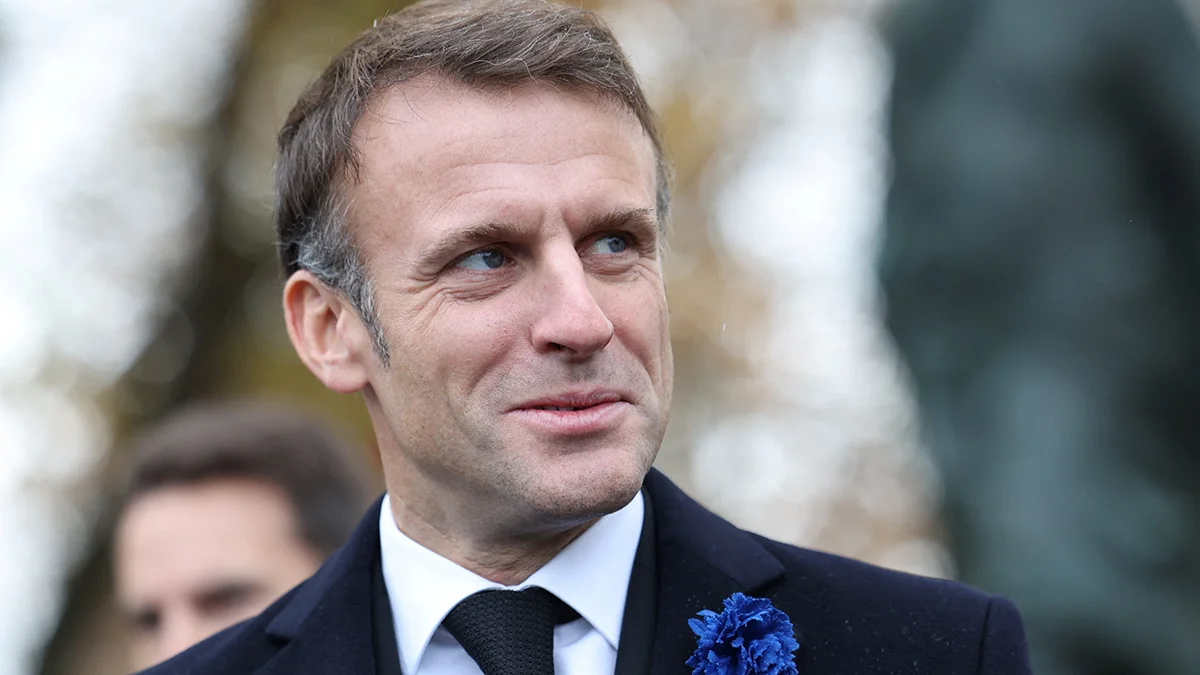
French President Emmanuel Macron. Photo: Claudia Greco / Pool / EPA-EFE
The past year was not easy for France and Emmanuel Macron personally. Winter and spring protests against pension reform flowed into summer pogroms due to the murder of a teenager by the police. The president even had to interrupt or transfer state visits in order to respond to a complex environment within the country.
According to the polls of the end of the year, the Renaissance Presidential Bloc is inferior in the ranking of the National Assembly movement, which is the opponent of Macron in the 2022 presidential election, Marine Le Pen. The leader of the French ultra -right is already clearly preparing for the presidential race of 2027, in which Macron, being twice elected president, will not be able to take part. As the problems accumulated by Macron, probably, will prevent him from finding a successor inside his party capable of defeating Le Pen, and why it is worth waiting for the French president to pay even more attention to a pan-European rather than an internal agenda-a political observer from France Sergey Mikhailov was specifically sorted out for the “New Europe”.
In December , in France, throughout 2023 , another political drama broke out. The Government tried to draw a new law on the regulation of migration through the parliament. This bill has a difficult fate: he starred in a discussion, returned to the conciliation commission, went through parliamentary hearings, traveled from the upper house of the parliament to the lower and back, repeatedly corresponded and, finally, was approved on December 19.
The ups and downs that had to overcome the bill reflect the current state of the French political system. On the one hand, the company has a strong request for changes in the state migration policy, but on the other hand, the contradictions within the French establishment, the features of the political institutions of the fifth republic and obligations in the EU do not allow to go beyond palliative measures. The law on migration is of great importance for France President Emmanuel Macron. He needed to carry out a bill to confirm his control over the political process in the country and demonstrate the opportunity to respond to society's requests.
After several failures of this and last year, Macron needs to prove that the rest of his second presidential term will be productive and he will be able to hand over his successor in 2027 in a relative order.
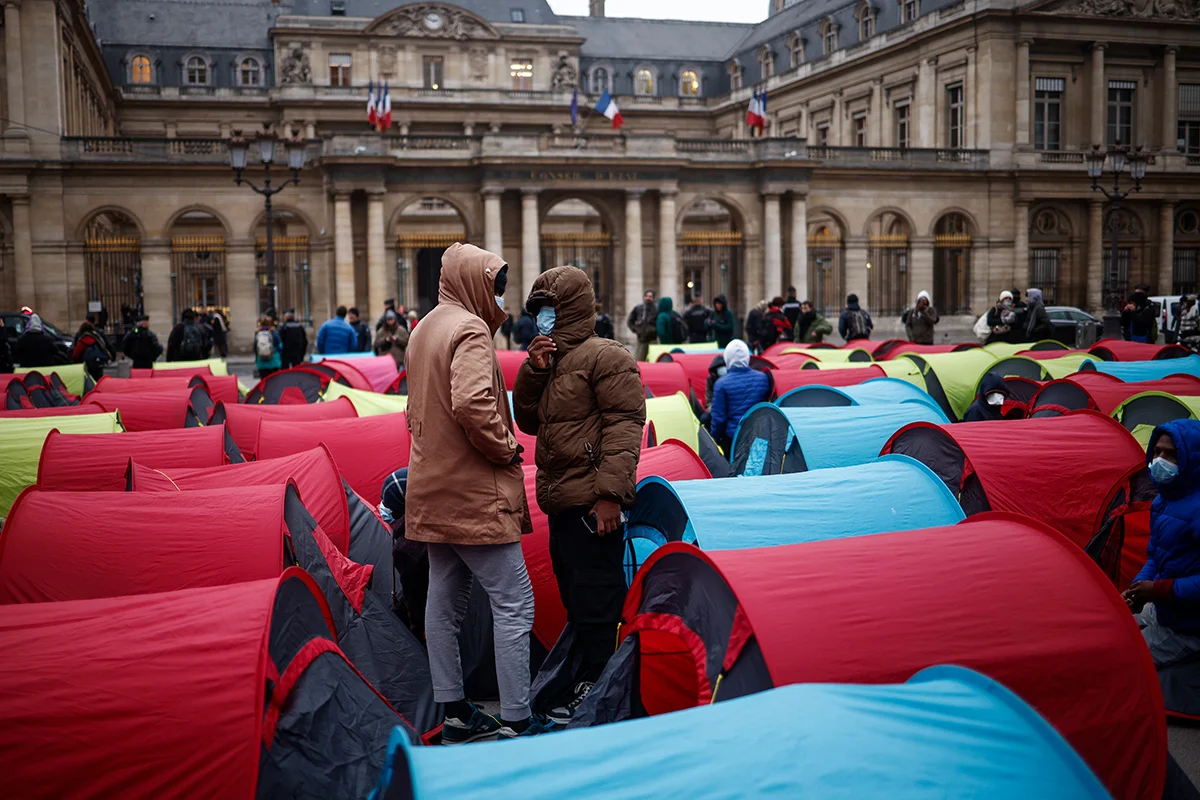
In the next few years, Macron’s policy of the policy of Macron largely depends on whether the leader of the French ultra -right forces Marin Le Pen will change it in the presidential chair.
Three key factors will normally interfere with Macron.
France is tired
The first is the very problem of migration. About 80% of French citizens believe that the country should not accept migrants anymore. Another 75% of the French believe that the government cannot cope with crime, and they directly associate this with the failures of migration policy. Two -thirds are sure that immigrants arriving from non -European states are dangerous.
Against this background, it is not surprising that most of the French reacted positively to the idea of the new law of regulation of migration, hoping to see in it more effective state control in this area.
But the final content of the law can hardly be called revolutionary - it can only complicate, but not radically change the approaches to the provision of asylum,
It does not return control over the borders and leaves a decisive word in controversial cases behind European authorities, that is, at the supranational level.
In addition, his individual articles, introducing more stringent measures in relation to migrants, may not be tested for compliance with the Constitution of France or be criticized by the European Court of Human Rights.
Such a more moderate approach of the government is increasingly diverging with the expectations of society, which is already skillfully used by Marin Le Pen. Her party “National Assembly” (RN) requires a constitutional referendum on the problem of migration, which Macron will never agree to.
Even adopted in the current form, the law will probably not reduce the discontent of the French: loud criminal news associated with migrants, such as the murder of teacher Dominic Bernard or summer pogroms in large cities, will not leave the agenda and will give rise to more and more waves of social discontent and demonstrate the weakness of the government.
In the search for situational allies
The second factor complicating the work of Macron, including not allowing it to achieve the adoption of bills in the form in which they were originally developed, is the lack of a stable majority in the lower house of parliament, the National Assembly.
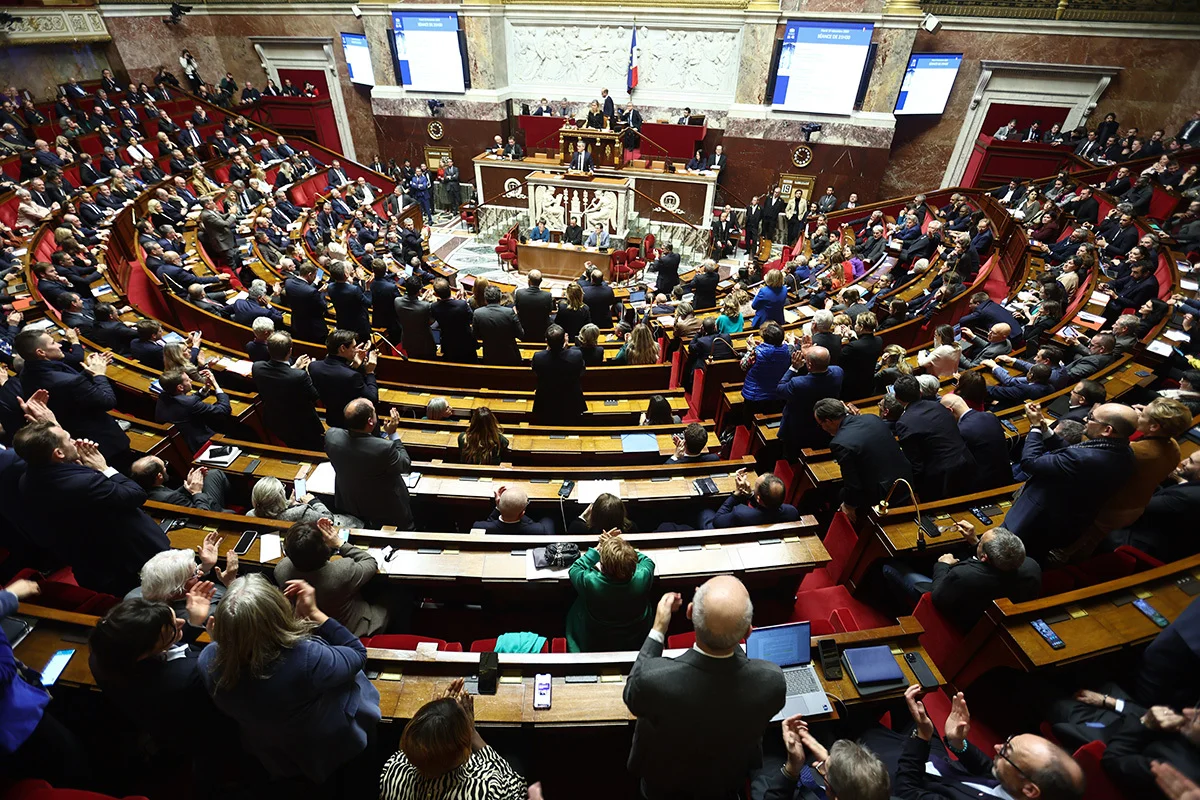
The political system of the French Republic is arranged so that the president forms the Cabinet of Ministers, but all key initiatives of this office should go through parliament. If the President’s Party at least in one of the chambers does not control more than half of the places, the government needs to look for additional support for its initiatives. And if in the parliamentary republics - for example, Germany, Spain or the Netherlands - without creating a stable coalition in parliament, the government simply will not be formed, then in France the cabinet, devoid of the majority, can continue to exist, but the votes of deputies for each bill will be situational and will turn into torture.
After the Renaissance macron’s election block received only the relative majority in the lower house, the president decided that, relying on contradictions in the ranks of the opposition, to find support for each initiative separately. But reality destroyed these plans.
It turned out that no one wants to play along with the government, and the discussion of any significant issue in parliament turned into a painful bargaining, where Macron supporters are forced to constantly make concessions.
But the political system of France provides the president with an instrument that can help overcome a disloyal parliament. This is well known to citizens Article 49.3 of the Constitution of the French Republic. It gives the government the right in an exceptional case to hold a law without the approval of deputies. As an answer, the National Assembly can vote for a vote of mistrust, and in the event of a government resignation, the law is canceled and new elections of deputies are held.
There were already twelve such “exceptional cases” in the second period of Macron, including the government approval by the government of the parliament of conflicting pension reform.
Too frequent appeal to the instrument, conceived as the last remedy, gives an occasion to the opponents of Macron to talk about the crisis of democracy. In order to avoid new accusations of authoritarianism, Macron refused to apply Article 49.3 in the case of the Law on Migration, but the compromise reached is unlikely to please it.
At the same time, Macron cannot dissolve the lower house and declare new elections, because the new composition of the deputies will most likely be even more problematic for him.
All this guarantees that until the next elections of the president and parliament in 2027, all political forces will have to work in a situation where the opposition, preparing for the next electoral cycle, will put sticks in the wheels to the government, regardless of what it offers.
President En Même Temps
The success of the young presidential candidate Emmanuel Macron in 2017 was explained not so much by his charm or attractive program as the formation of a new centrist political movement. Macron was able to unite former supporters of socialists and republicans, that is, the moderately left and right forces that have been the political establishment of France for decades.
Now these de facto destroyed by the new movement of the macron party-socialists and republicans-are experiencing decline and lose the remnants of the previous influence.
However, the new political configuration contained a macron trap, which eventually became more dangerous and turned into a third problematic factor that seriously constrains its capabilities in the second presidential term.
Trying to stay in the center of the political spectrum, Macron has great difficulties with the clarity of his political course. He periodically makes concessions a little to the right, then to the left, trying to maintain the integrity of his coalition. Sometimes for this, Macron resorted to the expression “en même Temps” (with French - “at the same time”), which later even became a meme . As a result of such a constant balancing, the essence of the reform proposed by the president became slurred, and Macron himself began to annoy the French with abstract reasoning.
The new law on migration is a vivid example of this logic. For example, the tightening of the rules for the allocation of social assistance to foreigners, reflecting right ideas laid down in the bill, was supposed to be equalized by the naturalization of illegal migrants who have been working in France for a long time, which corresponds to the positions of left -wing forces. To carry out the bill through parliament, the Macron government tried to enlist the support of the Republican Party, tightening hotel positions. This caused protests in the ranks of the macron coalition itself. The Minister of Health Orlya Russo resigned , and one of the leaders of the Renaissance Presidential Group in parliament Sasha Ulya voted against the final version of the law.
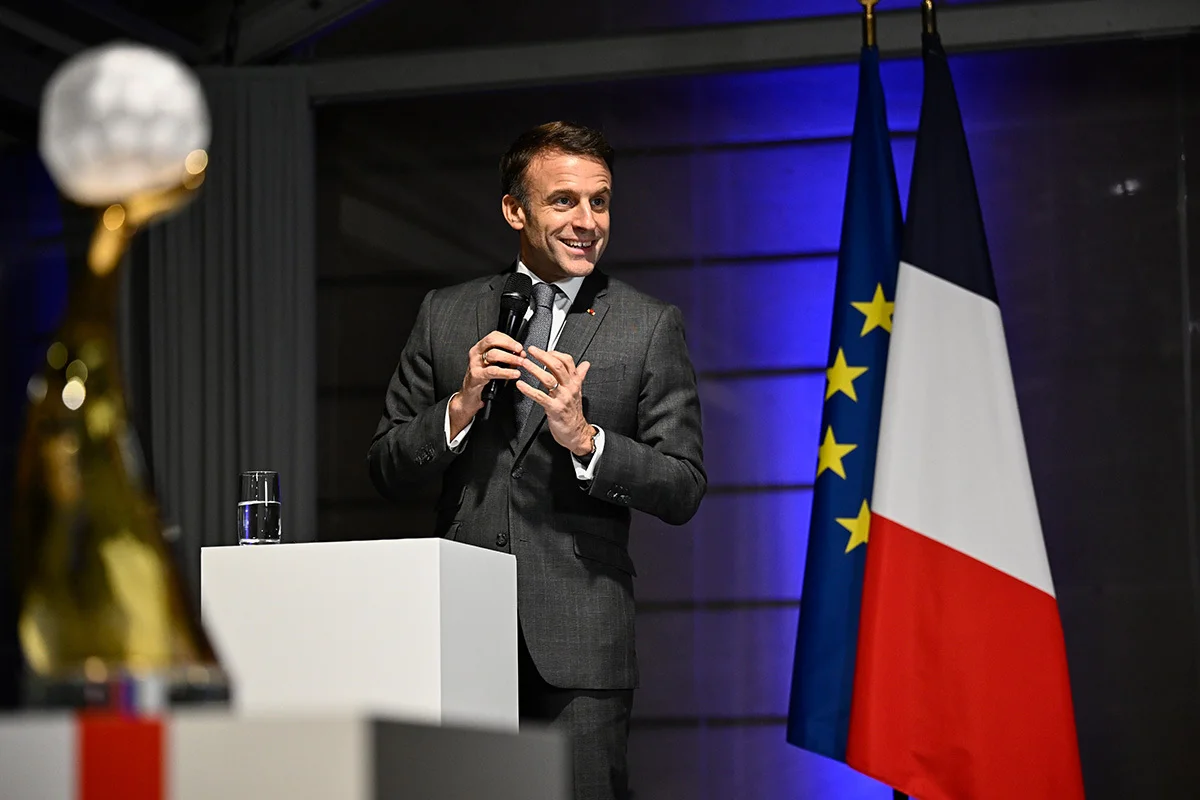
Both politicians are the long -standing associates of Macron, who came from the camp of socialists. Their departure shifted the balance of forces within the president’s coalition to the right, where Marin Le Pen already “awaits” him. A copy is always worse than the original, and Macron is unlikely to be able to replay the right populists in their field. Le Pen has already announced her “ideological victory”, since the adopted law on migration actually contains the proposals of the “National Assembly”.
In anticipation of the elections in the European Parliament in June 2024, the Le Pen party significantly ahead of the Renaissance macron block, gaining 31% against 22% of the presidential supporters. Le Pen continues to strengthen his position and in the eyes of the French is no longer the heiress of his more radical and scandalous father. At the same time, the coalition of the center, created by Macron, looks less stable. She may not survive before the elections of 2027 or not find a new single candidate for confrontation Marin Le Pen.
Exit outside
When in September 2017 the young President Macron made a speech in the Sorbonne about the strategic view of the future of Europe, his theses were perceived at best as utopian good wishes. Today, discussions about EU autonomy in the field of security and the need to turn the European Union into a center of power in the global world have become a common place.
With difficulty, but still adopted in December at a summit in Brussels, the decision to invite Ukraine and Moldova to begin negotiations on joining the EU will be an important direction for Brussels for the coming years. If, more recently, skepticism prevailed in the EU regarding the reception of new members, now, on the contrary, both for the Balkan countries and the republics of the former USSR, real prospects are opened to become part of the united Europe on the horizon of the next 10-15 years.
This is quite consistent with the ideas that Macron constantly sets out . From his point of view, the EU should expand to the entire European continent, excluding Russia, with mandatory decision -making within the EU, which was recently launched by the European Parliament.
It is possible that against the backdrop of an actual impasse in domestic politics in the remaining three and a half years of his presidency, Macron will invest with new forces in foreign policy and, in particular, in pan -European projects.
The Constitution of the Fifth Republic gives the president practically unlimited powers in the field of foreign policy. This means that any problems of the house will not affect the possibilities of Macron to represent France at the world level as he considers necessary. But Marin Le Pen will certainly take advantage of the president’s immersion in foreign policy and the forces close to her.