
Translated material
The end of stability
The Russian economy fell into a new trap. Will the authorities get out of it without loss?
The Russian authorities drive the economy into military captivity: the increase in government spending, which was formed due to the war, the failure of import substitution and administrative barriers disperse the inflation so that even the head of the Bank of Russia Elvira Nabiullin cannot cope with it. The official goal of the Central Bank for inflation is 4%, however, it has not been able to achieve it for the fourth year in a row, and the conditions in which the Russian economy enters in 2024 give the economists the opportunity to say that in the new year it will not be possible to meet the acceptable increase in prices - which means that the situations that happened with the eggs will happen more often. Moreover, due to the war and the need to increase government departments, the government will be interested in high inflation-it will fill the budget at the expense of Russians. There is a way out of this impasse, but the Russian authorities are unlikely to go to it. The economic trap of Russia is in the material "Cold".
In order not to miss the main materials of the "cold", subscribe to our Instagram and telegram .
According to the results of 2023, inflation in Russia should amount to 7.5% lower than in the pre-war 2021 ( 8.4% ), not to mention the military 2022 ( almost 12% ), but still very far from the target of 4%, which is set by the Central Bank. The problem is that in 2024 the situation may be worse, and cases with a sharp increase in prices for goods and services are greater.
The market of even one product can tell a lot about the nature of inflation in Russia, and at the same time give a good understanding of what the authorities and its regulation have the authorities.
If we proceed from the official interpretation of the reasons for the rise in price of eggs, which also sounded from Vladimir Putin in the December “direct line”, then the whole thing is in the imbalance of supply and demand. “Demand has increased, but no production volumes,” Putin said, assigning all the responsibility for the jump in prices for the “malfunction of the government”. The essence of his claims was that relatively cheap imports in a situation where the internal sentence was not enough, and demand is growing in time.
As a result, to solve this acute problem, the government had to reset import duties on eggs, and then on a frozen chicken - the chicken was also among the most rise in 2023 goods in 2023. The Russian market was allowed to save eggs from Turkey and Azerbaijan .
The rejection of restrictions on the import of goods that Russia now cannot produce in sufficient quantities, and in fact is able to help stabilize prices, said Yevsey Gurvich, the supervisor of the Expert Economic Group, noted in the Cold commentary. However, he adds, the problem is not that the government does not know how to take such measures, but that the authorities amplified by the pressure of domestic manufacturers, who with all their forces protect their market plots from competition.
The increase in the price of eggs once again showed the shortcomings of the import substitution policy, which came down to a banal restriction of competition. The authorities have traditionally reacted to the problem in the “manual mode” - when the rise in prices became completely outrageous. Meanwhile, the lack of imported barriers and the competitive market would, in principle, avoid the egg crisis in Russia without state intervention.
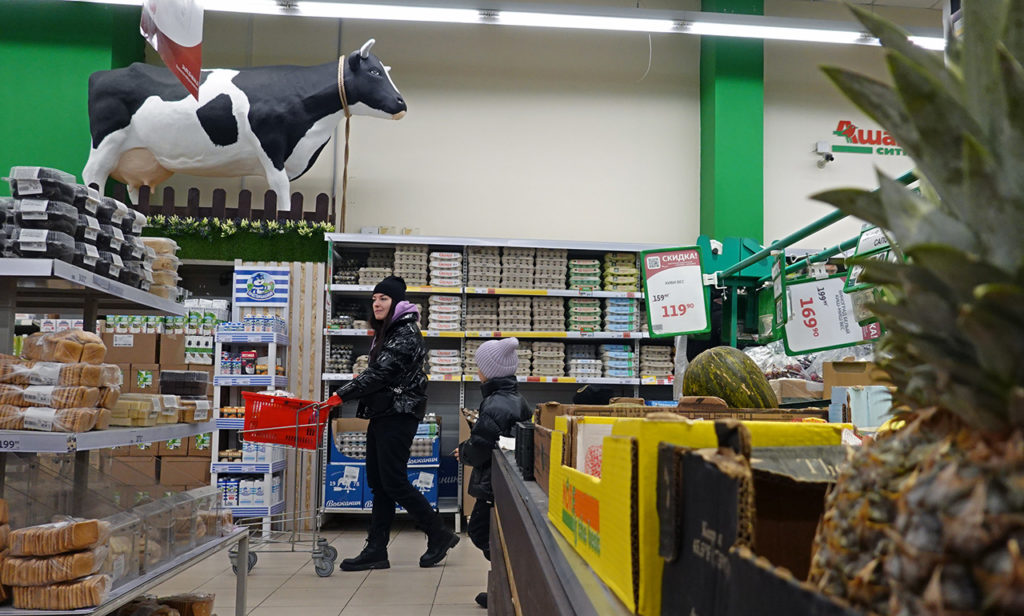
However, instead of the adoption of market realities, the Russian authorities again started looking for the guilty, and sometimes solving problems on Soviet manuals. For example, the Federal Antimonopoly Service (FAS) offered to retail chains to temporarily freeze the margin on eggs at a level of no more than 5%, and then aroused several cases against manufacturers. Even the Prosecutor General Igor Krasnov, who instructed his subordinates in the regions, joined the “supervisory inspections of the activities of the prime miners of chicken and retail sellers of these twars”.
Administrative pressure on the market, as a rule, does not lead to anything good. “Experience invariably shows that this quickly leads to the disappearance of“ unprofitable ”products from the shelves of stores,” Evsey Gurvich recalls.
Rotten system
The epic with the prices of eggs indicates much more serious problems of the Russian economy than the lack of government. Even the authorities themselves recognize this fact - one of the leading representatives of the Russian agrarian lobby, deputy chairman of the State Duma Committee for the Protection of Competition Sergey Lisovsky at parliamentary hearings on the growth of food prices, said that the monopolization of a number of markets adjacent to agriculture and foods has a significant impact on the cost of eggs and chicken.
“In a situation of reducing the incomes of the population, including agricultural producers, we observe the monopolization of trading export of grain, the railway transportation market, and port transshipment. And this provokes the increase in prices for most goods. Now, when most Western players have left the Russian market, there is practically no internal competition, which allows manufacturers to set prices in arbitrary order, ”Lisovsky described the situation.
The position of the deputy finds support in the expert community that recognizes the inefficiency of the Russian economy. The candidate of economic sciences, analyst Nikolai Kulbak says that a decrease in economic barriers and the fight against monopolies could help, "the trouble is that most Russian monopolies are either state -owned, or quasi -state ones - and no one will touch them."
Lisovsky’s words about the monopolization of the transport sector are perfectly shown how the services market affects the product market. It is also clearly visible in the November monitoring of the economic situation of the Institute named after E.T. Gaidara. The authors of the report note that the increase in annual inflation, which began in May, is due not only to the rise in price of goods, but also by high growth rates for services, which began in mid-2022, and in October 2023 they already accounted for about 40% of the annual increase in prices of the entire consumer basket (rising prices for services, as a result, was shifted to prices for goods of end consumers).
A striking example of the influence of services is poultry farming. In 2022, the livestock of birds in North Ossetia decreased by a quarter, and farmers associate this precisely with an increase in expenses for utilities and electricity, reducing profitability - manufacturers are simply forced to increase prices and reduce production.

“In the modern post -industrial economy, more than half of GDP is formed at the expense of services - of course, that in inflation its role will be high,” says Nikolai Kulbak. - The fact that services for services are growing faster than food inflation should not be surprised. Firstly, this means that there is a demand for these services. Secondly, the increase in prices for services is less annoyed by officials, and therefore it is higher. Thirdly, services, as a rule, contain a high share of human labor, which in Russia is getting more expensive due to a lack of labor resources, and the lack of labor resources leads to a reduction in the supply of services. And it will not be possible to neutralize these factors. ”
An empty place
Workers' deficiency is one of the key reasons for the price growth in 2023. Despite the boast of Vladimir Putin, a recordly low unemployment , the economists are sure that for the Russian economy this is a serious problem, which will not work out in the near future. The reasons for the lack of workers are well known: hundreds of thousands of Russians were either mobilized , or emigrated , or went to defense production . At the end of 2023, the shortage of personnel was recorded in 67 Russian regions, and the total flaw was estimated at almost five million people.
“Record low unemployment has no unequivocally positive effect. In case of increasing competition for applicants, the enterprises are forced to increase wages, which is good for the population, but this simultaneously leads to income risks in the future, ”the expert RA expert said.
However, the risks are not embarrassed by Vladimir Putin, who issues this problem of the Russian economy for the advantage and success. He boasts that the increase in salaries according to the results of 2023 will exceed the increase in prices, but the official inflation rate is calculated on the basis of dozens of goods and services, many of which the average Russian acquires at best once a year or even once in his life (housing, cars, tourist interpretations). If you take the actual list of regular purchases that people make, then the sensed inflation rate will be much higher . Putin does not even say that salaries increase the increase in prices - after all, the increase in business salaries to the final consumer - that is, to goods and services.
“The lack of employees forced the company to increase the salary, and such increase, wherever they begin, quickly spread to the entire economy as an epidemic,” explains Evsey Gurvich.
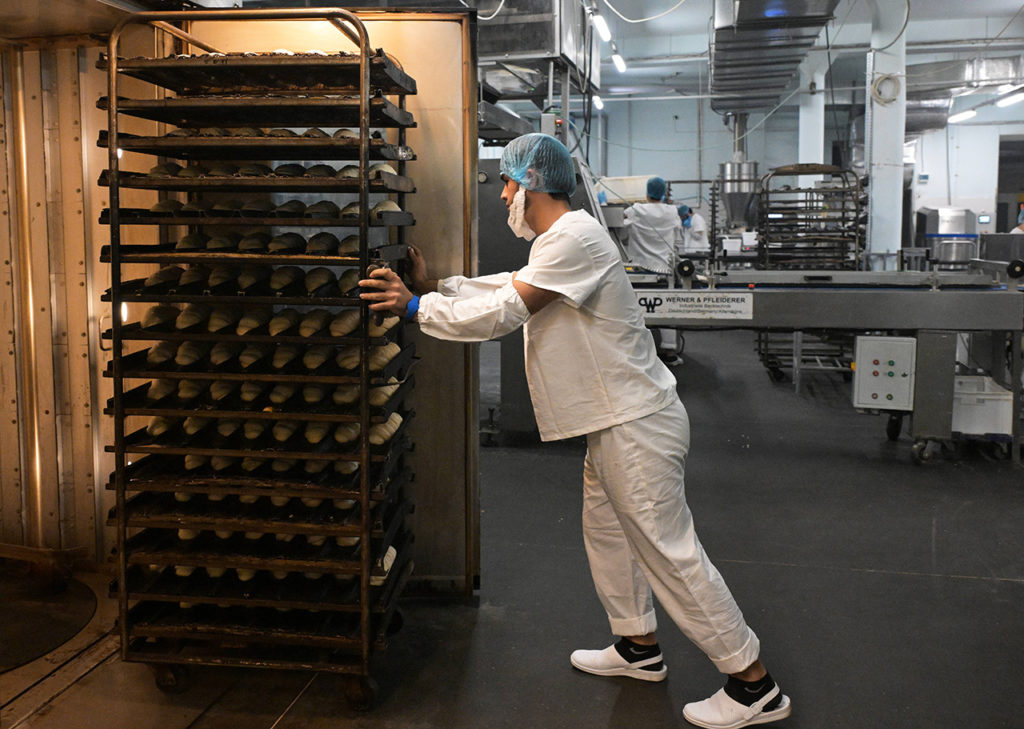
The analysts of the Gaidar Institute agree with him, the authors of the Bank of Russia report are also said: “Producers, thanks to high demand, can shift the increased costs to the final prices.” As a result, "sustainable inflationary pressure remains high." All inflation factors are now closely intertwined, Gurvich notes. The rapid increase in demand creates imbalances in the market of goods and in the labor market, and increasing salaries increases both consumer demand and production costs.
Guns instead of oil
The whole complex of problems forced the Bank of Russia to once again increase the key rate. Now its value is 16% - more than half as higher than in the middle of 2023 (7.5%). The level of current inflationary pressure of the Central Bank assessed how high and hinted that the further increase in the rate is very likely: "The return of inflation to the target in 2024 and its further stabilization near 4% implies a long period of maintaining strict monetary conditions in the economy."
Experts surveyed by Cold believe that the Central Bank is taking the right actions in the fight against inflation: increasing the base rate is a classic anti -inflationary measure, and the Russian regulator has done this more than once. However, the problem is that the restraining monetary policy of the regulator is neutralized by the actions of the government that sharply increases budget expenditures, Nikolai Kulbak emphasizes. In his opinion, it is precisely a sharp increase in budget expenditures , due to military needs, today - the most important factor in inflationary pressure, which will act in 2024. “The planned tremendous growth in budget expenditures means serious stimulation of consumer demand and inflation growth,” the expert said.
In addition, it will be possible to fulfill the budget obligations for expenses only if inflation increases, Kulbak adds, recalling that budget plans for income and expenses are spaced in nominal figures - excluding inflation. Accordingly, the higher the inflation level, the easier it will be with the help of taxes to collect the amount that was planned.
“There are two more options for replenishing income - to increase taxes and devalue the ruble. Most likely, there will be some combination of these three ways, but I would put more for inflation, since it is easier to disguise it than the introduction of taxes and even more so the fall of the ruble exchange rate, ”said Nikolai Kulbak.
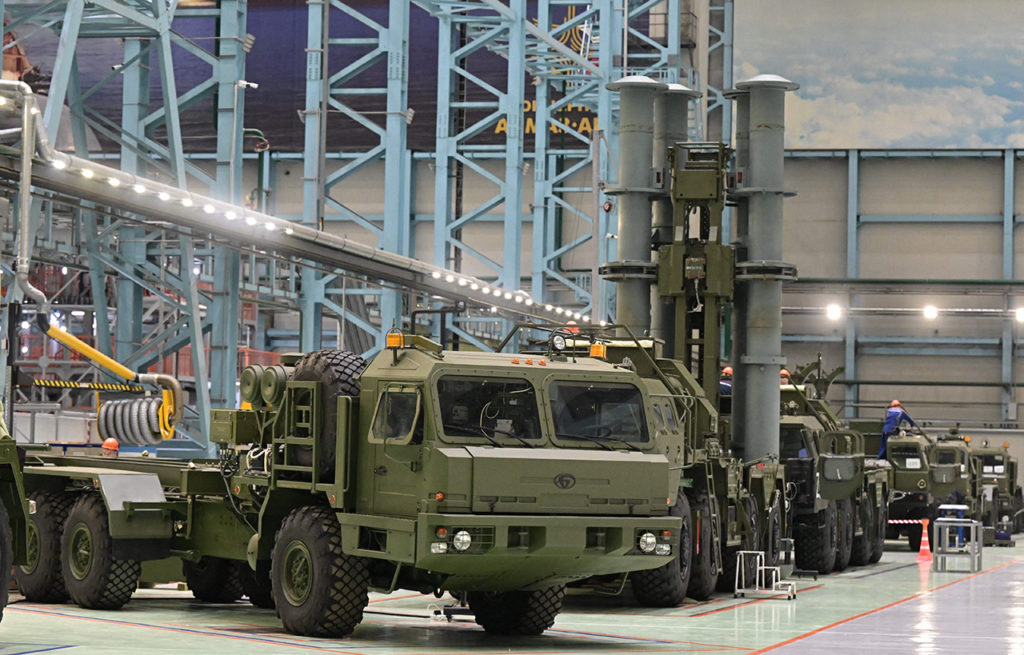
It remains only to add to this that the more the state will spend on war, the less opportunities it will have to support the national economy - this is exactly what the classic dilemma “guns or oil?” Seees now. The share of budget expenditures for the national economy in 2024 fell to the lowest level since 2007 . The reduction in expenses undermines entire civil production sectors, a striking example is agriculture, where, due to the reduction in expenses in 2023, profitability fell to 19.1%, and taking into account subsidies-for comparison, in the pre-war 2021 it was estimated at 25.6%.
Turkish demotivator
Otherwise, in this context, the growth of the Russian economy by 3.5% at the end of the year, which Putin announced at the end of December, also looks in this context. Even in the summer, Elvira Nabiullina warned that there was a risk of overheating in the economy, and a sharp acceleration of inflation in the second half of the year seems to indicate this particular.
However, there is every reason to believe that the Central Bank will fight inflation with the previous energy. The regulator’s decisions, Evsey Gurvich notes, most likely has a guideline - the financial experience of Turkey under Erdogan. In words, the basic principle of “erdoganomics” looks like this: low rates are low inflation. The result of these actions is well known: last year, the level of official inflation in Turkey exceeded 80%, and the Turkish lira year for the dollar over the past three years fell 3.5 times.
At the same time, the desired effect - the growth of the national economy - was somehow achieved, but, according to Gurvich, reminded, “American slides”: “The Turkish economy alternated ups and falling. Production often demonstrated good, albeit unstable growth rates, but regularly accelerating inflation and deep devaluation periods often forced to raise the base rate of the National Bank to dozens of percent. ”
The performance of Elvira Nabiullina at the December press conference really hints that the Russian Central Bank carefully monitors Turkish experiments. An attempt to disperse the economy with the help of a soft monetary policy, that is, a decrease in bets, Nabiullina compared with a car that has not been laid in the design at high speed: “We will go quickly, but perhaps not for long.” Actually, it looks like overheating of the economy.
In 2022, the Central Bank already tried to experiment with the softening of its policy, when a rapid decrease followed by a sharp increase in the rate to 20% immediately after the start of the war. The result turned out to be ambiguous: the Russian economy was in growth , and after it inflation, so it had to be raised again.
The Turkish economy was also in a similar trap, so in the end, Erdogan, after re -election for the next term, still had to abandon the pressure on the often changing leaders of the Turkish Central Bank, from which he constantly required a reduction in bets. The head of the National Bank in June, Hafiz Gafiz, Galdman Sachs , which once worked in the American investment bank, immediately moved to a diametrically opposite policy, and in less than six months the rate took off from 8.5%to 40%, although inflation still exceeds 60%.
This plot allows analysts to assume that the further situation with inflation in Russia largely depends on how the unspoken confrontation between the Central Bank will develop, which is trying to act “according to textbooks”, and the executive branch that planned a sharp increase in military expenses.
“In the current conditions, the Central Bank is very difficult to resist the pressure. If the Government does the Central Bank for itself, if it is “sacrificed” by its independence, then the interest rate will be reduced. But then it will be very difficult to predict the dynamics of inflation - it can grow sharply, ”says Nikolai Kulbak.
Meanwhile, the Central Bank makes it clear that so far everything is going according to plan. The regulator called the actual inflation of 2023 close to the upper boundary of the forecast range (5–7%), outlined a year earlier, and the next year it was decided to maintain the forecast for inflation almost unchanged - optimistic 4–4.5% following the results of 2024. Whether for the sake of this purpose it will be necessary to raise the bet again, it will become clear soon - the first meeting of the Central Bank is scheduled for February 16.