
Translated material
From the soldiers - at sea
The creator of the first icebreaker, the researcher of the ocean and the inventor of many devices that sailors around the world still use. To the anniversary of Admiral Stepan Makarov
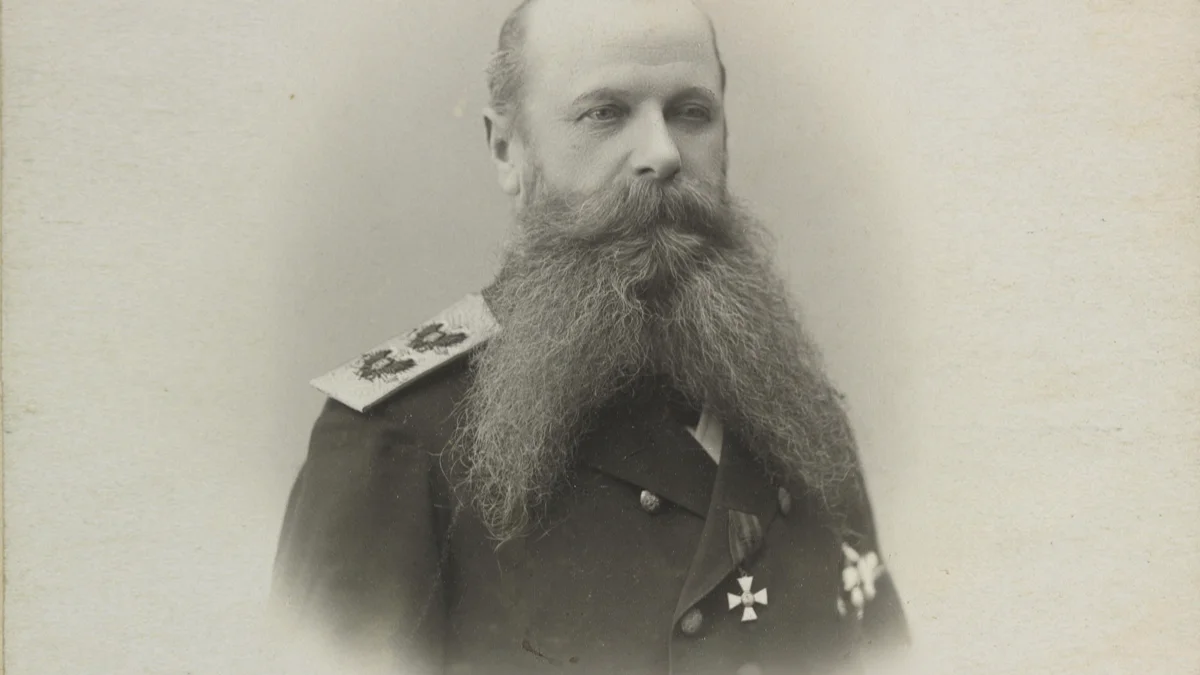
Admiral Stepan Makarov. Photo: National Library of Norway / Nb.no
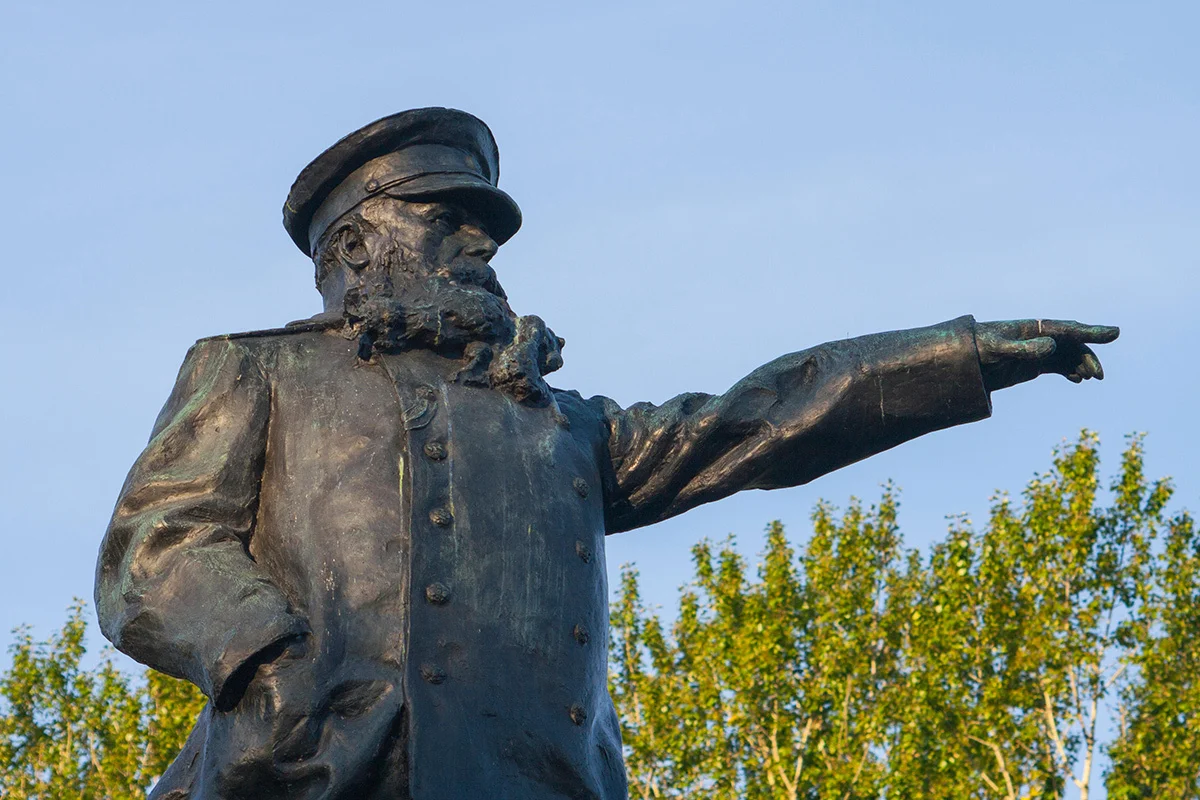
January 8 marks the 175th anniversary of the birth of the Russian fleet and polar explorer Stepan Makarov. Originally from the soldiers, Makarov managed to become Vice Admiral of the fleet, where representatives of the lower ranks could claim the maximum of the rank of midshipman. It was he who developed the tactics of mine and torpedo attacks, improved armor -piercing torpedoes, contributed to the introduction of the radio in the Russian fleet, created the Russian semaphore alphabet and invented the first icebreaker. On the monument to Makarov in Kronstadt, an inscription was carved, which was the personal motto of the admiral: "Remember the war."
Lucky
January 8 marks the 175th anniversary of the birth of the Russian fleet and polar explorer Stepan Makarov. Originally from the soldiers, Makarov managed to become Vice Admiral of the fleet, where representatives of the lower ranks could claim the maximum of the rank of midshipman. It was he who developed the tactics of mine and torpedo attacks, improved armor -piercing torpedoes, contributed to the introduction of the radio in the Russian fleet, created the Russian semaphore alphabet and invented the first icebreaker.
On the monument to Makarov in Kronstadt, an inscription was carved, which was the personal motto of the admiral: "Remember the war."
Stepan Makarov was called a lucky man. For the first time he was lucky before birth. In April 1848, in Nikolaev (Ukraine), the father of the future Admiral, Feldfebel Osip Makarov, passed exams for the rank of warrant officer, the first officer rank in the Russian Imperial Fleet. It is important to clarify that in those days in the fleet there was a division into sea ranks and land. The latter were assigned to those who served in the auxiliary services of the fleet: coastal artbatharies, crews of swallow (low -capacity) ships, ports, repairmen, doctors, etc. The form of both had one, but the epaulets were different. The sergeant was the boatswain (the highest non-commissioned officer rank). The first officer title of ensign corresponded to the rank of midshipman, determined by one star on pursuit with one clearance. The title was completely like this : the ensign in the Admiralty, his analogue in the ship's service: midshipman in the fleet.
Makarov Sr. passed the exams so brilliantly that the chairman of the examination commission, the elderly Rear Admiral, who served under the Ushakovsky flag, asked the Feldfebel:
“Who will you be from, Makarov?”
- From soldiers' children, your Blagority.
- A lot is read. The head of the certification gave you, even to the Order - Stanislav or Anna Present. How do you rule the service?
“As the oath is said, your nobleness.” And as a ship charter tells us.
- You think well. I see that you are cunning for the fleet. Correct. Must be married?
- Exactly so.
- Are there any children?
- Three - two sons and a daughter. We are still waiting for an increase in the family.
- They do not congratulate the child in advance: it is not accepted. But I congratulate the warrant officer on the rank of warrant officer. If he became an officer of the imperial Russian fleet, proud of this title.
“I am proud, your nobleness.”
- Sons teach, most importantly. Keep them in reasonable severity. So that you, a letter, go to you and the fleet officers.
Alexey Shishov, “Makarov. Remember the war ”, ed. Astrel, 2003
Stepan Makarov was born in the family of his father-officer, and the officer rank gave the right to teach their children in cadet corps. No, in the Page or Marine Corps, the path of Makarov Jr. was still closed, but it was quite possible to act in seafarer schools and naval schools, where officers for river flotillas and coarse voyages were trained. The most important thing is that at the end of such institutions, graduates began to service not with the lower classes, but with the maximum non-commissioned officers. This opened prospects for a more serious career. For example, the father of the future admiral, who began the ordinary sailor, received the officer title ten years later, having passed all the stages of the lower ranks. And after 35 years of immense service, he resigned in the rank of headquarters captain in the Admiralty.
In 1858, when Stepan was only 9 years old, his father was transferred to serve in Nikolaevsk-on-Amur. Osip Makarov, going to a new place of service, made a fair hook to visit St. Petersburg. And he ensured that all three of his sons were considered to be a service class and were accepted to serve in the fleet. Rather, distributed by marine educational institutions. Senior Ivan died in St. Petersburg, not completing his studies at the school, Yakov became a naval engineer, and Stepan had to be accepted at the Nikolaev Naval School , preparing the navigators, in which 12 people studied at that time: 6 in the younger group, 6 in the eldest.
In his book “Makarov. Remember the war ”Candidate of historical sciences, writer Alexei Shishov claims that Stepan's father managed to get into the officers because he read a lot and engaged in self -education. Therefore, from childhood, he taught his sons to books. At the same time, he writes that when Stepan was 9 years old, his mother died, and his father married a second time. In his diaries, Makarov never mentioned the stepmother, but there is such a record :
“From the age of nine, I was completely abandoned, and from the age of nine I almost never had the opportunity to use someone’s advice. All that happened in me, all this is compiled by my own work.
I worked a lot on myself, but all the same, there must be a lot of oddities that I myself may not notice. ”
All contemporaries of Makarov, and then the researchers of his life note that Makarov since his youth paid great attention to self -education. Studying at the Nikolaev Marine School, he read everything that was in the Nikolaev library, and also enjoyed the good attitude from the teachers to him and took books from their personal libraries.
Later, Makarov will repeat more than once: “The books were my childhood friends. They helped dream of serving in a military fleet, strive for it ... A good book taught me alone - to think on their own. She taught from her youth. "
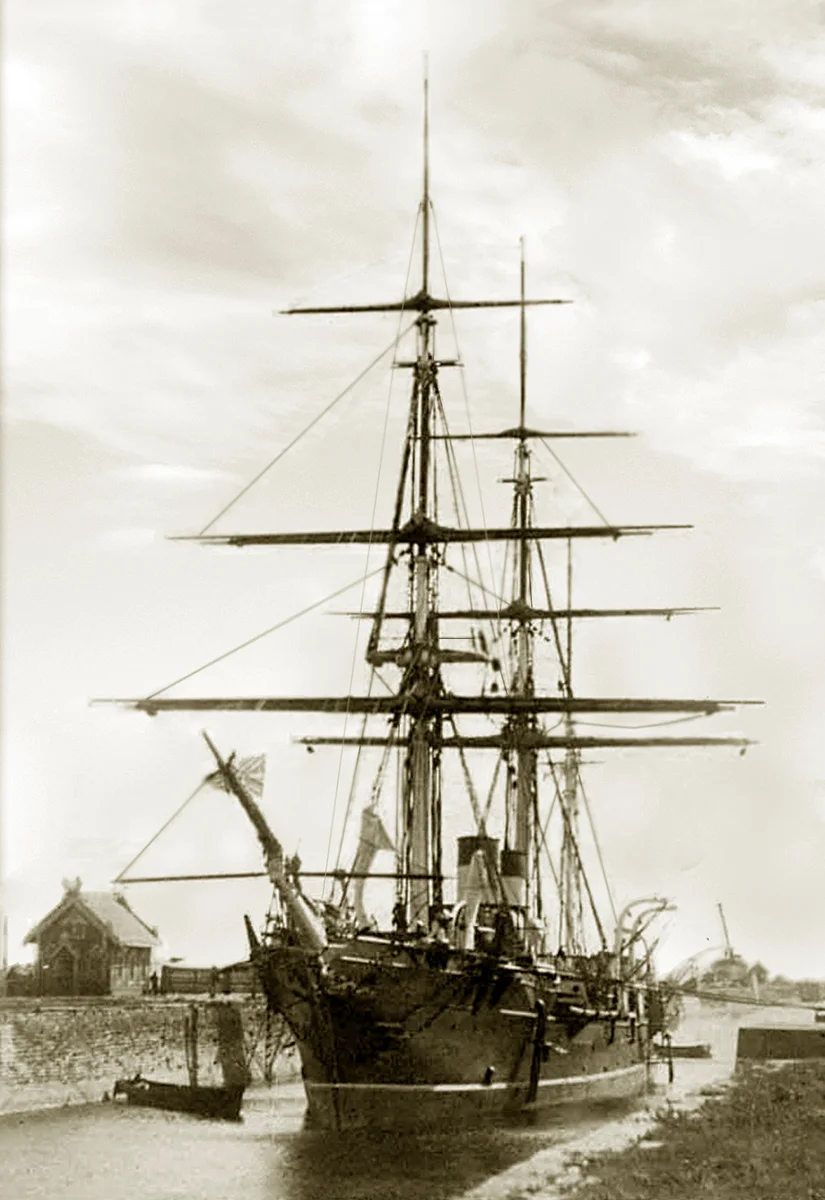
Makarov was lucky with his well -readness to shine in front of the Governor of the Primorsky Territory Admiral Peter Kazakevich. And he contributed to the fact that the sea practice of the cadet Makarov would not take place on river ships and low -roll ships, but on the real sea ship with the flagship corvet “Bogatyr”. So the 14-year-old cadet became a member of the campaign of Russian ships to demonstrate the flag to the US banks in 1863.
Fast career
In 1861, a civil war broke out in the United States between the southern and northern states. A stumbling block was a dispute about the spread of slavery. Initially, the UK and France tried to actively intervene in the conflict, forming a coalition with the Russian Empire. But in St. Petersburg, the Crimean war of 1853–56 had not yet forgotten for Russia, where England and France opposed Russia, although the United States announced neutrality, it was friendly towards Russia. In addition, in 1861, serfdom was canceled in Russia, which by many equated with slavery. So Emperor Alexander II sharply refused London and Paris, announcing the moral support of the northern states.
Great Britain also declared neutrality, but he was friendly to the southern states.
And by 1863, due to a number of diplomatic errors of representatives of the North, in London they seriously spoke of direct intervention.
And only the direction to the US banks in the summer of 1863 of the two Russian squadrons prevented Great Britain to get involved in the civil war.
Russian ships were off the coast of the United States for quite some time and Makarov, constantly on the shore, greatly advanced in learning English. At that time, the nobles were recommended to know French, and therefore in Russia English, which had not yet managed to become the language of international communication, studied little. The exception was marine officers, because at that time all the most authoritative works on sea tactics, shipping, information about the currents, weather features in different parts of the world came out in English. Still, Britain was not just called the “Lord of the Seas”, at that time she was such, although she already began to lose her position as a leader at sea.
The cadets of the Nikolaev school were not taught English. After all, it was assumed that they would not go far from their native shores. But Makarov, it was the knowledge of English that made it possible to advance in his career. In 1895, Makarov, who knew excellently English and constantly improved it, will “translate” the “semaphore alphabet” developed in England into Russian. “Semaphor” (transmission of information through signaling flags) sailors still use it, although officially from the naval charter it [Excluded] (https://ru.wikipedia.org/wiki/%25d0%2595%25D1%2580%25D0%25BC%25D0%25B0%25D 0%25BA _ (%25D0%25BB%25D0%25B5%25D0%25B4%25D0%25BE%25D0%25D0%25BE%25D0%25BB, _1898) In 2011.
A year later, he successfully passes final exams with a record average score 10.6 (out of 12 possible). Admiral Kazakevich gives him a brilliant characteristic, determines to serve on the Askold corvette, which in 1866 was supposed to be relocated from the Far East to Kronstadt, and sends Makarov’s representation to the Mademarins, enrolled in the marine cadet corps.
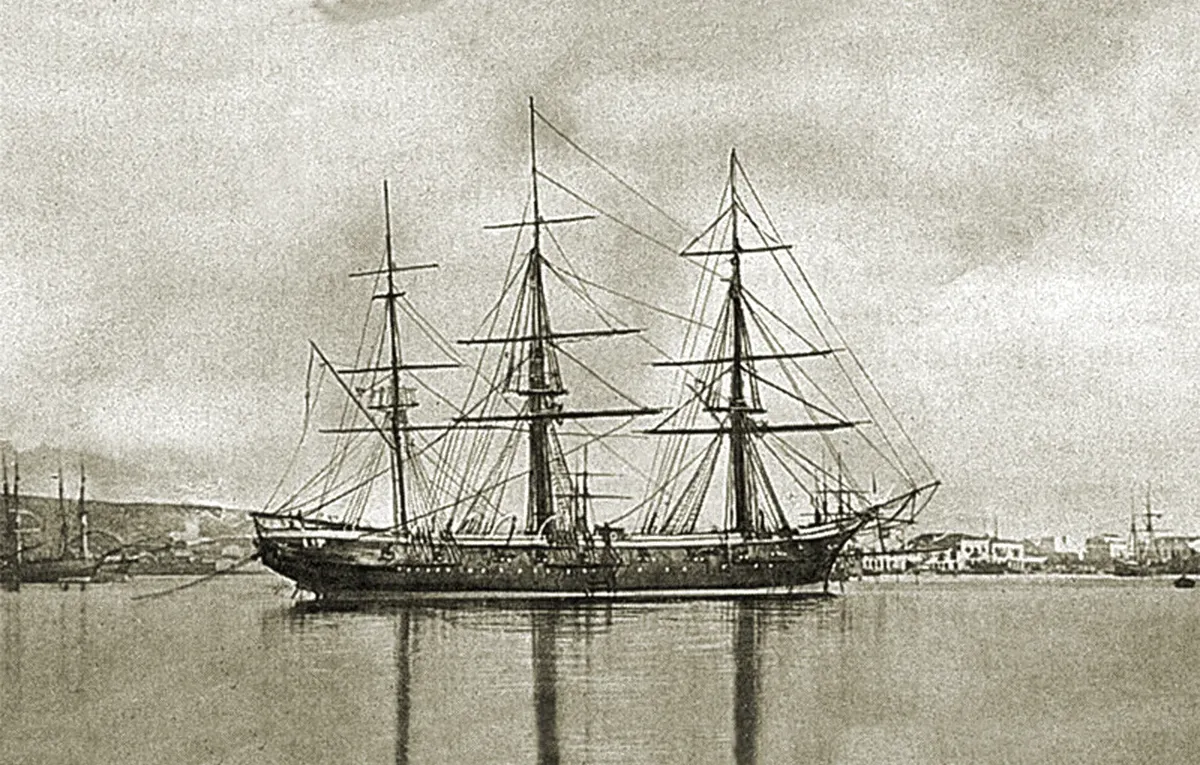
Snobs from the sea department for almost a year have not visited this performance. And only in 1867, when additional certificates were presented to Makarov (in particular, that during his birth, Makarov Sr. was already an officer), and the curator of the Imperial Fleet, Grand Duke Konstantin personally stood up for the Cadet, Stepan Makarov was admitted to the Marine Corps. At the end in 1869, he was promoted to midshipmen. He gets to the battleship "Mermaid".
During the first exit to the sea with Makarov on board, the Mermaid receives a hole in the case from a collision with a stone protrusion and almost goes to the bottom. It was that case, according to Shishov, that made Makarov seriously become interested in the survivability (unsinkability) of ships. In 1870, he publishes an article in the “Marine Collection” in which he expresses a number of his own thoughts about the survivability of ships. Despite the fact that several very useful ideas were expressed in the article, attention was paid only to Makarov's Plaster.
The young midshipman presented a diagram of how to quickly stop the intake of the water from the hole in the ship, clicking it with a rating opened outside.
This technology is still used by all fleets of the world.
His proposals for the isolation of individual premises of the ship, on trunk pipelines with powerful pumps (for extinguishing fire and pumping the incoming water), the introduction of a special course to combat holes remained unclaimed and introduced after the death of the admiral.
For the invention of Makarov's Parsal, Stepan Osipovich is carried out in lieutenants, and the long -standing acquaintance of Makarov Admiral Popov attracts him to the construction of new armored ships. The young lieutenant is trying to introduce his innovations through Popova, but quickly understands that this will lead to too serious a change in projects and will entail additional considerable expenses. And Makarov at the shipyards is simply engaged in the collection of statistical material.
In 1875, he published a monograph “On the unsinkability of the vessels”, which became a table book of shipbuilders at the beginning of the twentieth century, but at that time labor was not in demand.
Makarov asks to transfer it to the current fleet and soon receives an appointment to Black Sea.
At that time - this is 1876 - Russia was preparing for war with the Ottoman Empire. Makarov invited the leadership of the Black Sea Fleet to convert a high -speed ship to the carrier of small mine boats. According to the plan of the lieutenant, the steamer, to the board of which mine boats are attached, delivers them to the place of parking of the enemy ships. Under the cover of the night, it is selected as close as possible, then it launches the minonoski, which, with a swift throw, deliver mine banks directly to the sides of enemy ships, go to the “uterus”, rise from the water and the ship dissolves in the night.
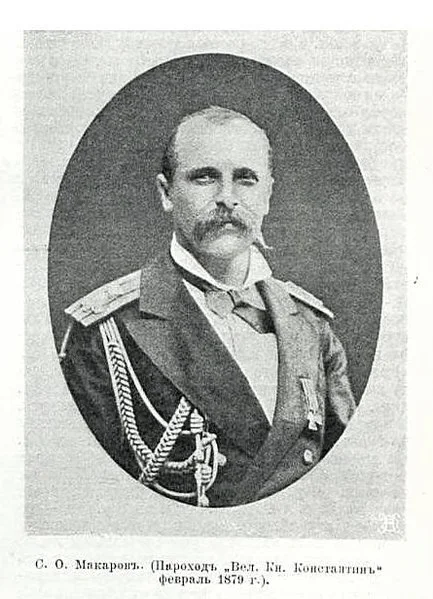
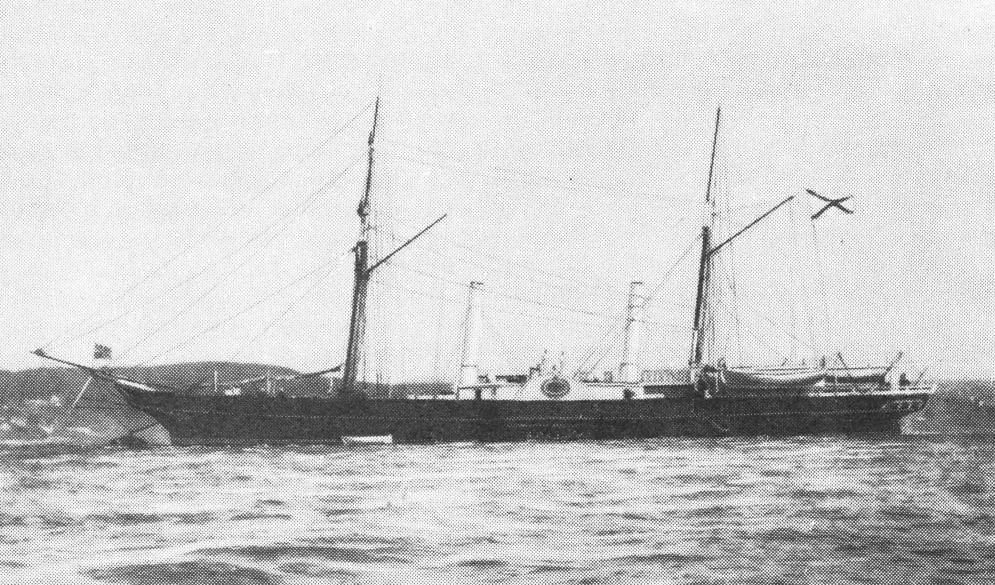
Makarov is distinguished by the ship "Grand Duke Konstantin", which he will re -engage in the declared goals.
In April 1877, the destroyer ship went to cruising off the Anatolian coast. Not immediately, but Makarova’s idea fully justifies itself. In less than a year, Macarov’s minos sunk or seriously damaged at least 20 enemy ships; Mostly commercial, but there were also military, in particular, corvette “Ijalali” and Aviso (high -speed intelligence officer) “Intibach”. In addition, at the same time, Makarov for the first time in the Russian fleet successfully attacked the enemy recently invented by the self-propelled mines of Waithead's mini-traffic.
In less than a year, the future admiral from the lieutenant turned into a captain of the 2nd rank, was awarded with nominal gold weapons, orders of Vladimir 4 degrees, George 4 degrees, promoted to an outbuilding and entered the guards crew (court position that promotes his career). But the most important thing is that Stepan Makarov acquired a very high authority precisely as a combat navy, and now he began to listen to his words much more carefully than to the conclusions of a little -known lieutenant.
International recognition
In 1880, Makarova, at the request of General Mikhail Skobelev, was attracted to the Akhal -Teke Expedition (conquest of Turkmenistan). Stepan Osipovich, actually performing the functions of the commander of the Trans -Caspian Military District, ensured uninterrupted delivery of goods from Astrakhan to Krasnovodsk. Timely and most complete supply played an important role in the entire “expedition”. When a year later the “expedition” reached the finals, Skobelev suggested Makarov, as a sign of respect, to exchange St. George Crosses. It is with the “Skobele” cross that the admiral will enter his last sea campaign.
After the Caspian, Makarov is appointed commander of the Taman steamer, which performed the functions of a styrect in Constantinople. Since the ship was almost constantly at the mooring wall, Makarov began to study the flow of the Black and Mediterranean Seas. As a result, the scientific treatise “On the exchange of Water of the Black and Mediterranean Seas” is born, which brought Makarov a prize of the Russian Academy of Sciences and recognition among scientists, as well as the title of captain of the 1st rank.
In 1886, at the head of the recently built armored cruiser Vityaz, Makarov goes to a round -the -world voyage. Leaving Kronstadt, the ship went to Europe from the north. Near Portugal, he fell into a fierce 12-point storm and was forced to linger in Lisbon to eliminate some problems. From there, the “Vityaz” proceeded to Rio de Janeiro, and then through Magellanov the Strait moved to the Pacific Ocean. After that, with two stops, on the Marquis and Sandwich Islands, the Pacific Ocean overcame for six months and in March 1887 anchored at the Japanese port of Jokoham.
The duration of swimming was due to the fact that all the time the crew was intensively engaged in various studies. Every four hours, water samples were taken, the temperature of water and air was measured, depths were measured, the currents and positions of heavenly objects (stars, sun, moon) were studied. After the “Vityaz” transition, he acted in the Pacific squadron for six months, and then went to Kronstadt: through the Indian Ocean, Suez Canal, the Mediterranean Sea, and the Gibraltar Strait. Once again, having rounded Europe, this time from the south, the Vityaz on May 20, 1889 entered Kronstadt, where a solemn meeting was arranged for the crew of the ship.
In 1894, the two -volume work of the Vityaz in the Pacific Ocean was published. In addition to thousands of pages of the text, labor contained many applications, tables, diagrams. Makarov himself in the preface wrote: “Hydrological observations made by the officers of the corvette“ Vityaz ”during a round -the -world voyage of 1886–1889.” This work was widely known, translated into many foreign languages, and Makarov’s name was included in the list of the greatest sailors. On the pediment of the International Oceanographic Museum in Monaco, the names of the 20 most famous ships in world history are listed. The only representative of Russia on this list is Vityaz .
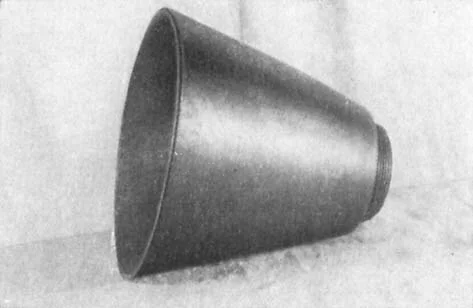
In 1890, Makarov was promoted to Rear Admiral and appointed chief inspector of marine artillery. In this post, the Navy was noted by the improvement of armor -piercing shells,
Having offered to cover the hidden part of the projectile with a soft alloy that, when contacting an obstacle in contact, is, as it were, and the shock force of the explosive charge falls on the area of the area than when the simple tip is hit. Это нововведение, получившее название « колпачки (наконечники) Макарова », применялись и во время Второй мировой войны.
В 1894 году, командуя Средиземноморской эскадрой, Степан Макаров отправляется (теперь уже во главе нескольких кораблей) во второй кругосветный поход. На этот раз обратным маршрутом: через Суэцкий канал в Индийский океан и на Дальний Восток; а уже оттуда через Тихий океан в США, затем в Атлантический океан и оттуда в Кронштадт. Результатом этого плавания стал труд «Рассуждения по вопросам морской тактики» (1897 г.). В труде с эпиграфом «Помни войну» он изложил основы ведения эскадренного боя кораблями броненосного флота, большое внимание было уделено также анализу роли морального фактора в морских сражениях.
Свои мысли о подготовке к войне вице-адмирал отстаивал в комиссиях по обсуждению судостроительной программы и вооружению приморских крепостей.
Он настаивал на разработке плана ведения возможной войны на Дальнем Востоке, на скорейшем укреплении Порт-Артура и Владивостока. Но ни в Военном, ни в Морском министерствах понимания Макаров не нашел и переключился на совершенно новую область: строительство ледокола.
А вот в Японии, куда труд был доставлен дипломатической почтой, книгу перевели, внимательно изучили. Она стала настольной книгой для высших офицеров Японии. В частности, командующий японским флотом Того Хэйхатиро считал, что единственный русский флотоводец, которого стоило бояться японскому флоту, был именно Макаров.
Лед океана и пламя войны
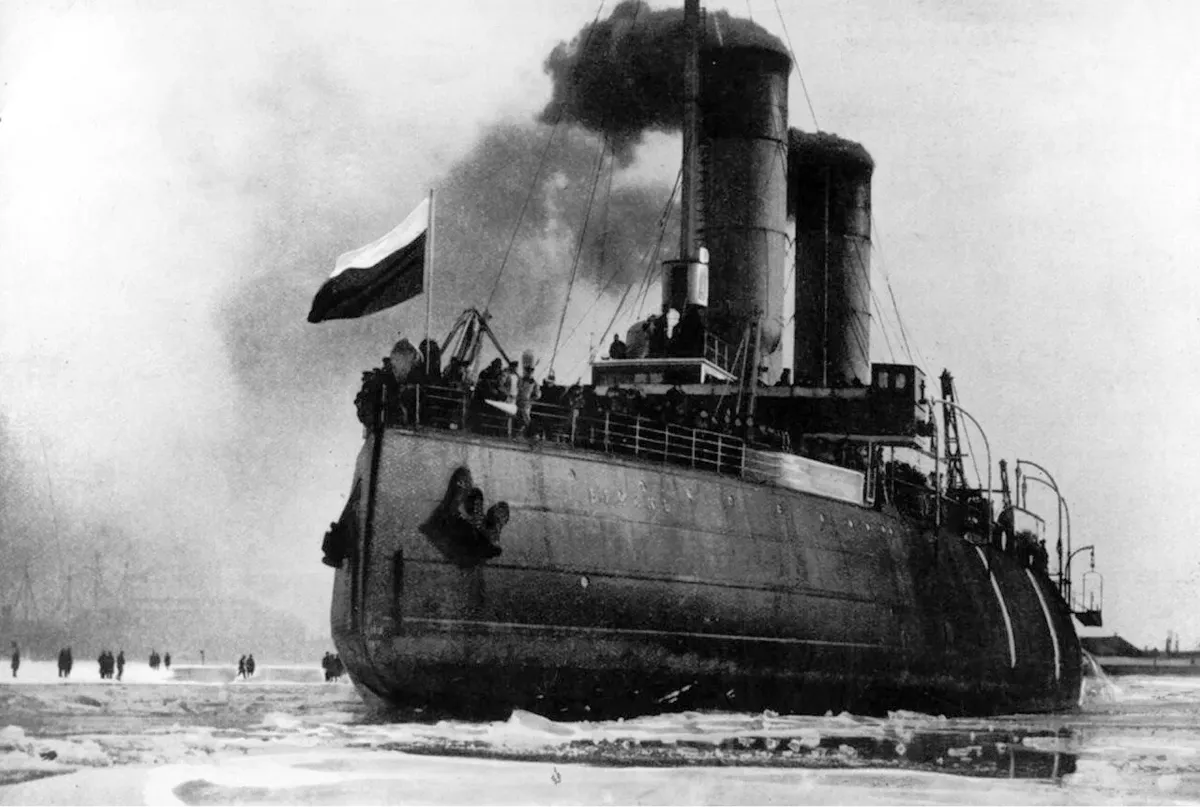
К счастью японцев, Макаров сильно увлекся строительством первого в мире ледокола, получившего название «Ермак». Строился он на верфях в Ньюкасле, так как многие технологические процессы, которые Макаров и великий русский ученый Дмитрий Менделеев собирались применить при строительстве ледокола, были недоступны на российских верфях. «Ермак» был спущен на воду в ноябре 1898 года. 19 февраля 1899 года на «Ермаке» был поднят коммерческий флаг (ледокол был причислен к министерству финансов). 9 марта корабль вышел на свое первое задание: освободить 11 коммерческих пароходов, затертых льдами в районе Ревеля (Таллинн). С заданием «Ермак» справился довольно легко, но были выявлены некоторые недостатки, для устранения которых ледокол вновь отправился в Ньюкасл. Ремонтные работы заняли месяц, и 29 мая 1899 года «Ермак» под командованием Макарова двинулся в свой первый поход в Северный Ледовитый океан. Почти четыре месяца команда ледокола собирала статистические данные о ледовой обстановке в Баренцевом море. Но потом «Ермак» напоролся на торосы, получил пробоину и вынужден был опять проследовать на ремонт в Англию.
Выводы комиссии, расследовавшей причины аварии, однозначны: «Ермак» не пригоден для проводки кораблей через океанские льды, но вполне справится со льдами на Балтике.
Министр финансов Сергей Витте запрещает применение ледокола для попыток освоения Северного морского пути, на чём настаивает Макаров, и продавливает решение об использовании «Ермака» только в акватории Финского залива.
На следующий, 1900 год Макаров, заручившись поддержкой Менделеева и Фердинанда Врангеля, выбивает разрешение на третью Арктическую экспедицию. После модернизации в Ньюкасле ледокол должен был летом 1901 года пройти до устья реки Енисей в Карском море.
Но и эта экспедиция окончилась неудачей. 16 июля 1901 года «Ермак» был затерт льдами в районе Новой Земли и вынужден был дрейфовать до 6 августа. Корпус судна не пострадал, но время было упущено. А потому Макаров решил не продолжать путь к Енисею, а сосредоточиться на изучении обстановки возле островов Франца-Иосифа.
По возвращению в Петербург Витте отстраняет Макарова от командования ледоколом. «Ермак» [прослужит](https://ru.wikipedia.org/wiki/%25D0%2595%25D1%2580%25D0%25BC%25D0%25B0%25D0%25BA_(%25D0%25BB%25D0%25B5%25D0%25B4%25D0%25BE%25D0%25BA%25D0%25BE%25D0%25BB,_1898) в русском и советском флоте до 1963 года, совершит немало героических ледовых прорывов и будет награжден орденом Ленина.
Степана Макарова назначают военным губернатором Кронштадта. На этом посту Макаров тут же обязал оснастить все военные корабли радиосвязью, внедрению которой старые флотоводцы сопротивлялись. Но противиться приказу самого прославленного на тот момент русского адмирала они не посмели.
Вообще Макаров на чисто административном посту показал себя очень деятельным чиновником. Он ввел в казармах газовое освещение, открыл портовую техническую школу, строго инспектировал матросские столовые и камбузы на кораблях (сохранилась копия его приказа от 1 мая 1901 года «О приготовлении щей»), читал лекции в морском собрании.
Но как человек военный, он стремился на Дальний Восток, где вот-вот должна была разразиться война с Японией, которая могла привести к катастрофе.
Николай II, введенный в заблуждение военным министром Куропаткиным, к предупреждениям Макарова отнесся без должного внимания. Правоту знаменитого адмирала морские и сухопутные комиссии будут вынуждены признать лишь после окончания Русско-японской войны, в процессе подведения ее итогов.
Впрочем, то, что Макаров в своих требованиях укреплять Порт-Артур был прав на все 200 процентов, выяснилось уже 26 января 1904 года. Японские войска атаковали Порт-Артур, разработав план нападения по книге «Рассуждения по вопросам морской тактики», написанной Макаровым в 1897 году. Кроме того, действия японцев в точности совпадали с теми предупреждениями, которые излагал Макаров в своей последней докладной записке , написанной за 4 дня до нападения.
1 февраля 1904 года Степана Макарова назначают командующим Тихоокеанским флотом и отправляют на Дальний Восток. Прибыв во Владивосток 24 февраля 1904 года, Макаров тут же деятельно включается в наведение порядка на флоте. В срочном порядке все корабли оборудуются радио (техников для этого Макаров привез из Петербурга). Каждый день несколько кораблей выходят в море на глубокую разведку с запретом вступать в бой. В Порт-Артур доставляются боеприпасы, вооружение, продовольствие, начинаются фортификационные работы, готовятся площадки для дополнительных артиллерийских батарей, улучшается бытовое снабжение и питание. Но самое главное — рядовые моряки и младшие офицеры воспрянули духом, поверив в Макарова, и с энтузиазмом включились в работу.
В марте 1904 года адмирал Макаров дважды не позволил адмиралу Того запереть в Порт-Артуре корабли Тихоокеанских эскадр. Но с генеральным сражением не торопился, ждал обещанного подкрепления с Балтийского флота. Бурная деятельность Макарова и ее явные успехи не могли понравиться ни прежним руководителям Тихоокеанского флота, ни высшим чинам Военного министерства.
Не имея возможности противодействовать открыто, противники Макарова в русском флоте гадили по мелкому. Например, был сперва затянут, а потом и вовсе похоронен проект по переброске малых торпедных катеров и миноносцев на Дальний Восток по железной дороге. А эти корабли могли сослужить большую службу как в качестве разведчиков, так и как боевая сила. Под самыми разными предлогами задерживалась, а потом вообще была отменена отправка во Владивосток броненосной эскадры под руководством адмирала Вирениуса.
А вот адмирал Того понимал, что если сейчас не нанести решающего удара, то Макаров наведет порядок и победить русских на море будет почти невозможно. А потому он разработал план, рассчитанный на импульсивность и личную отвагу Степана Макарова.
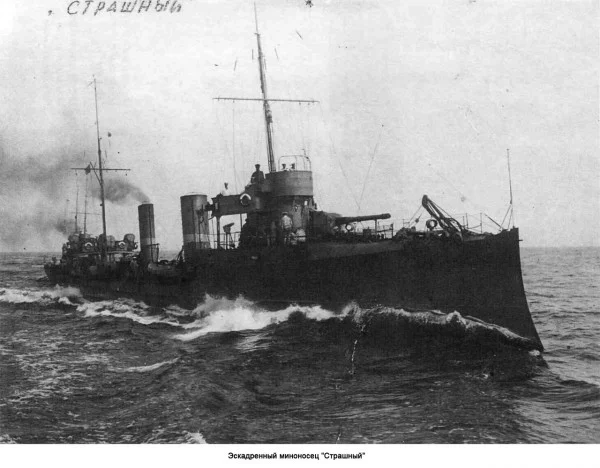
30 марта в зоне видимости наблюдателей Порт-Артура появились японские корабли. Адмирал Макаров тут же отправил в разведку пару эсминцев и несколько миноносцев. Японские корабли увели их в сторону, а ночью несколько кораблей вернулись к Порт-Артуру и стали минировать секретный фарватер для прохода русских кораблей.
Каким образом японцам удалось получить его координаты, не так уж и важно. Скорее всего, не обошлось без предательства. С наступлением утра в Порт-Артуре заметили, что несколько японских кораблей атаковали эсминец «Страшный». Макаров дал команду на выступление базировавшейся в Порт-Артуре эскадры и сам поднялся на борт эскадренного броненосца «Петропавловск». Вместе с ним на корабль поднялся знаменитый художник-баталист Василий Верещагин, с которым Макаров был знаком еще со времен Русско-турецкой войны 1877–78 годов, и двоюродный брат императора Николая II Великий князь Кирилл Владимирович, служивший начальник штаба адмирала Макарова.
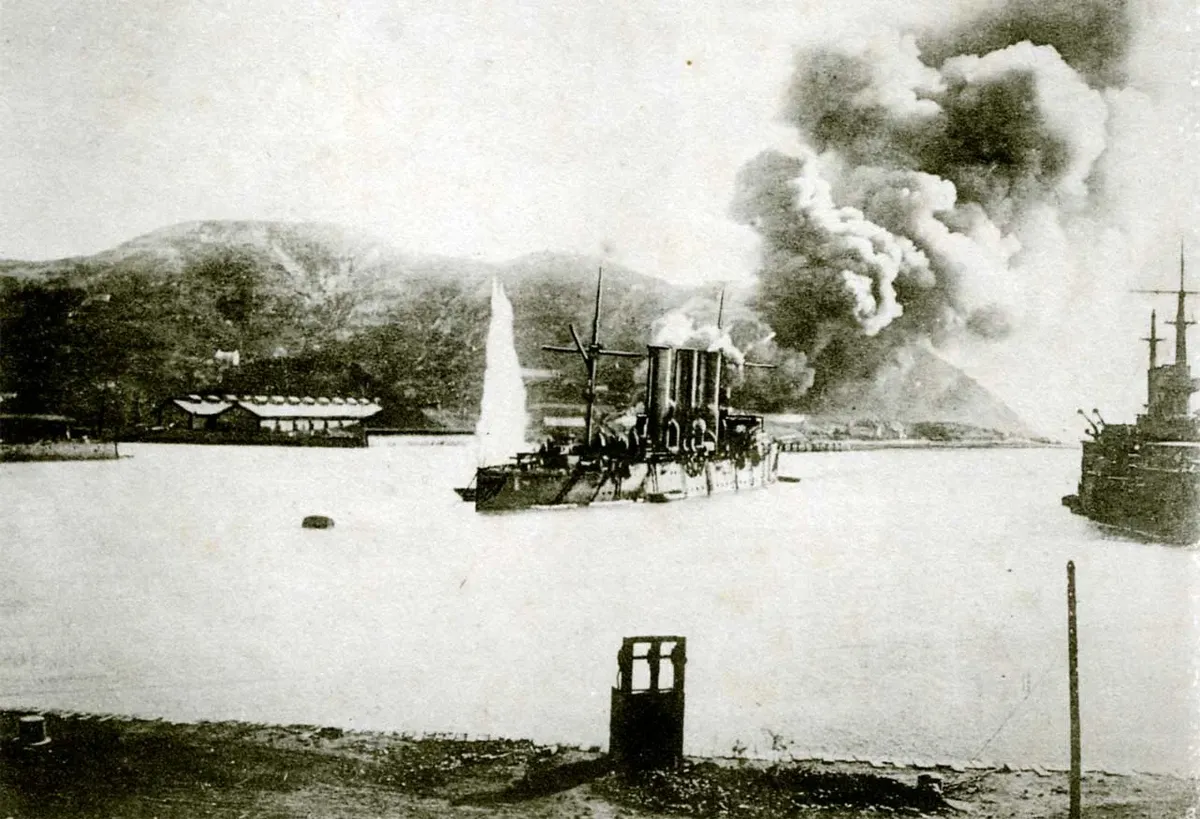
Мины, установленные в русском фарватере японскими моряками с соблюдением всех норм, прописанных Макаровым в руководстве по минному делу, были рассчитаны на задержку в 50 минут. Именно столько требовалось главным силам японской эскадры, чтобы дойти до места схватки эсминца «Страшного» с тремя японскими кораблями и захлопнуть ловушку для тех русских кораблей, которые бросятся на помощь своему. Но ловушка не сработала: «Страшный» затонул за несколько минут до прибытия помощи, а японские корабли, не решаясь вступать в схватку с превосходящими силами противника, на всех парах бросились на воссоединение со своими. Макаров, догадавшись, что японцы просто выманили его, велел подобрать выживших моряков с поверхности океана и приказал двигаться в обратный путь. К этому моменту мины уже успели всплыть на заданную глубину. И первым на мину наткнулся именно «Петропавловск». Да еще так неудачно, что сдетонировал боезапас корабля. Броненосец камнем ушел на дно.
Из экипажа в 700 с лишним человек выжило 80, включая Великого князя Кирилла, которого взрывной волной просто выбросило далеко в море.
Более 600 членов экипажа, включая адмирала Макарова и художника Верещагина, погибли вместе с кораблем. Смерть Степана Макарова, которому было всего 56 лет, потрясла всех моряков мира. Японцы направили Николаю II сочувствующую телеграмму, в которой было написано: «С самого приезда своего в Порт-Артур, в начале марта, он деятельно принялся за работу: привел в порядок побитую и расстроенную эскадру, поднял военный дух, водворил дисциплину и от всего сердца, не жалея сил, старался восстановить честь флота». Адмирал Того, получив подтверждение о смерти Макарова, приказал приспустить флаги на всех японских кораблях, офицеры надели траурные фуражки. А японский поэт Исикава Такубоку посвятил Макарову следующие строки :
Друзья и недруги, отбросьте прочь мечи,
Не наносите яростных ударов,
Замрите со склоненной головой
При звуках имени его: Макаров.
Его я славлю в час вражды слепой
Сквозь грозный рев потопа и пожаров.
В морской пучине, там, где вал кипит,
Защитник Порт-Артура ныне спит.