
Translated material
In a new place
The number of refugees around the world reached a record. We tell their stories
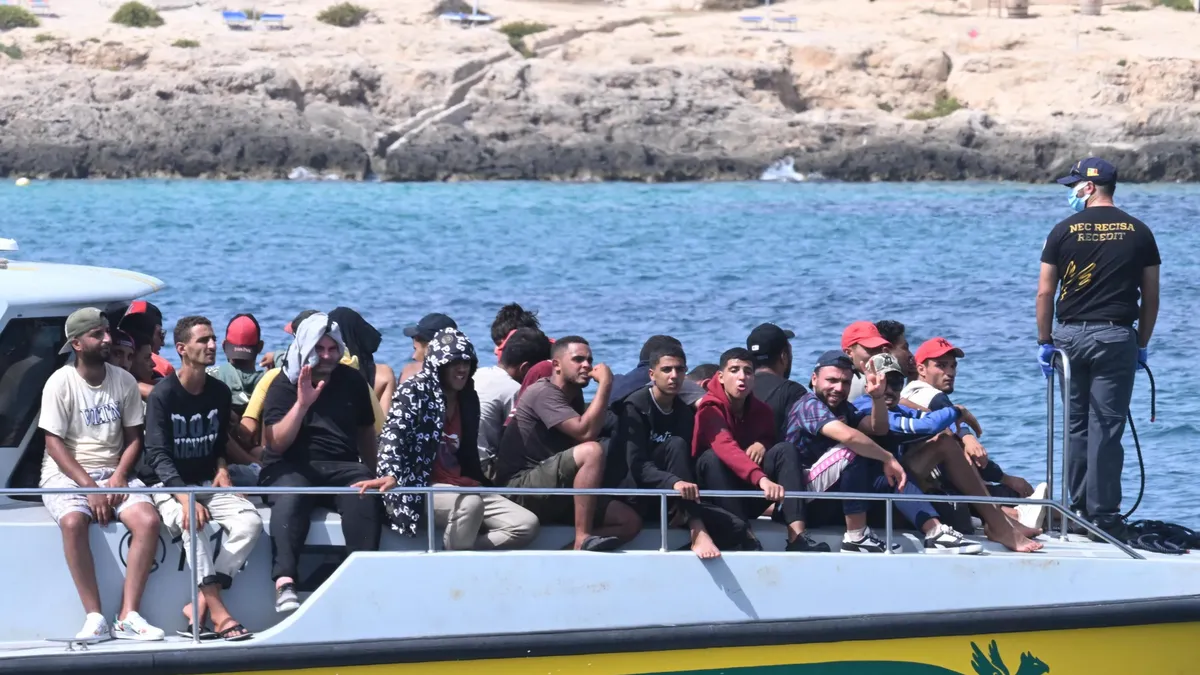
Migrants from Egypt, Bengal, Syria, Ethiopia and Sudan arrive from Tunisia on Lampeduz after their two boats were saved by the Guardia di Finanza V827, September 19, 2023, Lampeduza, Italy. Photo: Ciro Fusco / EPA-EFE
According to the UN, at the end of 2022, as a result of armed conflicts, persecution, violence and human rights violations, the number of forced immigrants amounted to 108, 4 million people. By the end of May 2023, this figure increased to 110 million due to the war in Sudan, Filippo Grandi, the UN Commissioner for refugees. Of these, more than half are faces fled from wars: 62, 48 million people.
According to the UN report, people in need of international protection mainly left Syria, Ukraine and Afghanistan - 17.9 million people. The most in the world of refugees was adopted by Türkiye - 3, 6 million. People receive temporary protection, use various support programs - in mid -2022, the UN first introduced the concept of “other persons”, implying people who are outside their country, are not refugees, but need international protection. Novyevropa talked with people from different countries who were forced to leave their homes.
"After the next shelling, we could not stand it"
Victoria: From Ukraine to Spain
Victoria is from Ukraine, she alone brings up a minor son Misha. In the fall of 2021, back in Kyiv, the child had a complex heart surgery. At this time, Victoria’s husband was in eastern Ukraine: he fell ill with coronavirus and fell into intensive care, where he died two weeks later.
“All this time, starting from mid -October, I have not worked. It took us about a month and a half to restore the child and put his health and nervous system in order,
- recalls Victoria. - And then the New Year .... And these are tears ... tears of loss of a loved one. Only in mid -January I was able to go to work and tried to return to the usual lifestyle. But this did not last long. February 24 - war. The child has an attack, fright, soothing drugs again. And I seemed to die. There was no strength for anything. We were at home for a month, there was no desire to go somewhere, but after the next shelling we could not stand it. ”
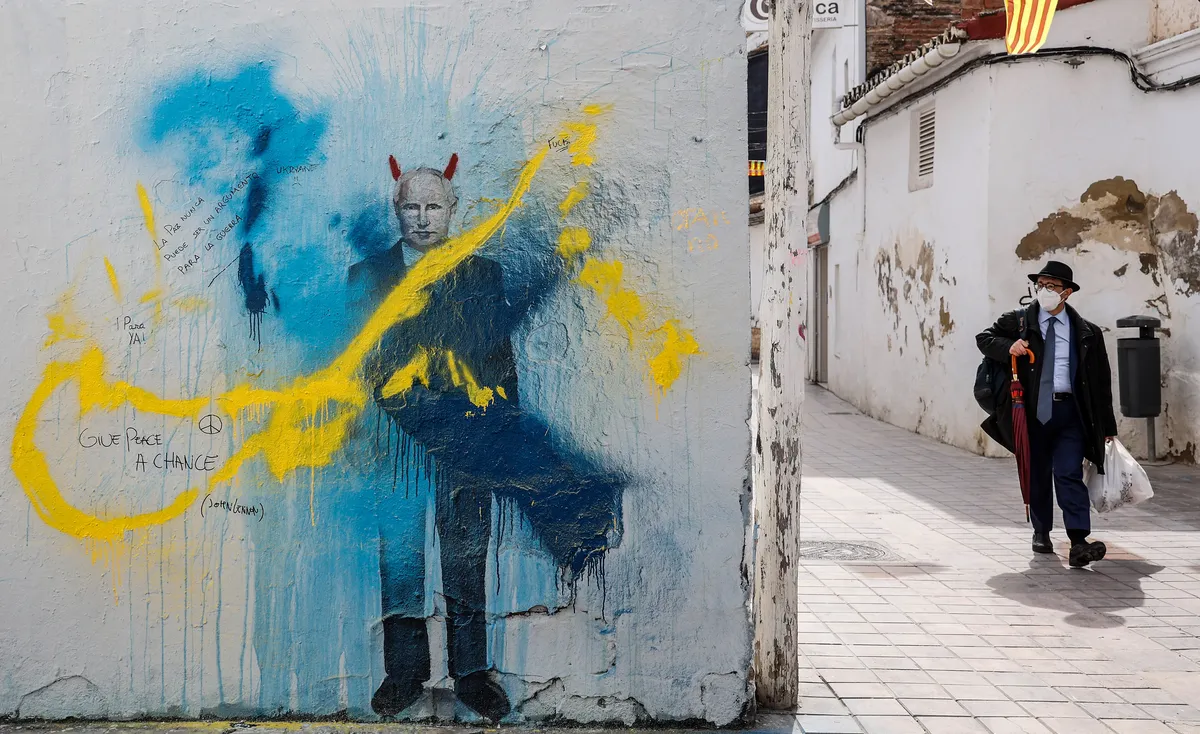
Victoria put in a small suitcase the most necessary and, together with her son and dog, sat on an evacuation train, stuffed with other people saving from the war. So Victoria and Misha got to Poland, and already from there - to Switzerland.
The woman went there because only there she had at least some familiar Europeans. “We arrived in Pshmysl and sat all night at the station, waited for the morning train,” she recalls. - Then we went to Vroclav, there we also slept at the station. Then to Berlin, from there - to Bern. ”
There was no one at the station: neither volunteers, nor help. From the experienced stress, a woman had a nervous breakdown. The random Russian -speaking passerby helped, who told Victoria and Misha how to get to the place of primary registration of those who fled from the war.
“For three days we lived in the bunker, then we were sent to the mountains, where we lived for 2.5 months,” the woman says.
- Then they provided a separate apartment and allowance. For a year we lived like that, in parallel, trying to treat the child. ”
But the climate did not come to the boy at all: he constantly had headache attacks before vomiting. As a result, Victoria decided to move to Spain: here Misha finally began to feel better.
But there are other difficulties - with documents. “Now we are standing on the program [helping refugees],” says Victoria. - We have the opportunity to go to the second phase, [to get a residence permit], but for this you need to find an apartment. In Spain, this is still a quest. People do not understand which the ministry pays for us. They are afraid of the occupiers. It is very difficult to explain to them that we look at life differently. ”
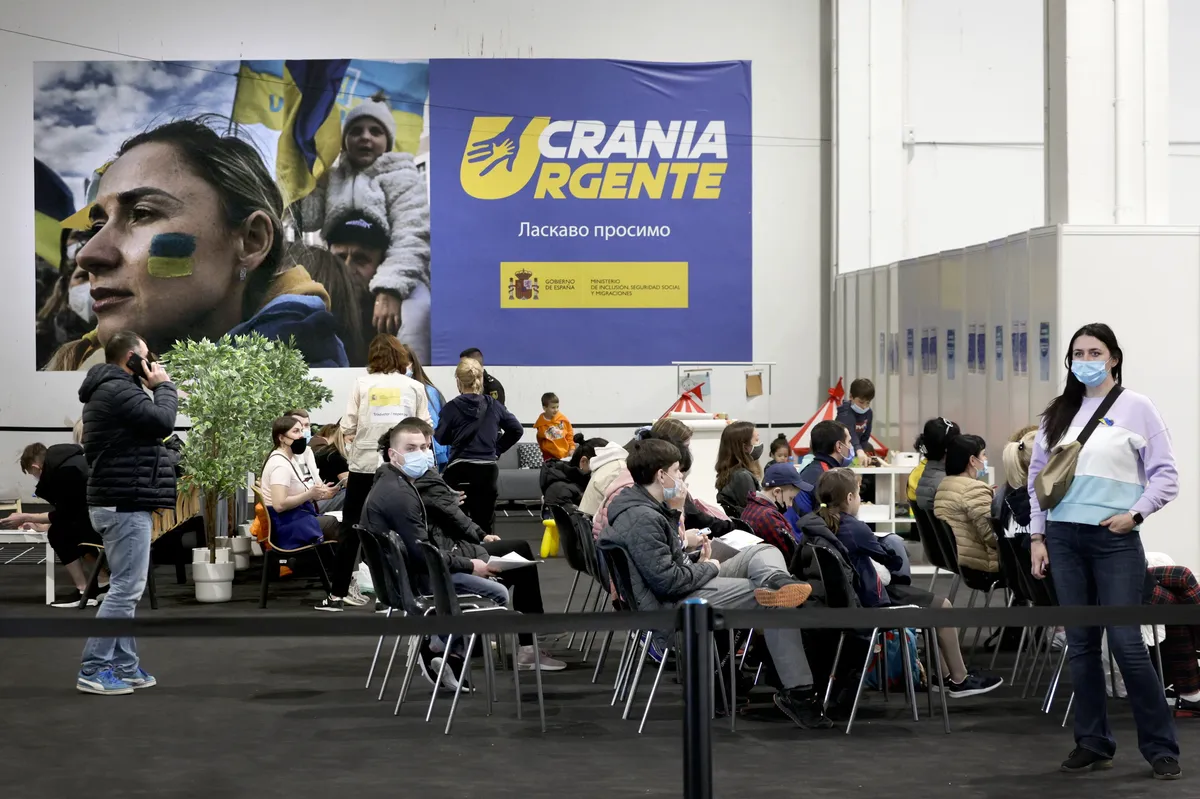
So far, Victoria and her son live in a shelter for refugees, where, in addition to Ukrainians, there are citizens of Somali, Morocco, Russia, Syria and Latin America. According to the woman, they feed the guests disgusting, so you have to buy food in stores.
“The most difficult thing is ignorance of the language,” Victoria admits. - You cannot explain, ask, ask. I'd like to return home! You are your own at home! You can solve problems with one call, you can say. There are opportunities there. "
But until the end of the war, Victoria does not plan to return. “I will not take the child home, he does not need stress from missiles and explosions,” she says.
"There, many people eat grass"
Barend: from Syria to Germany
The 27-year-old board fled from Syria with a sixteen-year-old teenager: he lived for ten years in the refugee camp of Zaatari, on the territory of Jordan intended for the Syrians. It was a very difficult life, recalls the Barents: in 2022, the number of refugees in the camp exceeded 82 thousand people.
“It was the worst day in my life,” says the Barents about how he got to the camp.
- Yes, it is safe and not scary here, but living was the tragedy for me. Life in the tent, dirt on the roads, there is almost no electricity and water.
In the summer, it is very hot inside the tents, in winter it is cold. Mud everywhere. "
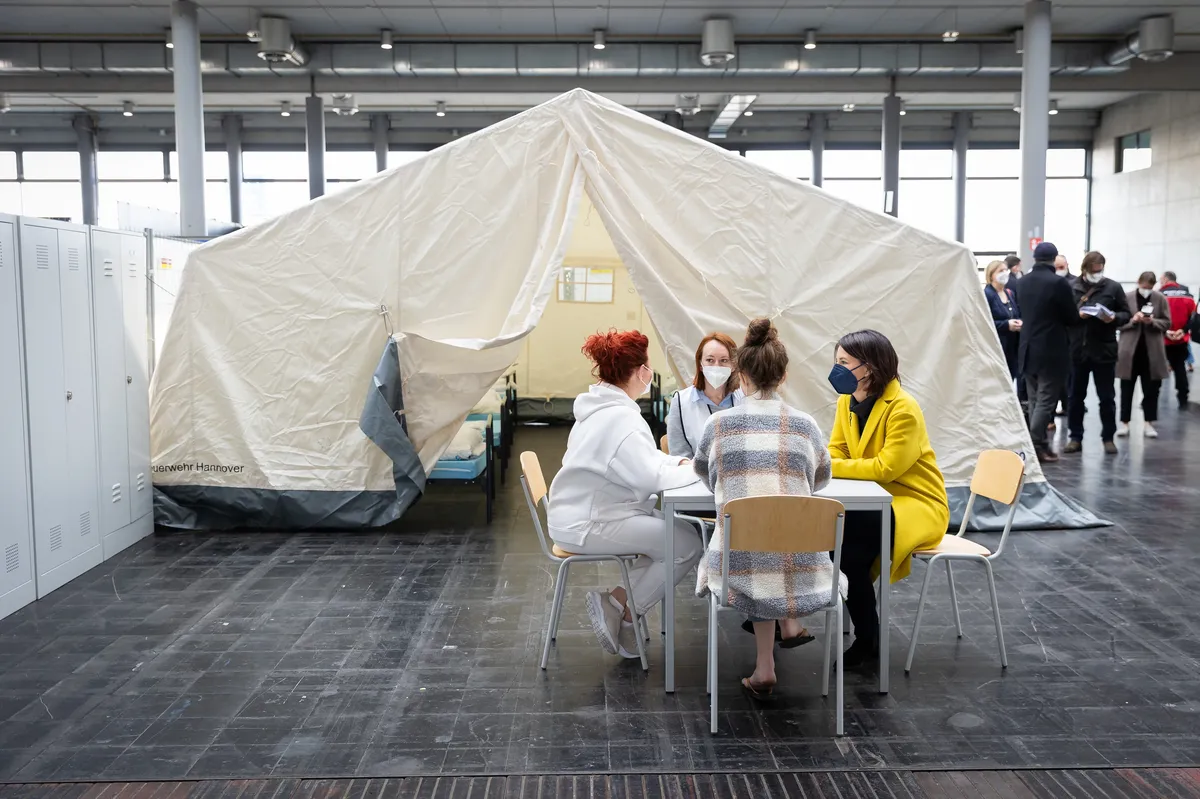
All the time in Zaatari, the Barend thought that his life and time were leaving. Then he decided to go to Europe. The path to Germany began with Russia, from where the Barend went to Belarus, and then to Poland. It was the hardest: the man spent two weeks in a neutral strip between states, terrible things were happening before his eyes. “I could cross the border in a week, but I saw that there were many women and children who disappeared without food and water,” the Barend recalls. - I began to help them, looking for lost, brought food to the children. But then I realized that I had already done enough and I can’t stay in the neutral zone anymore. ”
The Barend tried several times to break into Poland, but to no avail. Once he was seized by the Polish military, broke the phone and sent back to the neutral strip. For the second time, the ballon tried to cross the border by car with other refugees, but again unsuccessfully.
“The last time in a neutral strip I stumbled upon a guy from Afghanistan - he barely breathed, he was looking for the last ten days,” recalls the Barend. “We gave him food, drove and took with us.” The man says that
The hardest in the neutral strip was for women, children and old people: no one helped them, except for those who were in a similar position.
I had to eat, water, the phones had to be hidden in specially dug pits so that nothing from this could take away or break the Polish military. “It seems to me that the presence of journalists and humanitarian organizations there is very important, especially in a neutral strip, just for people to have food there. There, many people eat grass, ”says the man.
In the end, the barrend was able to cross the border and reached Germany in a day. There he turned to a special center for help that helps refugees. Now the man is undergoing all the necessary bureaucratic procedures and is waiting for an entry on language courses. The Barend dreams of learning the engineer-builder.
“My desire is to get a degree in the construction industry and live an ordinary life as a normal person,” he says. “Here I feel that I am at home, although, frankly, I do not have enough of my family.”
"In fact, I'm here at all without status"
Ulyana: from Russia to the USA
Ulyana, an eighteen-year-old refugee from Russia, now lives New York. The girl left Russia immediately after the 11th grade, almost six months before adulthood, in the early days of 2023. Such a rush was associated with the need to avoid military accounting for male documents.
Ulyana is one of those by whom the new law has hit the trans-people to change the “floor” column in the documents and receive hormonal therapy. The girl left for the United States with her mother and her affiliate visa affiliate, received in Kazakhstan. Before that, she spent two weeks in Turkey, where she began hormone therapy, and then moved to Mexico.

“We decided to leave Russia as urgently as possible,” says Ulyana.
As soon as the Ulyana was 18 years old, the mother and her affiliate program left the United States, and the girl moved from New York, where they lived with her family for the first time, in Chicago. In the new city, everything turned out to be not so simple - a local immigration lawyer, who promised to help with a change in tourist status to refugee, turned out to be a fraudster.
“We paid more than $ 4,000 and did not receive any documents with which you can do something. He did not do his work ",
- says Ulyana. The lawyer tried to take advantage of the fact that the girl under local laws is actually an orphan (adulthood in the United States comes from the age of 21. - Approx. Author ) , which means that she needs to find a guardian who would legally entrust Ulyana and her stay in the country. According to the “happy” accident, the guardian of the lawyer, who requested $ 3,000, volunteered to be a guardian. In addition, the documents that the immigration specialist provided as the work done turned out to be simply filled with a template from the Internet.
After conferring with her mother and her friends, Ulyana refused the services of a fraudster and found a new lawyer. And then she returned to New York: it seemed more prospects there, and in general, the atmosphere of the metropolis attracted, where no one cares who you are and how you look.
“My visa ended on December 3. I am now in New York, in fact, as illegal, ”the girl says. - I have a year to serve asylum. As far as I know, the state of New York protects the rights of migrants. And until I threaten any criminal liability, as, for example, in Texas or where else. Of course, this has its consequences: I still do not have a tax number, work permit. And in fact, I'm here at all without status. ”
The tourist visa does not allow Ulyana to officially work and all the more long -term renting out, but the girl was able to figure out this problem. “In Chicago, I worked as a barista and a waitress,” she says. - And this, in principle, brought me normal money. Now in New York I am looking for work-it is surprisingly difficult. It seemed that once in Chicago it managed to get so quickly, then in New York, in the city of migrants, this should be elementary. But there is no work yet. ”
The most difficult thing is that you have to rely only on yourself. “Life in Russia in domestic plan was much calmer,” Ulyana admits. -And here it turns out that I myself am building my life from scratch and there is no safety pillow, you can’t just go to my grandparents somewhere. I live in New York, I have rent, a million and I need to somehow get out. ”
A separate problem for a girl is medical services: Ulyana needs to take hormonal drugs, and travel insurance does not cover them, and it’s hard to sign up for a doctor. “I arrived in New York in early June. A few days later my birthday was. And on some day after the arrival, I realized that I had tablets left for a week, ”recalls Ulyana. - I started a panic. In Turkey, they could somehow get it, in Mexico too, and in America everything is according to the recipe, immediately even a recipe lens. Then I just met a woman who helped me get to the doctor very quickly. After the first trick, I went out with two boxes of tables for six months. ”
The girl says that starting life from scratch is very difficult, but here she is better than it was in Russia.
“I feel much happier
- Ulyana admits. - Of course, this is stress - to be an emigrant. But I wanted to move to America, I did it and is absolutely happy. "
“Previously, I had a clear understanding of what a house is; Now, probably, this is not "
From Belarus to Poland
Ivan is a former employee of the Belarusian State Media, he left in 2021 due to the increased interest of the special services. “In the beginning of the summer of 2021, they came for me and took it, released after 15 days. I used to work in the media and resigned, and the people who leave the system are always a special approach, ”says Ivan. Although why exactly he was detained, the young man does not know: either because of dismissal, or for participating in protests. “You are talking to an employee, and he clearly says:“ Well, we both understand that you went to protests, ”says Ivan. - We have no photos, but they are easy to find, we will prove it. This is a matter of time. You walked in any way. ” For protests or not for protests, I do not know. "
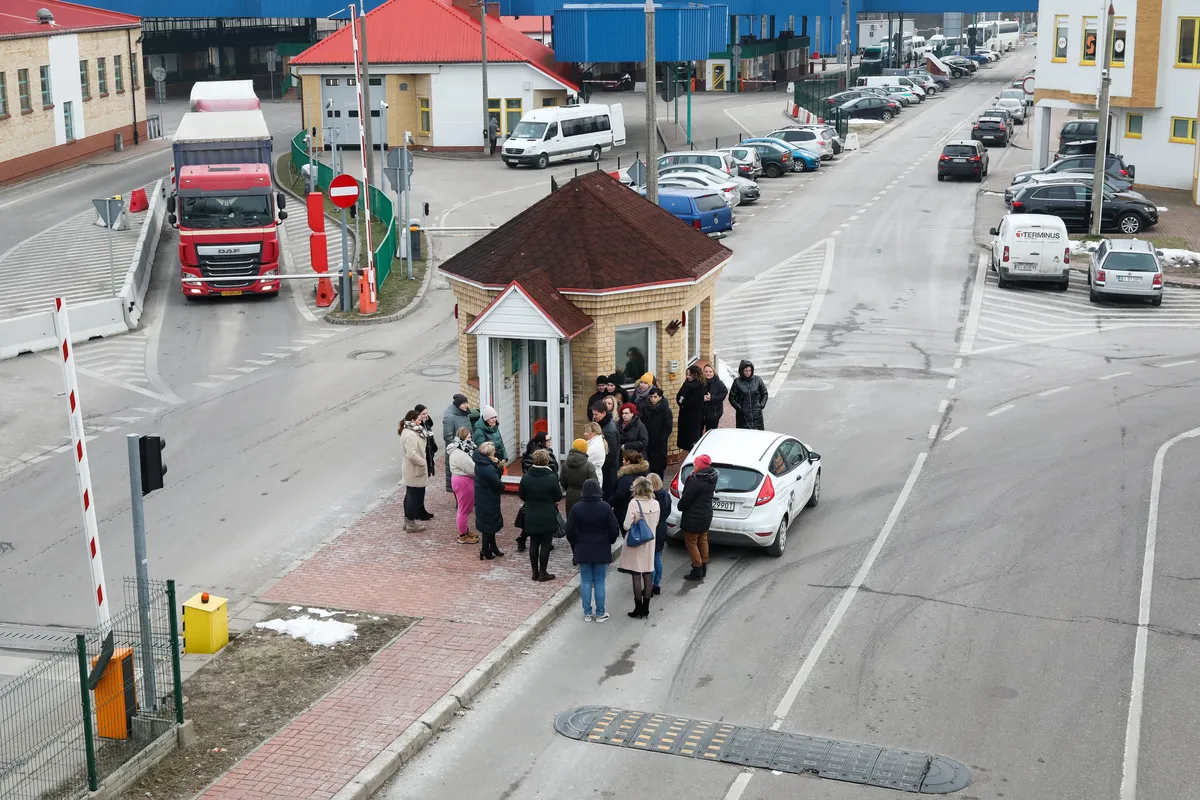
On the same day, when Ivan was detained, his friend was arrested, who later served two years. As soon as Ivan was released from the investigative insulator, he decided to leave, and left Belarus two days later. “When a criminal case was brought to my friend, I realized that at least I would be a witness,” Ivan says. “And the path from the witness to the accused is quite short.”
From Belarus, Ivan went to Ukraine, where he lived with friends at first, looking for housing and work. Ivan was helped by an organization engaged in the support of Belarusian citizens in Ukraine. When the war began, Ivan decided to stay in Ukraine. “In the early days of [war], I went with my brother to the border,” he says.
- We took out people, these were women and children. There, of course, chaos was going on, we had to go about 10 kilometers on foot. I was near the border, but I thought that I would probably not leave. I stayed".
But then bureaucratic difficulties began. “Bank accounts were blocked,” Ivan explains. - I had a residence permit, and I already understood that it would be problematic to extend it. The Schengen visa also had its own term. We did not know what would happen next, whether to ultimately leave. ”
A few months after the start of the war, the young man left for Poland, his friends also helped him there. In the legal sense, the journalist is not a refugee and generally does not associate himself with this word. Ivan explains that many Belarusian citizens who have left do not want to receive precisely the status of refugees, because this imposes significant restrictions on further movements and opportunities. “People are filed for refugee rather from despair, probably,” says Ivan. -For me, the word “refugee” is not about a person who sits on the manual. These are people who work, live ordinary life, they just have such a status. ”
Ivan does not plan to move somewhere else. A young man would like to return to his homeland, but only under certain conditions: “When everyone can return, then I can. The condition here, in fact, is one thing: democratization, the release of all political prisoners, lustration. ” Life in emigration taught Ivan several things: “I have become easier to relate to what is happening around. Now you can live in Warsaw, go to Berlin for a couple of weeks, ”says Ivan. - Previously, I had a clear understanding of what a house is; Now, probably, this is not. ”
"It was a terrible period: cruelty, racism, beating"
Seif: from Iraq to Germany
Seifs left his native country due to the persecution of LGBT people, which, according to the laws of Sharia, is permissible to execute. His refugee path began in Latvia, where a man came on a working visa in August 2021 and tried to request a political asylum. Seyph wanted to write a statement on the provision of asylum in the Riga office of the border service, but he was sent to Daugavpils, to the temporary detention center.
Once in Daugavpils, the man tried several times to give a petition for political asylum, but the camp employees each time refused him, not calling the reasons. The conditions in the refugee center were terrible, recalls Seif. “In one room, from three to six people were located,” he says.
- All the rooms were small, designed for four people. Several times refugees were beaten in front of my eyes. I was put in a single camera for a week because I announced a hunger strike. ”
The phones of refugees are seized and given for 15 minutes, says Seif. Every month, the rooms are closed under the pretext of quarantine: “Once we closed the rooms for 15 days. We did not go outside and did not walk until we got sick with scabies, ”he recalls. Universal medical care in any situation, according to Seif, is a potent sleeping pill or a headache tablet. They fed refugees potato puree with tofu three times a day.
Seephus managed to send a form to a request from the shelter only through a lawyer, after which he was finally released from the center in Daugavpils. On January 18, 2022, the man was refused asylum - then he went to Poland, and then to Germany. There, Seyf was able to get into Shelter at the church in Münster, who managed to provide him with a special protective status. «Сейчас я нахожусь под защитой церкви до тех пор, пока через три месяца не истечет Дублинское соглашение, согласно которому меня положено депортировать в Латвию», — рассказывает беженец.
У Сеифа есть мечта: открыть в Германии свой бизнес — ночной клуб и ресторан иракской и арабской кухни. Для этого он усиленно изучает немецкий язык и ищет работу.
Кроме того, Сеиф планирует подавать в суд на латвийских пограничников. «Я хотел попросить убежища, но мне его не дали в течение года и приказали депортировать меня в мою страну, — объясняет он. — Меня целый год продержали в Даугавпилсе без всякой причины. Это был ужасный период: жестокое обращение, расизм, избиения и одиночное заключение в тюрьме».