
Translated material
USA and UK hit Yemen
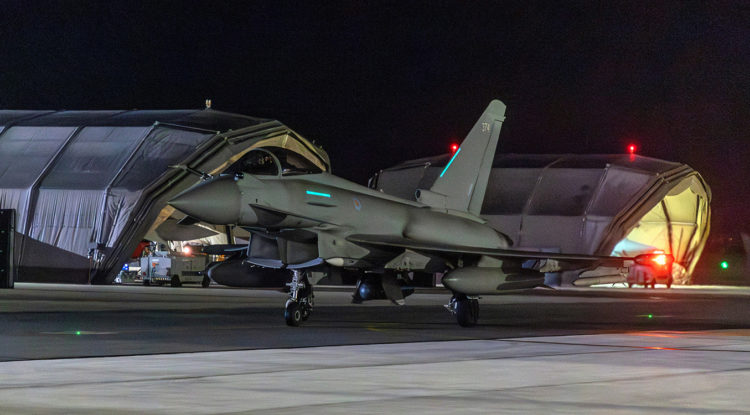
They want to stop the attacks of the "playing Hussites" in the Red Sea. The world is on the verge of a new war?
At night, from January 11 to 12, the military US and Britain struck the Hussites in Yemen. According to US President Joe Biden and British Prime Minister Rishi Sunaka , they did this in response to attacks by the Hussites of warships and merchant ships in the Red Sea, which last two months. Yemenic Husites openly support Iran, Husites, in turn, openly express support for the Hamas group. Will the US and Britain strike the escalation of the Palestinian-Israeli conflict? Is it possible to assume that the United States and Britain entered into hostilities on the side of Israel? "Cold" talked about this with Orientalist Ruslan Suleimanov .
In order not to miss the main materials of the "cold", subscribe to our Instagram and telegram .
What happened?
At night from January 11 to 12, 2024, aviation and warships of the USA and Great Britain struck more than 60 targets in Yemen. The US Air Force command in the Middle East stated that the attacks were inflicted on command posts, ammunition depots, commissioning, production facilities and air defense radars. This is the first blow of the US military against the Husit objects in Yemen since 2016 .
The governments of the United States and the UK stated that the attacks were inflicted in response to the attacks of ships in the Red Sea that lasted in recent months. The reason was the Khusitov blow , committed on January 9: then they launched more than 20 anti -ship cruise and ballistic missiles and drones. All of them were shot down by American and British ships and aircraft. Starting from November 19, the Husites inflicted almost 30 strokes on warships and merchant ships in the Red Sea.
Both US President Joe Biden , and British Prime Minister Rishi Sunak after a night attack on January 12 on objects in Yemen, said that they would continue to control the situation in the Red Sea and without delay would take measures if the attacks of trade and military vessels from the Husites continue.
Husites, in turn, say that they do not intend to stop attacks. “All the threats of the Americans and the British are not frightened and not frightened and will not force us to refuse to fulfill our duty-the support of our brothers in Gaza,” wrote one of the leaders of the Khusitov Abdulkader Al-Mortada on social networks.
After the terrorist attack in Israel on October 7, 2023, the Husites said that they support Hamas and intend to attack all vessels in the Red Sea, which are somehow connected with Israel. At the same time, as a result of their attacks, merchant ships were injured by more than 50 countries, and over two thousand ships changed their routes, avoiding the Red Sea - Joe Bayden announced such numbers.
Husits receive missiles and drones from Iran. After the blows of the United States and the UK, Russia filed a request for a urgent meeting of the UN Security Council, which should take place on January 12.
The blow of the United States and the UK in the Yemensky Husites can be called the escalation of the Palestinian-Israeli war?
“I would still share these stories.” The Husites have their own game, which is mainly connected with what has been happening in Yemen, where the Civil War has been going on for more than 10 years. Of course, the Husites announced their support for Hamas and demonstrate their readiness to oppose Israel. But still, getting involved in a big war against the United States is not in their interests.
The actions of the Husites are aimed at strengthening their legitimacy in the eyes of the Yemenis. First of all, the Husites are now focusing on those who live in the territories not controlled by them. Since they claim to establish complete control over Yemen, it is important for them to demonstrate solidarity with the Palestinians, to confirm this in practice. As a result, in Yemen and the Muslim world as a whole, the Husites are called almost the only ones who support Hamas not only in a word, but also with deed.
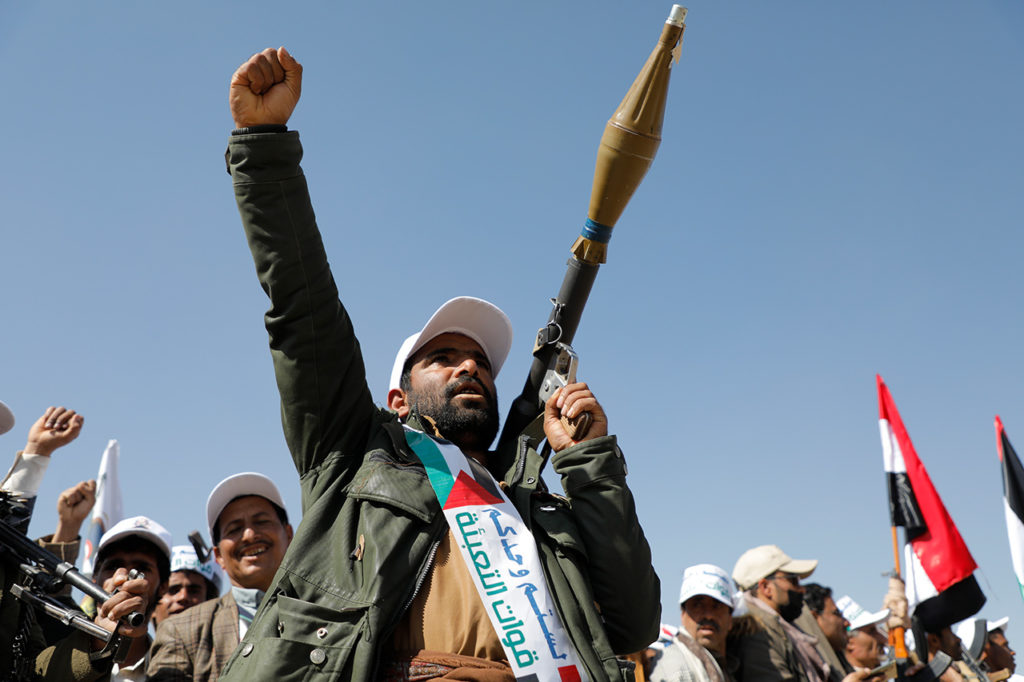
You say that the Hussites are conducting an internal struggle, but over the past two months they attacked almost 30 ships in the Red Sea. This is not like internal affairs.
- You are right. Here we can say that the Husites "played out" a little. Previously, they did not cross a kind of “red line”. At first, these were local sorties that took place earlier, for example , in relation to the ships of some Arab countries of the Persian Gulf. But after the Husites began to actually block international trade in the sea, the Americans could not leave this unanswered. At first, Washington reflected the blows and patrolled the sea, but this was not enough to “sobering” the Husites.
At the same time, I think that the attack of military facilities in Yemen from the United States is rather a signal not so much to Husites as the Iranian government.
Does Iran consider this signal?
- I think yes. At least, we remember how in the fall only the sending of American ships to the Mediterranean Sea besieged Iran and warned him from interference in the war between Israel and Hamas. Tehran himself is not at all interested in the Palestinian-Israeli conflict, which still remains local, out of the regional war. Iran does not want to directly participate in the war, because he knows that Israel and his allies can cause large -scale blows around the country, including his nuclear facilities.
Most likely, at the level of rhetoric, Tehran will express support to the Husites, but in fact, I think Iran considers the signal and will make the Husites in the future to behave more restrained.
What do you think Khusita want to achieve? In response to night attacks, they have already stated that they did not plan to stop.
- In fact, the Husites have already achieved their goals. They already control the capital of Yemen, the city of San, they control a considerable part of the country. Probably, they would like to capture the whole of Yemen - and for this, as I already noted, they need to get legitimacy in the eyes of all the Yemenis. This is their confrontation, first with Saudi Arabia (which in 2015 began the operation of the Storm of determination against the Hussites, but could not succeed), and now, of course, adds popularity against Israel. This, as they believe, gives them the moral right to speak on behalf of all Yemen. In addition, let's not forget that the Husites are strongly dependent on Tehran, and it is also important for him to somehow demonstrate in practice his solidarity with Hamas. Husites in this sense for Iranians are a very convenient tool.
What is the role of Russia in this? Moscow has already addressed the UN by requesting an urgent meeting of the Security Council in connection with the blows of the United States and its Yemen allies.
- Russia has quite limited levers of influence on the situation in Yemen, although Moscow with various Yemeni sides definitely has contacts, including with Husites. This is confirmed, for example, by the fact that in February 2022 the Khusites supported the Kremlin when he recognized the independence of the so -called DPR and LPR.
Wanting now to argue with the West in everything, Moscow can diplomatically cover the Husites in the UN Security Council, using the right veto, just like it does it regarding Hamas: applying a veto on American resolutions with condemnation of the Hamasian aggression regarding Israel on October 7. Hamas leaders repeatedly thanked Russia (and China) for this support to the UN. Something similar, perhaps, will happen to the Hussites.
What can be the scenarios of the development of events? Let's formulate positive, neutral and negative.
- The first option: within a few days (possibly weeks), all aspects of the conflict, having demonstrated their strength, will nevertheless abandon the idea of a large regional war. The Husites, who have already received wide support in Yemen, will stop and stop sabotage in relation to merchant ships in the Red Sea. The Americans will also maintain a reputation, showing that they will not leave any sabotage in the region unanswered. This is a positive script.
The second option: stretching the conflict for a longer period, several stages of escalation. For example, Husites, in addition to sorties in the Red Sea, may begin to strike the territory of Saudi Arabia - primarily on its oil infrastructure. This has happened more than once in the past. But even with such a scenario, I think all parties sooner or later are aware of the futility of a great war and will reduce activity, concluding the world.
The third, the most negative scenario, if the parties decide to go for an even greater escalation, if Iran does not consider US signals and will openly support the Husites, including weapons and military advisers. The fact is that in Yemen Iranians feel much more comfortable than at the same Palestinian-Israeli theater of military operations. Then it is impossible to exclude blows already on the territory of Iran by the Americans and their allies. But I believe that it will not reach. Iran is not interested in a direct armed confrontation either with Israel or the United States.