
Translated material
The final of the series "Curse" comes out
We tell you why this is the main intellectual satire of the season

Shot from the series "Curse". Source: Showtime Networks Inc. / Courtesy Everett Collection / Vida Press
On January 14, on the HBO channel, the last episode of the satirical series “Curse”, produced by indie directors brothers Safdi and written by comedian Neutan Fielder. “Curse” is a black comedy about one disastrous enterprise-a fictional reality show about conscious statements in New Mexico. Neutan Fielder and Emma Stone play the newlyweds who came up with a show for their business project-environmentally responsible smart “passive houses” that help maintain nature and promote the development of the local community. But the positive and caring heroes appear only in the frame, in their relations and in their project there are too many contradictions - from ambition and desire for commercial benefits to rivalry, envy and ignorance. The film critic Katya Stepnaya watched the revealing “curse” and tells how a small indie series puts on the shoulder blades of all and at once: influenser, modern media, vouk culture, political correctness rules and late capitalism.
What is the series "Curse"
Asher and Whitney Siegeli (Neutan Fielder and Emma Stone) are a young pair of white Americans who begin to shoot their “Repair” show (the English game of the words Fliplanthropy is difficult to translate into Russian) for the popular “House and Garden” television channel. The idea of their project is to sell smart “passive houses”, which due to new technologies do not harm the surrounding nature: there is no overrun of electricity, heating and water, and each house has a reflective mirror facade. To show these houses to potential buyers, sell them, and also change the Espanyol quarter outside Santa Fe in New Mexico-the idea of a television show. From the channel, the strange director of Daggi (Benny Safdi, one of the co -producers of the “curse”, one of the best American directors of the new generation), who is trying to make the show more interesting for customers, is invited to the project, because the whole season of “repairs” should still be approved.
On the first day of filming, according to an absurdity of circumstances, Asher will quarrel on the street with a small black girl selling lemonade and receives a curse from her. First, he refers to what is happening with irony, but already in the evening the chicken disappears from his dish in delivery, and then strange things begin to happen with the project and his marriage: everything falls apart, failure follows failure. It seems that the pagan curse begins to come true in the most unexpected moments, and the sunny-positive show also becomes an ominous venture, bringing only misfortune to everyone. The marriage of Asher and Whitney is falling apart: he is a modest Jewish guy with a dubious comic gift, she is a rich heiress with ambitions, whom the camera loves very much.

Life in front of the camera
A reality show is one of the most popular entertainment for a mass audience, whose heart is improvement projects. Romantic dates in paradise islands, repairing cars, redevelopment of houses, turning frogs into princes, weight loss, competition of home cooks and turning ordinary girls into supermodels-since the beginning of the 21st century we either watch or reproduce reality, even if we are not suspected. With the onset of the narcissistic era of self -transmission on Instagram, YouTube and Tiktok, the boundaries between the masks have finally blurred, and most of us are finally confused, where the brands with advertising end and ordinary people begin. This problem is in the invented television show of “curses”, and, no less important, in the main characters.
Perhaps the real TV and social networks did not bring any new behavioral practices, but simply registered and legalized a constant change in social roles? The main characters are poorly balanced between what they want to be for themselves, for each other and for the audience. The production in their head dominates. They even rebuild domestic jokes for social networks, rehearse “improvisations” in advance and blow menthol in the eyes of the heroes so that they have tears of joy.
The problem is that just optimistic stories are not really interesting to anyone, only the drama provides views. To be interesting, while hiding who you really are, is a task that neither Asher nor Whitney cope with.
Cutting out from the issues of real people with their real problems and uncomfortable issues, they castrate the project. But on the other hand, if everyone says what is actually, you can’t sell an elephant. How to construct a popular image that will be easy to reproduce? And how not to go crazy with an obsessive role, if by nature you are not the brightest and most disinterested person? Maybe directing the camera - already a sufficient curse.
Capitalism with a human face
The project of Asher and Whitney is the embodiment of the theory of small affairs, which was dreamed by the idealists of late capitalism. We will carry rag bags with us, sort garbage, give things for processing, there are products of local manufacturers, plant bushes in the yard and abandon cars - and the apocalypse can be avoided. Approximately the same idea of drops in the sea at the “repair”: 14 glass houses scattered in the non -prosperous area should stimulate responsible behavior among local and draw attention to the community. Almost immediately, in the Espanyola area, a coffee shop opens, where only locals are planning to work for work, and a store with jeans for $ 400, which local hooligans steal in packs, and then resell. The television show sells the dream of a good neighborhood, collective painting walls and guest dinners, while rickety fences stick out on the streets in different directions, and squatter occupies at home, from where the ruined people were expelled.
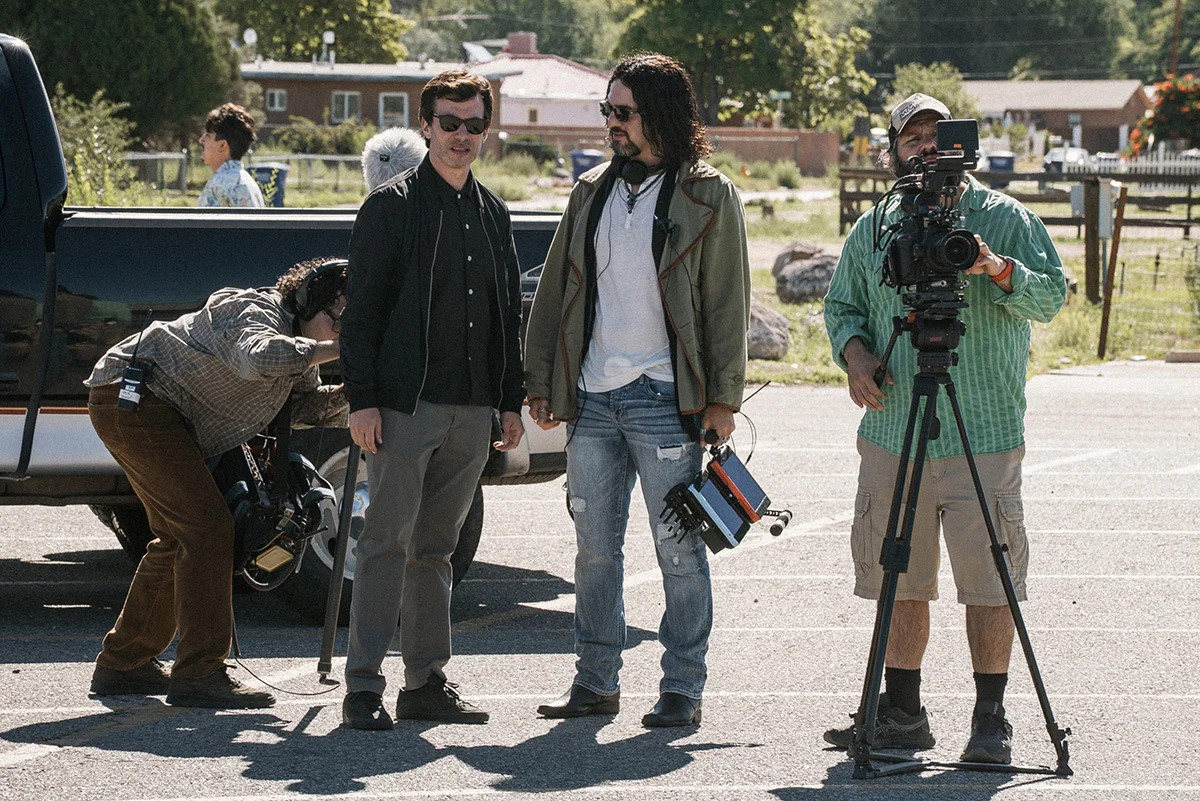
The camera notices everything: wherever the filming group of “repair processing” looks, the contradictions between the positive intention of the show and the merciless reality are everywhere, where there is not only poverty and homelessness, but also racism with crime.
Whitney Siegel herself is a more than controversial person: her parents earned a fortune on those who evicted people in social housing, and it was their million dollars that became the starting capital for “repairs”. The series behind the series “Curse” deepens the plot in different directions - from the intricacies of casting among Americans to gambling and working contracts. Few, with such a depth, it reveals this monetary side of American life, which is regulated not by ordinary citizens, but by expensive lawyers. Under a beautiful wrapper most often - inflation, behind the human face of capitalism is a vile reality: if it seems to you that you have won, you most likely lost.
The fault of a white man
So far, in the media space there is a public repentance of white Americans before minorities, in real America - a contradiction to contradiction. How, and not in show business, should the principle of inclusion be implemented? What should be done daily for peaceful coexistence? Is it possible to atone for many years of wine? What can be a new public contract? Formally, the Siegels are progressive young people with good intentions, but colossally low emotional intelligence.
Knowing the codes by which they are considered “respectable modern Americans”, they do not feel and do not understand what equality is, causing good to less successful and vainly rising above them.
One of the sick places in New Mexico, where the couple suits their television show is the exploitation of indigenous Americans who are not paid for the use of their land and roads. But, getting in touch with them, Whitney does it awkwardly and indivisible: she uses the society of these people, tries to expose herself more educated and concerned than it, and exploits the topic of equality in order to earn social capital. First of all, to erase the name of the heiress of unscrupulous rich parents who have made a state of economic stratification.
The “curse” puts one of the most painful issues of our time before the audience: is it possible to sincerely talk about equal rights, living due to non -rights? And are these sincere conversations about guilt, responsibility and awareness by another sales technique? Watching how Asher and Whitney are trying to ineptly make amends for people with whom they unconsciously behave dismissively, we can recall dozens of similar moments from their own life. What can be repentance not in the form of a ritual action, but in the form of constant support and interchange? And are we ready to listen to everything boiling when we offer a dialogue to those we offended? Asher and Whitney definitely do not know anything about this: they are too busy with what they look in front of the camera.